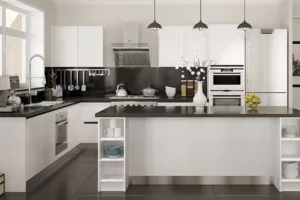

Kitchen Cabinet Models Turkey
Kitchen Cabinet Models Turkey: The Definitive Architectural Guide to Typologies, Material Engineering, and Global Sourcing
Introduction: The Geometric Anchor of Modern Residential Sourcing
In the landscape of modern residential design, the kitchen has shifted from a isolated, functional room into the open culinary center and social anchor of the home. This shift requires cabinetry that balances daily structural durability with premium visual appeal. For international interior architects, real estate developers, and discerning homeowners, exploring premium Kitchen Cabinet Models Turkey has emerged as a key strategic sourcing path.
The kitchen environment places substantial physical stress on built-in furniture. Cabinetry must perform reliably under challenging everyday conditions, including frequent swings in relative humidity, exposure to hot cooking steam, impacts from heavy cookware, and contact with acidic ingredients. Sourcing millwork that can handle these challenges without warping, peeling, or joint separation requires a deep understanding of core material science, edge fabrication chemistry, and structural alignment joinery.
Turkey’s modern manufacturing infrastructure has established itself as a global leader in this specialized sector, combining centuries of Mediterranean woodworking heritage with top-tier German and Italian automated computer-numeric-control (CNC) machining lines. This comprehensive technical guide analyzes the design typologies, substrate material engineering, surface protection finishes, spatial layouts, and international procurement logistics that define the premium market for Kitchen Cabinet Models Turkey.
1. The Turkish Manufacturing Infrastructure: Industrial Clusters and Scale Mechanics
To understand why sourcing Kitchen Cabinet Models Turkey is highly efficient for international buyers, one must analyze the country’s specialized industrial geography. Turkey’s furniture sector is organized into advanced manufacturing clusters, with each region specializing in specific production techniques, material processing paths, and volume capabilities.
+-----------------------------------------------------------------+

|         TURKISH KITCHEN CABINET MANUFACTURING CLUSTERS          |
+-----------------------------------------------------------------+

|  [İnegöl Hub]           ---> Custom Solid Timber & Premium Wood |
|  [Kayseri Cluster]      ---> High-Volume Automated Smart Lines  |
|  [İstanbul/Modoko Hub]  ---> Bespoke Luxury & Architectural Runs |
|  [Aegean/İzmir Zone]    ---> Minimalist Thermoform & Flat-Pack  |
+-----------------------------------------------------------------+
The İnegöl Furniture Ecosystem (Bursa Province)
İnegöl is a prominent woodworking center with a long heritage of craftsmanship. This region excels at combining automated machinery with skilled manual woodwork. Factories here focus on solid wood processing, multi-layer veneering, and complex transitional cabinetry, making it a key hub for high-end wood-focused Kitchen Cabinet Models Turkey.
The Kayseri Industrial Cluster
Kayseri hosts highly automated, high-volume production facilities. These factories feature advanced CNC routing setups, automated UV curing tunnels, and robotic assembly systems. Kayseri is the primary sourcing zone for large-scale commercial contracts, such as outfitting multi-family residential towers or global hotel chains that require strict dimensional consistency across thousands of units.
The İstanbul Modoko and Masko Design Centers
İstanbul serves as the center for custom luxury design. Workshops in Modoko and Masko cater to bespoke architectural drawings, working with premium materials like marine plywood, exotic book-matched veneers, integrated low-voltage LED systems, and custom natural stone or solid-surface tops.
2. A Taxonomy of Kitchen Cabinet Models Turkey: Typology and Architectural Styles
The diverse manufacturing setups found across Turkey allow factories to produce a wide range of kitchen styles. When sourcing Kitchen Cabinet Models Turkey, designs are categorized into three main architectural typologies, each featuring distinct profile geometries and construction steps.
         KITCHEN CABINET ARCHITECTURAL TYPOLOGIES
 ┌───────────────────┬───────────────────┬───────────────────┐
 │ Contemporary Slab │ Transitional      │ Ornate Classical  |
 │ Flat-front panels;│ Shaker designs;   │ Carved columns;   |
 │ continuous grain; │ 5-piece frames;   │ raised panels;    |
 │ handleless J-pull.│ balanced lines.   │ antique glazes.   |
 └───────────────────┴───────────────────┴───────────────────┘
Typology A: The Contemporary Minimalist Slab Model
- Profile Geometry: Completely flat, smooth front surfaces with sharp 90-degree outer edges. This design features an absence of external decorative moldings, handles, or visible hardware.
- Mechanical Integration: Employs integrated J-pull handles cut directly into the door edge using 5-axis CNC routers, or a true handleless configuration utilizing structural aluminum Gola profiles recessed into the cabinet carcass box.
- Visual Appeal: Focuses on material continuity. This includes high-gloss or ultra-matte lacquer surfaces, or sequentially book-matched wood veneers where consecutive sheets are sliced from a single log, allowing the natural grain pattern to flow uninterrupted across adjacent doors.
Typology B: The Transitional Shaker Model
- Profile Geometry: A classic five-piece door structure featuring a recessed center panel framed by two vertical stiles and two horizontal rails. The internal transitions can feature a crisp 90-degree step or a subtle, easy-to-clean bevel.
- Mechanical Integration: Readily accepts a wide selection of decorative surface hardware, including brushed brass bars, matte black knobs, or oil-rubbed bronze pulls.
- Visual Appeal: Delivers a balanced design that bridges classical and modern styles. It is frequently finished in durable, matte painted coatings or wrapped in textured thermoform foils that mimic the grain patterns of genuine painted timber.
Typology C: The Ornate Classical Model
- Profile Geometry: Characterized by complex, raised center panels, intricate profile routing along internal steps, and extended crown moldings that stretch smoothly up to the ceiling line.
- Mechanical Integration: Often paired with exposed decorative corbels, turned support columns around cooking alcoves, and integrated glass-front display cabinetry with internal fretwork frames.
- Visual Appeal: Celebrates historical design styles. These models are frequently crafted from premium solid hardwoods like oak or beech, treated with hand-applied accent glazes, wiping stains, and antiquing patinas that emphasize the depth of the carved woodwork.
3. Core Substrate Material Science: Engineering the Structural Foundation
The durability of any kitchen cabinet relies entirely on the quality of its underlying core substrate. When evaluating Kitchen Cabinet Models Turkey, international procurement teams look closely at the substrate material composition, density, and moisture resistance to select the right foundation for their climate conditions.
       CORE RESILIENCE SPECTRUM (Lowest to Highest Moisture Defense)
 ┌───────────────────┬───────────────────┬───────────────────┐
 │ Standard LDF/PB   │ Green MR-MDF      │ Marine Plywood    │
 │ (High risk of core│ (Resin-bonded;    │ (Cross-ply birch; │
 │ swelling & peeling)│ limits water vapor)│ waterproof glue)  │
 └───────────────────┴───────────────────┴───────────────────┘
Moisture-Resistant Medium Density Fiberboard (MR-MDF / Green Core)
- Chemical Composition: Formed by blending fine wood fibers with hydrophobic wax emulsions and moisture-resistant polyurethane or melamine-urea-formaldehyde resins before hot-pressing. The core is often tinted green for straightforward field identification.
- Performance Parameters: Features a uniform, dense core profile (ranging from 720 to 800 kg/m³) with zero void spaces. It provides a low thickness swelling rate (typically under 6% when submerged for 24 hours), making it an excellent substrate choice for profile-routered Shaker doors or smooth lacquered Kitchen Cabinet Models Turkey.
Multi-Ply Marine-Grade Plywood (Su Kontrası)
- Chemical Composition: Constructed by laminating thin sheets of high-density birch or hardwood veneers at alternating 90-degree grain angles. The layers are bonded under intense hydraulic heat and pressure using completely waterproof phenolic adhesives.
- Performance Parameters: Does not delaminate, twist, or split when exposed to direct water contact or boiling steam. Plywood offers exceptional screw-holding strength, ensuring hinges and drawer slides remain securely anchored over decades of heavy daily use.
Melamine-Faced Chipboard (Super-E0 High-Density PB)
- Chemical Composition: Created by compressing refined wood chips and flakes with specialized low-emission resins under high pressure. The face is sealed with a decorative paper sheet saturated with melamine resin.
- Performance Parameters: For cabinet boxes (carcasses) used in budget-conscious or high-volume commercial developments, premium Turkish factories utilize Super-E0 or E1 certified high-density chipboard. This material provides flat, easy-to-clean interior walls while keeping costs competitive.
4. Surface Finishing Technologies: Shields Against Water, Steam, and Heat
The exterior finish serves as the primary shield protecting the underlying cabinet substrate from everyday kitchen challenges like grease splatters, boiling steam, and cleaning chemicals. Sourcing premium Kitchen Cabinet Models Turkey options provides access to advanced industrial surface treatments.
| Finishing Process | Substrate Compatibility | Liquid Impermeability | Scratch Resistance | Design Aesthetics |
|---|---|---|---|---|
| Catalyzed Polyurethane Lacquer | MR-MDF, Solid Hardwood | Excellent (Seamless) | Medium-High | Seamless matte, satin, or mirror high-gloss |
| Vacuum Membrane Thermoform | Routered MR-MDF | Perfect on face/edges | High | Seamless 3D profiles, tactile textures, easy-clean |
| High-Pressure Laminate (HPL) | Flat MR-MDF, Chipboard | High (Requires edge-bands) | Extremely High | Ultra-durable color block, faux stone or metal |
| Natural Wood Veneer + Topcoat | Marine Plywood, MDF | High (Requires edge-bands) | Medium | Organic wood warmth, continuous sequenced grain |
Multi-Stage Polyurethane Lacquer Lines
A premium lacquer finish is built up over multiple structured layers to ensure a durable, beautiful seal:
- Sanding: The raw substrate panel is sanded to a uniform 240-grit smoothness to remove surface fuzz.
- Isolation Primer: A specialized chemical isolation coat is applied to seal the substrate pores and prevent the wood fibers from absorbing topcoat solvents.
- Filler Basecoats: Two to three layers of high-solid polyurethane filler are applied, with manual inter-coat sanding using progressively finer grits (up to 400-grit) to create a flat surface.
- Color Topcoats: Catalyzed acrylic polyurethane color is applied in cleanrooms to avoid dust contamination.
- Clear Coat Protection: A final scratch-resistant matte or gloss clear coat is applied. This layer cross-links chemically as it cures, building an inert, non-porous shield against water and cleaning solutions.
Automated Vacuum Membrane Thermoforming
This process is highly efficient for Shaker and patterned Kitchen Cabinet Models Turkey:
- A sheet of rigid polyvinyl chloride (PVC) or polyethylene (PET) foil is suspended over a CNC-routered MR-MDF panel coated with heat-activated polyurethane adhesive.
- The machine seals the chamber, heats the foil until it becomes pliable, and draws a powerful vacuum while applying hydraulic pressure from above.
- This forces the foil seamlessly into every intricate detail, groove, and edge of the door panel. Because the front and sides are wrapped from a single sheet, there are no edge joints where moisture can penetrate.
5. Precision Machining and Edge-Banding Systems
Once a cabinet panel is pressed or coated, it moves to the machining floor, where advanced technology is required to cleanly cut components and seal exposed edges without chipping.
       +---------------------------------------------------------+

       |           LASER EDGE-BANDING FUSION PROCESS             |
       +---------------------------------------------------------+

       | [Laser Diode Source] ---> Melts Functional Polymer Layer|
       | [Solid Hardwood Band]---> Pressed Directly into Substrate|
       | [Resulting Interface]---> Zero-Joint, 100% Waterproof Seam|
       +---------------------------------------------------------+
CNC Panel Processing
Factories use automated 5-axis CNC routers equipped with diamond-tipped cutting heads to shape the components. To prevent micro-chipping along the brittle edges of veneered sheets or laminated surfaces, saws use scoring blades that cut a shallow path ahead of the main blade, ensuring crisp, clean edge lines.
Zero-Joint Laser Edge-Banding
The perimeter edge of a flush door or carcass panel must be sealed to protect the inner core from moisture entry. Traditional edge-banders use hot-melt EVA glue pots, which leave a faint, visible glue line that can collect dirt and weaken over time if exposed to steam. Sourcing high-end Kitchen Cabinet Models Turkey options provides access to advanced laser or hot-air fusion edge-banding systems:
- The machine uses a concentrated laser beam to instantly melt a co-extruded polymer functional layer on the back of a thick ABS or solid-hardwood edge-band (typically 1.0mm to 2.0mm thick).
- The edge-band is then pressed firmly against the panel edge, fusing the two components together at a molecular level.
- This process creates a seamless, zero-joint transition that is completely waterproof, heat-resistant, and visually clean.
6. Core Cabinet Architecture: Carcass Engineering Options
While the doors grab the spotlight, the inner cabinet boxes (carcasses) bear the weight of heavy stone countertops and everyday storage items.
       +---------------------------------------------------+

       |             VENEERED CABINET CARCASS HUB          |
       +---------------------------------------------------+

       | [Backing Sheet] -> 8mm Veneered MDF Slide Dado     |
       | [Top/Bottom]    -> 18mm Marine Plywood or MR-MDF   |
       | [Front Face]    -> Solid Wood Laser Edge-banded Seam|
       | [Concealed Leg] -> ABS Adjustable Heavy Weight Feet |
       +---------------------------------------------------+
Option A: Solid Finger-Jointed Hardwood Panel Carcasses
- Technical Details: Built using edge-glued solid timber strips, usually made from beech or oak.
- Best For: Pure luxury applications where clients want an authentic, all-wood composition across every square inch of the build.
- Considerations: Demands consistent interior humidity monitoring to minimize seasonal movement across deeper cabinet boxes.
Option B: Marine-Grade Birch Plywood Carcasses
- Technical Details: Formed by cross-laminating odd numbers of thin birch wood veneers under intense hydraulic heat and pressure with waterproof phenolic adhesives.
- Best For: High-moisture environments or kitchens with heavy stone countertops. Plywood offers excellent screw-holding strength and remains structurally stable regardless of humidity fluctuations.
Option C: Veneered Blockboard (Starwood Core)
- Technical Details: Features a core made of solid softwood strips laid side-by-side, sandwiched between two layers of real wood veneer.
- Best For: A balanced compromise, offering the flat stability and light weight of an engineered core along with the visual appeal and touch of genuine wood.
7. Hardware Integration: The Mechanics of Motion
A premium Kitchen Cabinet Models Turkey configuration relies on top-tier mechanical hardware to ensure smooth, effortless operation and handle the substantial weight of heavy doors and stone counters.
- Heavy-Duty Soft-Close Drawer Systems: Turkish manufacturers partner with premium European brands like Blum (Legrabox/Tandembox) or Grass (Vionaro) to supply under-mount, synchronized runner tracks. These systems prevent drawer sagging and handle dynamic loads up to 70kg, closing smoothly even when fully loaded.
- Three-Dimensional Micro-Adjustable Hinges: Doors are hung using concealed soft-close hinges featuring integrated oil dampers. Installers can easily calibrate the doors across three axes (horizontal alignment, vertical height, and inset depth) down to fractions of a millimeter.
- Space-Optimizing Storage Access: Motorized touch-to-open servo systems and smooth corner pullouts (such as Kesseböhmer LeMans tracks) are integrated into the cabinet frames to maximize accessibility in corner layouts.
8. Structural Comparison Matrix: Evaluating Core Materials
To help procurement teams make informed decisions when evaluating Kitchen Cabinet Models Turkey specifications, this matrix outlines how common cabinet materials compare across key performance vectors:
| Engineering Dimension | 100% Solid Hardwood Timber | Premium Wood Veneer (MR Core) | High-Pressure Lamination (HPL) | Vacuum Membrane Thermoform |
|---|---|---|---|---|
| Dimensional Stability | Low (Expands/contracts seasonally) | Extremely High (Core resists movement) | Perfect (Inert synthetic composite) | High (Wrapped surface limits movement) |
| Authentic Wood Texture | 100% Genuine tactile wood grain | 100% Genuine tactile wood grain | Synthetic printed pattern repetition | Textured embossing mimics wood grain |
| Facade Design Control | Limited to timber width constraints | Infinite (Book-matching / Sequencing) | Rigid pattern repeats every few meters | Consistent pattern across uniform runs |
| Refurbishment Capability | Can be sanded down and refinished many times | Can be carefully sanded & restained | Cannot be sanded or repaired if damaged | Cannot be sanded; requires re-wrapping |
| Weight Profiles | High structural loading requirements | Moderate, stable weight metrics | Heavy composite core loading | Balanced, uniform component weight |
| Investment Lifecycle Asset | Luxury heirloom tier | Premium architectural tier | Functional budget tier | Durable mid-market value tier |
9. Sustainability Frameworks and Eco-Compliance Standards
As eco-conscious building practices become standard, the environmental credentials of furniture manufacturing are increasingly important. Turkish premium kitchen processing complies with rigorous European ecological safety regulations.
FSC (Forest Stewardship Council) Chain of Custody
High-end manufacturers maintain an FSC Chain of Custody certification. This tracking code certifies that all logs used in the cabinetry can be traced back to managed forest plots where replanting rates equal or exceed harvesting rates.
Zero-Formaldehyde E0 Glue Compliance
Particleboard kitchens often rely on urea-formaldehyde resins that off-gas toxic volatile compounds over time. A certified Kitchen Cabinet Models Turkey build uses advanced polyvinyl acetate (PVA) or polyurethane-based structural glues that carry E0 or E1 certification. This choice keeps the home’s indoor air clean and completely free of toxic chemical emissions.
10. Procurement Logistics, Project Engineering, and Global Delivery
Sourcing custom Kitchen Cabinet Models Turkey configurations for international residential developments or private estates involves an organized, step-by-step production and logistical process to ensure success.
+-------------+      +-------------+      +-------------+      +-------------+

| 1. Design & | ---> | 2. Flitch   | ---> | 3. Precision| ---> | 4. Surface  |
| 3D CAD/CAM  |      | Matching    |      | CNC Machining|      | Coating Line|
+-------------+      +-------------+      +-------------+      +-------------+
                                                                      |
+-------------+      +-------------+      +-------------+             |

| 7. On-Site  | <--- | 6. Sea/Land | <--- | 5. Factory  | <------------+
| Installation|      | Container   |      | Assembly    |
+-------------+      +-------------+      +-------------+
- Design and 3D CAD/CAM Modeling: Technical designers convert architectural floor plans into millimeter-precise production blueprints using advanced software like IMOS or TopSolid Wood. This software maps out every joint, hinge boring, and panel boundary.
- Material Selection and Flitch Matching: Artisans inspect raw wood bundles or choose uniform laminate lots, ensuring consistent color and pattern matching across the entire kitchen layout.
- Milling and CNC Machining: Substrates are trimmed on computerized beam saws and detailed on multi-axis CNC machines to cut hardware paths with high precision.
- Surface Coating Line: Panels pass through automated sanding machines, manual staining benches, or dust-free cleanrooms for lacquer application or thermoform pressing.
- Factory Pre-Assembly Inspection: Cabinets are fully assembled on the shop floor. Quality control inspectors verify door gaps (held to a strict 1.5mm tolerance), structural squareness, hardware operation, and seamless grain continuity.
- Disassembly and Custom Export Crating: Components are wrapped in thick, anti-static polyethylene foam, reinforced with honeycombed corner guards, and enclosed in heavy-duty wooden crates or OSB boxes built to withstand international sea or land freight.
- On-Site Installation: Local installation teams or dispatched factory representatives assemble the modular cabinets on-site, securing them to structural wall systems.
11. Maintenance Protocols for Multi-Decade Preservation
To ensure a premium kitchen layout maintains its finish sheen and structural balance for generations, homeowners should follow a structured maintenance routine.
- Indoor Environmental Control: Keep the home’s indoor relative humidity between 40% and 60% and maintain a consistent temperature. Drastic shifts (such as running high dry heat during sub-zero winters without a humidifier) can over-dry wood cells, potentially causing micro-cracking along joints.
- Cleaning Chemistry Restrictions: Never use cleaning agents that contain ammonia, chlorine bleach, or abrasive silicones. Silicones can penetrate the topcoat and complicate future refinishing work. Instead, clean surfaces using a damp microfiber cloth and a drop of pH-neutral dish soap, always wiping along the direction of the wood grain.
- Spill Mitigation: Wipe away water droplets that collect near sinks, dishwashers, or under-cabinet plinths immediately. Water allowed to sit on edges for long periods can eventually penetrate edge joints via capillary action, compromising the bond.
Conclusion: The Strategic Sourcing Choice
Investing in premium Kitchen Cabinet Models Turkey options blends architectural versatility with robust materials and precision engineering. By understanding the underlying substrate science, surface protection coatings, joinery mechanics, and logistical steps detailed in this guide, interior designers and real estate developers can confidently partner with top Turkish factories to build highly functional kitchen spaces that balance modern performance with timeless aesthetic appeal.


Etiket:Anthracite Kitchen Cabinet Turkey, Grey Kitchen Cabinet Turkey, Lacquered Door Production Turkey, Louvered Door Kitchen Bathroom Manufacturing Turkey, Louvered Door Solid Wood Kitchen Cabinets Turkey, Mass Production Kitchen Bathroom Cabinets Turkey, Moisture-Resistant Kitchen Cabinet Turkey, Silk Matte Kitchen Cabinet Turkey, Solid Wood Door Production Turkey, Solid Wood Door Turkey, Solid Wood Door Window Production Turkey, Water-Resistant Bathroom Cabinet Turkey, Wooden Door Production Turkey

Şunları da sevebilirsiniz
Wooden Bathroom Cabinet Turkey
Wooden Kitchen Cabinet Turkey