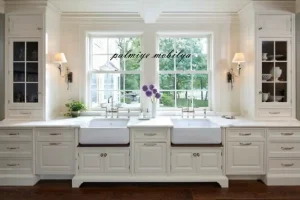

MDF Kitchen Cabinet Turkey
MDF Kitchen Cabinet Turkey: The Definitive Engineering and Sourcing Guide to Premium Substrates, Finishes, and Manufacturing
The modern kitchen manufacturing landscape has been fundamentally reshaped by advancements in material science and automated industrial woodworking. At the center of this global evolution is Medium-Density Fibreboard (MDF), a high-performance engineered wood product that has largely superseded traditional solid lumber and low-density chipboard in premium cabinetry design. Internationally, the phrase MDF Kitchen Cabinet Turkey has become synonymous with elite-tier manufacturing, precision computer numerical control (CNC) machining, and highly cost-effective export logistics.
Turkey has positioned itself as an unshakeable leader in the global furniture and cabinetry sectors. By integrating top-tier German and Italian automated assembly lines with immense regional wood-fiber processing plants and artisan finishing capabilities, Turkish factories supply developers, architects, and retailers worldwide. This technical manual provides an in-depth exploration of the material science, manufacturing procedures, surface coating technologies, and international procurement channels that define the MDF Kitchen Cabinet Turkey industry.
1. Material Science: Understanding the Anatomy of MDF
To understand why an MDF Kitchen Cabinet Turkey offers such profound structural longevity, one must examine the micro-engineering of Medium-Density Fibreboard itself. Unlike solid wood, which possesses organic anomalies such as knots, grain directionality, and moisture pockets, MDF is a highly homogenous composite material.
Production and Composition
MDF is manufactured by breaking down softwood and hardwood residuals into individual lignocellulosic wood fibers. These fine fibers are thoroughly dried and then blended in a precise ratio with synthetic thermosetting resin binders—typically urea-formaldehyde (UF) or phenol-formaldehyde. The coated fibers are formed into a uniform mat and subjected to extreme heat and intense hydraulic pressure inside a continuous press.
This process yields a highly dense, uniform, and calibrated panel with a smooth surface profile. The typical density of premium MDF used in Turkish kitchen production ranges from 700 kg/m³ to 850 kg/m³, providing structural properties that frequently outperform raw timber in cabinet applications.
Technical Performance Metrics of Cabinet-Grade MDF
When sourcing an MDF Kitchen Cabinet Turkey, industrial buyers evaluate several critical mechanical properties:
- Internal Bond Strength: Measures the cohesive strength of the fiber matrix through the thickness of the board. Premium Turkish boards exhibit internal bond ratings exceeding 0.60 N/mm², preventing internal splitting under mechanical stress.
- Modulus of Rupture (MOR): Dictates the bending strength of the panel. For 18mm thick shelves and structural vertical side panels, an MOR of 22 to 30 N/mm² ensures the cabinetry will not sag or buckle under the weight of heavy stone countertops or stacked ceramic dinnerware.
- Screw Holding Capacity: Evaluated on both the face and the raw edges. High-density MDF ensures that structural assembly screws and heavy-duty concealed door hinges remain anchored securely over thousands of opening and closing cycles without stripping the wood fibers.
2. Standard vs. Moisture-Resistant MDF in Kitchen Environments
A kitchen is an architecturally hostile environment for wood products. Cabinetry is routinely subjected to localized humidity spikes, boiling water steam, direct water splashes from cleanup sinks, and heat radiating from built-in ovens and cooktops. Consequently, the selection of the correct MDF substrate variation is vital to the lifespan of the installation.
+---------------------------------------------------------+

|              MDF COMPOSITE PANEL CROSS-SECTION          |
+---------------------------------------------------------+

|                                                         |
|   +-------------------------------------------------+   |
|   |  Top Layer: Acrylic / PET / Polyurethane Paint  |   |
|   +-------------------------------------------------+   |
|   |  High-Density Outer Fiber Layer (Calibrated)    |   |
|   +-------------------------------------------------+   |
|   |                                                 |   |
|   |  Core Matrix: Hydrophobic Resins & Wood Fibers  |   |
|   |  [Green-Dyed Moisture Resistant Matrix]         |   |
|   |                                                 |   |
|   +-------------------------------------------------+   |
|   |  High-Density Outer Fiber Layer (Calibrated)    |   |
|   +-------------------------------------------------+   |
|   |  Bottom Layer: Balancing Melamine / Counter-foil|   |
|   +-------------------------------------------------+   |
|                                                         |
+---------------------------------------------------------+
Green MDF (Moisture-Resistant/MR MDF)
For high-exposure zones within an MDF Kitchen Cabinet Turkey layout—most notably the undersink base module, the cabinetry housing the integrated dishwasher, and the panels immediately adjacent to the cooking range—Turkish manufacturers utilize Moisture-Resistant MDF, which is permanently tinted with a green diagnostic tracer dye during production.
MR MDF incorporates specialized hydrophobic emulsion waxes and melamine-urea-formaldehyde (MUF) resins into the fiber matrix. While standard MDF can exhibit a thickness swelling rate of over 15% when exposed to moisture, premium Turkish MR MDF limits thickness swelling to less than 5% to 7% under standardized cyclic water immersion tests. This prevents the edges of the cabinet doors and carcasses from warping, expanding, or splitting over time.
Chemical Safety: E1 vs. E0 and CARB Phase 2 Compliance
Because kitchen cabinets store food preparation items and operate within enclosed living spaces, indoor air quality and chemical emissions are strictly regulated. Turkish industrial panel producers (such as Kastamonu Entegre and AGT) manufacture substrates complying with rigorous global eco-label demands:
- E1 European Standard: Guarantees that formaldehyde gas emissions remain safely below 0.1 ppm, making it fully acceptable for standard residential infrastructure.
- E0 / CARB Phase 2 / TSCA Title VI: Restricts formaldehyde emissions even further (less than 0.05 ppm). These ultra-low emission boards are mandatory for high-end eco-conscious residential developments, medical facilities, and commercial buildings aiming for international green certifications like LEED or BREEAM.
3. Surface Finishing Technologies for Turkish MDF Cabinets
Raw MDF cannot be left exposed; its outer faces must be covered with decorative, protective layers. The absolute flatness and lack of grain texture on calibrated MDF make it the perfect substrate for advanced polymer coatings, laminates, and liquids. The finish applied to an MDF Kitchen Cabinet Turkey dictates its architectural style, scratch resistance, maintenance profile, and cost structure.
Vacuum-Pressed Membrane (PVC Foil) Coating
Membrane technology represents one of the most flexible and widely exported options within the MDF Kitchen Cabinet Turkey market.
- The Process: A raw MDF door panel is cut to size, and its face and edges are routed on a CNC machine to create decorative profiles (such as classical Shaker profiles, traditional raised panels, or contemporary integrated J-pull handles). A high-performance polyurethane adhesive is spray-applied to the panel. Once dry, the door is placed into a specialized thermo-vacuum press machine. A flexible Polyvinyl Chloride (PVC) foil sheet is suspended over the panels, heated until pliable, and vacuum-sucked tightly over the routed MDF core.
- Advantages: Because the PVC foil wraps seamlessly around the face and all four sides of the door panel simultaneously, it completely eliminates visible edge seams or glue lines. This provides an exceptional monolithic barrier against moisture.
Modern Acrylic and PET Panels
For ultra-modern, minimalist, flat-slab kitchen aesthetics, Turkish manufacturers are global leaders in producing co-extruded polymer-faced MDF panels.
- High-Gloss Acrylic: A rigid sheet of polymethyl methacrylate (PMMA) is permanently laminated onto the front face of a calibrated MDF sheet using PUR hot-melt adhesives, backed by a matching balancing sheet on the reverse side. This creates an optically flat, glass-like finish with a gloss unit rating exceeding 90. It offers deep color reflectivity and high resistance to UV-induced yellowing.
- Super-Matte PET: Utilizing refined Polyethylene Terephthalate foils, super-matte surfaces offer a velvety, soft-touch tactile experience with zero specular light reflection. These state-of-the-art coatings feature specialized anti-fingerprint technology, making them incredibly resilient against oily smudges, and exhibit thermal self-healing properties where micro-scratches can be buffed out using mild heat.
Elite Polyurethane and Acrylic Lacquer Painting
Lacquered cabinetry represents the pinnacle of premium craftsmanship within the MDF Kitchen Cabinet Turkey ecosystem.
- The Process: The raw MDF panels undergo a rigorous multi-stage preparation cycle. They are cut, routed, and fastidiously sanded. Next, an insulating base coat is applied to seal the porous core of the MDF, followed by multiple layers of polyurethane or acrylic primers. After further precision sanding, multiple topcoats of premium pigmented enamel are applied via automated spray cross-axis machines or by master craftsmen in pressurized, dust-free paint booths. The panels are then cured under UV lights or baked in thermal ovens.
- Aesthetic Superiority: Lacquer wraps the board continuously without an external edge-band strip or laminate seam. It allows for absolute design freedom, enabling any custom CNC-routed handle profile or classical ornamentation to be painted flawlessly. Furthermore, it can be color-matched to any universal color database, such as RAL or NCS.
4. Edge Preservation: The Critical Glue Line and Adhesives
The ultimate Achilles’ heel of any engineered wood cabinet is its perimeter edge. If water managed to penetrate the edge joint, it would bypass the protective surface laminates and directly compromise the inner fiber core. Therefore, the edge-processing phase of an MDF Kitchen Cabinet Turkey is executed using high-precision industrial machinery.
ABS vs. PVC Edgebanding
When flat-slab MDF doors or carcass boxes are constructed using acrylic, PET, or melamine-faced finishes, the raw exposed cut edges must be permanently sealed using narrow strips of impact-resistant plastic. Turkish factories prioritize Acrylonitrile Butadiene Styrene (ABS) edgebands ranging from 0.8mm to 2.0mm in thickness over cheaper, brittle PVC or paper alternatives. ABS possesses superior impact resilience, resists chipping when struck by heavy metal pots, and is fully recyclable without emitting toxic chlorine gases during waste processing.
The Chemistry of the Bond: EVA vs. PUR Adhesive Systems
The durability of the edgeband depends entirely on the chemical composition of the hot-melt adhesive used inside the industrial edgebanding machine:
| Structural Variable | EVA (Ethylene Vinyl Acetate) | PUR (Polyurethane Reactive) | Laser / Hot-Air Co-Extrusion |
|---|---|---|---|
| Chemical Action | Physical melting and cooling cycle; can re-melt if reheated. | Irreversible chemical cross-linking upon exposure to air humidity. | Thermal fusion of a polymer functional layer; zero glue needed. |
| Water Resistance | Moderate; susceptible to water vapor degradation over time. | Absolute waterproof barrier; highly resilient against standing water. | Complete hermetic seal; impervious to water ingress. |
| Heat Resistance | Fair (60°C–70°C); risk of softening near ovens. | Excellent (up to 140°C–150°C); highly stable in hot zones. | Maximum; withstands severe thermal shifts. |
| Visual Appearance | Visible, thicker adhesive line that can discolor. | Ultra-thin, translucent glue line; virtually invisible. | Completely seamless transition; zero glue line. |
Top-tier manufacturers of the MDF Kitchen Cabinet Turkey prioritize PUR glue application lines or cutting-edge Laser-fusion technology to guarantee that cabinetry installed immediately adjacent to high-steam dishwashers, under-sink piping, or boiling tea kettles will never experience structural edge delamination or peeling.
5. Structural Engineering: Carcass Construction and Joinery Systems
While the aesthetic focus remains on the exterior door panels, the structural longevity of an MDF Kitchen Cabinet Turkey is dictated by the engineering of its interior box carcass. The carcass must independently support the immense weight of stone countertops, integrated heavy appliances, and stored items while remaining perfectly square and rigid.
Cam-Lock and Dowel Construction
Turkish industrial factories manufacture modular cabinetry carcasses using a combination of fluted hardwood dowels and heavy-duty steel cam-lock (minifix) fastening systems.
- The Engineering: CNC boring machines drill highly precise holes into the side, top, and bottom panels of the cabinet box. During assembly, the wood dowels provide high shear resistance, preventing the panels from sliding or twisting out of alignment under load. The steel cam-lock system acts as a high-tensile tension tie, drawing the panels together tightly. This mechanical joinery system provides exceptional structural strength and allows the cabinets to be shipped completely flat-packed (knocked-down) to minimize international shipping freight costs, only to be assembled on-site with zero loss of structural integrity.
+---------------------------------------------------------+

|              CAM-LOCK & DOWEL JOINERY INTERACTION       |
+---------------------------------------------------------+

|                                                         |
|    Side Panel (18mm MDF)       Top / Bottom Panel       |
|    +-------------------+       +-------------------+    |
|    |                   |       |                   |    |
|    |   +-----------+   |       |                   |    |
|    |   | Cam-Lock  |<----------|--- [Steel Bolt]   |    |
|    |   | Housing   |   |       |                   |    |
|    |   +-----------+   |       |                   |    |
|    |                   |       |                   |    |
|    |   +-----------+   |       |   +-----------+   |    |
|    |   | Dowel Hole|<==|=======|==>| Fluted    |   |    |
|    |   | Recess    |   |       |   | Hardwood  |   |    |
|    |   +-----------+   |       |   | Dowel     |   |    |
|    |                   |       |   +-----------+   |    |
|    +-------------------+       +-------------------+    |
|                                                         |
+---------------------------------------------------------+
Carcass Panel Thickness Standards
In the premium Turkish kitchen export sector, standard configurations utilize a full 18mm thick MDF panel for all vertical side walls, horizontal bases, and internal adjustable shelving units. This represents a significant upgrade over lower-grade 15mm or 16mm chipboard alternatives commonly found in mass-market economy furniture, ensuring zero long-term panel bowing or hardware sagging under heavy loads.
Back Panel Engineering
Lower-grade cabinetry often utilizes thin 3mm hardboard panels simply stapled to the rear of the cabinet box. Conversely, an engineered MDF Kitchen Cabinet Turkey uses an 8mm or 18mm thick solid matching back panel that is recessed into a dedicated continuous groove (dado) routed along the perimeter of the side walls. This structural back panel squares the entire cabinet housing, completely eliminating any diagonal racking or swaying motion.
6. Layout Planning and Ergonomic Configurations
Deploying an MDF Kitchen Cabinet Turkey system requires a deep understanding of layout typologies and ergonomic workspace planning to ensure smooth, natural traffic flow and cooking efficiency.
Ergonomic Working Heights and Clearances
Modern kitchen architecture revolves around the “Golden Triangle” rule, linking the sink, the cooking zone, and the food storage refrigeration units. To facilitate comfortable food preparation, Turkish manufacturers design modular units to precise ergonomic dimensions:
- Total Base Height: Standardized at 85 cm to 92 cm from the finished floor line. This is achieved by combining a 72 cm to 76 cm tall base cabinet box with an adjustable 10 cm to 15 cm plinth leg system, topped with a 2 cm to 4 cm thick natural stone or engineered quartz countertop.
- Counter Overhang: The finished countertop should extend roughly 2 cm to 3 cm beyond the front plane of the MDF cabinet doors. This subtle overhang protects the front faces of the doors from down-dripping liquids and food crumbs spilled during countertop prep work.
- Wall Cabinet Clearance: A minimum vertical clearance of 50 cm to 60 cm must be maintained between the top of the countertop and the underside of the upper wall modules, preventing visual obstruction and safety hazards during cooking.
Layout Typologies for Modern Homes
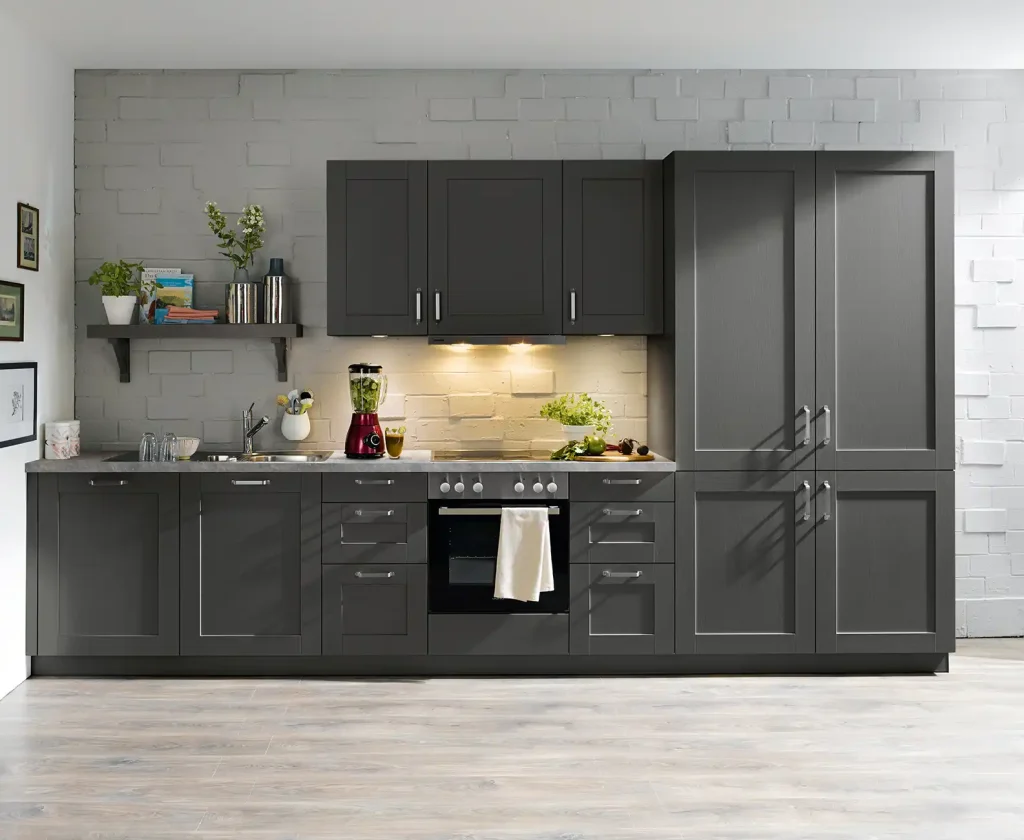
- The Linear (Galley) Configuration: Perfect for narrow spaces or open-concept loft apartments. All MDF base, wall, and appliance tower units run along a single wall plane, maximizing vertical storage efficiency.
- The L-Shaped Matrix: The most versatile configuration for family homes. It creates a highly natural work triangle, utilizes corner space efficiently via advanced pull-out internal hardware, and leaves ample room for an adjacent dining table.
- The U-Shaped Matrix: Excellent for large, dedicated kitchen spaces. It surrounds the chef on three sides with continuous work counters and bottom drawer modules, keeping all cooking utilities within immediate physical reach.
7. Premium Hardware, Drawer Systems, and Soft-Close Kinetics
An exceptionally crafted MDF cabinet box is only as good as the mechanical hardware components that allow it to move. The weight of heavy MDF doors and dense drawer contents requires industrial-grade mechanical hinges and linear slides.
Concealed Three-Dimensional European Hinges
The door movements of an MDF Kitchen Cabinet Turkey are guided by fully concealed, European-certified steel cup hinges. Prominent hardware brands such as Samet (a massive Turkish multinational manufacturing advanced kinetic hardware), alongside Western European industry standards like Blum and Hettich, are extensively utilized.
- 3D Adjustability: These hinges feature integrated adjustment screws that allow installers to fine-tune the door positioning along three independent spatial axes (vertical height, horizontal side-to-side alignment, and in-and-out depth). This ensures perfectly straight, symmetrical, micro-spaced gap lines across the entire kitchen facade.
- Integrated Hydraulic Soft-Close Dampers: Silent-closing mechanisms are built directly into the hinge arm cup, gracefully decelerating the door panel during the last 15 degrees of closure to prevent structural slamming and eliminate noise.
Full-Extension Double-Walled Drawer Systems
Modern high-utility kitchen layouts rely heavily on deep, pull-out drawers rather than low, static base shelving.
- Dynamic Load Capacities: Turkish modular kitchens utilize heavy-duty, double-walled steel box drawer sides integrated with full-extension synchronized undermount slide tracks. These tracks are engineered and certified to carry heavy loads ranging from 30kg up to 70kg without experiencing lateral tracking deflection or sagging.
- Push-to-Open and Soft-Close Integration: For sleek, handleless modern kitchen designs, automated mechanical or electrical push-to-open kinetics allow drawers to slide open smoothly with a gentle nudge from a user’s hand, knee, or hip, closing silently with a soft-touch push.
8. Sourcing, Global Logistics, and Procurement from Turkey
Procuring custom or modular kitchen shipments from Turkey requires an understanding of the regional manufacturing hubs, commercial export structures, and container logistics.
Primary Manufacturing Districts
The production of the MDF Kitchen Cabinet Turkey is clustered within highly developed, industrialized economic zones that offer direct transit lines to major international shipping ports:
- Bursa and Istanbul Regions: Renowned for cutting-edge design engineering, ultra-high-capacity automated factories, and instant access to the major maritime container terminals of Ambarlı and Gemlik.
- Kayseri Industrial Zone: A highly optimized mass-production center operating on an immense industrial scale, ideal for satisfying bulk multi-unit contract orders for global real estate developments and hotels.
- Ankara (Siteler Hub): Famous for specialized custom manufacturing lines, blending precision CNC panel cutting with high-end manual lacquer artisans and bespoke solid wood veneer book-matching.
Container Logistics, Packaging, and Assembly States
When importing kitchen cabinetry from Turkey across international borders, buyers select between two distinct delivery states depending on project labor budgets and shipping constraints:
- Flat-Pack / Knocked-Down (KD): Every individual MDF panel is shipped disassembled and packed flat inside heavy-duty, double-wall corrugated cardboard boxes. Internal contents are secured with high-density expanded polystyrene (EPS) edge guards, foam sheets, and vacuum-sealed plastic skins. This flat state minimizes air space inside the shipping container, drastically reducing maritime freight costs per unit, but requires qualified, skilled carpentry labor on-site for assembly.
- Pre-Assembled / Rigid Cabinets: The cabinet boxes are fully built, square-clamped, dowelled, and quality-inspected directly at the Turkish factory before being loaded into the container. While this significantly limits the number of kitchens that can fit into a standard 40-foot High-Cube container, it cuts down on-site installation time and guarantees factory-level structural alignment.
9. Mechanical, Electrical, and Plumbing (MEP) Site Integration
Because a premium MDF Kitchen Cabinet Turkey is pre-manufactured to exact, millimeter-accurate metric tolerances, the physical installation site must be precisely mapped and prepared before the cabinetry arrives.
Electrical Positioning Matrix
- High-Load Appliance Lines: Integrated wall oven towers, microwave cavities, and induction hobs require dedicated high-amperage electrical wiring lines. Outlets must be placed inside adjacent cabinet voids or service channels rather than directly behind the high-heat appliances themselves, ensuring easy accessibility for emergency isolation.
- Recessed LED Lighting Drivers: Modern custom cabinetry incorporates 24V under-cabinet LED task light strips or interior drawer lighting. Low-voltage transformer drivers must be situated in ventilated base plinths or dedicated upper service panels to prevent thermal overheating.
Plumbing Infrastructure and Waste Management
- Sink Module Protection: The base cabinet carcass housing the main sink must feature an open backboard or custom precut access loops to accommodate hot and cold water supply inlets and drain traps. The internal floor panel should be fitted with an aluminum or plastic protective tray to catch micro-condensation or accidental plumbing fluid leaks, safeguarding the underlying MDF from exposure.
- Dishwasher Placement Mechanics: Built-in dishwashers cannot be installed directly in front of plumbing valves or drain connections, as the appliance requires every millimeter of standard cabinet depth to slide flush with the surrounding MDF doors. The appliance must be positioned immediately adjacent to the sink module so its supply and drain hoses can route sideways through the carcass partition walls.
10. Cost-Benefit Matrix and Value Engineering Guidelines
Investing in a Turkish-manufactured MDF kitchen layout delivers an exceptional balance of uncompromising European-level quality and highly competitive production economics.
Selecting the Right Finish Configuration for Your Budget
Value engineering allows buyers to modify the finishes applied to the durable MDF substrate to align with precise project cost tiers without compromising the core structural carcass strength:
- Tier 1 (High-Volume Commercial Projects): Calibrated 18mm MDF cores covered with heavy-duty, cleanable melamine film linings, edged with 1mm thick ABS using PUR waterproof adhesive.
- Tier 2 (Premium Residential Properties): Moisture-resistant MDF cores finished with high-gloss acrylic panels or super-matte anti-fingerprint PET polymer foils, complete with synchronized soft-close drawer slides.
- Tier 3 (Bespoke Luxury Villas & Penthouses): Custom-machined MDF panels multi-coated in continuous matte or polished polyurethane lacquer paint, or wrapped in book-matched natural hardwood veneers, fitted with elite internal blind-corner and pantry storage mechanisms.
Leveling Systems for Structural Balance
Every high-performance base unit within an MDF Kitchen Cabinet Turkey layout is supported by heavy-duty, adjustable structural polymer legs hidden behind a clip-on, removable plinth kickplate. These legs can be adjusted independently to compensate for irregular or sloped concrete subfloors, achieving a perfectly horizontal level line. This leveling prevents mechanical twisting stress on the upper stone countertops and ensures all sliding drawer mechanisms track cleanly.
11. Comprehensive Maintenance Protocols for Structural Longevity
To ensure your MDF Kitchen Cabinet Turkey remains in flawless visual and structural condition for several decades, establish these professional care and maintenance protocols:
- Steam and Thermal Management: Always engage the range hood or downdraft exhaust system during all boiling or cooking activities to draw away airborne moisture before it can condense on the wooden undersides of upper wall modules. Never open a high-temperature dishwasher immediately after a washing cycle terminates; let the internal moisture cool for 15 minutes to prevent highly pressurized steam from striking the adjacent wrapped or lacquered door edges.
- Chemical Cleaning Restraints: Clean all exterior panel faces using a clean, lint-free microfiber cloth moistened with warm water and a highly diluted, pH-neutral dish soap. Under no circumstances should you apply abrasive scrubbing powders, steel scouring wool, industrial bleach, ammonia-based glass cleaners, or acetone, which can chemically micro-scratch polymer coatings, cloud glossy acrylic surfaces, and strip away protective lacquer paint seals.
- Weight Placement Rigor: Store ultra-heavy items—such as cast-iron Dutch ovens, heavy electrical mixers, or large porcelain sets—toward the outermost structural edges of drawer bases or lower carcass shelves rather than dead-center, optimizing weight distribution across the heavy-duty structural steel runners.
12. Conclusion: The Industrial Excellence of Turkish MDF Cabinets
Choosing an MDF Kitchen Cabinet Turkey system represents a highly strategic union of robust material science, refined architectural styling, and precise industrial manufacturing. By organizing your kitchen layout around consistent metric standards, specifying specialized moisture-resistant green MDF cores, and utilizing heavy-duty PUR edge-bonding alongside certified soft-close kinetics, you can create a highly efficient, beautiful, and long-lasting workspace.
Turkey’s immense automated industrial hubs stand fully equipped to deliver tailored cabinetry solutions that fulfill the stringent quality expectations of custom single-family residences, extensive multi-unit real estate developments, and high-volume commercial hospitality environments worldwide.
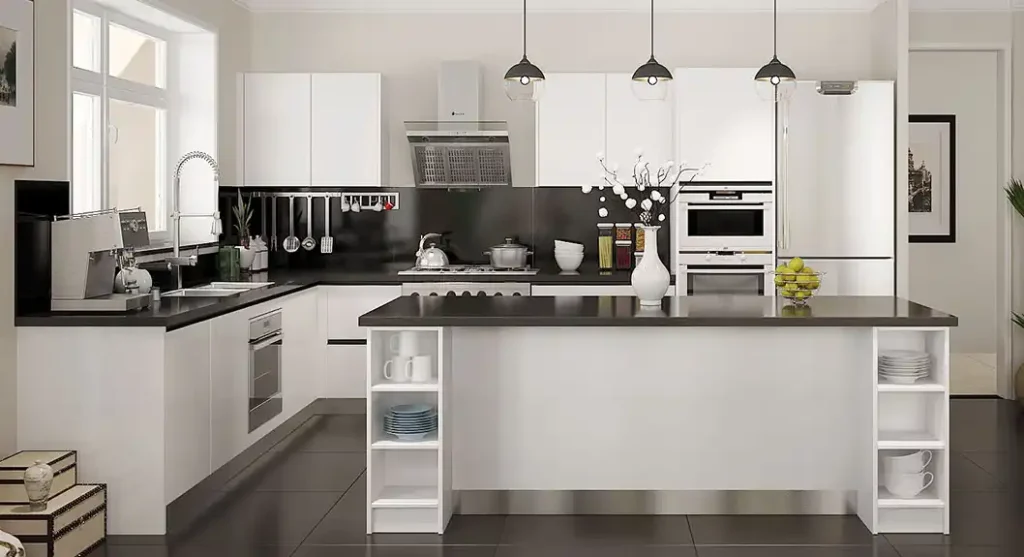
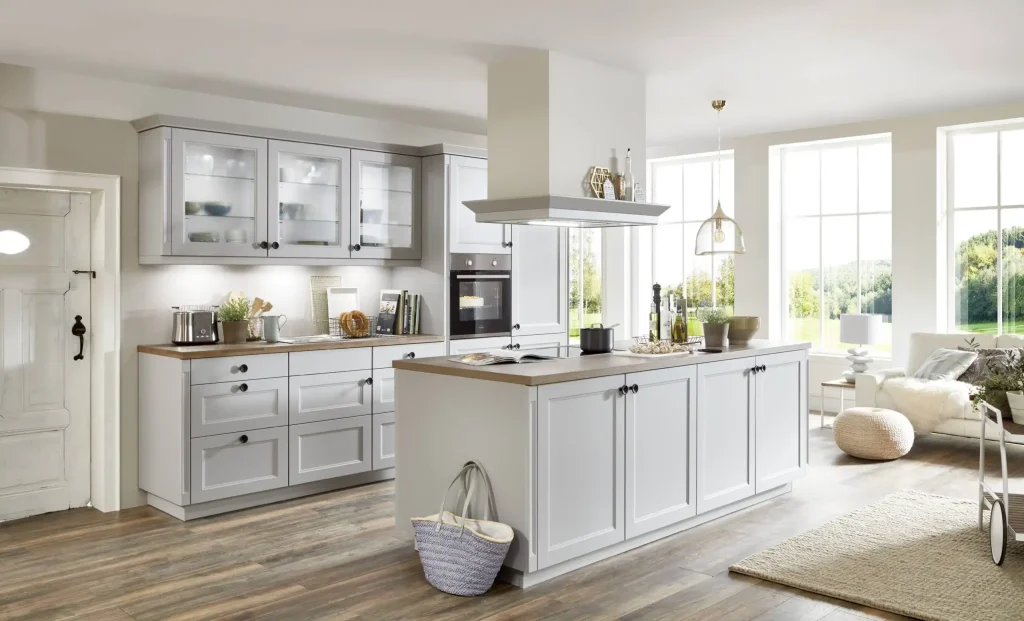
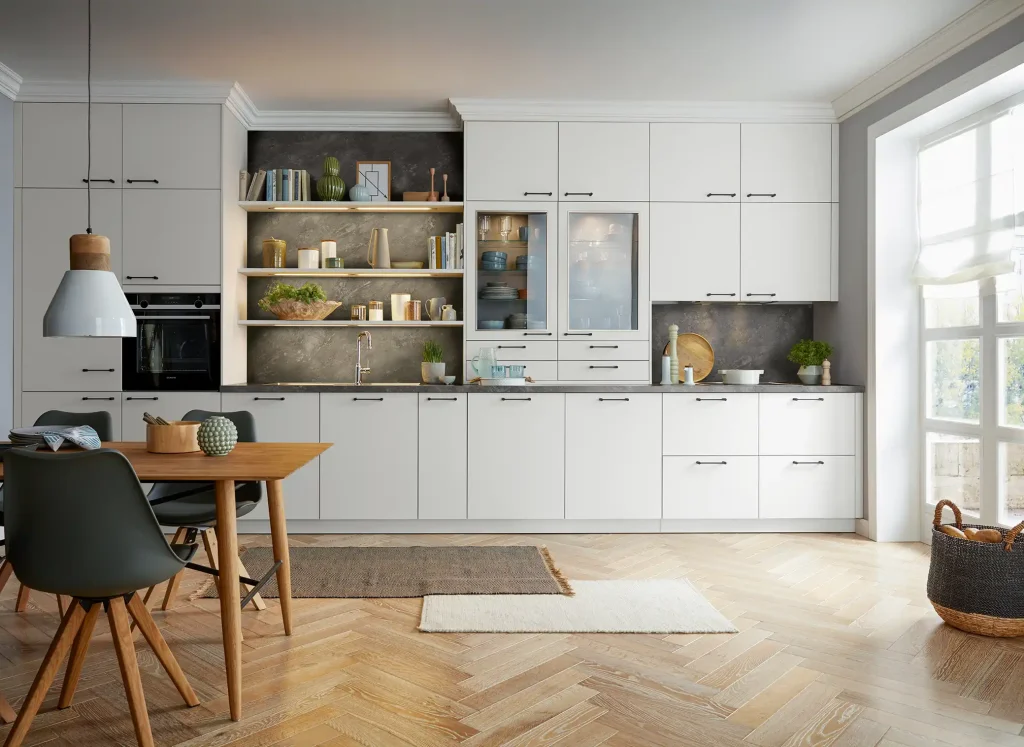
Etiket:Bathroom Cabinet Manufacturing Turkey, Cheap Bathroom Cabinet, Cheap Kitchen Cabinet, Chipboard Kitchen Cabinet Turkey, Custom-Size Kitchen Cabinet Turkey, Economic Kitchen Cabinets Turkey, Grey Kitchen Cabinet Turkey, Island Kitchen Cabinet Turkey, Kitchen Cabinet Manufacturing Turkey, Luxury Bathroom Cabinets Turkey, Luxury Kitchen Cabinets Turkey, MDF Bathroom Cabinet Turkey, MDF Kitchen Cabinet Turkey, Modular Kitchen Cabinet Turkey, Quality Bathroom Cabinet Turkey, Quality Kitchen Cabinet Turkey, White Kitchen Cabinet Turkey

Şunları da sevebilirsiniz
Chipboard Kitchen Cabinet Turkey
MDF Bathroom Cabinet Turkey