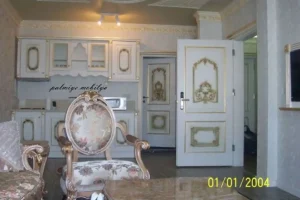

Custom-Size Kitchen Cabinet Turkey
Custom-Size Kitchen Cabinet Turkey: The Engineering Blueprint for Bespoke Substrates, Architectural Integration, and Sourcing
The global landscape of interior architecture has transcended mass-market, one-size-fits-all furniture solutions. In high-end property development, private estate restoration, and complex spatial renovations, standard off-the-shelf modular units often fail to address unique structural constraints, irregular room dimensions, and the precise functional requirements of a gourmet kitchen. Sourcing specialized millwork has become a priority, and the designation Custom-Size Kitchen Cabinet Turkey has emerged as a premier benchmark for architects, interior designers, and luxury developers worldwide. It represents a precise synthesis of state-of-the-art computer numerical control (CNC) automation, advanced material composite science, world-class surface treatments, and highly competitive macroeconomics.
Turkey has established itself as an unshakeable industrial superpower within the global furniture and customized millwork manufacturing sectors. By combining multi-million dollar automated European production machinery with centuries of design expertise, rich regional raw material reserves, and direct maritime logistics connecting to Europe, the Americas, and the Middle East, Turkish factories supply elite cabinetry worldwide. This exhaustive technical manual provides an in-depth exploration of the material science, structural engineering, custom sizing parameters, advanced surface applications, kinetic hardware systems, and global procurement workflows that define the Custom-Size Kitchen Cabinet Turkey industry.
1. The Architectural Logic of Custom Sizing vs. Modular Grids
To understand the immense utility of a Custom-Size Kitchen Cabinet Turkey program, one must analyze the limitations of traditional standard modular grid systems. Conventional modular cabinetry is dictated by a fixed metric matrix, typically operating in width increments of 15 cm (e.g., 30 cm, 45 cm, 60 cm, 90 cm). While this standard layout simplifies high-volume mass production, it regularly introduces severe spatial inefficiencies in real-world environments.
Eliminating Filler Panels and Dead Spaces
When standard modular units are installed along a fixed wall plane, the remaining gap—for example, a 12 cm space left over at the end of a run—cannot accommodate a standard cabinet block. Installers are forced to conceal this gap using a static filler panel. This practice results in lost storage capacity and breaks the continuous design lines of the kitchen.
A custom-sized engineering program eliminates this compromise entirely. Turkish custom ateliers design and mill cabinets down to millimeter-exact dimensions. This zero-tolerance cutting ensures that the cabinetry fills the architectural envelope completely, maximizing storage efficiency and creating clean, unbroken reveal lines across the entire kitchen layout.
Resolving Architectural Anomalies
Historic estate properties, custom-built luxury villas, and contemporary apartments frequently present severe structural anomalies that standard cabinets cannot resolve:
- Non-Standard Wall Angles: Walls that do not intersect at a perfect 90-degree angle create major installation challenges. Custom-size base units can be built with skewed depths or asymmetrical side gables to fit tightly against irregular walls.
- Exposed Structural Obstructions: Concrete structural columns, ceiling bulkheads, load-bearing pillars, and overhead beam drops regularly interrupt kitchen perimeters. Custom manufacturing allows panels to be factory-notched, recessed, or scribed directly around these obstructions, turning potential design flaws into integrated design elements.
- Complex Service Inclusions: High-capacity drainage stacks, localized gas lines, ventilation ducts, and underfloor heating manifolds can be seamlessly integrated into specialized cabinet cavities without compromising external aesthetics or structural box rigidity.
2. Advanced Material Science: The Substrate Foundations
The structural longevity and tactile weight of a Custom-Size Kitchen Cabinet Turkey production run depend entirely on the composite science of the internal substrates. Custom cabinetry faces severe physical stress from thermal radiation, localized steam exposure, high humidity levels, and major physical impacts. Selecting the correct substrate variation prevents warping, bowing, and moisture expansion over decades of intense functional use.
High-Density Moisture-Resistant MDF (HDF / MR MDF)
Premium Turkish cabinetry relies heavily on high-density wood fiber composites sourced from dominant regional processors like Kastamonu Entegre, AGT, and Starwood.
- MDF Production Science: Medium-Density Fibreboard (MDF) is manufactured by breaking down industrial softwood and hardwood residuals into individual lignocellulosic fibers using an industrial thermal defibrator. These ultra-fine fibers are thoroughly dried, blended with high-performance synthetic thermosetting resin binders, and formed into a continuous mat. This mat is subjected to intense hydraulic pressures and extreme heat inside a continuous press.
- HDF Density and Bond Performance: For high-load structural side panels, deep drawer bottoms, and intricately routed decorative door faces, factories specify High-Density Fibreboard (HDF) or heavy calibrated MDF. Exhibiting an internal density profile ranging from 780 kg/m³ to 880 kg/m³, this composite provides an exceptionally homogenous internal fiber network. This high density yields an internal bond strength exceeding 0.70 N/mm² and superior edge-routing capabilities, preventing the substrate from micro-pitting or showing structural weaknesses under heavy load stresses.
Cross-Laminated Marine Plywood (Birch and Okoume Matrix)
For the absolute highest tier of a Custom-Size Kitchen Cabinet Turkey architectural specification—particularly in intense water-exposure zones like under-sink base modules or high-humidity coastal climates—ateliers utilize cross-laminated marine plywood.
+---------------------------------------------------------+

|             LUXURY COMPOSITE CORE ARCHITECTURE          |
+---------------------------------------------------------+

|                                                         |
|   +-------------------------------------------------+   |
|   | Face Surface: Book-Matched Natural Wood Veneer   |   |
|   +-------------------------------------------------+   |
|   | Outer Layer: High-Density Calibrated MDF        |   |
|   +-------------------------------------------------+   |
|   |                                                 |   |
|   | Central Core: Waterproof Marine Plywood Layers   |   |
|   | [Cross-Laminated Okoume / Birch Matrix]         |   |
|   |                                                 |   |
|   +-------------------------------------------------+   |
|   | Outer Layer: High-Density Calibrated MDF        |   |
|   +-------------------------------------------------+   |
|   | Reverse Surface: Balanced Matching Wood Veneer  |   |
|   +-------------------------------------------------+   |
|                                                         |
+---------------------------------------------------------+
- The Mechanical Alignment: Marine plywood is engineered by bonding alternating plies of high-grade Birch or Okoume wood veneers together using advanced water-resistant phenolic or polyurethane resins under high pressure. The grain direction of each alternating sheet is rotated exactly 90 degrees. This cross-laminated design results in an isotropic substrate with virtually zero thermal expansion or moisture-induced dimensional movement, ensuring custom cabinet boxes remain square for generations.
International Chemical Safety and Air Quality Compliance
Sourcing custom cabinetry guarantees that your interior environment remains completely free of toxic chemical outgassing. Turkish industrial panel producers manufacture substrates that comply with the strictest international chemical emission boundaries:
- E1 European Safety Class: The universal standard, restricting formaldehyde gas emissions safely below 0.1 parts per million (ppm).
- E0 / CARB Phase 2 / TSCA Title VI Standards: These strict classifications restrict formaldehyde outgassing even further, to less than 0.05 ppm. Utilizing E0-certified cores is vital for any project aiming to secure global green building certifications such as LEED, BREEAM, or DGNB.
3. Artisanship Meets High-Tech: Master Surface Treatments
The exterior coating applied to a Custom-Size Kitchen Cabinet Turkey configuration dictates its architectural character, tactile luxury, scratch resistance, and daily maintenance parameters. Turkish factories operate advanced automated coating lines that apply premium liquid paints and polymer layers with sub-millimeter precision.
Multi-Stage Polyurethane and Acrylic Lacquer Painting
Lacquered cabinetry represents the absolute height of premium artisan craftsmanship and design flexibility in Turkey.
- The Priming Phase: The CNC-machined MDF panels receive an insulating sealant layer followed by three to four separate applications of high-build polyurethane or polyester primers. Each individual layer is meticulously sanded using precise orbital sanders and hand-checked for imperfections.
- The Coating and Polishing Phase: Multiple coats of premium pigmented acrylic enamel are applied within pressurized, dust-free down-draft cleanrooms. For high-gloss mirror finishes, the cured doors are subjected to a rigorous seven-stage wet-sanding and buffing process using progressive sheepskin wheels and diamond compound pastes. This yields a liquid-flat surface with a gloss rating exceeding 95 units, offering deep visual clarity free of “orange peel” texturing.
- Seamless Flow Protection: Unlike laminated or edged panels, liquid lacquer wraps completely around the routed profiles, front face, and all four lateral edges of the door continuously. This seamless flow eliminates visible joint lines or micro-gaps, creating a hermetic shield that prevents water vapor from penetrating down into the raw wood substrate.
Hand-Selected Book-Matched Rare Wood Veneers
For warm, biophilic luxury aesthetics, Turkish ateliers excel in applying rare, exotic hardwood veneers (such as American Walnut, Smoked Oak, Santos Palisander, Wild Olive, and Macassar Ebony) onto stable engineered core boards.
- Sequence-Matching Engineering: Veneer flitches are sliced sequentially from a single log and arranged manually in pairs (book-matching) or repeating sequences (slip-matching). This ensures that the organic woodgrain patterns flow seamlessly across multiple adjacent vertical drawer fronts and tall appliance tower runs, creating a continuous natural landscape canvas across the kitchen facade.
Sintered Stone and Ultra-Thin Ceramic Fronts
A significant innovation within the Custom-Size Kitchen Cabinet Turkey sector is the integration of ultra-thin sintered stone and porcelain skins directly onto structural cabinet door frames.
- The Engineering: Large-format, 3mm thick sintered stone slabs (such as Dekton, Laminam, or Neolith) are chemically bonded onto hidden, lightweight structural extruded anodized aluminum or marine plywood support doors. This allows designers to match the cabinet doors exactly with the kitchen countertops and wall claddings, establishing a monolithic architectural stone aesthetic capable of withstanding direct knife scratches, heat exposure, and impacts.
4. Perfection at the Edges: Advanced Bonding Technologies
The execution of the edge profiles separates average cabinetry from an authentic Custom-Size Kitchen Cabinet Turkey product line. If an edge seam is visible or fails chemically, the entire luxury experience is compromised. When flat-slab door designs or interior carcass boxes are constructed using pre-laminated acrylic or melamine-faced panels, the raw cut edges must be permanently sealed using narrow strips of impact-resistant plastic.
Heavy-Duty ABS Edgebanding
Turkish factories prioritize Acrylonitrile Butadiene Styrene (ABS) edgebands ranging from 1.0mm to 2.0mm in thickness over brittle paper or standard PVC alternatives. ABS provides excellent impact absorption, preventing the cabinet corners from chipping when struck by heavy cast-iron cookware. ABS is also chlorine-free and highly heat-resistant, ensuring it does not warp or release toxic gases during municipal waste recycling.
Adhesive Performance Matrix: EVA vs. PUR Adhesive Systems
The structural lifespan of custom cabinetry operating near steam-generating dishwashers and cooking hobs depends fundamentally on the chemical composition of the adhesive inside the edgebanding machine:
| Technical Performance Metric | EVA (Ethylene Vinyl Acetate) Adhesives | PUR (Polyurethane Reactive) Hot-Melts | Laser Fusion / Hot-Air Co-Extrusion |
|---|---|---|---|
| Bonding Mechanism | Simple physical melting and cooling phase; remains heat-reversible. | Irreversible chemical cross-linking initiated by ambient humidity. | Thermal fusion of a pre-extruded polymer layer via directed energy. |
| Water Barrier Status | Moderate; continuous exposure to water vapor can degrade the bond. | Absolute; creates a waterproof chemical seal across wood fibers. | Perfect hermetic closure; zero physical moisture ingress. |
| Thermal Deflection Limit | Fair (60°C to 75°C); risk of edge shifting near ovens. | Excellent (up to 140°C to 150°C); highly stable under extreme shifts. | Maximum resistance; immune to environmental temperature spikes. |
| Visual Appearance | Thicker, opaque glue line that can accumulate grime over time. | Ultra-thin, translucent glue layer; virtually invisible. | Completely seamless transition; zero visible glue line. |
To ensure premium durability, leading manufacturers of the Custom-Size Kitchen Cabinet Turkey market rely exclusively on PUR adhesive lines or cutting-edge Laser-fusion systems to guarantee that panels will never experience edge delamination or peeling under intense kitchen working conditions.
5. Structural Engineering: Custom Carcass Fabrication and Joinery
While external styling defines visual character, the structural longevity of a Custom-Size Kitchen Cabinet Turkey program is dictated by the engineering of its interior box carcass. The carcass must independently support the immense static weight of heavy natural stone or quartz countertops, integrated commercial appliances, and dense internal storage items while remaining perfectly square and rigid over time.
Cam-Lock and Dowel Construction Mechanics
Turkish industrial factories manufacture customized cabinetry carcasses using a highly precise, automated assembly logic combining fluted hardwood dowels with heavy-duty steel cam-lock (minifix) fastening systems.
+---------------------------------------------------------+

|              CAM-LOCK & DOWEL STRUCUTURAL INTERACTION   |
+---------------------------------------------------------+

|                                                         |
|   Side Panel (18mm MDF)            Horizontal Bottom     |
|   +-------------------+       +-------------------+     |
|   |                   |       |                   |     |
|   |   +-----------+   |       |                   |     |
|   |   | Cam-Lock  |<----------|--- [Steel Bolt]   |     |
|   |   | Housing   |   |       |                   |     |
|   +---------------+   |       |                   |     |
|   |                   |       |                   |     |
|   |   +-----------+   |       |   +-----------+   |     |
|   |   | Dowel Hole|<==|=======|==>| Fluted    |   |     |
|   |   | Recess    |   |       |   | Hardwood  |   |     |
|   |   +-----------+   |       |   | Dowel     |   |     |
|   |                   |       |   +-----------+   |     |
|   +-------------------+       +-------------------+     |
|                                                         |
+---------------------------------------------------------+
- The Engineering: CNC nesting and boring machines drill highly precise holes into the side, top, and bottom panels of the custom box. During assembly, compressed hardwood dowels are inserted, providing high shear resistance that prevents vertical or horizontal panel shifting. The steel cam-lock system acts as a high-tensile tension tie, drawing the panels together tightly.
- Logistics Optimization: This mechanical joinery system provides exceptional structural strength and allows custom-sized cabinets to be shipped completely flat-packed (knocked-down) to minimize international shipping freight costs, only to be assembled on-site with zero loss of structural integrity.
Carcass Panel Thickness Standards
In the premium Turkish export sector, standard configurations utilize a full 18mm thick moisture-resistant panel for all vertical side walls, horizontal bases, and internal adjustable shelving units. This represents a significant upgrade over lower-grade 15mm or 16mm alternatives commonly found in mass-market economy furniture, ensuring zero long-term panel bowing or hardware sagging under heavy loads.
Recessed Back Panel Engineering
Lower-grade cabinetry often utilizes thin 3mm hardboard panels simply stapled to the rear of the cabinet box. Conversely, an engineered Custom-Size Kitchen Cabinet Turkey system uses an 8mm or 18mm thick solid matching back panel that is recessed into a dedicated continuous groove (dado) routed along the perimeter of the side walls. This structural back panel squares the entire cabinet housing, completely eliminating any diagonal racking or swaying motion.
6. Layout Planning and Custom Geometric Configurations
Deploying a Custom-Size Kitchen Cabinet Turkey system requires a deep understanding of layout typologies and ergonomic workspace planning to ensure smooth, natural traffic flow and maximum cooking efficiency.
Ergonomic Working Heights and Clearances
Modern kitchen architecture revolves around the “Golden Triangle” rule, linking the sink, the cooking zone, and the food storage refrigeration units. To facilitate comfortable food preparation, Turkish manufacturers design custom units to precise ergonomic dimensions:
- Tailored Base Heights: Standard base heights settle between 85 cm and 92 cm from the finished floor line. This is achieved by combining a 72 cm to 76 cm tall base cabinet box with an adjustable 10 cm to 15 cm plinth leg system, topped with a 2 cm to 4 cm thick natural stone or engineered quartz countertop. Custom manufacturing allows these heights to be adjusted upward or downward to match the primary cook’s specific height.
- Countertop Overhang Precision: The finished countertop should extend roughly 2 cm to 3 cm beyond the front plane of the custom cabinet doors. This subtle overhang protects the front faces of the doors from down-dripping liquids and food crumbs spilled during countertop prep work.
- Wall Cabinet Clearance: A minimum vertical clearance of 50 cm to 60 cm must be maintained between the top of the countertop and the underside of the upper wall modules, preventing visual obstruction and safety hazards during cooking.
Layout Typologies for Modern Architecture
- The Linear (Galley) Configuration: Perfect for narrow spaces or open-concept loft apartments. All custom base, wall, and appliance tower units run along a single wall plane, maximizing vertical storage efficiency.
- The L-Shaped Matrix: The most versatile configuration for family homes. It creates a highly natural work triangle, utilizes corner space efficiently via advanced pull-out internal hardware, and leaves ample room for an adjacent dining table.
- The U-Shaped Matrix: Excellent for large, dedicated kitchen spaces. It surrounds the chef on three continuous walls with work counters and bottom drawer modules, keeping all cooking utilities within immediate physical reach.
7. Premium Hardware, Drawer Systems, and Soft-Close Kinetics
An exceptionally crafted custom cabinetry box is only as good as the mechanical hardware components that allow it to move. The weight of heavy custom doors and dense drawer contents requires industrial-grade mechanical hinges and linear slides. Turkish factories specify elite moving mechanisms from premium European brands alongside custom premium lines from Turkey’s leading hardware innovator, Samet.
Concealed Three-Dimensional European Hinges
The custom door movements are guided by fully concealed, European-certified steel cup hinges.
- 3D Adjustability: These hinges feature integrated adjustment screws that allow installers to fine-tune the door positioning along three independent spatial axes (vertical height, horizontal side-to-side alignment, and in-and-out depth). This ensures perfectly straight, symmetrical, micro-spaced gap lines across the entire kitchen facade.
- Integrated Hydraulic Soft-Close Dampers: Silent-closing mechanisms are built directly into the hinge arm cup, gracefully decelerating the door panel during the last 15 degrees of closure to prevent structural slamming and eliminate noise.
Full-Extension Double-Walled Drawer Systems
Modern high-utility kitchen layouts minimize deep, static lower shelves, substituting them with high-capacity slide-out metal drawer configurations.
- Dynamic Load Capacities: Custom-size kitchens utilize heavy-duty, double-walled steel box drawer sides integrated with full-extension synchronized undermount slide tracks. These tracks are engineered and certified to carry heavy loads ranging from 30kg up to 70kg without experiencing lateral tracking deflection or sliding stick-slip friction.
- Push-to-Open and Soft-Close Integration: For sleek, handleless modern kitchen designs, automated mechanical or electrical push-to-open kinetics allow drawers to slide open smoothly with a gentle nudge from a user’s hand, knee, or hip, closing silently with a soft-touch push.
8. Mechanical, Electrical, and Plumbing (MEP) Site Integration
Because a premium Custom-Size Kitchen Cabinet Turkey layout is fully pre-fabricated to millimeter-exact metric tolerances, the physical installation environment must be precisely mapped and prepared prior to the container’s arrival on-site.
Electrical Positioning Matrix
- High-Load Appliance Conduits: Built-in ovens, heavy-duty microwaves, and induction hobs consume high levels of electric current. Outlets must be positioned inside adjacent cabinet voids or service channels rather than directly behind the high-heat appliances themselves, ensuring easy accessibility for emergency isolation.
- Low-Voltage LED Transformers: Accent lighting recessed under upper wall modules adds crucial task illumination. Low-voltage 24V LED drivers should be situated in ventilated base plinths or accessible service panels to prevent thermal overheating.
Plumbing Infrastructure Constraints
- Sink Module Backboard Openings: The base cabinet carcass selected to house the main sink must feature an open backboard or custom cutouts to clear incoming hot and cold water supply valves and vertical drainage pipes. The internal floor panel should be overlaid with an aluminum or plastic protective waterproof tray to collect micro-condensation and accidental leaks, shielding the structural wood composite from moisture contact.
- Dishwasher Side Routing: Built-in dishwashers require every millimeter of standard 56 cm cabinet depth to slide completely flush with the surrounding door facades. Consequently, plumbing supply valves and drain connections cannot be located directly behind the dishwasher. The appliance must be situated immediately adjacent to the sink module so its supply and drain hoses can route sideways through the carcass side panels.
9. Sourcing Infrastructure, Industrial Hubs, and Global Logistics
Sourcing a bulk procurement contract or a specialized custom run within the Custom-Size Kitchen Cabinet Turkey market requires a clear understanding of the geographic manufacturing clusters and professional quality auditing protocols.
Primary Sourcing Districts
The automated furniture export infrastructure is concentrated in highly developed industrial zones featuring direct logistical connectivity to maritime container terminals:
- Bursa (İnegöl Cluster) and Istanbul Regions: Renowned worldwide for advanced design engineering, ultra-high-capacity automated factories, and instant access to the major global shipping hubs of Ambarlı and Gemlik ports.
- Kayseri Industrial Zone: A highly optimized center for mass-scale manufacturing, operating on immense factory scales that are ideal for satisfying high-volume contract orders for global real estate developments and commercial hospitality chains.
- Ankara (Siteler Hub): Famous for specialized custom manufacturing lines, blending precision CNC panel cutting with high-end manual lacquer artisans and bespoke solid wood veneer book-matching.
Container Packaging and Ready-to-Assemble (RTA) Logistics
When importing custom cabinetry from Turkey across international borders, buyers select between two distinct delivery states depending on project labor budgets and shipping constraints:
- Flat-Pack / Knocked-Down (KD): Every individual panel is shipped disassembled and packed flat inside heavy-duty, double-wall corrugated cardboard boxes. Internal contents are secured with high-density expanded polystyrene (EPS) edge guards, foam sheets, and vacuum-sealed plastic skins. This flat state minimizes air space inside the shipping container, drastically reducing maritime freight costs per unit, but requires qualified, skilled carpentry labor on-site for assembly.
- Pre-Assembled / Rigid Cabinets: The cabinet boxes are fully built, square-clamped, dowelled, and quality-inspected directly at the Turkish factory before being loaded into the container. While this significantly limits the number of kitchens that can fit into a standard 40-foot container, it cuts down on-site installation time and guarantees factory-level structural alignment.
10. Cost Optimization and Value Engineering Matrix
Investing in a Turkish-manufactured custom kitchen layout delivers an exceptional balance of uncompromising European-level quality and highly competitive production economics. Due to favorable local operating structures, integrated regional wood industries, and strategic trade customs agreements, international buyers can procure high-performance cabinetry at a highly competitive price point compared to equivalent Western European suppliers.
Value Engineering Material Configurations
Procurement officers can value engineer their kitchen layout choices to align with strict budget thresholds while preserving the underlying carcass strength:
- Tier 1 (High-Volume Commercial Projects): Calibrated 18mm high-density chipboard carcasses paired with flat-slab melamine-faced doors, sealed with ABS edgebanding using PUR adhesives, and fitted with durable standard soft-close hardware.
- Tier 2 (Premium Residential Properties): Moisture-resistant green MDF base carcasses finished with high-gloss acrylic panels or super-matte anti-fingerprint PET polymer foils, complete with synchronized full-extension drawer banks.
- Tier 3 (Bespoke Luxury Villas & Penthouses): Custom-machined MDF panels multi-coated in continuous matte or polished polyurethane lacquer paint, or wrapped in book-matched natural hardwood veneers, fitted with elite internal blind-corner and pantry storage mechanisms.
11. Comprehensive Maintenance Protocols for Structural Longevity
To ensure your Custom-Size Kitchen Cabinet Turkey system preserves its flawless visual luster and structural kinetic performance for decades, establish these professional care and maintenance guidelines:
- Steam and Condensation Management: Always engage the mechanical range hood or downdraft extraction unit during all cooking or boiling procedures to draw away airborne humidity before it can condense on the undersides of upper wall modules. Never open a high-temperature dishwasher immediately after a washing cycle finishes; leave the appliance door closed for 15 minutes to allow internal steam to dissipate, preventing highly pressurized moisture from striking adjacent door edgeband lines.
- Chemical Cleaning Restrictions: Clean all exterior front faces and interior carcass shelves using a clean, dry microfiber cloth dampened with warm water and a highly diluted, pH-neutral dish soap. Never apply abrasive scrubbing powders, steel scouring pads, industrial bleach, ammonia-based glass cleaners, or acetone, which can micro-scratch polymer surface coats, cloud polished laminate finishes, and strip away protective resin layers.
- Weight Distribution Control: Store ultra-heavy kitchenware—such as cast-iron Dutch ovens, large ceramic dish sets, or bulk grocery supplies—toward the outermost structural edges of lower drawer bases or carcass shelves rather than dead-center, optimizing weight distribution across the heavy-duty structural steel runners.
12. Conclusion: Sourcing Long-Term Value with Turkish Manufacturing
Sourcing a Custom-Size Kitchen Cabinet Turkey layout represents a highly logical and strategic union of robust material composite science, advanced surface protection engineering, and highly efficient modular architecture. By organizing your project around consistent metric layouts, specifying green moisture-resistant substrates for water-exposure zones, and deploying heavy-duty PUR edge-bonding alongside European-certified kinetic hardware, you can build a highly resilient, visually striking, and long-lasting culinary workspace.
Turkey’s vast, highly automated industrial clusters stand fully prepared to fulfill tailored cabinetry requirements, providing the ideal scale, precision, and economic efficiency required for custom single-family property renovations, extensive multi-unit real estate developments, and high-volume commercial housing contracts globally.
If you are currently developing a residential property or configuring a commercial modular layout, please tell me:

Şunları da sevebilirsiniz
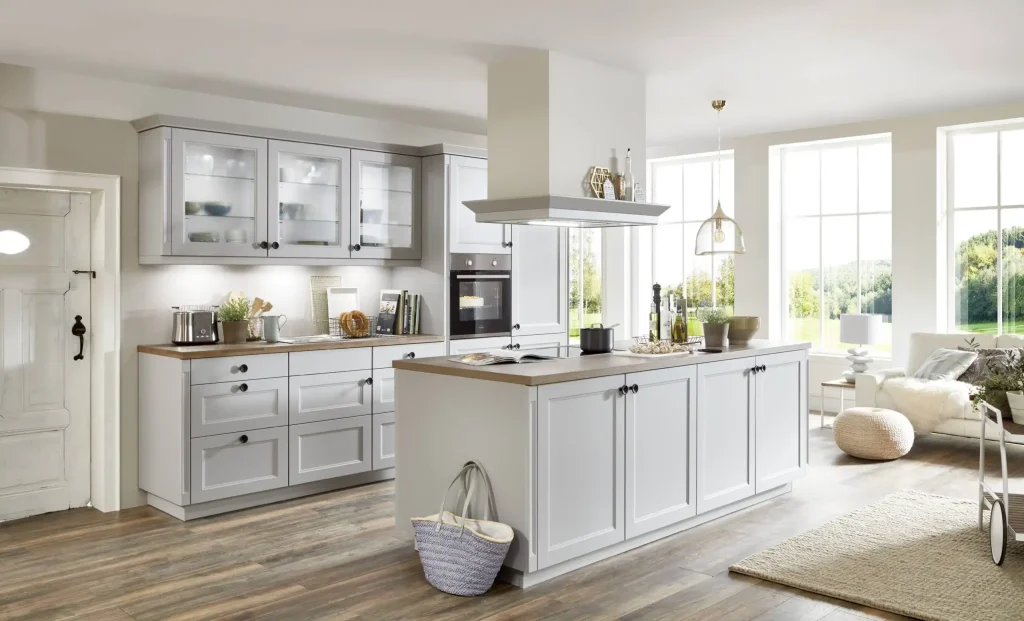
Grey Kitchen Cabinet Turkey
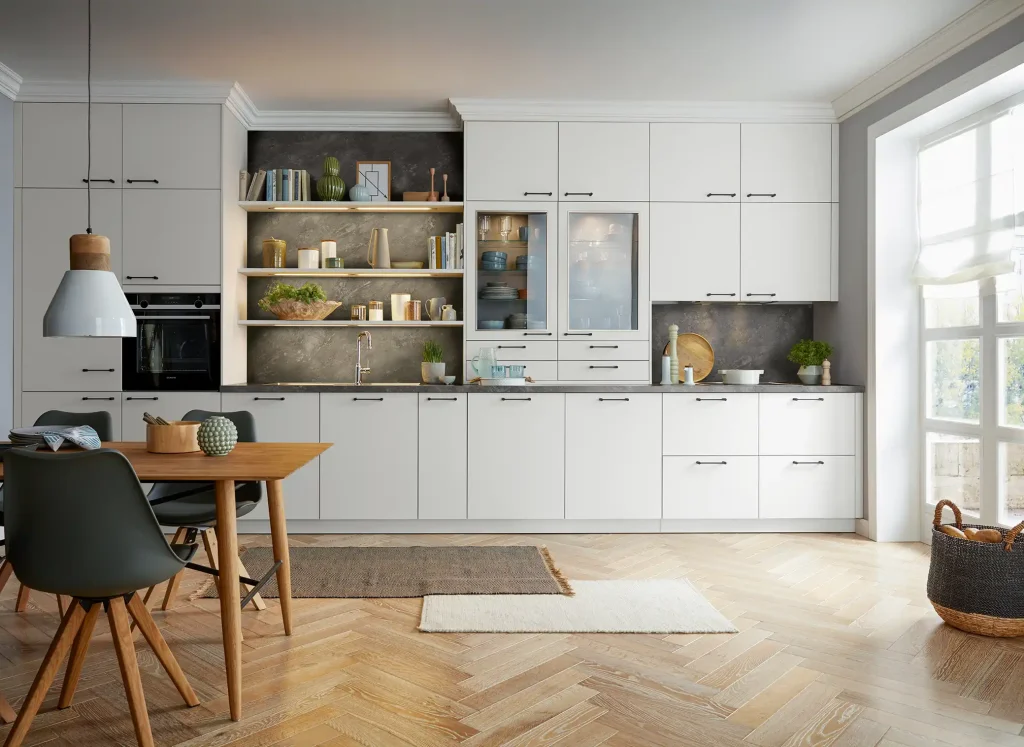
White Kitchen Cabinet Turkey