
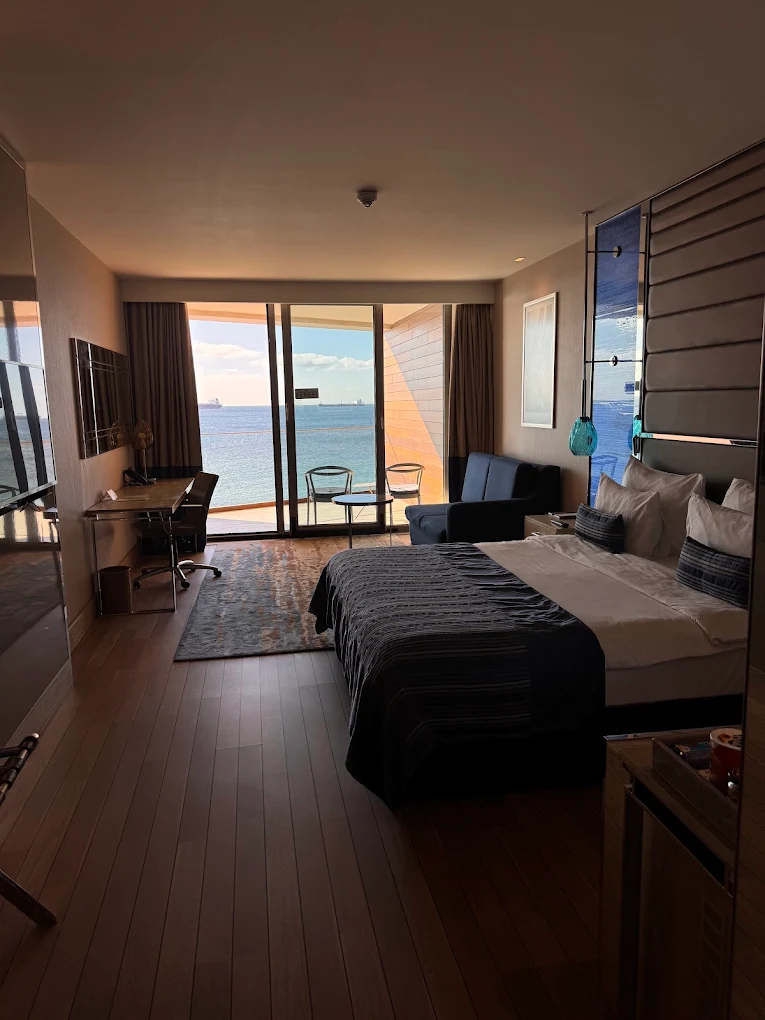
Hotel Doors Turkey
Complete Guide to Hotel Doors Turkey: Acoustic Engineering, Fire Safety Compliance, and B2B Sourcing Management
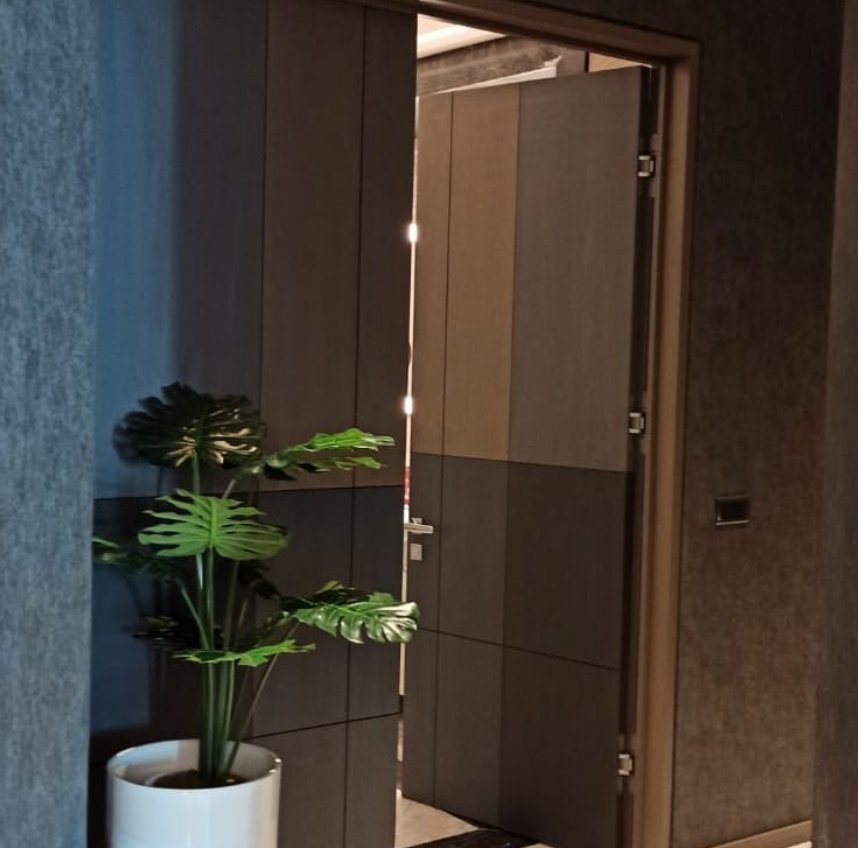
The industrial specification of acoustic, fire-rated entry systems within the global hospitality industry represents one of the most strictly regulated workflows in commercial real estate development. Unlike standard residential doors, a commercial guestroom entry system functions as a complex, multi-layered technological barrier. It must simultaneously ensure certified fire containment, high-performance acoustic isolation, access control integration, and exceptional structural durability, all while seamlessly matching the property’s interior design guidelines. When global hotel chains, procurement management companies (PMCs), asset owners, and architectural practices seek to fulfill these technical requirements, Hotel Doors Turkey has become the premier international benchmark for specialized contract manufacturing.
Turkey’s position as a dominant global center for specialized hospitality door fabrication is rooted in its unique structural capability: the vertical integration of high-performance security engineering with state-of-the-art automated production centers. Operating under stringent European norms, Turkish door manufacturers combine advanced timber and metal tectonics with high volumetric output. This technical guide delivers an exhaustive, masterclass-level analysis of the Turkish contract hospitality door landscape. Read on to master mechanical testing metrics, fire-rating certifications, acoustic decibel damping calculations, and to implement a risk-mitigated B2B procurement protocol optimized for global franchise rollouts.
1. The Strategic Value Matrix of Sourcing Hotel Doors Turkey
When corporate procurement directors evaluate international contract tenders for hospitality entry systems, they grade candidate production plants across a rigorous matrix evaluating certified compliance, mechanical performance, customizability, transit lead times, and cost optimization. Sourcing Hotel Doors Turkey delivers an optimized alignment across this multi-dimensional spectrum, consistently outperforming both high-overhead Western European custom factories and rigid, high-MOQ East Asian generic mass-production lines.
+--------------------------------------------------------------------------+

|            THE STRATEGIC ADVANTAGE MATRIX FOR TURKISH LOGISTICS          |
+--------------------------------------------------------------------------+

|  TRANSPORT MODE     | REGIONAL DESTINATION   | AVERAGE TRANSIT TIME      |
+---------------------+------------------------+---------------------------+

|  Overland TIR Truck | Continental Europe     | 4 - 8 Days (Door-to-Door) |
|  Overland TIR Truck | CIS / Middle East      | 5 - 10 Days (Door-to-Door)|
|  Deep-Water Vessel  | MENA Region            | 10 - 14 Days (Port-to-Port)|
|  Deep-Water Vessel  | United States (East)   | 18 - 22 Days (Port-to-Port)|
+---------------------+------------------------+---------------------------+
Logistical Velocity and Near-Shoring Risk Mitigation
In commercial hospitality development, construction schedules are unyielding. Because doors are installed directly into finished partitions right before carpets and electronic finishes, any delay in the door delivery pipeline immediately halts the entire project, incurring massive financial penalties from brand operators. sSourcing Hotel Doors Turkey significantly reduces this systemic supply chain risk:
- Overland Trucking Efficiency: Turkey operates a massive, highly efficient overland TIR trucking network. Fully loaded factory trailers depart from Turkish manufacturing zones and arrive directly at European, CIS, or Middle Eastern construction sites within 4 to 10 days, completely bypassing maritime port bottlenecks, container shortages, and unpredictable ocean route disruptions.
- Direct Maritime Connections: For transcontinental projects, Turkey’s deep-water ports—including Ambarlı (Istanbul), Mersin, and Alsancak (Izmir)—provide direct, non-stop weekly ocean links to major global ports, cutting out multi-port transshipment delays.
Macroeconomic Optimization and Advanced Industrial Automation
The economic structure of Turkey provides optimized operational costs and highly competitive skilled labor rates relative to North America and Western Europe. However, unlike low-cost manufacturing markets where reduced pricing indicates a compromise in raw material grades or quality control, Turkish door manufacturers achieve cost efficiency through heavy investments in industrial automation. High-speed multi-axis computer numerical control (CNC) nesting lines, automated edge-banding cells, computerized calibration sanders, and robotic lacquer lines ensure absolute dimensional accuracy, allowing factories to achieve millimeter-level precision across thousands of identical door assemblies while optimizing overhead costs.
Vertical Supply Chain Independence
A foundational advantage when managing the procurement of Hotel Doors Turkey is the self-sustaining nature of the domestic Turkish supply market. Turkish manufacturers do not rely heavily on imported sub-components or chemical treatments to complete complex hospitality contracts:
- Timber and Core Resource Abundance: Extensive domestic managed forestry resources deliver robust stocks of Beech, Oak, Walnut, and Pine, alongside dense engineered composite boards.
- Advanced Chemical Industry: Domestic chemical plants produce specialized intumescent fire-seal compounds, acoustic rubber extrusions, and certified fire-retardant clear coats and paints.
- Metallurgical Prominence: Local industrial clusters manufacture heavy-duty commercial steel frames, concealed hinges, automatic drop-down seals, and stainless steel strike plates. This domestic integration shields international buyers from secondary global supply chain delays.
2. Technical Mapping of Turkey’s Industrial Door Clusters
The contract industrial base for fabricating Hotel Doors Turkey is structured into distinct, geographically specialized manufacturing hubs. Each cluster possesses unique machinery capabilities, testing footprints, and structural specialties.
+--------------------------------------------------------------------------+

|            GEOGRAPHICAL SPECIALIZATION OF TURKISH FACTORIES             |
+--------------------------------------------------------------------------+

|  ISTANBUL (Industrial Zones) --> High-End Engineering, Access Control & PVD|
|  BURSA (İnegöl Cluster)      --> High-Volume Panel Automation & Case Match|
|  KAYSERİ (Organized Zones)   --> Heavy-Duty Steel Frames & Mass Production|
|  ANKARA (Siteler Cluster)    --> Artisan Fine Wood Veneers & Luxury Suites|
|  IZMIR (Aegean Cluster)      --> Contemporary Minimalism & Export Compliance|
+--------------------------------------------------------------------------+
Istanbul (İkitelli, Tuzla, and Dudullu): The High-Engineering Nexus
As the financial and technological capital of Turkey, Istanbul houses elite door engineering firms that specialize in advanced multi-material integration and international certification compliance.
- Core Competencies: High-decibel acoustic guestroom doors, multi-hour fire-rated assemblies, complex electronic lock routing, and premium integrated architectural finishes.
- Engineering Capabilities: Istanbul-based manufacturers excel at coordinating directly with global access control vendors (such as ASSA ABLOY, Salto, and Dormakaba). They utilize specialized testing jigs to ensure that automated mortise routings, wire-transfer pathways, and concealed door closer cavities are cut to flawless tolerances before finishes are applied.
Kayseri: The Steel Frame and Structural Volume Giant
Kayseri features exceptionally large, highly automated, enclosed manufacturing complexes built on strict Lean production principles.
- Core Competencies: Electro-galvanized steel door frames, heavy-duty security doors, high-volume fire-rated metal doors, and mass-scale commercial frame lines.
- Industrial Scale: Sourcing Hotel Doors Turkey from Kayseri introduces clients to highly organized automated environments. If a mega-resort or convention hotel requires thousands of identical, wrap-around steel door frames or high-durability service area fire doors, Kayseri delivers unmatched output speed, uniform automated welding, and strict quality standardization.
Bursa (İnegöl): The Center for High-Volume Panel Processing and Aesthetics
İnegöl is a massive furniture fabrication cluster that excels at matching hospitality case goods with door aesthetics.
- Core Competencies: High-volume modular panel processing, matched guestroom-and-door veneer slicing, melamine and laminating panel technologies, and high-capacity automated production.
- Operational Capacity: The massive manufacturing plants in this zone are configured to execute large-scale franchise rollouts, maintaining the capacity to process wood-faced bedroom entry doors and wardrobe matching panel sets for multiple properties concurrently without running into production delays.
Ankara (Siteler): The Artisan Center for Solid Wood and Premium Luxury Suites
Siteler is a historic production cluster in Ankara, globally respected for its preservation of traditional, high-end woodworking craftsmanship.
- Core Competencies: Hand-selected solid wood carving, complex hand-veneering, book-matching, radial veneering, and classic or neoclassical architectural door typologies.
- Artisanal Mastery: The artisans in Siteler maintain deep knowledge regarding timber grain orientation, atmospheric stabilization of raw logs, traditional woodworking joints, and multi-layered, hand-rubbed decorative finishes used in presidential and executive hotel suites.
Izmir: The Coastal Modernist and Export Specialist
The Aegean industrial zone of Izmir focuses primarily on contemporary minimalist designs and high-performance resort doors.
- Core Competencies: Concealed flush-to-wall frame doors, hidden pivot doors, weather-resistant exterior entrance doors, and sleek minimalist guestroom doors.
- Export Experience: Izmir manufacturers have traded directly with Western European markets for decades, meaning their internal engineering designs natively follow strict German, British, and French environmental and structural safety codes.
3. Structural Engineering and Material Tectonics of Guestroom Doors
A guestroom door assembly cannot be evaluated simply by its surface aesthetics. Its true performance is dictated by its internal core engineering, perimeter sealing chemistry, and structural frame coupling. Sourcing high-performance Hotel Doors Turkey requires procurement teams to define and verify precise material properties, core substrates, and engineering performance metrics.
+------------------------------------------------------------------------+

|                 COMMERCIAL HOTEL DOOR STRUCTURAL CROSS-SECTION         |
+------------------------------------------------------------------------+

| [Layer 1: Finishing Overlay]  --> HPL (1.2mm) or Real Wood Veneer + PU |
| [Layer 2: Stabilizing Skin]   --> High-Density Fiberboard (HDF) Skin   |
| [Layer 3: Performance Core]   --> Multi-Layer Solid Flaxboard Core     |
| [Perimeter Security]          --> Intumescent Fire + Dual Acoustic Seal|
+------------------------------------------------------------------------+
The Performance Core: Engineered Flaxboard and Tubular Substrates
Turkish manufacturers avoid cheap honeycomb paper cores for commercial hospitality contracts, as they fail to block sound and have poor impact resistance. Instead, high-performance entries utilize specialized multi-layer structural cores:
- Solid Particleboard / Flaxboard Cores: Premium guestroom doors utilize dense, solid particleboard or engineered flaxboard cores (sourced from top global manufacturers or specialized domestic suppliers). Flaxboard cores provide natural fire-resistant properties and excellent stability, ensuring the door leaf remains flat and straight under continuous use.
- Tubular Particleboard Cores: For budget or select-service properties where fire ratings are achieved via specialized skins, tubular ( Sauerland) cores are deployed. These cores introduce precisely calibrated air chambers that disrupt sound wave transmission while keeping the total weight of the door leaf optimized to prevent hinge fatigue.
The Stabilizing Skin and Outer Finishing Overlays
The outer layer of the door leaf determines its resistance to warping and everyday wear and tear:
- High-Density Fiberboard (HDF) Skins: Before finishes are applied, the core is wrapped on both sides with high-density fiberboard (HDF) skins (typically 4mm to 8mm thick). HDF provides a highly stable surface that acts as a structural moisture barrier, preventing environmental humidity fluctuations from reaching the internal core and causing the door leaf to warp.
- High-Pressure Laminate (HPL) Overlays: For midscale, extended-stay, and business properties, horizontal and vertical faces are pressed with heavy-duty commercial HPL (minimum 1.2mm thickness). This finish delivers maximum resistance to scratches, luggage cart impacts, and harsh chemical sanitizers used by housekeeping teams.
- Natural Wood Veneers and Solid Timber Lippings: For luxury 4-star and 5-star properties, natural wood veneers (such as European Oak, American Walnut, or Santos Rosewood) are expertly sliced, stitched, and pressed over the HDF skins. To prevent edge chipping from guest luggage, reputable Turkish factories apply a thick solid wood perimeter lipping (typically 5mm to 10mm thick) beneath the veneer layer, allowing the door edge to absorb heavy impacts without exposing core seams.
Advanced Framing Systems: Adjustable Wood Composite vs. Structural Steel Frames
The interface between the door leaf and the wall partition is critical for structural stability and noise control:
- Adjustable Wood Composite Frames: Constructed from high-density MDF and multi-layer plywood sandwich panels, these frames feature adjustable telescopic architraves that can easily adapt to varying site wall thicknesses. They are ideal for guestrooms due to their excellent acoustic dampening properties and warm visual appeal.
- Electro-Galvanized Steel Frames: For service corridors, back-of-house zones, and properties utilizing heavy masonry partitions, Turkish factories produce robust steel frames (typically 1.5mm to 2.0mm thick). These frames undergo automated multi-stage washing, zinc phosphating, and electrostatic powder baking to ensure they remain completely rust-resistant and structurally indestructible under extreme commercial use.
4. Fire Safety Engineering and Global Certification Protocols
Fire containment is an absolute legal mandate in hospitality real estate. A guestroom door leaf, its frame, hinges, locksets, and seals must function as a single certified fire-rated barrier designed to suppress the spread of deadly smoke and flames along egress corridors. Manufacturers of Hotel Doors Turkey are deeply integrated into global safety regulatory testing frameworks, providing fully certified solutions for international projects.
+--------------------------------------------------------------------------+

|                  GLOBAL FIRE AND SMOKE COMPLIANCE TRACK                  |
+--------------------------------------------------------------------------+

|  CERTIFICATION STANDARD | TESTING REGIME AUTHORITIES                    |
+-------------------------+------------------------------------------------+

|  EN 1634-1 (EU Norm)    | Efectis, Chiltern Dynamics, Warringtonfire     |
|  UL 10C (US Standard)   | Intertek, Underwriters Laboratories (UL)       |
|  BS 476-22 (UK Norm)    | BM TRADA, BRE Global                           |
+-------------------------+------------------------------------------------+
The Chemistry of Intumescent Sealing Systems
To pass rigorous fire testing regimes, Turkish manufacturers cut specialized channels into the perimeter of the door frame or the leaf edges to house high-performance intumescent graphic strips.
- Volumetric Activation: When exposed to temperatures exceeding 150°C, these intumescent compounds expand to up to 25 times their original volume.
- Hermetic Suppressing: The expanding material transforms into a dense, charcoal-like foam layer that hermetically seals the clearance gaps between the door leaf and the frame. This completely cuts off oxygen delivery to the fire zone and prevents toxic carbon monoxide gas from seeping into guest escape paths.
Navigating Fire Containment Classifications
Depending on the specific architectural fire-zoning layout, products in the Hotel Doors Turkey sector are custom-engineered to meet varying hourly containment thresholds:
- FD30 / EI30 (30-Minute Resistance): The standard international baseline requirement for standard guestroom entry doors opening into sprinkler-protected corridors.
- FD60 / EI60 (60-Minute Resistance): Typically mandated for interconnecting doors between adjoining suites, linen storage rooms, and elevator vestibule boundaries.
- FD124 / EI120 (120-Minute Resistance): Heavy-duty, structural steel-reinforced entry frameworks designed for primary mechanical rooms, high-voltage electrical vaults, and main service exit stairwells.
5. Acoustic Engineering and Decibel Damping Architecture
Acoustic privacy is a major driver of guest satisfaction scores. Noise bleeding from corridors—such as loud footsteps, talking, and closing doors—is a common guest complaint. An effective guestroom entry system must function as a high-performance sound barrier. When selecting Hotel Doors Turkey, procurement teams must analyze the acoustic decibel (dB) damping architecture built into the door assemblies.
Acoustic Decibel (dB) Performance Classes
Acoustic performance is measured using the Sound Transmission Class (STC) rating or the weighted sound reduction index (\(Rw\)). Turkish factories engineer entry sets across precise performance bands:
- 32 dB to 35 dB (Standard Damping): The entry baseline configuration for economy properties or properties with wide, carpeted corridors that naturally absorb ambient noise.
- 38 dB to 42 dB (Premium Isolation): The standard requirement for 4-star and 5-star business and luxury properties. This level of acoustic isolation ensures that normal corridor conversations and mechanical noises remain completely inaudible inside the guestroom sleeping zone.
- 45 dB+ (Extreme Isolation): Specialized acoustic door sets engineered for airport hotels, high-density urban properties, and main nightclub or ballroom entrance perimeter zones.
Technical Engineering Components of Acoustic Doors
+------------------------------------------------------------------------+

|                    ACOUSTIC RECOVERY FLOW DIAGRAM                      |
+------------------------------------------------------------------------+

|  Corridor Noise  ==> [Triple-Acoustic EPDM Perimeter Gaskets]           |
|                         ↓ (Sound Waves Disrupted)                       |
|                  ==> [Internal Air Chambers / Dense Flax Core]          |
|                         ↓ (Decibel Energy Absorbed)                     |
|                  ==> [Automatic Heavy-Duty Drop-Down Bottom Seal]       |
|                         ↓ (Sound Leaks Prevented)                       |
|  Silent Guestroom Environment Secured                                   |
+------------------------------------------------------------------------+
To eliminate sound leaks, Turkish engineers design multi-layered defense frameworks directly into the door assembly:
- Triple-Acoustic EPDM Perimeter Gaskets: Door frames feature specialized, continuous rebates lined with high-elasticity EPDM rubber gaskets. These gaskets are engineered to compress perfectly against the door leaf, creating an airtight perimeter seal that blocks sound waves.
- Automatic Heavy-Duty Drop-Down Bottom Seals: The single largest sound leak on any door is the clearance gap at the floor line. Acoustic doors manufactured in Turkey feature heavy-duty, spring-loaded mechanical drop-down seals mortised into the bottom edge of the door leaf. When the door closes, a mechanical plunger activates against the frame jamb, forcing a thick neoprene or silicone seal down against the floor line to eliminate any sound leaks.
- Acoustic Glazing and Vision Panels: For public area doors requiring glass vision windows, manufacturers utilize multi-layer acoustic laminated glass layers separated by a sound-dampening polyvinyl butyral (PVB) interlayer, preventing sound bridging through the glass.
6. Access Control Integration and Hardware Engineering
A commercial hotel door functions as an interactive hardware station. It must accommodate electronic locking hardware, electronic privacy switches, guest door viewers, automated door closers, and heavy-duty concealed hinges. Technical coordination during the fabrication of Hotel Doors Turkey prevents costly on-site errors.
Flawless CNC Mortise Preparation
The modern electronic lockset requires deep, precise internal pockets to house the mechanical mortise lock, the external card reader escutcheon, the battery compartments, and the internal tracking wiring. Sourcing from top-tier Turkish door factories provides procurement teams with full automated CNC integration:
- Digital Template Coordination: The lock vendor supplies the factory with 1:1 scale digital CAD routing templates.
- Automated Machining: Multi-axis CNC machines cut the hardware pockets, spindle pathways, and wire-transfer channels into the door leaf with sub-millimeter precision before any final lacquer or laminate finish is applied. This completely eliminates manual on-site drilling, which can compromise the structural integrity and fire rating of the door core.
Power Transfers and Smart System Infrastructure
For properties utilizing online, hardwired electronic access control systems or smart energy management hubs, the door must act as an electrical conduit:
- Concealed Wire-Transfer Routings: Turkish door engineers drill continuous internal wire pathways from the hinge side through the center of the core straight to the lock pocket.
- Concealed Electronic Power Transfers: Specialized mortised power transfers are installed on the hinge edge, allowing low-voltage power cables to pass seamlessly from the frame into the door leaf without exposing any wiring to the guest.
High-Load Commercial Hardware Specifications
Lobby and guestroom doors are heavy, often weighing between 60 to 90 kg due to their high-density acoustic cores. This requires commercial-grade hardware support:
- Concealed Multi-Axis Adjustable Hinges: Premium installations utilize heavy-duty concealed hinges (such as Simonswerk or leading domestic brands). These hinges are mortised flush into the door leaf and frame, providing a clean minimalist look while allowing maintenance teams to adjust the door leaf across three axes for a continuous, long-term perimeter seal.
- Integrated Overhead Door Closers: To satisfy strict fire codes, doors must close and latch automatically. Turkish manufacturers reinforce the top rail of the door core with solid hardwood or internal steel plates to firmly anchor concealed overhead door closers, ensuring the closing mechanisms will not tear loose under continuous use.
7. B2B Sourcing Protocols, Project Management, and Risk Mitigation
Procuring commercial architectural door sets from Hotel Doors Turkey involves a structured B2B pipeline. To guarantee project deadlines are maintained and financial liabilities are managed, purchasing agents must execute a precise sequence of management activities.
+--------------------------------------------------------------------------+

|                 THE STRUCTURED B2B SOURCING PIPELINE                     |
+--------------------------------------------------------------------------+

|  STAGE 1: TENDER DEFINITION --> Detailed SCHEDULE, Fire/Acoustic Metrics  |
|  STAGE 2: SUPPLIER AUDIT    --> Financial Check & Machinery Verification |
|  STAGE 3: SHOP DRAWING APPROVAL -> Lock Templates & Opening Hand Mapping |
|  STAGE 4: QUALITY INSPECT   --> Mid-term & Pre-Shipment Independent QC   |
|  STAGE 5: SHIPPING PREF.    --> EUR.1 Custom Forms, Duty Optimization     |
+--------------------------------------------------------------------------+
Phase 1: Tender Definition and Comprehensive Door Schedules
The procurement process begins by supplying candidate manufacturing plants with complete interior architecture specification packages. This documentation must include a detailed Bill of Quantities (BOQ), material specifications, mandatory regional fire certifications, and firm delivery schedules. Vague requests invite pricing instability and misaligned expectations. For a door tender, this requires a detailed Door Schedule Matrix defining:
- Exact wall structural opening dimensions and opening hand orientation (Left-Hand Inswing, Right-Hand Outswing, etc.).
- Explicit fire-rating performance thresholds (e.g., EI30, FD60) paired with targeted acoustic damping requirements (\(Rw\) rating).
- Precise hardware tracking data, defining lock brands, hinge types, closer models, and architectural finish styles.
Phase 2: Factory Prequalification Auditing
Before awarding a contract, purchasing teams must perform comprehensive physical or detailed remote virtual audits of candidate facilities. Review their financial performance histories, international export experience, machinery age, total labor numbers, and critical international manufacturing certifications, including:
- ISO 9001: Quality Management Systems
- ISO 14001: Environmental Management Standards
- ISO 45001: Occupational Health and Safety Management
Phase 3: Contract Structure and Milestone Gates
Commercial legal contracts must explicitly tie financial outlays to verifiable production milestones. The standard commercial payment structure used for procurement within the Turkish contract furniture market involves a 30% to 40% initial down payment to fund factory raw material purchasing. Intermediate progress payments are tied to verified production milestones, and the final payment balance is cleared only after successful quality inspection reports are issued before container loading.
Phase 4: Quality Control and Third-Party Inspection
To prevent defective items from reaching the site, independent quality control gates must be built directly into the factory timeline. Hire an independent third-party testing and verification company (such as SGS, Bureau Veritas, or TUV) or employ a dedicated local QC manager to run mid-term and pre-shipment inspections on the active production floors.
Phase 5: Logistics, Customs, and International Commercial Terms
Establish explicit commercial trade terms under standard International Commercial Terms (Incoterms), preferring FOB (Free on Board), EXW (Ex Works), or DDP (Delivered Duty Paid). Confirm that the exporting factory drafts all required preferential trade documentation, such as the EUR.1 movement certificate or A.TR movement certificate. These certificates permit duty-free or significantly reduced tariff entry into European Union and associated international markets.
8. Operational Checklist: Avoiding Critical Sourcing Pitfalls
To ensure your execution of Hotel Doors Turkey runs smoothly, your project management office must actively monitor and eliminate these three widespread procurement pitfalls:
+--------------------------------------------------------------------------+

|                  PROCUREMENT PITFALL PREVENTION MATRIX                   |
+--------------------------------------------------------------------------+

|  PITFALL                    | TECHNICAL REMEDIATION                      |
+-----------------------------+--------------------------------------------+

|  Misaligned Lock Templates  | Enforce hard digital template locking      |
|  Site Opening Discrepancies  | Mandate on-site structural dimensions laser|
|  Improper Packaging Failures | Enforce heavy structural edge corner guard |
+-----------------------------+--------------------------------------------+
1. Misaligned Lock Templates and Mortise Mismatches
If the factory’s CNC programming deviates from the lockset manufacturer’s parameters by even two millimeters, the electronic handles will not mount flush, compromising the entry system’s fire and security ratings. To remediate this risk, mandate that the access control provider ships a physical lock mechanism and installation jig directly to the Turkish factory floor for physical fit testing prior to final production sign-off.
2. Discrepancies in Site Structural Opening Dimensions
In new construction, structural wall openings often vary from the original architectural plan due to construction tolerances. If doors are built strictly to the blueprint without verifying real-world site conditions, frames may not fit, causing expensive structural alterations. To prevent this, require the main contractor or the door manufacturer’s field engineer to conduct a full laser scan and manual survey of all rough structural openings before launching factory cutting operations.
3. Packaging Failures and Shipping Damage
Finished doors—especially those with high-gloss lacquers or premium natural veneers—are vulnerable to edge damage and scratching during transcontinental shipping and on-site handling. To protect your investment, require the factory to pack doors using comprehensive commercial packaging specifications: individual wrapping with thick expanded polyethylene (EPE) foam, heavy heavy-duty edge corner guards, and shipment in reinforced, IPPC-certified closed wooden crates to prevent shifting inside the container.
9. Sustainability Profiles, Certifications, and Global Compliance
Modern hospitality investors and multinational hotel brands operate under strict ESG (Environmental, Social, and Governance) targets. Sourcing Hotel Doors Turkey supports these green development programs, as the Turkish manufacturing sector has updated its infrastructure to meet demanding international environmental laws.
Managed Forestry and Chain of Custody (FSC)
Reliable commercial furniture manufacturers in Turkey maintain verified FSC (Forest Stewardship Council) Chain of Custody systems. This standard guarantees that all solid woods, real veneers, and wood-fiber panels used in your hotel furniture project are harvested from legally managed, renewable forest assets that protect biodiversity and respect local workers’ rights.
Indoor Air Quality and Low Chemical Volatility
Guests spend prolonged periods in enclosed hotel guestrooms, making indoor air purity a significant factor in guest experience. High-end Turkish factories use advanced water-based lacquers and ultra-low formaldehyde bonding agents.
- E1 and E0 Emissions Compliance: Meeting European E1 or E0 criteria guarantees that formaldehyde outgassing and dangerous Volatile Organic Compounds (VOCs) are kept to a minimum. This eliminates strong chemical odors from newly furnished rooms and satisfies the prerequisites for green building certifications like LEED (Leadership in Energy and Environmental Design) and BREEAM.
Corporate Social Auditing and Workplace Safety
Turkish factories that export products to major global hotel operators face routine independent social compliance inspections. These production plants maintain compliance with SEDEX (SMETA) or BSCI protocols. These audits verify that the factories strictly prohibit child labor, maintain fair and legal wage policies, provide hygienic working conditions, and run strict safety systems across the factory floor. Choosing these audited facilities shields global hospitality brands from supply chain reputation risks.
10. Comparative Evaluation: Turkey vs. Alternative Sourcing Centers
To help corporate procurement teams make informed, data-driven sourcing choices, this matrix contrasts the market for Hotel Doors Turkey against alternative international manufacturing hubs:
| Sourcing Performance Index | Hotel Doors Turkey | Western Europe (Germany/Italy) | East Asia (China/Vietnam) |
|---|---|---|---|
| Manufacturing Cost Index | Highly Competitive / Balanced | Extremely High / Premium | Low to Moderate Cost |
| Bespoke Design Agility | High (Agile technical offices) | Moderate (Prefer catalog lines) | High (But demands high MOQs) |
| Transit Lead-Time (Europe/MENA) | Short (4 to 14 Days) | Ultra-Short (2 to 5 Days) | Long (30 to 45 Days via Sea) |
| Raw Material Independence | High (Domestic wood, cloth, steel) | High (But highly priced) | Variable (Relies on imported logs) |
| Regulatory & FR Compliance | Native European Code Alignment | Strict Global Compliance | Variable (Requires constant checking) |
| Minimum Order Quantity (MOQ) | Flexible (Supports boutique hotels) | High Standard Limits | Very High Volume Limits |
11. Next-Generation Design and Technology Trends
The contract manufacturing sector supporting Hotel Doors Turkey continues to adapt, integrating new technical innovations and changing design concepts to satisfy modern travelers and tech-focused hotel operators.
Smart Furniture and Digital Integration
Innovative Turkish manufacturers are building advanced technology features directly into their guestroom furniture collections. Modern product lines feature bedside tables with integrated wireless inductive charging fields hidden beneath real wood veneer faces, smart wardrobes with built-in UV-C sanitizing compartments to cleanse guest items, and workspaces with touch-sensitive command panels that link directly to the hotel’s central Property Management System (PMS).
Biophilic Design Principles and Authentic Textures
Reflecting current shifts in international hotel design, Turkish manufacturers are leveraging regional material assets to create biophilic elements. Factories combine unrefined, live-edge solid timbers with clean structural metals, use regional natural stones (like Aegean Travertine marble or classic Marmara quartz) as structural load-bearing components rather than superficial cladding, and apply organic, eco-friendly plant oils that display the natural beauty of the wood grain.
Circular Economy Engineering and Modular Liferanges
Forward-looking contract factories across İnegöl, Izmir, and Istanbul build furniture with its end-of-life cycle in mind. This involves engineering case goods with modular components. If a desk leg is scuffed or dented by an item of luggage, the modular engineering allows on-site maintenance crews to replace that single sub-component in minutes, avoiding the need to scrap and replace the entire desk system. Additionally, factories are increasing their use of recycled aluminum structures and biodegradable core fibers to support circular economy requirements.
12. Strategic Procurement Conclusions and Next Steps
Optimizing your process for Hotel Doors Turkey is a sophisticated corporate workflow that directly affects your property’s style, operational lifespan, and initial capital returns. Sourcing from this region provides a proven answer to global supply chain challenges, delivering an ideal balance of historic woodworking talent, advanced factory automation, strategic geographic positioning, and international environmental compliance.
To maximize the success of your next hospitality procurement project in Turkey, adopt these fundamental strategic guidelines:
- Initiate Technical Collaboration Early: Involve candidate Turkish factories during your initial conceptual design phases. Their engineering offices can provide important value-engineering feedback that optimizes project budgets before shop drawings are finalized.
- Select Specialized Production Hubs: Align your interior design goals with regional manufacturing strengths. Direct high-volume, standardized modular room packages to the large automated plants in İnegöl or Kayseri, and send highly intricate boutique designs or custom public space millwork to specialized studios in Istanbul or Ankara.
- Enforce Complete Technical Transparency: Protect your project’s capital investment by using comprehensive, detailed contract documents that explicitly define every core substrate, Martindale rub count, mechanical hardware cycle duration, and regional flame-retardant safety certificate.
- Implement Fixed Quality Gates: Never skip the prototype mock-up room verification phase. Use independent third-party inspectors to confirm quality milestones directly on the production floor before clearing final progress payments and authorizing container loading.
By leveraging the advanced capabilities of the Turkish furniture manufacturing infrastructure, hospitality developers can build exceptional, long-lasting spaces that impress guests and maximize long-term asset value.
Butik Otel Mobilyaları
Etiket:Boutique Hotel Furniture Turkey, Distressed Wood Hotel Furniture Turkey, Hotel Doors Turkey, Hotel Entrance and Hotel Lobby Furniture Turkey, Hotel Entrance Furniture Turkey, Hotel Furniture Decoration Turkey, Hotel Furniture Istanbul Turkey, Hotel Furniture Manufacturing Companies Turkey, Hotel Furniture Manufacturing Turkey, Hotel Furniture Procurement in Turkey, Hotel Furniture Turkey, Hotel Furnitures Turkey, Hotel Lobby Furniture Turkey, Hotel Room Furnitures Turkey, Hotel Wood Decoration Turkey, Luxury Hotel Furniture Turkey, Solid Wood Hotel Furniture Turkey, Wooden Hotel Furniture Turkey

Şunları da sevebilirsiniz
Wooden Hotel Furniture Turkey
Solid Wood Hotel Furniture Turkey