
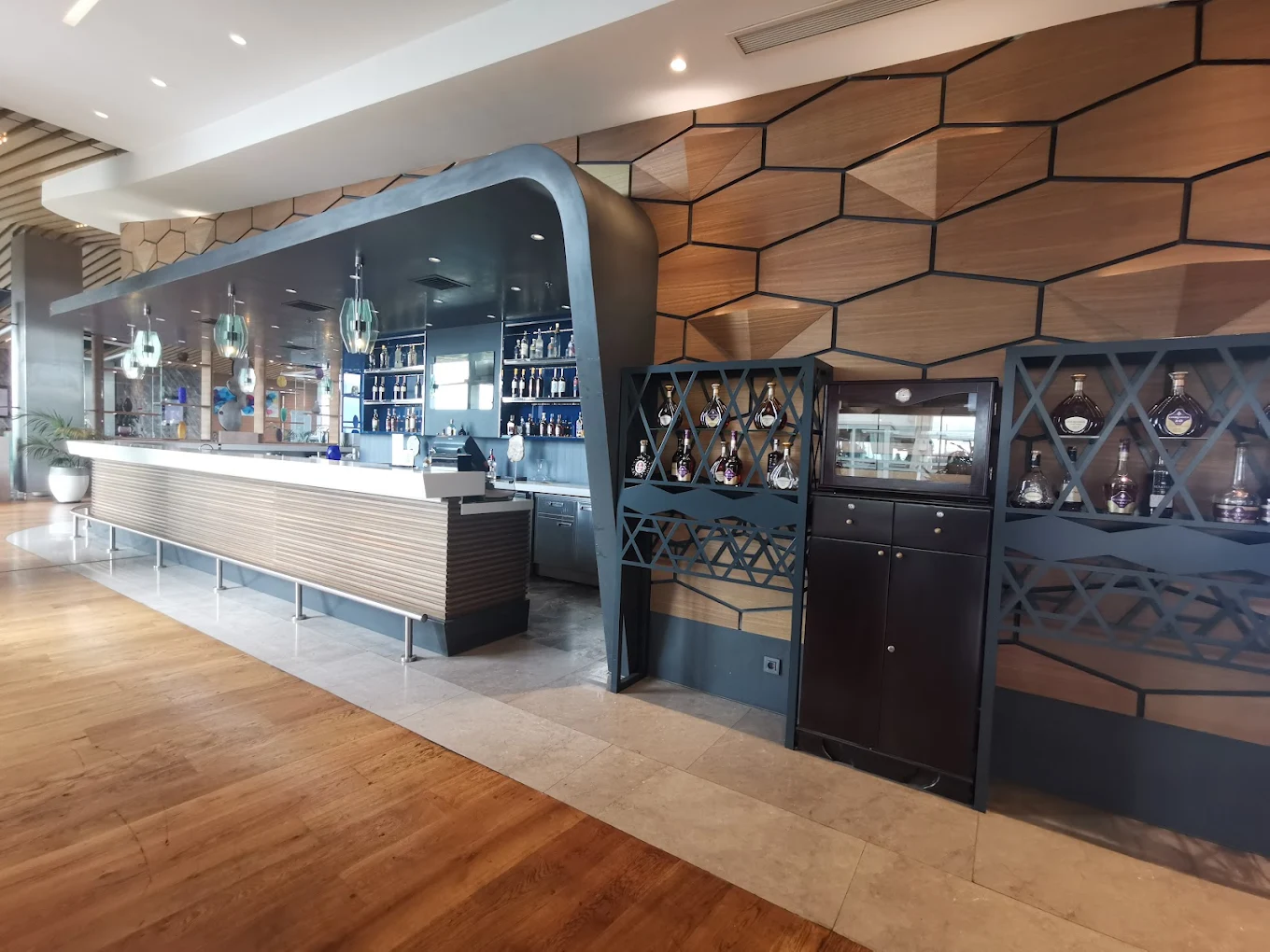
Fire-Rated Hotel Doors Turkey
Fire-Rated Hotel Doors Turkey: The Definitive B2B Procurement and Engineering Guide
The global hospitality development sector demands an uncompromising convergence of life safety compliance, architectural integration, and acoustic isolation. Within a commercial property, the guestroom entry door assembly is not merely an aesthetic partition; it is a highly engineered life-safety asset subjected to strict international fire codes, building regulations, and insurance mandates. When international developers, general contractors, procurement directors, and hotel operators map out supply chains capable of delivering certified fire resistance alongside high-end architectural finishes, Turkey stands out as a leading global manufacturing hub.
This comprehensive technical guide provides an exhaustive analysis of fire-rated hotel doors Turkey, exploring structural engineering configurations, international testing certifications, core substrate compositions, acoustic damping technology, and factory auditing frameworks.
1. The Strategic Advantage of Sourcing Fire-Rated Hotel Doors Turkey
The global positioning of Turkey as a tier-one manufacturing hub for specialized architectural door sets is the result of continuous industrial automation, heavy capital investments in testing infrastructure, and strict compliance with European and American safety directives. Sourcing fire-rated hotel doors Turkey offers an intersection of regulatory compliance and manufacturing agility that satisfies the most demanding project briefs.
+-----------------------------------------------------------------------------------+

|                        THE LIFE SAFETY PROCUREMENT TRIFECTA                       |
+-----------------------------------------------------------------------------------+

|                                                                                   |
|      [ CERTIFIED FIRE RESISTANCE ] <──► [ EN / UL TESTING METRICS ]               |
|                                     ▲                                             |
|                                     │                                             |
|                                     ▼                                             |
|                     [ COST-EFFECTIVE COMPLIANCE SOURCING ]                        |
|                                                                                   |
+-----------------------------------------------------------------------------------+
Advanced Industrial Customization
The primary core competency defining manufacturers of fire-rated hotel doors Turkey is their ability to merge fire-retardant structural cores with bespoke architectural skins. Traditional mass-production facilities in alternative markets often limit procurement teams to a narrow selection of standard dimensions, plastic laminates, or basic paint options.
In contrast, the Turkish manufacturing ecosystem leverages advanced parametric CNC processing lines to seamlessly integrate non-standard heights, exotic natural wood veneers, book-matched marquetry, custom routed paneling, and architectural metal inlays directly into certified fire door designs without compromising their structural integrity.
Strategic Logistical and Trade Channels
Geographically positioned at the absolute crossroads of Europe, the Middle East, Africa, and Central Asia, Turkey offers substantial distribution and shipping advantages:
- Overland Road Logistics: Direct road freight fleets connect the main industrial centers of western and central Turkey to continental European job sites within 4 to 7 business days. This avoids the unpredictable maritime transit delays, container shortages, and port backlogs common in East Asian shipping corridors.
- Maritime Shipping Infrastructure: Deep-water container ports including Ambarlı (İstambul), Gemlik (Bursa), and Mersin operate daily direct roll-on/roll-off (Ro-Ro) and container liner services to North America, the GCC region, and North Africa within 10 to 16 days.
- Duty-Free Trade Channels: Turkey’s long-standing Customs Union agreement with the European Union establishes a duty-free industrial trade corridor. This minimizes international import paperwork, eliminates tariff barriers, and speeds up customs clearance.
2. Definitive Manufacturing Clusters and Hubs in Turkey
The architectural millwork and technical door industry in Turkey is strictly organized into highly specialized regional industrial clusters. Each cluster operates with its own distinct production capacity, mechanical infrastructure, and engineering focus, making them unique sources for fire-rated hotel doors Turkey.
İstanbul and the Marmara Industrial Zone
İstanbul serves as the absolute engineering, product certification, and international project management center for fire-rated hotel doors Turkey.
- Technical Infrastructure: Factories within the İstanbul OSB (Organized Industrial Zones) operate specialized, multi-million dollar testing rigs and internal laboratories. They focus on manufacturing high-end, mixed-media door assemblies that integrate electronic access systems, drop-down threshold mechanics, and concealed hardware options.
- Project Profile: The primary hub for large-scale five-star hotel developments, international brand tenders (such as Marriott, Hilton, Accor, and IHG), and complex projects requiring bespoke engineering submittals and extensive physical prototyping.
Kayseri Organized Industrial District
Kayseri houses some of the largest specialized door and panel production facilities in Eurasia.
- Industrial Scale: The operational philosophy in Kayseri revolves around high-volume automation and heavy machinery assets. Facilities feature automated hydraulic hot-press lines, continuous profile edge-banding machinery, and robotic UV-curing finishing tunnels.
- Project Profile: The optimal hub for mid-to-high-volume procurement schedules, serving mega-scale select-service hotel chains, large business hotels, student housing projects, and modular apart-hotel developments requiring rapid delivery times and precise dimensional uniformity.
Bursa and the İnegöl Cluster
İnegöl is an industrial complex fully dedicated to advanced wood processing, panel engineering, and contract millwork lines.
- Supply Chain Integration: Factories here benefit from immediate access to local raw wood processors, engineered substrate manufacturers, and chemical treatment plants.
- Project Profile: Highly competitive for lifestyle properties, design-led boutique hotels, and resort developments requiring specialized architectural finishes, custom stains, and matching wall-paneling systems integrated directly with fire door frames.
Ankara (Siteler Industrial Zone)
Ankara Siteler represents the historic center of master wood manipulation and technical carpentry in Turkey.
- Artisanal Engineering: While alternative hubs prioritize high-speed industrial panel sizing, Siteler retains a high concentration of specialized technical ateliers. They excel at integrating traditional solid wood details, complex architraves, and hand-applied finishes onto engineered fire-rated cores.
- Project Profile: The definitive choice for heritage hotel restorations, traditional luxury properties, presidential suites, and high-security state hospitality environments.
3. Structural Anatomy and Substrate Engineering
A technical understanding of fire-rated hotel doors Turkey requires an examination of the internal core architecture. A fire door leaf is a complex laminate assembly engineered to slow down thermal transmission, maintain structural squareness under extreme heat, and prevent chemical smoke passage.
+-------------------------------------------------------------------+

|               CROSS-SECTIONAL LEAF PROFILE ARCHITECTURE           |
+-------------------------------------------------------------------+

|                                                                   |
| [1. ARCHITECTURAL SKIN]  --> Natural Veneer / HPL / Lacquer Coat  |
| [2. SUBSTRATE FACING]    --> High-Density, Flame-Retardant MDF    |
| [3. STRUCTURAL CORE]     --> Halspan / Sauerland Solid Mineral Core|
| [4. HARDWOOD PERIMETER]  --> Intumescent-Lined Fire-Retardant Beech|
|                                                                   |
+-------------------------------------------------------------------+
Core Composite Formulations
Turkish manufacturers utilize two primary types of solid cores to satisfy international fire ratings:
- Solid Mineral Fiber Cores: Composed of a matrix of volcanic rock-wool, calcium silicate, and specialized binding agents. This formulation provides lightweight properties alongside excellent thermal resistance, making it the preferred core configuration for 90-minute and 120-minute fire ratings.
- Solid Particle/Extruted Tubes Cores: Sourced from certified suppliers like Sauerland Spanplatte or Halspan, these cores use calibrated wood particle streams bound with flame-retardant thermosetting resins. This configuration offers superior impact resistance and acoustic dampening, making it perfect for 30-minute and 60-minute guestroom entry partitions.
Frame and Architrave Substrate Systems
A fire-rated door leaf will fail to protect an opening if it is paired with an unrated or sub-standard frame. Manufacturers of fire-rated hotel doors Turkey engineer complete, matching frame assemblies:
- Moisture-Resistant Fire Retardant MDF (MR-FR-MDF): Used for standard guestroom openings, offering structural stability against wall moisture and preventing thermal expansion.
- Cold-Rolled Galvanized Steel Frames: Utilized for high-impact back-of-house corridors, industrial kitchens, and service elevator lobbies. These steel frames are treated with multi-stage electrostatic powder coatings to ensure complete corrosion resistance and durability.
4. International Fire Testing and Certification Frameworks
When evaluating fire-rated hotel doors Turkey, procurement teams must prioritize verifiable third-party certification. True life-safety assets do not rely on self-declarations; they are verified through testing under destructive conditions.
European Standards (EN 1634-1) vs. American Standards (UL 10C)
Turkish door manufacturers maintain dual compliance pathways to serve diverse global regulatory markets:
| Code Standard | Testing Philosophy | Key Performance Metric | Market Applicability |
|---|---|---|---|
| EN 1634-1 | Integrity (E) & Insulation (I) tracking under positive furnace pressure. | Measures the exact minutes the door prevents flame passage (E) and blocks thermal transfer (I). | Europe, UK, GCC Region, Africa |
| UL 10C | Positive pressure fire exposure followed immediately by the Hose Stream Test. | Verifies structural integrity under sudden impact and thermal shock from high-pressure water hoses. | North America, Select Middle East Projects |
| BS 476-22 | Traditional British Standard tracking structural stability and integrity. | Evaluates performance indicators in minutes (e.g., FD30, FD60). | Historical Commonwealth Markets |
The Critical Role of Certification Bodies
Reputable manufacturers of fire-rated hotel doors Turkey carry product line certifications issued by internationally recognized auditing agencies, including Exova Warringtonfire (Certifire), Intertek (Warnock Hersey), and BM TRADA. These certifications guarantee that the factory undergoes regular unannounced audits. This continuous oversight ensures that the doors rolling off the mass-production line are constructed identically to the specific prototypes that passed the destructive testing furnace.
5. Acoustic Engineering and Hardware Integration
A hotel guestroom door must perform two primary functions simultaneously: it must provide a certified fire safety barrier during an emergency, and it must deliver complete acoustic privacy during standard operations.
Acoustic Isolation Performance Metrics
Noise transmission from public corridors into guestrooms is a common source of guest complaints. Manufacturers of fire-rated hotel doors Turkey solve this issue by engineering acoustically insulated door sets:
- Decibel Ratings: Standard assemblies are rated between 32 dB and 45 dB of sound attenuation, in compliance with ISO 10140-2 standards.
- Multi-Layered Damping: This performance is achieved by incorporating internal acoustic layers—such as heavy mineral wool mats or cork-composite sheets—directly within the fire-retardant core, dampening sound wave transmission.
+-------------------------------------------------------------------------------+

|                        PERIMETER ACOUSTIC AND SMOKE SEALING                   |
+-------------------------------------------------------------------------------+

|                                                                               |
|  [INTUMESCENT STRIPS] ──► Expands 25x under heat (>180°C) to seal all gaps.    |
|  [DROP-DOWN SEALS]    ──► Mechanical automatic base seal to stop sound/smoke. |
|  [SILICONE GASKETS]   ──► Continuous perimeter seals for daily acoustic control.|
|                                                                               |
+-------------------------------------------------------------------------------+
Precision Intumescent and Sealing Systems
The perimeter interface between the door leaf and the frame is a critical vulnerability point during a fire. Turkish door designs address this with integrated sealing technology:
- Dual-Action Intumescent Strips: Recessed into the edge profiles of the leaf or frame. When temperatures exceed 180°C, these graphite-based strips expand to approximately 25 times their original volume. This rapid expansion fuses the door leaf to the frame, blocking the passage of toxic gas, heat, and smoke.
- Acoustic Silicone Gaskets: Provide continuous compression sealing during daily use, blocking sound leaks and draft air while allowing for smooth, low-force closing operations.
- Automatic Heavy-Duty Drop-Down Seals: Concealed inside a routed slot at the bottom edge of the door leaf. When the door closes, a mechanical plunger activates against the frame, dropping a neoprene acoustic seal firmly onto the threshold floor line. This blocks sound and smoke transmission without requiring a raised floor profile.
6. Sourcing Categories: Guestroom Entry vs. Back-of-House Doors
A comprehensive hospitality procurement strategy divides fire door packages into distinct performance categories based on their operational zone within the property.
1. Guestroom Entry Door Assemblies
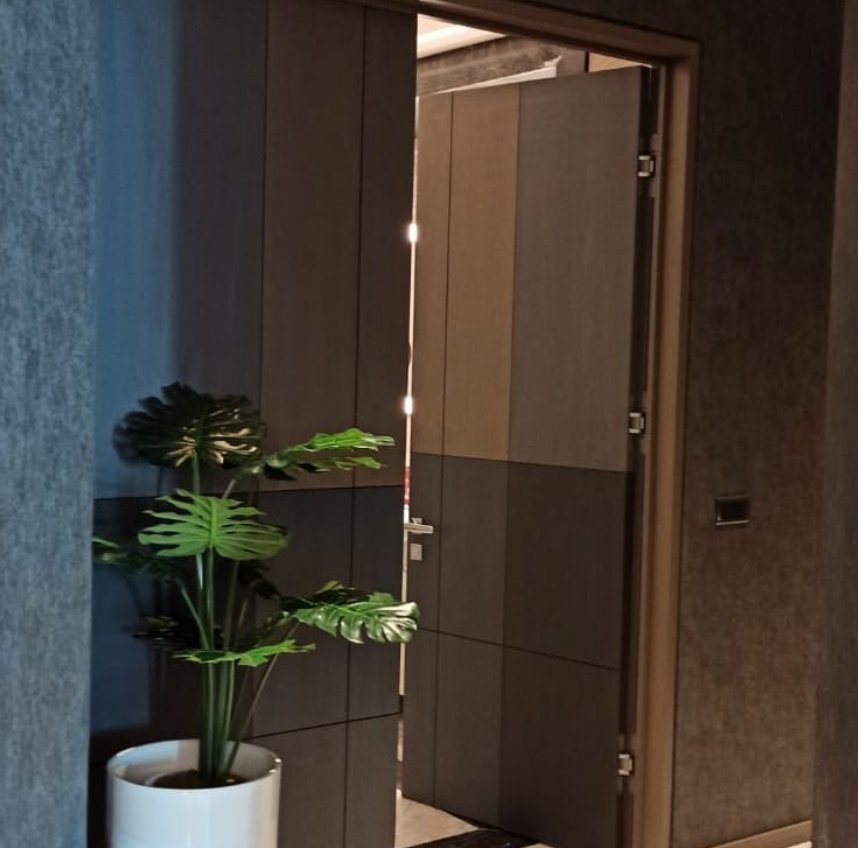
The guestroom entry door is the most visible fire-safety asset on the property. It must blend into the public corridor’s design scheme while meeting strict safety parameters.
- Standard Specifications: Typically requires a minimum 30-minute or 60-minute fire rating (FD30 / FD60 / EI30 / EI60), paired with a minimum acoustic rating of 38 dB.
- Access Control Integration: The lock stiles are precision-routed via specialized CNC machinery to accommodate specific electronic locking card readers (such as VingCard, Salto, or Dormakaba). This precision routing includes internal wiring raceways to route power from frame hinges directly to the electronic lock face without exposed cables.
- Finishing Repertoire: Options feature book-matched high-grade natural walnut or white oak veneers, high-durability high-pressure laminates (HPL) with antimicrobial surfaces, and multi-stage polyurethane lacquers with UV stabilizers to prevent yellowing under corridor lighting.
2. Back-of-House and Service Corridor Doors
Back-of-house doors prioritize clean utility, high impact durability, and extended fire integrity.
- Standard Specifications: Frequently demands 90-minute or 120-minute fire ratings (EI90 / EI120 / UL 120) to protect critical safety zones, escape stairs, electrical substations, and commercial kitchens.
- Structural Elements: Door leafs are often faced with heavy-duty textured steel sheets, impact-resistant solid colored plastics, or reinforced Acrovyn armor wraps. Frame structures are built from 1.5mm thick galvanized steel profiles to resist continuous impact from heavy luggage carts and service equipment.
- Safety Hardware Integration: Fitted with heavy-duty panic bars, electromagnetic door holders connected directly to the central building automation system, and wide-angle vision panels made of fire-resistant ceramic glass.
7. The Turnkey B2B Procurement Lifecycle
Procuring complex structural assets through manufacturers of fire-rated hotel doors Turkey follows a structured project management lifecycle to ensure absolute conformity with site realities, construction timelines, and building codes.
[Phase 1: Submittal & Code Audit] ──► [Phase 2: On-Site Digital Scribing] ──► [Phase 3: The Mock-Up Validation]
                                                                                      │
[Phase 5: Automated Mass Production] ◄── [Phase 4: Global Export Logistics] ◄─────────┘
Phase 1: Technical Submittal and Code Audit
The procurement lifecycle starts with a comprehensive review of the project’s Architectural Door Schedule, Fire Strategy Maps, and Interior Design documentation. The factory’s technical project management office (PMO) audits the specifications against their active testing certificates. The PMO then issues comprehensive submittal packages including cross-sectional drawings, hardware coordination templates, and copy certificates for approval by the project’s fire consultant and local civil defense authorities.
Phase 2: On-Site Digital Scribing and Dimensioning
Walls can settle, and rough openings are rarely perfectly plumb across hundreds of keys in a new construction site.
- The Process: Experienced engineering teams from leading Turkish door companies travel to the construction site to perform digital scribing. Using high-precision laser trackers (such as Leica Disto or 3D point-cloud scanners), they measure the exact top, middle, bottom widths, and structural squareness of every rough opening.
- The Benefit: This step ensures that each door frame is manufactured to match its specific opening, eliminating time-consuming trimming or adjustments on-site during installation.
Phase 3: The Mock-Up and Prototype Validation
Before green-lighting production for hundreds of doors, the factory manufactures a complete prototype set for a physical mock-up room. Sourcing directors, interior designers, and general contractors evaluate the unit to check real-world closing forces, electronic lock alignments, drop-seal engagement, and finish compliance. Any required adjustments are documented and locked into the manufacturing software before mass production begins.
Phase 4: Automated Mass Production
Once approved, the manufacturing software releases the shop drawings to the factory floor. Multi-axis CNC routing machines cut leaf pockets, hinge positions, lock cases, and seal grooves in a single continuous operation to keep tolerances within ±0.2mm. Substrate layers are combined using waterproof thermosetting glues inside multi-daylight hydraulic hot presses, creating a strong, delamination-proof composite leaf.
Phase 5: Global Export Packaging and Protective Crating
Finished architectural door sets are highly vulnerable to damage from improper handling or humidity changes during international transport.
- Protective Layers: Leaf faces are protected with heavy-duty peelable protective films, enclosed in high-density polyethylene foam sleeves, and fitted with reinforced corner guards.
- Crating Architecture: Complete frame components and door leaves are packed flat inside custom-built, heavy-duty wooden crates made from heat-treated ISPM-15 compliant timber. These crates are securely packed into shipping containers with heavy moisture-absorbing desiccant packs to maintain stable humidity levels during sea transit.
8. Commercial Optimization and Value-Engineering Strategies
Sourcing from fire-rated hotel doors Turkey offers structural procurement teams avenues to optimize cash flow and maximize project return on investment (ROI).
Maximizing Project ROI via Strategic Price-to-Quality Ratios
Optimized industrial clusters, domestic raw material access, and advanced factory automation allow Turkish door manufacturers to offer a highly competitive cost structure. When compared to Western European or North American architectural door mills, Turkish suppliers can deliver identical technical certifications, European functional hardware, and premium finishes at a substantial reduction in total landed cost. This pricing advantage allows developers to reallocate capital into guest-facing technology, premium marketing, or property amenities.
Flexible Minimum Order Quantities (MOQs) for Multi-Type Layouts
Traditional high-volume factories often demand high minimum order quantities per specific door size or finish to justify resetting their assembly lines.
- Agile Setup: Turkish contract manufacturers excel at handling low-volume, high-mix production schedules. They can easily process custom boutique project configurations—featuring multiple non-standard door dimensions and unique room styles—without charging high premiums for setup times.
International Trade Finance and Risk Management Frameworks
The Turkish commercial banking sector is fully integrated into global international trade finance systems. B2B contract transactions are typically secured through flexible finance mechanisms designed to protect buyer capital:
- Confirmed Letters of Credit (L/C): Fully supported, ensuring funds are released only when verified shipping documents, export customs clearances, and quality inspection certificates are presented.
- Milestone Payments: Standard payment structures are tied to clear project milestones (e.g., 30% advance payment to secure core components, 40% mid-production verification, and 30% upon final factory quality control clearance prior to container loading).
9. Factory Auditing Framework for Sourcing Teams
Selecting the ideal partner from the wide array of manufacturers delivering fire-rated hotel doors Turkey requires a structured verification process. Sourcing teams can use this step-by-step framework to audit potential manufacturing partners:
                  [1. TECHNICAL AUDIT]
          Assess Machine Park, CNC & Spray Booths
                            │
                            ▼
                 [2. ADMINISTRATIVE AUDIT]
          Evaluate PMO Capability & English Fluency
                            │
                            ▼
                  [3. FINANCIAL AUDIT]
          Verify Credit Ratings & Raw Material Capital
1. Technical Infrastructure Audit
- Machinery Park: Verify that the factory operates modern, industrial-grade panel processing machinery, including computerized sizing saws, edge-banders with pre-milling units, and 5-axis CNC routers.
- Atmospheric Control in Finishing: Inspect the finishing department. A high-quality finish requires pressurized, positive-pressure, dust-free spray booths with water-curtain filtration systems. Open-air or unpressurized spraying introduces airborne dust particles, causing surface texturing that fails luxury contract inspections.
- Material Testing Lab: Confirm whether the facility utilizes essential testing equipment on-site, including digital timber moisture meters, Martindale textile abrasion testers, and structural drop-testing jigs for seating frames.
2. Project Management and Engineering Competence
- The Project Management Office (PMO): Ensure the factory has a dedicated contract PMO staffed by qualified industrial designers and wood engineers who speak fluent English. A hospitality project requires continuous, technically detailed communication; a direct link to an engineer prevents communication errors.
- Document Control: Review examples of previous shop-drawing submittals, material matrices, and quality assurance logs to confirm the factory follows structured documentation practices.
3. Financial and Corporate Health Verification
- Material Capital: Ensure the company possesses sufficient liquid operating capital to purchase raw materials for large, multi-container projects without depending entirely on your initial deposit.
- Corporate Track Record: Request verified commercial bank references, corporate registry tracking, and a list of completed international hospitality references to confirm long-term reliability.
10. Navigating and Mitigating Sourcing Risks
While sourcing from Turkey offers clear benefits, international procurement requires proactive management of common operational challenges to keep projects on track.
Resolving Communication Nuances in Technical Specifications
Vague descriptions like “solid wood finish” or “high-durability textile” create ambiguity that can lead to production deviations.
- Mitigation Strategy: Use precise, internationally recognized technical terms in all contract documents. Specify exact manufacturer part codes, wood species (e.g., Quercus robur), Martindale rub counts, fire-retardancy classifications, and RAL or Pantone color codes. Ensure all measurements are documented in metric units to avoid conversion errors during CNC programming.
Managing Production Calendars Around Peak Seasonal Demands
The global hospitality renovation and construction cycle experiences sharp peaks ahead of spring openings and autumn refreshes. During these peak windows, premium Turkish factories face high demand, which can extend standard production queues.
- Mitigation Strategy: Secure your factory production slot early by signing a reservation agreement well before interior design layouts are finalized. Build a 2-to-3-week buffer into the master project schedule to account for potential international transit bottlenecks or customs clearance steps.
11. The Digital Evolution of Turkish Contract Manufacturing
The Turkish furniture industry continues to enhance its capabilities by integrating advanced digital technologies and Industry 4.0 paradigms.
Advanced Industry 4.0 Tracking Systems
Leading factories are upgrading to fully digital smart facilities. Incoming raw materials receive unique QR or RFID asset tags at the warehouse gate. This digital infrastructure allows international clients and project managers to log into secure online portals and track the exact production status of individual components—from raw cutting to final upholstery—in real time, providing complete supply chain transparency.
Virtual Reality (VR) Spatial Prototyping
To accelerate design approvals and reduce the time required for physical mock-up rooms, advanced Turkish engineering offices utilize immersive VR environments. International design teams can wear VR headsets to virtually tour a fully engineered guestroom layout. This interactive review allows stakeholders to assess proportions, check hardware placement, and verify clearances before mass manufacturing begins, reducing overall lead times.
12. Strategic Sourcing Recommendations
For hospitality developers, procurement managers, and interior designers planning their next project, Turkey provides a scalable, highly engineered, and cost-effective manufacturing ecosystem. To maximize the success of your sourcing strategy, implement these practical best practices:
- Involve the Factory Early: Engage your chosen Turkish manufacturer during the conceptual design phase. Their internal engineering teams can offer value-engineering adjustments that preserve the design intent while lowering fabrication costs.
- Enforce Strict Technical Specifications: Ensure your Bill of Quantities (BOQ) explicitly outlines international performance metrics, including E1 compliance, Crib 5 fire retardancy, and specific commercial hardware cycle requirements.
- Conduct Physical Factory Audits: Before transferring large capital deposits, visit the manufacturing facilities in person or hire an accredited third-party inspection agency to verify their machine capacity, finishing environments, and financial standing.
- Partner with Dedicated Contract Experts: Select factories that specialize exclusively in B2B hospitality contract manufacturing over residential furniture producers. True contract specialists understand the structural engineering, regulatory standards, and logistical coordination required to deliver a successful commercial hospitality project.
Frequently Asked Questions (FAQ)
What is the typical production lead time for fire-rated hotel door sets in Turkey?
Lead times are dictated by the total door count and hardware complexity. Typically, engineering and technical shop drawing submittals take 2 to 3 weeks. Once the architectural drawings and mock-ups are approved, mass manufacturing for a 150-key hotel project generally takes between 8 and 12 weeks. Sourcing teams should also factor in road or sea transit times based on the project location.
Can a manufacturer modify the dimensions of a certified fire door leaf for a specific project?
Yes, but only within the exact dimensional tolerances set by the original testing certificate (such as a Certifire or Warnock Hersey data sheet). These certificates typically allow for minor adjustments in height or width within a specified percentage of the tested prototype. If a project requires dimensions beyond these certified limits, the manufacturer must work with the certification body to obtain an official engineering assessment or conduct a new physical test.
How do Turkish manufacturers integrate electronic card locks into fire-rated door assemblies?
Leading Turkish door manufacturers utilize high-precision multi-axis CNC machinery parks to mortise lock pockets based on computerized templates provided directly by electronic lock manufacturers (e.g., VingCard or Salto). These paths include hidden, internal CNC-bored wire channels running through the core composite substrate to link the lock face to a concealed power transfer hinge, ensuring full fire compliance.
What is the difference between integrity (E) and insulation (I) metrics on fire door documentation?
Integrity (E) defines the door assembly’s physical capacity to resist structural collapse and prevent the passage of flames or hot gases through the opening. Insulation (I) measures the door’s capacity to limit temperature transmission from the fire side to the non-fire side, protecting guests and emergency personnel in escape corridors from intense radiant heat.
Butik Otel Mobilyaları
Tarihi Binaların Ahşap Dekorasyonları
Tarihi Ahşap restorasyonlari Kapılar
Tarihi binaların mobilya dekorasyonları
Etiket:Distressed Wood Hotel Furniture Turkey, Hotel Doors Turkey, Hotel Entrance and Hotel Lobby Furniture Turkey, Hotel Entrance Furniture Turkey, Hotel Furniture Decoration Turkey, Hotel Furniture Istanbul Turkey, Hotel Furniture Manufacturing Companies Turkey, Hotel Furniture Manufacturing Turkey, Hotel Furniture Procurement in Turkey, Hotel Furniture Turkey, Hotel Furnitures Turkey, Hotel Lobby Furniture Turkey, Hotel Room Furnitures Turkey, Hotel Wood Decoration Turkey, Luxury Hotel Furniture Turkey, Solid Wood Hotel Furniture Turkey, Wooden Hotel Furniture Turkey

Şunları da sevebilirsiniz
Hotel Hospitality Furniture Turkey
Hotel Furniture Export Turkey