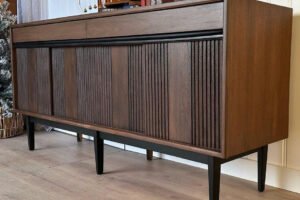

Lacquered Door Models Turkey
Lacquered Door Models Turkey: The Ultimate Technical and Design Guide
Lacquered doors represent the pinnacle of modern interior architectural joinery. In Turkey’s booming manufacturing sector, Lacquered Door Models Turkey has become a premier search standard for developers, architects, and homeowners seeking high-end, durable, and highly customizable internal doors.
This guide provides an exhaustive engineering and design breakdown of Turkish lacquered doors. It covers core materials, chemical formulation layers, architectural styles, technical manufacturing tolerances, installation frameworks, and maintenance protocols.
1. Defining the Lacquered Door: Material Composition and Anatomy
To understand why lacquered door models from Turkey are highly sought after globally, one must analyze their internal and external anatomy. A lacquered door is not merely a piece of wood painted white; it is a multi-layered, engineered composite product designed to resist warping, moisture degradation, and surface impact.
Core Structure and Framing
The structural integrity of a premium Turkish lacquered door relies on its internal skeleton.
- Internal Frame (Stile and Rail): The perimeter frame consists of finger-jointed solid wood, typically sourced from slow-grown Austrian pine or local Turkish fir (Abies cilicia). Finger-jointing removes natural knots and counteracts the internal directional stresses of the wood, preventing the door from bowing or twisting over time.
- Internal Core Fillers:
- Paper Honeycomb: A lightweight, high-density hexagonal paper cell structures used for standard residential projects. It provides excellent compression resistance while maintaining a low weight-to-volume ratio, reducing hinge wear.
- Tubular Chipboard (Sauerland Spanplatte): Extensively utilized in high-end Turkish manufacturing, this hollow-core particleboard offers superior sound insulation (typically up to 28-32 dB) and enhanced fire resistance compared to honeycomb cores.
- Solid Wood Strips: Used for maximum acoustic separation and premium heft.
The Substrate Layer: High-Density Fiberboard (HDF) vs. MDF
The surface preparation of lacquered door models in Turkey relies heavily on the quality of the engineered wood sheets bonded to the internal frame.
- Medium-Density Fiberboard (MDF): Usually 6mm to 8mm thick, providing a stable, flat surface free of grain patterns.
- High-Density Fiberboard (HDF): Preferred for premium models due to its density (>800 kg/m³). HDF offers exceptional resistance to blunt impacts and provides a perfectly smooth substrate that prevents the absorbing of solvents, ensuring an even lacquer finish.
2. The Chemistry of Lacquering: Coating Systems and Surface Physics
The defining feature of Lacquered Door Models Turkey is the outer liquid coating layer. Turkish factories employ advanced chemical application lines using automated CNC spraying robotics and UV-curing tunnels. The coating process is categorized by the chemical formulation of the lacquer paint.
Polyurethane (PU) Coatings
Polyurethane remains the industry benchmark for deep, rich color tones and elastic durability.
- Composition: A two-pack system consisting of a polyester or polyether resin base cross-linked with an isocyanate hardener.
- Performance: Excellent chemical resistance to household detergents, high elasticity to accommodate micro-movements of the wood substrate, and high impact resistance.
Acrylic Lacquers (Non-Yellowing)
Acrylic formulas are widely used for pure white and pastel-colored lacquered door models in Turkey.
- Composition: Thermoplastic or thermosetting acrylic resins dissolved in organic solvents.
- Performance: Superior UV resistance. Unlike polyurethane, acrylic lacquers do not yellow when exposed to direct sunlight over extended periods, making them ideal for south-facing residential spaces.
Water-Based Eco-Lacquers
Driven by European Union export regulations and green building certifications (like LEED and BREEAM), Turkish manufacturers have integrated water-borne polyurethane dispersions (PUDs).
- Composition: Acrylic-polyurethane hybrid polymers suspended in a water matrix with minimal co-solvents.
- Performance: Extremely low Volatile Organic Compound (VOC) emissions, curing to a highly resilient finish while ensuring safe indoor air quality.
UV-Cured Industrial Coatings
For high-volume commercial developments, automated rolling lines apply ultraviolet-curable coatings.
- Composition: Photo-reactive oligomers and monomers that instantly polymerize when exposed to intensive UV light wavelengths.
- Performance: Immediate hardness, allowing for instant packaging and scratch resistance.
3. The Multi-Stage Manufacturing Protocol
Achieving a flawless, mirror-like gloss or a velvety matte finish on Lacquered Door Models Turkey requires a strict multi-step application and sanding schedule. Any deviation in temperature, humidity, or grit sequencing will cause surface defects like orange peeling, pinholing, or bubbling.
Step 1: Substrate Sizing and CNC Routing
The raw MDF/HDF-faced door blank is cut to precise millimeter tolerances. If the door model features geometric engravings, classic country grooves, or modern linear patterns, a 3-axis or 5-axis CNC router carves the design into the panel.
Step 2: Isolation and Priming (The Foundation)
- Isolator Coat: A highly fluid polymer layer applied to raw routed grooves and edges to seal the exposed wood fibers and prevent uneven absorption.
- First Primer Layer: A high-solid polyurethane or polyester primer is sprayed across the entire surface. This fills micro-pores in the fiberboard.
- Curing & Sanding: The door cures in a temperature-controlled flash-off zone. It is then mechanically sanded using orbital sanders with P240 to P320 grit sandpaper.
- Second Primer Layer: Applied perpendicular to the first layer to guarantee complete, uniform coverage, followed by another round of fine sanding with P400 grit.
Step 3: Topcoat Lacquer Application
The door enters a positive-pressure, dust-free cleanroom. Automated reciprocal spraying arms apply the topcoat at a controlled wet film thickness (WFT) of 120 to 150 microns.
Step 4: The Curing Cycle
The doors pass through a multi-stage drying tunnel:
- Infrared (IR) Flash-off: Evaporates volatile solvents gradually to prevent surface skinning.
- Convection Drying: Maintains a stable 40°C–50°C environment to fully cross-link the polymer chains over several hours.
4. Architectural Classifications of Lacquered Door Models Turkey
Turkish design aesthetics balance classic European styles with modern, minimalist architecture. When exploring Lacquered Door Models Turkey, products are generally categorized into three design profiles.
Modern and Minimalist Flat Panel Models
Characterized by clean lines and unblemished surfaces, modern lacquered doors focus on geometric simplicity.
- Flush Doors: Perfectly flat surfaces finished in deep matte or high-gloss shades. They create an uninterrupted visual plane.
- Linear Engraved Doors: Feature subtle, shallow CNC-routed lines (V-grooves or U-grooves) forming abstract, horizontal, or vertical geometric grid patterns.
- Concealed Frame Systems (Filomuro): The door sits completely flush with the drywall, utilizing an invisible aluminum frame embedded directly into the wall profile.
Classic and Neoclassical Paneled Models
These designs pay homage to traditional craftsmanship, making them ideal for luxury residential properties, hotels, and upscale villas.
- Raised and Recessed Panels: Constructed using multi-layered routing techniques that mimic traditional stile-and-rail assembly.
- Decorative Gold and Silver Leaf Accents: Artisans hand-apply metallic leaf or patina lines within the routed panel profiles to accentuate historical detailing.
- Arched Transoms and Overdoor Panels: Designed for high-ceiling interiors, these configurations extend the visual height of the doorway with matching lacquered upper casings.
Country and Shaker Style Models
Bridging the gap between rustic charm and contemporary elegance, these models are characterized by straight, non-beveled inner frame profiles.
- Shaker Profiles: A simple recessed rectangular central panel with clean 90-degree corner joints.
- Barn-Door Conversions: Heavy-duty lacquered panels installed on visible matte black or stainless-steel sliding rail hardware.
5. Color Psychology and Surface Sheen Engineering
The visual impact of Lacquered Door Models Turkey depends on the choice of color and the specular reflection configuration of the finish.
Specular Gloss Levels (The Gloss Scale)
Gloss is measured scientifically using a glossmeter at a fixed 60-degree angle of incidence, yielding Gloss Units (GU):
- Deep Matte (1%–5% GU): Absorbs almost all ambient light, completely eliminating glare and concealing fingerprint oils. It offers a contemporary look.
- Satin / Eggshell (15%–25% GU): Provides a soft luster that is highly forgiving of minor surface scratches and easy to wipe clean.
- Semi-Gloss (40%–60% GU): Offers a traditional sheen that highlights routed panel profiles and architectural relief details.
- High Gloss / Mirror Finish (>90% GU): Requires extensive post-cure polishing with abrasive compounds and lamb wool buffers. It reflects light to open up narrow corridors.
Current Color Trends in Turkish Manufacturing
While pure signal white (RAL 9016) and traffic white (RAL 9016) remain global best-sellers, Turkish manufacturers offer extensive custom matching using the international RAL and NCS color charts.
- The New Neutrals: Anthracite grey (RAL 7016), stone grey, warm cashmere, and muted beige dominate modern luxury developments.
- Deep Jewel Tones: Forest green, rich navy, and midnight black are widely used as statement doors for home offices, master suites, and boutique hotels.
6. Frame, Casing, and Architrave Technical Integration
A lacquered door cannot function isolation; its performance and visual integration depend heavily on the engineering of the frame and architrave system. When purchasing Lacquered Door Models Turkey, vendors supply complete pre-hung systems.
Material Compositions for Framing
- Solid Wood Blockboard Frames: Layers of solid wood core sandwiched between thin sheets of MDF, providing maximum structural rigidity and screw-holding capacity for heavy hardware.
- Composite Wood-Plastic (WPC) Frames: Highly popular for bathroom applications due to their complete waterproof properties, preventing water from wicking up from damp flooring tiles.
Telescopic Architrave Systems
Turkish door manufacturers utilize adjustable telescopic casing profiles. The architrave features a long tongue that slides smoothly into a matching groove on the door frame core. This allows installers to compensate for variations in wall thickness (ranging from 100mm up to 300mm+) without cutting or planing timber on-site.
| Frame Component | Standard Material | Density Specification | Primary Functional Role |
|---|---|---|---|
| Core Frame | Blockboard / Finger-Jointed Pine | 550–650 kg/m³ | Bears weight loads and anchors hinge structures |
| Casing Backing | Structural MDF | 750–820 kg/m³ | Provides a smooth surface for lacquered finishes |
| Architrave (Casing) | Moisture-Resistant MDF / WPC | 800+ kg/m³ | Telescopically adjusts to variations in wall thickness |
| Sealing Gasket | Thermoplastic Elastomer (TPE) | N/A | Dampens acoustic transfers and prevents slamming |
7. Hardware, Concealed Mechanisms, and Engineering Accessories
The tactile feel of opening and closing a premium lacquered door depends on the integrated architectural hardware. Turkish factories offer precise CNC mortising for a wide variety of hardware accessories.
3D Adjustable Concealed Hinges
Gone are the days of unsightly brass butt hinges. Modern Lacquered Door Models Turkey feature fully integrated, invisible 3D hinges (such as Simonswerk Tectus or local Turkish equivalents like Otlav components).
- 3D Adjustability: Installers can fine-tune the door panel along three axes (height ±3mm, lateral ±2mm, depth/compression ±1mm) using a simple hex key. This ensures perfectly uniform 3mm reveal gaps around the entire door perimeter.
Magnetic Lock Latches
Traditional mechanical strike plates can scratch the frame and make loud clicking noises. Magnetic silent locks use a spring-loaded magnetic bolt that remains flush inside the door profile when open. It only snaps forward into the strike plate when the door is fully closed, ensuring quiet, reliable operation.
Drop-Down Automatic Bottom Seals
To enhance acoustic performance and block drafts without resorting to an unsightly raised floor threshold, an automatic mechanical drop seal can be routed into the bottom rail of the door panel. When the door closes, a plunger pin compresses against the frame jamb, dropping a neoprene acoustic seal smoothly onto the floor finish.
8. Structural Durability and Performance Standard Protocols
For commercial projects, hospitality applications, and multi-unit residential developments, Lacquered Door Models Turkey must meet rigorous European quality compliance parameters.
EN 1192: Mechanical Strength Testing
Doors are classified from Class 1 (light duty) up to Class 4 (heavy duty) based on their resistance to vertical loads, static torsion, hard body impact, and soft body impact. Premium Turkish lacquered doors with solid core chipboard typically clear Class 3 and Class 4 certifications.
EN ISO 10140-2: Acoustic Insulation Benchmarks
Acoustic performance is critical for modern apartments and hotels.
- Hollow core paper honeycomb models achieve an \(R_{w}\) rating of approximately 22–25 dB.
- Solid-core tubular chipboard systems with dual perimeter TPE gaskets achieve \(R_{w}\) ratings between 32 dB and 38 dB, blocking clear speech transmission between adjacent rooms.
9. Architectural Specification Matrix
For architects and project managers drafting construction documentation, this structural matrix outlines standard guidelines for specifying premium lacquered internal doors from Turkey.
- Core Options: High-density paper honeycomb, tubular chipboard, or solid engineered timber.
- Skin Material: Ultra-flat moisture-resistant HDF or premium MDF, min. 6mm or 8mm thickness.
- Chemical Treatment: Polyurethane base primer coats with an anti-yellowing acrylic topcoat or industrial UV-cured coatings.
- Standard Dimensional Limits: Widths from 600mm to 1000mm; heights from 1950mm to 2400mm+; custom thickness ranging from 40mm to 45mm.
- Color Reference: Standard RAL Classic spectrum or NCS Index matching.
- Permissible Gaps: Top/Sides: 3.0mm max; Bottom: 5.0mm to 8.0mm (depending on flooring finish).
10. Comprehensive Installation Methodology
Even the most precisely engineered lacquered door will fail if installed poorly. Lacquered surfaces are unforgiving of mechanical damage, so installers must follow a systematic process.
Pre-Installation Site Readiness Requirements
- Moisture Equilibrium: The building’s wet trades (plastering, screeding, tiling) must be fully cured. Indoor relative humidity must remain between 40% and 60%, and the subfloor moisture content must be below 2.0% for concrete.
- Opening Verifications: The structural rough opening must be checked for vertical plumb, horizontal level, and squareness across diagonal corners.
The Step-by-Step Assembly Process
- Dry Assembly: Assemble the three-sided telescopic frame on a clean, padded workspace to avoid scratching the lacquer finish.
- Frame Positioning: Place the frame into the rough wall opening, securing it temporarily with plastic shims.
- Plumb and Level Check: Use a precision spirit level or a 3D cross-line green laser level to align the hinge jamb perfectly on both horizontal and vertical axes.
- Anchor Fastening: Drive structural anchors behind the hinge plates and inside the strike plate cutout to hide the fasteners from view.
- Polyurethane Foam Application: Inject low-expansion, single-component polyurethane insulation foam into the gap between the rough wall opening and the door frame. Avoid high-expansion foams, which can warp the frame as they cure.
- Hanging the Panel: Mount the door panel onto the concealed hinges and adjust the 3D hex screws to set uniform 3mm reveal gaps.
- Architrave Insertion: Apply small beads of low-modulus silicone adhesive or wood glue inside the frame groove, then slide the telescopic architrave tongue smoothly into place for a tight, flush finish against the wall.
11. Maintenance, Preservation, and Field Repair Guide
Lacquered finishes are durable, but they require proper maintenance to protect the outer clearcoat layers from micro-scratching and chemical degradation.
Cleaning Protocols
- Daily Cleaning: Wipe the door down with a clean, dry, lint-free microfiber cloth to remove dust particles.
- Damp Cleaning: For fingerprints or smudges, lightly moisten a microfiber cloth with lukewarm water and a drop of pH-neutral soap. Dry the surface immediately with a second clean microfiber towel.
- Prohibited Chemicals: Never use abrasive scouring pads, steel wool, acetone, ammonia, bleach, or solvent-based thinners. These chemicals will dissolve or dull the outer acrylic polymer chains, causing cloudy spots.
On-Site Repair of Minor Lacquer Scratches
- Surface Cleaning: Clean the scratched area thoroughly using isopropyl alcohol to remove body oils and wax buildup.
- Color Infill: For deep scratches that expose the white primer beneath a dark door, use a specialized acrylic touch-up pen or a soft wax repair stick matched exactly to the door’s RAL color code.
- Levelling: Gently scrape away excess wax filler using a plastic edge scraper to level the repair with the surrounding finish.
- Micro-Polishing (For Gloss Finishes): If dealing with a minor surface scratch on a high-gloss model, apply a small dab of automotive fine-cut polishing compound. Work the compound in circular motions with a clean lamb’s wool pad, then buff the area out to restore its original gloss level.
12. Sourcing and Custom Procurement from Turkey
Turkey’s manufacturing hubs—centered in areas like Istanbul, Bursa, Kayseri, and Izmir—offer a highly competitive mix of automated German/Italian machinery lines and skilled woodworking craftsmanship.
Key Sourcing Considerations for International Buyers
- Container Loading Protection: Because lacquered surfaces are vulnerable to friction scratches during transport, ensure that your supplier wraps every door panel individually in protective polyethylene foam sheets, adds heavy-duty cardboard edge protectors, and packs them into sturdy wooden export pallets.
- Climatic Adaptive Design: When ordering Lacquered Door Models Turkey for projects in regions with high humidity or extreme dryness, specify your destination’s climate profile to your manufacturer. This allows them to optimize the internal core wood moisture content (ideally stabilizing it at 8% ±2%) and adjust the chemical flexibility of the lacquer coats accordingly.
By pairing advanced polyurethane and acrylic resin coatings with automated CNC processing lines and robust internal framing, Turkish door manufacturers produce durable, high-performing interior doors. Whether your project calls for a modern matte flush design or an intricate neoclassical paneled entry system, understanding these technical details ensures your chosen doors will look beautiful and function reliably for years to come.
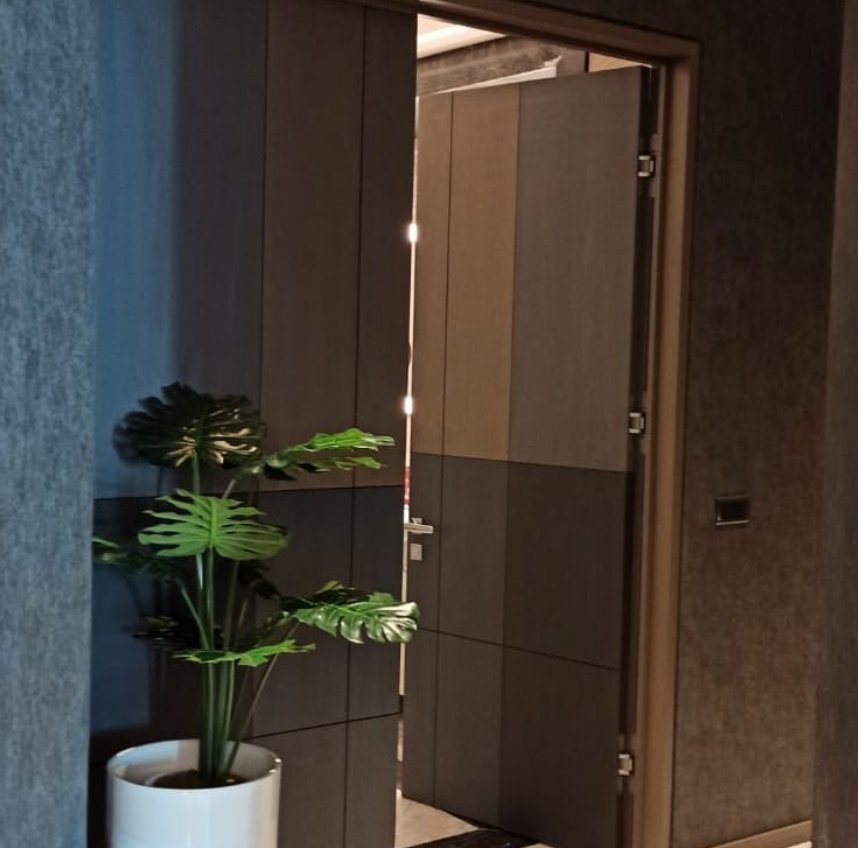
Butik Otel Mobilyaları
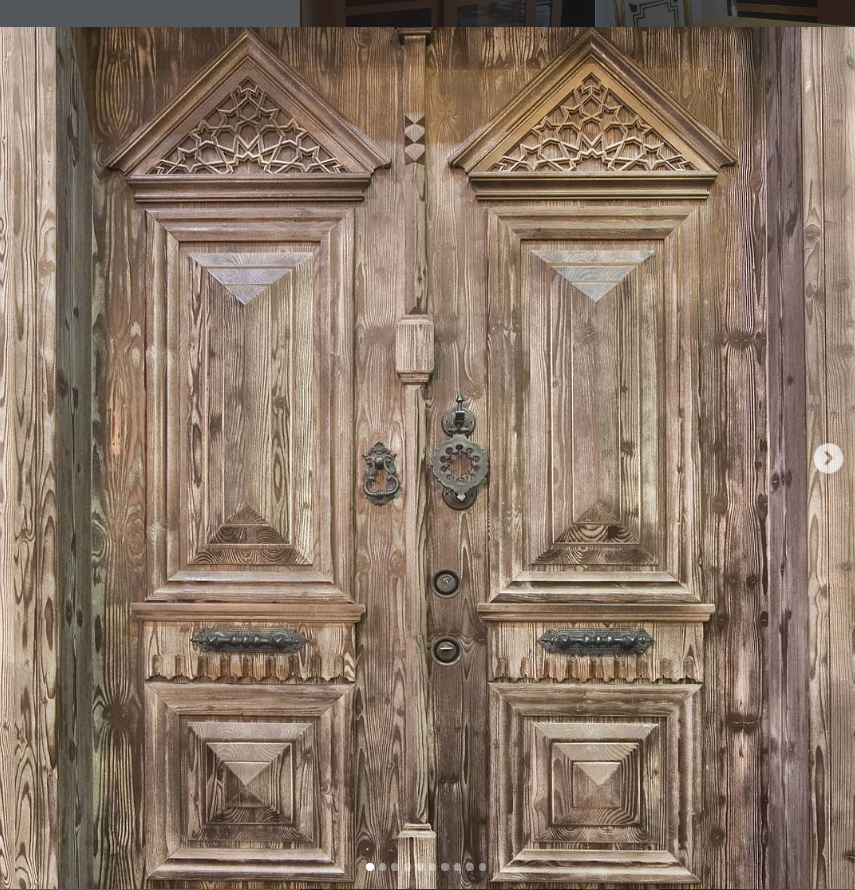
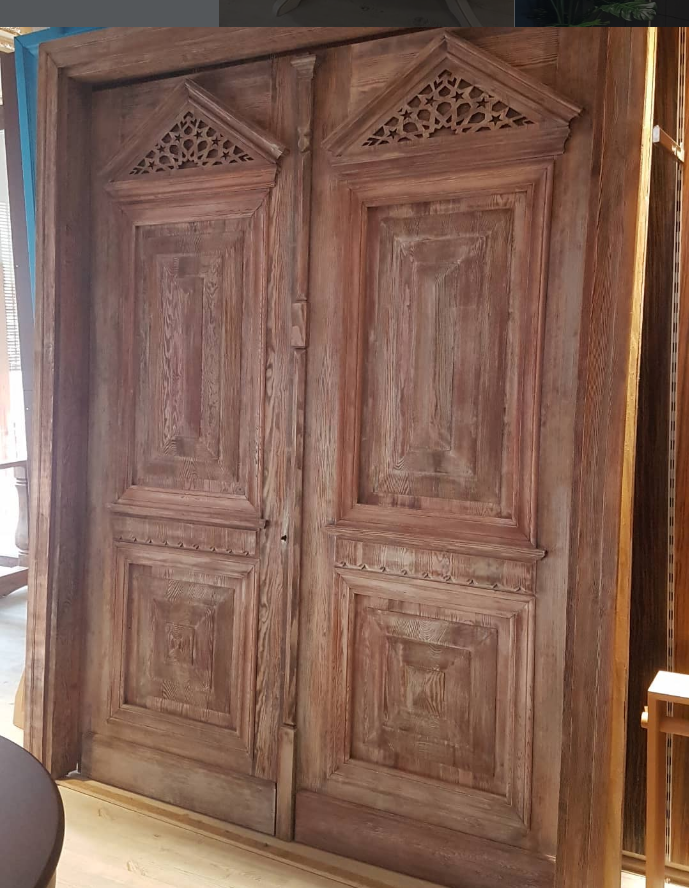
Butik Otel Mobilyaları
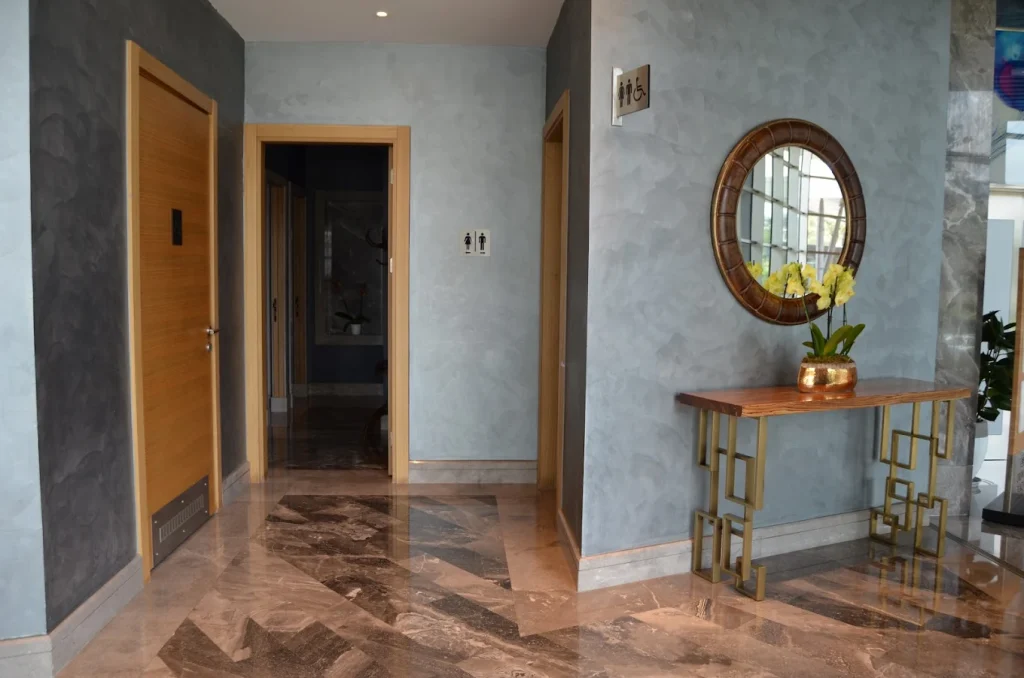

Butik Otel Mobilyaları


Şunları da sevebilirsiniz
Wood Window Production Turkey
Solid Furnitures Turkey