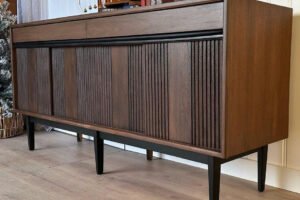

Lacquered Door Types Turkey
Lacquered Door Types Turkey: The Complete Technical and Engineering Manual
In the field of high-end interior architecture and construction procurement, Lacquered Door Types Turkey serves as an essential benchmark for premium interior joinery. Turkey’s manufacturing infrastructure combines automated Italian and German surface-finishing technologies with precise wood engineering. This combination has made the country a global hub for custom interior door production.
To help architects, quantity surveyors, interior designers, and real estate developers make informed decisions, this technical manual provides an in-depth breakdown of lacquered door types. We will explore structural core designs, opening mechanisms, panel configurations, and chemical coating classifications.
1. Structural Typologies: Core Matrix and Engineering Classifications
The classification of Lacquered Door Models Turkey begins with their internal core architecture. While the exterior surface offers a seamless layer of liquid polymer coating, the internal core determines the door’s acoustic dampening, structural weight, impact resistance, and long-term durability.
Hollow Core (High-Density Paper Honeycomb) Types
- Engineering Anatomy: These doors feature a perimeter frame made of finger-jointed coniferous timber (typically local Turkish Fir or Scots Pine). The interior void is filled with an expanding hexagonal kraft paper honeycomb lattice, bonded under pressure to two outer structural sheets of MDF or HDF.
- Technical Performance Metrics:
- Structural Mass: 12 kg/m² to 15 kg/m².
- Airborne Sound Insulation (\(R_{w}\)): 20 dB to 24 dB.
- Thermal Conductivity (\(\lambda \)): Approximately 0.09 W/m·K.
- Ideal Structural Applications: Budget-conscious residential developments, temporary interior partition walls, and low-traffic areas like walk-in closets or pantries where acoustic isolation is not a priority.
Tubular Core (Hollow-Core Particleboard) Types
- Engineering Anatomy: Often utilizing premium cores like German Sauerland Spanplatte, these doors feature an internal filling of extruded particleboard with continuous horizontal or vertical cylindrical tubes running through the material.
- Technical Performance Metrics:
- Structural Mass: 22 kg/m² to 28 kg/m².
- Airborne Sound Insulation (\(R_{w}\)): 28 dB to 34 dB.
- Mechanical Compression Strength: Exceeds 500 kPa.
- Ideal Structural Applications: The standard for premium residential properties, hotel guestrooms, corporate office suites, and master bedrooms. This type delivers a solid, high-end feel when operating the handle and provides reliable acoustic privacy.
Solid Core (Laminated Strand Lumber and Blockboard) Types
- Engineering Anatomy: The inner core is fully packed with edge-glued, finger-jointed timber blocks or high-density structural multi-layered particleboard sheets. This core is then faced with structural HDF panels before receiving its lacquer layers.
- Technical Performance Metrics:
- Structural Mass: 32 kg/m² to 45 kg/m²+.
- Airborne Sound Insulation (\(R_{w}\)): 35 dB to 42 dB (when paired with heavy-duty acoustic perimeter gaskets).
- Impact Resistance Classification (EN 1192): Class 4 (Heavy Duty/Severe Duty).
- Ideal Structural Applications: Public buildings, educational facilities, luxury villas, entrance doors for high-end apartments, and media rooms that require maximum structural stability and sound isolation.
2. Surface Panel Configurations and Architectural Classifications
When exploring Lacquered Door Types Turkey, products are visually categorized by their surface topology and how the decorative outer face is machined and assembled.
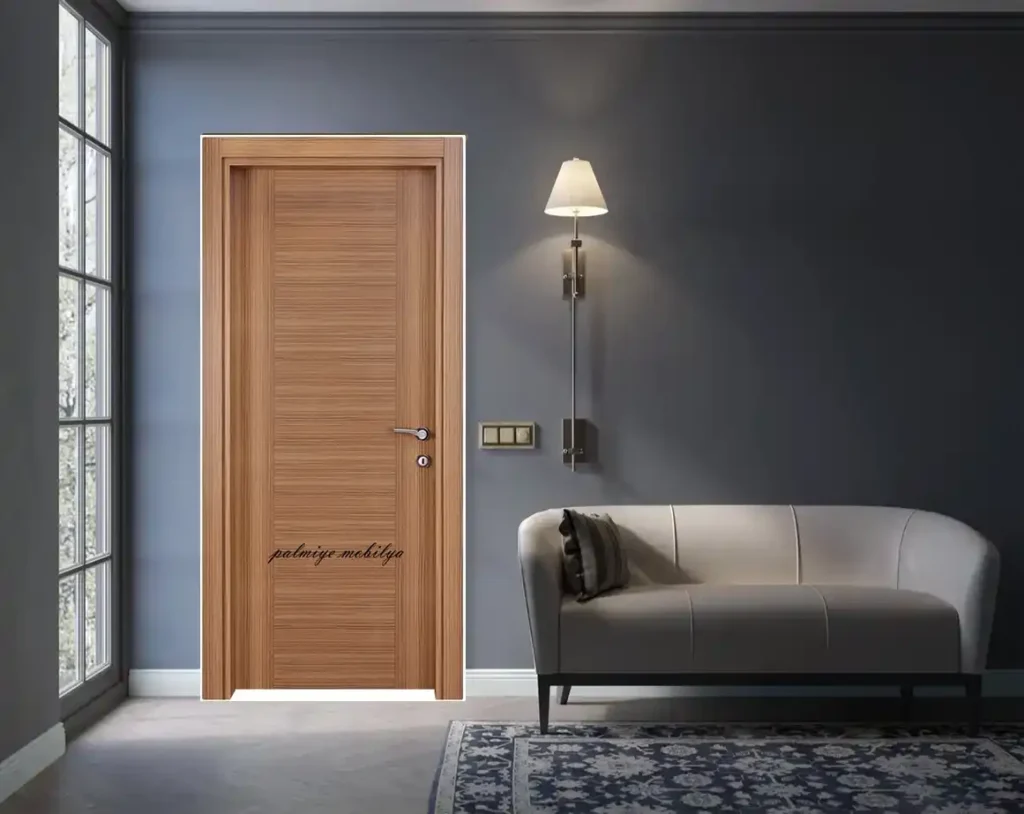
Flush Surface (Flat Panel) Lacquered Types
- Design & Machining Characteristics: The surface is a completely flat sheet of HDF, free of three-dimensional moldings or routed lines. The focus is entirely on the quality of the lacquer coat, whether it is finished in a smooth velvet matte or a polished high-gloss sheen.
- Architectural Style Alignment: Minimalist, industrial, mid-century modern, and Scandinavian styles. These doors match well with hidden trim profiles and frameless door systems.
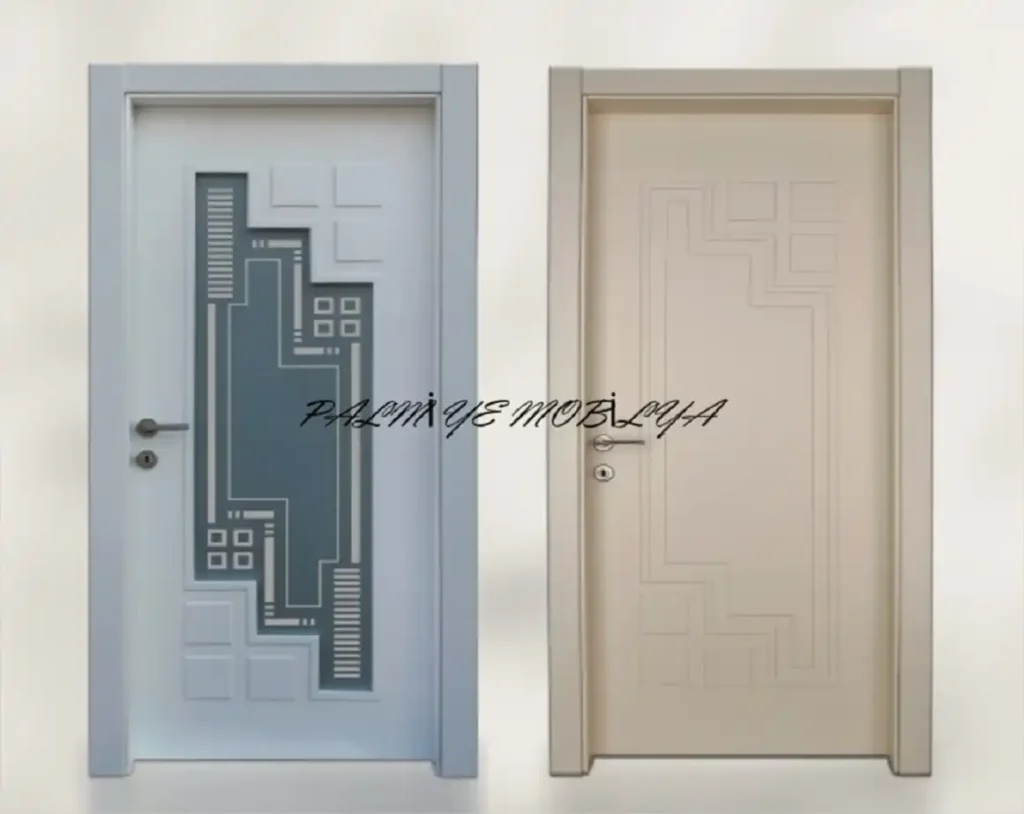
CNC-Routed (Engraved Line) Lacquered Types
- Design & Machining Characteristics: Precise 3-axis or 5-axis computer numerical control (CNC) diamond router bits engrave linear channels into the 8mm outer HDF skin before the lacquering process begins.
- Channel Profiles:
- V-Groove: A sharp 90-degree or 60-degree incision that creates crisp shadows.
- U-Groove: A smooth, rounded indentation that provides a softer, more subtle transition.
- Step-Groove: A multi-layered square incision that gives a recessed, dimensional effect.
- Architectural Style Alignment: Contemporary urban architecture, transitional spaces, and modern apartments that use geometric patterns to create visual height or width across long corridors.
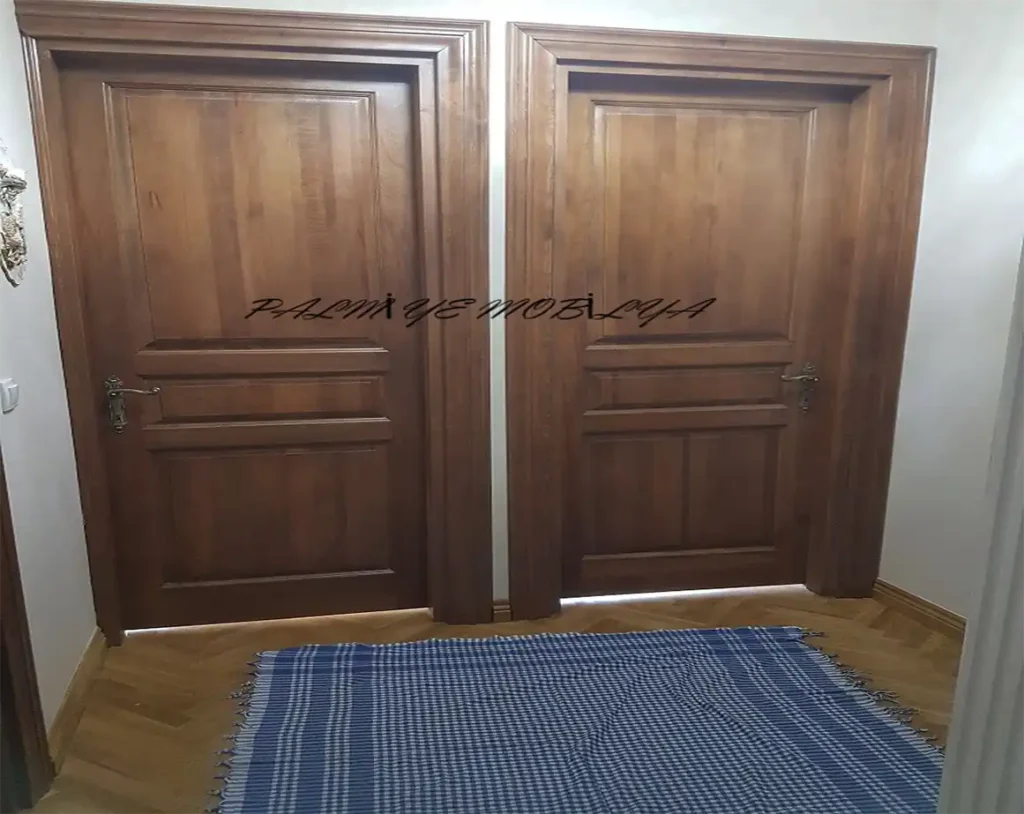
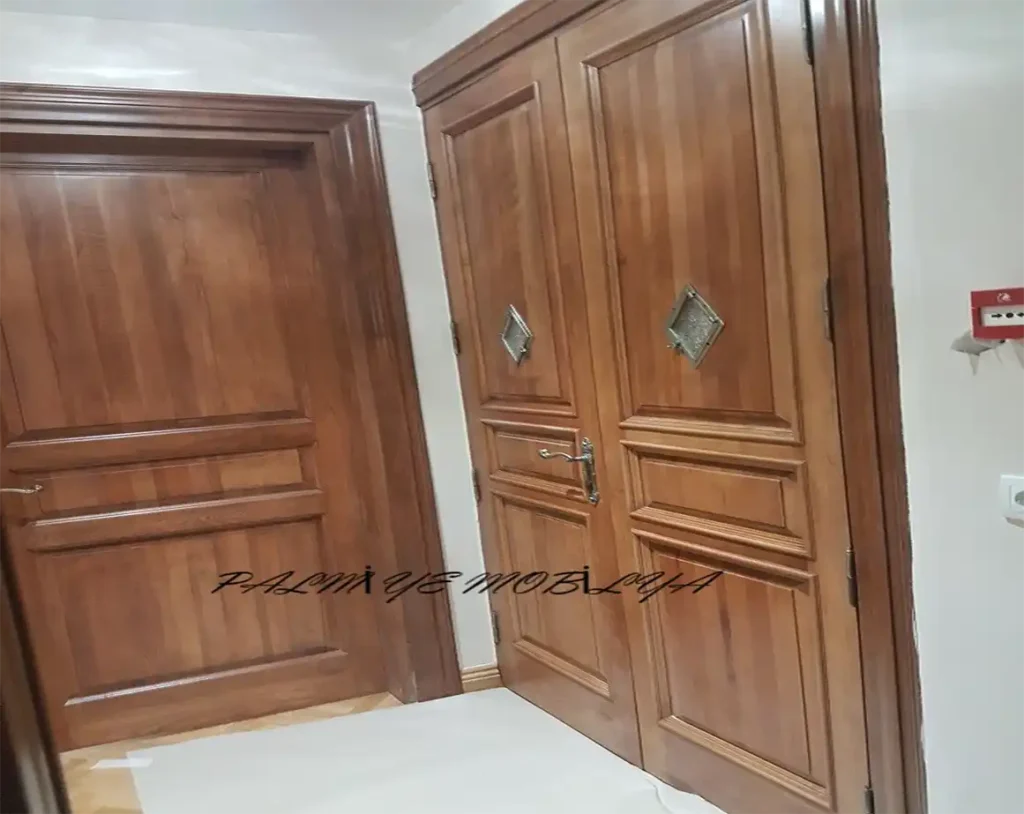
Raised and Recessed Paneled Lacquered Types
- Design & Machining Characteristics: These doors simulate traditional joinery by routing out deep center sections of the face sheet or by using modern bonding techniques to mount separate lacquered raised panels onto the core face.
- Typologies:
- Single-Panel (Shaker Style): A clean, recessed rectangular center with sharp 90-degree edges.
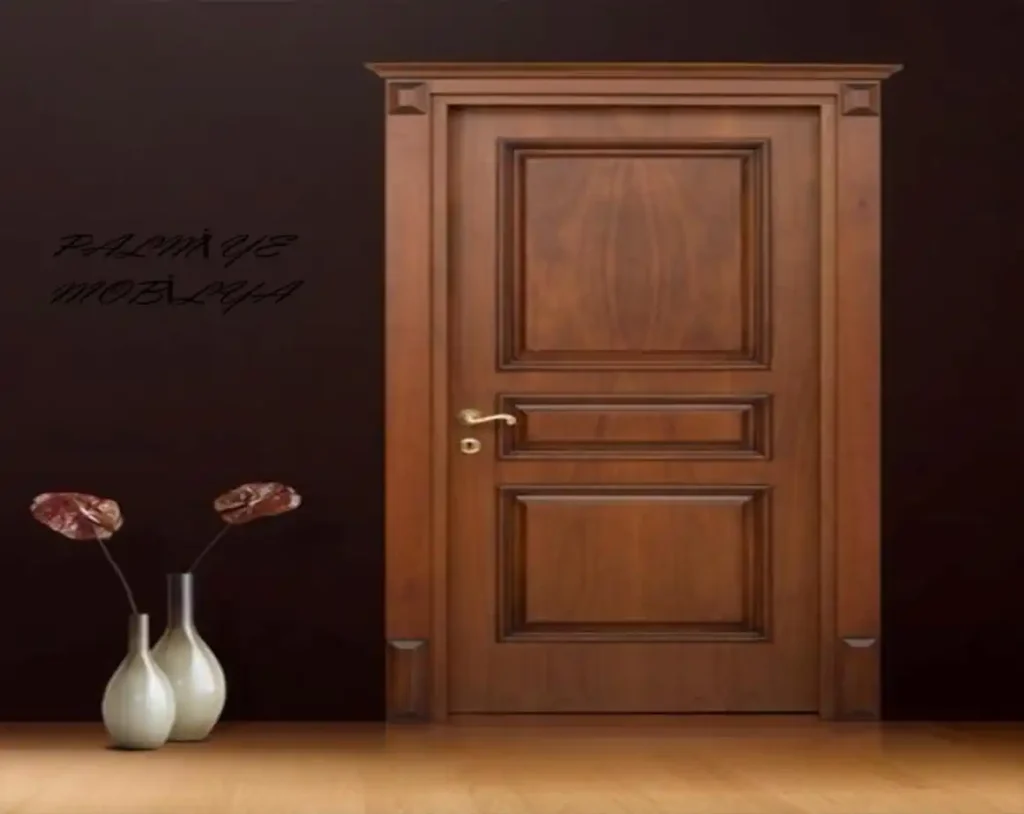
- Two-Panel Classic: Features a smaller square upper panel and an elongated lower panel, often styled with elegant French curves or traditional ogee profiles.
- Multi-Panel Georgian/Victorian: Features four or six symmetrical recessed panels, capturing light to accentuate classical proportions.
- Architectural Style Alignment: Neoclassical villas, luxury hotels, heritage renovations, and traditional European residences.
3. Chemical Coating Systems and Finish Classifications
The exterior polymer skin is what defines a lacquered door. Turkish factories use a variety of chemical formulations to balance cost, processing speed, scratch resistance, and color retention.
Polyurethane (PU) Lacquered Types
- Chemical Profile: A multi-component coating system driven by a cross-linking reaction between a polyol resin base and an aliphatic or aromatic isocyanate hardener.
- Surface Properties: High elasticity, high film thickness, and excellent resistance to household cleaning chemicals and impact. It creates a deep, vibrant finish in solid colors.
- Best Use Case: High-traffic family homes and standard commercial spaces where durability and chemical resistance are necessary.
Acrylic Lacquered Types (Non-Yellowing)
- Chemical Profile: Thermosetting or thermoplastic pure acrylic polymers dissolved in specific organic solvents.
- Surface Properties: Outstanding UV stability. Unlike standard polyurethane formulas, acrylic resins do not break down or yellow when exposed to direct sunlight, making them essential for pure white finishes.
- Best Use Case: White and pastel-colored doors in spaces with large, south-facing windows, glass facades, or bright overhead skylights.
Water-Borne Eco-Lacquered Types
- Chemical Profile: Polyurethane dispersions (PUDs) and acrylic acrylic-copolymer hybrids suspended in a water matrix, significantly lowering Volatile Organic Compound (VOC) emissions.
- Surface Properties: Meets strict green building requirements (LEED, BREEAM) and European eco-regulations. It provides a durable finish with low chemical odor during and after installation.
- Best Use Case: Sustainability-focused construction projects, hospitals, nurseries, and eco-conscious residential developments.
UV-Cured Industrial Lacquered Types
- Chemical Profile: Photo-reactive acrylated oligomers and monomers that instantly polymerize under precise ultraviolet light frequencies inside automated production lines.
- Surface Properties: Extremely hard outer shell with excellent scratch and abrasion resistance. These doors are produced on highly efficient automated rolling lines.
- Best Use Case: Large-scale commercial projects, multi-unit apartment complexes, and high-volume developments where consistency and scratch-resistant finishes are required.
4. Gloss Metrics and Sheen Engineering
The appearance of Lacquered Door Types Turkey is heavily influenced by its gloss level. Gloss levels are measured precisely using a calibrated glossmeter at a 60-degree angle of reflection according to international standards (ISO 2813).
[0 GU] ------------------ [20 GU] ------------------ [50 GU] ------------------ [100 GU]
     Deep Matte              Satin / Eggshell         Semi-Gloss               High Gloss
     (Anti-Fingerprint)      (Soft Luster)            (Traditional Sheen)      (Mirror Finish)
Deep Matte (1% to 5% Gloss Units)
- Visual Characteristics: A soft, velvety surface that absorbs nearly all incoming ambient light. This finish minimizes reflections and glare.
- Technical Advantage: Formulated with anti-fingerprint additives, making it highly resistant to skin oils, smudges, and minor handling marks.
Satin and Eggshell (15% to 25% Gloss Units)
- Visual Characteristics: Offers a gentle luster that strikes a balance between absorbing and reflecting light.
- Technical Advantage: A highly versatile choice for residential projects, as it is easy to clean and forgives minor dust accumulation or surface micro-scratches over time.
High Gloss / Mirror Finish (Greater than 90% Gloss Units)
- Visual Characteristics: A mirror-like, ultra-reflective surface that adds a sense of depth and brightness to tight spaces.
- Technical Advantage: Requires a meticulous multi-stage manual or robotic polishing process using extra-fine abrasive compounds and wool buffers. This creates an upscale, luxurious appearance for high-end projects.
5. Functional and Opening Mechanism Typologies
Lacquered door models from Turkish manufacturers are fully adaptable to modern space planning and can be engineered to support various functional opening mechanisms.
Standard Hinged (Swing) Lacquered Types
- Mechanical Setup: The door panel is mounted to a wooden or composite frame using side hinges and swings open along a single axis.
- Hardware Integration: Can be configured with traditional butt hinges or modern, fully concealed 3D adjustable hinges that hide from view when the door is closed.
Concealed Frame (Filomuro / Flush-with-Wall) Lacquered Types
- Mechanical Setup: The traditional wooden architrave is eliminated. An extruded structural aluminum frame is embedded directly into the plasterboard or brick wall before finishing. The lacquered door panel hangs on 3D hinges, sitting completely flush with the surrounding wall surface.
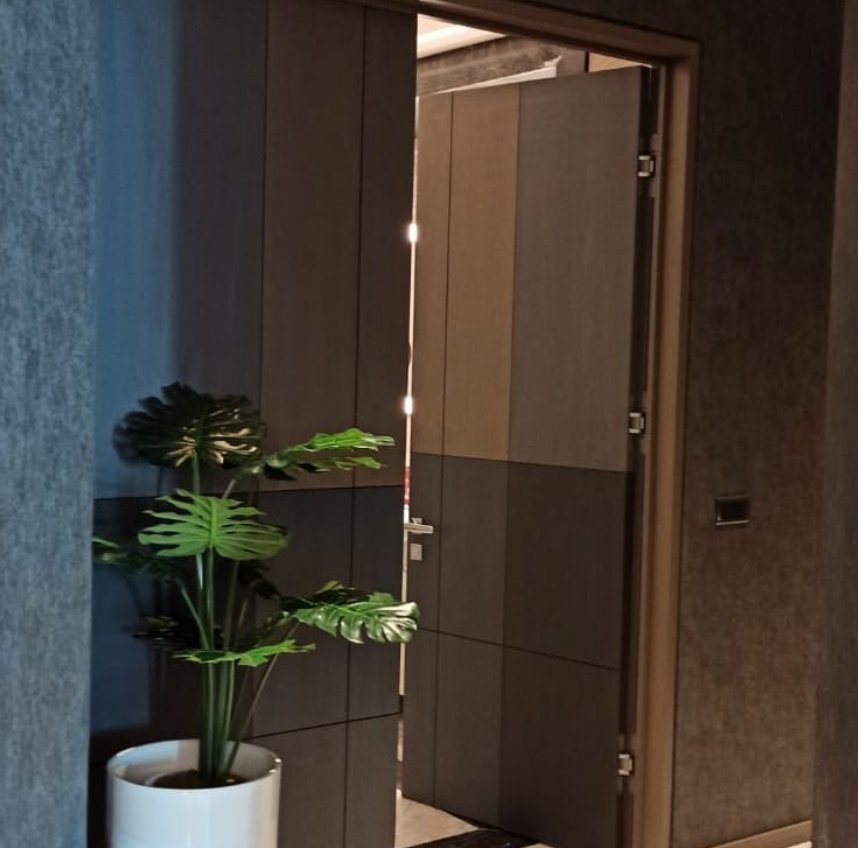
- Design Strategy: Creates a seamless, hidden door look. The door can be painted or lacquered in the exact color of the wall to make it blend into the background.
Sliding and Pocket Lacquered Types
- Mechanical Setup: The door panel moves horizontally along a top-mounted aluminum rail system.
- Barn Door Type: The hardware track is mounted visibly on the wall surface, and the lacquered door slides parallel to the wall.
- Pocket Door Type: The door slides completely into a recessed metal cage built inside the drywall partition, clearing floor and wall space.
- Hardware Integration: The bottom rail of the door is routed with a guide channel to prevent swaying, and the side profile features integrated flush pull handles and hook locks.
Pivot Lacquered Types
- Mechanical Setup: Instead of side-mounted hinges, the door turns on heavy-duty top and bottom pivot pins anchored into the floor and upper lintel.
- Design Strategy: Designed for grand entrances and oversized architectural openings. This mechanism easily handles wide, heavy solid-core panels, allowing them to swing open smoothly with minimal effort.
6. Comprehensive Technical Dimensions and Tolerance Matrix
To ensure successful installation and trouble-free operation on site, Turkish lacquered doors are manufactured to strict structural specifications and metric tolerances.
| Structural Parameter | Residential Standard Specification | Commercial / Luxury Specification | Allowable Manufacturing Tolerance |
|---|---|---|---|
| Panel Thickness | 40 mm | 42 mm to 45 mm | ±0.5 mm |
| Standard Heights | 1980 mm / 2050 mm | 2100 mm / 2200 mm / 2400 mm+ | ±1.0 mm |
| Standard Widths | 700 mm / 800 mm / 900 mm | 750 mm / 850 mm / 1000 mm+ | ±1.0 mm |
| HDF Surface Skin | 6 mm thickness | 8 mm thickness | ±0.2 mm |
| Perimeter Reveal Gap | 3.0 mm | 3.0 mm | ±0.5 mm |
| Bottom Floor Clearance | 5.0 mm to 8.0 mm | 4.0 mm to 6.0 mm (with drop seal) | ±1.0 mm |
7. The Layer-by-Layer Manufacturing and Chemical Curing Protocol
Understanding the manufacturing process highlights why premium Lacquered Door Types Turkey excel in surface uniformity and long-term durability. The coating process is a systematic application of layers and precise sanding cycles.
+-------------------------------------------------------+

|  Topcoat Layer 2: Acrylic/PU Finish (40 microns)      |
+-------------------------------------------------------+

|  Topcoat Layer 1: Color Base Finish (40 microns)      |
+-------------------------------------------------------+

|  Sanding Cycle: P400 Grit Mechanical Polishing         |
+-------------------------------------------------------+

|  Primer Layer 2: Cross-Linked High-Solid (50 microns) |
+-------------------------------------------------------+

|  Sanding Cycle: P320 Grit Calibration Sanding         |
+-------------------------------------------------------+

|  Primer Layer 1: Pore-Filling Filler Base (50 microns)|
+-------------------------------------------------------+

|  Isolator Resin Layer: Fiber-Sealing Base             |
+-------------------------------------------------------+

|  Substrate Base: Ultra-Flat High-Density HDF Skin     |
+-------------------------------------------------------+
Step 1: Substrate Preparation and Calibration
The door panel is passed through a wide-belt calibrating sander to ensure the HDF surface skin is perfectly flat and consistent in thickness across its entire area.
Step 2: Isolator Sealing Application
A highly fluid polyurethane or polyester isolator resin is applied to any raw machined grooves or exposed edges. This seals the loose wood fibers, preventing them from absorbing uneven amounts of moisture or primer.
Step 3: First Primer Layer and Curing
Automated reciprocating arms apply a thick layer of high-solid primer (approximately 50 to 60 microns). The door then moves to an infrared flash-off zone, where solvents evaporate gradually to prevent surface defects like pinholes or bubbling.
Step 4: Intermediate Calibration Sanding
Once cured, the door panel is sanded using orbital machines with P240 to P320 grit sandpaper. This step removes surface imperfections, creates a flat plane, and gives the next coat a textured profile to grip onto.
Step 5: Second Primer Layer and Fine Sanding
A second perpendicular primer layer is applied and cured. This layer undergoes ultra-fine calibration sanding using P400 to P600 grit media, preparing the surface for a flawless topcoat.
Step 6: Cleanroom Topcoat Application
The door enters a positive-pressure, dust-free cleanroom. Automated spraying robotics apply two coats of premium polyurethane or acrylic topcoat at a wet film thickness of 120 to 150 microns.
Step 7: Final Curing and Polishing Line
The doors move through a multi-stage convection drying tunnel at 40°C to 50°C to ensure full chemical cross-linking. High-gloss variants bypass packaging and head directly to a buffing line, where they are polished with fine abrasive compounds and lamb’s wool wheels to achieve a mirror finish.
8. Integrated Frame and Architrave Systems
An interior door functions as a complete system. When specifying Lacquered Door Types Turkey, manufacturers design matching frame and architrave components to ensure clean aesthetics and structural stability.
Blockboard Wood Frames
- Construction: Formed by edge-gluing solid wood strips together, sandwiched between thin layers of MDF.
- Performance Benefit: Exceptional resistance to bending and warping under high humidity, while providing a solid substrate for anchoring heavy 3D hinges.
Wood-Plastic Composite (WPC) Waterproof Frames
- Construction: Extruded using an advanced blend of organic wood flour and polymer resins.
- Performance Benefit: 100% waterproof and highly resistant to moisture wicking, making it an excellent choice for bathroom entries, humid coastal projects, and tropical climates.
Telescopic Architrave Systems
Turkish door systems feature adjustable telescopic architraves. The casing molding includes an extended tongue that slides directly into a matching groove on the main door frame. This allows installers to adjust the trim on-site to fit varying wall thicknesses without needing to cut or plane timber.
9. Hardware Engineering and Mortise Specifications
Premium lacquered doors require high-quality hardware to function smoothly. Turkish factories utilize precise CNC machinery to prep doors for various high-performance accessories.
Magnetic Silent Locks
- Mechanism: Traditional spring mechanical latches are replaced with a sleek magnetic bolt system. When the door is open, the latch stays pulled inside the panel profile. It only snaps forward into the strike plate when the door closes completely.
- Benefits: Eliminates clicking sounds, prevents the latch from scratching the face of the lacquered frame, and offers a clean look along the edge of the door.
3D Adjustable Hidden Hinges
- Mechanism: Concealed hinges are mortised into the frame and the door edge, becoming completely invisible when the door is shut.
- Benefits: Allows installers to fine-tune the door across three structural axes (vertical, horizontal, and depth/compression) using a hex key. This ensures perfectly uniform margins around the entire opening.
Drop-Down Automatic Acoustic Seals
- Mechanism: A mechanical drop seal is integrated into a routed slot along the bottom rail of the door panel.
- Benefits: When the door closes, a small plunger pin presses against the frame jamb, lowering a neoprene acoustic seal down onto the floor. This blocks air drafts, dust, light, and sound without requiring a raised floor sill.
10. Rigorous Quality Control and Testing Protocols
To meet international building codes and European product standards, high-quality Lacquered Door Types Turkey must pass strict physical and mechanical testing protocols.
Mechanical Strength Testing (EN 1192)
Doors are subjected to vertical loading, static torsion, hard body impact, and soft body impact tests. High-quality solid-core and tubular-core lacquered models routinely clear Class 3 (Medium Duty) and Class 4 (Heavy Duty) ratings, ensuring they can withstand frequent slamming and heavy daily use.
Resistance to Liquid Testing (EN 12720)
The finished lacquer surface is exposed to common household liquids—including water, coffee, fruit juices, fats, and mild cleaning detergents—for up to 24 hours. A passing grade requires zero permanent staining, softening, or color fading of the polymer coating.
Cross-Cut Adhesion Testing (EN ISO 2409)
A grid of lattice cuts is made through the lacquer coating down to the HDF substrate. Adhesion-testing tape is applied and pulled away firmly. A passing score (Class 0 or Class 1) ensures the lacquer layers are strongly bonded and will not peel or chip at corners and edges over time.
11. On-Site Installation Manual
To protect the factory-applied finish of your premium lacquered doors, installers must follow a systematic installation process on site.
Phase 1: Site Environment Readiness Checklist
- Curing of Wet Trades: All interior plastering, drywall taping, tiling, and flooring screeds must be fully dry.
- Humidity & Temperature Control: The building’s climate must be stabilized, maintaining a relative humidity between 40% and 60% and an ambient temperature between 15°C and 25°C.
- Moisture Verification: The subfloor moisture content must measure below 2.0% for concrete slabs before doors are unboxed.
Phase 2: Step-by-Step Installation Procedure
- Rough Opening Assessment: Verify the rough structural opening is vertical, square, and plumb across both diagonal axes.
- Frame Pre-Assembly: Lay out the three-sided frame components on a clean, padded workbench. Assemble the miter joints using internal structural screws and wood glue.
- Positioning the Frame: Lift the assembled frame into the wall opening. Secure it temporarily using non-marring plastic adjustment wedges.
- Plumb Realignment: Use a precision laser level to align the hinge jamb on both the horizontal and vertical planes.
- Structural Anchoring: Secure the frame to the wall studs by driving structural fasteners through hidden hardware pockets, such as behind the hinge plates and inside the strike plate mortise.
- Insulation Foaming: Inject a low-expansion, single-component polyurethane foam into the gap between the wall and the frame. Use temporary internal wood cross-braces to prevent the foam from flexing or bowing the frame as it cures.
- Hanging the Panel: Mount the lacquered door panel onto the hinges. Adjust the 3D hinge screws to set a uniform 3mm reveal gap along the top and sides.
- Architrave Trim Fitting: Apply thin lines of low-modulus construction adhesive inside the frame groove. Slide the telescopic architrave tongue into place, adjusting it until it sits flush against the wall finish.
12. Maintenance, Care, and Preservation Guide
Lacquered doors are durable and easy to maintain, but they require proper care to avoid surface scratches and chemical damage.
Approved Cleaning Procedures
- Dusting: Wipe the door surface regularly with a clean, dry, lint-free microfiber cloth to remove dust.
- Washing: For light smudges or fingerprints, use a microfiber cloth dampened with lukewarm water and a drop of pH-neutral soap. Wipe the surface clean, then dry it immediately with a soft towel.
- Prohibited Materials: Never use abrasive pads, steel wool, or harsh chemicals like acetone, ammonia, bleach, or solvent thinners. These materials will dull, cloud, or dissolve the protective lacquer finish.
Field Repair of Minor Surface Damage
- Cleaning: Degrease the damaged area using isopropyl alcohol to clear away dirt and skin oils.
- Filling Deep Scratches: For deep scratches that reach the primer layer, fill the groove using an acrylic touch-up pen or a soft wax repair stick matched to the door’s original RAL color code.
- Levelling: Gently remove excess filler using a plastic edge scraper to level the repair with the surrounding surface.
- Polishing (Gloss Surfaces): For high-gloss finishes, apply a dab of fine-cut polishing compound to the area. Buff gently in circular motions with a clean microfiber cloth or a mini wool pad to restore the mirror-like shine.
13. Procurement Guidelines for International Project Managers
When sourcing Lacquered Door Types Turkey for international commercial or residential projects, developers should incorporate specific criteria into their purchase orders.
Shipping Protection Requirements
Lacquered finishes are sensitive to friction damage during transit. Ensure your purchase specifications require the manufacturer to wrap every door panel individually in protective polyethylene foam sheets, fit them with heavy-duty reinforced cardboard corner guards, and ship them on secured, enclosed wooden export pallets.
Climatic Optimization
When ordering doors for regions with high humidity or very dry conditions, share the destination’s climate profile with the factory. This allows the manufacturer to optimize the moisture content of the raw timber core (ideally stabilizing it between 6% and 10%) and adjust the flexibility of the lacquer coats to prevent cracking or warping after delivery.
By choosing the right core material, surface configuration, chemical coating, and opening mechanism, you can select a Turkish lacquered door system that matches your design goals and meets your project’s performance requirements.
Butik Otel Mobilyaları
Butik Otel Mobilyaları

Butik Otel Mobilyaları



Şunları da sevebilirsiniz
Wood Window Production Turkey
Solid Furnitures Turkey