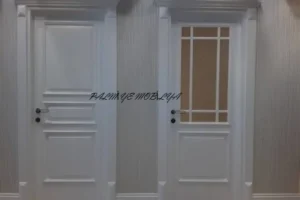

Lacquered Hotel Doors Turkey
Lacquered Hotel Doors Turkey: The Ultimate Technical and Procurement Guide for Global Hospitality Developments
In international hospitality architecture and multi-family high-rise development, the interior entrance system of a guestroom is much more than a functional partition. It serves as the primary physical transition point, establishing a guest’s first impression of acoustic insulation, mechanical security, and upscale design. In the global commercial real estate market, sourcing through a certified Lacquered Hotel Doors Turkey pipeline has become a vital strategy for developers, project managers, and hospitality procurement specialists.
Turkey’s commercial millwork sector has positioned itself at the cutting edge of global industrial design. By combining advanced automated machinery with high-density materials and deep woodworking expertise, Turkish manufacturers produce premium lacquered hospitality doors that meet international fire-rating, sound-containment, and structural durability standards.
This technical guide provides an exhaustive review of the materials, chemistry, manufacturing steps, performance tests, and global supply chain logistics that define high-performance Lacquered Hotel Doors Turkey. It offers architects, contract specifiers, and procurement officers the technical insights required to execute successful millwork packages for world-class hotel properties.
1. The Global Expansion of Lacquered Hotel Doors Turkey Sourcing
The growing presence of Lacquered Hotel Doors Turkey manufacturers in top-tier hospitality projects—from boutique hotels in Western Europe to mega-resorts in the Middle East—is driven by distinct industrial clustering and strong macroeconomic advantages.
High-Capacity Manufacturing Hubs and Cluster Economics
The production of commercial-grade Lacquered Hotel Doors Turkey is concentrated in heavily capitalized industrial manufacturing zones across regions like Kayseri, İnegöl, Ankara, and the outskirts of Istanbul. These clusters house specialized chemical labs, automated wood calibration centers, and hardware machining plants in close proximity.
- Direct Raw Material Integration: Turkish factories sit directly adjacent to some of the largest domestic composite board and resin plants globally. This proximity eliminates internal logistics delays, lowers raw material transportation costs, and secures bulk pricing discounts that are passed on to global buyers.
- Scalable Production Efficiency: Tier-1 Turkish facilities manage massive floor areas equipped with continuous automated production lines. This setup enables them to produce thousands of custom architectural doors per month (e.g., 10,000 to 30,000 complete sets) with strict dimensional consistency and low per-unit labor costs.
Strategic Logistics and Trade Customs Efficiency
The cross-border logistics advantages of a Lacquered Hotel Doors Turkey contract simplify international construction schedules:
- The EU-Turkey Customs Union: Since 1995, industrial products have moved between Turkey and European Union member states free of import customs tariffs or quantitative restrictions, provided an A.TR movement certificate is verified. This provides an immediate cost advantage compared to importing from East Asian manufacturing hubs.
- Intermodal Freight Route Connectivity: Turkey’s direct access to deep-sea maritime ports (such as Ambarlı, İzmir, and Mersin) and established overland trucking corridors allows shipping containers to reach European, North African, or Middle Eastern construction sites within 3 to 10 days. This minimized transit window significantly reduces the amount of capital tied up in transit and prevents expensive project field delays.
2. Structural Composition and Advanced Core Material Sciences
A commercial hotel door must withstand thousands of continuous operational cycles, sudden physical impacts from guest luggage, and changing microclimates without bowing or cracking. Sourcing managers utilize the Lacquered Hotel Doors Turkey network because its products are engineered with robust, multi-layered core and substrate matrices.
[Bespoke Lacquered Hotel Door Leaf Cross-Section Matrix]
┌────────────────────────────────────────────────────────┐
│ Polyurethane-Acrylic Topcoat (UV-Cross-Linked Protection)│
├────────────────────────────────────────────────────────┤
│ High-Solid Polyurethane / Polyester Primer Base        │
├────────────────────────────────────────────────────────┤
│ Moisture-Resistant Premium MDF/HDF Skin (8mm to 12mm)  │
├────────────────────────────────────────────────────────┤
│ Internal Core Vector: Solid Wood, Sauerland, Mineral   │
├────────────────────────────────────────────────────────┤
│ Internal Frame: 3-Layer Cross-Laminated Glulam soft    │
└────────────────────────────────────────────────────────┘
Substrate Sizing: Refined High-Density Fiberboard
The visual quality of a luxury lacquer coat depends on the flatness and stability of the underlying substrate. If the fiberboard face is porous or rough, the liquid paint layers will absorb unevenly, resulting in surface imperfections or an unacceptable wavy “orange peel” finish.
- Density Calibration: For hospitality lines, factories avoid low-grade particleboards or thin fiber skins. Instead, they use thick, premium High-Density Fiberboard (HDF) or extra-refined Medium-Density Fiberboard (MDF) with densities exceeding 820 kg/m³.
- Moisture-Resistant (MR) Resins: Premium lines utilize MR-HDF manufactured with hydrophobic melamine-urea-formaldehyde or polymeric MDI binders. This chemistry keeps thickness swelling below 4% even when exposed to high humidity, making the doors highly suitable for luxury bathrooms, indoor wellness spaces, and coastal properties.
- Architectural Skin Thickness: While standard commercial doors use thin 3mm to 4mm skins, Lacquered Hotel Doors Turkey typically relies on 8mm, 10mm, or 12mm thick HDF outer skins. This structural thickness allows for deep, dramatic 3D architectural CNC carving, curved beveling, and classical panel detailing without exposing the hollow core underneath.
Internal Frame Construction: Cross-Laminated Glulam Timber
To prevent door stiles and rails from bowing due to differences in air pressure and temperature between the hotel corridor and the guestroom interior, the internal frame of the door leaf is built using engineered timber:
- Automated Defect Removal: Premium softwoods and hardwoods (such as Siberian Pine, European Spruce, or native Fir) are kiln-dried to an exact moisture content of 8% to 10%. They are then scanned by automated optical sensors that detect and cut out natural defects like knots, pitch pockets, or structural cracks.
- Cross-Grain Lamination: The remaining clear timber segments are finger-jointed using high-tensile polyurethane (PUR) structural adhesives. These wood elements are then laminated into a multi-layered frame where the grain directions alternate at 90-degree angles. This cross-grain design cancels out internal movement, keeping the door frame straight and stable.
Hospitality Internal Core Matrices and Performance Physics
The internal filling of a guestroom door leaf dictates its weight, impact resistance, thermal mass, and sound isolating characteristics. High-end Lacquered Hotel Doors Turkey manufacturers offer three primary core configurations tailored to hospitality building regulations:
+───────────────────────────────+───────────────────────────────+───────────────────────────────+

| Internal Core Variant         | Structural Density Class      | Performance Role              |
+───────────────────────────────+───────────────────────────────+───────────────────────────────+

| Extruded Tubular Board        | 260 - 320 kg/m³ Core Profile  | Guestrooms (Acoustic Baseline)|
| Solid Particleboard Matrix    | 550 - 680 kg/m³ Solid Core    | Interconnecting / Suite Doors |
| Solid Mineral Composite       | High Density Vermiculite      | Fire Doors (FD30 to FD90)     |
+───────────────────────────────+───────────────────────────────+───────────────────────────────+
1. Extruded Tubular Particleboard (Sauerland Core)
- Structure: Extruded composite timber featuring continuous cylindrical voids running through its mass.
- Performance: Combines excellent flat-panel crush resistance with a lightweight profile, reducing wear on hidden hinge hardware while providing good structural stability. This core serves as the standard baseline for acoustic guestroom openings.
2. Solid Particleboard and Flaxboard Matrices
- Structure: A solid, continuous sheet of compressed flax fibers or high-density particleboard.
- Performance: Provides high mechanical impact resistance and excellent structural mass. This setup is frequently specified for interconnecting suite doors and grand formal room entries.
3. Solid Mineral Fire Cores
- Structure: A dense matrix of vermiculite, volcanic glass particles, and specialized structural binders.
- Performance: Non-combustible, high density, and low thermal conductivity. This core is required for certified fire doors protecting egress corridors.
3. Chemical Engineering and Automated Lacquering Systems
The defining characteristic of premium Lacquered Hotel Doors Turkey is the depth, clarity, hardness, and fading resistance of their surface coats. Sourcing managers prioritize automated industrial finishing lines to ensure that thousands of guestroom doors match exactly in gloss level and color tone.
[Hospitality Lacquer Chemical Layer Stack]
├── 1. Pore Isolation Layer  --> Transparent Polyester/Epoxy Sealer (Blocks Grain Intake)
├── 2. Structural Leveling   --> Dual Multi-Layer High-Solid Polyurethane Fillers (Sanded)
└── 3. Architectural Styling --> Aliphatic Acrylic Non-Yellowing Topcoat (UV Cured)
Polyurethane-Acrylic and Aliphatic Acrylic Formulations
Hotel corridors often feature a mix of natural light and high-intensity overhead bulbs, which can break down low-grade paint binders:
- The Discoloration and Yellowing Challenge: Standard paints utilize aromatic binders that turn yellow or fade when exposed to sunlight. To prevent this, premium Lacquered Hotel Doors Turkey factories use high-grade Aliphatic Acrylic Non-Yellowing Topcoats. These resins are completely transparent and stable, keeping white and pastel doors bright over long lifecycles.
- Pencil Hardness and Surface Flexibility: The chemical coating is cross-linked to achieve a surface hardness rating of 3H to 5H on the pencil scale. This provides high scratch resistance against luggage wheels and carts, while maintaining enough film elasticity to flex with micro-movements of the wood fiber substrate without cracking.
The Automated Robotic Coating and UV-Curing Processing Line
In a premier Turkish mass-production factory, the application of lacquer follows a strict automated sequence:
- Wide-Belt Calibrating Sanding: The assembled door leaves are fed through multi-head sanding machines equipped with progressively finer grit sandpapers (P180 to P320). This removes any micro-offsets between the HDF skin and the internal timber frame, achieving a flat surface profile.
- De-Dusting and Ionization: High-velocity air knives blow away micro-dust particles, while static ionization bars neutralize the surface charge of the door leaf. This prevents airborne dust from sticking to the door face before it enters the wet coating zone.
- Robotic Reciprocating Spray Application: The doors travel on a continuous conveyor belt into an enclosed, positive-pressure cleanroom cabin. Dual-arm reciprocating spray robots equipped with high-volume, low-pressure (HVLP) spray guns track the door geometry via optical light curtains. The robots adjust their speed and fluid delivery to coat the flat faces, CNC grooves, and outer edges with absolute uniformity.
- Automated Flash-Off Tunnels: The wet-coated doors pass through heated air-circulation tunnels (35°C to 50°C) for a designated flash-off period. This step allows the water or solvent carriers to evaporate slowly, preventing solvent trapping, surface pinholes, or boiling bubbles.
- UV Cross-Linking Radiators: The doors enter the UV curing chamber, passing under high-intensity mercury and gallium lamps. The UV radiation activates the photo-initiators, instantly cross-linking the polymers into a hard coat. The door leaf emerges from the chamber dry, stackable, and ready for immediate packaging or hardware machining.
4. Architectural Finishes, Designs, and Customization Options
A core commercial benefit of sourcing Lacquered Hotel Doors Turkey is the wide range of architectural designs available within automated production lines, giving designers extensive flexibility.
Gloss Level Calibration and Aesthetics
[Gloss Unit (GU) Level Calibration]
 0 - 3 GU    --> Velvet Deep Matte (Anti-Reflective, Zero-Smudge Nano-Film)
 10 - 20 GU  --> Classic Satin / Eggshell (Balanced Sheen, Hospitality Standard)
 35 - 50 GU  --> Semi-Gloss Architectural Finish (Institutional Premium)
 90+ GU      --> Mirror Piano High-Gloss Finish (Luxury Statement Presidential Suites)
- Velvet Deep Matte Finishes (0-3 GU): Highly recommended for modern, minimalist guestrooms. Matte surfaces scatter light waves evenly, which helps mask minor scratches and fingerprint oils, reducing housekeeping maintenance.
- Classic Satin Finishes (10-20 GU): A versatile option that offers a soft sheen, bridging the gap between modern and classical interior design styles.
Precision CNC Routing and Metallic Inlays
Using computer-aided design (CAD) and multi-axis CNC routers, operations running Lacquered Hotel Doors Turkey lines can feature a wide variety of architectural surface details:
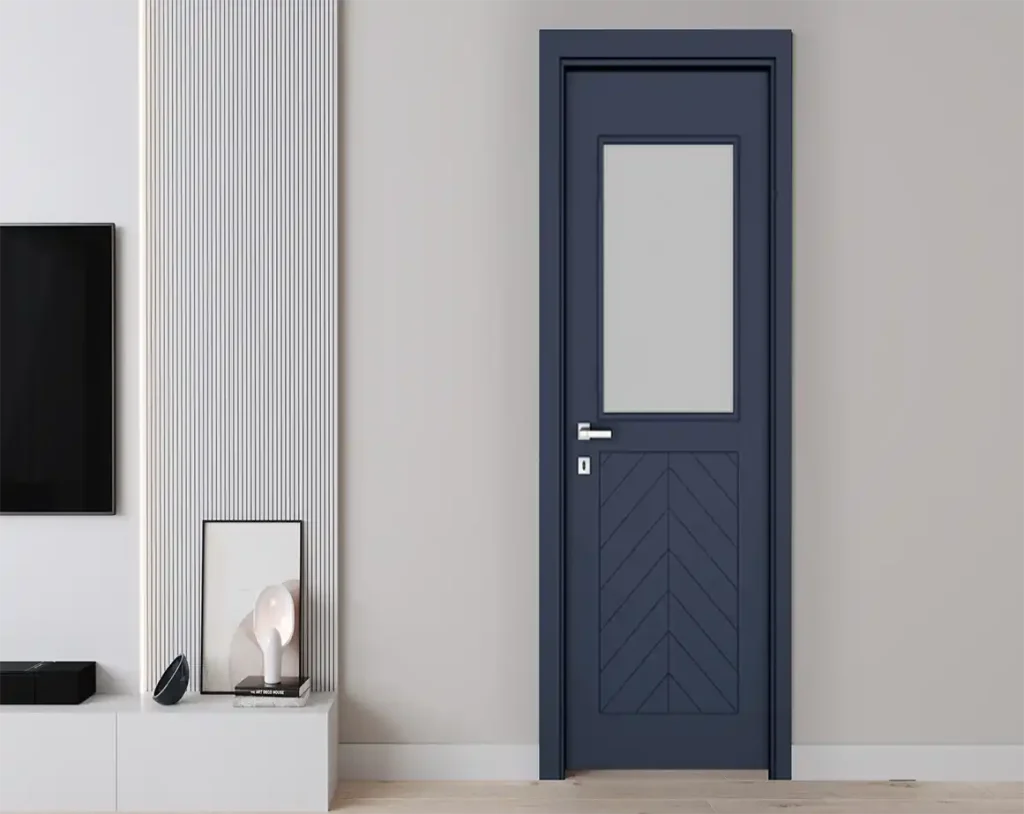
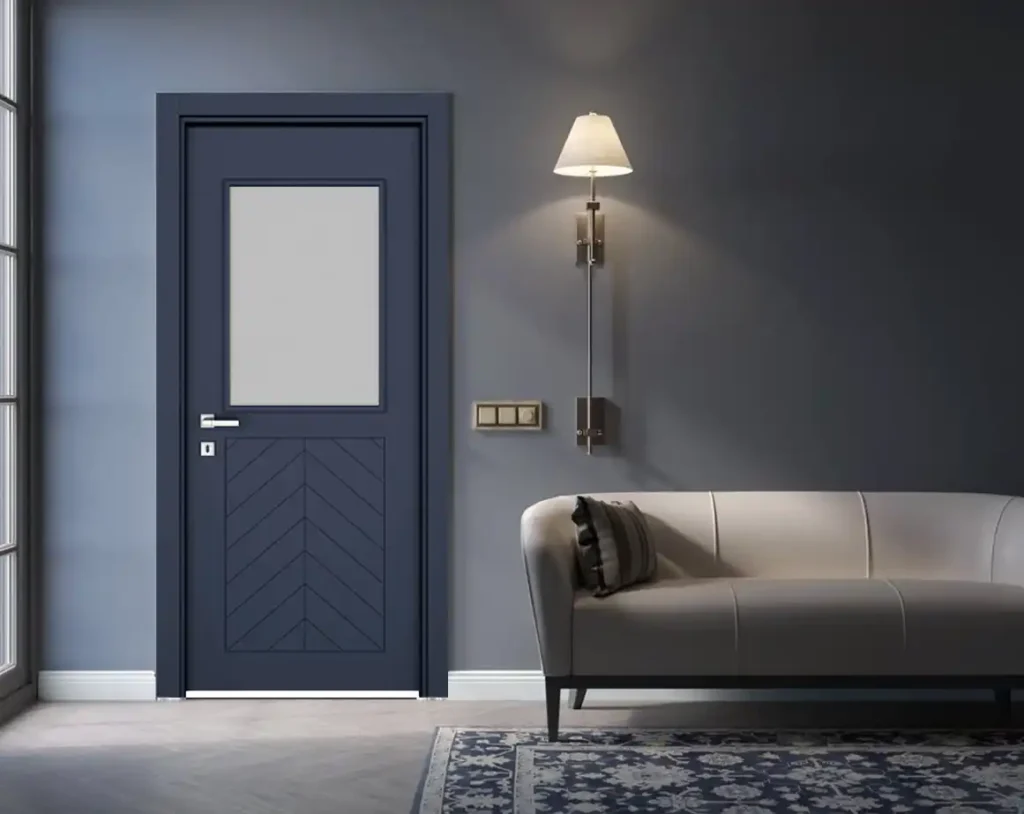
- Minimalist V-Grooves: Sharp, narrow linear incisions (typically 2mm to 4mm wide and 1.5mm deep) that create clean geometric accents for modern spaces.
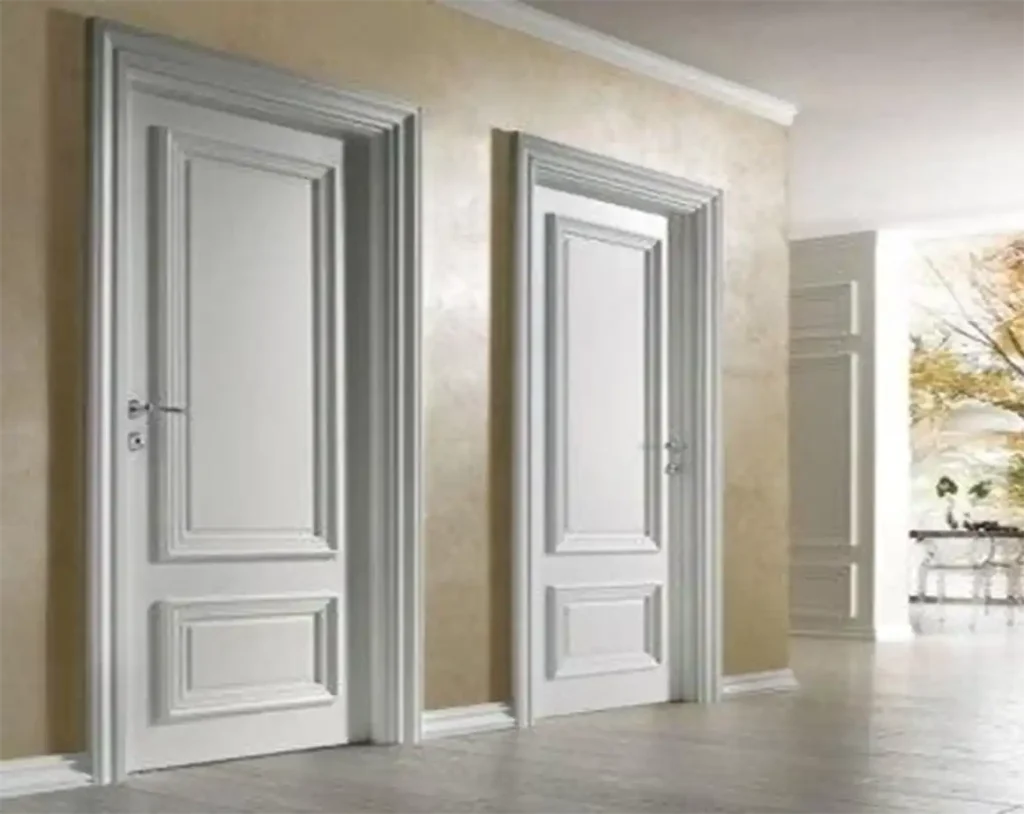
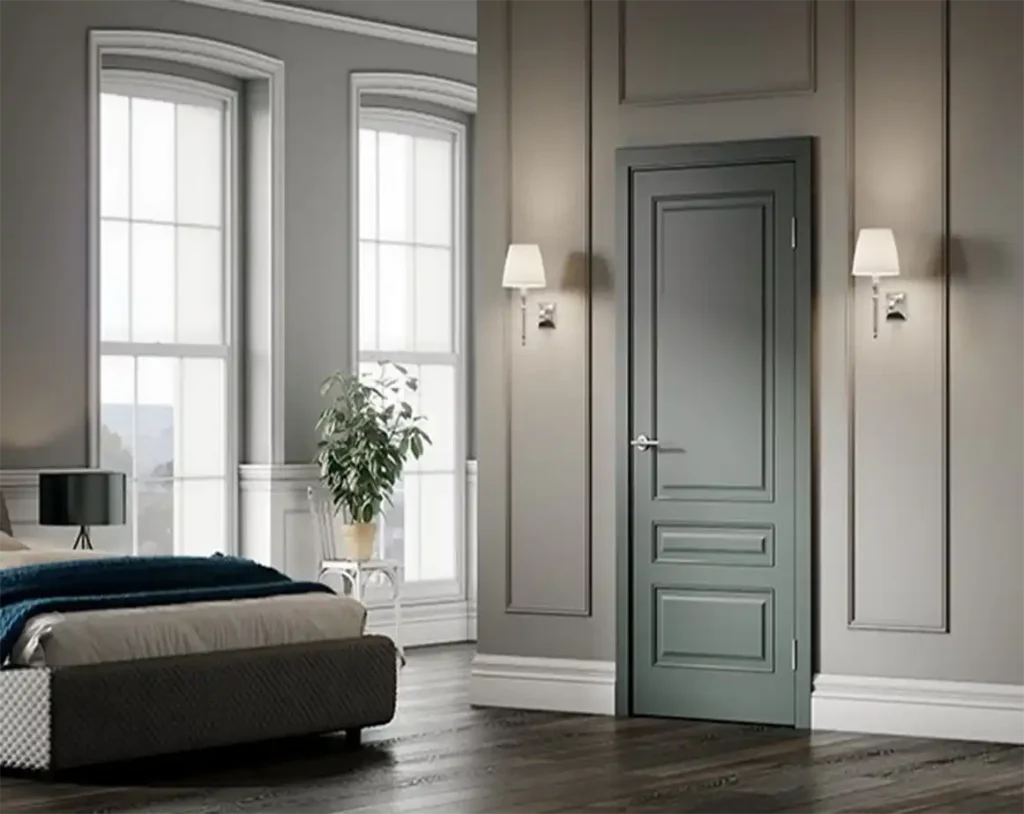
- Bespoke Neo-Classical Profiles: Deeper U-grooves and tiered bevels that replicate the look of traditional stile-and-rail paneled doors, fitting well in traditional apartments and high-end hotel developments.
- Flush Metallic Inlays: Precision CNC routing channels can integrate decorative metal profiles—such as brushed champagne gold, polished brass, satin chrome, or dark anodized copper—completely flush with the lacquered surface for a sleek look.
5. Architectural Framing, Casings, and Structural Hardware Engineering
A hospitality entrance door relies on its surrounding frame and hardware to function reliably. In Lacquered Hotel Doors Turkey, the framing system is engineered to simplify installation on-site while maintaining clean design lines.
Telescopic Adjustable Framing Systems
Traditional door frames often require custom adjustments or on-site trimming to fit variations in wall thickness. Turkish manufacturers utilize adjustable telescopic frame casings to overcome this challenge:
[Hospitality Telescopic Adjustable Framing Blueprint]
┌────────────────────────────────────────────────────────┐
│  Adjustable Architrave Casing (Sliding Interlock Tongue)│
├────────────────────────────────────────────────────────┤
│  Masonry / Drywall Core (Adjustable from 120mm-240mm)   │
├────────────────────────────────────────────────────────┤
│  Engineered Laminated Frame Core (Moisture-Shielded)    │
│  └── Inset TPE Acoustic Performance Gasket             │
└────────────────────────────────────────────────────────┘
- Interlocking Adaptability: The architrave features an extended tongue that slides smoothly into a dedicated groove in the main frame body. This allows a single frame type to adapt to variable wall thicknesses on site (e.g., adjustable from 120mm up to 180mm). This configuration hides structural wall imperfections and eliminates the need for on-site trimming.
- Composite Waterproof Frame Casings: To prevent water damage from floor washing, frame bases are often fabricated from a wood-plastic composite (WPC) or fully wrapped in hydrophobic polymers before lacquering. This protects the bottom of the frame from swelling due to capillary water absorption.
Invisible Framing Systems
For minimalist designs, manufacturers can integrate flush-to-wall or frameless casing profiles:
- Extruded Aluminum Frame Substructure: The wooden frame casing is replaced by an extruded structural aluminum frame installed directly into the drywall or brick masonry during the rough construction phase.
- Seamless Visual Alignment: The profile is plastered over and painted along with the wall. Once the lacquered door leaf is hung on hidden 3D hinges, it sits perfectly flush with the wall face, creating a clean look with no visible architrave trim.
Premium Hardware Preparation
Luxury Turkish factories use multi-axis CNC machines to pre-cut all necessary hardware pockets, ensuring precise installation on-site:
- 3D Adjustable Hidden Hinges: Hidden hinge systems (such as Simonswerk Tectus or high-quality Turkish equivalents) are mortised flush into the door leaf and frame. These hinges allow for precise adjustment across three independent axes (±3mm Height, ±2mm Lateral, ±1mm Depth) using a simple hex wrench, helping installers achieve uniform 3mm gaps.
- Magnetic Silent Mortise Locks: Instead of traditional mechanical latches that click loudly against the frame strike plate, magnetic locks use a neodymium magnetic bolt that stays flush within the door leaf while open. It extends silently into the frame receiver only when the door is fully closed, providing quiet operation and a clean, hardware-free look.
- Biometric Electronic Lockset Prep: For hospitality developments, CNC routing lines can pre-machine internal wire chases through the core of the door leaf. This preparation allows for the clean installation of RFID electronic hotel locksets, card scanners, and smart access systems without visible surface wiring.
6. Technical Performance Metrics and Quality Standards
International hospitality chains require verifiable performance data to satisfy safety codes and insurance regulations. High-end Lacquered Hotel Doors Turkey facilities subject their products to testing against strict international standards.
[Performance Standard Compliance Array]
├── Fire Containment Testing --> EN 1634-1 / UL 10C (Certified 30, 60, or 90 Minute Barriers)
├── Mechanical Performance   --> EN 1191 / EN 12400 (Class 5 Severe Duty Quality Cycling)
├── Acoustic Sound Isolation --> EN ISO 10140-2 (Certified 32 dB to 42 dB Performance)
└── Ecological Emission Code --> EN 717-1 / E1 Standard (Formaldehyde Air Verification)
Fire Resistance Testing (EN 1634-1 / UL 10C)
Certified fire doors are engineered to isolate smoke, toxic gases, and flames within designated building zones for critical periods.
- Intumescent Expansion Strips: The perimeter of a fire-rated door assembly from a Lacquered Hotel Doors Turkey line is fitted with graphite-based intumescent seals. When temperatures exceed 150°C, these strips expand up to 25 times their original volume, sealing the gaps between the leaf and frame to block hot gases.
- Egress Hardware: The assemblies are pre-machined to accept fire-rated panic bars and automated hydraulic closers that comply with EN 1125 and EN 1154 standards, ensuring reliable mechanical egress during an emergency.
Mechanical Endurance and Resistance to Cycling (EN 1191 / EN 12400)
Doors in high-traffic hotels, offices, and large estates experience constant physical use over their lifecycles.
- Rigid Testing Rig: Complete door sets are mounted in automated testing rigs that open and close the door leaf up to 200,000 times under continuous load.
- Severe Duty Classification: High-quality Turkish doors achieve Class 4 or Class 5 (Severe Duty) ratings, verifying that the hinges remain aligned, the door leaf does not sag, and the structural joints hold firm over extended lifecycles.
Acoustic airborne sound Attenuation (EN ISO 10140-2)
Acoustic isolation is a critical requirement for guest comfort in hotels and privacy in corporate offices.
- System Component Sync: To achieve high \(R_{w}\) (Weighted Sound Reduction Index) ratings, a Lacquered Hotel Doors Turkey manufacturer combines extruded tubular particleboard cores with multi-layered composite dampers and continuous Thermoplastic Elastomer (TPE) or EPDM perimeter seals.
- Automatic Mechanical Drop Seals: Deep grooves are routed into the bottom edge of the door leaf to hold a mechanical drop seal. When the door closes, a plunger extends a neoprene profile downward to seal the gap with the floor, allowing the door system to achieve certified noise reduction values ranging from 32 dB to over 42 dB.
7. Quality Control and Industry 4.0 Traceability
Maintaining quality across a large hospitality run requires replacing manual oversight with automated inspection systems.
Automated Inline Inspection Systems
- Laser Flatness Scanners: After pressing the HDF skins onto the internal timber chassis, the door blanks pass under multi-point laser measurement sensors. If a door blank shows a warp or twist greater than 0.5mm over a 2000mm length, it is automatically routed off the line for correction.
- Digital Glossmeters: At the exit of the UV-curing tunnel, automated digital glossmeters scan the door face to verify gloss consistency. This step ensures that every door in a 1,000-unit hospitality order matches perfectly, with no visible differences between individual rooms.
Barcode and RFID Tracking Systems
[Industry 4.0 Data Architecture Flow]
Raw Materials Barcoded ──> CNC Routing Parameters Auto-Loaded ──> Robotic Spray Calibration ──> QC Gate Check ──> Shipping Palette Mapping
Every single component in a Lacquered Hotel Doors Turkey run is assigned a unique barcode or RFID tag upon order entry.
- Automated Machine Calibration: As the door arrives at each station (CNC routing, robotic spraying, hardware drilling), automated scanners read the barcode. The machine instantly loads the correct architectural routing files, paint volume calibrations, and hardware layouts for that specific unit.
- Traceability Benefits: This level of tracking minimizes human error on mixed-model production lines and gives procurement officers real-time visibility into production progress.
8. Sourcing Logistics, Financial Management, and Incoterms Optimization
Procuring volume door orders directly from a Lacquered Hotel Doors Turkey facility requires a clear understanding of commercial trade protocols, packaging specifications, and supply-chain logistics.
Structural Parameters for Technical Specification Schedules
To get precise, actionable quotes from a Turkish manufacturer, procurement officers should prepare an architectural schedule detailing the following variables:
[Technical Specification Checklist for Factory Sourcing]
├── 1. Dimensional Profile   --> Clear Wall Opening Height, Width, Finished Wall Thickness
├── 2. Core Matrix Choice    --> Tubular Particleboard, Solid Core, Sound Shield Matrix
├── 3. Surface & Finish Specs--> Selected RAL/NCS Tone, Gloss Index (Matte vs Piano Gloss)
├── 4. Framing System Type   --> Telescopic Adjustable, Concealed Flush Aluminum Frame
└── 5. Mechanical Hardware   --> Hidden 3D Hinge Routing, Magnetic Silent Mortise Lock
Financial Planning and Incoterms Management
When setting up purchase contracts with a luxury manufacturer, choosing the right International Commercial Term (Incoterm) helps manage risk and transportation costs effectively:
- FOB (Free On Board): The factory manages production, domestic transport to a major Turkish port (such as Ambarlı or İzmir), and export customs clearance. Risk and freight costs transfer to the buyer once the container is loaded onto the ocean vessel. This is an excellent option for buyers with established global freight forwarding partnerships.
- CIF (Cost, Insurance, and Freight): The manufacturer arranges and pays for ocean shipping and maritime insurance to the buyer’s designated destination port. This model simplifies logistics for mid-sized import distributors.
- DDP (Delivered Duty Paid): The manufacturer manages the entire shipping process, including international ocean transit, import customs clearance, local tariffs, and final delivery to the job site. This model provides maximum cost certainty for large-scale real estate developers without internal logistics teams.
Packaging Engineering for Deep Ocean Freight
Lacquered and veneered surfaces are sensitive to friction damage and pressure marking during international transit. A professional factory utilizes multi-layer automated packaging lines to protect cargo:
┌────────────────────────────────────────────────────────┐
│  Heavy-Gauge Double-Wall Corrugated Outer Carton Box   │
├────────────────────────────────────────────────────────┤
│  High-Density EPS (Styrofoam) Edge & Corner Protectors │
├────────────────────────────────────────────────────────┤
│  Polyethylene Protective Stretch-Film Moisture Barrier │
├────────────────────────────────────────────────────────┤
│  Peelable Low-Tack Protective Surface Masking Film     │
└────────────────────────────────────────────────────────┘
- Volumetric Loading Optimization: A standard 40-foot High Cube (40′ HC) shipping container can hold approximately 350 to 450 complete door sets (including leaves, un-assembled frame components, and architraves) when stacked on engineered, ISPM-15 certified heat-treated wooden pallets.
9. Sustainability and Green Building Compliance
Modern hospitality groups often require strict compliance with ecological building initiatives such as LEED (Leadership in Energy and Environmental Design) and BREEAM (Building Research Establishment Environmental Assessment Method). A forward-thinking Lacquered Hotel Doors Turkey manufacturer adapts its processes to meet these environmental standards.
Certified Sustainable Timber Sourcing
Leading door factories in Turkey operate under verified FSC (Forest Stewardship Council) and PEFC (Programme for the Endorsement of Forest Certification) Chain of Custody tracking systems. This certification ensures that the softwoods used in internal frames and the wood fibers in the HDF skins are sourced from sustainably managed forests that support local biodiversity and exclude illegal logging.
Low-VOC Finish Systems and Indoor Air Quality
- Reduced Off-Gassing: Traditional wood paints can release volatile organic compounds (VOCs) and formaldehyde into living spaces over time.
- E0 and E1 Compliance: High-end manufacturers bond their core matrix elements using resins that meet strict European E1 and E0 formaldehyde emission standards. Combined with water-borne or UV-cured topcoats, these doors help projects earn points under the Indoor Environmental Quality (IEQ) sections of LEED and BREEAM.
10. Comprehensive Procurement Timeline Management
To line up production with your construction deadlines, use this typical project timeline for a high-volume order (e.g., 1,000 door sets) from a Lacquered Hotel Doors Turkey facility:
[Hospitality Sourcing Operational Timeline]
├── Phase 1 (Weeks 1 - 2): Technical Shop Drawing Reviews & CAD Profile Freeze
├── Phase 2 (Week 3)     : Physical Prototype Fabrication & Quality Sign-Off
├── Phase 3 (Weeks 4 - 7): High-Speed Automated CNC Machining & Processing
├── Phase 4 (Week 8)     : Automated Lacquering, UV Curing, Hand-Polishing & Quality Audits
└── Phase 5 (Weeks 9 -12): Pallet Stacking, Container Customs, Ocean Transit, & Site Delivery
- Phase 1 (Shop Drawings): Architectural CAD files are reviewed by the factory’s engineering team to confirm exact wall openings, door swings, and hardware compatibility.
- Phase 2 (Prototyping): A sample door set is built to verify finish quality, color accuracy, and hardware fit before full production begins.
- Phase 3 (Core Machining): Engineered timber frames are finger-jointed, HDF panels are pressed, and multi-axis CNC machines cut the required hardware profiles.
- Phase 4 (Finishing & QC): Doors go through automated coating lines, UV tunnels, hand-polishing stages, and automated inspection gates to check dimensions and surface gloss.
- Phase 5 (Logistics): Doors are packed on pallets, cleared through customs, loaded into containers, and shipped via ocean or overland routes to the site.
Conclusion: Securing Sourcing Strategy Success with Turkish Engineering
Sourcing through a dedicated Lacquered Hotel Doors Turkey supplier provides international real estate developers, hospitality design firms, and large-scale builders with an effective combination of industrial capability, technical precision, and customizable design flexibility. By utilizing premium core configurations, automated coating lines, and precise hardware preparations, Turkey’s premium millwork sector delivers high-end interior surfaces tailored to the strict schedules and high quality demands of modern global construction projects. Understanding these material choices, performance criteria, and logistical options helps procurement teams secure their supply chains and deliver high-quality interior spaces on schedule and on budget.

Şunları da sevebilirsiniz
Lacquered Room Door Turkey
Economic Lacquered Door Manufacturing Turkey