

Economic Lacquered Door Manufacturing Turkey
Economic Lacquered Door Manufacturing Turkey: The Comprehensive Sourcing and Engineering Guide for Global Procurement
The international construction and real estate development industries face an ongoing challenge: how to source interior finishes that deliver high aesthetic appeal while meeting strict budget targets, mechanical standards, and aggressive building schedules. For large-scale residential projects, social housing initiatives, student accommodations, and budget-conscious hospitality developments, the selection of interior millwork is a critical financial and functional decision. Within this context, Economic Lacquered Door Manufacturing Turkey has emerged as a premier industrial workflow for developers and procurement officers worldwide.
Turkey has positioned its manufacturing sector as a key bridge between European engineering precision and cost-effective manufacturing economics. By investing heavily in specialized automated machinery, sourcing raw materials efficiently, and optimizing production lines, Turkish factories have mastered the art of value engineering. They produce clean, durable lacquered doors at a fraction of the cost of traditional Western European workshops without sacrificing structural integrity.
This comprehensive technical guide details the raw material optimization, manufacturing chemistry, automated production steps, international testing compliance, and supply-chain logistics that define Economic Lacquered Door Manufacturing Turkey. This resource is designed to help real estate developers, procurement managers, and commercial distributors optimize their supply chains, evaluate factory capabilities, and achieve high returns on investment (ROI).
1. The Global Competitive Edge of Economic Lacquered Door Manufacturing Turkey
Understanding the economic value of an Economic Lacquered Door Manufacturing Turkey production contract requires looking beyond basic price lists to analyze the macro-economic and industrial framework of the Turkish manufacturing sector.
Industrial Scale and Cluster Procurement Economics
The budget-friendly pricing of Turkish lacquered doors is achieved through large-scale industrial clustering rather than a reduction in material quality. In major industrial zones such as Kayseri, İnegöl, Gaziantep, and Organized Industrial Zones (OSB) around Istanbul and Ankara, factories operate within integrated supply-chain networks.
- Shared Raw Material Access: Facilities are built close to large domestic MDF and HDF production plants (such as Kastamonu Entegre and Yıldız Entegre). This proximity eliminates international raw material transport costs and secures volume-based bulk discounts.
- Continuous Line Optimization: Tier-1 factories optimize their production configurations for continuous operation. By running automated lines non-stop for uniform order volumes (e.g., 5,000 to 20,000 sets of standard dimensions), factories minimize machine retooling downtime, which reduces per-unit labor costs.
Logistics Advantages and Tariff-Free Customs Frameworks
The financial benefits of sourcing from an Economic Lacquered Door Manufacturing Turkey facility extend directly to international transit and trade customs management:
- The EU-Turkey Customs Union Agreement: Since 1995, industrial products have moved between Turkey and European Union member states free of import customs tariffs or quantitative restrictions when accompanied by an A.TR movement certificate. This creates an immediate cost advantage compared to importing from East Asian hubs.
- Intermodal Geographical Connectivity: Turkey’s direct access to deep-sea ports (such as Ambarlı, İzmir, and Mersin) and established overland trucking corridors allows shipping containers to reach European, North African, or Middle Eastern construction sites within 3 to 10 days. This rapid delivery schedule reduces the amount of capital tied up in transit and avoids costly project delays.
2. Value Engineering: The Sub-Surface Core and Substrate Science
The essence of Economic Lacquered Door Manufacturing Turkey lies in value engineering—the practice of optimizing material selection and structural design to deliver required performance properties at the lowest possible cost. A value-engineered lacquered door leaf is designed as a balanced, multi-layered composite panel.
[Value-Engineered Lacquered Leaf Structural Blueprint]
┌────────────────────────────────────────────────────────┐
│ Polyurethane-Acrylic Composite Topcoat (UV-Accelerated)│
├────────────────────────────────────────────────────────┤
│ High-Solid Base Coat Primer / Pore Sealer               │
├────────────────────────────────────────────────────────┤
│ Standard Calibrated MDF/HDF Skin (3.2mm to 4.5mm)       │
├────────────────────────────────────────────────────────┤
│ Internal Core: Structural Cellular Honeycomb (Kraft)   │
├────────────────────────────────────────────────────────┤
│ Internal Framing: Finger-Jointed Structural Softwood   │
└────────────────────────────────────────────────────────┘
Substrate Sizing: Calibrated Medium-Density Fiberboard (MDF)
The exterior facing of any painted door requires a flat, stable panel. If the fiberboard face is too rough or porous, liquid paint coatings will absorb unevenly, resulting in surface imperfections or an unacceptable wavy finish.
- Calibrated Skin Selection: For economic manufacturing lines, factories typically use calibrated MDF skins with a thickness of 3.2mm, 4.0mm, or 4.5mm. By sourcing high-density, thin skins instead of heavy 8mm or 12mm panels, the factory reduces raw material costs while providing a flat surface for paint application.
- Surface Calibrating Sanding: Before entering the coating line, the composite panels pass through heavy multi-head wide-belt sanding machines. These calibrate the panel thickness to a strict tolerance of \(\pm 0.1mm\), ensuring uniform paint distribution across large production runs.
Internal Frame Engineering: Finger-Jointed Softwood
Using raw, solid wood planks for internal door stiles and rails can lead to structural failure, as natural timber is prone to twisting or bowing when exposed to variations in indoor humidity. To prevent this while maintaining low costs, an Economic Lacquered Door Manufacturing Turkey workflow utilizes finger-jointed engineered softwood frames:
- Defect Elimination: Cost-effective local softwoods (such as native Spruce, Fir, or Pine) are kiln-dried to an equilibrium moisture content (EMC) of 8% to 10%. Automated scanning lines detect and cut out natural defects like loose knots or deep pitch pockets.
- PUR Finger-Interlocking: The remaining clear timber segments are joined using high-tensile polyurethane (PUR) adhesives in an interlocking finger pattern. This engineered structure cancels out internal timber stresses, ensuring the frame stiles stay straight without the high cost of expensive hardwood species.
Core Physics: Structural Cellular Honeycomb Optimization
To achieve competitive pricing and a manageable structural weight, budget-conscious residential developments rely on cell matrix core technology.
+───────────────────────────────+───────────────────────────────+───────────────────────────────+

| Core Typology                 | Cell Size & Density Profile   | Compressive Structural Load  |
+───────────────────────────────+───────────────────────────────+───────────────────────────────+

| Standard Hexagonal Honeycomb  | 22mm - 30mm Cell Geometry     | 3.8 - 4.5 kg/cm²              |
| Micro-Cell Reinforced Matrix  | 14mm - 18mm Tight Geometry    | 5.0 - 6.2 kg/cm²              |
+───────────────────────────────+───────────────────────────────+───────────────────────────────+
- Cellular Honeycomb Core Infrastructure: Constructed from 120 g/m² to 140 g/m² heavy structural kraft paper formed into an expanding hexagonal matrix. This design provides high compressive strength under flat loads while maintaining a lightweight profile (typically 11–14 kg per door leaf).
- Kinetic and Weight Advantages: The lightweight core significantly reduces the load on hidden or barrel hinges. This enables factories to use economical hardware sets that still perform reliably over thousands of opening cycles, reducing overall system procurement costs.
3. The Chemistry of Cost-Effective Coating: Automated Paint Application
The visual quality of a lacquered door depends on its surface coating. In an Economic Lacquered Door Manufacturing Turkey facility, keeping prices low while maintaining high quality requires substituting labor-intensive manual spraying with high-speed automated coating systems.
[Automated Industrial Coating Stages]
Calibrating Sanding ──> De-Dusting Air Knives ──> Roller Coater / Robotic Spray ──> Infrared Flash-Off ──> UV Radiation Curing
Cost-Optimized Coating Materials
To balance raw material costs with performance, factories adjust their paint chemistry for high line throughput:
- Polyurethane-Acrylic Composite Blends: Instead of using pure, multi-layer aliphatic acrylics, economic lines often use specialized polyurethane-acrylic composite paints. These formulations provide good surface hardness and scratch resistance while remaining cost-effective for large-volume projects.
- Water-Borne Industrial Primers: Factories use high-solid, water-borne primers to seal the porous MDF skins. These primers evaporate quickly in heated flash-off tunnels, reducing solvent costs and keeping volatile organic compound (VOC) emissions within European E1 environmental limits.
Automated Application Methods: Roller Coating vs. Robotic Spraying
Depending on the architectural design of the door leaf, an Economic Lacquered Door Manufacturing Turkey line uses two main automated application methods:
- Automated Flat Roller Coating Lines: For flat flush doors without carved profiles, paint is applied via automated rubber roller heads. This process achieves nearly 100% paint transfer efficiency with zero overspray waste, making it a highly cost-effective finishing method for budget developments.
- Robotic Reciprocating Spray Systems: If the door features routed geometric patterns or classical panel designs, it is processed in positive-pressure spray cabins. Dual-arm reciprocating robots scan the door geometry via optical sensors and apply paint uniformly into the routed channels, minimizing overspray and manual touch-ups.
High-Speed UV-Tunnel Cross-Linking
Air-drying paint can take hours and requires extensive factory floor storage space, which increases operational costs. Economic production lines overcome this challenge by using instant ultra-violet (UV) curing technology:
- Instant Polymerization: After paint application, the door leaf passes through automated infrared heating zones to evaporate liquid carriers, then moves directly under high-intensity UV lamps.
- Immediate Handling: The UV light activates photo-initiators in the paint matrix, cross-linking the polymers into a hard finish within seconds. The door leaf emerges from the tunnel completely dry and ready for immediate packaging, eliminating storage bottlenecks and accelerating project delivery times.
4. Design Profiles and Surface Finish Calibration
Value engineering does not limit a project to plain designs. An Economic Lacquered Door Manufacturing Turkey contract can include a variety of modern surface finishes and clean architectural details adapted for automated production.
Gloss Level Optimization
[Gloss Unit (GU) Level Performance Matrix]
 3 - 8 GU     --> Modern Matte (Scatters Light, Masks Micro-Scratches)
 15 - 25 GU   --> Standard Satin / Eggshell (Balanced Sheen, Easy to Clean)
 40 - 50 GU   --> Semi-Gloss Institutional (High Traffic, High Reflection)
- Modern Matte Finishes (3-8 GU): Highly recommended for budget residential sourcing. Matte surfaces scatter light waves evenly across the door face, which helps mask minor wall misalignments and small structural imperfections on-site.
- Standard Satin Finishes (15-25 GU): A versatile baseline standard that balances a soft sheen with easy maintenance, making it suitable for multi-family residential housing.
Shallow CNC Geometric Routing
To add architectural detail without driving up cost, doors can be customized with shallow geometric patterns:
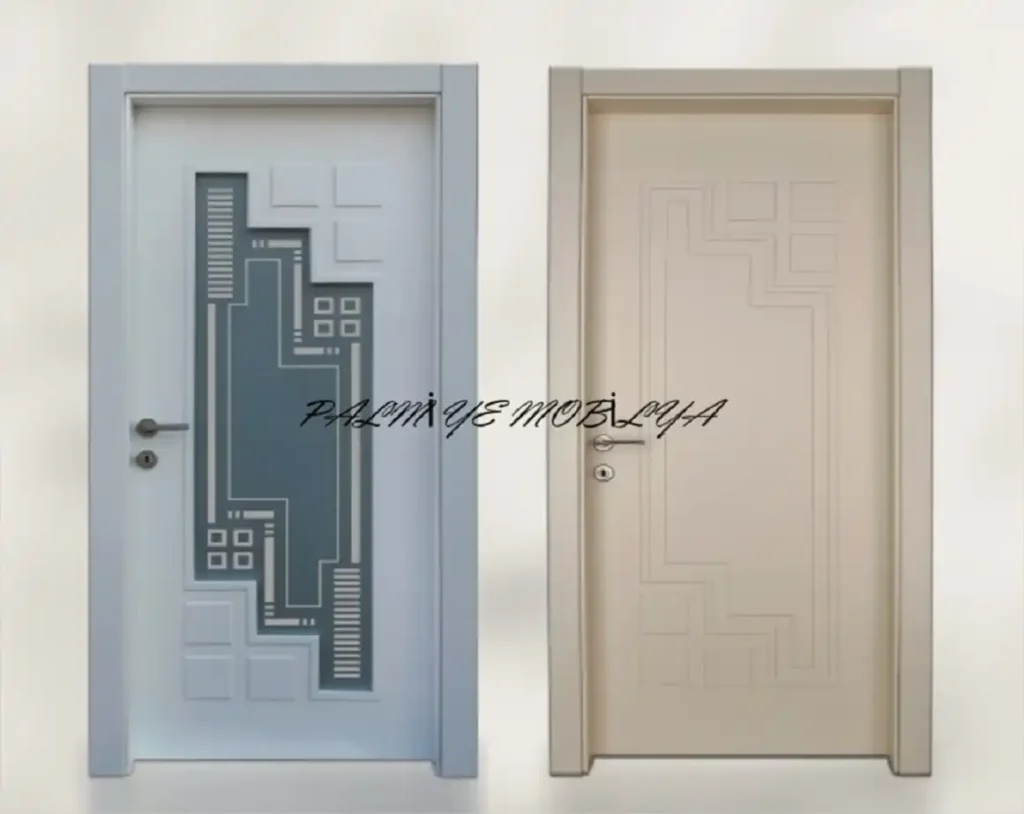
- Shallow V-Grooves: Multi-axis CNC routing machines cut crisp, shallow linear incisions (typically 1.5mm deep and 3mm wide) into the MDF skin. This approach creates clean modern lines without cutting deep into the core, keeping processing times short and minimizing tool wear.
- Simplified Panel Designs: Software files can replicate the appearance of traditional classical panel configurations through surface carving, offering a traditional look at a lower cost than multi-piece stile-and-rail assembly.
5. Casing Systems and Precision Hardware Preparation
A door cannot function without its frame casing and supporting mechanical hardware. An Economic Lacquered Door Manufacturing Turkey facility applies value engineering to the entire door frame assembly to simplify field installation and reduce labor costs.
Composite Telescopic Casing Systems
Traditional wooden frames can be expensive and require exact wall measurements. Turkish manufacturers address this by focusing on adjustable telescopic casing assemblies made from cost-effective composite materials:
[Telescopic Composite Frame Cross-Section]
┌────────────────────────────────────────────────────────┐
│  MDF/Softwood Composite Frame Body                      │
├────────────────────────────────────────────────────────┤
│  Adjustable Architrave Trim (Interlocking Slider Tongue)│
├────────────────────────────────────────────────────────┤
│  Wall Construction Core (Adjustable Scope: 100mm-160mm)│
│  └── Pre-Fit EPDM Acoustic / Air Infiltration Gasket   │
└────────────────────────────────────────────────────────┘
- MDF-Wood Core Composites: The main frame body is constructed by laminating finger-jointed softwoods with durable exterior layers of MDF. This composite structure provides high screw-holding power at a competitive price point.
- Telescopic Adjustability: The matching architrave trim features an extended tongue that slides directly into a groove in the main frame casing. This design allows the frame to adjust to varying wall thicknesses on-site (e.g., expanding from 100mm up to 150mm), which helps hide irregular masonry work and eliminates the need for expensive custom framing adjustments.
Pre-Machined Hardware Layouts
On-site cutting of hinge pockets and lock bores is labor-intensive and can lead to costly alignment errors. To prevent this, an Economic Lacquered Door Manufacturing Turkey plant integrates all hardware preparations directly into its automated CNC production sequence:
- Standardized Mortise Routing: Automated machines cut out lock cases, handle bores, and hinge positions based on standardized hardware templates (such as European standard DIN configurations).
- Quiet-Closing Magnetic Striking Plates: Frames are pre-routed to accept silent magnetic latches or cost-effective mechanical locksets. The continuous inner track of the frame casing is fitted with a pre-installed, durable EPDM rubber gasket, ensuring quiet closing performance and an air-tight seal right out of the box.
6. Technical Performance Standards and Testing Compliance
Even budget-conscious building projects must satisfy local safety codes and mechanical performance metrics. Reputable factories specializing in Economic Lacquered Door Manufacturing Turkey test and certify their doors to verify compliance with international building standards.
[Mechanical and Structural Testing Matrix]
├── Operational Life Cycling --> EN 1191 / EN 12400 (Class 4 Medium to Heavy Duty)
├── Surface Liquid Exposures --> EN 12720 / DIN 68861 (Stain Resistance Certification)
├── Acoustic Attenuation    --> EN ISO 10140-2 (Acoustic Range: 24 dB to 28 dB)
└── Ecological Emission Code --> EN 717-1 / E1 Standard (Formaldehyde Air Verification)
Mechanical Endurance Testing (EN 1191 / EN 12400)
Interior doors in residential complexes and institutional buildings must withstand repeated daily use over long lifecycles without sagging or failure.
- Rigid Testing Rig Proving: Complete door sets are mounted in automated testing frames that mechanically open and close the door leaf up to 100,000 times under continuous structural loads.
- Class 4 Compliance: Value-engineered Turkish honeycomb-core doors achieve Class 4 mechanical ratings, confirming that the frame joints hold firm and the hardware stays aligned under regular operational stress.
Surface Resistance and Stain Testing (EN 12720)
The exterior painted lacquer film must resist everyday handling and typical household chemical exposures.
- Chemical Exposure Testing: The cured surface layer is exposed to common household materials (including water, aliphatic cleaning agents, oils, and citric solutions) for extended testing blocks. A properly cured polyurethane-acrylic composite finish prevents staining or softening, ensuring the doors are easy to clean and maintain over time.
Low Emission Environmental Codes (EN 717-1)
Maintaining indoor air quality is an important requirement for modern residential certifications.
- E1 and E0 Clean Standards: Turkish manufacturers build internal cores and outer skins using composite resins that meet strict European E1 environmental standards. This classification guarantees low formaldehyde emissions, ensuring safe indoor air quality for residents in high-density developments.
7. Global Sourcing Logistics, Procurement Optimization, and Incoterms
Procuring volume interior doors directly from an Economic Lacquered Door Manufacturing Turkey partner requires managing commercial purchase specifications, pallet configurations, and international shipping terms effectively.
Developing a Technical Sourcing Door Schedule
To get accurate factory quotes and prevent production errors, project procurement teams should create an architectural door schedule covering these essential parameters:
[Procurement Technical Specification Matrix]
├── 1. Structural Dimensions --> Clear Wall Opening Height, Width, Finished Wall Thickness
├── 2. Internal Core Selection--> Standard Hexagonal Honeycomb Core (Value Optimization)
├── 3. Coating Specification --> Selected RAL Color Tone, Matte or Satin Gloss Index
├── 4. Framing Architecture  --> Telescopic Adjustable MDF Composite Casing System
└── 5. Hardware Layout Config--> Standard 2-Pin Barrel or Butterfly Hinge CNC Routing
Financial Planning and Incoterms Management
When drawing up international supply contracts with a Turkish manufacturer, select the appropriate International Commercial Term (Incoterm) based on your team’s freight and logistics setup:
- FOB (Free On Board): The factory manages production, domestic transport to a major Turkish port (such as Ambarlı or İzmir), and export customs clearance. Risk and freight costs transfer to the buyer once the container is loaded onto the ocean vessel. This is an excellent option for buyers with established global freight forwarding partnerships.
- CIF (Cost, Insurance, and Freight): The manufacturer arranges and pays for ocean shipping and maritime insurance to the buyer’s designated destination port. This model simplifies logistics for mid-sized import distributors.
- DDP (Delivered Duty Paid): The manufacturer manages the entire shipping process, including international transit, import customs clearance, local tariffs, and final delivery to the job site. This model provides maximum cost certainty for large-scale real estate developers without internal logistics teams.
Volumetric Container Loading Optimization
To reduce international freight costs per unit, shipping configurations must be optimized for volume. A standard 40-foot High Cube (40′ HC) sea shipping container can house approximately 400 to 480 complete door sets when properly managed:
┌────────────────────────────────────────────────────────┐
│  Heavy Corrugated Protective Outer Carton Box Wrapping │
├────────────────────────────────────────────────────────┤
│  EPS (Styrofoam) Corner Caps & Edge Impact Protectors  │
├────────────────────────────────────────────────────────┤
│  Polyethylene Thin-Film Protective Moisture Shield     │
└────────────────────────────────────────────────────────┘
- Pallet Stack Sorting: Door leaves are packed flat on heavy wooden pallets, while un-assembled frame components and architrave trims are packed in long boxes and stacked along the container sides. This loading method maximizes space utilization and helps protect the lacquered surfaces from friction damage during sea transit.
8. Procurement Timeline and Project Milestones
To align factory production with your on-site building deadlines, use this typical procurement timeline for a high-volume order (e.g., 2,000 door sets) from an Economic Lacquered Door Manufacturing Turkey facility:
[Sourcing Operational Timeline Breakdown]
├── Phase 1 (Weeks 1 - 2): CAD Shop Drawing Reviews & Dimension Verification
├── Phase 2 (Week 3)     : Physical Prototype Sign-Off & Color Match Approval
├── Phase 3 (Weeks 4 - 6): High-Speed Automated CNC Machining & Core Assembly
├── Phase 4 (Week 7)     : Automated Roller/Spray Lacquering & UV Tunnel Curing
└── Phase 5 (Weeks 8 -11): Container Loading, Export Customs, Maritime Ocean Freight, & On-Site Unloading
- Phase 1 (Shop Drawings): The factory’s technical department reviews the architectural blueprints to confirm door swings, frame depths, and exact wall openings.
- Phase 2 (Prototyping): A sample door set is built to confirm color accuracy, routing depth, and hardware fit before full production begins.
- Phase 3 (Core Machining): Automated lines assemble the finger-jointed timber frames and structural honeycomb cores, then press the MDF skins into place.
- Phase 4 (Finishing): Assembled doors move through automated sanding machinery, roller or robotic spray stations, and UV tunnels for quick drying.
- Phase 5 (Logistics): Finished doors are packed on pallets, cleared through export customs, loaded into containers, and shipped to the project site.
Conclusion: Maximizing Project ROI with Turkish Value Engineering
Sourcing through an Economic Lacquered Door Manufacturing Turkey program offers international real estate developers, hospitality groups, and commercial contractors an effective way to balance budget limits with reliable performance. By moving away from labor-intensive manual painting and utilizing high-speed automated roller coating lines, Industry 4.0 CNC machining, and value-engineered honeycomb core structures, Turkey’s manufacturing base delivers clean, durable interior doors at a highly competitive price point. Understanding these material choices, technical performance metrics, and logistical options helps global procurement teams secure their supply chains and deliver high-quality interior spaces on schedule and on budget.
Butik Otel Mobilyaları
Butik Otel Mobilyaları

Şunları da sevebilirsiniz

Lacquered Hotel Doors Turkey
Lacquered Room Door Turkey