

Lacquered Door Models Turkey
Lacquered Door Models Turkey: The Ultimate Guide to Luxury, Craftsmanship, and Trends
Turkey has emerged as a global powerhouse in premium interior architecture and manufacturing. Among its most sought-after exports, lacquered door models from Turkey represent the perfect fusion of traditional wood craftsmanship and cutting-edge industrial technology.
This comprehensive guide delivers an in-depth technical analysis, design evaluation, and procurement roadmap for Turkish lacquered doors. Whether you are an architect, real estate developer, or homeowner seeking high-end interior solutions, this definitive manual covers everything you need to know about specifications, manufacturing standards, and architectural applications.
1. What Are Lacquered Door Models Turkey? An Architectural Overview
When exploring high-end interior design, lacquered door models Turkey consistently stand out for their flawless, mirror-like finishes and exceptional structural integrity. But what exactly defines a authentic Turkish lacquered door?
At its core, a lacquered door is an interior door engineered using an advanced multi-layered coating process. Unlike standard PVC-bound or melamine doors, a lacquered door features a core covered with high-density or medium-density fiberboard (MDF). This base is systematically coated with specialized chemical primers and liquid polyurethane or acrylic-based paints.
The Anatomy of a High-Quality Turkish Lacquered Door
To understand why these doors are highly regarded globally, we must look at their internal and external composition:
- The Internal Framework: High-grade Turkish manufacturers utilize solid wood stiles and rails, typically made from finger-jointed European red pine or fir. This prevents warping over time.
- The Honeycomb Core or Tubular Chipboard: The interior cavity is filled either with high-compression paper honeycomb for standard residential weight or tubular (bored) particleboard for superior acoustic insulation and fire resistance.
- The MDF Skin: Thick MDF sheets (typically 6mm to 8mm) are bonded to the framework. This provides a perfectly flat, dense canvas for CNC routing and painting.
- The Liquid Coating Layers: Multiple coats of primer, sanding insulation layers, color coats, and protective topcoats create a solid, seamless envelope.
2. Engineering and Manufacturing Standards in Turkey
The global success of lacquered door models Turkey is driven by rigorous engineering protocols and advanced automated production lines located in manufacturing hubs like Istanbul, Bursa, Kayseri, and Izmir.
The Step-by-Step Chemical and Mechanical Process
[Solid Wood Frame + MDF Layering] ➔ [CNC Precision Carving] ➔ [Isolator & Primer Application] ➔ [Robotic Multi-Stage Sanding] ➔ [Polyurethane/Acrylic Coating] ➔ [UV Curing & Quality Control]
Step 1: CNC Carving and Formatting
Raw MDF-bonded doors pass through highly precise computer numerical control (CNC) machines. These units engrave intricate classic panel details, minimalist geometric lines, or custom architectural grooves directly into the dense fiberboard surface.
Step 2: Surface Isolation and Priming
Raw wood and MDF are highly porous materials. To prevent the wood from unevenly absorbing the final paint, a chemical isolator layer is applied. This is followed by two to three coats of high-fill polyurethane base primers.
Step 3: Calibrated Sanding
Between every single coat of primer, the door surfaces are mechanically and manually sanded using progressively finer grits (from 240 up to 400 grit). This eliminates any microscopic imperfections or orange-peel textures.
Step 4: Topcoat Application (The Lacquering)
The doors enter pressurized, dust-free cleanrooms. Automated robotic spray arms apply premium liquid polyurethane or acrylic lacquers. These systems guarantee an identical micron-level thickness across every square millimeter of the door.
Step 5: Curing and Baking
Modern Turkish facilities utilize ultraviolet (UV) curing tunnels or temperature-controlled baking ovens. This accelerates chemical cross-linking, resulting in an incredibly hard, scratch-resistant surface that does not yellow over time.
3. Classifying Lacquered Door Models Turkey by Design Aesthetics
Architectural styles vary wildly across residential and commercial projects. Turkish manufacturers accommodate this diversity by categorizing lacquered door models Turkey into three distinct design families.
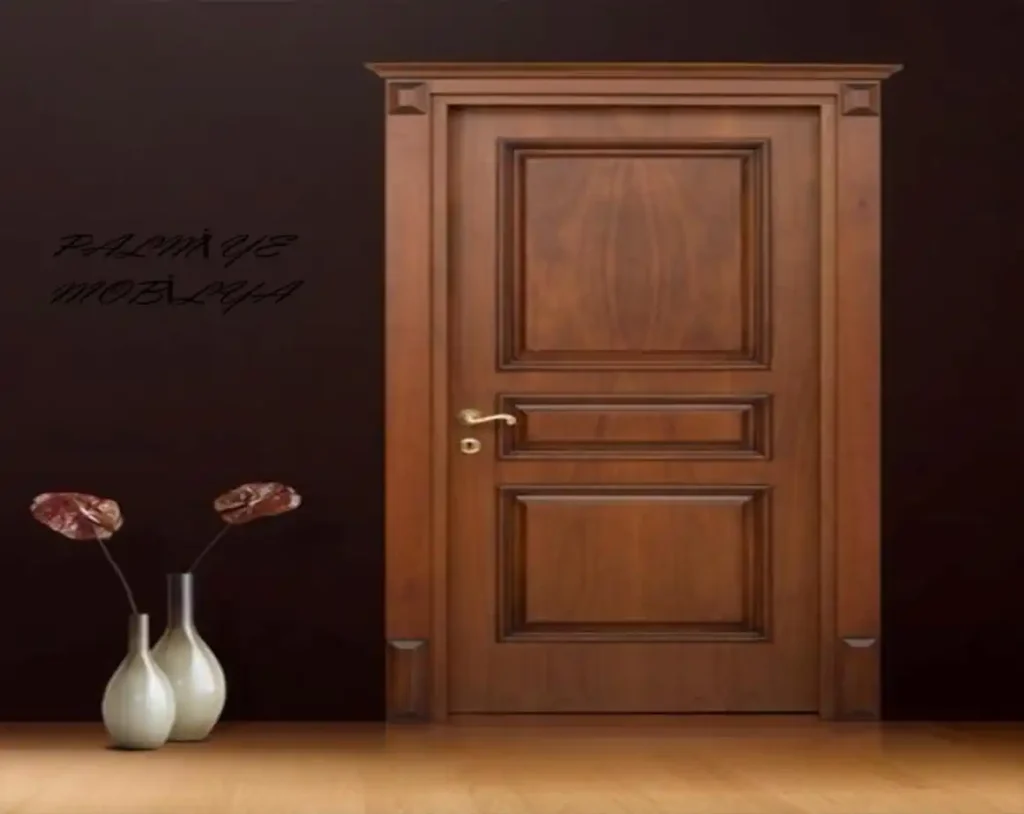
Classic and Neo-Classical Lacquered Doors
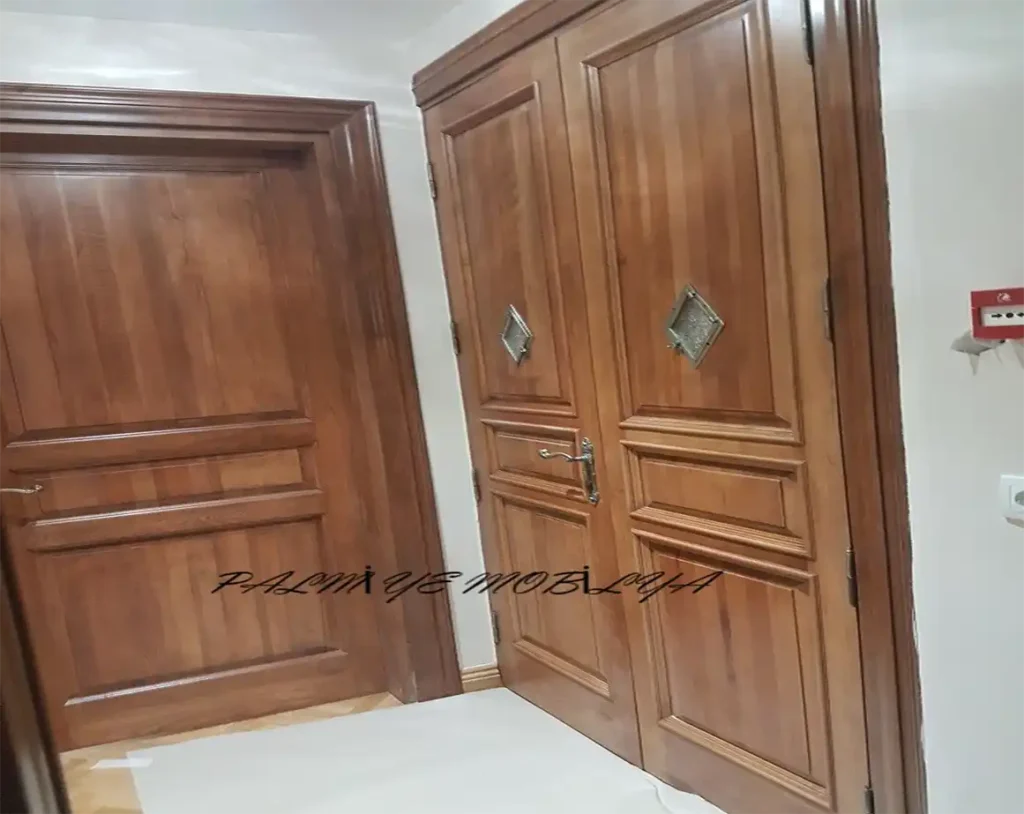
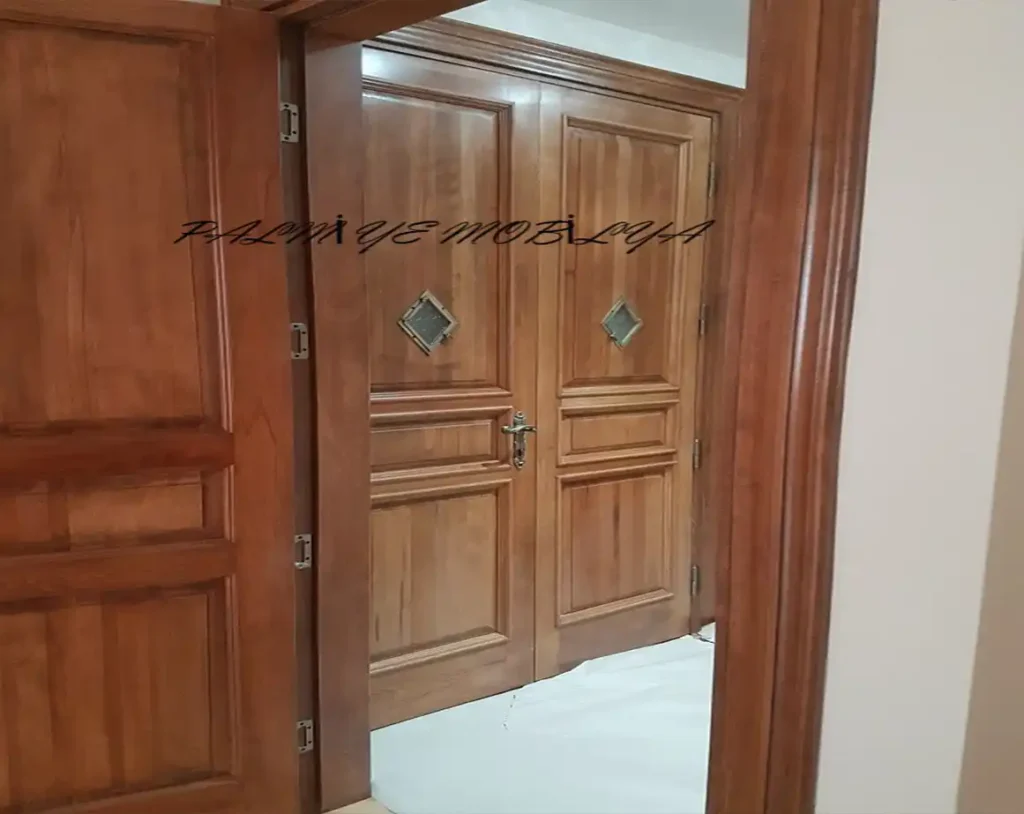
Classic Turkish models celebrate grand architecture. They feature deep CNC routing that mimics traditional raised-panel joinery.
- Visual Characteristics: Multi-panel configurations (2-panel, 3-panel, or 4-panel designs), crown moldings, decorative architraves (over-door frames), and gold or silver leaf detailing.
- Best Suited For: Luxury villas, historical renovations, high-end hospitality suites, and traditional estates.
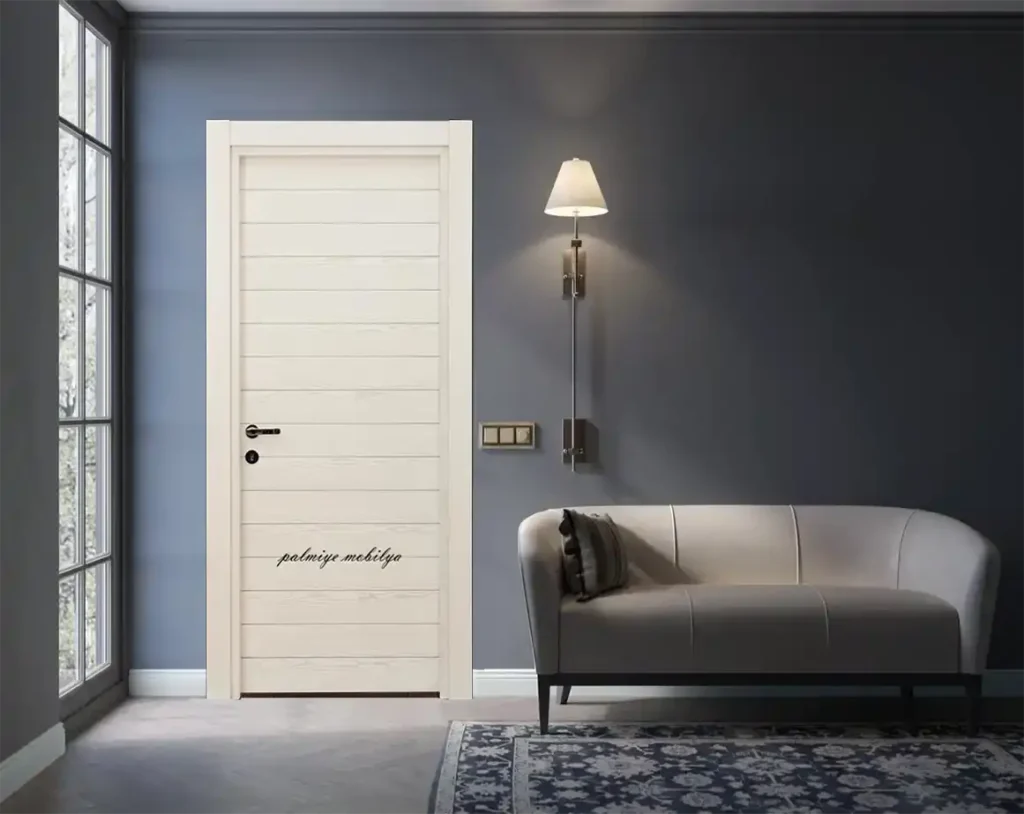
Modern and Minimalist Lacquered Doors
For contemporary spaces, simplicity requires absolute perfection. Any flaw on a plain door is immediately noticeable, which is why Turkish precision sanding shines in this category.
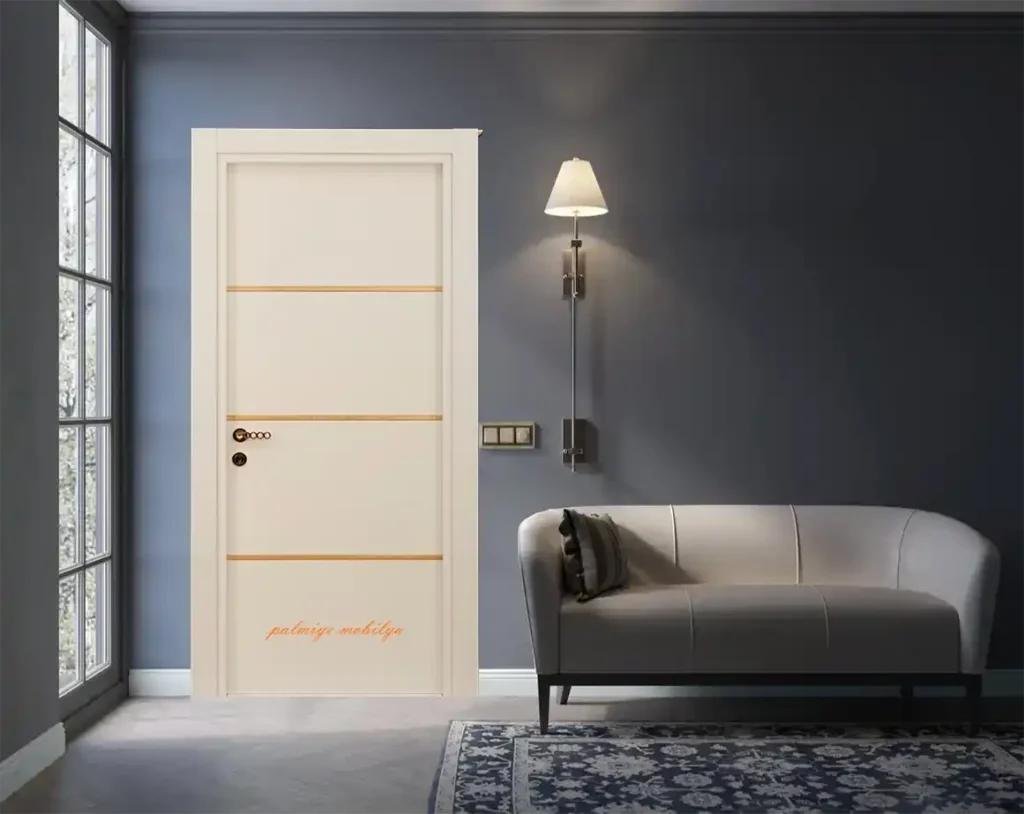
- Visual Characteristics: Completely flush surfaces, subtle horizontal or vertical V-grooves (grooved lacquered doors), hidden hinges, and integrated magnetic locks.
- Best Suited For: High-rise apartments, minimalist penthouses, commercial office spaces, and modern galleries.
Country and Rustic-Chic Lacquered Doors
Combining cozy warmth with a premium feel, country-style lacquered models are incredibly popular in European export markets.
- Visual Characteristics: Vertical beadboard patterns, shaker-style recessed panels, and soft off-white or pastel finishes.
- Best Suited For: Suburban homes, cottage designs, and boutique seaside resorts.
4. Gloss Levels and Color Technology
The term “lacquered” does not automatically mean high-gloss. In fact, lacquered door models Turkey are highly customizable across a spectrum of sheen levels and chemical formulations.
Matte vs. Silk-Matte vs. High-Gloss
| Sheen Level | Gloss Percentage (Gardner Units) | Ideal Use Case | Maintenance Profile |
|---|---|---|---|
| Deep Matte | 5% – 10% | Ultra-modern, moody spaces | Highly resistant to visible fingerprints; absorbs light beautifully. |
| Silk-Matte (Satin) | 20% – 35% | Universal residential use | The industry standard. Easy to wipe clean; reflects a soft, luxurious glow. |
| High-Gloss (Piano) | 85% – 95%+ | Luxury penthouses, dramatic entries | Mirror-like reflection. Requires careful micro-fiber cleaning; highly prestigious look. |
Color Engineering and Non-Yellowing Guarantees
Historically, poorly made white doors turned yellow when exposed to sunlight. Premium Turkish manufacturers solve this by utilizing aliphatic polyurethane and acrylic resins equipped with advanced UV-absorbers.
While classic signal white (RAL 9016) and pure white (RAL 9010) remain international bestsellers, modern trends have shifted toward complex architectural tones:
- Antracit Grey (RAL 7016): Offers a dramatic, industrial-chic contrast in modern lofts.
- Cashmere and Greige: Soft, warm neutrals that sit beautifully between beige and grey.
- Custom RAL/NCS Matching: High-end manufacturers can match any color code provided by an interior designer’s palette.
5. Technical Specifications, Framing, and Component Integration
A door is only as good as the system it integrates into. When purchasing lacquered door models Turkey, buyers select full-set engineering solutions rather than just raw door leaves.
Frame and Architrave Composites
To prevent structural sagging or swelling due to bathroom moisture, Turkish manufacturers design high-performance frame configurations:
- Sandwich Wood Frames: Multi-layered blocks of solid wood and MDF glued together to eliminate directional wood tension.
- Adjustable Architraves (Telescopic Frames): Engineered with a tongue-and-groove system that allows the door frame to expand or contract to perfectly match varying wall thicknesses (e.g., accommodating walls from 10cm to 30cm thick).
Hardware and Acoustic Machining
Modern factories pre-bore all hardware slots using high-precision CNC machinery based on European standards (DIN norms).
- Magnetic Lock Systems: Replace traditional mechanical latches. When the door is open, the latch is completely flush with the door edge, sliding out silently via magnetic attraction only when fully closed.
- Hidden (Concealed) Hinges: Premium 3D-adjustable hidden hinges are routed into the door leaf and frame. When the door is closed, the hinges are completely invisible, creating a clean flush look.
- Drop-Down Acoustic Seals: An automatic mechanical seal integrated into the bottom edge of the door leaf. It drops down to seal the gap against the floor when the door closes, radically improving acoustic dampening.
6. Comparing Lacquered Doors with Alternative Internal Doors
To truly appreciate the value proposition of lacquered door models Turkey, one must compare them technically against other mass-market door options available globally.
Lacquered Doors vs. PVC-Membrane / Vinyl Wrap Doors
PVC doors use vacuum presses to glue a plastic film over MDF.
- The Problem with PVC: PVC doors exhibit visible plastic seams on the edges, are prone to delamination (peeling) near heat sources, and can look synthetic under bright light.
- The Lacquered Advantage: A lacquered door features a monolithic, continuous liquid-painted envelope. There are zero edges, seams, or joints to peel open.
Lacquered Doors vs. Melamine and Laminate Doors
Laminate doors use paper impregnated with phenolic resins pressed onto a board.
- The Problem with Laminate: Laminate doors are highly restricted to linear patterns and flat surfaces. They cannot support deep classic carvings, curves, or intricate CNC details.
- The Lacquered Advantage: Lacquer can flow perfectly into any three-dimensional routed groove, offering unlimited freedom for architectural profiles.
Lacquered Doors vs. Solid Natural Wood Doors
- The Problem with Solid Wood: Pure solid wood constantly breathes, expands, and contracts with seasonal humidity, leading to cracks in painted finishes and potential frame warping.
- The Lacquered Advantage: By using an engineered wood frame and stable MDF skins, lacquered doors remain perfectly flat and architecturally stable for decades while maintaining a pristine, high-end painted aesthetic.
7. Acoustic and Thermal Insulation Capabilities
Interior doors play a massive role in creating quiet, private zones within a home or commercial building. The acoustic performance of lacquered door models Turkey depends directly on their internal core selection.
Core Materials and Decibel (dB) Ratings
- Standard Honeycomb Core: Delivers basic thermal separation and an acoustic reduction of roughly 22 dB to 26 dB. Ideal for standard budget-conscious residential rooms.
- Tubular (Bored) Particleboard Core: Features horizontal cylindrical hollows running through solid chipboard. This significantly increases density, delivering an acoustic insulation rating of 28 dB to 34 dB. Highly recommended for bedrooms and home offices.
- Solid Chipboard / Acoustic Multi-Layer Core: Completely solid core engineered for maximum sound dampening, achieving 35 dB to 42 dB+ when paired with double-rebound acoustic rubber gaskets fitted into the door frame. Essential for luxury hotel suites and boardrooms.
8. Installation Methodologies and Architectural Detail Integration
The final aesthetic of lacquered door models Turkey relies heavily on executing correct installation techniques. Since these doors arrive pre-finished from the factory, structural site preparation is non-negotiable.
Critical Pre-Installation Site Requirements
- Wall Painting and Flooring Completion: Doors should only be installed after all wet trades (plastering, screeding, tiling, or hardwood flooring installation) are fully dry. High ambient humidity from drying plaster can damage premium finishes.
- Sub-Frame Preparation: Openings must be structurally sound, square, and plumb. Many luxury projects install a rough timber sub-frame (kör kasa) into the brick or drywall opening to provide a perfectly straight anchoring surface.
Flush-to-Wall (Filomuro) Installations
A massive trend across European and Middle Eastern architecture is the flush-to-wall lacquered door. This design uses a specialized aluminum frame embedded directly into the drywall or brickwork before plastering. The lacquered door leaf is then hung on hidden hinges, aligning perfectly with the wall face. When painted the exact same color as the wall, the door virtually disappears, leaving only a ultra-slim hairline gap perimeter.
9. Maintenance, Repair, and Long-Term Durability Protocols
A common misconception is that premium painted surfaces are fragile. In reality, industrial-grade lacquered door models Turkey are designed for high-traffic environments, provided simple care guidelines are followed.
Everyday Cleaning Protocols
- Do Use: A soft, clean microfiber cloth lightly dampened with lukewarm water and a drop of pH-neutral soap. Always wipe dry immediately with a secondary dry microfiber cloth.
- Do Not Use: Abrasive sponges, scouring pads, bleach, ammonia, alcohol-based glass cleaners, or aggressive chemical solvents. These will dull matte finishes or scratch high-gloss topcoats.
Repairing Minor Scratches and Dents
If a heavy object impacts a lacquered door and chips the paint, the underlying MDF can become exposed to ambient moisture.
- Touch-Up Kits: Reputable Turkish exporters provide small color-matched touch-up paint bottles along with the order shipment.
- The Repair Process: Clean the damaged spot, use fine 1200-grit sandpaper to smooth out the microscopic edge of the chip, apply a tiny drop of the touch-up lacquer using a precision brush tip, allow it to dry for 24 hours, and buff gently.
10. The B2B Procurement Process: Sourcing from Turkish Manufacturers
For international buyers, developers, and distributors, importing lacquered door models Turkey offers an outstanding price-to-quality ratio. Navigating the commercial sourcing process effectively requires understanding industry-specific supply chains.
Key Manufacturing Hubs in Turkey
- Istanbul & Suburbs: Excellent for high-end, boutique, highly customized architectural designs with rapid air or sea logistics.
- Kayseri: The industrial heartland of mass production. Ideal for sourcing thousands of doors for massive residential developments or social housing projects at highly competitive unit rates.
- Bursa & Inegöl: Deeply rooted in specialized wood processing, offering extraordinary neo-classical detailing and high-quality craftsmanship.
Crucial Steps in Sourcing and Quality Assurance
[Detailed Door Schedule & Dimensions] ➔ [Sample Production & Finish Approval] ➔ [Production & Random Batch Testing] ➔ [Heavy-Duty Export Packaging] ➔ [Container Loading & Custom Clearance]
- Drafting the Door Schedule: Provide the manufacturer with clear wall opening dimensions, opening directions (left/right hand), wall thicknesses, lock types, and specific core density requirements.
- Requesting a Sample (MOCK-UP): Before manufacturing hundreds of doors, always order a complete mock-up door set including the frame and hardware routing. Evaluate the paint edge uniformity, gloss consistency, and structural stiffness.
- Packaging Standards for Maritime Transit: Lacquered surfaces are sensitive to friction during long ocean freight transits. Ensure your contract specifies heavy-duty export packaging: edge guards, thick polyethylene foam wrapping, face-protecting styrofoam sheets, and palletization inside heavy wooden crates.
11. Sustainability, Certifications, and Eco-Friendly Commitments
Global construction regulations demand strict adherence to environmental safety. Premium Turkish door factories invest heavily in green manufacturing technologies to comply with international green building standards like LEED and BREEAM.
VOC Emissions and Indoor Air Quality
Traditional low-grade paints release Volatile Organic Compounds (VOCs) into the air for years after installation, degrading indoor air quality. High-tier suppliers of lacquered door models Turkey utilize water-based lacquers or low-VOC polyurethane coatings that comply with strict European E1 safety standards, ensuring zero harmful off-gassing inside homes.
Certified Wood Sourcing
Responsible manufacturers source their internal pine frameworks and MDF sheets from certified sustainable forests monitored by the Forest Stewardship Council (FSC) or the Programme for the Endorsement of Forest Certification (PEFC). This guarantees that your luxury doors do not contribute to illegal deforestation.
12. Future Trends Shaping Lacquered Door Design
As we move forward, the design language surrounding lacquered door models Turkey continues to evolve, blending sensory tactile experiences with high-tech functional features.
Deep Textures and 3D Micro-Routings
While perfectly smooth flush surfaces remain popular, designers are increasingly requesting micro-textured doors. This involves carving incredibly fine, repeating ribbed or fluted linear patterns across the face of the MDF before it enters the lacquering line. The interplay of light and shadow on a fluted silk-matte lacquered surface creates an incredibly rich architectural feature.
Integrated Smart Home Hardware
Doors are becoming active nodes in smart homes. Turkish factories are increasingly designing door models equipped with internal wiring channels routed during the core assembly stage. This allows for the clean integration of biometric fingerprint scanners, facial recognition cameras, and motorized smart locks hidden completely within the door body, maintaining a clean aesthetic without exposed wiring.
Soft-Close Concealed Tracks
For sliding lacquered door models, pocket doors, and large barn-style room dividers, manufacturers are integrating built-in hydraulic damping tracks. These systems slow the heavy door down smoothly as it reaches the end of its track, preventing loud slams that could stress or chip the lacquered frame over decades of heavy use.
Summary Sourcing Checklist for Architects and Buyers
When finalizing your procurement specifications for lacquered door models Turkey, ensure every line item on your purchase order covers these critical parameters:
- Core Material: Honeycomb (budget/lightweight) vs. Tubular Chipboard (standard residential acoustic) vs. Solid Wood/Particleboard (heavy-duty/luxury).
- MDF Specification: Minimum 6mm to 8mm thickness to ensure deep, stable CNC grooving without compromising core bond integrity.
- Chemical Coating Base: Aliphatic polyurethane or acrylic paint with integrated non-yellowing UV filters.
- Frame Composition: Multi-layered sandwich wood or moisture-resistant MDF with telescopic adjustment margins matching exact site wall thicknesses.
- Hardware Prep: Factory-executed CNC routing for hidden hinges, magnetic locks, and automatic drop seals to eliminate messy manual on-site drilling.
- Packaging Compliance: Polyethylene foam face insulation, rigid corner protectors, and reinforced wooden export crate palletization.
By investing in premium Turkish lacquered doors, you acquire a product that balances exceptional raw materials, automated precision engineering, and sophisticated design flair. These doors provide long-lasting value, transforming standard openings into striking architectural statements.


Şunları da sevebilirsiniz
Distressed Furniture Turkey
Lacquered Furniture Turkey