

Lacquered Door Types Turkey
Lacquered Door Types Turkey: The Ultimate Guide to Architectural Styles, Sourcing, and Technical Specs
Turkey has established itself as a global leader in high-end interior architecture and millwork manufacturing. Among its most prestigious structural exports, lacquered door types Turkey stand out as the premium choice for international real estate developers, interior designers, and luxury homeowners.
This comprehensive manual provides an exhaustive, technically rigorous analysis of the entire landscape of premium Turkish painted doors. It covers core engineering, finish options, architectural classifications, global trade logistics, and installation science.
1. Defining the Engineering Landscape of Lacquered Door Types Turkey
To properly specify internal openings for luxury residential or commercial spaces, one must understand what separates authentic lacquered door types Turkey from lower-quality painted or synthetic alternatives.
A high-tier Turkish lacquered door is an engineered architectural component. It is built using advanced multi-layer liquid coating technology applied over a dimensionally stable substrate. It is completely seamless, unlike mass-produced doors wrapped in synthetic foils or finished with edge-banded laminates.
The Component Breakdown
- The Structural Core: High-grade Turkish manufacturers build the internal frame using finger-jointed timber, typically European red pine (Pinus sylvestris) or kiln-dried fir. This engineered framing eliminates the natural internal stresses of the wood, preventing warping, twisting, or bowing over decades of environmental exposure.
- The Stabilizing Substrate: Thick sheets of Medium-Density Fiberboard (MDF) or High-Density Fiberboard (HDF)—ranging from 6mm to 12mm—are hydraulically pressed onto the internal timber frame. This provides a perfectly flat, uniform canvas capable of accepting precision computer numerical control (CNC) micro-grooving and multiple liquid chemical layers.
- The Chemical Coating Matrix: The exterior finish is achieved through a multi-stage application of liquid primers, barrier coats, and pigmented topcoats. These are baked or ultraviolet (UV) cured to form a single, solid chemical skin that wraps around every edge of the door leaf.
2. Structural Core Configurations and Acoustic Engineering
The overall quality and function of lacquered door types Turkey are heavily defined by their internal cores. Choosing the right core impacts the door’s weight, hand-feel, sound reduction index, and fire resistance.
Paper Honeycomb Core
- Technical Profile: Constructed from high-compression hexagonal kraft paper cells bonded to the frame and face panels.
- Acoustic Insulation: Typically provides an acoustic reduction of 22 dB to 26 dB.
- Structural Mass: Lightweight, averaging 15 to 22 kilograms per door leaf.
- Best Application: Budget-conscious residential projects, multi-family housing developments, and secondary guest bedrooms where heavy acoustic separation is not a priority.
Tubular (Bored) Particleboard Core
- Technical Profile: Features solid engineered wood chipboard arrays drilled horizontally with parallel cylindrical hollows during the extrusion process.
- Acoustic Insulation: Delivers exceptional acoustic dampening, ranging from 28 dB to 34 dB.
- Structural Mass: Moderate to heavy, averaging 28 to 38 kilograms per door leaf.
- Best Application: Master bedrooms, home offices, executive meeting spaces, and premium hotel rooms. This core provides a heavy, satisfying feel when swung shut.
Solid Chipboard and Flaxboard Cores
- Technical Profile: A completely dense, solid block of compressed wood particles or natural flax fibers bound together with high-performance thermosetting resins.
- Acoustic Insulation: Achieves high ratings from 35 dB to over 42 dB when paired with professional frame drop-seals.
- Structural Mass: Very heavy, often exceeding 45 to 55 kilograms per door leaf.
- Best Application: Commercial hospitality entrances, institutional buildings, security doors, and high-end residential suites requiring excellent acoustic and thermal isolation.
3. The Precision Chemistry of Turkish Lacquered Finishes
The surface quality of lacquered door types Turkey relies heavily on advanced industrial chemical coatings. Sourcing from premium Turkish factories means understanding the distinct advantages of polyurethane, acrylic, and water-borne coating chemistries.
Polyurethane Lacquered Doors
Polyurethane coatings represent the classic choice for premium architectural millwork. They are created by cross-linking polyols with specialized isocyanate hardeners.
- The Chemistry: Forms an incredibly tough, impact-resistant, elastic polymer web over the MDF substrate.
- Surface Texture: Provides a smooth finish with a soft sheen, reflecting light across the door face without harsh glare.
- Durability Profile: Excellent resistance to everyday impacts, household cleaners, and minor scratches.
Acrylic Lacquered Doors
Acrylic coatings are the gold standard for high-end modern designs, particularly for projects that require crisp whites or deep matte blacks.
- The Chemistry: Formulated with high-grade thermo-plastic or thermosetting acrylic resins coupled with specialized aliphatic hardeners.
- Color Stability: Exceptional UV resistance. These doors are practically immune to yellowing or fading when exposed to direct, intense sunlight over decades.
- Optical Clarity: Offers incredible visual depth, especially in mirror-like high-gloss (piano gloss) configurations.
Eco-Friendly Water-Borne Lacquered Doors
Driven by global green building initiatives like LEED and BREEAM, modern Turkish factories have invested heavily in water-reducible acrylic-polyurethane hybrids.
- The Chemistry: Water serves as the primary carrier medium instead of volatile organic solvents.
- Environmental Profile: Ultra-low volatile organic compound (VOC) emissions, ensuring clean indoor air quality right after installation.
- Performance: Modern water-borne lacquers match solvent-based coatings in hardness, chemical resistance, and touch durability.
4. Categorizing Lacquered Door Types Turkey by Design Aesthetic
Turkish manufacturers cater to diverse international architectural trends by splitting lacquered door types Turkey into three main styles.
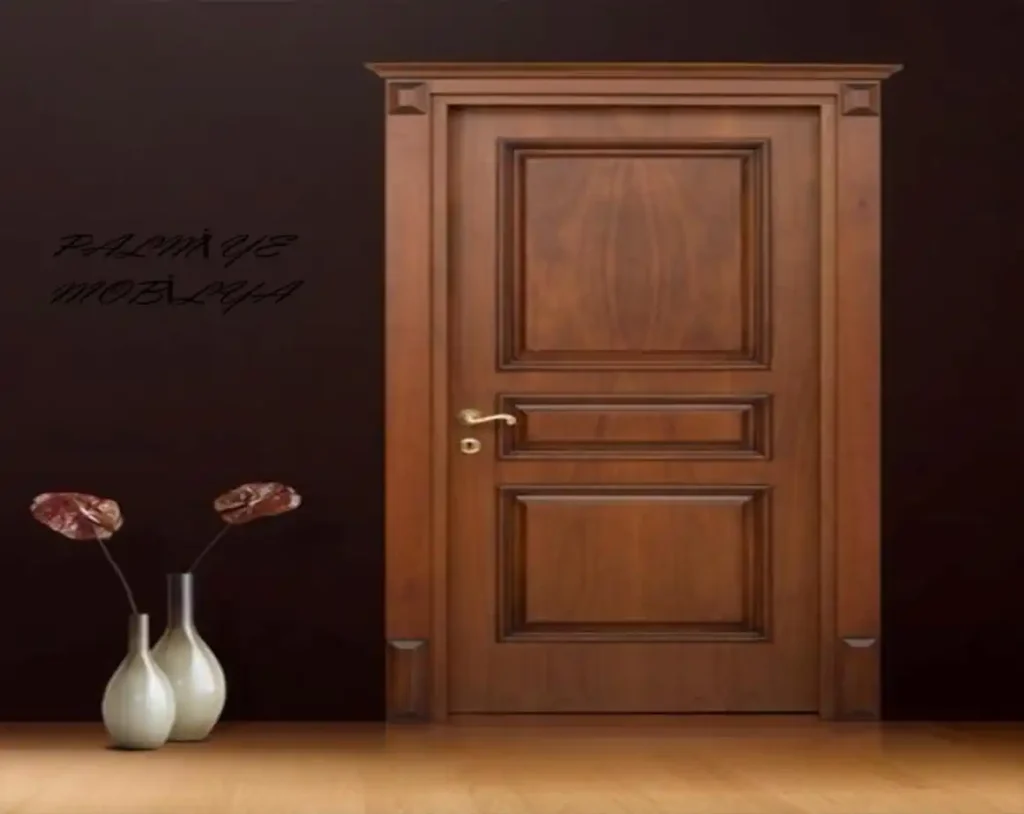
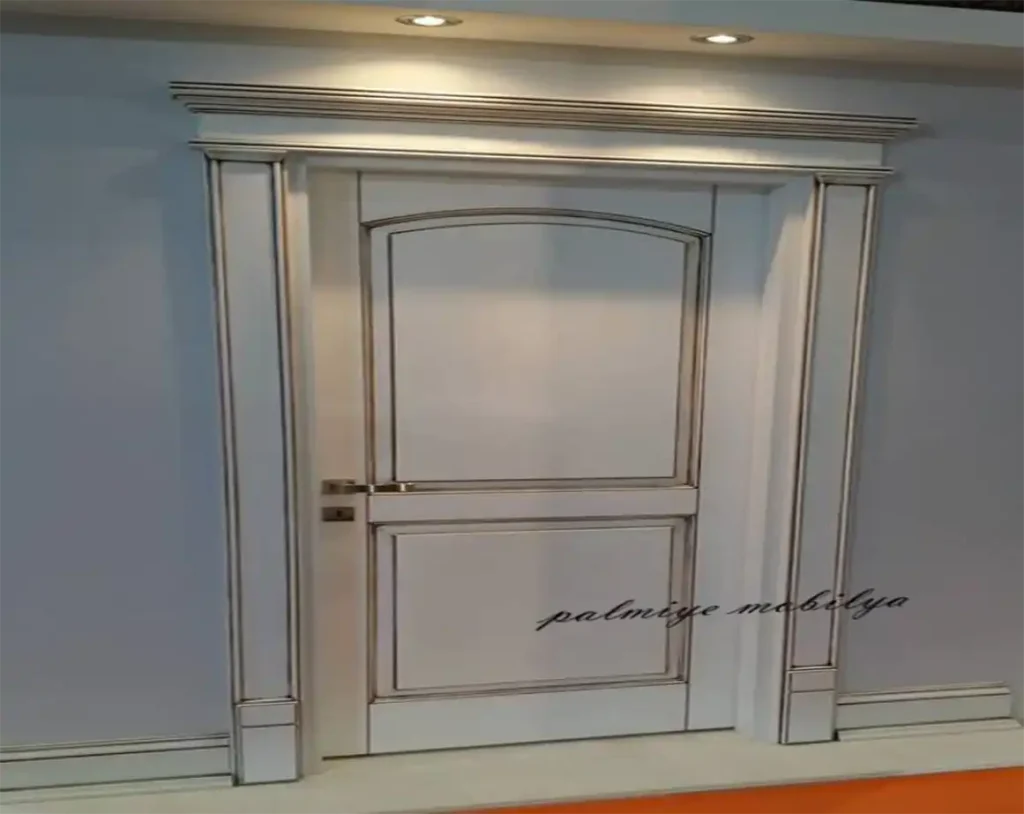
Classic Panelized Lacquered Doors
Classic models draw inspiration from traditional European joinery, adapting it for modern CNC precision production.
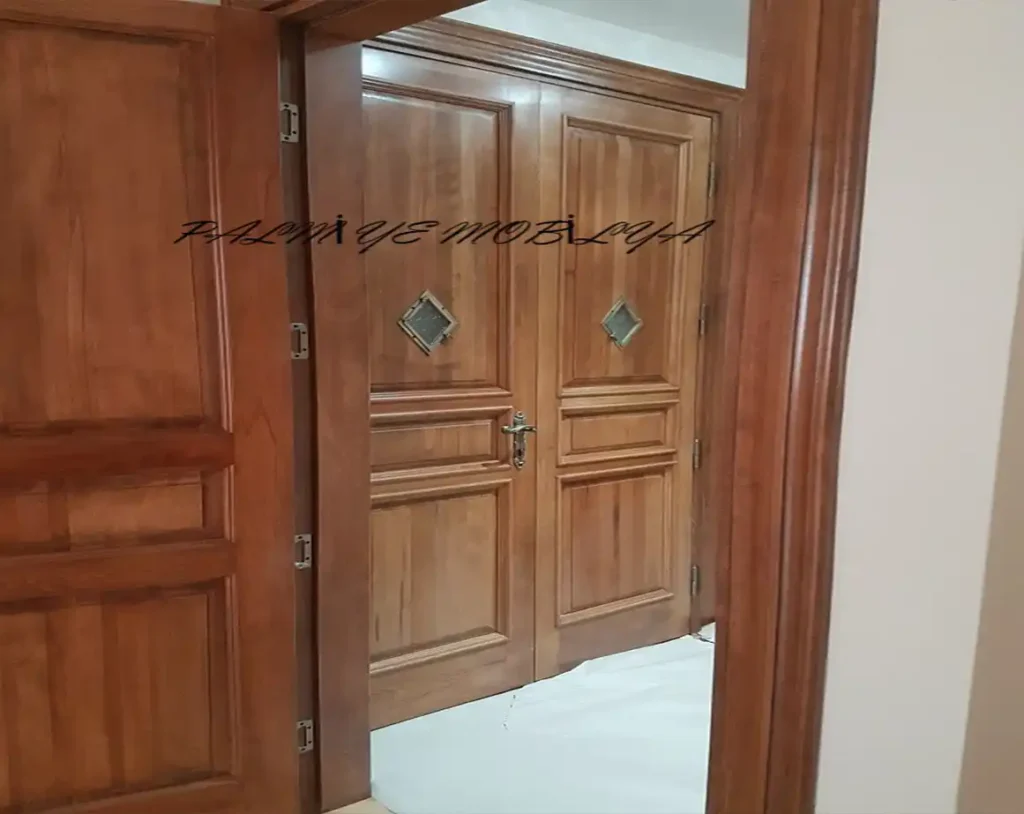
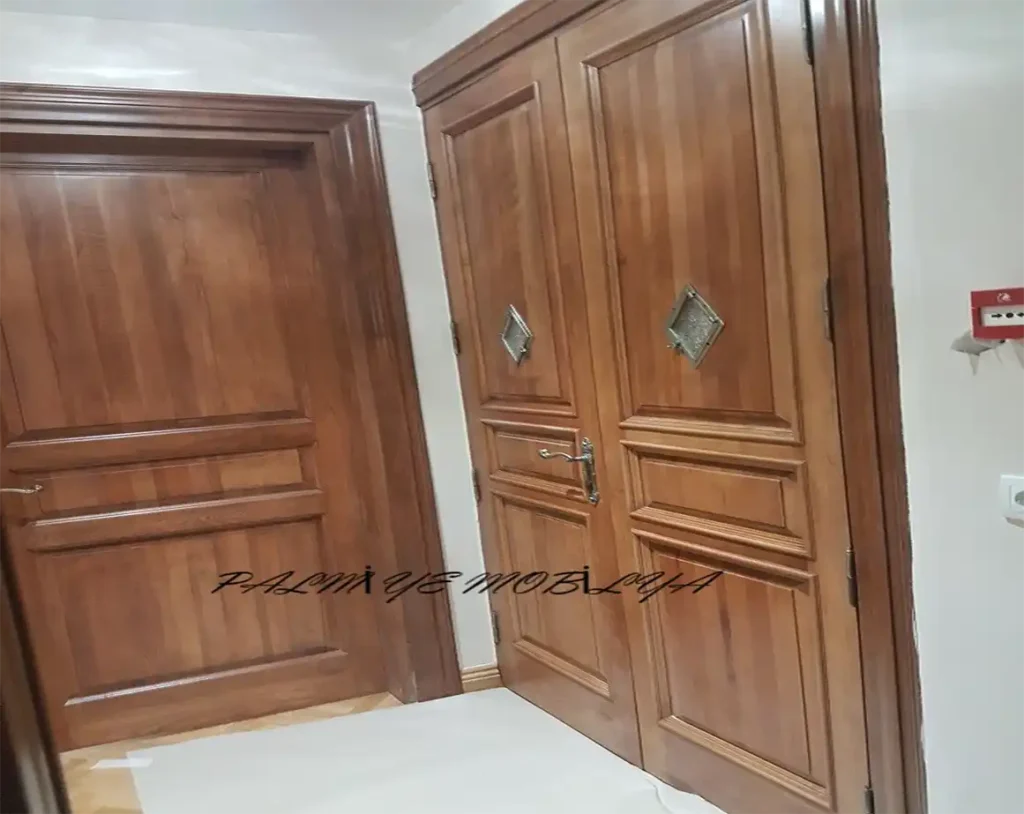
- Design Details: Deep 3D routing that replicates raised panels, multi-step decorative architraves, classic capital crowns above the door head, and optional gold, silver, or bronze hand-patinated accent lines.
- Panel Options: Available in classic 1-panel, 2-panel equal, 3-panel traditional, and 4-panel cross configurations.
- Ideal Architecture: Neoclassical villas, traditional estates, luxury historical hotel renovations, and stately offices.
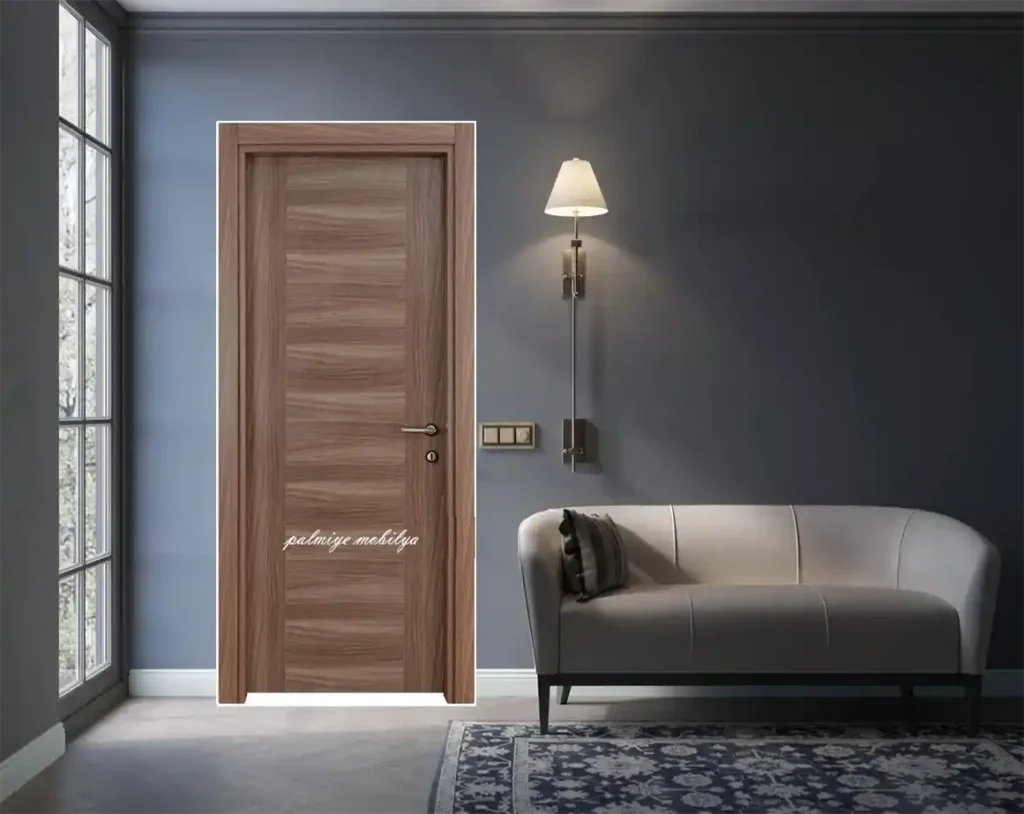
Minimalist Modern Flush Lacquered Doors
For modern spaces, simplicity requires flawless execution. Because flat doors offer no carvings to hide mistakes, Turkish manufacturers rely on precise robotic sanding to create perfectly flat surfaces.
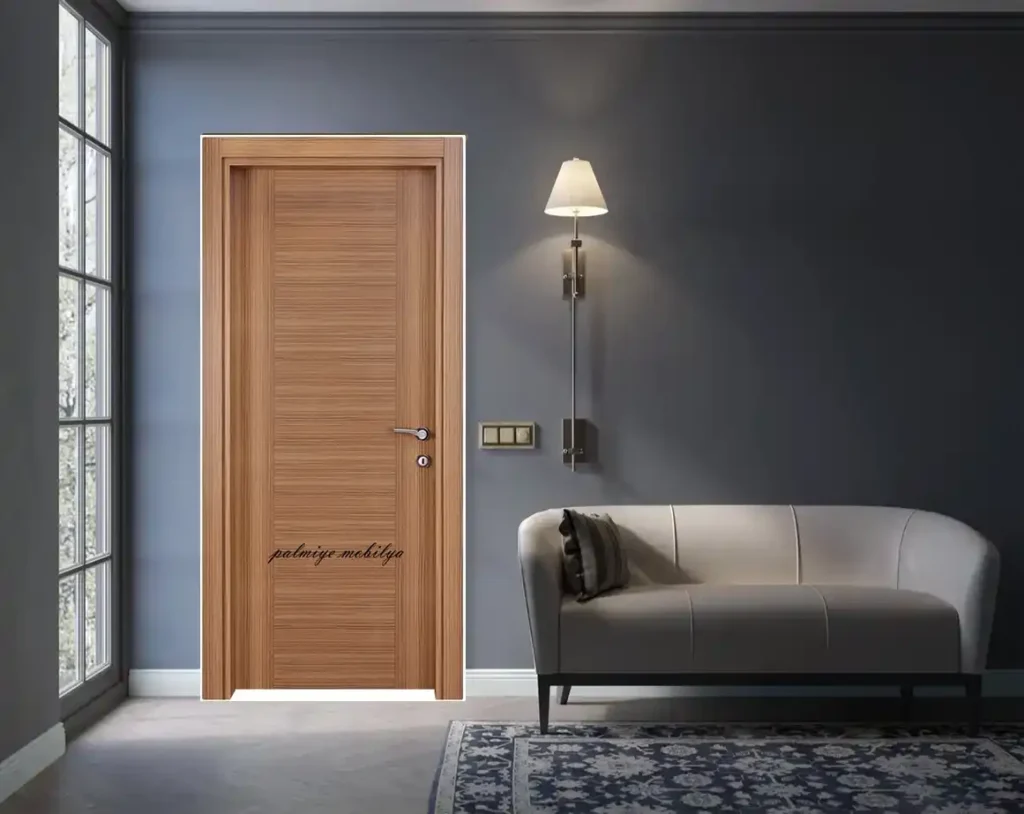
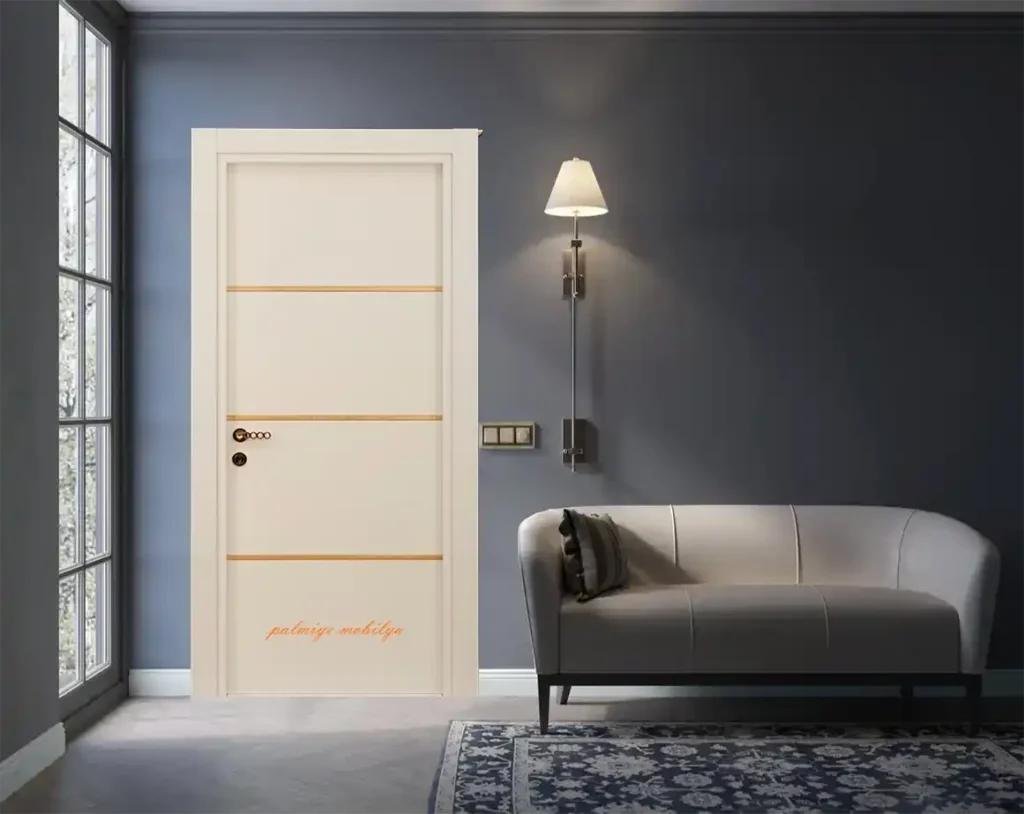
- Design Details: Completely flush surfaces with sharp lines, minimalist geometric V-grooves (horizontal or vertical accent channels), and hidden hardware integration.
- Hardware Setup: Often paired with concealed 3D-adjustable hinges and silent magnetic mortise locks to preserve clean lines.
- Ideal Architecture: High-rise luxury penthouses, modern art galleries, tech firm offices, and minimalist residential builds.
Country and Shaker-Style Lacquered Doors
This style bridges the gap between classic warmth and modern clean lines, making it popular across European and North American export markets.
- Design Details: Recessed center panels with square, un-beveled edges (true Shaker style) or vertical tongue-and-groove beadboard routings that mimic rustic timber planks.
- Color Choices: Often specified in soft, warm tones like buttermilk white, olive green, muted sage, and warm cashmere greige.
- Ideal Architecture: Suburban family homes, coastal vacation properties, and rustic boutique resorts.
5. Gloss Levels and Optical Engineering
The choice of gloss level changes the entire look and feel of lacquered door types Turkey within an interior space. Turkish factories use precise gloss-meter calibration to control light reflection across three primary tiers.
Matte and Deep Matte Finishes (1% to 10% Gloss Units)
- Visual Impression: Completely absorbs incident light, resulting in a velvety texture with no glare or reflection.
- Design Context: Ideal for moody, contemporary interiors utilizing dark palettes like charcoal grey, deep navy, or forest green.
- Maintenance: Resistant to visible oil smudges and fingerprints, though micro-scratches can burnish matte finishes over time if scrubbed aggressively.
Silk-Matte and Satin Finishes (15% to 35% Gloss Units)
- Visual Impression: The balance point of interior design. It reflects a soft glow that accentuates CNC routing lines without creating harsh, distracting highlights.
- Design Context: The default standard for high-end residential projects, multi-unit complexes, and standard commercial spaces.
- Maintenance: Easy to wipe clean, highly durable, and excellent at concealing dust and minor surface wear.
High-Gloss and Piano-Gloss Finishes (85% to 95%+ Gloss Units)
- Visual Impression: A mirror-like surface with absolute optical clarity and reflection.
- Design Context: Used for grand entrance doors, premium hotel suites, or dramatic contemporary statements.
- Maintenance: Requires dedicated care using soft microfiber cloths. High-gloss doors are prone to showing fingerprints and fine dust, but offer unmatched luxury and prestige.
6. Comprehensive Technical Comparison: Lacquered vs. Alternatives
To appreciate why top-tier developers choose lacquered door types Turkey, it helps to compare them against common interior door options on the global market.
| Feature / Metric | Premium Turkish Lacquered Doors | PVC / Vinyl Membrane Wrapped Doors | High-Pressure Laminate (HPL) Doors | Melamine Faced Chipboard Doors |
|---|---|---|---|---|
| Edge Seam Integrity | Monolithic: 100% seamless liquid envelope with zero edges to peel. | Glued plastic edges prone to peeling near heat and moisture. | Visible dark joint lines where the laminate meets the edge band. | Exposed glued edge bands that can peel under impact or moisture. |
| Surface Freedom | Unlimited: Can be CNC routed with deep curves, profiles, and 3D patterns. | Restricted to shallow curves; sharp internal corners can cause vinyl tenting. | Strictly flat; cannot accept 3D carving or panel routing. | Flat only; limited to simple geometric sheet processing. |
| Repairability | High: Minor scratches and chips can be sanded and touched up with matching liquid lacquer. | Zero: If the vinyl melts or tears, the entire leaf must be replaced. | Very Low: Scratches cannot be filled without leaving visible patches. | Zero: Any surface damage requires replacing the door leaf. |
| Aesthetic Value | Premium: Soft satin glow or piano gloss with deep optical clarity. | Synthetic, plastic-like sheen that can look cheap under bright light. | Industrial look; excellent wood grains but looks commercial. | Budget aesthetic; lacks depth and premium feel. |
| Moisture Resistance | Excellent: The sealed paint layer prevents ambient humidity from reaching the MDF. | Good initially, but water can seep into edge seams over time. | High on the face, but joints can swell if exposed to standing water. | Vulnerable; moisture easily penetrates edge seams, swelling the core. |
7. Advanced Architectural Frameworks and Component Integration
A door is a complete structural system. When procuring lacquered door types Turkey, architects look beyond the door leaf to evaluate the frame, architrave, and hardware preparation.
Telescopic and Adjustable Frame Systems
Turkish manufacturers are known for engineering highly adaptable frame profiles that streamline on-site installation.
- The Sandwich Wood Frame: Constructed by gluing solid wood blocks between high-density HDF outer layers. This hybrid setup combines the structural strength of timber with the smooth, paintable surface of HDF.
- The Telescopic Adjustability: The architrave (casing) features a structural tongue that slides smoothly into a matching groove machined along the perimeter of the frame. This lets the installer adjust the frame width on site to match varying wall thicknesses (e.g., expanding from 12cm to 16cm) without needing custom wood cutting.
Flush-to-Wall (Invisibile/Filomuro) Frameworks
Modern minimalist design often requires doors that disappear completely into the surrounding architecture.
- The Structural System: The traditional wood frame is replaced with an extruded structural aluminum frame anchored directly into the brickwork or steel-stud drywall before plastering.
- The Visual Finish: The frame is plastered over completely, leaving only a tiny 2mm perimeter reveal. The flush lacquered door leaf is hung on heavy-duty concealed hinges, aligning perfectly with the wall face. When painted the exact same color as the wall, the opening virtually disappears.
High-Performance Hardware Prep
Top-tier Turkish door factories pre-bore all hardware recesses using high-precision CNC machinery based on European DIN norms.
- Concealed 3D Hinges: These hinges are routed deep into the door leaf and frame, making them completely invisible when the door is closed. They allow the installer to adjust the door leaf across three separate axes (height, depth, and lateral alignment) using a simple hex key.
- Magnetic Lock Mortises: Traditional mechanical latches are replaced with silent magnetic systems. When the door is open, the latch stays completely flush with the door edge. It only slides out into the strike plate via magnetic attraction when the door is fully closed. This eliminates mechanical clicking and delivers a clean look.
- Automatic Acoustic Drop-Down Seals: A spring-loaded mechanical mechanism mortised into the bottom rail of the door leaf. The moment the door hits the frame, an internal plunger drops a heavy-duty silicone seal down against the floor line. This blocks light drafts, odors, and sound without requiring a raised floor threshold.
8. Sourcing and B2B Procurement Strategy in Turkey
For international commercial buyers, large-scale developers, and distribution networks, sourcing lacquered door types Turkey provides a great balance of high quality and competitive manufacturing costs. Navigating the Turkish industrial landscape requires a strategic approach.
Major Turkish Manufacturing Hubs
- Kayseri Industrial Zone: The powerhouse of high-volume, automated door production. Kayseri factories use heavy machinery optimized for large commercial residential complexes, social housing projects, and hospitality rollouts requiring thousands of consistent units.
- Istanbul & Kocaeli Regions: The hub for high-end boutique fabrication and custom architectural projects. Sourcing here gives buyers access to cutting-edge designs, specialized flush-aluminum integrations, and rapid sea or air logistics through major international ports.
- Inegöl & Bursa Cluster: Deeply rooted in generations of fine woodworking craftsmanship. Inegöl excels at high-end Neoclassical designs, custom wood inlay pairings, and artisanal hand-finished lacquer styles.
The Commercial Sourcing Workflow
- Technical Specification Phase: Provide the factory with a comprehensive door schedule detailing clear wall opening widths, finish floor heights, opening orientations (left vs. right pull), target wall thicknesses, and required acoustic core ratings.
- The Mock-Up Protocol: Before initiating mass production for hundreds of rooms, always commission a complete mock-up set. Test the door leaf, telescopic frame, hardware tolerances, and finish consistency under job-site lighting conditions.
- Quality Control and Compliance Checks: Ensure your manufacturing contract specifies regular batch testing for paint thickness (measured in microns), cross-hatch adhesion testing (to verify the paint bonds properly to the MDF), and gloss-meter consistency checks.
9. Shipping, Logistics, and Preservation Engineering
Lacquered finishes are sensitive to friction, moisture, and shifting loads during maritime or long-haul truck transport. Reliable exporters of lacquered door models Turkey use thorough multi-layer packaging protocols.
Multi-Layer Packaging Systems
- Layer 1: Surface Protection: Every door leaf is wrapped in a thick, static-free polyethylene protective film to shield the lacquer from dust, moisture, and fine scratches.
- Layer 2: Impact Absorption: High-density styrofoam or expanded polyethylene (EPE) foam sheets cover the front and back faces of the door leaf.
- Layer 3: Edge and Corner Defense: Heavy-duty, multi-ply corrugated U-profile cardboard guards wrap around the entire perimeter of the door, with extra reinforced caps on all four corners to absorb drops or shifting impacts.
- Layer 4: Heavy Timber Palletization: The protected doors are stacked flat on reinforced wooden pallets, securely strapped down, and wrapped in heavy stretch film. They are then loaded into ocean containers or dry-van trucks using forklifts, ensuring zero movement during transit.
10. Site Preparation and Professional Installation Science
The longevity and performance of lacquered door types Turkey depend heavily on correct on-site installation. Because these doors arrive fully finished from the factory, structural site preparation is essential.
Critical Pre-Installation Site Conditions
- Managing Trade Sequences: Doors should be treated as finish furniture components. They should only be brought onto the job site after all wet trades—such as plastering, drywall taping, screeding, tiling, and self-leveling floors—are fully complete and dried out.
- Controlling Ambient Humidity: The relative humidity on site must be maintained between 40% and 60%, and the ambient temperature should stay between 15°C and 25°C. High ambient moisture from drying plaster can cause the timber framework to expand, stressing the premium lacquer finish.
- Verifying Openings: All wall openings must be checked for squareness, straightness, and uniform wall thickness across multiple measurement points before installing the frame.
Step-by-Step Installation Methodology
- Assembling the Frame: Layout the frame jambs and header on a clean, padded surface. Fasten the corners securely using the manufacturer’s provided hidden bracket joints or specialized wood screws.
- Positioning and Anchoring: Insert the assembled frame into the wall opening. Use plastic or timber shims at all anchoring points to ensure the frame is perfectly level and plumb across all planes.
- Applying Structural Foam: Secure the frame to the wall using low-expansion polyurethane foam applied at regular intervals. Avoid high-expansion foams, which can bow the frame jambs inward and prevent the door from closing properly.
- Hanging the Leaf: Mount the door leaf onto the concealed hinges. Use the 3D adjustment screws to set perfectly uniform 3mm gaps along the top and side margins.
- Fitting the Architraves: Apply a bead of premium polymer adhesive along the telescopic tongue of the architrave, then slide it into the frame groove until it sits tight against the finished wall face.
11. Maintenance, Care, and Lifecycle Management
To maintain the pristine finish of lacquered door types Turkey over a long lifecycle, maintenance staff and homeowners should follow a strict care protocol.
Daily and Weekly Maintenance
- Approved Cleaning Steps: Dust the door face regularly with a clean, dry, ultra-soft microfiber cloth. For light smudges or fingerprints, slightly dampen the cloth with lukewarm water mixed with a drop of pH-neutral dish soap. Wipe the surface down, then immediately dry it with a second microfiber cloth.
- Prohibited Cleaning Products: Never use abrasive scrubbing sponges, steel wool, or harsh chemicals like bleach, ammonia, or acetone. Avoid alcohol-based glass cleaners or citrus-infused sprays, as these solvents can gradually dissolve or dull the protective lacquer topcoat.
Repairing Minor Surface Damages
If a heavy object impacts the door and chips the paint, the underlying MDF must be sealed quickly to prevent ambient moisture from entering the core.
- Using Touch-Up Kits: Premium Turkish exporters include small, color-matched touch-up paint bottles with each order.
- The Spot Repair Technique: Clean the damaged spot to remove any loose debris. Use an ultra-fine 1500-grit sandpaper to gently smooth down the microscopic edges of the chip. Apply a tiny drop of the touch-up lacquer using a precision brush or toothpick. Let it dry for 24 hours, then buff gently with a soft polishing cloth to blend it into the surrounding finish.
12. Future Trends in Turkish Lacquered Door Manufacturing
The design and manufacturing of lacquered door types Turkey continue to evolve, driven by smart home integration, advanced texturing techniques, and new sustainable materials.
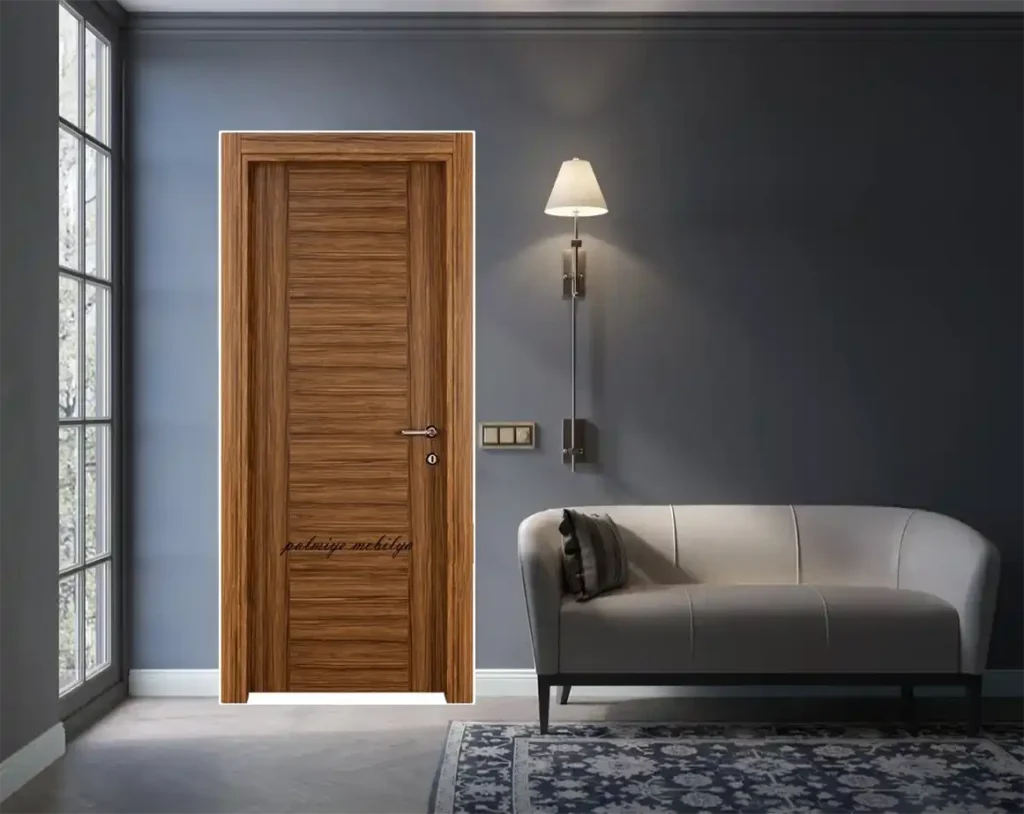
3D Fluted and Micro-Ribbed Textures
Modern interior trends are moving away from completely flat surfaces toward tactile, textured elements. Turkish factories are using advanced 5-axis CNC routers to carve fine, repeating ribbed, fluted, or wavy patterns across the face of the door panel before it enters the automated painting line. The interplay of light and shadow across a fluted silk-matte lacquered door creates a striking architectural feature.
Concealed Smart Home Hardware Integration
Doors are becoming active parts of modern smart home networks. Turkish manufacturers are increasingly routing internal wiring channels directly through the core during assembly. This allows for clean, hidden integration of:
- Biometric fingerprint scanners embedded directly into the door face.
- Facial recognition cameras built smoothly into the frame header.
- Motorized multi-point electronic smart locks hidden within the door body, preserving clean lines without exposed wiring or bulky external boxes.
Antibacterial and Self-Healing Topcoats
Driven by commercial hospitality and healthcare demands, modern chemical labs in Turkey are developing smart lacquer formulations. These include silver-ion infused topcoats that naturally kill 99.9% of surface bacteria, as well as micro-capsule acrylic coatings capable of self-healing fine hairline surface scratches when exposed to mild heat from a standard hair dryer.
Summary Sourcing Checklist for Architects and Project Managers
When preparing a procurement contract or tender for lacquered door types Turkey, ensure every line item on your purchase order specifies these critical technical parameters:
- Internal Core Type: Specify Paper Honeycomb for basic residential budgets, Tubular Chipboard for standard acoustic comfort, or Solid Chipboard for luxury hotel guestrooms.
- MDF Facing Thickness: Minimum 6mm to 8mm for flat flush doors; 10mm to 12mm for deep 3D classic routed panels.
- Paint Specification: Premium Aliphatic Polyurethane or Acrylic lacquer with a verified UV-absorber non-yellowing guarantee.
- Gloss Level Requirement: Explicitly define the target sheen (e.g., Deep Matte 5%, Silk-Matte 25%, or High-Gloss 90%+).
- Frame Engineering: Sandwich wood core with telescopic HDF architraves built to match your specific site wall thicknesses.
- Hardware Preparation: Complete factory CNC pre-boring for 3D hidden hinges, magnetic mortise locks, and automatic drop seals to eliminate manual on-site modifications.
- Logistics Protection: Heavy-duty export packaging including foam edge guards, face protection sheets, and reinforced wooden crates suitable for international shipping.
By selecting the right combination of core engineering, chemical coatings, and frame specifications, you ensure your investment in Turkish lacquered doors delivers long-lasting durability, exceptional acoustic comfort, and timeless architectural style.


Şunları da sevebilirsiniz
Distressed Furniture Turkey
Lacquered Furniture Turkey