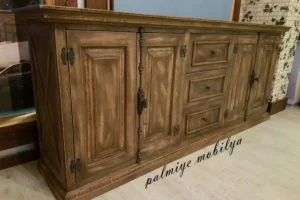

Distressed Wood Hotel Furniture
The global hospitality industry relies heavily on creating memorable guest experiences, and the foundation of that experience lies in the physical environment. Wooden Hotel Furniture Turkey has emerged as a premier phrase and a booming industry segment for hoteliers, interior designers, and procurement managers worldwide who seek the perfect balance of aesthetic warmth, structural longevity, and cost-effective manufacturing.
This comprehensive industry analysis and guide explores why Turkey has become a global powerhouse for custom hotel casework, millwork, and loose furniture fabrication. We delve deep into manufacturing techniques, wood species selection, sustainability standards, procurement strategies, and technical specifications required for commercial hospitality grades.
Wooden Hotel Furniture Turkey: The Ultimate Guide to Global Hospitality Sourcing
Choosing the right manufacturing partner for commercial furniture requires an understanding of both materials science and artisanal craft. When global brands look toward Europe and the Middle East for premium fit-outs, Turkey stands out as a dominant force.
1. The Strategic Advantage of Turkish Furniture Manufacturing
The Turkish furniture manufacturing sector is not a recent phenomenon; it is built upon centuries of woodworking traditions combined with massive modern capital investments.
Geographical and Logistical Efficiency
Turkey’s geographical position acts as a natural bridge between Europe, Asia, and Africa. For hotel developers, this translates to drastically reduced shipping times compared to Asian manufacturing hubs.
- Transit Times: Maritime freight from Turkish ports (such as Ambarlı, İzmir, or Mersin) to major European ports takes between 5 to 10 days, compared to 30 to 45 days from East Asia.
- Customs Union Agreement: Turkey’s Customs Union agreement with the European Union eliminates tariffs on industrial goods, streamlining documentation and lowering total landed costs.
- Multimodal Transport: Direct rail and highway networks allow for secure, climate-controlled container shipping straight to hotel construction sites.
Industrial Clustering and Ecosystems
Turkish manufacturing thrives on industrial clustering. Specific regions specialize in different verticals of the woodworking and furniture sectors:
- İnegöl (Bursa): The industrial capital of mass furniture production and advanced machinery integration.
- Istanbul (MASKO & MODOKO): The epicenter for high-end luxury design, custom engineering, and architectural collaboration.
- Ankara (Siteler): Historically renowned for master craftsmanship, hand-carved details, and solid wood processing.
- Kayseri: A hub for large-scale production, particularly upholstered goods and metal-wood integration.
2. Technical Material Specifications for Commercial Grade Furniture
Residential furniture fails rapidly in a hotel environment. Commercial furniture must withstand high turnover, aggressive cleaning protocols, impacts from heavy luggage, and varying indoor climate conditions. When drafting a Request for Proposal (RFP) for wooden hotel furniture Turkey, understanding technical material science is critical.
Solid Wood vs. Engineered Wood Profiles
| Material Type | Structural Application | Technical Performance Attributes |
|---|---|---|
| Solid Beech (Gürgen) | Chair frames, table legs, sofa bases, exposed structural edges. | Exceptional bending strength, high shock resistance, holds fasteners securely. |
| Solid Oak (Meşe) | Premium luxury tabletops, wall paneling profiles, executive desks. | Dense grain structure, highly resistant to fungal decay, premium visual texture. |
| MDF (Medium-Density Fiberboard) | Wardrobe doors, headboards, mini-bar cabinets, vanity units. | Isotropic nature ensures no warping; ideal substrate for natural veneers or lacquer finishes. |
| Marine Plywood | Bathroom vanities, luggage racks, luggage storage backings. | Cross-laminated veneer structure with waterproof resin; resists delamination under high humidity. |
Natural Wood Veneers and Slicing Techniques
For large-scale guestroom casegoods, using solid wood for every surface is structurally unstable and cost-prohibitive. Turkish manufacturers utilize high-grade natural wood veneers bonded to stable engineered wood cores.
- Quarter Slicing: Produces a straight, linear grain pattern ideal for modern, minimalist hotel concepts.
- Crown Slicing (Flat Slicing): Displays the natural “cathedral” grain pattern of the wood, favored in traditional or transitional luxury hotels.
- Rotary Peeling: Primarily used for structural plywood layers rather than aesthetic surfaces.
3. Advanced Surface Treatments and Chemical Resistance
The finish applied to wooden hotel furniture Turkey determines how well the asset maintains its visual integrity over a 7-to-10-year property renovation cycle. Turkish factories utilize automated spray lines and UV curing technology to apply high-durability coatings.
Polyurethane (PU) and Acrylic Finishes
- Polyurethane Coatings: Provide a thick, flexible protective layer highly resistant to water ring marks from guest glasses, alcohol-based perfumes, and chemical sanitizers.
- Acrylic Non-Yellowing Coatings: Crucial for light-colored woods (like bleached oak or maple) and white lacquered surfaces. They prevent the wood from turning yellow under UV sunlight exposure.
Fire Retardant and Anti-Microbial Coatings
International hospitality chains (such as Marriott, Hilton, and IHG) enforce strict fire safety protocols. Premium Turkish manufacturers supply wood finishes that comply with global fire ratings:
- EN 13501-1: European standard for the fire classification of construction products and building elements.
- BS 476 (Part 6 & 7): British standards assessing flame propagation and surface spread of flame.
- Low-VOC (Volatile Organic Compounds): Turkish suppliers exporting to the US and EU utilize water-based coatings that meet LEED compliance certification, preserving indoor air quality for guests.
4. Engineering Custom Hospitality Casegoods
The internal engineering of a piece of furniture separates commercial grade from consumer grade. Turkish engineers utilize advanced CAD/CAM software (such as SolidWorks or TopSolid) to design joinery that absorbs daily stress.
[Solid Wood Edge Banding] ---> Absorbs impact from housekeeping carts
       |
[Natural Wood Veneer] --------> Provides premium aesthetic depth
       |
[High-Density MDF Core] ------> Prevents warping, twisting, and cracking
       |
[Counter-Veneer Backing] -----> Balances moisture tension across the panel
Critical Joinery Techniques
- Mortise and Tenon: The gold standard for hotel dining chairs and lounge seating frames. This joint offers the highest resistance to lateral forces when guests lean back.
- Dowel and Cam-Lock Assemblies: Utilized for modern modular wardrobe setups, allowing safe transport and precise on-site installation by fit-out teams.
- Finger-Jointing: Used to create long, stable solid wood profiles without the risk of natural warping along the length of the timber.
Hardware Integration
The longevity of wooden cabinetry relies heavily on its moving parts. Top-tier Turkish furniture factories do not compromise on functional hardware. They partner with world-renowned domestic and European hardware giants like Samet (Turkey), Blum (Austria), and Häfele (Germany).
- Soft-Closing Hinges: Tested for a minimum of 100,000 open/close cycles to prevent door slamming noise in guest hallways.
- Under-Mount Hidden Drawer Slides: Capable of handling high weight capacities (up to 40 kg per drawer) to survive guests overloading drawer spaces.
5. Architectural Millwork and Public Space Integration
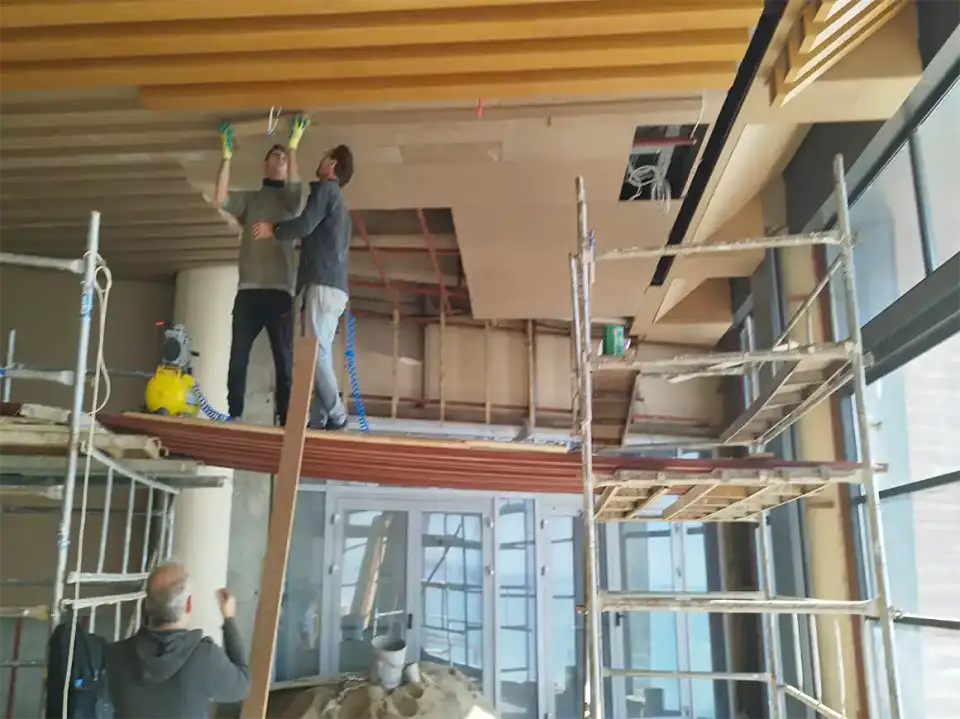
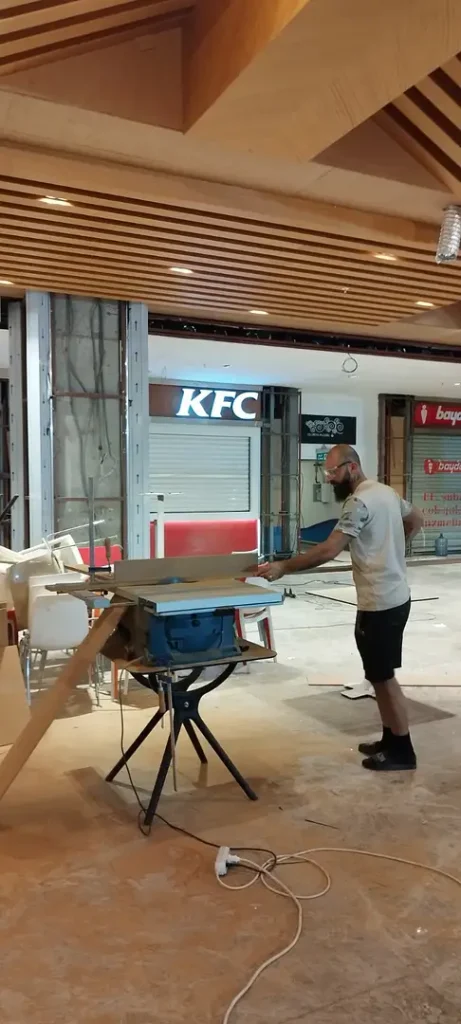
A core strength of sourcing wooden hotel furniture Turkey is the ability of factories to handle both loose furniture and complex architectural millwork. This single-source capability ensures that wood species, stain colors, and gloss levels match perfectly between the guestrooms and public zones.
Lobby and Reception Areas
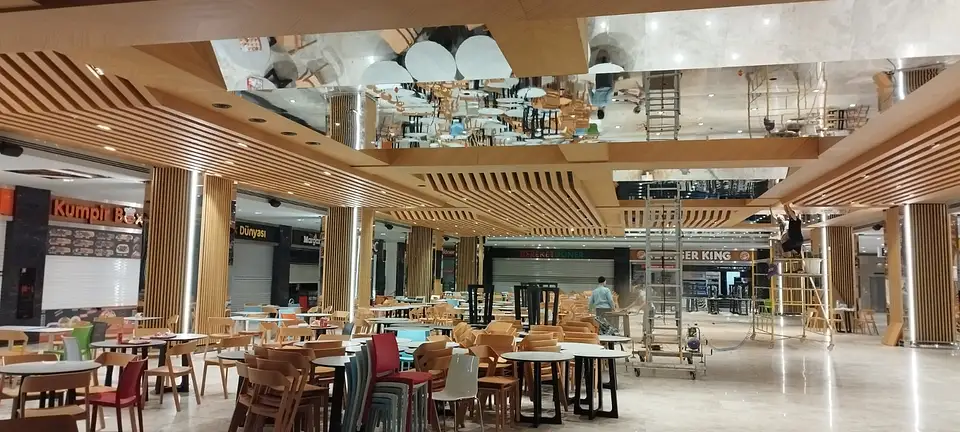
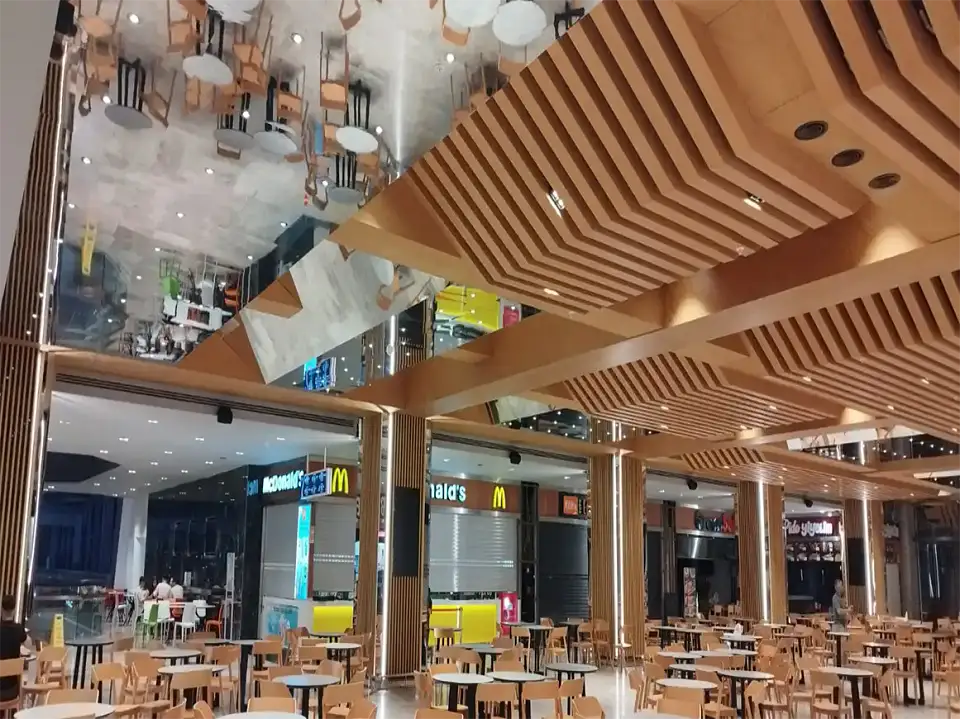
The lobby requires monumental woodworking. Large-scale structural columns wrapped in wood paneling, massive acoustic ceiling baffles, and statement reception desks require heavy engineering.
- Acoustic Wood Paneling: Perforated or micro-grooved veneered panels backed by sound-absorbing acoustic fleeces are engineered to manage echo in high-ceilinged hotel lobbies.
- Metal and Stone Inlays: Turkish manufacturers are highly adept at integrating rich materials directly into wood fabrications, including brushed brass strips, book-matched marble slabs, and integrated LED lighting channels.
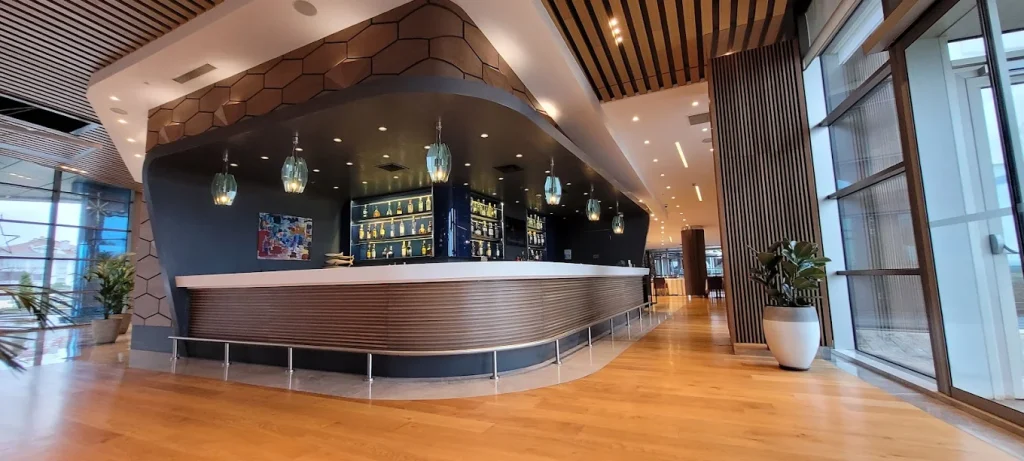
All-Day Dining and Bar Fit-Outs
Restaurant environments expose wood to extreme conditions: hot plates, spilled acids (citrus juice, wine), and constant physical abrasion.
- Solid Wood Edge Banding: All veneered tables are fitted with a 3mm to 5mm solid wood edge band before veneering. This protects the vulnerable perimeter from being chipped by chairs bumping into the table.
- High-Pressure Laminate (HPL) Linings: While the exterior of a buffet station or bar counter features elegant natural wood veneer, the interior working zones are lined with water-resistant HPL for easy cleaning and moisture protection.
6. Sustainability, Certifications, and Global Compliance
Modern hoteliers must meet strict Environmental, Social, and Governance (ESG) criteria. The sourcing of wood products must not contribute to deforestation or illegal logging activities.
Chain of Custody Certifications
The Turkish forestry sector is heavily regulated by the General Directorate of Forestry (OGM), ensuring sustainable harvesting cycles. For international verification, key factories maintain:
- FSC (Forest Stewardship Council): Guarantees that the wood used in the production process is harvested from responsibly managed forests.
- PEFC (Programme for the Endorsement of Forest Certification): Ensures mutual recognition of localized sustainable forest management frameworks.
Formaldehyde Emission Standards
Indoor air safety is paramount for guest health. Cheap particle boards can off-gas toxic formaldehyde over time.
- E1 Standard: Turkish manufacturers exporting to the EU adhere strictly to E1 certification standards, which limit formaldehyde release to safe, highly restricted levels.
- TS EN 71-3: Safety standards ensuring that coatings used on any accessible wooden surfaces are completely free from toxic heavy metals.
7. The Procurement and Customization Process Explained
Procuring wooden hotel furniture Turkey involves a structured project management lifecycle. Navigating this process systematically protects your investment and ensures timely project handover.
Step 1: Shop Drawing and Material Sample Approval
Upon receiving the interior designer’s initial concept drawings, the manufacturer’s technical design office creates highly detailed production shop drawings.
- Scale Verification: Every dimension is re-checked against actual site measurements (as-built drawings).
- Sample Boxes: A curated sample box containing wood stain swatches, lacquer colors, mock-up joinery sections, and hardware options is shipped to the client for official sign-off.
Step 2: The Mock-Up Room (The Acid Test)
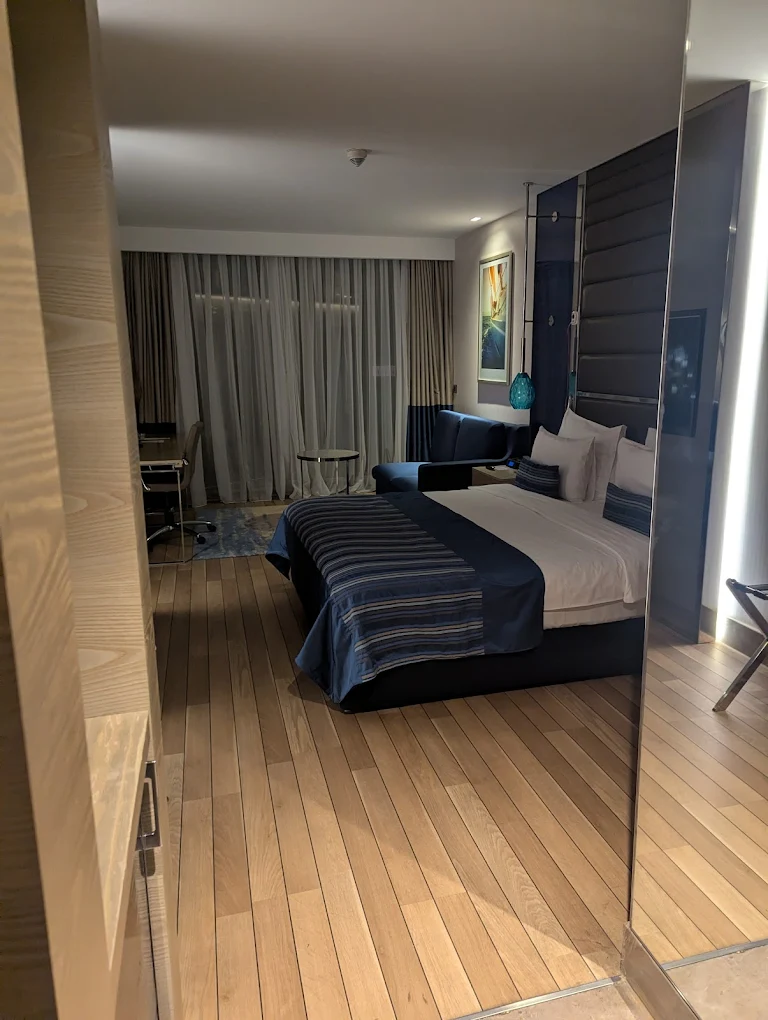
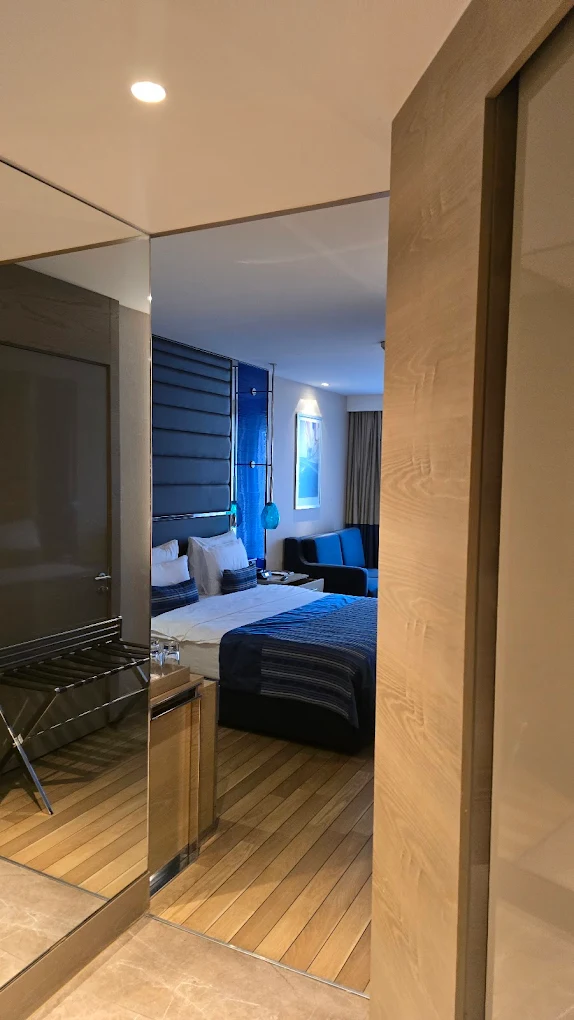
Before green-lighting mass production for a 200-room hotel, producing a prototype or “Mock-Up Room” is standard operational procedure.
- Quality Baseline: The mock-up allows the hotel owner, operator, and designer to evaluate the aesthetics, comfort, and durability of the furniture in a real-world space.
- Engineering Refining: Any design flaws, such as a drawer hitting a bedside light switch or a wardrobe lacking adequate internal clearance, are corrected at this stage without expensive penalties.
Step 3: Production and Quality Control Protocols
Quality control (QC) in Turkish factories occurs at multiple critical gates:
- Moisture Content Testing: Kiln-dried solid wood is tested to ensure its internal moisture level sits between 8% and 12%. This range prevents the wood from shrinking or splitting when exposed to different global climates.
- Dry Fitting: Wardrobes and complex wall panel systems are completely dry-assembled on the factory floor to verify tolerances before passing to the finishing and lacquering lines.
Step 4: Export Packaging and Crating
Transporting delicate wood products across oceans and continents requires heavy-duty protective packaging.
- High-Density Foam Edge Protectors: Guard vulnerable corners against impact.
- Corrugated Board Wrapping: Heavy-duty, double-walled cardboard boxes prevent surface scratches.
- Wooden Palletization and Crating: For fragile items or high-end millwork, custom ISPM-15 certified heat-treated wooden crates are built to prevent movement inside maritime containers.
8. Navigating Financial and Contractual Safeguards
Successful procurement requires strong contractual and financial frameworks. Turkish commercial law is fully aligned with western standards, offering solid security for global investors.
Incoterms and Delivery Frameworks
Contracts should clearly state the chosen ICC Incoterms to define exactly where liability shifts from the factory to the buyer.
- EXW (Ex Works): The buyer handles all logistics from the factory door in Turkey.
- FOB (Free on Board): The manufacturer handles inland transit and customs clearance inside Turkey, placing the goods safely onto the vessel.
- DDP (Delivered Duty Paid): The manufacturer manages the entire supply chain, including international freight, destination customs clearance, and delivery directly to the hotel construction site.
Payment Terms and Trade Finance
- Standard Structure: Typically operates on a 30% to 40% advance bank wire transfer to initiate raw material purchasing, with the remaining balance due against the presentation of the Bill of Lading (BL) and final pre-shipment QC report.
- Letters of Credit (LC): For multi-million dollar institutional projects, irrevocable Letters of Credit opened through reputable international banks offer deep security for both the buyer and the Turkish manufacturer.
9. Contemporary Design Trends in Turkish Woodworking
The aesthetic direction of hospitality design shifts continuously. Turkish manufacturers are uniquely agile in adapting to these design movements due to their blended exposure to both European minimalist design philosophies and rich Eastern architectural heritages.
Biophilic Design and Organic Forms
Modern wellness resorts focus heavily on connecting guests with nature.
- Live-Edge Accents: Incorporating natural, raw-edge slabs of walnut or oak into public bar counters or communal working tables.
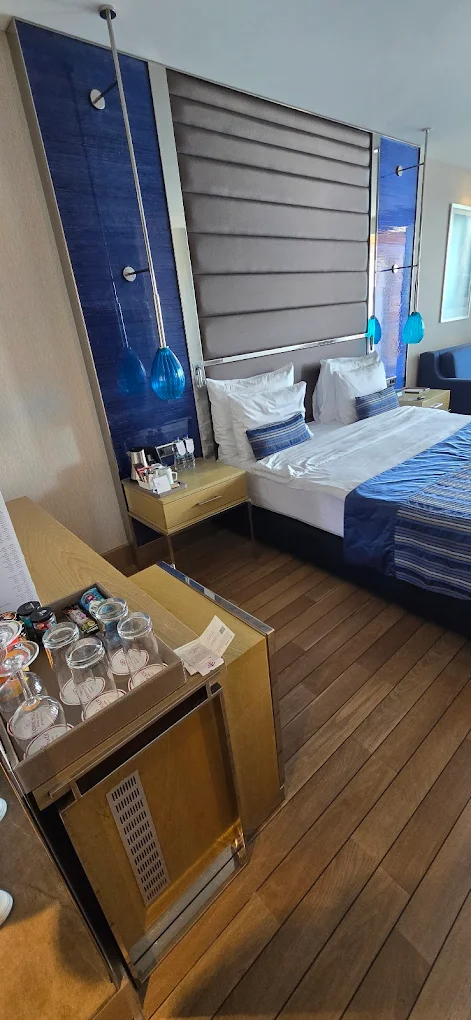
- Fluted Wood Paneling: Running vertically along walls and bed headboards to create texture, depth, and play of light.
Matte and Open-Pore Textures
The era of high-gloss, heavily poured polyester lacquer coatings has largely shifted toward natural aesthetics.
- Open-Pore Finishes: Utilizing special matte polyurethane or natural oil treatments that leave the natural deep pores of oak or ash wood visible and tactilely palpable.
- Deep Matte Lacquers: Soft-touch, anti-fingerprint matte coatings that preserve a clean look even under constant use by guests.
10. Comparative Evaluation: Turkey vs. Global Competitors
To make an informed corporate decision, global procurement teams must weigh Turkey against other major hospitality manufacturing hubs like China, Vietnam, Italy, and Poland.
| Evaluation Metric | Turkish Manufacturing Hub | Southeast Asian Hubs | Western European Hubs |
|---|---|---|---|
| Customization Ability | Extremely High: Built for bespoke, low-to-high volume architectural fit-outs. | Moderate: Prefers high-volume, standardized catalog runs. | Extremely High: Superior design, but at significantly higher price points. |
| Geographic Proximity to EMEA | Excellent: Short overland or maritime routes; fast transit times. | Poor: Long ocean voyages subject to major global maritime disruptions. | Excellent: Centrally located, but faces much higher domestic transport costs. |
| Labor Skill Level | High: Deep-rooted artisanal traditions combined with technical wood engineering degrees. | Medium: Highly automated for repetitive tasks; limited custom hand-engineering. | Extremely High: Master craftsman level, but heavily constrained by extreme labor costs. |
| Material Sourcing | Abundant: Direct access to European softwoods and domestic premium hardwoods like walnut and beech. | Variable: Dependent on imported logs or lower-density tropical woods. | Abundant: Access to premium certified woods, but raw material costs are higher. |
11. Maintenance and Longevity Protocols for Hotel Operations
The lifecycle value of wooden hotel furniture Turkey does not end when installation finishes. Hotel maintenance teams must follow professional protocols to extend the service life of these assets.
Climate Control Management
Wood is hygroscopic; it absorbs and releases moisture based on its surrounding environment.
- Relative Humidity (RH): Hotel guestrooms should maintain a stable relative humidity between 40% and 60%. Dropping below 35% can cause solid wood elements to shrink and joints to open; exceeding 65% can cause wood panels to swell.
- HVAC Deflection: Air conditioning vents should never blow cold or warm air directly onto wooden headboards or wardrobes, as localized thermal shock can crack surface lacquers.
Preventive Cleaning Guidelines
- Avoid Ammonia and Silicones: Maintenance staff must avoid cleaning products containing ammonia or silicone. Ammonia dulls polyurethane finishes over time, while silicone leaves a greasy film that prevents future touch-ups or re-lacquering.
- Microfiber and PH-Neutral Cleaners: Use slightly damp microfiber cloths paired with pH-neutral, water-soluble timber cleaners to safely remove grease and dust without stripping the topcoat.
12. Conclusion: Maximizing ROI on Sourcing Decisions
Investing in wooden hotel furniture Turkey offers global hoteliers a resilient strategic solution. By combining cost efficiencies, short transit timelines, rigorous adherence to European environmental standards, and deep technical woodworking expertise, Turkish manufacturers deliver reliable value for commercial interiors.
To maximize your Return on Investment (ROI), choose a partner capable of handling both complex structural millwork and loose casegoods. Ensure all technical requirements—from kiln-drying moisture levels to fire-retardant chemical coatings—are clearly detailed in your initial contract documentation. Partnering with a vetted Turkish factory ensures your hotel interior will withstand daily operations while providing guests with a warm, memorable experience for years to come.
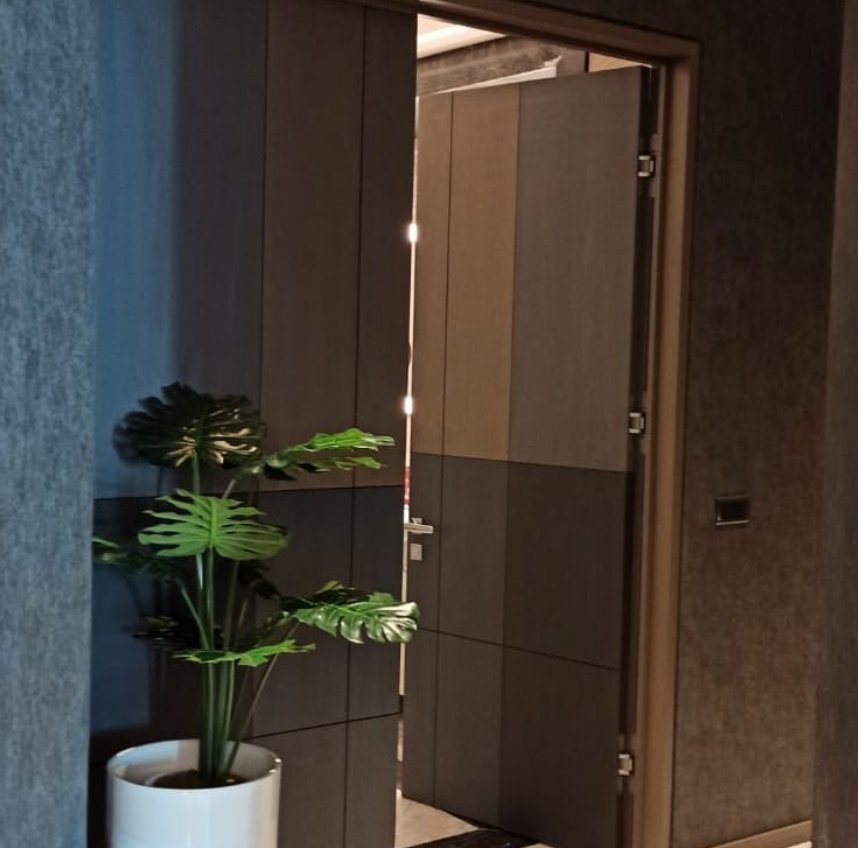
Butik Otel Mobilyaları
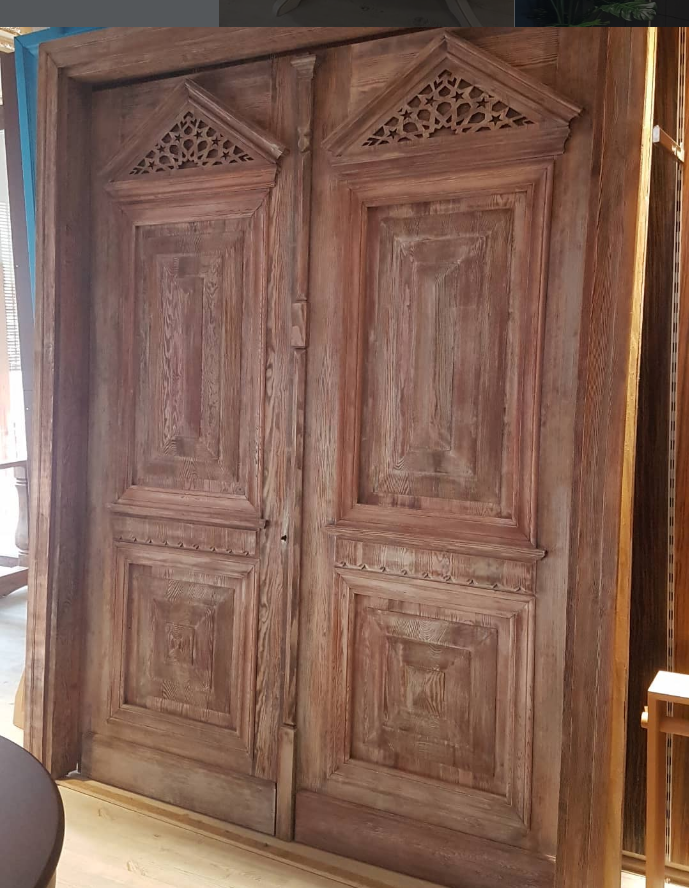
Butik Otel Mobilyaları
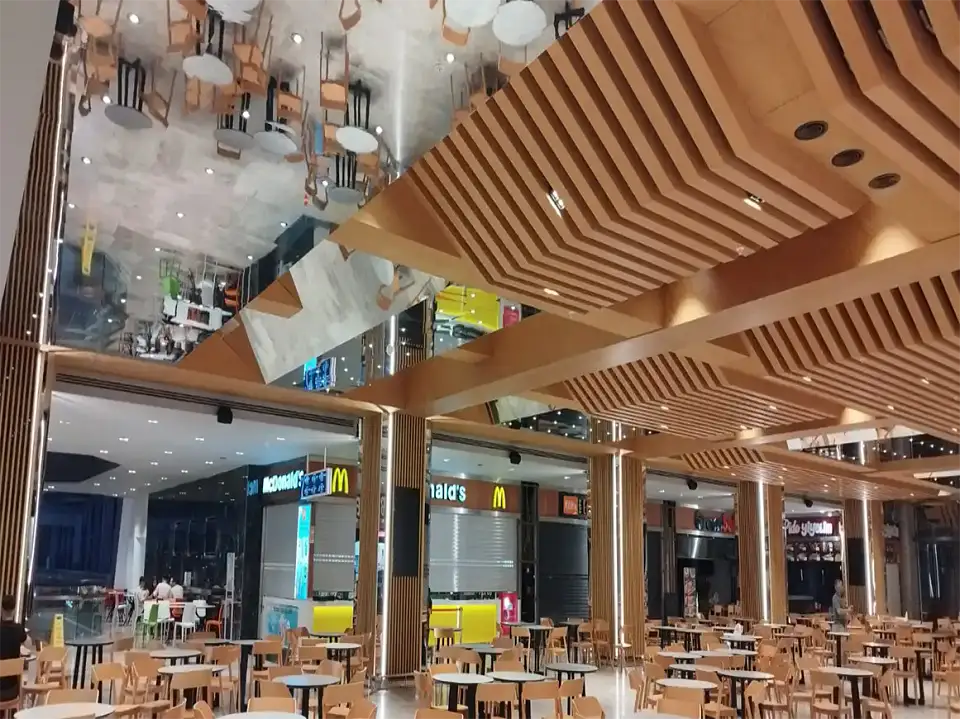
Butik Otel Mobilyaları
Tarihi Binaların Ahşap Dekorasyonları
Tarihi Ahşap restorasyonlari Kapılar
Tarihi binaların mobilya dekorasyonları
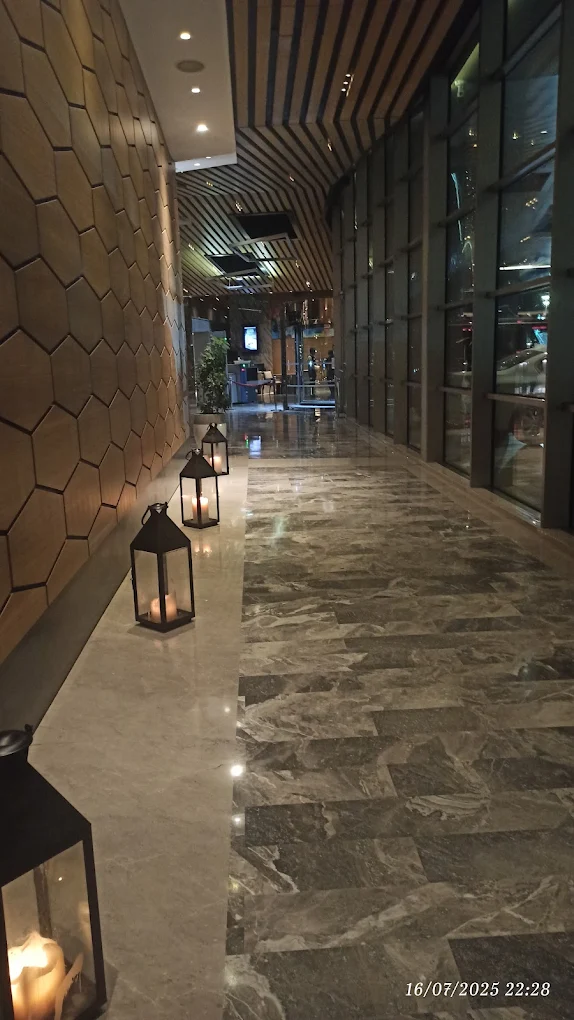
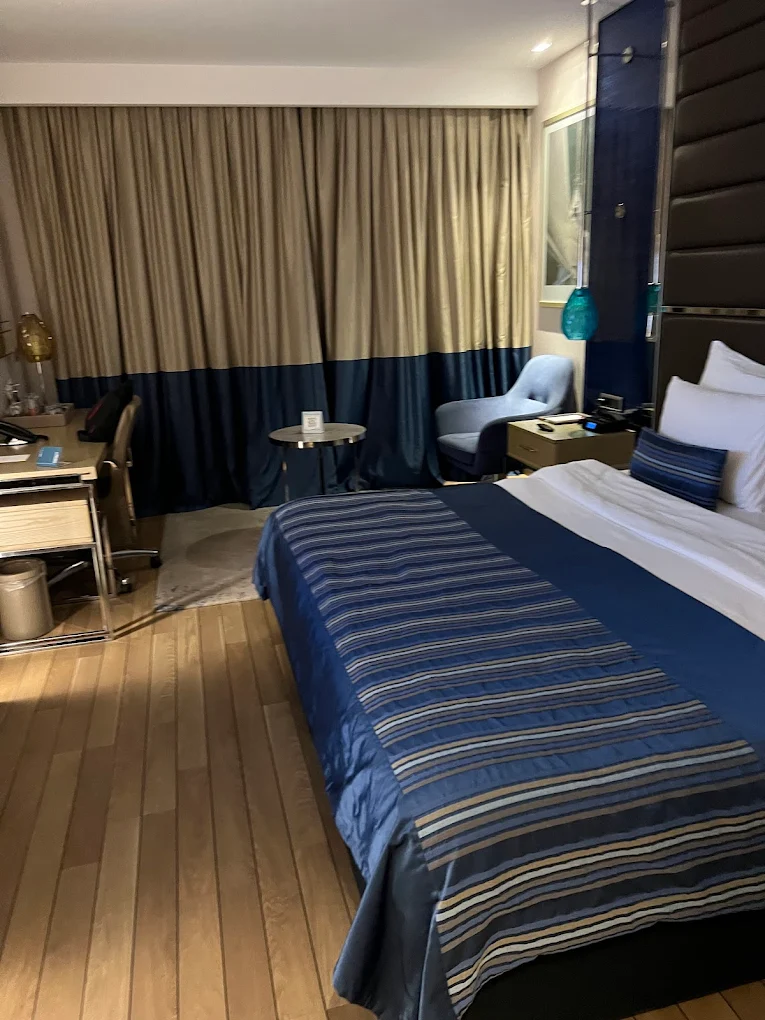
Butik Otel Mobilyaları
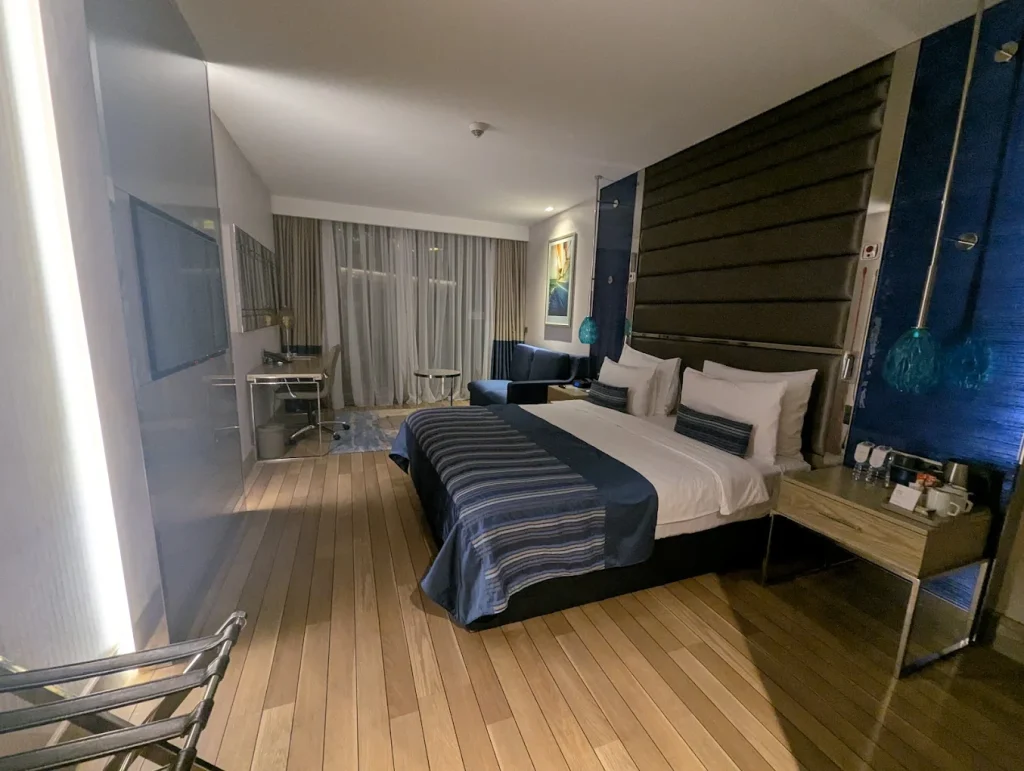
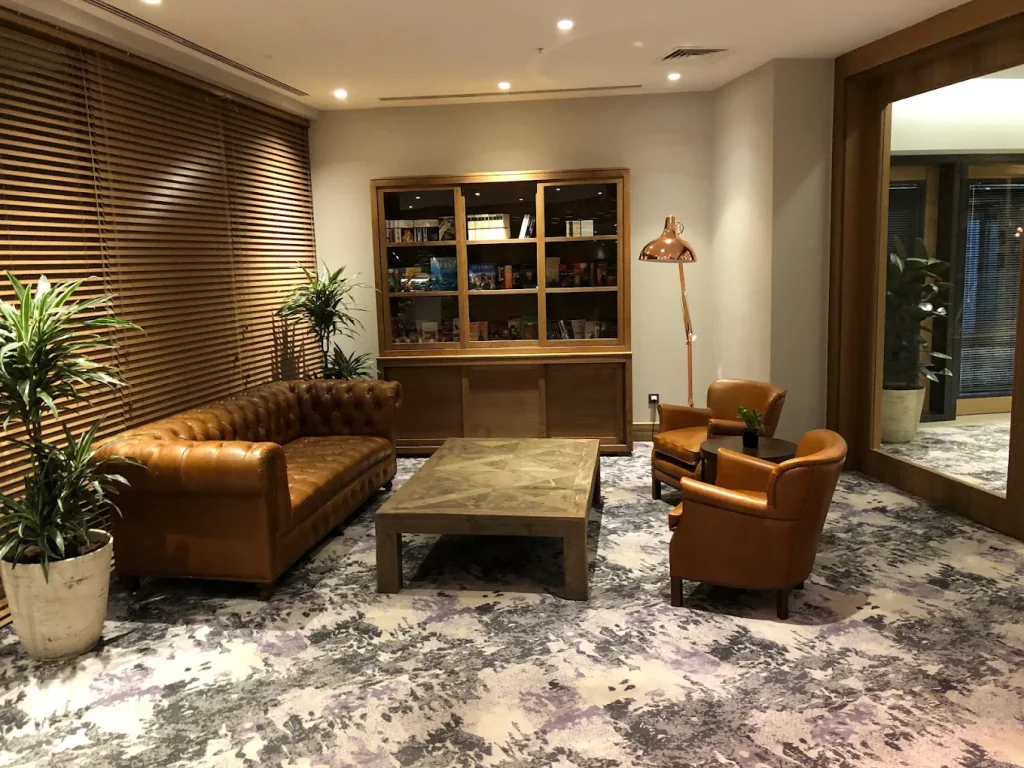
Etiket:Boutique Hotel Furniture Turkey, Distressed Wood Hotel Furniture Turkey, Hotel Doors Turkey, Hotel Entrance and Hotel Lobby Furniture Turkey, Hotel Entrance Furniture Turkey, Hotel Furniture Decoration Turkey, Hotel Furniture Istanbul Turkey, Hotel Furniture Manufacturing Companies Turkey, Hotel Furniture Manufacturing Turkey, Hotel Furniture Turkey, Hotel Lobby Furniture Turkey, Hotel Room FurnitureTurkey, Hotel Wood Decoration Turkey, Luxury Hotel Furniture Turkey, Solid Wood Hotel Furniture Turkey, Wooden Hotel Furniture Turkey

Şunları da sevebilirsiniz
Mass Production Solid Furniture

Solid Wood Furniture Production Turkey