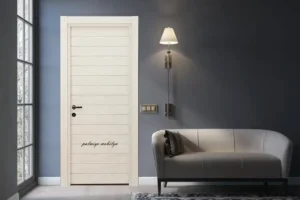

Flat Lacquered Door Manufacturing Turkey
Flat Lacquered Door Manufacturing Turkey: The Comprehensive Engineering, Industrial Production, and Procurement Guide
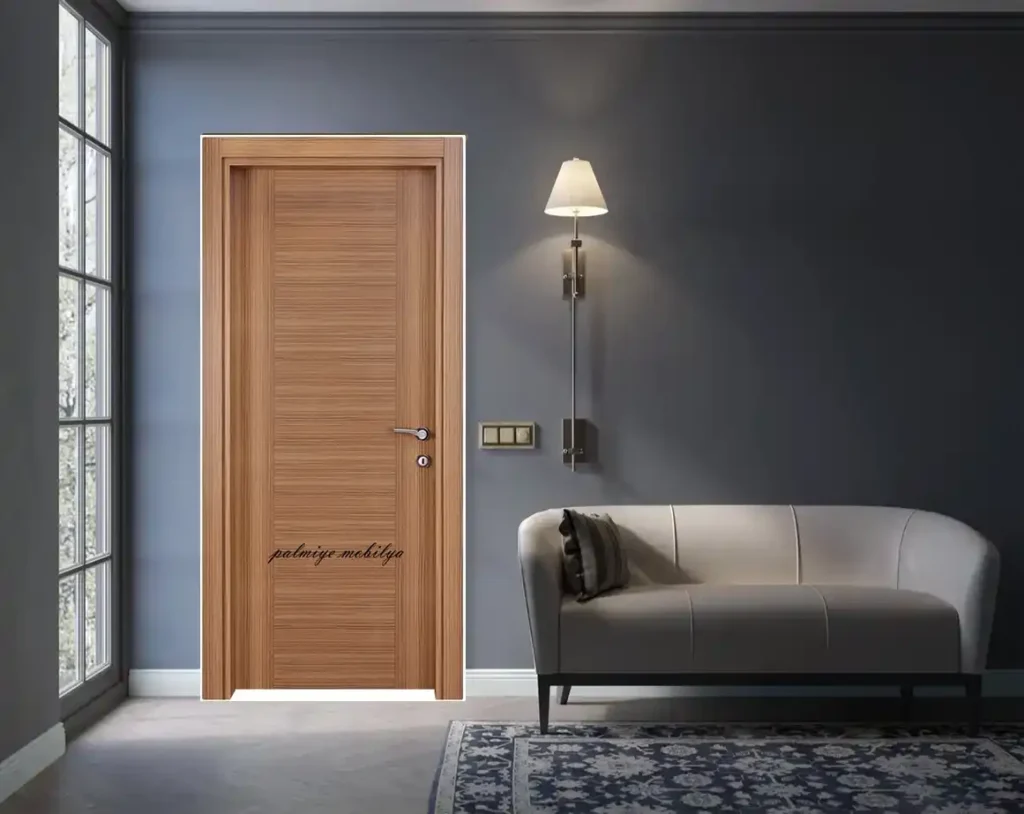
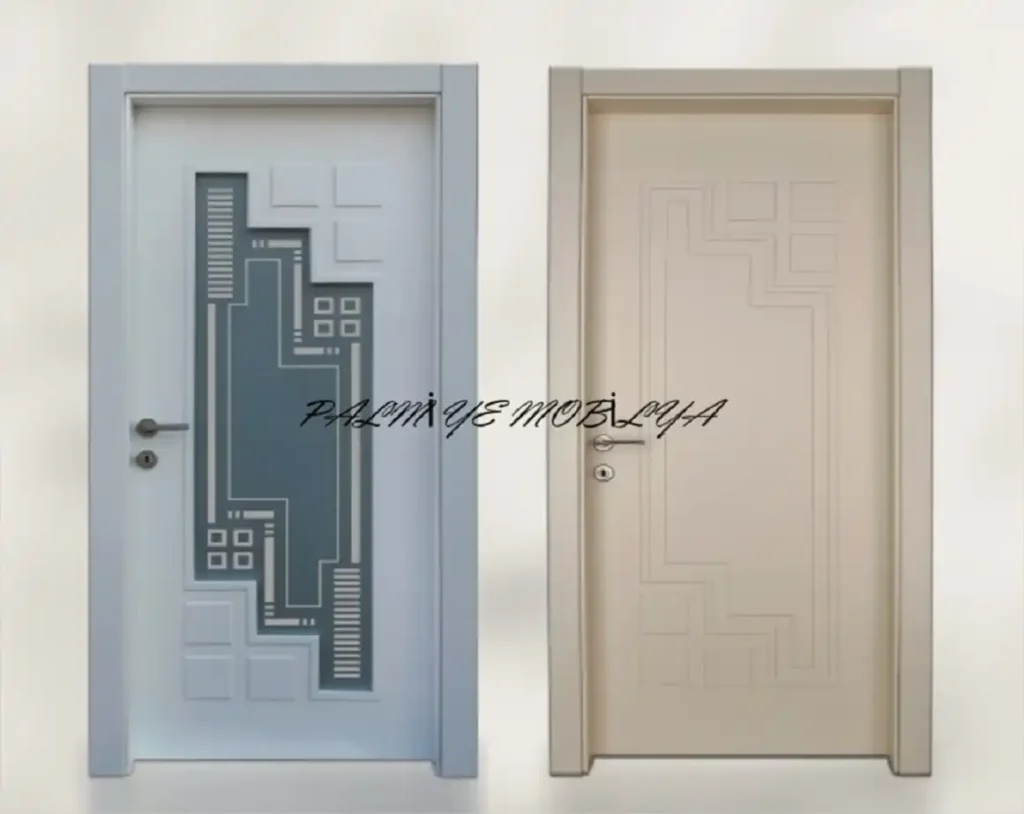
The global architectural landscape has experienced an undeniable shift toward minimalist, clean-lined interior aesthetics. In contemporary residential complexes, high-end hospitality venues, and premium commercial developments, the traditional ornate, deeply paneled door has been largely superseded by the flush, perfectly flat interior door panel. Achieving a visually flawless, mirror-smooth, or deeply matte finish on an entirely flat surface is one of the most technically demanding tasks in industrial woodworking. At the forefront of this specialized sector is Flat Lacquered Door Manufacturing Turkey.
Turkish industrial joinery and door manufacturers have positioned themselves as premier global suppliers by integrating advanced European automated production machinery with sophisticated chemical coatings, a vertically integrated wood supply chain, and strict quality control standards. This comprehensive technical guide provides an exhaustive look into the raw materials, structural engineering, automated spray application chemistry, calibration sanding methods, and quality check systems that define Flat Lacquered Door Manufacturing Turkey.
1. Raw Material Architecture and Warp-Prevention Engineering
In an entirely flat door leaf, any structural warping, twisting, or bowing—even by a single millimeter—is immediately visible when light hits the surface. Because there are no decorative moldings or recessed panels to hide surface movement, Flat Lacquered Door Manufacturing Turkey treats structural stabilization as a rigorous engineering process.
[Kiln-Dried Engineered Softwood Frame] + [Internal Stabilization Core]
                               │
                               ▼
            [High-Pressure Hydraulic Cold Pressing]
                               │
                               ▼
        [Calibrated Double-Skin High-Density Fiberboard]
Kiln-Dried Finger-Jointed Framework Architecture
The internal skeleton of a flush door—composed of vertical stiles and horizontal rails—forms the primary perimeter frame. Standard budget doors often fail because they use solid, un-engineered timber sections that retain natural internal tensions. As indoor moisture levels fluctuate with changing seasons, these un-engineered sections twist, destroying the flat surface of the door.
- Species Selection and Thermal Treatment: High-volume Turkish factories utilize premium engineered softwoods, primarily Siberian Pine (Pinus sylvestris) or high-altitude regional Turkish Spruce (Picea abies). The raw lumber is processed inside automated convection kiln-drying chambers to achieve a highly controlled, stable internal moisture content restricted to between 8% and 10% (±1%).
- Defect Purging and Cross-Grain Jointing: Computerized optical scanners inspect the dried timber boards to identify and cut away structural defects, including knots, pitch pockets, and cross-grains. The remaining clear wood segments are milled with interlocking “finger” profiles at their ends and bonded together using high-performance, D3-grade or D4-grade water-resistant polyurethane structural adhesives under intense hydraulic pressure. This process alternates the grain directions of the segments, which cancels out internal wood tension and ensures the framework remains completely straight over decades of operational use.
- Double-Lock Block Integration: To ensure secure hardware installation without risking surface denting, the internal frame is reinforced with extra finger-jointed timber blocks on both sides. This provides a solid anchor point for heavy latch locks and handles.
High-Density Fiberboard (HDF) Overlaid Faces
The outer face plates of a flush door require exceptional smoothness, structural hardness, and low porosity. While budget manufacturers rely on lightweight, standard-density fiberboards, Flat Lacquered Door Manufacturing Turkey relies on premium High-Density Fiberboard (HDF) faces.
- Density Calibration: The HDF sheets feature an ultra-dense fiber compaction rating exceeding 820 to 880 kg/m³. This heavy compaction provides a stiff, flat structural face that resists impacts and mechanical pressures.
- Moisture Deflection Resins: During fiber compaction, the wood fibers are mixed with specialized hydrophobic paraffin waxes and melamine-urea-formaldehyde resins. This minimizes the board’s water-absorption and thickness-swelling rates, preventing the substrate from contracting or expanding due to seasonal humidity changes. This protection is critical for shielding the outer lacquer layers from micro-cracking, bubbling, or peeling.
- Calibrated Face Thinning: Prior to assembly, the HDF faces pass through wide-belt sanders equipped with electronic sectional platens. This calibrates the thickness tolerance across the entire sheet to within ±0.05 mm, providing an exceptionally uniform base for paint application.
Internal Core Matrix Configurations
The internal filling of a flush door determines its acoustic performance, weight, impact resistance, and cost. In Flat Lacquered Door Manufacturing Turkey, three primary core matrix designs are utilized depending on project specifications:
- Extruded Tubular Chipboard Core (Sauerland Core Technology):
- This core consists of continuous horizontal cylindrical tubes running through a compressed wood-particle matrix.
- It provides an excellent strength-to-weight ratio, distributing surface impacts evenly across the face while avoiding adding unnecessary weight to the hinges.
- It delivers a solid acoustic sound reduction index (\(R_{w}\)) ranging from 28 dB to 32 dB, making it the preferred standard for premium residential bedrooms and apartment entrance doors.
- Solid Particleboard Core:
- A continuous, solid block of highly compressed particleboard fibers spanning the entire internal frame cavity.
- It provides maximum structural mass, giving the door a substantial feel and high impact resistance.
- It achieves an enhanced acoustic isolation rating up to 34–36 dB, commonly specified for luxury hospitality guestrooms and upscale home offices.
- Multi-Layer Acoustic and Fire-Rated Assemblies:
- Composed of alternating layers of dense rockwool insulation, structural mass-loaded vinyl (MLV) sound barriers, intumescent sheets, and solid timber.
- Engineered to meet exact international building standards, including British Standard (BS 476) and European Norm (EN 1634) fire ratings for 30-minute (FD30) and 60-minute (FD60) fire resistance, alongside sound insulation up to 42 dB.
2. Advanced Sizing, Calibration Sanding, and Hardware Mortising
A truly flat door panel requires precision machining across all four edges and faces before a single drop of paint is applied. Flat Lacquered Door Manufacturing Turkey relies on integrated, automated double-end tenoning lines and multi-head calibration machines to achieve zero-tolerance alignment.
Double-End Tenoning and Sizing Calibration
Once the internal frame, core filling, and outer HDF faces are bonded under high hydraulic pressure in multi-daylight cold or hot presses, the rough door blank moves along automated conveyor lines.
- Simultaneous Edge Milling: High-speed, scoring circular saw blades trim all four edges of the door blank simultaneously. This guarantees perfectly square 90-degree corners and exact dimensional tolerances down to 0.1 mm across large production lots.
- MDF Profile Edge Banding: The raw exposed side profiles of the door are covered with thin MDF edge bands or specialized priming tapes. This seals the porous edges of the internal frame, preparing them for painting and preventing uneven paint absorption.
Industrial Wide-Belt Sanding and Face Calibration
Any microscopic variations in surface height or raw fiber texture will cause light to ripple across a lacquered finish. To eliminate this issue, the sized door blanks pass through high-performance multi-head wide-belt sanding machines.
- Sequential Grit Reduction: The panels move through varying configurations of sanding rollers, starting with aggressive 80-grit cross-sanding belts to level out the surface, moving to 120-grit and 180-grit longitudinal belts, and finishing with fine 240-grit and 320-grit orbital sanding platens.
- Segmented Electronic Platens: The sanding pads are controlled by real-time electronic pressure sensors that detect the thickness of the door leaf. This prevents the machine from over-sanding the outer corners and edges, ensuring a perfectly uniform surface across the entire face.
Integrated CNC Hardware Mortising
Custom hardware preparation adds significant labor costs and risks surface scratching if done manually on-site. In Flat Lacquered Door Manufacturing Turkey, smart factories integrate hardware prepping directly into the main automated production line:
- Concealed Hinge Mortising: Multi-axis CNC routers cut exact mortises to fit premium European concealed hinge systems (such as Simonswerk Tectus, Anselmi, or Kubica). These hinges remain completely hidden within the door leaf and frame when closed, allowing the door to sit perfectly flush with the wall line.
- Magnetic Lock Pockets: Pockets are automatically routed to fit premium magnetic latch locks (like AGB Polaris). The latch remains hidden inside the door edge when open, extending via magnetic force only when closed. This ensures exceptionally quiet operation and a clean look.
- Automatic Mechanical Drop Seals: A deep horizontal channel is routed along the bottom rail to hold mechanical drop-down draft seals. These drop down automatically to seal the gap between the door and floor when shut, blocking sound, light, and drafts.
3. Chemical Science: The Lacquering Layer Hierarchy
The quality of a flat lacquered finish is defined by its chemical structure. In Flat Lacquered Door Manufacturing Turkey, creating a durable, pristine surface requires a precise multi-layered chemical process that builds depth and resilience.
The Five-Layer Industrial Coating Protocol
A premium lacquer finish requires applying multiple distinct chemical layers, each serving a specific performance purpose:
| Layer Order | Chemical Formulation Base | Wet Film Thickness (WFT) | Technical Function and Performance Purpose |
|---|---|---|---|
| Layer 1 | Polyurethane/Acrylic Pore Sealer | 20 – 30 Microns | Penetrates HDF pores; seals fibers against moisture. |
| Layer 2 | High-Solid Polyurethane Primer (Coat 1) | 70 – 90 Microns | Fills micro-voids; builds a flat structural body. |
| Layer 3 | High-Solid Polyurethane Primer (Coat 2) | 70 – 90 Microns | Enhances chemical cross-linking; perfects the base. |
| Layer 4 | Pigmented Lacquer Base (Color Coat) | 40 – 50 Microns | Delivers deep color density and complete UV stability. |
| Layer 5 | Clear Acrylic Shield Topcoat | 30 – 40 Microns | Protects against scratches, chemicals, and yellowing. |
Chemistry Selection: Polyurethane vs. Acrylic vs. UV Curing Resins
Turkish manufacturing lines customize chemical compositions based on the project’s performance criteria and environmental standards:
- Two-Component Polyurethane (PU) Lacquers: Modified PU coatings are formulated with high-solid content. This allows the paint to cover the surface efficiently in fewer passes, reducing chemical usage while maintaining good flexibility and impact resistance. Polyurethane films can flex slightly along with the natural micro-movements of the wood core, preventing hairline cracks around joints over decades of seasonal changes.
- Aliphatic Acrylic Non-Yellowing Systems: Formulated using aliphatic acrylic resins, these are highly recommended for bright white and light pastel doors. They block UV light, ensuring white doors retain their crisp color over decades of exposure to natural sunlight.
- Photo-Initiated Industrial UV-Cured Resins: For large-scale residential developments requiring rapid production, automated roller-coating lines use photo-initiated UV lacquers. These cure almost instantly under heavy UV lamp arrays, creating an ultra-hard surface highly resistant to scratching.
- Low-VOC Water-Borne Eco-Coatings: To help projects qualify for green building certifications like LEED, BREEAM, and DGNB, premium Turkish factories offer advanced water-based lacquer options. These eco-friendly coatings emit minimal Volatile Organic Compounds (VOCs), protecting indoor air quality.
4. Automated Micro-Climate Cleanrooms and Application Engineering
The finest lacquer chemical formulation will fail if applied in an unmonitored environment. High-quality Flat Lacquered Door Manufacturing Turkey is produced using advanced automated application systems within highly controlled, pressurized cleanrooms.
[Sanded Door Panel] ➔ [Ionizing Dust Removal Dusting] ➔ [Robotic Spray Chamber] ➔ [Linear Curing Oven]
Positive-Pressure Air Handling and Cleanrooms
Lacquering requires an environment completely free of airborne dust and contaminants. Turkish factories route their painting processes through enclosed cleanrooms managed by positive-pressure HVAC networks.
- The Filtration Mechanism: Conditioned air passes through HEPA filters and enters the cleanroom from ceiling plenums at a higher volume than it is drawn out by floor exhaust fans.
- The Protection Benefit: This creates a positive pressure barrier. When doors are opened, air flows outward, preventing dust, fabric fibers, or external debris from entering and marring the wet paint.
- Atmospheric Stabilization: Temperature is held at a steady 22°C (±2°C) with relative humidity maintained between 50% and 60% to ensure even chemical solvent evaporation and prevent surface blushing.
Flatbed Reciprocating Oscillating Spray Robots
While manual spraying is reserved for highly complex custom trim work, large commercial volumes utilize advanced reciprocating spray robots.
- Electronic Target Scanning: Before entering the spray zone, the door panel passes under an electronic light curtain or infrared scanning array that maps its exact dimensions.
- Uniform Spray Distribution: Overhead, dual-axis or quad-axis arms fitted with High-Volume, Low-Pressure (HVLP) or Airless spray guns move in a calibrated matrix pattern. Computer controls monitor conveyor speed and spray pressure to maintain an exact wet-film thickness down to the micron across flat surfaces and edge profiles. This avoids paint pooling or thinning.
Surface Gloss Engineering and Buffing
Turkish manufacturers produce a wide range of gloss levels to match modern interior design trends:
- Deep Matte / Velvet Touch (1% to 5% Gloss Units): These ultra-matte finishes absorb light almost entirely. Often treated with excimer laser curing or anti-fingerprint coatings, they remain smudge-free even in high-traffic commercial spaces.
- Satin and Semi-Gloss (20% to 40% Gloss Units): The versatile architectural standard, offering a soft sheen that brings out the depth of the door profiles.
- High-Gloss Mirror Finish (90%+ Gloss Units): A demanding finish requiring multiple thick acrylic clear coats. After curing, the panels pass through a 7-stage mechanical polishing line using progressively finer abrasive compounds and wool buffing pads to create a glass-like reflection free of “orange peel” texturing.
5. Architectural Integration: Frameless Wall Profile Systems
Modern architecture favors clean, structural lines that blend doors seamlessly into the overall wall layout. Flat Lacquered Door Manufacturing Turkey has adapted by developing integrated framing and wall paneling systems.
[Wall Structural Opening] ➔ [Anodized Aluminum Hidden Frame] ➔ [Flush Lacquered Door] ➔ [Integrated Wall Paneling]
Structural Hidden Aluminum Frames
The demand for minimalist, trimless interior openings led to hidden door frame innovations. Turkish engineers design heavy-duty structural aluminum sub-frames integrated directly into drywall or brick partitions during rough-in construction phases.
- Alloy Strength: Extruded from high-strength T6-grade aluminum alloys, these frames resist flexing and distortion under the weight of solid-core doors.
- Seamless Installation: The frame features specialized mesh tracks that allow plaster or drywall compound to bond directly to its edge. Once finished and painted, the frame disappears completely, letting the lacquered door sit perfectly flush with the wall line.
Coordinated Boiserie (Wall Paneling) Assemblies
A key benefit of sourcing from Flat Lacquered Door Manufacturing Turkey is the option to manufacture matching wall paneling alongside door packages.
- Aesthetic Continuity: Producing doors and adjacent boiserie paneling in the same factory under identical batch controls ensures an exact match for lacquer color, gloss levels, and groove patterns across the room.
- Grand Scale Options: Turkish factories handle oversized architectural components comfortably, producing floor-to-ceiling door panels up to 3.2 meters tall, equipped with internal tension rods to ensure straightness over time.
6. Structural Compliance, Testing, and International Logistics
To maintain its standing in global supply chains, Flat Lacquered Door Manufacturing Turkey adheres to strict international testing standards, certification processes, and rugged export packing guidelines.
Quality and Sustainability Standards
Top-tier Turkish manufacturers comply with European regulations to guarantee quality, safety, and environmental responsibility:
- ISO 9001 & ISO 14001: Standardized frameworks for consistent quality management systems and eco-conscious manufacturing operations.
- FSC Chain-of-Custody: Guarantees all wood fiber and solid timber framing parts originate from responsibly managed forests.
- E0 / E1 Formaldehyde Emission Limits: All engineered wood materials and binding adhesives are tested to ensure minimal chemical off-gassing, keeping indoor spaces healthy.
Mechanical Endurance Testing
Before large project shipments leave the factory floor, samples undergo mechanical stress tests to confirm performance:
- Cycle Life Testing: Automated pneumatic arms run doors through 100,000 to 200,000 continuous open-and-close cycles to confirm hinge and frame durability.
- Climate Resistance Isolation: Door panels are placed in environmental chambers that cycle through high humidity and dry heat to ensure the lacquer coat will not crack or delaminate in tropical or desert climates.
Heavy-Duty Packaging for Maritime and Over-the-Road Export
Transporting delicate matte and high-gloss finishes globally requires robust packaging engineering. Turkish exporters use a multi-tiered packing protocol:
- Surface Film Interleaving: Low-tack polyethylene (PE) film is applied directly to finished lacquer faces to protect against abrasions during handling.
- Impact-Absorbing Edge Profiles: Dense, thick Expanded Polyethylene (EPE) foam sleeves wrap all four corners and edges to cushion against shocks.
- Hermetic Moisture Barriers: The entire packed door assembly is wrapped in heavy-duty polyethylene bags containing active silica gel packets to prevent moisture exposure during long ocean voyages.
- Reinforced Wooden Crating: Individual doors are loaded into heavy wooden pallets or reinforced crates designed for overseas transport, ensuring the products arrive at international construction sites undamaged.
Conclusion: Key Considerations for International Procurement
Working with Flat Lacquered Door Manufacturing Turkey offers developers, procurement managers, and architects access to precision-engineered products that balance automated efficiency with high-end craftsmanship. By understanding the core wood engineering, cleanroom spraying processes, and advanced hardware preps behind these products, international buyers can select production partners that deliver exceptional quality, beauty, and long-term value to their architectural portfolios.




Şunları da sevebilirsiniz

Solid Wood Door Turkey

Colored Lacquered Doors Turkey