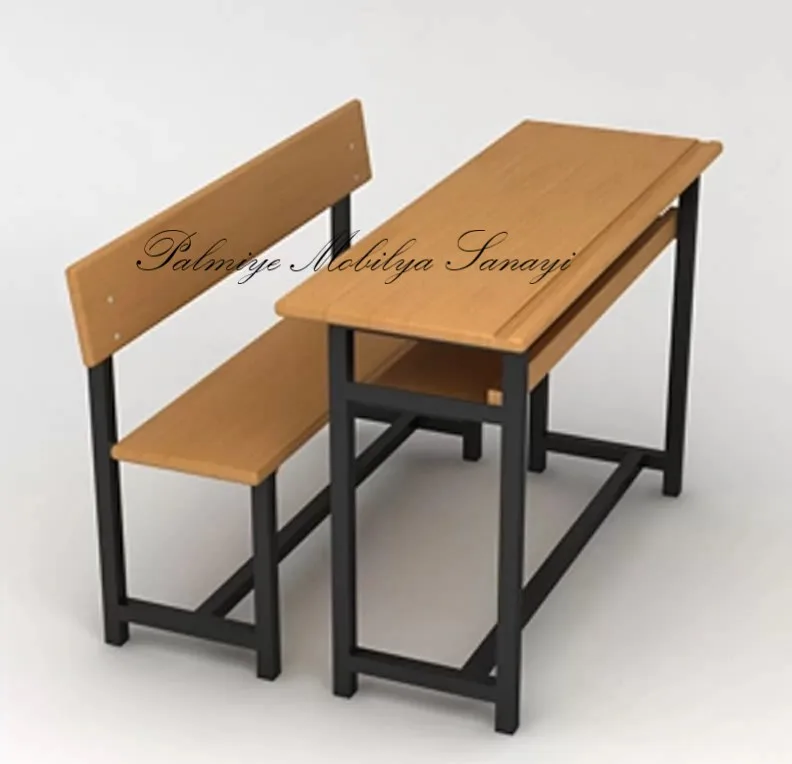
Hornbeam Solid School Desks Turkey
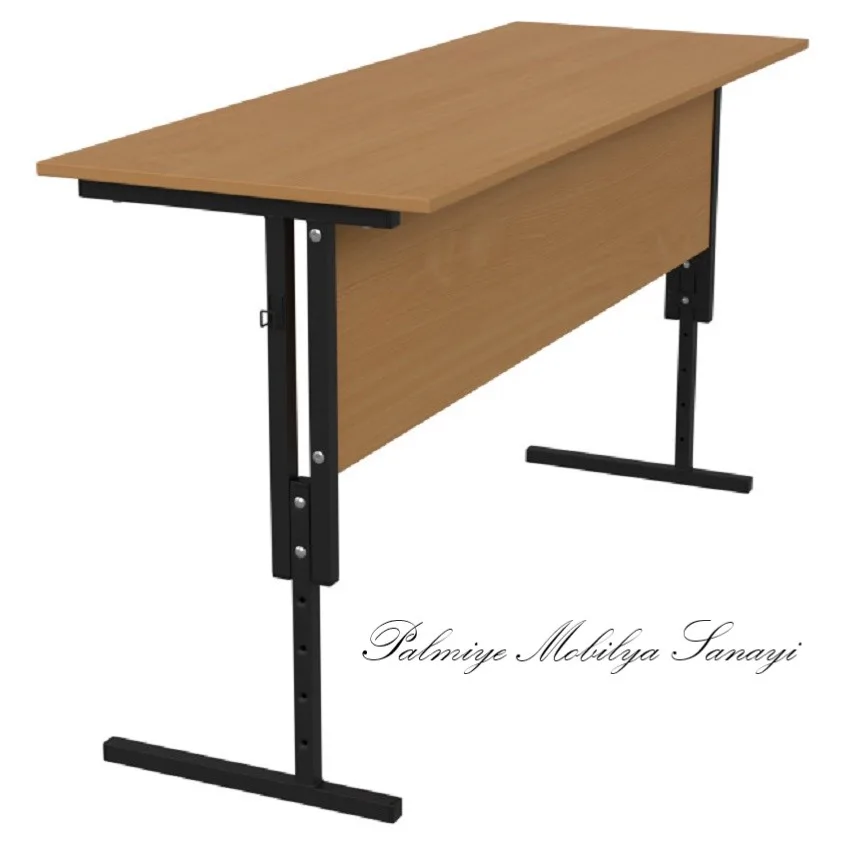
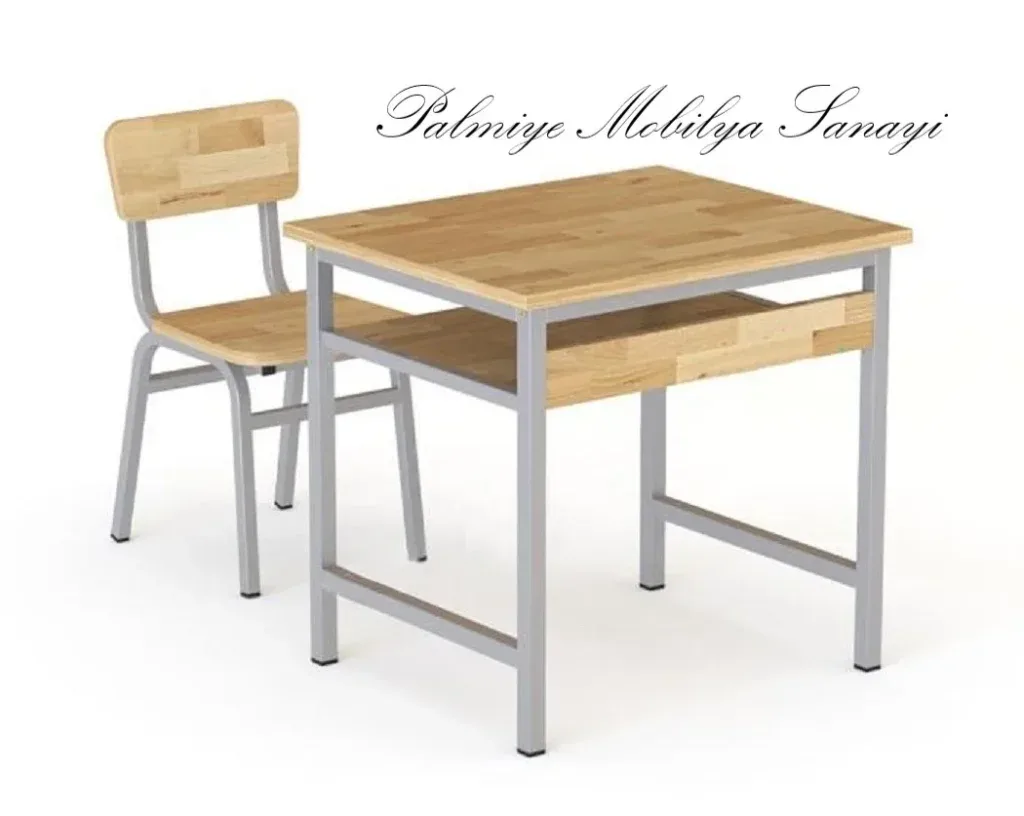
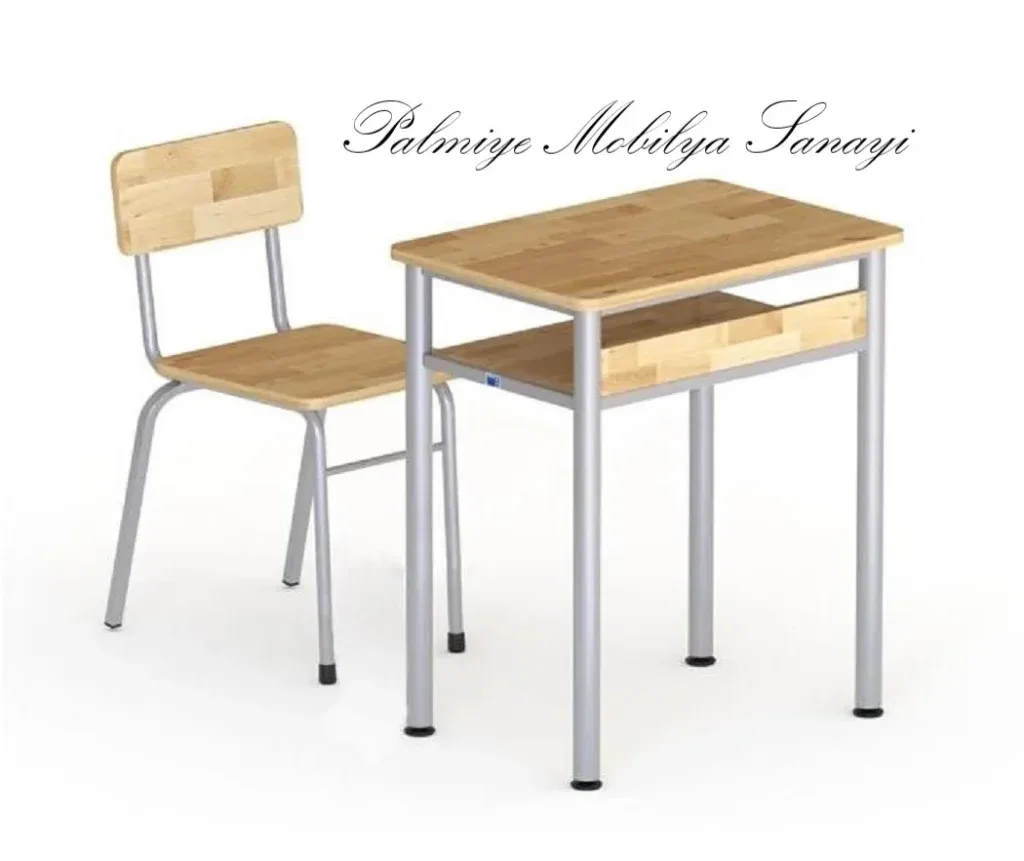
The physical infrastructure of educational environments directly impacts student focus, posture management, and institutional asset lifecycles. Within the highly demanding global contract furniture procurement sector, the specification of a Hornbeam Solid School Desks Turkey asset framework has become the premier international benchmark for projects requiring ultimate mechanical durability, strict anatomical safety, and high-yield operational longevity. Turkey has strategically elevated its educational manufacturing sector into a capital-intensive global powerhouse. By combining high-speed European robotic steel-processing loops with the advanced thermodynamic conditioning of ultra-dense European Hornbeam (Carpinus betulus) harvested from the Black Sea and Marmara forestry microclimates, Turkish industrial facilities provide school boards, international universities, and civil works ministries with structurally uncompromising classroom configurations.
This definitive technical manual operates as an exhaustive engineering blueprint covering anthropometric ergonomics, material science, industrial CNC fabrication, chemical surface cross-linking, compliance testing, and supply logistics for a premium Hornbeam Solid School Desks Turkey portfolio.
1. Botanical Material Science and High-Density Anisotropic Wood Mechanics
To understand why a Hornbeam Solid School Desks Turkey setup provides an exceptionally high lifecycle return on investment, procurement officers must evaluate the fundamental cellular and physical characteristics of the chosen timber substrate. Hornbeam (Carpinus betulus), historically classified in heavy engineering as “ironwood,” possesses structural properties that render it uniquely qualified for heavy-use educational furniture compared to conventional contract hardwoods like European Beech, Oak, or Maple.
The Microscopic Dense Fiber Matrix of Carpinus betulus
Hornbeam is a diffuse-porous hardwood defined by an incredibly compressed, fine, and interlocked cellular network.
- Oven-Dry Density Parameters: While standard seasoned European Oak exhibits an average density range of \(720\text{ kg/m}^3\) to \(760\text{ kg/m}^3\) and European Beech tracks at \(680\text{ kg/m}^3\) to \(720\text{ kg/m}^3\), Hornbeam exhibits an extraordinary average seasoned density profile ranging from \(800\text{ kg/m}^3\) to \(860\text{ kg/m}^3\). This high density indicates a minimal volume of internal cellular air cavities (lumens) and a high concentration of thick-walled structural fibers (libriform fibers).
- Surface Resistance Properties: The light ivory or pale cream wood face possesses an interlocked grain vector that resists splitting along grain lines. This cellular toughness prevents students from intentionally gouging, carving, or scratching the desk surface with knives, pens, or metal objects—a primary failure mechanism in standard institutional furniture.
Comprehensive Mechanical Strength Profiles
To quantify why a Hornbeam Solid School Desks Turkey provides superior physical performance under educational stress, it is necessary to examine its standard wood-mechanics parameters against conventional architectural hardwoods:
| Mechanical Performance Parameter | European Hornbeam (Carpinus betulus) | European Oak (Quercus robur) | European Beech (Fagus sylvatica) |
|---|---|---|---|
| Janka Side Hardness Rating (N) | \(16,010\text{ N}\) | \(4,980\text{ N}\) | \(5,820\text{ N}\) |
| Modulus of Rupture (Bending Strength) | \(145.0\text{ MPa}\) | \(97.0\text{ MPa}\) | \(110.0\text{ MPa}\) |
| Modulus of Elasticity (Stiffness Index) | \(16,500\text{ MPa}\) | \(12,500\text{ MPa}\) | \(14,000\text{ MPa}\) |
| Compressive Strength (Parallel to Grain) | \(71.0\text{ MPa}\) | \(46.3\text{ MPa}\) | \(53.0\text{ MPa}\) |
The mechanical data reveals that Hornbeam possesses nearly three times the surface indentation resistance of standard Oak and significantly higher bending strength (Modulus of Rupture). This allows a Hornbeam Solid School Desks Turkey work surface to resist deep denting, structural sag under heavy loads, and mechanical failure at fastener points when subjected to extreme physical stress or student misuse.
Anisotropic Volumetric Dynamics
Wood is an anisotropic material, meaning its dimensional movement varies depending on the directional plane of its fibers. Hornbeam exhibits a radial shrinkage coefficient of approximately \(6.8\%\), a tangential shrinkage coefficient of \(11.5\%\), and a total volumetric shrinkage index of \(18.4\%\) when transitioning from a green state to completely oven-dry. Because its tangential-to-radial shrinkage ratio is relatively high, unconditioned solid Hornbeam boards can warp or twist if not treated correctly. Turkish manufacturers mitigate these natural tendencies through precise thermodynamic seasoning and advanced lamination engineering.
2. Thermodynamics of Timber Seasoning and Microclimatic Moisture Stabilization
Because of Hornbeam’s high wood-fiber density and significant volumetric shrinkage coefficients, the drying and seasoning stage is the most critical phase in the fabrication of a high-performance Hornbeam Solid School Desks Turkey. If a manufacturer attempts to machine raw Hornbeam timber that has not achieved an exact state of Equilibrium Moisture Content (EMC), the completed desk surfaces will warp, pull out of alignment, split along grain boundaries, and crack surface finishes as soon as they encounter climate-controlled classroom HVAC environments.
The Physics of the Fiber Saturation Point (FSP)
In green timber, water exists in two primary states: free water held within the open cell cavities, and bound water chemically bonded within the cell walls. During the initial drying phases, free water is evaporated first. This loss of liquid water does not impact the mechanical or dimensional properties of the wood.
The structural transformation begins at the Fiber Saturation Point (FSP), which for Hornbeam occurs at approximately \(28\%\) moisture content. At this threshold, the cell cavities are completely empty, but the cell walls remain fully saturated with bound water. As drying continues below the FSP, bound water is pulled out of the cell walls. This causes the wood fibers to contract, initiating volumetric shrinkage and significantly increasing the mechanical hardness and stiffness of the timber.
Computerized Progressive Kiln Drying Schedules
To dry a wood as dense and sensitive as Hornbeam without causing visual defects or internal checks, Turkish factories utilize state-of-the-art computerized conventional steam or specialized vacuum kiln drying chambers. The conditioning schedule requires precise, gradual adjustments to dry-bulb temperatures, wet-bulb depression values, and relative humidity over an extended cycle:
[Green Timber Extraction: ~60% MC]
       ↓
[Air-Drying Pre-Conditioning under Ventilated Sheds: Down to ~25% MC]
       ↓
[Computerized Kiln Stage 1: Mild Thermal Introduction (40°C - 45°C), High Relative Humidity]
       ↓
[Computerized Kiln Stage 2: Progressive Moisture Evaporation (50°C - 55°C), Controlled Depression]
       ↓
[Computerized Kiln Stage 3: Core Equalization and Desorption (60°C)]
       ↓
[High-Humidity Steam Stress-Relief Conditioning Cycle]
       ↓
[Target Export Equilibrium Moisture Content Verified: Strict 8% ±2% for Educational Work Surfaces]
- Mild Thermal Starters: The computerized kiln controls the cycle over several weeks, starting at a conservative temperature of \(40^{\circ }\text{C}\) to \(45^{\circ }\text{C}\) with a high relative humidity. This setup ensures that the rate of moisture evaporation from the outer surface matches the rate of moisture migration from the deep interior core of the wood block.
- Prevention of Case Hardening: If the surface dries too quickly, a defect known as “case hardening” occurs. The outer shell of the timber sets into a rigid, shrunk state while the interior core remains wet. As the interior eventually dries and shrinks, it pulls against the rigid outer shell, creating massive internal tensile stresses that cause internal split fractures (honeycombing) or severe structural warping.
- Target Export Parameters: For premium interior educational furniture configurations, advanced factories verify an exit moisture content of a strict \(8\%\pm2\%\). This specific metric aligns directly with the typical indoor equilibrium moisture content of climate-controlled classrooms, minimizing subsequent expansion or contraction cycles post-installation.
- Steam Stress Equalization: At the conclusion of the kiln schedule, high-humidity steam conditioning cycles are introduced into the chamber. This step re-wets the outer micro-layers slightly, equalizing moisture levels across the entire cross-section of the wood block and neutralizing any residual internal stresses before the lumber is unstacked.
3. Anthropometric Ergonomics and Educational Workspace Design
The physical engineering that underpins premium Hornbeam Solid School Desks Turkey assets is fundamentally rooted in anthropometry—the scientific study of human body measurements. Unlike standard commercial office furniture, educational desks must accommodate rapid human growth cycles, prolonged sitting durations, and highly varied physical movements while actively preventing musculoskeletal disorders (MSDs) from forming during developmental years.
Standard Compliance for Classroom Work Surfaces (EN 1729-1 and EN 1729-2)
Turkish manufacturers design and produce educational furniture to comply strictly with European Standards EN 1729 Part 1 (Functional Dimensions) and Part 2 (Safety Requirements and Test Methods). This framework establishes specific size codes calibrated to student height ranges, ensuring proper spinal alignment, pelvic support, and joint angles.
- Size Code 4 (Student Height 133–159 cm): Features a desk top height of 640 mm and a chair seat height of 380 mm, engineered for late primary and early secondary school students.
- Size Code 5 (Student Height 146–176 cm): Features a desk top height of 710 mm and a chair seat height of 430 mm, optimized for high school classrooms.
- Size Code 6 (Student Height 159–188 cm): Features a desk top height of 760 mm and a chair seat height of 460 mm, engineered for senior high schools, universities, and adult learning centers.
Biomechanical Dynamics of Student Desks
Premium work surfaces manufactured under the Hornbeam Solid School Desks Turkey category incorporate specific physical features to optimize learning performance:
- The Ergonomic Desktop Curve: Worktops feature a routed abdominal cutout or concave radius (minimum 50 mm recession) on the student-facing edge. This profile allows students to rest their forearms comfortably on the desk surface without forcing their shoulders upward, significantly reducing tension across the trapezius muscles.
- The Desktop Slope Angle Matrix: Advanced models feature dual-position or adjustable desktop tilt mechanisms (0° to 16° slope). A slightly tilted surface (typically 8° for writing and 16° for reading) optimizes the visual reading distance and angle, preventing neck flexion and spinal slouching during long study sessions.
- Rounded Safe-Edge Geometry: All desktop corners and perimeter profiles are routed to a smooth radius (minimum 4 mm to 10 mm edge radius). This configuration eliminates sharp contact boundaries, preventing bruising or injury during sudden classroom movements.
4. Substrate Engineering and Multi-Layer Lamination Architecture
In high-utility institutional woodworking, a premium Hornbeam Solid School Desks Turkey surface is rarely manufactured from a single solid monolithic plank of wood. Due to the high anisotropic shrinkage metrics of Carpinus betulus, a wide single-slab timber board will continuously expand and contract across its tangential and radial axes in response to relative humidity fluctuations. Over a wide desktop plane, this movement can cause severe warping or bowing, preventing the desk from sitting flush on its framework. To overcome these natural material limits, Turkish factories utilize advanced multi-layer timber lamination and composite core engineering.
Cross-Laminated Timber (CLT) Core Physics
To maximize the exceptional hardness and impact resistance of Hornbeam while ensuring absolute dimensional straightness, manufacturers apply a multi-layer engineered sandwich configuration:
[Wear Face Layer: 4mm to 6mm Solid Hardwood Hornbeam Lamella]
------------------------------------------------------------------
[Engineered Core: Cross-Laminated Finger-Jointed Timber Scantlings]
------------------------------------------------------------------
[Wear Face Layer: 4mm to 6mm Solid Hardwood Hornbeam Lamella]
- Finger-Jointed Core Scantlings: Kiln-dried timber planks are ripped into narrow structural strips (\(40\text{ mm}\) to \(60\text{ mm}\) wide). During this process, automated optical scanners detect and cut out any natural timber defects, large knots, or pitch pockets. The remaining premium segments are finger-jointed end-to-end to create continuous core scantlings.
- Alternating Grain Configuration: These core framing bars are placed side-by-side and face-laminated under massive hydraulic pressure. Crucially, adjacent timber strips are oriented with their growth rings and natural grain vectors running in alternating directions. This grain reversal means that if one timber segment attempts to cup or warp in one direction due to a localized microclimatic shift, the adjacent segment exerts an equal and opposite mechanical force, neutralizing internal movement and keeping the desktop piece perfectly flat.
- Thick Wear Face Lamellas: This stable core is then face-laminated on both sides with a thick, structural solid wood wear layer or micro-lamella (typically \(4\text{ mm}\) to \(6\text{ mm}\) thick) of premium plain-sawn or quarter-sawn Hornbeam timber. The thick face lamella provides the exact visual appearance, substantial physical weight, and solid feel of a single block of wood, while the internal cross-laminated core ensures the desk remains stable over a multi-decade operational lifespan.
5. Structural Metallurgy and Robotic Welding Frameworks
The load-bearing frameworks of a Hornbeam Solid School Desks Turkey system must withstand continuous mechanical stress, impact, and dynamic shifting forces over a multi-decade lifecycle. Unlike residential furniture, institutional desk frames are exposed to lateral torque from students shifting weight, dragging along floors, and structural loads. Managing these forces requires high-specification structural metallurgy and robotic welding profiles.
Alloy Specifications and Profile Geometry
Turkish manufacturers construct the heavy-duty metal chassis of classroom furniture using cold-rolled low-carbon steel tubes:
- Alloy Classifications: Factories utilize structural steel grades such as ST37 or ST52 under European standard EN 10305-3. Profile walls are maintained at a strict minimum thickness of 1.5 mm to 2.5 mm for standard legs, and up to 3.0 mm for heavy-duty reinforcement cross-bars and bracket mounts.
- Profile Geometry Dynamics: Leg designs alternate between high-tensile oval tubes (\(50\text{ mm}\times30\text{ mm}\)) and square-set structural steel channels (\(40\text{ mm}\times40\text{ mm}\)). The geometry of oval tubing provides superior resistance to lateral bending forces, minimizing frame deflection when desks are grouped or moved under load.
Robotic Metal Inert Gas (MIG) Welding Tunnels
The structural junctions joining metal components together are processed inside automated multi-axis robotic welding cells:
- Continuous Industrial Fusion: Automated MIG welding ensures continuous, deeper penetration along all structural intersections. This industrial control completely eliminates the brittle micro-fissures, porous pockets, and cold joints common in manual gas welding, ensuring the joints remain stable under intense structural stresses and sudden impacts.
- Integrated Anti-Vibration Foot Assemblies: The lower leg bases are fitted with heavy-gauge internal steel screw-inserts to anchor adjustable, non-marking thermoplastic glides. These glides level out the desk on irregular classroom floors while decoupling the steel chassis from the floor finish, absorbing kinetic energy and eliminating scraping noises inside active classrooms.
[Cold-Rolled Structural Tube] ➔ [Laser Cutting & Profiling] ➔ [Robotic MIG Welding Loop]
                                                                        ↓
[Thermosetting Powder Coat Curing] ⇦ [Electrostatic Powder Tunnel] ⇦ [Chemical Passivation Dip]
Electrostatic Powder Coating and Surface Passivation
Raw processed steel frames pass through an automated multi-stage chemical immersion pre-treatment loop before receiving their final color coatings:
- Multi-Stage Immersion Sequence: Frames are sequentially treated through hot alkaline degreasing, iron or zinc phosphating, and demineralized nano-ceramic rinsing baths. This chemical sequence eliminates surface oxides and forms an amorphous passivation layer that acts as an active anti-corrosive shield while creating a uniform anchor key for powder adhesion.
- Thermosetting Epoxy Finish Matrix: The passivated frames move into electrostatic powder coating tunnels where an even 60 to 90 micron layer of thermosetting epoxy-polyester powder is applied. The components cross through linear curing tunnels heated to 180°C–200°C, cross-linking the polymers into a durable shell with a pencil hardness rating of 4H. This durable coating provides permanent defense against dynamic scratches, physical impact, and aggressive cleaning sanitizers, while preventing rapid corrosion or paint peeling over its operational lifecycle.
6. Multi-Axis CNC Mechanical Profiling and Joint Engineering Precision
Because seasoned Hornbeam possesses an exceptionally high Janka hardness rating (\(16,010\text{ N}\)), it is highly resistant to manual cutting, carving, and routing. Attempting to machine Hornbeam with standard carpentry tools can cause friction overheating, wood scorching, and tool dulling. Turkish manufacturing facilities overcome this through heavy-duty, computer-guided automation.
Fully Automated 5-Axis CNC Window Processing Cells
Raw cross-laminated Hornbeam board components enter high-velocity multi-axis computer numerical control (CNC) machining lines equipped with automated tool changers and laser-guided positioning beds.
- Polycrystalline Diamond Tooling Technology: To clean-cut the dense fiber matrices without causing surface chipping or fiber tearing, Turkish CNC lines use specialized PCD router bits. These bits operate with synchronized internal compressed-air micro-jets or cold liquid cooling lines to lower friction temperatures, preventing localized wood scorching and thermal stress cracking.
- Simultaneous Structural Milling: The CNC machine reads digital architectural CAD files to execute precision profiling across the desktop panels. It cuts smooth ergonomic edge bevels, machines recessed pen grooves (6 mm depth), and mills out hidden wire routing channels within an absolute accuracy tolerance of \(\pm0.1\text{ mm}\).
Pre-Machined Mechanical Joint Engineering and Hardware Preparation
Simultaneously, the multi-axis CNC centers execute all hardware pre-drilling and fastening preparation before the component moves into the coating phase:
- Under-Seat Fastener Anchoring: High-speed vertical boring spindles mill out multi-point circular pockets on the desktop underside to receive integrated twin-threaded steel insert nuts (insert sleeves). When the desktop is bolted onto the steel leg framework, the machine bolts anchor directly into these pre-set steel housings rather than screwing into raw wood fibers. This engineering step prevents screws from loosening or stripping over decades of heavy institutional use, allowing facility teams to unbolt and re-mount tops during building maintenance without losing joint stability.
7. Advanced Chemistry of Surface Coatings and Fluid Preservation
The long-term visual appearance, sanitary maintenance, and surface lifespan of a premium Hornbeam Solid School Desks Turkey set are dictated by the chemical composition and curing physics of its topcoats. In an active classroom setting, the desktop surface is continuously exposed to abrasion from paper and laptop bases, chemical impact from ballpoint ink and markers, and direct contact with sweat, soda spills, and aggressive sanitization cleaning fluids.
Pre-Treatment and Sanding Calibration
Before receiving any liquid topcoats, the completely machined desktop panels pass through multi-head automated calibration and wide-belt orbital sanding lines.
- Sanding Progression Matrix: Sanding lines utilize precise abrasive sanding progressions—moving from stiff P120 zirconium belts up to ultra-fine P320 orbital silicon-carbide pads. This meticulous sanding avoids creating cross-grain scratch marks, which are highly visible on Hornbeam’s smooth, light surface.
- Pore Isolation Primer Seals: Hornbeam is highly diffuse-porous, meaning it absorbs solvents rapidly and can exhibit uneven coloring if finishes are applied directly to the raw wood. To counter this, Turkish paint facilities apply a low-viscosity, deep-penetrating polyurethane isolation coat. This layer penetrates the outer micro-layers of the wood tissue, sealing the pores uniformly and providing a consistent surface for subsequent applications.
High-Performance Industrial Coating Formulations
Turkish manufacturing lines deploy advanced, eco-friendly coating arrays to seal educational wood components:
Two-Component Aliphatic Polyurethane Lacquers
Formulated by cross-linking polyacrylate resins with high-purity aliphatic polyisocyanate hardeners. This chemical combination yields a highly elastic yet impact-resistant topcoat shell, achieving a pencil hardness rating of 3H to 4H. Crucially, the aliphatic chemistry provides complete stability against photolytic oxidation. Standard aromatic finishes yellow quickly when exposed to sunlight through large windows, clouding the underlying wood grain; aliphatic systems maintain complete optical clarity over decades, preserving the true light color profile of the Hornbeam.
Super-Matte / Anti-Fingerprint Curing Formulations
For contemporary collaborative school designs, automated lines coat components with specialized matte topcoats cured via excimer ultraviolet tunnels. This process alters the microscopic surface geometry of the liquid lacquer, scattering light reflections evenly to achieve an ultra-low gloss value of \(3\text{ GU}\) to \(8\text{ GU}\) (Gloss Units). This finish yields a soft-touch surface that repels oily fingerprint smudges, reduces visual glare under intense classroom LED lights, and minimizes the appearance of superficial scuffs.
Bio-Based Monocoat Protective Oils
Specified for projects focused on authentic wood texture or biophilic design guidelines. These deep-penetrating hybrid oils sink directly into the upper vascular tubes of the wood tissue, bonding on a molecular level with the cellulose fibers rather than forming a thick plastic sheet on top. This approach preserves the natural matte texture and tactile feel of the wood grain while providing reliable resistance to common fluid spills (such as ink, coffee, and water) in compliance with EN 12720 standards.
8. Structural Performance Testing and Universal Safety Certifications
For school boards, university facilities committees, and institutional procurement directors, classroom furniture choices must be backed by quantifiable safety data and international performance certificates. Products labeled under the premium Hornbeam Solid School Desks Turkey vertical undergo rigorous third-party independent testing to verify their mechanical durability and low environmental impact.
European Educational Structural Fatigue Standards (EN 1729-2)
Turkish educational furniture is tested and certified to meet the demanding parameters of European Standard EN 1729 Part 2. The automated mechanical testing sequence includes:
- Desktop Static Load Capacity Test: A vertical static force of \(1,000\text{ N}\) (\(\sim100\text{ kg}\)) is applied continuously to the front and center edges of the desktop for \(10,000\text{ cycles}\) to confirm zero frame deformation, welding separation, or substrate deflection cracking.
- Desk Impact Resistance Test: A heavy impactor weight dropping a dynamic load is applied repeatedly to the unsupported center sections, simulating the extreme physical abuse of a student jumping or sitting directly on the desk top.
- Lateral Stability and Structural Shear Test: Horizontal driving forces are applied across the leg chassis in multiple direction profiles to simulate the friction loads encountered when desks are dragged across carpeted or tiled floors, validating that the overall chassis setup remains stable without experiencing frame loosening or structural joint shear.
Environmental Certifications and Indoor Air Quality Standards
Because students spend prolonged hours enclosed inside active learning environments, furniture must not emit toxic chemicals, volatile organic compounds (VOCs), or hazardous gases.
- Formaldehyde Emission Limits (E0 and E1 Compliance): All laminated timber components and core resins used in Turkish factories comply with European E1 or ultra-strict E0 safety metrics. Formaldehyde gas emissions are limited to negligible thresholds (\(<0.05\text{ ppm}\)), preserving indoor air quality and helping facilities secure green building credentials like LEED or BREEAM.
- Heavy-Metal Free Coatings Safety Certification: Polypropylene desk components, natural stains, and powder-coated metal framing arrays utilized across Hornbeam Solid School Desks Turkey supply lines are certified completely free of lead, cadmium, phthalates, and other volatile organic compounds in full compliance with international REACH regulations.
9. Classroom Integration, Modern Pedagogies, and Styling Typologies
Contemporary educational methodologies are moving away from traditional, rigid forward-facing lecture styles toward active, collaborative, and team-based problem-solving models. The Hornbeam Solid School Desks Turkey sector has adapted to these requirements by engineering mobile, modular, and modular multi-functional workspace systems.
Modular, Interlocking Geometry For Active Learning
Modern student desks feature specific geometric configurations that allow individual workspaces to transform into multi-student collaborative layouts in seconds:
[ Geometric Interlocking Options ]
- Triangular 60° Formats: Combines 6 desks into a flawless hexagon cluster
- Trapezoidal 120° Formats: Connects into sweeping semi-circles or large workshop pods
- Modular Rectangular Formats: Arranges in rows for focused testing or rows for team tasks
- Trapezoidal and Triangular Layouts: Desks engineered with a 60° or 120° angled perimeter frame can be arranged individually for focused testing, grouped into triads for peer brainstorming, or combined into full circular clusters for larger team workshops.
- Quick-Release Nesting Mechanics: Mobile desks incorporate integrated high-tensile nylon flip-top mechanisms. Flipping the desktop vertically allows multiple desks to nest tightly together, freeing up floor space for kinesthetic activities or interactive presentations.
Integrated Utility and Smart Connectivity Arrays
To support digital campus initiatives, premium Turkish school desks are customized with discrete technological utilities:
- Concealed Cable Management Trays: Structural steel privacy panels (modesty panels) are folded to form internal cable runways, routing electrical lines and data cords safely off the floor.
- Flush-Mounted Surface Sockets: Desktops can be pre-machined with flush-mounted, impact-resistant connectivity hubs containing USB-C charging ports and power drops, providing safe connectivity options for laptops and student tablets without cluttering the main workspace.
10. Commercial Procurement, Export Logistics, and Site Management
Executing a large-scale project—such as outfitting a completely new university campus or a massive multi-building student residential village—requires strict coordination, robust export packaging, and absolute adherence to production timelines.
The Technical Engineering Submittal Process
Prior to initiating factory production for a project contract, the manufacturer’s technical engineering division works closely with the project’s main contractor to develop detailed shop drawings. This technical review phase ensures precision across several variables:
- Accurate Floor Plan Layouts: Checking that furniture dimensions conform to classroom and laboratory blueprints, preserving clear fire evacuation paths and compliant ADA accessibility pathways.
- Integrated Mechanical and Electrical Prep (M&E): Ensuring study desks and laboratory benches include precision cutouts for data lines, electrical floor boxes, and cable management trays.
Industrial Export Packaging Systems
To protect delicate finishing coats and structural frames during long-distance multi-modal sea container shipping or overland freight transit, factories implement robust, multi-layered packing methods:
[Disassembled Furniture Components (Knock-Down Format)]
  ↓ Wrapped in High-Density Polyethylene Anti-Scratch Cushioning Foam
  ↓ Fitted with Thick, Multi-Wall Corrugated Cardboard Edge Protectors
  ↓ Vacuum-Sealed in a Waterproof Thermoplastic Shrink-Wrap Moisture Barrier
  ↓ Secured into ISPM-15 Heat-Treated Heavy Solid Wooden Crates or Pallet Racks
- Flat-Pack Knock-Down (KD) Engineering: Items are designed to ship flat-packed, which significantly reduces shipping volume and cuts shipping container costs by up to 50%. Desks are engineered with heavy-duty internal steel cam-lock fittings and insert nuts, allowing on-site assembly teams to build the units quickly using standard tools without sacrificing joint strength.
Onsite Installation Readiness and Environmental Controls
School furniture assets are premium finishing elements and must be treated with care. They should never be brought onto a construction site during rough-in or wet-work phases.
- Climate Enclosure Mandate: The building envelope must be fully enclosed, with all external windows and curtain walls completely installed. All high-moisture interior trades—including concrete subfloor pouring, gypsum plastering, drywall taping, and primary bathroom tiling—must be 100% complete and fully cured.
- Relative Humidity Controls: The building’s HVAC systems must be operational, with internal relative humidity stabilized between 40% and 60% and ambient temperatures maintained consistently between 16°C and 24°C. Introducing dry, engineered wood components into an unconditioned, high-humidity building environment can cause the furniture to absorb excess moisture, leading to structural swelling, frame distortion, and micro-fissures in the lacquer finish.
11. Facility Management Maintenance and Asset Lifespan Preservation
To protect the aesthetic value and structural performance of a Hornbeam Solid School Desks Turkey asset portfolio over decades of heavy institutional operations, facility management teams must adhere to a structured, preventative maintenance schedule.
Standard Cleaning Protocols
- High-Traffic Surface Disinfection: Classroom desktops, lab benches, and metal frame components should be cleaned using mild, neutral commercial disinfectants. Abrasive cleaners, bleaching agents, or harsh scrubbing pads must be avoided to protect the protective polymer layers or clear oil coats from premature wear.
- Graffiti and Ink Remediation: For localized ink, permanent marker, or ballpoint pen stains, clean the area immediately using specialized, non-solvent solvent wipes recommended by the finish manufacturer. Avoid raw acetone or strong petroleum spirits, which chemically degrade the polyurethane cross-linked topcoat, causing it to become sticky and susceptible to subsequent permanent staining.
Preventative Mechanical Tune-Ups
- Fastener Inspections: High-use educational furniture should undergo annual maintenance inspections. On-site facility teams should check and tighten the underside machine bolts anchoring the steel frame to the desktop sleeves, keeping connections solid and preventing structural wiggle or wobble during testing.
- Floor Glide Replacement Tracking: Inspect the lower plastic or nylon leg glides biannually. Damaged or missing glides should be replaced promptly using standard push-fit replacement caps provided by the factory. This simple maintenance step eliminates loud scraping noises inside active classrooms and protects premium terrazzo, vinyl, or wood parquet flooring from permanent scratch damage.
Conclusion: The Strategic Campus Investment
Specifying a premium, high-volume contract via a certified Hornbeam Solid School Desks Turkey infrastructure represents a critical strategic decision that balances capital expenditure with high operational performance and student health alignment. By combining high-speed automated European woodworking lines, cross-laminated Carpinus betulus face lamellas, robust cold-rolled steel frameworks, and strict third-party compliance for EN 1729 educational structural durability, modern Turkish production systems provide institutional buyers with an unyielding asset pipeline.
For school administrators, ministry procurement directors, and international campus architects, partnering with certified Turkish furniture manufacturers ensures access to highly customizable design choices capable of fulfilling the most demanding project specifications. Whether outfitting a modern collaborative academy via mobile interlocking triangular desk configurations or supplying heavy-duty lecture hall furniture for a flagship civic university, the engineered configuration of contemporary Hornbeam Solid School Desks Turkey lines provides a high-utility, reliable, and elegant solution for contemporary educational spaces.

Şunları da sevebilirsiniz

Distressed Furniture Turkey
Lacquered Furniture Turkey