Hotel Furniture Turkey
The Ultimate Guide to Hotel Furniture in Turkey: Manufacturing, Design Trends, and Global Procurement Excellence
Turkey has established itself as a global powerhouse in the hospitality furniture industry. It bridges the gap between Eastern manufacturing efficiency and Western design sophistication. Hoteliers, interior designers, and procurement managers worldwide increasingly turn to Turkish manufacturers. They seek high-quality, durable, and customizable furniture solutions.
This comprehensive guide analyzes the Hotel Furniture Turkey industry. We cover engineering standards, design innovation, regional manufacturing hubs, and logistics. This information will help you optimize your next hospitality FF&E (Furniture, Fixtures, and Equipment) procurement project.
1. Why Turkey Dominates the Global Hotel Furniture Market
The global market for Hotel Furniture Turkey has grown rapidly over the past two decades. This growth is driven by structural advantages, geographic location, and a deep-rooted history of craftsmanship. Turkey is no longer just an alternative to Asian or European manufacturing; it is a primary destination for premium hospitality furniture.
+-----------------------------------------------------------------+

|                    TURKISH FF&E ADVANTAGE                       |
+------------------------------------+----------------------------+

| Geographic Synergy                 | Hub linking EU, MEA, CIS   |
+------------------------------------+----------------------------+

| Customization Depth                | Full bespoke OEM/ODM       |
+------------------------------------+----------------------------+

| Compliance Standards               | ISO 9001, ISO 14001, EN    |
+------------------------------------+----------------------------+

| Vertical Integration               | Raw timber to final finish |
+------------------------------------+----------------------------+
Strategic Geographic Location and Logistics
Turkey sits at the crossroads of Europe, Asia, and Africa. This provides a major logistical advantage for international hotel developers.
- Shipping Timelines: Marine freight from Turkish ports (such as Ambarlı, Gemlik, and İzmir) reaches major European and Middle Eastern ports within 7 to 14 days. This is much faster than the 35 to 45 days required for shipments from East Asia.
- Reduced Lead Times: Shorter transit times mean lower holding costs. They also reduce the risk of project delays, which can cost hoteliers thousands of dollars per day in lost room revenue.
- Customs Union Agreements: Turkey’s Customs Union agreement with the European Union simplifies paperwork. It eliminates import duties for EU-based developers, streamlining the procurement process.
Vertical Integration of Raw Materials
Turkey possesses abundant natural resources that support its furniture manufacturing ecosystem.
- Native Timber Sources: The country has extensive sustainable forests. These supply high-quality hardwoods like beech, oak, walnut, and chestnut directly to local sawmills.
- Domestic Supply Chains: Turkish manufacturers do not rely heavily on imported raw timber for core structures. This insulates them from global supply chain disruptions and volatile shipping costs.
- Textile Industry Synergy: Turkey is a top global producer of high-performance textiles, leather, and upholstery fabrics. Hotel furniture manufacturers can source fire-retardant, anti-microbial, and high-Martindale-rub fabrics locally. This allows for seamless integration into bespoke furniture pieces.
Cost-to-Quality Ratio
The Turkish furniture sector offers a balance of competitive pricing and European manufacturing quality.
- Skilled Artisans: Lower labor overhead costs compared to Western Europe do not mean lower quality. Turkey maintains a large workforce of skilled woodworkers, CNC programmers, and finishing artisans.
- Advanced Machinery: Turkish factories use advanced European machinery (such as Homag, Biesse, and SCM groups). This technology ensures precision manufacturing that meets strict international hospitality specifications.
2. Engineering and Technical Specifications for Hospitality Furniture
Commercial hotel furniture must meet higher performance standards than residential furniture. Hotel Furniture Turkey manufacturers design products to handle continuous, high-volume use in busy commercial environments.
+-----------------------------------------------------------------+

|               HOSPITALITY ENGINEERING STANDARDS                 |
+-------------------+---------------------------------------------+

| Parameter         | Industry Target Standard                    |
+-------------------+---------------------------------------------+

| Upholstery Rubs   | > 50,000 to 100,000 Martindale cycles       |
+-------------------+---------------------------------------------+

| Flame Retardancy  | BS 5852 (Crib 5), EN 1021-1/2, CAL 133      |
+-------------------+---------------------------------------------+

| Joinery System    | Double-dowelled, mortise-and-tenon, corners |
+-------------------+---------------------------------------------+

| Core Material     | E1 or E0 low-emission moisture-resistant MDF|
+-------------------+---------------------------------------------+
Structural Joinery and Durability Engineering
A piece of furniture in a high-traffic hotel room must withstand heavy use and impacts without structural failure.
- Joinery Techniques: Premium Turkish manufacturers avoid using simple staples or drywall screws. Instead, they use double-dowelled joints, mortise-and-tenon construction, and heavy-duty corner blocks glued and screwed into place.
- Reinforcement: Chair legs and structural frames are made from solid hardwoods like kiln-dried European beech wood. This wood is dried to a strict moisture content of 8% to 10% to prevent warping, splitting, or shrinking in different climates.
- Metal-to-Metal Connections: For casegoods that require disassembly, manufacturers use steel-to-steel minifix cam-lock systems or threaded inserts. These inserts allow the furniture to be assembled and disassembled multiple times without stripping the wood or losing structural integrity.
High-Performance Fabric and Foam Standards
Upholstered furniture in hotels must meet strict regulatory and safety standards.
- Abrasion Resistance: Fabrics used for hotel sofas, lounge chairs, and desk chairs must pass intensive Martindale or Wyzenbeek abrasion tests. Turkish suppliers routinely use fabrics rated for 50,000 to 100,000 Martindale cycles for standard rooms, and over 100,000 cycles for public spaces.
- Flame Retardancy (FR): Turkish manufacturers construct upholstered items to comply with international fire codes. These include British Standards (BS 5852 Crib 5), European Norms (EN 1021-1/2), and American Standards (CAL 133). They achieve compliance by using inherently FR yarns or applying specialized back-coatings, along with combustion-modified high-resilience (CMHR) foam.
- Stain and Fluid Resistance: Advanced nano-coatings (such as Teflon, Crypton, or local equivalents) are applied to fabrics. These coatings prevent liquids, coffee, and oils from penetrating into the foam layers, making cleanup fast and simple.
Surface Finishes and Chemical Resistance
The surface finishes on casegoods must resist scratches, impact damage, and chemical cleaners.
- Polyurethane and Acrylic Lacquers: Turkish factories use multi-layer polyurethane (PU) or acrylic lacquers with UV inhibitors. These finishes prevent yellowing and fading caused by direct sunlight in resort hotels.
- High-Pressure Laminates (HPL): For high-touch surfaces like tabletops, desk surfaces, and luggage racks, manufacturers use high-pressure laminates (HPL) or compact laminates. Brands like Gentas and ASD provide surface options that resist heat, scratches, and impact.
- Chemical Protection: Finishes are formulated to withstand daily cleaning with harsh commercial disinfectants. They resist moisture rings from condensation and prevent alcohol-based liquids from stripping the finish.
3. Major Manufacturing Hubs for Hotel Furniture in Turkey
The Hotel Furniture Turkey industry is organized into distinct geographical clusters. Each region specializes in different types of furniture production, price points, and design styles.
+-----------------------------------------------------------------+

|             TURKISH FURNITURE MANUFACTURING CLUSTERS            |
+-------------------+---------------------------------------------+

| Region            | Operational Specialization                  |
+-------------------+---------------------------------------------+

| Istanbul (Modoko) | Luxury, high-end bespoke, boutique FF&E     |
+-------------------+---------------------------------------------+

| Inegol (Bursa)    | High-capacity automation, volume casegoods   |
+-------------------+---------------------------------------------+

| Kayseri           | Industrial mattress and upholstered production|
+-------------------+---------------------------------------------+

| Ankara (Siteler)  | Solid wood carving, classic artisan joinery |
+-------------------+---------------------------------------------+

| Izmir             | Out-door resort, eco-conscious timber design|
+-------------------+---------------------------------------------+
Istanbul: The Capital of Luxury and High-End Bespoke FF&E
Istanbul is the design and commercial center of the Turkish furniture industry, home to major hubs like Modoko and Masko.
- Bespoke Focus: Istanbul factories specialize in manufacturing complex, custom furniture designs for 5-star luxury brands, boutique hotels, and high-end public spaces.
- Design Engineering Collaboration: Designers and engineers work closely together here. This proximity allows international architects and design firms to visit factories, review full-scale mock-up rooms, and approve material samples quickly.
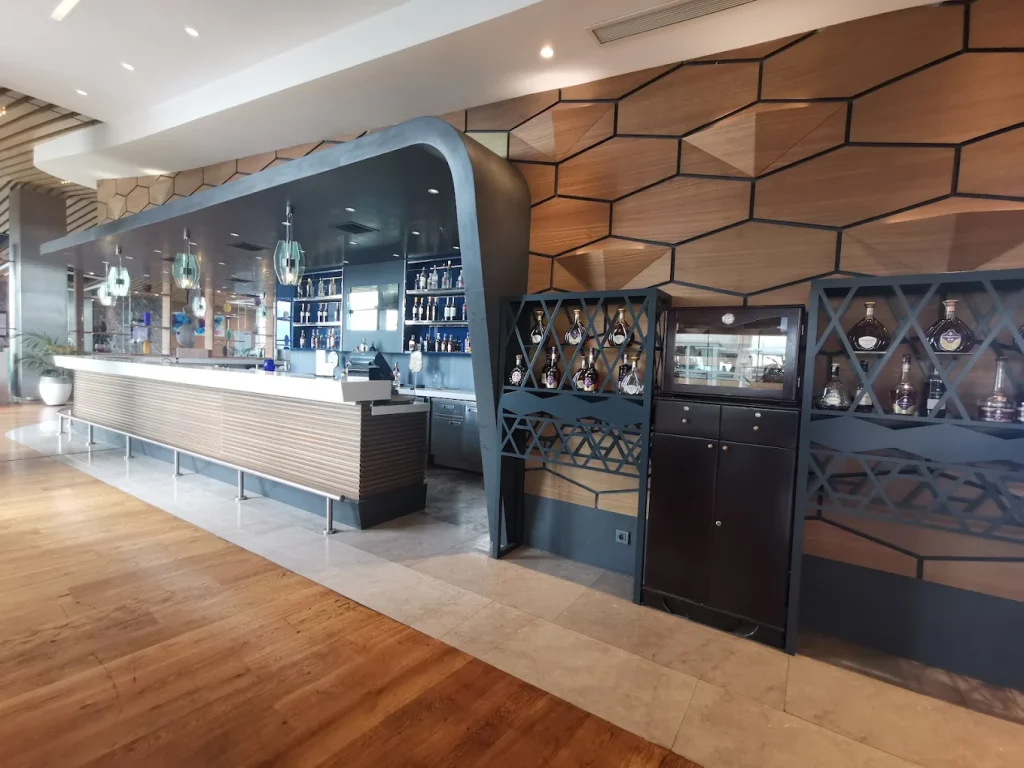
- Premium Material Integration: Istanbul’s supply chain easily integrates custom metalwork, specialized glass, natural stone, and advanced integrated LED lighting systems into furniture designs.
İnegöl (Bursa): The High-Capacity Automation and Mass-Customization Hub
Located in the Bursa province, İnegöl is a large, integrated furniture manufacturing cluster.
- Industrial Scale: Factories in İnegöl are built for high production volume and efficient mass-customization. They are well-suited for large-scale hotel projects, such as 300+ room business hotels or expansive holiday resorts.
- Advanced Machinery: These facilities feature highly automated production lines. Computer-controlled CNC routers, automated edge-banders, and robotic finishing lines ensure consistent dimensions and quality across large production runs.
- Cost Efficiency: High-volume material purchasing and optimized production workflows allow İnegöl manufacturers to offer competitive pricing on large hospitality projects.
Kayseri: The Mass Production and Bedding Cluster
Kayseri is a major industrial hub located in Central Anatolia.
- Mattress Production: The region features some of the largest mattress and base manufacturing facilities in Europe. They supply pocket-spring, memory foam, and hybrid hospitality-grade mattresses to major international hotel chains.
- Functional Upholstered Furniture: Kayseri factories specialize in high-volume production of sofa beds, extra guest beds, and upholstered seating systems. They utilize automated metal stamping and frame welding lines.
Ankara (Siteler): Classic Craftsmanship and Solid Wood Joinery
The Siteler district in Ankara is one of Turkey’s oldest furniture manufacturing hubs.
- Artisanal Woodworking: Siteler is known for traditional craftsmanship, wood carving, and working with solid timbers.
- Heritage Concepts: This region is a primary source for historical renovations, palace-style luxury hotels, and classic hospitality designs that require hand-carved details, real gold leafing, and complex marquetry.
İzmir: Coastal and Resort Furniture Production
The Aegean region, centered around İzmir, specializes in furniture for coastal properties and resorts.
- Outdoor and Leisure Furniture: Factories here specialize in weather-resistant outdoor furniture. They utilize powder-coated aluminum frames, synthetic hand-woven rattan, and marine-grade teak or iroko woods.
- Eco-Conscious Manufacturing: Many manufacturers in this cluster focus on sustainable production practices, using certified legal timber and water-based, low-VOC finishes.
4. Analysis of Hotel Spaces and FF&E Requirements
A successful Hotel Furniture Turkey procurement strategy requires an understanding of the unique technical demands of different hotel environments.
+-----------------------------------------------------------------+

|                  FF&E REQUISITES BY HOTEL ZONE                  |
+-----------------------------------------------------------------+

| [Guestrooms & Suites]                                           |
|  ├── Bed Headboards (Integrated LED, low-voltage USB pass-thru) |
|  ├── Wardrobes & Minibars (Vented compressor heat dissipation)  |
|  └── Luggage Racks (Heavy-impact HPL with stainless steel rails)|
+-----------------------------------------------------------------+

| [Lobbies & Public Spaces]                                       |
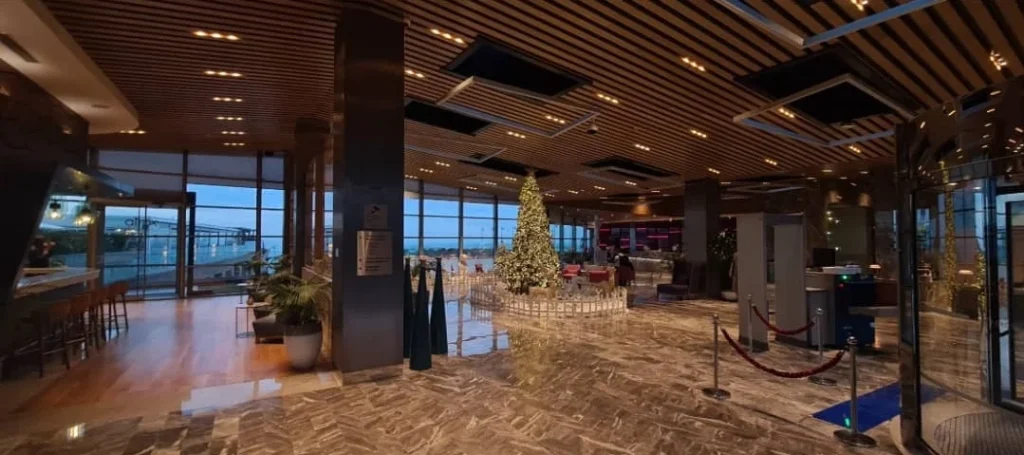
|  ├── Reception Desks (Natural marble, hidden wire management)  |
|  └── High-Traffic Lounges (Reinforced solid beech subframes)   |
+-----------------------------------------------------------------+

| [All-Day Dining & Restaurants]                                  |
|  ├── Dining Tables (Waterproof compact laminates or quartz)     |
|  └── Seating (Martindale fabrics > 100k, easy-clean finishes)   |
+-----------------------------------------------------------------+
Guestrooms and Suites
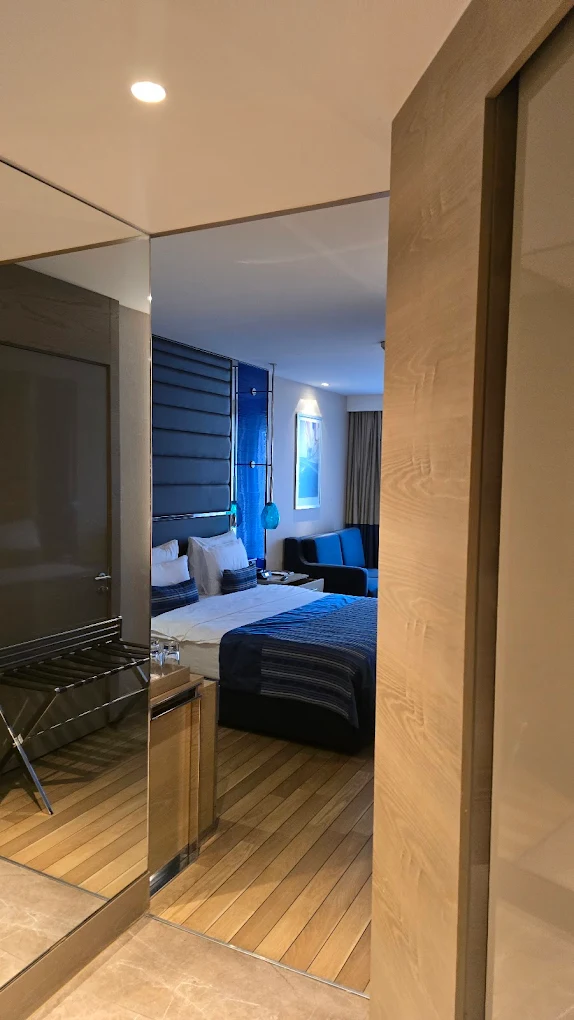
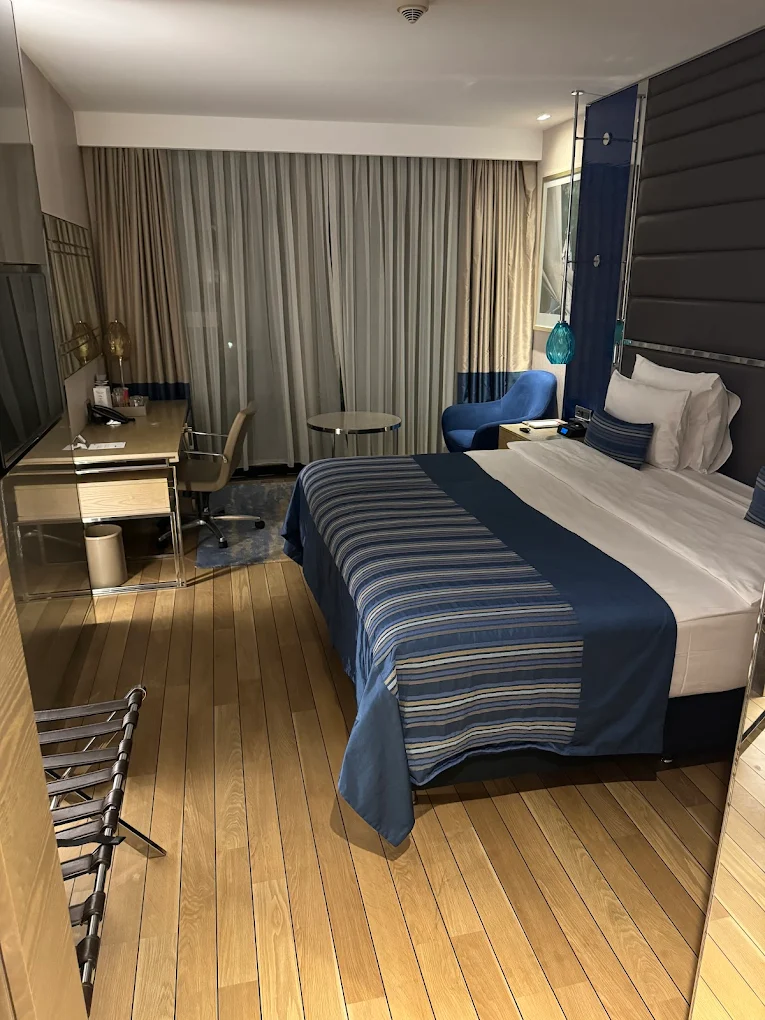
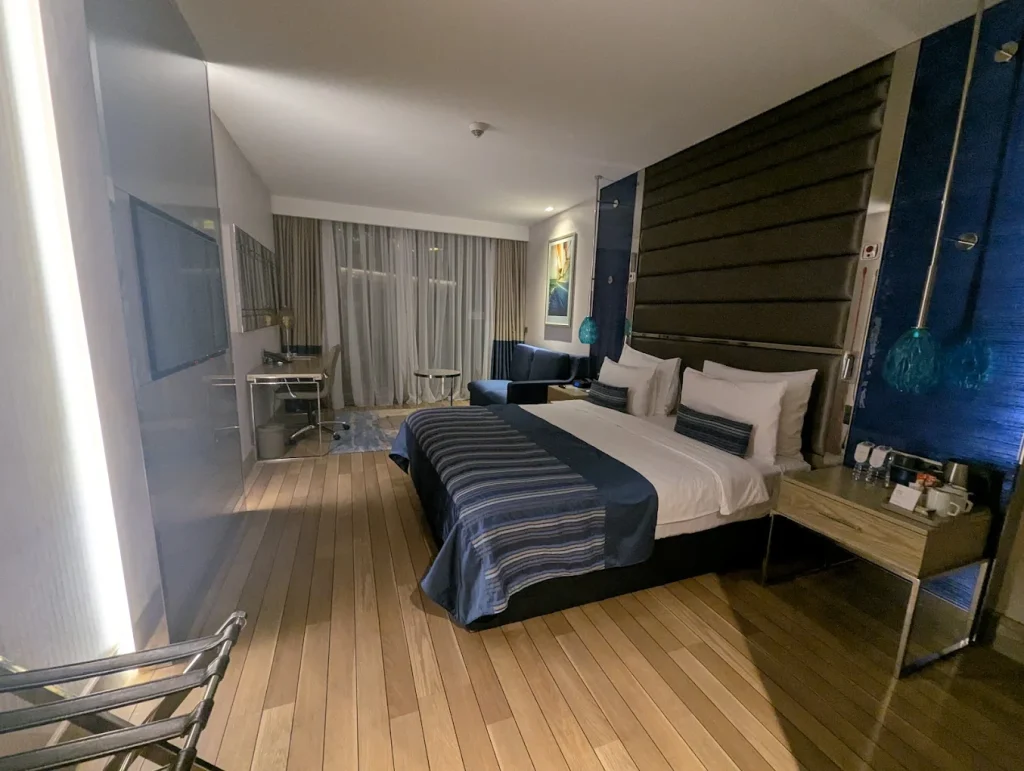
Guestroom furniture must blend comfort, aesthetics, and smart utility within a compact space.
- Headboards: Modern headboards often feature integrated LED strip lighting, built-in reading lamps, and cutout channels for low-voltage USB and international power outlets. Turkish manufacturers route these channels directly into the backing panels using CNC machinery for clean electrical installation.
- Wardrobes and Minibar Cabinets: Minibar enclosures require proper ventilation to prevent the compressor from overheating. Turkish factories include laser-cut ventilation grilles and removable back panels to allow air to circulate. Wardrobe doors feature heavy-duty, soft-close hinges (such as Samet or Blum) tested for 100,000 open-and-close cycles.
- Desks and Luggage Racks: Luggage racks must withstand heavy impacts from dropped suitcases. Manufacturers reinforce these surfaces with thick high-pressure laminates (HPL) or stainless steel protective rails to prevent dents and deep scratches.
Lobbies and Public Spaces
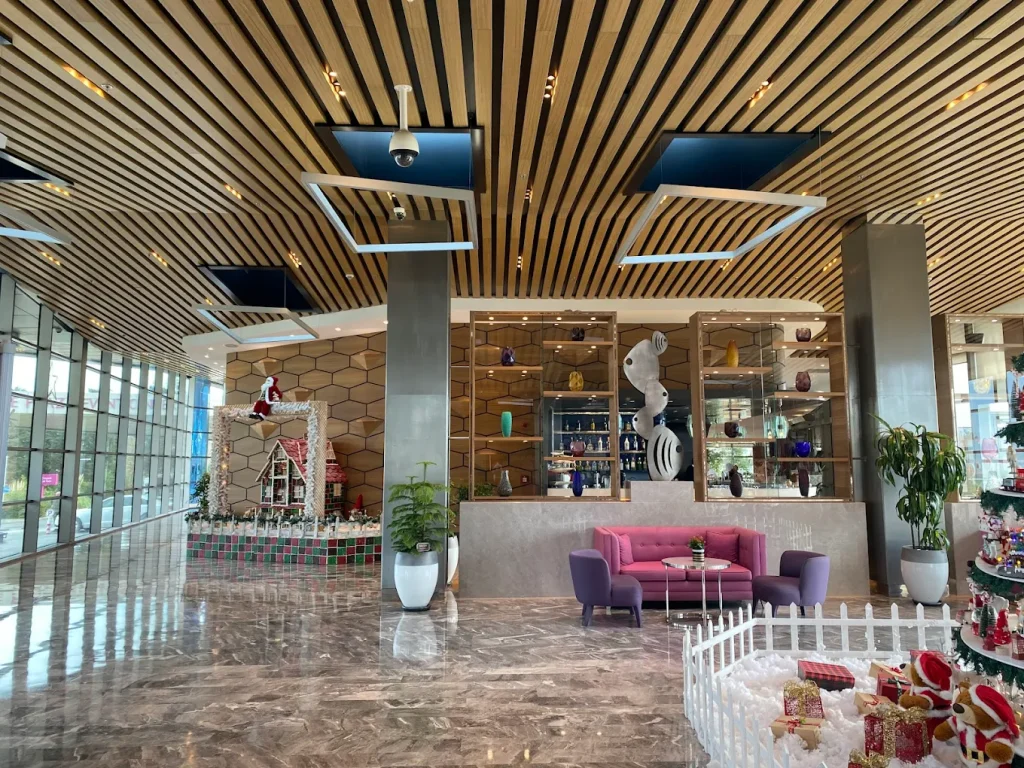
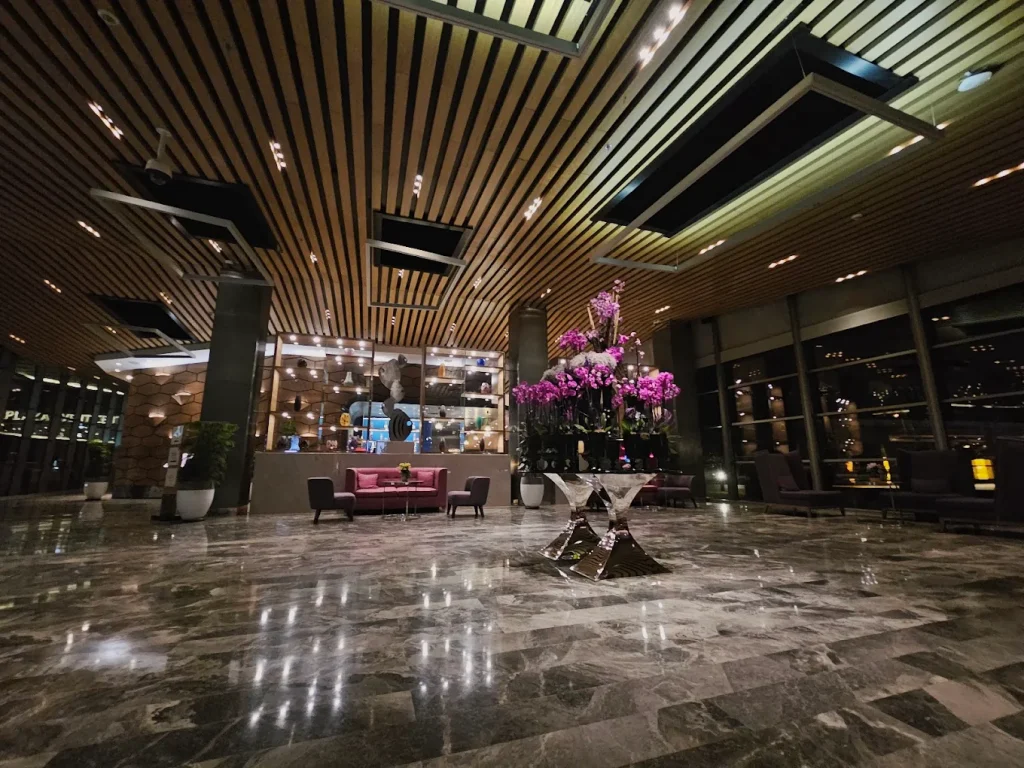
Lobby furniture creates a guest’s first impression and experiences constant, heavy traffic.
- Reception Desks: These large, custom-built units function as ergonomic workspaces and design focal points. Turkish manufacturers construct them by mounting heavy natural marble, quartz, or solid surfaces onto strong structural steel internal frames. They include built-in cable trays and grommets to keep computer and card-reader wires hidden.
- Lounge Seating: Sofas and accent chairs in public spaces use heavy-duty steel spring systems or high-tension Italian elastic webbing. The subframes are built from solid beech wood or welded box-section steel to prevent sagging or shifting over time.
Restaurants and All-Day Dining Areas
Restaurant furniture must resist frequent food spills, liquid exposure, and constant movement.
- Dining Tables: Table tops feature non-porous surfaces like compact laminates, quartz, or sealed natural stone. If real wood veneer is specified, manufacturers apply a specialized, marine-grade clear topcoat to protect the wood from water damage and acidic food stains.
- Dining Chairs: Chairs feature reinforced corner blocks and side stretchers to withstand guests leaning back on two legs. Upholstery fabrics are selected for easy cleaning, allowing staff to wipe away oil and grease stains with a damp cloth.
5. The Manufacturing and Customization Process (OEM/ODM)
The strength of the Hotel Furniture Turkey market lies in its ability to handle complete original equipment manufacturer (OEM) and original design manufacturer (ODM) projects. Turkish factories rarely just sell from a catalog; they build to print based on your design team’s unique specifications.
+-----------------------------------------------------------------+

|                 TURKISH FF&E PRODUCTION PIPELINE                |
+-----------------------------------------------------------------+

| Phase 1: Technical Shop Drawings                                |
|   └── CAD/BIM conversion, structural validation, value engineering|
+-----------------------------------------------------------------+

| Phase 2: Material Matrix Approval                              |
|   └── Swatch books, finish control samples, certification checks|
+-----------------------------------------------------------------+

| Phase 3: Mock-Up Room Construction                              |
|   └── Full 1:1 scale room build, structural and design vetting  |
+-----------------------------------------------------------------+

| Phase 4: Industrial Mass Production                             |
|   └── CNC fabrication, component assembly, multi-stage QC checks|
+-----------------------------------------------------------------+
Shop Drawings and Technical Engineering
The procurement process begins when the client submits interior design concepts, renderings, and material specifications.
- CAD and BIM Translation: Factory engineering teams translate these artistic concepts into detailed, 2D production shop drawings and 3D CAD models. They check every dimension for structural stability, ergonomics, and material efficiency.
- Value Engineering (VE): Turkish engineers can suggest alternative materials or manufacturing techniques to lower costs without sacrificing design intent. For example, they might replace a solid exotic wood panel with a well-matched, natural book-ended wood veneer on an E1-grade MDF core. This change reduces costs and increases structural stability in humid environments.
Material Sampling and Submittals
Before mass production starts, the factory prepares a comprehensive material board for approval.
- Physical Samples: The client receives real samples of wood finishes, lacquered paint swatches, fabric swatches, metal electroplating options, and stone samples.
- Certification Verification: Every sample comes with its corresponding technical data sheet, certifying its performance metrics like Martindale rub tests, fire ratings, and formaldehyde emissions.
The Mock-Up Room (The 1:1 Scale Proof)
For mid-to-large-scale hotel projects, constructing a physical mock-up room is a critical step in quality control.
- Full-Scale Production: The factory manufactures one complete set of room furniture exactly as specified.
- Inspection and Refinement: The hotel owners, designers, and procurement managers inspect the mock-up room in person or via high-definition video. They test the comfort of seating, evaluate the finish under different lighting, and check internal clearances. Any adjustments to dimensions, finishes, or hardware are recorded and implemented before mass production begins.
6. Quality Control, Standards, and Certifications
International hotel operators require strict adherence to international quality management systems. Reliable Hotel Furniture Turkey suppliers operate under global certification programs.
+-----------------------------------------------------------------+

|               GLOBAL CERTIFICATION COMPLIANCE                   |
+-------------------+---------------------------------------------+

| Certification     | Operational Scope and Definition            |
+-------------------+---------------------------------------------+

| ISO 9001          | Standardized quality management systems     |
+-------------------+---------------------------------------------+

| ISO 14001         | Eco-conscious environmental management      |
+-------------------+---------------------------------------------+

| FSC Certification | Traceable timber from sustainable forests    |
+-------------------+---------------------------------------------+

| CE / EN Standards | European structural and safety compliance   |
+-------------------+---------------------------------------------+
Factory Quality Management Systems
- ISO 9001: This certification ensures the factory follows documented processes for everything from raw material inspection to final product packaging.
- In-Line Inspection: Large Turkish factories run multi-stage quality control checks during production. Inspectors check parts after CNC cutting, after assembly, and under bright inspection lights after finishing to catch runs, dust inclusions, or uneven sheen.
Environmental and Sustainability Standards
Sustainability is an increasingly important factor in international hospitality procurement.
- FSC (Forest Stewardship Council): Leading Turkish manufacturers maintain FSC chain-of-custody certification. This guarantees that all timber and wood products are sourced from responsibly managed forests.
- Low-Emission Materials: Factories utilize E1 or E0 grade engineered wood cores. These cores limit formaldehyde emissions, helping properties meet green building standards like LEED or BREEAM.
- ISO 14001: This standard monitors and reduces a factory’s environmental footprint through efficient waste recycling, proper chemical management, and reduced energy consumption.
7. Logistics, Freight, and On-Site Installation
The procurement process extends beyond the factory floor. It includes shipping logistics, customs handling, and onsite installation.
+-----------------------------------------------------------------+

|                    LOGISTICAL OPTIMIZATION                      |
+-----------------------------------------------------------------+

| [Packaging Design]                                              |
|  ├── Multi-layer foam wrapping + high-density edge protectors   |
|  └── Corrugated boxes packed flat with clear, bilingual labels  |
+-----------------------------------------------------------------+

| [Shipping Methods]                                              |
|  ├── Overland Trucking (Direct 5–9 day transit across Europe)   |
|  └── Ocean Freight (FCL containers from Istanbul/Izmir/Gemlik)  |
+-----------------------------------------------------------------+

| [On-Site Assembly]                                              |
|  ├── Sent factory technicians or local certified teams          |
|  └── Sequential installation coordinated floor-by-floor         |
+-----------------------------------------------------------------+
Commercial Export Packaging Standards
To protect furniture from damage during ocean transit and rough handling, manufacturers follow strict packaging protocols.
- Multi-Layer Protection: High-gloss and lacquered surfaces are covered with protective PE scratch-resistant films. Corners are fitted with thick, high-density polyethylene edge protectors, and the entire item is wrapped in multi-layer bubble wrap or expanded polyethylene foam.
- Heavy-Duty Boxing: Items are packed into heavy, double-wall corrugated cardboard boxes. Items like wardrobes and desks are packed flat whenever possible to save container space and reduce the risk of structural damage during transit. Boxes feature clear, bilingual labels showing room numbers, item codes, and barcodes for efficient sorting onsite.
Shipping Methods and Transit Optimization
- Intermodal Options: Depending on the destination, projects can utilize direct overland trucking, short-sea shipping, or deep-sea container freight.
- European Transit: For projects within Europe, large volume trailers can drive directly from factories in İnegöl or Istanbul to job sites in Germany, France, or the UK within 5 to 9 days. This eliminates intermediate port handling and reduces the risk of transit damage.
- Full Container Load (FCL): For overseas shipping, factories load goods directly into 40-foot High Cube (HC) sea containers at the factory gate. They use professional bracing and strapping to secure the load and prevent shifting during rough sea transits.
Customs Documentation and Compliance
Turkish exporters work with customs brokers to prepare standard international trade documentation. This helps avoid delays at entry ports.
- Required Documentation: Standard paperwork includes commercial invoices, detailed packing lists, certificates of origin, bills of lading, and ATR or EUR.1 movement certificates for European union destinations.
- Smooth Clearance: Accurate customs paperwork ensures shipments clear customs smoothly, helping to keep your project installation schedule on time.
On-Site Installation Management
Proper installation is critical to achieving the intended look and performance of your furniture.
- Expert Installation Teams: Many top-tier Hotel Furniture Turkey companies can send specialized installation supervisors or complete carpentry teams directly to your project site. These professionals handle everything from final leveling to trimming filler panels and adjusting soft-close hinges.
- Coordinating with Contractors: If local union labor is required, Turkish factories provide detailed, step-by-step installation manuals, exploded assembly diagrams, and video guides. They work closely with the main contractor to ensure everything is installed correctly.
8. Strategic Guide to Sourcing and Negotiating with Turkish Manufacturers
Procuring hospitality FF&E from abroad requires clear communication, realistic timelines, and structured contracts. Here is a practical roadmap for managing your procurement project successfully.
+-----------------------------------------------------------------+

|                   PROCUREMENT PROJECT TIMELINE                  |
+-----------------------------------------------------------------+

| Weeks 1 - 3:   RFQ Submission, Design Concept & CAD Review       |
| Weeks 4 - 6:   Value Engineering, Estimates & Material Selection|
| Weeks 7 - 9:   Mock-up Manufacturing, Delivery & Evaluation     |
| Weeks 10 - 18: Factory Mass Production & Continuous In-Line QC  |
| Weeks 19 - 22: Logistics, Sea/Land Freight & Customs Clearance  |
| Weeks 23 - 26: On-Site Unloading, Sorting & Final Installation  |
| Week 27+:      Final Walkthrough, Punch List & Project Sign-Off |
+-----------------------------------------------------------------+
How to Select the Right Manufacturer
Not every factory is suited for every type of hotel project. It is important to align your project requirements with the manufacturer’s specific strengths.
- Review Past Projects: Ask for a list of completed projects that match your hotel’s tier. A factory that primarily produces furniture for 3-star select-service hotels may not have the finishing techniques or material supply chains required for a 5-star luxury boutique property.
- Audit the Factory Floor: Whenever possible, conduct an in-person factory audit or hire an independent inspection firm (such as SGS or Bureau Veritas). Verify that the factory has the necessary machinery, dry timber storage areas, enclosed dust-free finish rooms, and sufficient assembly space to handle your order volume.
- Check Financial Health: Ensure the manufacturer has the financial stability and cash flow required to purchase raw materials for large projects without requesting unusual, high-risk advance payments.
Negotiating Contracts and Structuring Payments
Hospitality procurement contracts require clear terms to protect both parties from unexpected costs or delays.
- Standard Payment Terms: The industry standard for custom manufacturing in Turkey typically follows a 30% advance deposit to trigger raw material purchasing and engineering drawings, followed by a 70% balance payment due upon quality approval before the containers leave the factory gates.
- Use Irrevocable Letters of Credit (LC): For large, multi-million dollar institutional projects, using an LC can provide financial security for both the buyer and the seller.
- Define Incoterms: Clearly state the agreed-upon Incoterms in your contract (such as EXW, FOB, CFR, or DDP). This ensures there is no confusion about who is responsible for port charges, local transport, customs duties, and marine cargo insurance.
Conclusion: Maximizing Success with Turkish Hospitality Furniture
Sourcing Hotel Furniture Turkey offers a competitive advantage for international hotel developers, interior designers, and brand operators. By manufacturing in Turkey’s specialized industrial clusters, you can access European-grade engineering, flexible customization options, and reliable shipping timelines at a competitive cost.
A successful procurement project relies on thorough planning, clear technical specifications, and structured quality control processes. Partnering with the right Turkish manufacturer transforms the FF&E process from a logistical challenge into a reliable, efficient collaboration. This helps ensure your hospitality property opens on schedule with durable, beautiful furniture built to last.
Butik Otel Mobilyaları
Butik Otel Mobilyaları
Butik Otel Mobilyaları
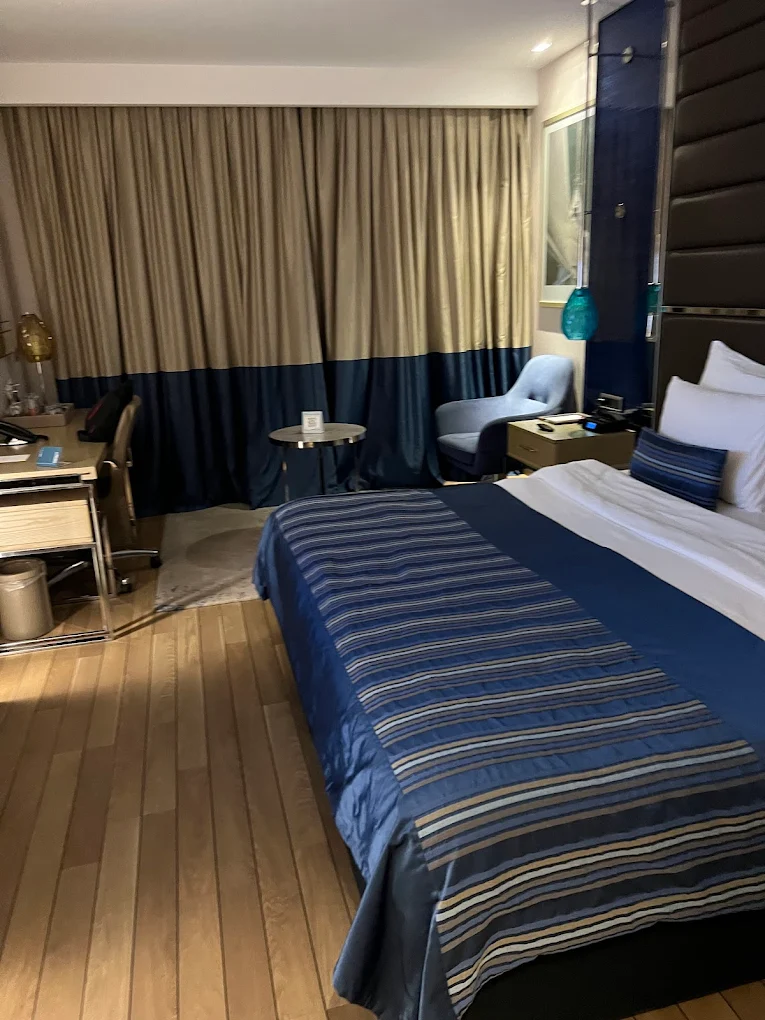


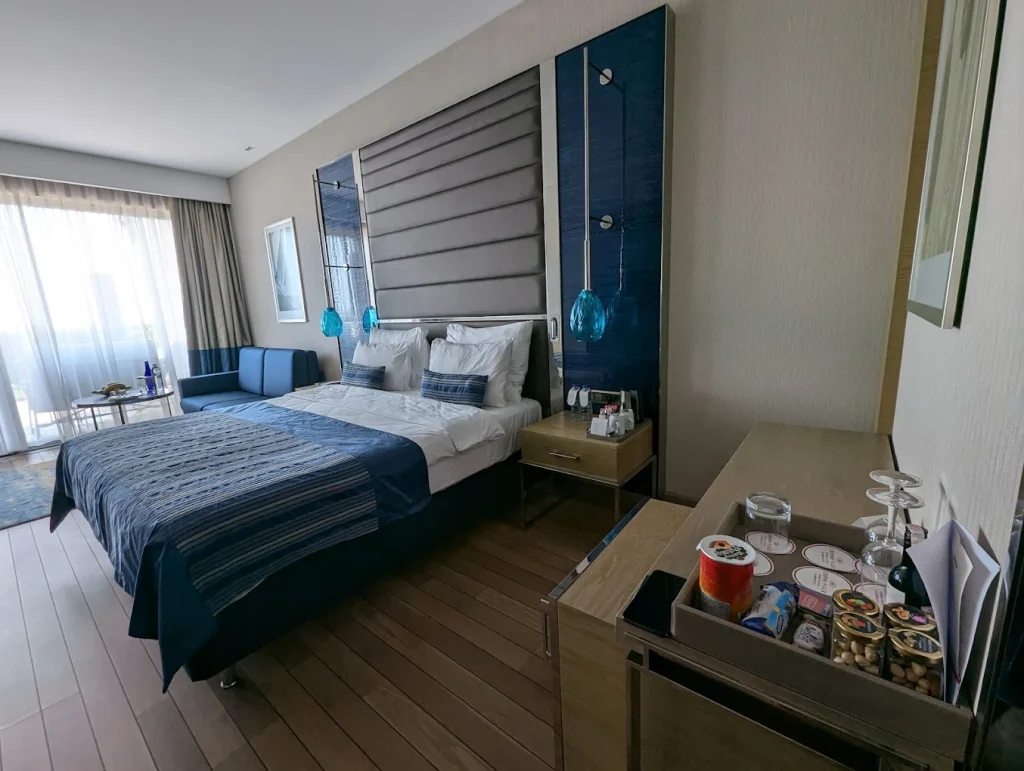
Butik Otel Mobilyaları

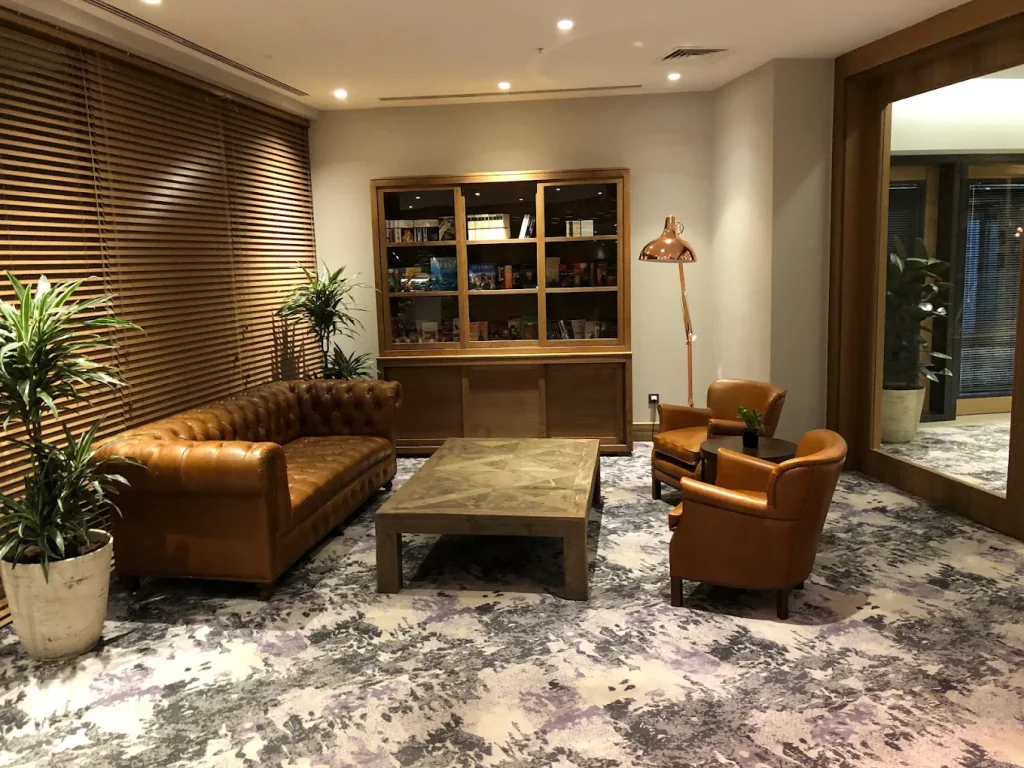



Etiket:Distressed Wood Hotel Furniture Turkey, Hotel Doors Turkey, Hotel Entrance and Hotel Lobby Furniture Turkey, Hotel Entrance Furniture Turkey, Hotel Furniture Decoration Turkey, Hotel Furniture Istanbul Turkey, Hotel Furniture Manufacturing Companies Turkey, Hotel Furniture Manufacturing Turkey, Hotel Furniture Turkey, Hotel Lobby Furniture Turkey, Hotel Room FurnitureTurkey, Hotel Wood Decoration Turkey, Luxury Hotel Furniture Turkey, Solid Wood Hotel Furniture Turkey, Wooden Hotel Furniture Turkey

Şunları da sevebilirsiniz
Mass Production Solid Furniture

Solid Wood Furniture Production Turkey