
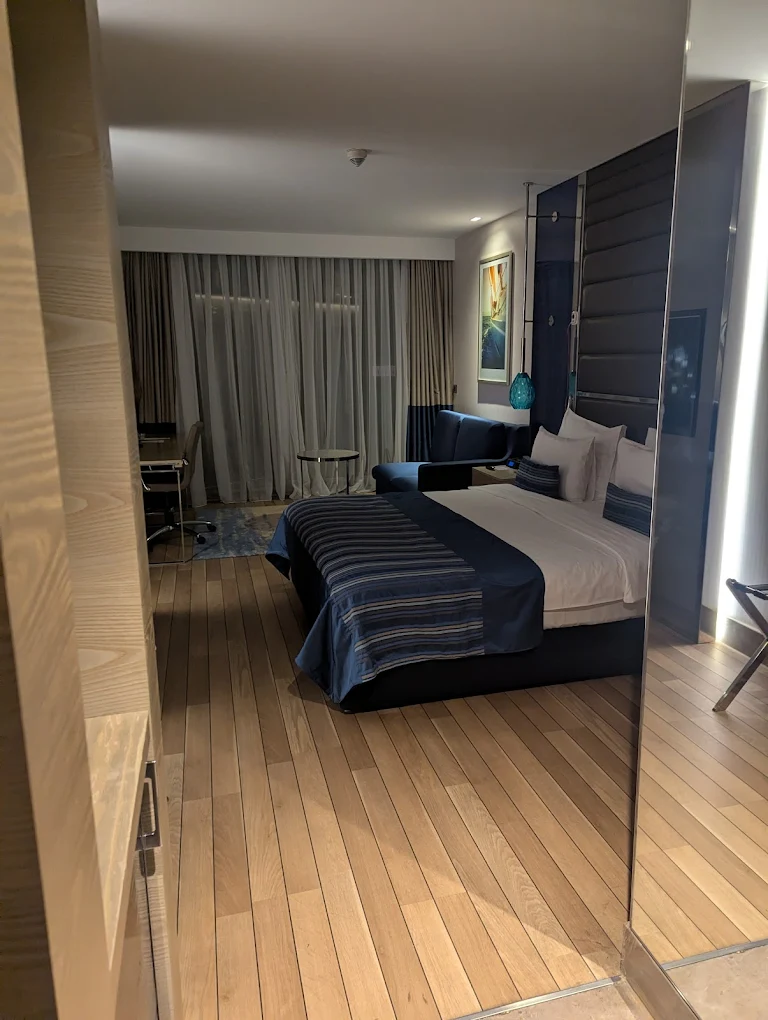
Hotel Wardrobes Turkey
Hotel Wardrobes Turkey: The Definitive B2B Procurement and Design Engineering Guide
The guestroom remains the primary revenue engine of any hospitality asset. Within this space, case goods and storage systems dictate the operational efficiency, spatial ergonomics, and aesthetic refinement that guests associate with a premium stay. Among these permanent architectural fixtures, the wardrobe assembly represents one of the most complex, high-wear, and technically demanding components. In modern commercial hospitality—ranging from select-service airport transit properties to five-star luxury resorts—the wardrobe has evolved far beyond a basic timber closet. It is now a highly engineered, multi-functional piece of architectural millwork that must seamlessly integrate low-voltage electrical systems, smart sensor lighting, automated safety safes, mini-bars, integrated luggage benches, acoustic buffering, and strict international fire safety and environmental compliance.
When hospitality procurement directors, asset managers, corporate hoteliers, and interior architects map out global supply chains capable of delivering custom wardrobe sets that combine rigorous European technical standards with competitive pricing, Turkey stands out as the premier destination. This comprehensive industrial guide provides an exhaustive, technically in-depth analysis of hotel wardrobes Turkey sourcing, exploring design engineering practices, regional production clusters, material properties, hardware standards, fire testing certifications, and international procurement lifecycles.
1. The Strategic Foundations of Sourcing Hotel Wardrobes Turkey
The global positioning of Turkey as a tier-one contract millwork and furniture manufacturing powerhouse is the result of structural industrial scaling, advanced manufacturing technologies, and deep alignment with international safety directives. Sourcing hotel wardrobes Turkey provides international developers with a unique balance of regulatory compliance, high-end design customization, and competitive total landed cost.
+-----------------------------------------------------------------------------------+

|                        THE CONTRACT SOURCING TRIFECTA                             |
+-----------------------------------------------------------------------------------+

|                                                                                   |
|      [ EUROPEAN QUALITY STANDARDS ] <───► [ AUTOMATED CNC EFFICIENCY ]            |
|                                     ▲                                             |
|                                     │                                             |
|                                     ▼                                             |
|                     [ COMPETITIVE TOTAL LANDED COST ]                             |
|                                                                                   |
+-----------------------------------------------------------------------------------+
The Artisanal-Industrial Hybrid Manufacturing Model
The core competitive advantage defining the market for hotel wardrobes Turkey is the country’s unique operational framework. The Turkish manufacturing ecosystem successfully blends high-technology mass-production lines (featuring 5-axis CNC machining, automated panel line sizing, and robotic edge-banding) with agile, highly skilled artisanal clusters. This structural flexibility allows Turkish operations to seamlessly process massive, highly repetitive case good orders for a 500-key airport hotel while simultaneously running highly customized, low-volume millwork lines for an ultra-luxury boutique resort.
Strategic Logistical and Customs Infrastructure
Geographically positioned at the absolute crossroads of Europe, the Middle East, Africa, and Central Asia, Turkey provides unparalleled transit efficiency to major development markets:
- Overland Road Freight: Direct overland trucking fleets connect major Turkish industrial zones to European economic hubs within 4 to 7 business days, bypassing the unpredictable maritime congestion associated with East Asian shipping corridors.
- Maritime Infrastructure: Deep-water container ports including Ambarlı (İstanbul), Gemlik (Bursa), and Mersin offer regular, direct roll-on/roll-off (Ro-Ro) and container liner services to North America, the GCC region, and North Africa within 10 to 16 days.
- Customs Union Framework: Turkey’s long-standing Customs Union agreement with the European Union facilitates a duty-free industrial trade channel, vastly reducing import administration, clearing times, and compliance friction.
2. Definitive Design and Production Hubs in Turkey
The contract furniture, specialized millwork, and interior architectural sector in Turkey is strictly organized into highly specialized regional industrial clusters. Each cluster operates with its own distinct production capacity, mechanical infrastructure, and engineering focus, making them unique sources for hotel wardrobes Turkey.
İstanbul (Modoko, Masko, and İkitelli OSB)
İstanbul serves as the absolute engineering, design coordination, and project management nerve center for hotel wardrobes Turkey.
- Material Versatility: Facilities within İstanbul specialize in complex, contemporary mixed-media designs. They excel at engineering wardrobe panel assemblies that integrate diverse materials, such as combining structural stainless steel frames with tinted glass doors, premium leather handle wraps, natural stone counters, and integrated smart LED lighting arrays.
- Project Profile: The primary hub for international architectural coordination, luxury five-star turnkey bidding, and properties requiring detailed engineering submittals and extensive physical prototyping.
Bursa (İnegöl Industrial Zone)
İnegöl is an industrial complex completely dedicated to furniture manufacturing and raw wood processing, exporting to over 150 nations.
- Automation Scale: Factories here feature multi-million dollar automated panel processing lines, computer-controlled sizing centers, and continuous UV-curing finishing tunnels.
- Project Profile: The optimal hub for mid-to-high-volume production schedules, serving large-scale select-service hotel chains, corporate business hotels, and extensive holiday resort layouts requiring precise dimensional uniformity and rapid turnaround times.
Ankara (Siteler District)
Siteler represents the historic core of master woodcraft and traditional joinery in Turkey.
- Artisanal Expertise: While alternative hubs prioritize high-volume automation, Siteler maintains an unmatched concentration of master craftsmen specializing in solid wood manipulation, complex wood turnings, hand-carving, marquetry, and artisanal surface treatments like hand-rubbed oil finishes or French polishing.
- Project Profile: The definitive choice for heritage hotel restorations, traditional luxury properties, and state-level hospitality projects requiring authentic solid wood elements.
3. Contract Engineering and Value-Engineering Methodologies
The procurement journey for hotel wardrobes Turkey extends far beyond the simple manufacturing of designs. It relies on a rigorous engineering process that translates conceptual interior design renderings into structurally viable, long-lasting contract furniture.
[Conceptual ID Package] ──► [SolidWorks Digital Decomposition] ──► [Value-Engineering Phase] ──► [Detailed Shop Drawings]
Parametric Modeling and Structural Decomposition
Upon receiving the Interior Design (ID) package and the associated Bill of Quantities (BOQ), the manufacturer’s internal engineering department rebuilds every single item within a 3D parametric environment using advanced software like SolidWorks or TopSolid. This engineering phase ensures:
- MEP Alignment: Perfect coordination with field mechanical, electrical, and plumbing layouts, ensuring precise placements for wire raceways, outlet cutouts, ventilation grilles for mini-bars, and structural anchoring points for safe-deposit units.
- Structural Finite Element Analysis (FEA): Digitally simulating stress points on load-bearing components, such as clothes rails, cantilevered shelving, and integrated luggage benches attached directly to the wardrobe structure, to optimize internal reinforcement before production begins.
Value-Engineering Protocols for Sourcing Hotel Wardrobes Turkey
A primary skillset of manufacturers specializing in hotel wardrobes Turkey is value engineering—the process of optimizing manufacturing costs and durability without compromising the designer’s visual intent.
- Substrate Optimization: Replacing thick, heavy solid wood panels prone to environmental movement with warp-resistant, balanced Moisture-Resistant MDF (MR-MDF) or multi-layered marine plywood cores faced with premium thick natural wood veneers (1.2mm to 2.0mm). This configuration provides the look and feel of solid wood while preventing core warping or sliding door binding under continuous hotel HVAC operation.
- Metallurgical Alternatives: Substituting costly, solid cast brass structural parts or accents with precision CNC-machined structural 316-grade stainless steel coated with an advanced Physical Vapor Deposition (PVD) titanium layer. This approach delivers identical color matching and reflectivity while providing vastly superior scratch resistance, lower maintenance needs, and exceptional cost efficiency.
- Acoustic and Motion Calibration: Incorporating soft-closing mechanisms, sound-dampening perimeter gaskets, and high-performance sliding tracks that prevent panel-vibration noise, maximizing the perceived luxury of the room while extending the lifecycle of the joinery.
4. Technical Material Standards and International Compliance
Contract furniture in the hospitality sector faces intense daily wear, requiring materials that comply with demanding performance and safety metrics. Leading companies providing hotel wardrobes Turkey align their procurement and processing lines with international certification standards.
| Component Group | Technical Metric / Standard | Operational Impact and Performance Indicator |
|---|---|---|
| Engineered Panels & Substrates | EN 717-1 (E1 & E0 Standards) | Restricts formaldehyde gas emissions to safe levels, protecting indoor air quality and earning LEED/BREEAM rating points. |
| Upholstery Foams & Linings | BS 5852 (Crib 5) / CAL 117 | High-resilient, combustion-modified polyurethane foams engineered to self-extinguish under direct flame exposure inside wardrobe bench seats. |
| Performance Textiles / Leathers | EN ISO 12947-2 (Martindale Test) | Requires a minimum of 50,000 to 100,000 double rubs for luggage bench seat pads to prevent surface pilling, scuffing, or fiber thinning. |
| Wood Sealers & Topcoats | EN 12720 (Chemical Resistance) | Multi-layered acrylic-polyurethane varnishes resistant to high-strength alcohol sanitizers, hot liquids, and scratches inside shelving. |
| Hardware & Movements | DIN EN 15338 / EN 15706 | Heavy-duty commercial drawer slides and sliding door tracks certified for 100,000 continuous opening and closing cycles. |
Advanced Timber Stabilization and Kiln Control
A major risk when sourcing furniture internationally is structural movement—warping, bowing, or joint checking—occurring after installation due to differing climate zones. To prevent this, premium manufacturers of hotel wardrobes Turkey utilize computerized kiln-drying chambers to condition all raw timber before production:
- Target Moisture Profiles: Hardwoods (such as European beech, oak, and American walnut) are dried to a strict moisture content between 8% and 12%.
- Environmental Matching: This precise range ensures the wood fibers remain stable when exposed to continuous climate-controlled HVAC systems in hotels worldwide, protecting wardrobe door alignments and avoiding seasonal separation of frames.
5. Comprehensive Spatial Customization and Architectural Architecture
The structural engineering and stylistic approach of hospitality wardrobes change depending on its intended zone within the property and the design tier of the asset. Experienced producers of hotel wardrobes Turkey adapt their assembly techniques and material selection to match these specific functional layouts.
+-----------------------------------------------------------------------+

|             WARDROBE ARCHITECTURAL CONFIGURATION MATRIX               |
+-----------------------------------------------------------------------+

| S-Type: Select Business   ──► Low-Profile Panel, Durable HPL Facing   |
|                               Exposed Modular Luggage Bench Rack      |
|                                                                       |
| L-Type: Upscale Urban     ──► Veneer Finish, Soft-Close Hinged Doors  |
|                               Concealed LED Warm Dimming Rails        |
|                                                                       |
| V-Type: Ultra-Luxury      ──► Walk-In Setup, Aluminum Profile Frames  |
|                               Tinted Glass Doors, Leather Drawer Trims|
+-----------------------------------------------------------------------+
Low-Voltage and Tech Integration Engineering
A modern wardrobe layout is an active electrical and tech interface node within the guestroom. Manufacturers of hotel wardrobes Turkey build specialized multi-layered assemblies to streamline site installation:
- Hidden CNC-Routed Wire Raceways: Built into the rear or side structures of the wardrobe carcasses, allowing general contractors to pull low-voltage cables, LED drivers, and power lines safely without manual field-cutting.
- Integrated Sensor Automation: Wardrobes feature recessed magnetic proximity switches or micro-infrared sensors hidden inside the door profiles. Opening a door or sliding back a panel triggers automated, dot-free COB LED light strips recessed within a 45-degree aluminum profile extrusion, illuminating the interior without causing glare.
- Ventilation and Heat Management: Integrated heat-dissipation channels and discrete ventilation grilles are engineered behind internal mini-bar enclosures. This setup prevents thermal buildup from absorption or compressor refrigerators, avoiding finish discoloration or component degradation.
Sliding vs. Hinged Door Mechanics and Structural Tuning
Selecting the door mechanism significantly influences the spatial footprint and the cost engineering profile of the project:
- Hinged Door Configurations: Preferred for classic designs or properties with ample floor layouts. Turkish contract wardrobe builders use heavy-duty commercial soft-close clip hinges equipped with integrated opening-angle limiters to prevent doors from impacting adjacent walls or mirrors.
- Sliding Door Assemblies: Essential for compact urban hotel formats where traffic flow path efficiency is prioritized. Premium hotel wardrobes Turkey utilize top-hung sliding track mechanisms with fluid dampers. This top-hung system isolates the structural weight of the door panels onto the upper frame truss, preventing debris accumulation from obstructing smooth operation, a common failure point of bottom-rolling setups.
6. Sourcing Categories: Built-In Millwork vs. Standalone Modular Systems
Hospitality procurement strategies organize wardrobe development into two distinct manufacturing pipelines based on structural integration properties, field installation logistics, and budget targets.
1. Built-In Millwork Wardrobe Infrastructures
Built-in millwork wardrobe structures are designed to blend into the room’s permanent architecture, extending floor-to-ceiling or wall-to-wall.
- Scribing and Adjustment Tolerances: Top-tier Turkish factories incorporate dedicated loose scribing pieces and field-adjustment margins (ranging from 20mm to 50mm) into the edge components of the wardrobe. This allows site installation crews to cut down borders precisely to match uneven plastered walls or sagging concrete sub-floors on-site without exposing raw core wood.
- Substrate Engineering: Due to proximity to wet zones (such as bathroom doors or entrance vanities), structural frames are built from Moisture-Resistant MDF (MR-MDF) or high-grade multi-layer marine plywood faced with premium balance natural wood veneers or high-pressure laminates (HPL). This completely prevents core swelling or delamination from humidity or floor mopping.
2. Standalone Modular Wardrobe Units
Standalone modular configurations operate as self-contained loose furniture pieces, often serving select-service business chains or lifestyle hotels favoring an open-plan concept.
- Structural Rigidity: These units rely on internal structural steel frames or double-dowelled, glued, and corner-blocked premium composite bodies. This heavy-duty reinforcement ensures the piece maintains its squareness and structural integrity during frequent relocations or housekeeping movement.
- Visual Adaptability: Independent modular wardrobes frequently combine open storage fields, minimalist iron hanging bars, and integrated leather-wrapped storage cubbies, offering a flexible and contemporary aesthetic that reduces initial site installation times.
7. The Turnkey B2B Procurement Lifecycle and Quality Control
Procuring contract fixtures through suppliers of hotel wardrobes Turkey follows a structured project management pipeline to ensure absolute quality control, timeline compliance, and cost predictability.
[Phase 1: Tender & BOQ Optimization]
                 │
                 ▼
[Phase 2: The Mock-Up Room (Acid Test)]
                 │
                 ▼
[Phase 3: Automated Mass Production]
                 │
                 ▼
[Phase 4: Export-Grade Protective Crating]
                 │
                 ▼
[Phase 5: White-Glove On-Site Installation]
Phase 1: Tender Analysis and BOQ Optimization
The process begins with the submission of the designer’s Interior Design package and the matching Bill of Quantities (BOQ). The manufacturer’s engineering office breaks down the specifications to calculate material yields, assembly times, and structural requirements. This phase produces comprehensive production shop drawings that require signed approval from the client’s lead architect.
Phase 2: The Mock-Up Room (The Crucial Validation Stage)
Before green-lighting production for hundreds of units, reputable Turkish contract wardrobe builders assemble a complete prototype set for a physical mock-up room. Sourcing managers, interior designers, and hotel owners travel to the factory showroom or site to evaluate real-world ergonomics, finish consistency, and sensor alignments under actual lighting conditions. This step prevents expensive structural errors during mass production of hotel wardrobes Turkey.
Phase 3: Automated Mass Production and Quality Assurance
Once the mock-up room is signed off, the digital blueprints are released to production. Parametric digital cutting files are sent directly to multi-axis CNC routers, ensuring every component across the entire production run falls within exact geometric tolerances of ±0.5mm. Quality assurance inspectors audit products at three distinct production stages:
- White-Wood Inspection: Checking structural joints, internal wire raceway routings, and panel calibrations before any finishes are applied.
- Finishing Line Inspection: Assessing coating thickness, edge coverage, and color consistency under controlled D65 lighting booths.
- Final Assembly Inspection: Testing electrical continuity, panel alignment clearances, and hardware movement.
Phase 4: Export-Grade Protective Crating and Container Logistics
Hospitality wardrobe assemblies feature oversized panel surfaces and delicate glass or stone integrations that require robust packaging for long-distance international transit.
- Multi-Layered Protection: Component panels are cleaned and wrapped in high-density polyethylene sheet wrap, reinforced with thick foam edge protectors, enclosed in heavy-duty double-wall corrugated cardboard boxes, and secured inside flat-pack configurations.
- Crating Architecture: Fragile elements—such as mirrored doors, integrated marble counters, or glass shelves—are packed flat inside custom-built, heavy-duty wooden crates made from heat-treated ISPM-15 compliant timber. These crates are securely packed into shipping containers with heavy moisture-absorbing desiccant packs to maintain stable humidity levels during sea transit, protecting finishes from micro-clouding.
Phase 5: White-Glove On-Site Installation
To ensure complex built-in wardrobes are fitted perfectly on-site, premier suppliers of hotel wardrobes Turkey deploy dedicated global installation teams. These specialized carpenters and supervisors travel directly to the project site to unpack, assemble, scribe, level, and anchor all wardrobe elements, coordinating efficiently with local general contractors to ensure a seamless handoff.
8. Commercial Optimization and Risk Mitigation Strategies
Sourcing from international suppliers requires structured commercial planning. The Turkish contract furniture market offers specific financial structures to protect buyer capital and optimize project ROI.
Maximizing ROI via Cost-to-Quality Ratios
Thanks to optimized manufacturing clusters, local material integration, and competitive operational cost structures, hotel wardrobes Turkey provide an exceptionally competitive price-to-quality ratio. International buyers regularly discover that Turkish contract suppliers can deliver identical technical specifications, premium European hardware, and specialized hand-finishing as premium Western European firms at a significant reduction in total landed cost. This pricing advantage allows developers to reallocate capital into guest-facing technology, premium marketing, or property amenities.
Flexible MOQs for Non-Standard Room Layouts
Traditional high-volume manufacturing hubs require high minimum order quantities (MOQs) per product line to justify retooling automated machinery. Turkish contract factories excel at managing low-volume, high-mix production schedules. They can easily produce varying wardrobe layouts across multiple unique room footprints within a single boutique property without charging high premiums for setup times.
International Trade Finance and Risk Management Frameworks
The Turkish commercial sector operates within a mature international banking framework. B2B contract transactions are typically secured through flexible trade finance options designed to protect buyer capital:
- Letters of Credit (L/C): Fully supported, ensuring funds are released only when verified shipping documents and quality certificates are presented.
- Milestone Payments: Standard payment terms are structured around clear project milestones (e.g., 30% advance payment to secure raw materials, 40% mid-production verification, and 30% upon final factory quality control clearance prior to container loading).
9. Factory Auditing Framework for Sourcing Teams
Selecting the ideal partner from the wide array of manufacturers delivering hotel wardrobes Turkey requires a structured verification process. Sourcing teams can use this step-by-step framework to audit potential manufacturing partners:
                  [1. TECHNICAL AUDIT]
          Assess Machine Park, CNC & Spray Booths
                            │
                            ▼
                 [2. ADMINISTRATIVE AUDIT]
          Evaluate PMO Capability & English Fluency
                            │
                            ▼
                  [3. FINANCIAL AUDIT]
          Verify Credit Ratings & Raw Material Capital
1. Technical Infrastructure Audit
- Machinery Park: Verify that the factory operates modern, industrial-grade panel processing machinery, including computerized sizing saws, edge-banders with pre-milling units, and 5-axis CNC routers capable of routing long wire channels and hardware pockets cleanly.
- Atmospheric Control in Finishing: Inspect the finishing department. A high-quality finish requires pressurized, positive-pressure, dust-free spray booths with water-curtain filtration systems. Open-air or unpressurized spraying introduces airborne dust particles, causing surface texturing that fails luxury contract inspections.
- Material Testing Lab: Confirm whether the facility utilizes essential testing equipment on-site, including digital timber moisture meters, hardware cycle testing jigs, and electrical continuity checkers.
2. Project Management and Engineering Competence
- The Project Management Office (PMO): Ensure the factory has a dedicated contract PMO staffed by qualified industrial designers and wood engineers who speak fluent English. A hospitality project requires continuous, technically detailed communication; a direct link to an engineer prevents communication errors.
- Document Control: Review examples of previous shop-drawing submittals, material matrices, and quality assurance logs to confirm the factory follows structured documentation practices for hotel wardrobes Turkey.
3. Financial and Corporate Health Verification
- Material Capital: Ensure the company possesses sufficient liquid operating capital to purchase raw materials for large, multi-container projects without depending entirely on your initial deposit.
- Corporate Track Record: Request verified commercial bank references, corporate registry tracking, and a list of completed international hospitality references to confirm long-term reliability.
10. Navigating and Mitigating Sourcing Risks
While sourcing from Turkey offers clear benefits, international procurement requires proactive management of common operational challenges to keep projects on track.
Resolving Communication Nuances in Technical Specifications
Vague descriptions like “solid wood finish” or “high-durability textile” create ambiguity that can lead to production deviations in execution of hotel wardrobes Turkey orders.
- Mitigation Strategy: Use precise, internationally recognized technical terms in all contract documents. Specify exact manufacturer part codes, wood species (e.g., Quercus robur), Martindale rub counts, fire-retardancy classifications, and RAL or Pantone color codes. Ensure all measurements are documented in metric units to avoid conversion errors during CNC programming.
Managing Production Calendars Around Peak Seasonal Demands
The global hospitality renovation and construction cycle experiences sharp peaks ahead of spring openings and autumn refreshes. During these peak windows, premium Turkish factories face high demand, which can extend standard production queues.
- Mitigation Strategy: Secure your factory production slot early by signing a reservation agreement well before interior design layouts are finalized. Build a 2-to-3-week buffer into the master project schedule to account for potential international transit bottlenecks or customs clearance steps.
11. The Digital Evolution of Turkish Contract Manufacturing
The Turkish furniture industry continues to enhance its capabilities by integrating advanced digital technologies and Industry 4.0 paradigms to elevate the execution of hotel wardrobes Turkey projects.
Advanced Industry 4.0 Tracking Systems
Leading factories are upgrading to fully digital smart facilities. Incoming raw materials receive unique QR or RFID asset tags at the warehouse gate. This digital infrastructure allows international clients and project managers to log into secure online portals and track the exact production status of individual components—from raw cutting to final upholstery or hardware insertion—in real time, providing complete supply chain transparency.
Virtual Reality (VR) Spatial Prototyping
To accelerate design approvals and reduce the time required for physical mock-up rooms, advanced Turkish engineering offices utilize immersive VR environments. International design teams can wear VR headsets to virtually tour a fully engineered guestroom layout featuring various options for hotel wardrobes Turkey. This interactive review allows stakeholders to assess proportions, check hardware placement, and verify clearances before mass manufacturing begins, reducing overall lead times.
12. Strategic Sourcing Recommendations
For hospitality developers, procurement managers, and interior designers planning their next project, Turkey provides a scalable, highly engineered, and cost-effective manufacturing ecosystem. To maximize the success of your sourcing strategy, implement these practical best practices:
- Involve the Factory Early: Engage your chosen Turkish manufacturer during the conceptual design phase. Their internal engineering teams can offer value-engineering adjustments that preserve the design intent while lowering fabrication costs.
- Enforce Strict Technical Specifications: Ensure your Bill of Quantities (BOQ) explicitly outlines international performance metrics, including E1 compliance, functional hardware cycle minimums, and specific electrical components certifications.
- Conduct Physical Factory Audits: Before transferring large capital deposits, visit the manufacturing facilities in person or hire an accredited third-party inspection agency to verify their machine capacity, finishing environments, and financial standing.
- Partner with Dedicated Contract Experts: Select factories that specialize exclusively in B2B hospitality contract manufacturing over residential furniture producers. True contract specialists understand the structural engineering, regulatory standards, and logistical coordination required to deliver a successful commercial hospitality project.
Frequently Asked Questions (FAQ)
What is the typical production lead time when sourcing hotel wardrobes Turkey models?
Production lead times are driven by design complexity, material selections, and total volume. Typically, the design engineering and submittal blueprint phase requires 2 to 3 weeks. Following mock-up room verification and final structural sign-off, mass manufacturing for a 100-to-200-key property generally requires between 8 and 12 weeks. Sourcing directors must also allocate appropriate shipping windows based on road or container freight parameters.
Can Turkish manufacturers pre-integrate electronic smart safes and card locks into the wardrobe units?
Yes. Elite Turkish contract manufacturers routinely engineering custom internal storage matrices designed to house specified electronic hotel safes, automatic luggage lift tracks, and card-reader or biometric locker interfaces. Pockets are precision cut via CNC machinery using specific electronic data templates provided by safety equipment brands (such as Elsafe or Assa Abloy), integrating internal wiring lines cleanly.
What standard functional hardware brands are used in wardrobe assemblies in Turkey?
Top-tier Turkish manufacturers rely on world-class industrial hardware components certified for intensive commercial cycles. Factories frequently specify premium local lines like Samet or renowned European systems from Blum and Hettich. Sourcing teams can dictate the exact brand line, soft-close dampening type, and loading weight capacity profiles within the project shop drawing submittal files.
How do hotel wardrobes Turkey suppliers minimize transport-related component failures?
Turkish export furniture mills implement multi-layered protective protocols. Large structural panels are flat-packed using high-density polyethylene protective film coatings, interlocking structural polystyrene foam edge blockings, and heavy duty double-wall corrugated cardboard wrappers. Fragile integrations like internal mirrors or glass panels are crated separately in heat-treated ISPM-15 compliant wood structures packed securely into specialized maritime or road containers alongside active silica gel desiccant packs.

Şunları da sevebilirsiniz
Hotel Hospitality Furniture Turkey
Hotel Furniture Export Turkey