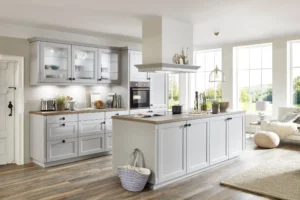

Kitchen Cabinet Prices Turkey
Kitchen Cabinet Prices Turkey: The Complete Commercial Engineering Guide to Sourcing Costs, Cost Drivers, Valuation Matrices, and Global Procurement Economics
Introduction to the Kitchen Cabinet Prices Turkey Macroeconomic Landscape
In the international commercial real estate, hospitality development, and luxury residential design sectors, optimizing procurement economics without sacrificing structural material integrity is a constant operational challenge. As global supply chains continue to experience structural shifts, the Kitchen Cabinet Prices Turkey market has emerged as an essential focus for international procurement directors, developers, and wholesale buyers. Sourcing cabinetry systems from Turkey offers a highly sophisticated financial model—providing high-end, European-standard precision engineering at a significantly optimized capital expenditure.
However, navigating Kitchen Cabinet Prices Turkey requires far more than a surface-level glance at factory catalog rates. A truly optimized B2B procurement strategy demands a deep understanding of the underlying cost drivers, including raw material substrate chemistry, surface coating technologies, kinematic hardware load ratings, automated vs. manual labor inputs, currency hedging, and transcontinental shipping logistics. This definitive commercial guide delivers high-density technical analysis and explicit cost breakdowns, providing international buyers with the financial and structural intelligence needed to navigate the Turkish kitchen manufacturing market and achieve maximum return on investment (ROI).
Macroeconomic Fundamentals: Why Turkey Offers Supreme Cost Optimization
To understand the structural advantages of Kitchen Cabinet Prices Turkey, one must examine the macroeconomic factors that shape the country’s manufacturing sector. Turkey occupies a unique strategic position, acting as an industrial and logistical bridge between Western Europe, the Middle East, Africa, and the Americas.
Several core pillars drive the highly competitive cost structure of the Turkish kitchen cabinetry trade:
- Advantageous Operational Costs: Turkey maintains a highly optimized balance of competitive industrial utility overheads, efficient domestic supply lines, and a skilled, technically trained workforce. This allows Turkish factories to operate at a lower cost base than comparable high-end workshops in Germany, Italy, or the United Kingdom.
- Vertically Integrated Supply Chains: Major Turkish manufacturing clusters—such as Bursa (İnegöl), Istanbul, Kayseri, Izmir, and Ankara (Siteler)—are structurally designed to bring all necessary suppliers together. Kitchen factories operate in immediate proximity to the country’s massive natural stone quarries, engineered quartz labs, ceramic sanitaryware complexes, and specialized chemical finishing plants. This geographic density eliminates internal transport delays, removes intermediate distributor markups, and insulates Kitchen Cabinet Prices Turkey from erratic global supply chain spikes.
- Heavy Capital Investments in Industrial Automation: Rather than relying on high-labor, manual fabrication methods that introduce human error and slow down delivery, the leading tier of Turkish exporters utilizes highly automated German and Italian machinery lines. The deployment of automated panel-sizing centers, continuous UV flat-line curing ovens, and multi-spindle 5-axis CNC routers enables factories to produce massive contract orders at a very low per-unit labor cost, ensuring that highly competitive Kitchen Cabinet Prices Turkey are matched with exceptional, repeatable physical quality.
Structural Breakdown of Primary Cost Drivers: What Dictates Kitchen Cabinet Prices Turkey
When a Turkish factory processes a Request for Quotation (RFQ) for an international kitchen project, the final cost calculation is determined by a precise matrix of raw materials and engineering choices. To achieve successful value engineering, buyers must understand how these individual components impact the final price.
1. Substrate Core Material Selection
The underlying core board material represents the structural foundation of the kitchen cabinet and serves as the initial price anchor:
- Standard Particleboard / Chipboard: The most economical core option. While highly cost-effective for dry areas or budget-driven multi-family housing projects, it possesses lower density and limited moisture resistance. It forms the baseline for entry-level Kitchen Cabinet Prices Turkey.
- High-Density Medium Density Fiberboard (MDF): A mid-tier cost option offering superior density (typically 750 to 800 kg/m³), excellent screw-holding capacity, and a perfectly smooth surface ideal for painting or vacuum foil pressing.
- Green-Core Moisture-Resistant MDF (MR-MDF): A premium core board option bound with advanced hydrophobic polymer resins. While it commands a 15% to 25% price premium over standard MDF, it limits internal thickness swelling to less than 6% under intense steam exposure, preventing costly structural failures and delamination over time.
- Multi-Ply Cross-Laminated Plywood: The highest cost substrate tier. Constructed from alternating layers of premium birch or hardwood veneers, it provides unparalleled structural strength and is specified exclusively in ultra-luxury, multi-generational custom kitchen models.
2. Front Façade Coating Chemistry and Surface Engineering
The treatment applied to the cabinet door front represents a significant percentage of the overall cabinet cost. Kitchen Cabinet Prices Turkey shift dramatically based on the surface methodology selected:
- Direct Pressure Melamine (Laminate): The most cost-effective front option. Tough, scratch-resistant, and easy to clean, it is the standard choice for volume contract developments.
- Thermofoil (PVC / PET) Vacuum Membrane Foils: A mid-tier pricing category. By stretching a continuous polymer sheet seamlessly over a routed MR-MDF panel face and its four edges concurrently, it provides an impervious moisture barrier and mimics routed shaker frames or modern fluted textures without the high cost of manual painting.
- Two-Pack (2K) Polyurethane Lacquer (Painted): A high-tier pricing option. Requiring multiple rounds of pressurized spray priming, robotic sanding, color application, and UV curing in dust-free cleanrooms, it commands a higher price due to intense energy and processing inputs, yielding a rich, completely seamless architectural finish.
- Real Wood Veneer (Sequenced or Blueprint Matched): A premium pricing category. Razor-thin leaves of genuine hardwood (like Anatolian walnut, European oak, or smoked eucalyptus) are pressed onto MR-MDF cores. The cost varies based on the slicing method (rift vs. flat cut) and the architectural complexity of the grain matching across door fronts.
3. Kinematic Hardware Load and Performance Ratings
A common engineering mistake is evaluating kitchen quality solely by its external appearance. The longevity of a kitchen is determined by its moving parts, and premium hardware represents a critical component of Kitchen Cabinet Prices Turkey:
- Standard Soft-Close Hardware: Entry-level configurations utilize basic soft-close hinges and drawer slides that perform adequately under normal domestic loads but have limited cycles of corrosion protection in highly humid rooms.
- Heavy-Duty Synchronized Undermount Runner Systems: Premium Turkish cabinetry models incorporate advanced concealed steel drawer slides from global leaders or elite domestic pioneers like SAMET. Rated for heavy dynamic loads of 40 kg (88 lbs) to 70 kg (154 lbs) per deep drawer box, this hardware guarantees smooth, silent operation even when loaded with cast-iron cookware. Specifying this elite hardware infrastructure increases the per-unit cost but completely eliminates long-term warranty and maintenance liabilities.
Linear Meter vs. Modular Unit Pricing Models in Turkey
To properly analyze and compare Kitchen Cabinet Prices Turkey, international buyers must understand the two distinct pricing methodologies deployed by Turkish estimating departments.
The Linear Meter (Metretül) Pricing Model
Commonly used in early project budgeting and initial residential estimations across Turkey, Europe, and the Middle East, the linear meter pricing system provides a quick baseline cost calculation:
- The Definition: A linear meter configuration assumes a standard, fixed vertical stack consisting of one 60cm deep base cabinet, a matching length of standard natural stone or laminate countertop, and one 30cm deep upper wall-hung cabinet box, including standard doors, basic shelves, and entry-level handles.
- The Limitation: While highly convenient for raw calculations, linear meter estimates drop significantly in accuracy the moment a project introduces custom corner carousels, deep pull-out spice towers, hidden internal cargo pantries, or overhead mechanical lift stays, which are priced far outside standard linear calculations.
The Individual Modular Unit Pricing Model
The gold standard for commercial contract procurement, institutional B2B importing, and precise value engineering:
- The Definition: Every individual cabinet box carcass, front door leaf, hinge mechanism, internal shelf bracket, and filler panel is assigned a separate, explicit line-item cost code based on its exact dimensions and material composition.
- The Advantage: This allows international procurement teams to conduct surgical cost analysis. For example, if a project’s initial quote exceeds budget parameters, a developer can choose to preserve premium MR-MDF lacquered front doors for the visual exterior faces while substituting costly internal plywood carcass walls with high-density, cost-effective melamine-faced chipboard (MFC), precisely adjusting Kitchen Cabinet Prices Turkey to hit specific financial targets.
Comprehensive Valuation Matrix: Comparing Sourcing Tiers and Costs
To deliver actionable data and absolute transparency, the following technical matrix provides an exhaustive, comparative cost breakdown across the three primary manufacturing tiers found within the Kitchen Cabinet Prices Turkey export market.
| Technical Component | Contract / Economy Tier | Designer / Mid-Market Tier | Luxury / Bespoke Tier |
|---|---|---|---|
| Primary Carcass Substrate | 18mm Standard High-Density Chipboard (MFC). | 18mm High-Density MDF or MR-MDF. | 19mm Multi-Ply Marine Birch Plywood. |
| Front Door Face Finish | Direct Pressure Melamine / Standard PVC Foil. | Seamless PET Membrane / Matte 2K Lacquer. | Blueprint-Matched Real Veneer / High-Gloss UV. |
| Edgebanding Technology | Standard Hot-Melt EVA Adhesive. | Polyurethane (PUR) Waterproof Cross-Linking. | Laser / Hot-Air Co-Extrusion Zero-Joint Fusion. |
| Kinematic Hardware Spec | Standard Soft-Close (Basics). | Synchronized Full-Extension (40kg capacity). | Motorized Tip-On / Thick-Door Institutional. |
| Integrated Countertop | Laminate Postformed Board / Basic Ceramic. | Engineered Quartz / Solid Surface Corian. | Rare Natural Marble Slabs / Calacatta Quartz. |
| Average Price Range Indicator | Highly Cost-Effective. Ideal for budget multi-family volume housing. | Balanced ROI. Preferred for standard residential developments. | Premium Capital Investment. Built for luxury estates. |
Value Engineering Strategies: Optimizing Kitchen Cabinet Prices Turkey Without Sacrificing Longevity
For commercial developers and large-scale procurement officers, the true power of sourcing from Turkey lies in the capacity to execute highly sophisticated value engineering. By strategically matching materials with specific spatial stresses, buyers can optimize Kitchen Cabinet Prices Turkey to fit tight budgets while preserving a premium user experience.
Hybrid Carcass Structural Layering
Instead of manufacturing the entire cabinet box out of a single expensive material, factories can apply smart structural layering:
- The Method: Specify high-performance, green-core Moisture-Resistant MDF (MR-MDF) or marine plywood only for the high-exposure wet areas of the kitchen—specifically the under-sink base cabinet box, the dishwasher surrounding panels, and the kickboard plinths that face regular wet floor mopping.
- The Savings: Substitute the dry upper wall cabinet boxes and internal pantry partitions with premium, high-density Melamine-Faced Chipboard (MFC). This hybrid strategy protects the kitchen from structural water damage while dropping the overall cabinet package cost by up to 15% to 25%, greatly reducing the average Kitchen Cabinet Prices Turkey allocation.
Shaker Door Fabrication Optimization
Traditional neoclassical kitchens utilize five-piece shaker doors constructed from a separate solid wood frame surrounding a center floating panel. This method requires considerable manual labor and assembly time, driving up production costs.
- The Value Engineering Alternative: Utilize single-piece doors made from thick, high-density MR-MDF that are precision-routed on advanced multi-spindle CNC machining tables to perfectly mimic the traditional five-piece recessed frame profile.
- The Finish Alignment: Wrap these seamless routed doors in a premium matte PET polymer membrane foil inside advanced vacuum press lines. PET foils replicate the exact visual depth and smooth feel of high-end painted lacquers, eliminate visible joints where paint can crack over time, and reduce the processing cost by up to 30% compared to traditional multi-layer painted finishes, significantly lowering overall Kitchen Cabinet Prices Turkey.
The Kinematic Cost Factor: Hardware Optimization
While it is tempting to trim costs by choosing unbranded metal hardware, this represents a severe long-term financial risk for global projects. Low-grade kitchen hinges and drawer slides lack adequate anti-corrosion platings and fail early under heavy culinary weights, leading to expensive on-site maintenance calls and early cabinet damage.
- The Strategic Approach: Maintain a premium, branded hardware baseline (such as SAMET or Blum) for high-frequency moving parts—specifically the main under-sink pull-out trash drawers and the primary daily pantry towers.
- The Optimization: For low-frequency storage zones, such as deep upper holiday-ware cabinets or decorative accent open shelving units, switch from complex motorized pull-out systems to basic mechanical soft-close hinges, locking in long-term performance while keeping structural hardware costs balanced within your Kitchen Cabinet Prices Turkey framework.
Contract Engineering and Financial Risk Mitigation for B2B Importers
Sourcing large-scale container shipments through the Kitchen Cabinet Prices Turkey channel requires an ironclad, professional commercial contract. Buyers must include clear protective clauses to manage common financial risks, including raw material cost shifts and currency volatility.
1. Managing Currency Fluctuations
The Turkish Lira (TRY) can experience notable volatility within global currency markets. To ensure absolute price predictability and protect corporate margins over long-term multi-month construction schedules, international business contracts are almost universally negotiated and locked in stable foreign reserve currencies, primarily Euros (EUR) or United States Dollars (USD).
- Best Practice Contracting: Ensure your supply agreement includes a explicit currency stabilization clause. This clause states that the agreed contract price remains fully fixed as long as the exchange rate between the contract currency and the local manufacturing currency stays within a predefined percentage band, protecting both the international buyer and the Turkish factory from sudden macroeconomic shifts.
2. Securing Raw Material Pricing Allocations
In times of erratic global timber shortages or supply chain disruptions for premium chemical resins, raw material spot prices can spike rapidly. To prevent a factory from requesting a retrospective price increase mid-production, commercial contracts should include an explicit raw material allocation clause. This clause confirms that upon receipt of the initial deposit payment, the factory is legally required to immediately purchase and secure the entire volume of raw substrate boards, stone slabs, and metal hardware components needed for the full order, locking in your Kitchen Cabinet Prices Turkey structure from day one.
3. Structuring Secure International Payment Milestones
To balance the factory’s need for operational capital with the importer’s need to protect against non-delivery or low-quality production, Turkish B2B trade utilizes two primary financial pathways:
- The Irrevocable Letter of Credit (L/C at Sight): The gold standard for high-volume commercial contracts. The importer’s bank guarantees payment to the Turkish exporter, but only when the factory presents explicit, unresolvable proof of compliance—including clean Bills of Lading, valid A.TR or EUR.1 certificates, clean Pre-Shipment Inspection reports, and phytosanitary certificates. This eliminates performance risk for both international entities.
- The Telegraphic Transfer (T/T) Milestone Structure: Commonly deployed for mid-tier residential and custom hospitality projects. The contract is structured around clear manufacturing milestones: a 30% down payment to trigger raw material allocation and engineering design drawings, followed by the remaining 70% balance payment due immediately upon the presentation of a successful third-party Acceptable Quality Limit (AQL) Pre-Shipment Inspection report and a copy of the Master Bill of Lading (B/L) showing the container has been accepted by the shipping line.
Global Supply Chain Logistics and Landed Cost Engineering
To accurately calculate the true return on investment of your procurement strategy, you cannot look solely at the factory-gate price (Ex Works). Importers must calculate the full Landed Cost—which incorporates factory-gate Kitchen Cabinet Prices Turkey, multi-layer export protective packing, internal land hauling to maritime ports, ocean container freight rates, cargo transit insurance, destination port handling fees, and localized customs clearance import duties.
1. Optimizing International Commercial Terms (Incoterms 2020)
The choice of Incoterm dictates exactly where the financial risk of loss or damage shifts from the Turkish manufacturer to the international importing entity:
- FOB (Free On Board – Target Port, e.g., FOB Ambarlı / FOB Izmir / FOB Gemlik): This is highly recommended for experienced B2B importers. The Turkish manufacturer is legally and financially responsible for fabricating the cabinetry, packing it into export boxes, hauling it to the container port, and clearing the goods through Turkish export customs. The risk shifts to the importer the moment the physical container passes over the ship’s rail at the Turkish port, allowing the buyer full control over maritime freight routing, shipping rates, and destination customs clearance.
- CIF (Cost, Insurance, and Freight – Destination Port): Often preferred by smaller distributors or boutique buyers. The Turkish factory organizes and pays for ocean freight transport and basic maritime transit insurance to the buyer’s target port. However, risk shifts to the buyer the moment the container is loaded onto the vessel in Turkey, meaning the importer must handle any transit damage claims with the carrier while managing all local port unloading charges and import customs duties.
2. Flat-Pack (RTA) versus Fully Assembled Shipping Economics
Procurement managers must weigh the logistical trade-offs between RTA and pre-assembled cabinet configurations to optimize their container shipping costs:
- Knocked-Down / Ready-To-Assemble (RTA): Perfect for high-volume commercial projects where ocean freight volume optimization is critical. Panels are stacked completely flat, maximizing the number of units that can fit into a single 40-foot High-Cube shipping container, dramatically dropping the per-unit transit cost. This strategy yields the lowest landed cost baseline for Kitchen Cabinet Prices Turkey.
- Fully Pre-Assembled Enclosures: Preferred for ultra-luxury residential developments or hotels where on-site installation labor costs are high. The cabinets are built, structurally glued, squared, and checked for hardware alignment inside the Turkish factory using industrial pneumatic case clamps. While this configuration reduces packing density and increases the per-unit freight cost, it ensures rapid on-site mounting, saving massive construction labor expenses at the destination site.
3. Tariff Mitigation and Preferential Certificates of Origin
The financial viability of the Kitchen Cabinet Prices Turkey supply chain is greatly enhanced by leveraging Turkey’s vast international trade agreements:
- The A.TR Movement Certificate: For B2B importers based within the European Union, the issuance of an A.TR certificate by Turkish customs authorities certifies that the industrial goods are in free circulation within Turkey. This document allows the entire shipment to enter the EU market with a 0% customs duty rate, bypassing standard third-country import tariffs and dropping landed costs.
- EUR.1 Movement Certificate: Utilized for trade between Turkey and countries with which it shares bilateral Free Trade Agreements, such as the United Kingdom, EFTA member states (Switzerland, Norway, Iceland), Ukraine, and various North African nations. The EUR.1 certificate proves the preferential origin of the goods, allowing for substantial tariff reductions or complete duty exemptions at the destination border.
Quality Control (QC) Protocols: Protecting Your Investment at the Factory Gate
In the international furniture trade, discovering a manufacturing defect after a shipping container has crossed the ocean and cleared customs at your destination port is an expensive operational disaster. Importers must establish strict, multi-stage Quality Control frameworks at the Turkish factory gate before the final balance payment is issued and ownership title transfers.
The Pre-Shipment Inspection (PSI) and the AQL Framework
Once the production run is 100% complete and at least 80% of the order is packed into export cartons, a formal inspection should be executed according to the Acceptable Quality Limit (AQL) Standard (ISO 2859-1). Importers can utilize third-party international testing agencies (such as SGS, Bureau Veritas, or TUV) to pull statistically representative samples and conduct rigorous physical tests:
- The Cross-Hatch Adhesion Test (ASTM D3359 / ISO 2409): Performed on lacquered or painted vanity surfaces. A precision multi-blade knife cuts a grid pattern through the paint layer down to the substrate. Specialized high-tack testing tape is applied to the grid and pulled away sharply at a 90-degree angle. The grid is inspected under a magnifying lens to ensure zero paint flaking, confirming that the chemical primer bond will survive years of hot kitchen steam and cooking oils.
- The Dimensional Reveal Check: Measuring all door-to-carcass gaps using digital calipers. Reveal gaps must be perfectly uniform across all planes, typically restricted to a strict tolerance of 1.5mm ± 0.5mm to guarantee clean alignment upon installation.
- The Moisture Verification: Testing core boards using pinless digital moisture meters to ensure the core moisture content sits strictly within the optimal stability range of 6% to 8%, preventing future warping.
Professional On-Site Installation and Environmental Management Protocols
To preserve the structural precision and value built into your cabinetry package, project managers and general contractors must enforce professional site rules during the installation phase.
1. Site Readiness and Climate Control Stabilization
Kitchen cabinetry must never be brought into a building that is actively undergoing wet construction trades. All drywall mudding, structural concrete pouring, painting, and floor tiling must be completely finished and thoroughly dry. The building’s permanent Heating, Ventilation, and Air Conditioning (HVAC) system must be fully operational and running continuously for at least 7 to 10 days prior to delivery. The ambient interior temperature must be held strictly between 18°C and 22°C (64°F to 72°F), and the relative humidity must be stabilized between 40% and 60%.
2. The 48-to-72-Hour Atmospheric Acclimation Rule
Once delivered to the site, the cabinet components must be carefully removed from their shipping crates and laid flat or stacked loosely within their final installation spaces for a minimum of 48 to 72 hours before installation. This essential step allows the microscopic cell structure of the natural wood fibers and the engineered substrate core to gently adjust to the specific relative humidity and temperature profile of its permanent home, preventing any sudden wood warping, joint stress, or door alignment movement post-installation.
3. Precision Laser Level Alignment and Base Anchoring
Using multi-plane, high-accuracy structural laser levels, installers must establish a perfect horizontal datum line across the kitchen space, identifying any minor floor slope variations. Base cabinets must be meticulously leveled using heavy-duty adjustable leveling legs before being securely anchored to structural wall studs or backing blocks. If a cabinet box is installed even slightly out of plumb, it will introduce invisible twisting pressures to the door frames, causing doors to hang unevenly and heavy-duty soft-close drawer slides to lose their smooth gliding path.
Long-Term Maintenance and Conservation: Protecting Your Architectural Asset
A premium system selected from the Turkish manufacturing ecosystem is engineered to deliver decades of reliable service, but its lifelong durability relies on adherence to proper, scientifically sound maintenance practices.
Daily and Weekly Surface Hygiene
- Chemical Precautions: Never clean premium lacquered, foil-wrapped, or wood-veneer kitchen models with harsh multi-surface sprays, ammonia, bleach, heavy degreasers, acetone, or silicone-based furniture waxes. These harsh chemicals will slowly dissolve the cross-linked polymer bonds of premium UV or polyurethane lacquers, leaving a hazy, sticky residue that ruins the finish.
- The Safe Method: Use a clean, ultra-soft microfiber cloth slightly dampened with lukewarm water and a drop of mild, pH-neutral liquid soap. Wipe gently, moving strictly in the direction of the natural wood grain lines to avoid micro-scratching the surface. Follow up immediately with a soft, bone-dry microfiber cloth to remove all trace surface dampness. Never let water droplets sit near sink panels or dishwasher vent edges.
Seasonal Hardware Calibration
Because kitchen cabinets experience thousands of mechanical cycles per year and natural wood-based substrates retain a minor degree of micro-hygroscopic movement across changing seasons, minor alignments can occur. Homeowners or property managers should perform a simple annual tuning cycle:
- Hinge Alignment: Utilize the built-in 3-way parametric screws on the concealed hinges to realign any cabinet door gaps that have altered due to seasonal shifts, ensuring a perfectly uniform reveal grid across all front panels.
- Drawer Track Inspection: Check the undermount runner tracks to ensure no debris or culinary dust has accumulated in the synchronized gear tracks, wiping them with a dry brush to preserve a completely silent, smooth gliding motion.
Commercial ROI Analysis: Sourcing from Turkey vs. Alternative Global Markets
When finalizing a global procurement strategy, a clear comparison of the capital cost profiles and structural quality of different manufacturing regions highlights the distinct financial advantages of the Turkish market.
Sourcing from Western Europe (Germany / Italy)
- The Profile: Western European manufacturers offer exceptional precision engineering and highly regarded luxury brand equity.
- The Financial Challenge: These systems command immense capital cost premiums driven by high domestic industrial energy costs, complex labor overhead structures, and expensive corporate markups. This inflates overall project budgets and narrows commercial development profit margins.
Sourcing from Low-Cost High-Volume Regions
- The Profile: Certain global manufacturing zones offer incredibly low base factory-gate pricing.
- The Structural Liability: These low prices are frequently achieved by utilizing low-density substrate boards bound with high-formaldehyde glues, low-grade metal hardware that rusts early in humid kitchens, and thin surface foils that peel near ovens. This introduces massive long-term warranty risks, costly localized on-site repair liabilities, and early project replacement expenses.
The Turkish Market Balance
- The Value Equilibrium: Sourcing from the Kitchen Cabinet Prices Turkey trade corridor delivers a highly compelling middle path. By pairing high-density green-core moisture-resistant substrates, certified low-emission chemical safety (E1/CARB Phase 2 compliance), premium waterproof PUR edge engineering, and heavy-duty, corrosion-protected kinematic hardware with optimized factory overhead costs, Turkey eliminates the structural risks of low-cost sourcing. This provides global buyers with high-end, European-standard architectural cabinetry at a significantly optimized landed cost, driving maximum operational and financial yield for your real estate enterprise.
Conclusion: The Definitive Procurement Path for Savvy Global Enterprises
The modern Kitchen Cabinet Prices Turkey trade corridor stands as a masterful intersection of advanced material science, high-precision automated machinery, robust environmental compliance, and deep economic value. By moving beyond basic price comparison and focusing heavily on the technical dynamics of substrate densities, surface finish chemistry, waterproof edgeband bonding, secure international payment structures, and preferential customs certifications, global procurement teams can thoroughly eliminate supply chain risks. Sourcing premium kitchen furniture from Turkey delivers a powerful competitive advantage—offering an elite fusion of manufacturing precision, rich aesthetic flexibility, and optimal economic cost engineering designed to protect your investment capital and drive maximum financial returns across your global commercial ventures.


Etiket:Acrylic Kitchen Cabinet Turkey, Bathroom Cabinet Models Turkey, Bathroom Cabinet Prices Turkey, Bathroom Cabinets Export Import Turkey, Bathroom Cabinets Turkey, High Gloss Kitchen Cabinet Turkey, Kitchen Cabinet Models Turkey, Kitchen Cabinet Prices Turkey, Lacquered Kitchen Cabinet Turkey, Membrane Kitchen Cabinet Turkey, Modern Bathroom Cabinet Turkey, Modern Kitchen Cabinet Turkey, Natural Wood Kitchen Turkey, Solid Wood Kitchen Turkey, Wood Veneer Kitchen Cabinets Turkey

Şunları da sevebilirsiniz
MDF Kitchen Cabinet Turkey
Modular Kitchen Cabinet Turkey