

Lacquered Door Types Turkey
Lacquered Door Types Turkey: The Ultimate Architectural Classification, Material Engineering, and B2B Sourcing Guide
In high-end interior architecture, upscale residential developments, and contemporary hospitality procurement, interior doors have evolved from basic functional partition barriers into critical design statements. Modern interior concepts lean heavily toward flawless, glass-smooth surfaces, geometric depth, and minimal reflectivity. To satisfy these design demands while ensuring long-term resistance to high-traffic impacts and microclimatic stress, global procurement networks have established a primary sourcing channel: Lacquered Door Types Turkey.
However, mass-producing high-volume commercial runs of lacquered wooden doors introduces extreme engineering challenges. Liquid-applied lacquers are highly sensitive to their production environments. If a factory lacks precise ambient humidity controls, clean-room atmospheric filtration, or advanced automated sanding calibration, the finished door leaves will suffer from microscopic surface blemishes. These include dust inclusions, orange-peel textures, pinholes, and edge cracking over time. Furthermore, if the core wood substrate is not properly isolated from moisture, it will expand or warp, causing the brittle lacquer skin to fracture along structural joints.
Turkey’s advanced furniture and millwork manufacturing sectors have systematically resolved these technical vulnerabilities. By pairing advanced multi-axis robotic spraying cells and state-of-the-art Ultraviolet (UV) curing tunnels with heavy investments in high-density moisture-resistant core engineering, Turkish industrial clusters deliver world-class products. These satisfy the strictest international performance, safety, and environmental compliance frameworks.
This comprehensive technical guide provides an exhaustive analysis of the surface chemistry, substrate engineering, design variations, quality assurance criteria, and strategic B2B sourcing protocols that drive Lacquered Door Types Turkey.
1. The Global Landscape: Why Turkey Leads Premium Finish Sourcing
The capacity to execute large-scale Original Equipment Manufacturer (OEM) and Original Design Manufacturer (ODM) contracts for premium lacquered finishes requires a highly integrated industrial infrastructure. The landscape of Lacquered Door Types Turkey does not operate through fragmented artisan workshops. Instead, it is organized into massive, specialized industrial zones that consolidate advanced European automation, strict environmental controls, and specialized chemistry suppliers.
The Structural Advantages of Turkish Production Clusters
- The İnegöl Furniture Megacluster (Bursa): Globally recognized for its vertical industrial integration. Within a tight geographic radius, lacquered door factories operate directly alongside major engineered wood mills, specialized chemical and lacquer formulators, and custom architectural hardware designers. This proximity shortens internal logistics loops and allows factories to source high-grade raw components instantly to complete volume orders.
- The Istanbul Industrial Corridor: Spanning major industrial zones like Hadımköy, Tuzla, and Dilovası, this region features capital-intensive manufacturing plants designed for high-volume contract supply. These facilities leverage advanced multi-million dollar automated finishing lines to supply major real estate projects in Europe, North America, and the Middle East, benefiting from direct access to major deep-water container terminals like Ambarlı.
- The Kayseri Free Zone: A powerhouse for heavy-industrial scaling, specializing in high-speed, flat-pack, or pre-hung Ready-to-Assemble (RTA) door assemblies. Kayseri plants utilize computerized nesting and automated edge-processing lines to optimize raw material yields, maintaining competitive wholesale pricing structures for high-volume distributors.
Regulatory and Custom Alignment
As an active member of the EU-Turkey Customs Union, industrial goods manufactured within the framework of Lacquered Door Types Turkey enter the European Union completely duty-free under the A.TR Movement Certificate protocol. This close economic relationship means Turkish national production standards are fully aligned with European Norms (EN). This alignment simplifies compliance verification for international buyers regarding indoor air safety, structural mechanical loadings, and fire propagation metrics.
2. Core Substrate Engineering: Isolating the Base to Prevent Lacquer Fractures
A lacquered finish is fundamentally a rigid, glass-like polymer coating bonded to an underlying wooden core. Because wood is an anisotropic, hygroscopic material that naturally expands and contracts with fluctuations in ambient humidity, the core substrate must be engineered to remain perfectly stable. If the core wood layer shifts even a fraction of a millimeter, the tension will cause the brittle lacquer skin to crack along the structural joint lines. Within the framework of Lacquered Door Types Turkey, factories use highly stabilized substrate matrices.
High-Density Moisture-Resistant Fiberboard (MR-HDF) Outer Skins
Turkish manufacturers do not apply liquid lacquer directly to raw solid lumber or low-density particleboard. Instead, the door leaf faces are constructed using premium Moisture-Resistant High-Density Fiberboard (MR-HDF) faces, which provide a density rating exceeding 800 to 880 kg/m³.
During production, raw wood fibers are refined and blended with a high concentration of hydrophobic synthetic resins—typically Melamine-Urea-Formaldehyde (MUF) or advanced Polymeric Diphenylmethane Diisocyanate (PMDI) binders.
- Technical Metric: In strict accordance with EN 317 standards, Turkish premium MR-HDF limits its 24-hour thickness swelling coefficient to under 5% to 6% during total water submersion. This dense, non-porous structure absorbs almost no atmospheric water vapor, providing an exceptionally flat, dimensionally stable surface. This extreme flatness is mandatory; any underlying surface waviness or fiber swelling would be magnified across a high-gloss or deep-matte lacquered face.
Internal Core Configurations: Balancing Mass, Acoustics, and Thermal Deflection
To support the outer MR-HDF faces, the internal cavity of the door leaf is filled with structural core materials tailored to specific architectural requirements and budget tiers:
- Tubular Particleboard Core (Sauerland Spanplatte): The absolute industrial standard for premium hotel rooms and contemporary office suites. It features continuous horizontal cylindrical voids running through a pressed particle matrix. This reduces the total leaf weight by up to 40% compared to solid timber, protecting the hinges from mechanical strain while providing high impact resistance and a certified acoustic insulation baseline.
- Solid Particleboard Core: Composed of high-density pressed wood particulates bound with thermosetting resins, yielding a uniform solid field. This format provides excellent structural mass and high screw-holding power, acting as the structural baseline for certified acoustic and fire-rated door packages.
- Honeycomb Structural Insulators: Utilized for budget-conscious residential projects and light-duty interior paths. Hexagonal cells made of heavy-duty, recycled kraft paper are expanded and sandwiched between internal softwood structural rails and the outer HDF faces. This achieves a lightweight door leaf that optimizes shipping logistics and speed of installation while maintaining flat-surface crushing resistance.
Laminated Veneer Lumber (LVL) Structural Perimeter Framing
To prevent the outer door edges from bowing or twisting due to temperature differentials between conditioned interior spaces and humid hallways, top-tier factories in the Lacquered Door Types Turkey sector construct the internal framing (stiles and rails) from Laminated Veneer Lumber (LVL) rather than standard solid pine.
LVL is constructed by peeling logs into thin veneer layers, aligning the grain directions of all layers parallel, and bonding them under intense hydraulic pressure with cross-linked exterior-grade adhesives. Because individual timber grain variations are randomized and neutralized across the multi-layer composition, the resulting frame resists bowing and seasonal warping.
3. Surface Chemistry: Formulating the Perfect Lacquer Matrix
The chemical composition of the liquid coating dictates its scratch resistance, color fastness, tactile texture, and behavioral flexibility. Factories involved in Lacquered Door Types Turkey employ sophisticated chemical matrixes to achieve premium architectural finishes.
Two-Component (2K) Polyurethane Lacquer Systems
For premium bespoke contracts and custom residential applications, two-component (2K) polyurethane systems are highly favored. This chemical structure relies on a distinct chemical reaction between two separate liquid streams mixed immediately prior to spraying:
- Component A (Base): Acrylic or polyester resins containing free hydroxyl (-OH) functional groups.
- Component B (Hardener): Polyfunctional aliphatic or aromatic isocyanate compounds (-NCO).
When mixed, the hydroxyl and isocyanate groups form a dense network of polyurethane linkages. This cross-linked molecular structure creates a tough, flexible coating that expands and contracts with the underlying wood fibers without micro-cracking, while providing strong resistance to impacts and regular chemical cleaning agents.
Ultraviolet (UV) Cured Polyacrylate Coatings
For high-volume continuous industrial production runs, liquid coatings formulated with photo-initiated UV-cured polyacrylates are specified.
- The Photochemical Reaction: The liquid lacquer is enriched with specialized photo-initiators. When the coated panel passes through intense ultraviolet radiation chambers inside the curing tunnel, the photo-initiators absorb the UV light energy and break down into highly reactive free radicals. These free radicals trigger an instantaneous polymerization reaction across the acrylate monomers and oligomers, transforming the liquid film into a completely solid protective shell within seconds. This rapid drying profile prevents airborne dust from settling on the wet surface, ensuring a clean, blemish-free finish.
Excimer Nano-Matting Surface Architecture
To satisfy contemporary architectural demands for ultra-matte finishes with a soft, tactile feel, elite Turkish factories integrate Excimer Matting Technology into their automated finishing lines.
- Microscopic Wrinkling Physics: The liquid coating is first exposed to short-wave vacuum-UV radiation (172 nm) emitted by specialized excimer lamps within an inert nitrogen gas atmosphere. This 172 nm radiation penetrative depth is limited to the absolute topmost layer of the wet lacquer film, causing it to cross-link instantly and shrink slightly, forming a microscopic, highly uniform “wrinkled” nano-topography. The door then passes under standard long-wave UV lamps to solidify the underlying bulk lacquer layers.
- Anti-Fingerprint Performance: This nano-scale surface geometry diffuses incoming light waves uniformly in all directions, yielding an ultra-low gloss value of under 2 to 5 Gloss Units (GU). Crucially, this nano-topography minimizes the contact surface area available to human fingertips. Oily residues cannot easily wet or adhere to the surface, making fingerprints virtually invisible and exceptionally easy to maintain.
4. Industrial Finishing Lines: The Physics of Flawless Application
Achieving a high-end lacquered finish across thousands of production door sets requires removing human variability from the application phase. Automated Lacquered Door Types Turkey facilities use closed-loop industrial finishing systems that control temperature, cleanliness, and movement tolerances down to precise metrics.
Multi-Stage Automated Calibration Sanding
The absolute prerequisite for a mirror-like high-gloss or flawless deep-matte lacquered surface is precision sanding calibration. Raw door panel surfaces are processed through inline wide-belt sanders equipped with electronically controlled, segmented pneumatic platens.
- Micron-Level Tolerance Tracking: These sanding heads adjust their vertical processing pressures dynamically based on electronic thickness measurements taken at the feed gate. The panels are sanded through a strict sequence of ascending grit configurations—starting at P180 for raw substrate flattening, moving through P240 and P320 for primer calibration, and reaching ultra-fine P400 to P600 grits for intermediate coats. This systematically removes any microscopic fiber fuzz or tool chatter marks before the next coating layer is applied.
Multi-Axis Reciprocating Robotic Spraying Enclosures
The liquid paint application occurs inside fully isolated, positive-pressure spraying cabins equipped with multi-axis reciprocating spray arms or articulated 6-axis robotic arms.
- Environmental Air Filtration: Airborne dust particles are the primary cause of surface defects in lacquered finishes. To eliminate this risk, the air supplied to the spraying cabins passes through multi-stage HEPA filtration banks, maintaining a strict positive-pressure differential against the rest of the factory floor. This prevents any external dust or overspray from entering the enclosure.
- Precise Fluid Dynamics Control: The robotic spray heads navigate according to exact 3D digital profiles of the door leaf, maintaining a precise distance and angle from the panel surface. The computerized fluid delivery system modulates atomization air pressures, fluid flow rates, and nozzle speeds in real time. This ensures a consistent dry film thickness (DFT) of 120 to 160 microns, covering deep routed grooves and sharp edge profiles without paint pooling or thin spots.
Controlled Thermal Flash-Off and Curing Tunnels
Directly after leaving the wet spray enclosure, the coated doors enter specialized thermal Flash-Off Tunnels before moving to final UV curing.
- Controlled Solvent Extraction: The flash-off tunnel uses controlled laminar air currents at moderately elevated temperatures (35°C to 45°C) to accelerate the evaporation of volatile organic solvents or water carriers from the wet film. This controlled extraction ensures the surface layer solidifies slowly, allowing air bubbles to escape naturally. This step prevents gas trapping, solvent pop blemishes, or pinhole defects before the door enters the high-intensity UV ovens for instant solidification.
5. Typological Classification: Navigating Lacquered Door Types Turkey
To assist procurement managers, architects, and wholesale distributors in structuring their portfolios, Turkish industrial producers group their manufacturing variations into four distinct design and functional categories. When selecting your inventory or project callouts, understand how these core classifications of Lacquered Door Types Turkey differ in geometry and application.
Category A: The Pure Minimalist Flush Flat Type
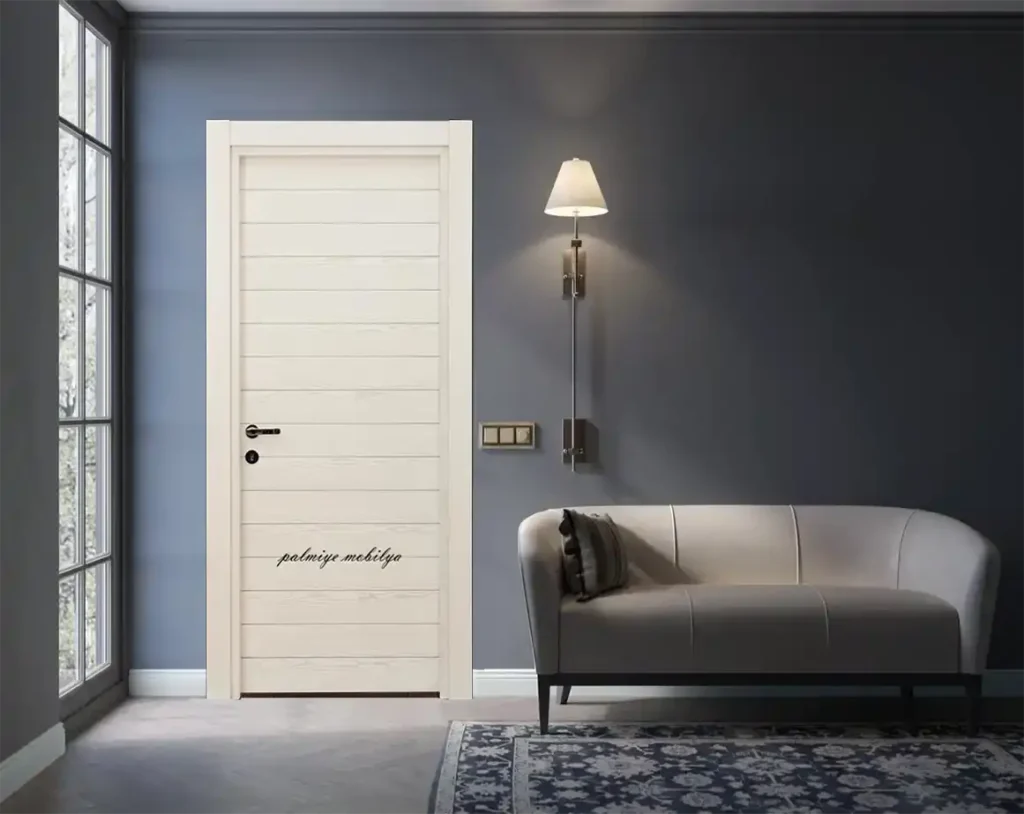
This classification represents the baseline configuration for ultra-modern residential developments and high-end workplace design. The door leaf features a completely continuous, single flat plane without surface carvings, profiles, or framing lines.
- Visual Strategy: The visual value relies entirely on the perfection of the polymer finish. These models are heavily requested in high-gloss mirror reflections or deep excimer dead-matte surfaces. They are typically paired with concealed aluminium invisible frames that sit completely flush with the surrounding drywall, removing traditional architraves so the door leaf acts as an integrated extension of the wall surface itself.
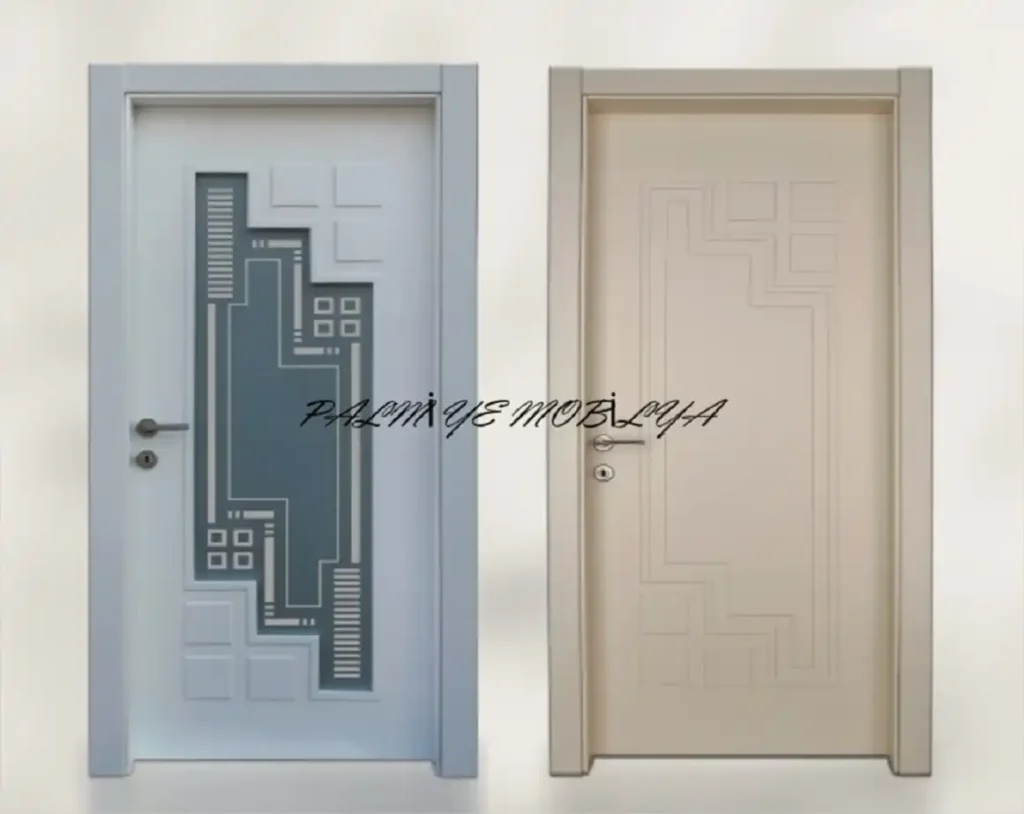
Category B: CNC Profiled Grooved and Sculpted Linear Types
This classification bridges modern minimalism with classic linear play. Before entering the liquid primer phase, raw MR-HDF sheets pass under high-speed 3-axis and 5-axis CNC router matrices that etch precise decorative patterns directly into the board face.
- V-Groove Architecture: The primary aesthetic is achieved via deep V-shaped grooves milled at calibrated depths of 1.5mm to 3.5mm. These geometric cuts can create minimalist linear bands, sweeping chevron alignments, offset multi-box patterns, or contemporary updates to standard three-panel vertical templates. When coated uniformly, the sloped walls of the V-grooves diffuse ambient interior lighting, yielding crisp, dramatic shadow lines across the door face.
Category C: Engineered Classical Raised-Panel Types
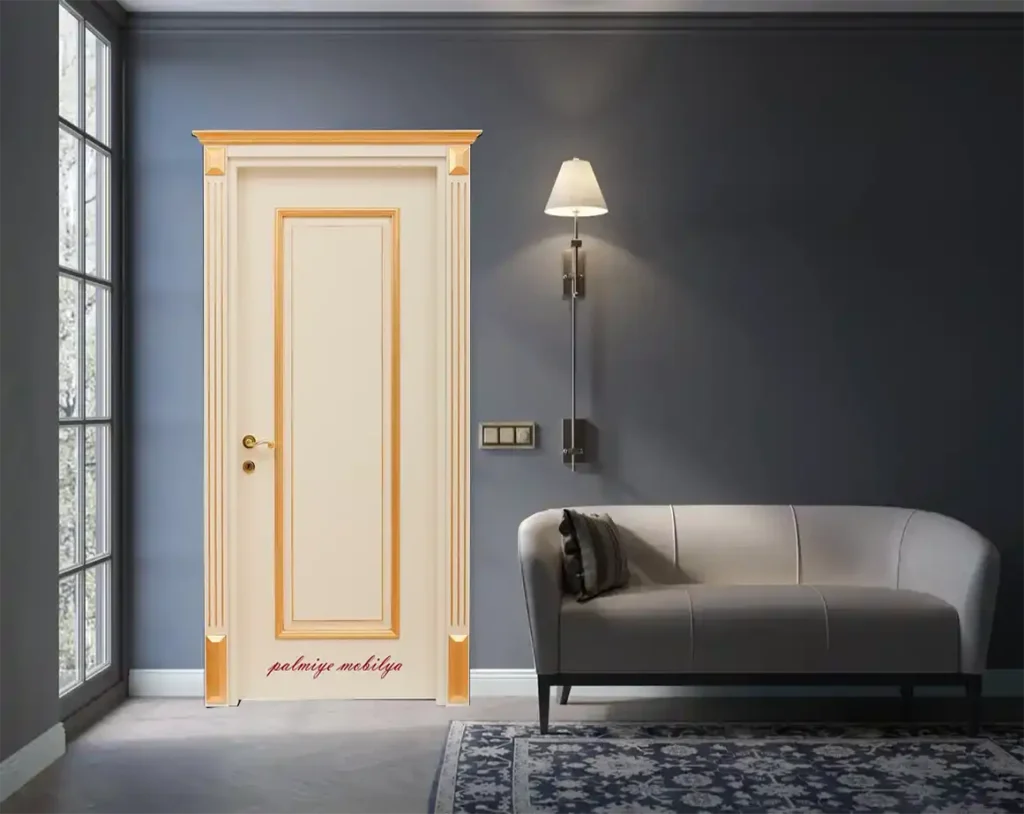
For classic residential villas, premium hospitality settings, and heritage renovations, Turkish factories replicate traditional stile-and-rail joinery through advanced continuous milling or component pressing.
- Monolithic Sculpting: Rather than assembling multi-jointed timber parts that could split, 5-axis routers sculpt deep rectangular fields, multi-step profiles, and ornate curved headers directly out of a thick, solid HDF skin. This gives the full visual depth and character of historical raised-panel doors while offering the total structural stability and warp resistance of an engineered core.
Category D: Inlaid Material Hybrid and Glazed Types
This premium product tier combines contrasting industrial materials directly with the uniform lacquer coat to create distinct design accents:
- Metallic Accents: Door faces are routed with narrow slots that receive flush-fitted decorative metal strips. These profiles are made of brushed stainless steel, matte black coated brass, or anodized rose-gold aluminium.
- Acoustic Glazing Profiles: Incorporate tempered safety glass openings, from thin vertical privacy slits to large clear panes held by integrated lacquered beads.
- Veneer Combinations: Feature a solid lacquered frame enclosing a central panel finished in premium book-matched natural wood veneers (like American Burl Walnut or European Smoked Oak), sealed under a uniform clear matte topcoat.
6. Technical Performance Doors: Fire Resistance and Acoustic Engineering
Modern architectural contract specifications require interior doors to provide verified life-safety performance and sound isolation alongside premium visual aesthetics. The ecosystem of Lacquered Door Types Turkey incorporates advanced testing and manufacturing processes to deliver certified technical door solutions.
Certified Fire-Rated Assemblies (FD30 to FD90)
Turkish fire door manufacturing operates under strict third-party surveillance systems, certified by accredited international verification laboratories such as Warringtonfire (Exova BM TRADA), IFC Certification, or Underwriters Laboratories (UL).
- Core Material Engineering: Fire-rated door packages substitute standard cores with high-density mineral fiberboards or specialized multi-layer solid wood blocks treated with intumescent fire-retardant chemicals. These materials block thermal transmission, preventing heat propagation and preserving structural integrity during an emergency.
- Intumescent Seal Integration: The perimeter edges of the door leaf or frame feature hidden grooves lined with intumescent graphite-based strips. When exposed to temperatures exceeding 150°C, these strips expand up to 25 times their original volume. This rapid expansion fills the gaps between the door leaf and frame, sealing the opening to prevent toxic smoke and deadly hot gases from passing through.
Acoustic Sound-Transmission Control (STC) Engineering
High-end hotel guest rooms, corporate boardrooms, and medical screening units require strong acoustic isolation. Turkish acoustic doors are engineered using multi-layered, sound-dampening materials designed to disrupt sound waves.
- Acoustic Interlayering: The core consists of alternating layers of high-density particleboard, heavy acoustic rubber membranes, and specialized sound-absorbing mineral wool.
- Perimeter Drop-Seal Mechanics: To stop sound from passing underneath the door, Turkish acoustic door systems feature integrated mechanical drop-seals recessed into the bottom edge of the door leaf. When the door closes, a plunger activates a heavy-duty silicone gasket that drops down to seal tightly against the floor, achieving certified acoustic reduction levels ranging from 32 dB up to 45 dB.
7. Frame and Architrave Engineering: Heavy-Duty Material Hybrids
A door leaf system is only as reliable as its structural casing framework. If a frame casing bows, twists, or shifts over time due to seasonal humidity, the heavy door leaf will jam, rub, or fail to latch correctly. To prevent this, manufacturers in the Lacquered Door Types Turkey sector engineer stable hybrid frame systems.
Hybrid MDF-Solid Wood Casing Profiles
To optimize structural strength and surface finish quality, Turkish factories construct door frames using a hybrid composition. The inner core consists of finger-jointed, knot-free solid pine or spruce lumber that provides strong screw retention and structural strength. This solid wood core is sandwiched between outer layers of high-density moisture-resistant HDF.
- The Technical Advantage: The outer HDF layer provides a perfectly smooth base for applying thin wood veneers, CPL coatings, or lacquer finishes without any natural grain telegraphing. Meanwhile, the internal solid wood core ensures the frame stays straight and securely handles the continuous mechanical strain of heavy hinges.
Telescopic Adjustable Architrave Mechanics
Wall thicknesses in real-world construction often vary due to masonry and plaster tolerances. To simplify installation, Turkish factories standardize the use of telescopic adjustable frames.
- The Mechanical Design: The architrave (casing) features an integrated extension tongue that slides smoothly into a corresponding groove routed along the main door frame casing. This design allows the frame to expand or contract dynamically (typically offering a 20mm to 50mm adjustment range) to fit varying wall thicknesses perfectly on-site, eliminating the need for custom trim work or exposed nail holes.
8. Quality Assurance (QA) and Machine-Vision Inspection Channels
Maintaining consistent manufacturing standards across an order of thousands of premium lacquered door sets requires automated quality control. Turkish production lines incorporate standardized check-points to eliminate defects before shipments leave the factory floor.
Machine-Vision Surface Quality Analysis
High-speed automated production lines are equipped with automated optical inspection (AOI) scanning systems located immediately after the sanding, edge-banding, and lacquering stages.
- Micron-Level Surface Scanning: High-resolution industrial cameras scan the surface of every passing panel under multi-angled LED lighting arrays. Advanced machine-vision algorithms analyze the surface in real time, flag dimensional deviations down to 0.1mm, identify color variations against the target master sample, and detect minor surface defects like dust inclusions or micro-scratches. Units that do not meet parameters are automatically diverted from the line for refinement.
CNC Lock-Case and Hinge Machining Accuracy
Traditional field routing of lock-sets and hinge pockets is slow and prone to human error. Turkish factories process all hardware preparations using heavy-duty, multi-spindle CNC machining centers.
- Sub-Millimeter Alignment: The CNC system mills the main lock-case cavity, faceplate recess, handle spindle bore, and hinge cut-outs into the door leaf and frame simultaneously. This digital coordination ensures that when components arrive on the construction site, hinges and locksets align perfectly with zero play, reducing installation times by up to 70%.
9. B2B Sourcing Parameters: OEM/ODM Customization Frameworks
For global procurement managers, commercial architects, and high-volume wholesale distributors, partnering with factories within the Lacquered Door Types Turkey sector requires setting up clear technical frameworks to ensure product consistency and complete compliance with local building codes.
| B2B PHASE ACTION | EVALUATION PARAMETERS | MANDATORY DELIVERABLE DOCUMENTATION |
|---|---|---|
| 1. Technical Requisition | Define Project Scope Metrics | Finalized Technical Specification Document |
| 2. Factory Verification | Assess Industrial Capacity | ISO 9001/14001, EN Fire Test Certificates |
| 3. Prototype Sourcing | Validate Structural Geometry | 1:1 Scale Assembled Performance Door Set |
| 4. Quality Inspection | Pre-Shipment Audit Verification | Third-Party Inspector Clearance Certificate |
OEM vs. ODM Sourcing Models
- ODM (Original Design Manufacturer): Buyers choose from the Turkish factory’s established portfolio of pre-engineered door styles, customizing surface finishes, frame architraves, and hardware finishes. This approach offers lower Minimum Order Quantities (MOQs) and fast production lead times, making it ideal for wholesale distributors and retail furniture lines.
- OEM (Original Equipment Manufacturer): The factory manufactures custom doors according to detailed architectural plans, custom dimensions, unique core requirements, and specific global hardware callouts provided by the buyer. This approach is highly favored for large-scale, high-density residential developments and premium hotel construction projects.
Critical Quality Control Checkpoints for Procurement Contracts
When drafting an international supply contract for lacquered doors, ensure the following checkpoints are formally established in your production agreement:
- Core Moisture Content Window Verification: The factory must log and verify that all processed raw fiber boards sit within the specified internal moisture content window (8% to 12% for interior rooms) directly prior to entering profile cut lines or automated spraying enclosures.
- Gloss Level Consistency Audits: Every production batch must be evaluated using calibrated 60-degree digital gloss meters across a minimum of five surface points per door leaf. Gloss thresholds must stay within a strict variance limit of \(\pm \) 0.5 GU to prevent visible color-matching discrepancies during field installation.
- Cross-Cut Adhesion Testing: The laboratory must conduct regular cross-cut tape adhesion testing (EN ISO 2409) on finished door sections to guarantee the multi-layer coating system bonds securely and will not peel under mechanical stress.
10. Technical Material Comparison and Cost-Benefit Matrix
To help procurement managers, developers, and architects select the optimal material and design configuration for their projects, this comparative matrix details the technical trade-offs of various formats used in the global doors industry.
| Core Material + Finish Technology | Design Profile Flexibility | Anti-Fingerprint Performance | Cost Index (B2B Bulk Sourcing) | Target Architectural Application Zone | Expected Lifespan Under Heavy Traffic |
|---|---|---|---|---|---|
| Honeycomb Paper Core + Economy Standard Lacquer | Low (Flat Slab Only) | Medium | Budget Baseline | Standard multi-family interior bedrooms, budget housing | 5 to 7 Years |
| Tubular Particleboard Core + 2K Polyurethane Coating | Medium-High (CNC Routed Lines) | High | Competitive Value | Standard commercial offices, apartment entries | 10 to 12 Years |
| Solid Particleboard Core + Multi-Layer Acrylic UV Matt | High (Deep Routed Panels) | Very High | Mid-Tier Optimized | Corporate suites, premium medical complexes, retail lines | 12 to 15 Years |
| Mineral Core (Fire-Spec) + EBC Excimer Matt Polish | Premium (Inlaid Hybrid Metals) | Maximum Ultimate | Premium Contract Tier | Luxury hotel entrances, high-rise luxury apartment packages | 15 to 20 Years |
| Solid Laminated Lumber Core + 2K High-Gloss Polish | Custom Bespoke Carving | Low (Requires polishing) | Luxury Artisanal Tier | High-end executive presidential suites, luxury villas | Lifetime Structural |
11. Logistics, Supply Chain Efficiency, and Customs Advantage
Turkey’s geographic position provides clear logistical benefits over East Asian manufacturing centers, yielding shorter lead times and reduced transit risk for buyers across Europe, the Middle East, Africa, and North America.
Proximity and Multi-Modal Transport Timelines
- Overland Road Freight to Europe: Shipments dispatched via container trucks from Western Turkey can reach European distribution hubs (including Germany, France, and Austria) within 4 to 7 days. This fast turnaround reduces warehouse storage costs and improves capital efficiency compared to long ocean voyages.
- Ocean Freight Solutions: Major deep-water container terminals (such as Ambarlı in Istanbul, Alsancak in Izmir, and Evyap Port in Kocaeli) provide frequent departures. Maritime transit to the UK takes roughly 10 to 14 days, while shipments to East Coast US ports arrive in approximately 18 to 24 days.
Export Packaging Standards for Premium Finishes
Lacquered surfaces are sensitive to surface abrasions and pressure marks during long-distance shipping. Turkish manufacturers apply robust multi-layer packing standards:
- Leaf Protective Enveloping: Every door leaf is wrapped in a heavy protective polyethylene sleeve, reinforced with high-density expanded polystyrene (EPS) foam edge caps and corner protectors, and packed into individual double-wall corrugated cardboard boxes.
- Palletized Security Protocols: Finished door sets are stacked flat onto heavy-duty, heat-treated wooden pallets conforming to ISPM-15 regulations. The entire pallet is securely bound with high-tensile polyester strapping, wrapped in multi-layer stretch film, and fitted with heavy structural corner boards to prevent shifting or crushing inside the container.
Tariff Structures and the EU-Turkey Customs Union
A significant economic benefit for European procurement teams is the EU-Turkey Customs Union Agreement. Industrial goods—including processed wood products and cabinetry furniture—produced in Turkey enter the European Union duty-free, provided they are shipped with an A.TR Movement Certificate. This agreement removes tariff barriers and helps optimize procurement margins for European distributors.
12. Customization Matrix: Technical Modality Configurations
To assist enterprise purchasing teams in aligning production runs with specific local market standards, Turkish mass-production facilities offer pre-calibrated adjustments across several major engineering categories.
Architectural Rebate Profiles
- Rebated (Overlapping) Door Edges: The door leaf features a stepped profile along its perimeter that overlaps a section of the frame when closed. This configuration is widely standardized across continental Europe, providing superior light-blocking capabilities, improved draft protection, and enhanced acoustic performance.
- Flush (Non-Rebated) Door Edges: The door leaf fits perfectly inside the frame enclosure, forming a clean, flat surface with the wall. This minimalist layout is highly favored in contemporary British and North American architectural projects.
Integrated Routing for Intelligent Systems
- Concealed Hinge Routing: SSS (Satin Stainless Steel) or matte black multi-axis adjustable concealed hinges are completely recessed into the leaf and frame profile. When closed, the hinge infrastructure is entirely invisible, preserving the clean lines of the lacquered surface.
- Automated Wire Channelling for Smart Locks: For hospitality projects utilizing electronic RFID proximity locks, Turkish factories utilize specialized deep-hole drilling equipment to mill continuous, internal wire channels through the center of the core substrate from the hinge knuckle to the lock mortise case. This allows low-voltage power cables to be routed invisibly, protecting the wiring from damage.
13. Conclusion: Leveraging the Turkish Manufacturing Advantage at Scale
The modern global construction and interior design markets demand interior door infrastructure that successfully combines refined aesthetics with reliable structural durability under intensive daily use. The manufacturing ecosystem for Lacquered Door Types Turkey offers an efficient, scalable solution to these enterprise requirements. By combining advanced production technologies—such as high-density moisture-resistant substrates, advanced PUR and laser edge-bonding systems, and inline optical quality scans—with a streamlined geographical and trade position, Turkish industrial facilities produce world-class cabinetry and openings at highly competitive price points.
For real estate developers managing high-density residential projects, purchasing managers expanding private-label product lines, or global wholesale distributors optimizing their supply chains, partnering with Turkish manufacturing hubs provides a stable, high-capacity procurement channel. This integration helps protect project timelines, ensure consistent quality, and support healthy business margins in a competitive international market.
Butik Otel Mobilyaları



Şunları da sevebilirsiniz
Distressed Furniture Turkey

Lacquered Furniture Turkey