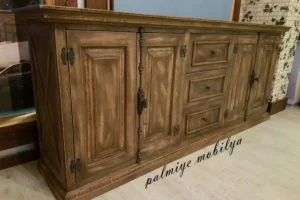

Mass Production Wood Doors
Ultimate Guide to Mass Production Wood Doors: Advanced Materials Engineering, Automated Manufacturing, and Global Procurement Architecture
The global real estate development, commercial construction, and hospitality sectors operate within an architectural landscape where scalability, mechanical performance, structural longevity, and cost efficiency must align perfectly. In modern multi-family residential towers, expansive corporate campuses, grand resort complexes, and state-of-the-art institutional buildings, interior and exterior door openings are not merely decorative elements. They represent critical spatial barriers engineered to regulate acoustic insulation, control automated fire containment zones, resist continuous mechanical impacts, and maintain indoor air quality compliance.
To satisfy these demanding architectural requirements across thousands of identical openings without sacrificing the prestige, warmth, and organic tactile luxury of natural timber, the international construction industry relies on high-capacity mass production wood doors. Sourcing these complex architectural assets at scale demands a deep understanding of computerized woodworking automation, advanced wood science, international testing standards, and highly optimized supply-chain architectures.
This comprehensive technical guide provides an exhaustive analysis of the material engineering, manufacturing workflows, technical performance metrics, and global procurement architectures that govern the deployment of high-performance mass production wood doors.
1. Macroeconomics and Industrial Scaling of Mass Production Wood Doors
To appreciate the market dominance of mass production wood doors in contemporary architecture, one must evaluate how industrial automation transformed traditional, low-yield carpentry into a high-throughput, high-precision manufacturing discipline. Historically, solid timber joinery was a slow, artisan-driven practice vulnerable to manual measurement variances and natural structural defects. Modern manufacturing has redefined this landscape, allowing factories to output thousands of premium units daily while maintaining sub-millimeter tolerances.
The Shift from Artisan Joinery to Automated Scaling
The primary driver behind the global ascendancy of mass production wood doors is the synchronization of advanced computer-integrated manufacturing (CIM) with massive material processing matrices. Modern mega-factories can process raw logs or calibrated timber bundles into completely finished, hardware-ready door assemblies in a fraction of the time required by traditional methods. This transition guarantees:
- Sub-Millimeter Dimensional Consistency: Automated lines eliminate human tracking errors, ensuring door number 1 matches door number 10,000 within margins of less than ±0.1mm.
- Optimized Material Utilization: Computer-guided scanning optimization software analyzes wood grains in real time, executing cuts that maximize yield and minimize waste, directly lowering the overall cost base.
- Compressed Construction Lifecycles: High-speed continuous manufacturing allows developers to source full container loads of pre-hung, pre-finished door assemblies matching strict critical-path schedules.
Global Sourcing Clusters and Economic Drivers
The manufacturing infrastructure for mass production wood doors is concentrated within specialized industrial clusters across strategic global regions, notably in Euro-Mediterranean hubs like Turkey, Central European manufacturing centers, and high-volume North American sectors. These clusters thrive due to specific structural advantages:
- Vertical Integration: Colocated timber-milling complexes, chemical formulation labs, and hardware production lines reduce intermediate transport costs and streamline quality assurance.
- Advanced Automation Capitalization: Heavy investment in multi-million dollar automated processing lines, continuous hydraulic pressing matrices, and robotic spray-finishing cells allows factories to maintain high output speeds and cost-effective operations.
- Trade Harmonization and Compliance: Leading manufacturing nodes operate under international frameworks like the ISO 9001 quality management structure and European Union Technical Standards (EN), simplifying customs clearance and regulatory approvals across global borders.
2. Material Science and Core Engineering of Mass Production Wood Doors
A fundamental misconception in the construction industry is that a high-performance door must consist of a single, continuous slab of raw lumber cut directly from a tree flitch. In reality, a single piece of raw timber will naturally twist, bow, and split due to internal moisture stresses. High-performance mass production wood doors utilize advanced engineered wood science to achieve true structural solidity while completely eliminating natural wood movements.
The Mechanics of Internal Volumetric Stress
Wood is a hygroscopic material. It naturally absorbs and releases moisture to maintain an equilibrium moisture content (EMC) with the surrounding atmosphere. This process triggers dimensional movement along three distinct orientations:
\(\text{Tangential\ Expansion}>\text{Radial\ Expansion}>\text{Longitudinal\ Expansion}\)
When an un-engineered solid wood slab experiences seasonal relative humidity (RH) shifts, the exterior cell layers dry or wet faster than the deep core cells. This differential tension generates severe internal mechanical stress, causing the door leaf to warp within its frame rebate, making it stick or fail to latch. To solve this problem, mass production lines re-engineer the internal core layout.
[Premium Hardwood Veneer, Solid Wood Lamella, or Architectural HPL Face]
                                │
                                ▼
    [Moisture-Resistant High-Density Fiberboard (HDF) Substrate Skin]
                                │
                                ▼
    [Engineered Core: Finger-Jointed Timber Core or Solid Flaxboard Core]
                                │
                                ▼
    [Solid Hardwood Edge Banding / High-Impact Post-Formed Protective Edges]
Advanced Core Architectural Formulations
To ensure longevity, mass production wood doors utilize distinct engineered core configurations designed to balance weight, impact resistance, and dimensional stability.
1. Engineered Finger-Jointed Solid Core
This layout represents the gold standard for premium, heavy-duty interior and exterior applications.
- The Process: Raw softwood or medium-density hardwood timber planks are sliced into small structural blocks. Advanced optoelectronic scanner cells detect and isolate natural defects like loose knots, pitch pockets, or micro-cracks, which are instantly cut away by high-speed cross-cut saws. The remaining pristine blocks are re-assembled using interlocking finger-joint cuts and bonded under high pressure with structural D4 polyurethane or exterior-grade PVAc adhesives.
- The Mechanics: The finger-jointed blocks are laid out sequentially with their natural growth rings alternating direction. When humidity shifts occur, the internal expansion vectors of adjacent blocks push directly against one another, neutralizing internal stress and keeping the door leaf flat and structurally sound.
2. Solid Flaxboard and Particleboard Cores (Sauerland Spanplatte System)
Widely specified for high-performance hospitality, commercial office, and multi-family residential interior doors where uniform density, acoustic isolation, and fire rating are core project parameters.
- The Process: Calibrated wood chips, flax shives, or agricultural fibers are mixed with low-emission synthetic resins and compressed under intense heat and hydraulic pressure into a solid, continuous multi-density core.
- The Mechanics: This manufacturing technique yields a completely homogeneous internal core free of internal voids, grain lines, or directional growth orientations. As a result, solid flaxboard cores possess zero natural directionality, making them exceptionally stable and highly resistant to warping or indentation.
3. Three-Layer Solid Timber Lamella Core
Reserved for luxury main entrances, executive corporate suites, and oversized heavy-duty exterior entryways.
- The Process: The door core consists of three solid timber sheets pressed together under immense pressure. The inner center layer runs horizontally (perpendicular), while the two outer face layers run vertically.
- The Mechanics: This cross-ply configuration limits the volumetric expansion of the wood fibers, allowing the door to maintain its precise dimensions even when exposed to severe climate variations.
3. Surface Finishing Technologies and Protective Armoring
The exterior face layer of mass production wood doors defines both the visual style and the surface durability of the product. Industrial finishing lines use high-precision processes to apply real wood aesthetics or high-durability polymer armoring over the stable engineered core.
Natural Wood Veneering and Splicing Artistry
For projects requiring the authentic texture and prestigious look of premium hardwoods like Walnut, Oak, Ash, or Teak, automated veneering lines apply thin sheets of natural timber (typically 0.6mm to 2.0mm thick) over an HDF stabilizing substrate.
- Automated Book Matching: High-speed veneer slicing stations cut sequential sheets from a single log flitch. Robotic splicing lines flip every second sheet over like a page in a book, creating a perfectly symmetrical, mirrored grain pattern across the door face. This approach emphasizes the wood’s natural cathedral shapes and organic movements.
- Slip Matching Layouts: Sequential veneer sheets are laid out side-by-side without flipping, producing a clean, uniform vertical grain pattern with subtle color shifts. This look is highly favored for modern, minimalist architectural concepts.
High-Pressure Laminate (HPL) and CPL Protective Armor
For heavy-traffic institutional, healthcare, or educational settings, natural wood veneers are often replaced with commercial-grade High-Pressure Laminate (HPL) or Continuous Pressure Laminate (CPL) skins.
- Composition: Multiple layers of kraft paper soaked in phenolic resins are fused with a printed decorative sheet under intense heat and pressure, creating an ultra-dense, completely non-porous face skin.
- Performance: HPL skins make mass production wood doors completely scratch-resistant, graffiti-proof, and chemically inert to strong hospital-grade disinfectants, bleaching agents, and everyday impacts.
Robotic Coating and UV-Curing Lines
To seal wood pores and guard against mechanical wear, moisture absorption, and UV fading, doors enter fully enclosed, dust-free finishing cells.
[Multi-Station Wide-Belt Micro-Sanding (180 to 320 Grit)]
                            │
                            ▼
[Robotic Reciprocating Spray: High-Build Sealer Coating Application]
                            │
                            ▼
[Automated Infrared (IR) Flash-Off & Thermal Equalization Tunnel]
                            │
                            ▼
[Ultra-Violet (UV) Robotic Laser Curing Chamber (Instant Solidification)]
                            │
                            ▼
[Final Clean-Room Visual Inspection & Protective Peel-Film Application]
- Micro-Sanding: The door leaves pass through multi-head wide-belt sanding machines equipped with optoelectronic thickness barriers, sanding the faces down smoothly to sub-millimeter tolerances.
- Robotic Spray Application: Computer-controlled spray arms move across the doors, applying uniform coats of polyurethane, acrylic, or water-based primers and clear coats. This automated process ensures consistent layer thickness across the flat surfaces and detailed edge profiles.
- Instantaneous UV Curing: The coated doors pass through ultra-violet radiation tunnels. The UV light triggers an instant cross-linking chemical reaction within the specialized coatings, curing the finish to full hardness in seconds. This allows the doors to be immediately stacked, packed, and palletized without risk of surface smudging or wet paint damage.
4. Technical Performance Metrics: Acoustics, Fire Safety, and Security
In modern commercial and residential construction, architectural doors must deliver certified performance alongside high aesthetic appeal. High-performance mass production wood doors are systematically engineered, tested, and certified by international accredited laboratories—such as Warringtonfire (Certifire), Efectis, Intertek, and SGS—to satisfy strict global building codes.
Acoustic Isolation Performance (\(R_{w}\) / STC Ratings)
Controlling noise transfer between spaces is critical for luxury hotel guestrooms, multi-family apartment units, clinical consulting rooms, and educational spaces. The dense, homogeneous core structures of mass production wood doors make them exceptional acoustic barriers conforming to international standard EN ISO 10140-2.
- Standard Interior Configuration (32 dB to 35 dB): Achieved by combining a solid engineered core with a single perimeter EPDM gasket and an automatic mechanical drop-down seal integrated into the bottom edge of the door leaf.
- High Acoustic Isolation Configuration (38 dB to 45 dB+): Utilizes multi-layer composite cores incorporating dense solid flaxboard, heavy sound-damping polymer membranes, and natural acoustic cork inserts, all supported by double-perimeter compression seals and specialized threshold systems.
Certified Fire Containment (FD30 to FD120 / EI30 to EI120)
Fire-rated doors serve as critical life-safety assets, isolating building zones into distinct thermal containment cells to halt the spread of fire and toxic smoke. Mass production lines fabricate certified assemblies conforming to European Standard EN 1634-1 and British Standard BS 476-22.
- FD30 / EI30 (30-Minute Fire Rated): Typically specified for standard apartment entrance doors and classroom openings. Built with an engineered solid core wrapped in a fire-retardant structural frame and finished with wood veneer or heavy HPL.
- FD60 / EI60 to FD90 / EI90 (60 to 90-Minute Fire Rated): Required for mechanical vaults, commercial kitchens, service shafts, and main emergency exit corridors. These doors incorporate non-combustible calcium silicate boards within the core structure, heavy-duty intumescent seals along the perimeter rebates, and fire-certified hardware components.
Intumescent Expansion Sealing Mechanics
To prevent smoke and heat from bypassing the door assembly, high-performance doors rely on intumescent graphite strips hidden within routed slots along the frame rebates or leaf edges. Under normal conditions, these strips remain flat, maintaining standard operating clearances.
When ambient temperatures exceed 150°C during a fire event, the intumescent material expands rapidly up to 25 times its original volume. This forms a rigid, non-combustible carbon seal that completely fills all gaps, blocking the passage of dangerous smoke, carbon monoxide, and direct flames.
5. Industrial CAD/CAM Engineering and Hardware Integration
The real value of mass production wood doors is realized during field installation. Traditional solid wood doors often require time-consuming manual planing, routing, and drilling on the active construction site. Mass-produced technical doors completely eliminate this field labor through comprehensive industrial CAD/CAM integration.
Sub-Millimeter CNC Hardware Prep
Before moving to the finishing lines, every door leaf enters fully automated 5-axis CNC machining bays. Digital templates derived from the project’s architectural door schedules instruct the milling heads to cut precise pockets for:
- Concealed 3D-adjustable hinges or heavy-duty continuous butt hinges.
- Multi-point security lock cases, silent magnetic latch systems, or electronic hotel card locks.
- Internal wire-routing channels that connect the hinge side to the lock body for seamless integration of smart access control cards, biometric fingerprint readers, and remote electronic lockdown networks.
Because these cutouts are routed under computer control to tight tolerances (within \(\pm0.1\text{mm}\)), all hardware components fit perfectly at the factory or on-site, accelerating installation schedules and cutting field labor costs.
+------------------------------------------------------------------------------------+

|                        HARDWARE ROUTING TOLERANCE SPECIFICATIONS                   |
+---------------------+-----------------------+--------------------------------------+

| Component Pocket    | Target Depth (mm)     | Industrial CNC Tolerance Matrix      |
+---------------------+-----------------------+--------------------------------------+

| Hidden Hinge Case   | 35.0                  | ±0.05 mm                             |
| Magnetic Lock Body  | 90.0                  | ±0.10 mm                             |
| Drop-Down Floor Seal| 42.0                  | ±0.08 mm                             |
| Euro Cylinder Track | Flush Face            | ±0.05 mm                             |
+---------------------+-----------------------+--------------------------------------+
Pre-Hung and Knock-Down (KD) Framing Systems
To streamline logistics and deployment, high-capacity mass production lines manufacture integrated door framing systems optimized for fast installation:
- Telescopic Adjustable Frames: Constructed using multi-layer engineered wood or extruded aluminum, these frames feature a smart telescopic architrave design. This configuration allows the frame depth to expand or contract dynamically to match variable wall thicknesses on-site, speeding up installation and compensating for minor drywall or masonry alignment variances.
- Wrap-Around Steel Frames: For heavy-duty commercial and institutional environments, frames are stamped from 1.5mm hot-dip galvanized steel sheets, featuring continuously welded miter joints and heavy anchor plates designed to lock firmly into structural stud walls.
6. Sustainable Sourcing, Forest Management, and Green Building Certifications
As global environmental compliance standards grow more stringent, real estate developers and institutional builders must ensure that structural timber products do not contribute to deforestation or poor indoor air quality. The manufacturing lines for mass production wood doors operate under strict international environmental frameworks.
Chain-of-Custody Tracking
Leading mass production facilities maintain rigorous chain-of-custody tracking systems certified by global environmental bodies:
- FSC (Forest Stewardship Council) Certification: Guarantees that every wood fiber utilized within the finger-jointed core, the stabilizing HDF skins, and the face veneers can be tracked back through every step of the supply chain to a responsibly managed forest source. Sourcing FSC-certified products provides valuable credits for projects seeking LEED, BREEAM, or DGNB green building certifications.
- PEFC (Programme for the Endorsement of Forest Certification): Validates that timber extraction balances ecological preservation with local economic sustainability, ensuring responsible natural resource management.
Safeguarding Indoor Air Quality (Low VOC & Formaldehyde Standards)
Because people spend hours inside enclosed residential and commercial spaces, protecting indoor air quality is a key health consideration. Modern door manufacturing addresses this through clean material standards:
- E1 and E0 Compliance: All composite wood sheets and structural core binders are formulated with advanced low-emission resins that meet or exceed European E1 standards and California Air Resources Board (CARB Phase 2) rules, preventing harmful formaldehyde off-gassing.
- Non-Toxic Surface Treatments: Industrial priming and lacquering compounds are certified free of dangerous heavy metals and volatile organic compounds (VOCs), ensuring a safe indoor environment for occupants.
7. Global Sourcing Architecture: Tender Specs to Container Logistics
Procuring a shipment of mass production wood doors for a major international project requires a structured procurement process to ensure all technical specifications are executed accurately from architectural drawings to final site delivery.
[Phase 1: Tender Specification & BoQ Review]
                      │
                      ▼
[Phase 2: CAD Shop Drawings & 3D BIM Modeling]
                      │
                      ▼
[Phase 3: Material Sample & Mock-Up Validation]
                      │
                      ▼
[Phase 4: Factory Mass Production & Quality Inspection Gates]
                      │
                      ▼
[Phase 5: Heavy-Duty Industrial Packaging & Container Freight Logistics]
Step 1: Detailed Specifications and BoQ Review
The procurement lifecycle begins with an exhaustive evaluation of project documentation:
- Bill of Quantities (BoQ) Analysis: The developer provides full door schedules detailing clear structural wall openings, partition depths, swing configurations, fire/acoustic performance targets, hardware sets, and finish styles.
- BIM Modeling and CAD Submittals: The factory’s engineering team translates these parameters into detailed 2D CAD shop drawings and 3D BIM models illustrating exact jamb layouts, wall anchoring points, and clearances for client approval.
Step 2: Material Sampling and Prototype Mock-Ups
Given the natural variations inherent to timber, establishing clear appearance boundaries is an important step before starting mass production.
- Finish Range Boards: The factory prepares physical sample boards displaying the minimum, median, and maximum natural variations in grain texture and color under the chosen stain or lacquer option.
- Full-Scale Project Mock-Ups: For large projects, manufacturers can build a complete, full-scale mock-up door assembly—complete with frame, architraves, and hardware. This allows the design team to evaluate tolerances, structural rigidity, and aesthetics before authorizing full mass production.
Step 3: Factory Production and Quality Gates
During mass production, quality control teams enforce strict inspection gates across several production milestones:
- Gate 1 (Moisture Verification): Digital pinless moisture meters check all incoming core blocks post-kiln drying to ensure they fall strictly within the required 8% to 10% (±2%) moisture window.
- Gate 2 (Finish Adhesion Testing): Completed surfaces undergo cross-hatch adhesion and impact testing to confirm the long-term durability of the protective topcoat.
- Gate 3 (Dimensional Tolerances): Calibrated laser measurement tools verify the flatness, squareness, and thickness of each door leaf to ensure alignment with specifications.
Step 4: Industrial Packaging and Container Freight Logistics
To protect mass-produced solid doors from mechanical impacts, humidity fluctuations, and maritime moisture during long-distance transport, manufacturers use specialized packaging systems:
- Surface Protection: Each finished door leaf is wrapped in a heavy-duty layer of protective expanded polyethylene (EPE) foam to prevent surface scratching.
- Edge Barriers: Rigid, reinforced multi-layer cardboard or molded plastic protectors are applied to all corners and edges of the door leaf.
- Palletization: The doors are stacked flat on heavy-duty, heat-treated, ISPM-15 compliant wooden pallets, securely strapped with high-tensile poly bands, and fully wrapped in industrial stretch film.
- Container Optimization: For sea freight, moisture-absorbing silica gel desiccant bags are distributed throughout the shipping container to prevent condensation and moisture buildup during oceanic transit.
8. Procurement Analysis: Sourcing Categorization and Cost Realities
When managing high-volume architectural budgets, commercial procurement officers frequently evaluate engineered mass production wood doors against alternative structural solutions.
+------------------------------------------------------------------------------------+

|                        PRODUCT LIFECYCLE VALUE PROFILES                           |
+-------------------+-----------------+--------------------+-------------------------+

| Product Category  | Structural      | Acoustic & Fire    | Total Project Value     |
|                   | Integrity       | Containment Certs  | Lifecycle Yield         |
+-------------------+-----------------+--------------------+-------------------------+

| Artisan Carpentry | Volatile/Variable| Seldom Certified   | Low (Exorbitant Labor)  |
| Hollow-Core Flush | Poor/Fragile    | Non-Compliant      | Low (Frequent Replace)  |
| Mass Prod. Wood   | High/Stable     | Fully Documented   | Exceptional Balance     |
+-------------------+-----------------+--------------------+-------------------------+
Mass Production Engineered Units vs. Custom Artisan Sourcing
Bespoke manual woodwork commands premium artistic appeal, but cannot fulfill the strict velocity demands or uniform tolerance matrices required by multi-unit infrastructure developments. Manual shop carpentry is vulnerable to localized measurement errors, human execution discrepancies, and natural wood movement under atmospheric exposure.
Furthermore, standalone workshops rarely possess the specialized laboratory credentials to provide validated fire and acoustic containment documents. Industrialized mass production wood doors eliminate these limitations, guaranteeing absolute mechanical consistency across thousands of units alongside lower baseline capital expenditures.
Mass Production Engineered Units vs. Hollow-Core Commodities
Lightweight hollow-core or cardboard-honeycomb entries reduce immediate delivery costs but fail quickly under standard real-world usage cycles. They exhibit minimal sound dampening properties, can puncture under moderate localized impacts, and quickly warp or delaminate when exposed to localized temperature and humidity drops.
Transitioning to mass-produced solid engineered wooden doors provides reliable long-term durability, built-in thermal and sound barrier properties, and an elevated physical tactile weight that increases the long-term asset evaluation of any commercial development.
9. Comprehensive Installation Guidelines and Lifetime Maintenance
The long-term performance of mass production wood doors depends significantly on proper installation and consistent maintenance. Adhering to professional installation and care standards ensures the doors perform reliably for decades.
Site Readiness and Acclimatization Rules
- Wet Trade Verification: Doors must never be brought on-site while wet trades—such as drywall taping, plastering, tiling, or concrete pouring—are active. The indoor relative humidity must be stabilized between 40% and 60%, and the ambient temperature maintained between 15°C and 25°C.
- Acclimatization: Unpacked door leaves should be stored completely flat on level supports within their final installation environment for at least 48 to 72 hours prior to hanging, allowing the wood’s cellular structure to adapt to the local atmospheric equilibrium.
Frame Installation and Alignment
- Structural Leveling: Door frames must be anchored into wall openings using heavy-duty fixing screws countersunk behind hinge leaves and strike plates. Installers must use precise spirit levels or digital laser measures to ensure the jambs are plumb, square, and free of twists.
- Fixing Foam: The gap between the structural wall opening and the door frame should be filled with high-quality, low-expansion polyurethane foam. High-expansion foams must be avoided, as they can exert excessive pressure, bowing the frame inward and causing the door leaf to bind.
Long-Term Finish Preservation and Cleaning
- Routine Cleaning: Surfaces should be cleaned using a soft, dry or slightly damp lint-free microfiber cloth with a highly diluted, pH-neutral wood soap. Harsh chemical cleaners, abrasive pads, bleach, ammonia, and high-pressure steam cleaners will damage the protective finish and must never be used.
- Moisture Protection: Any water exposure along the bottom edges of doors installed in high-humidity environments—such as bathrooms or exterior entryways—must be wiped dry immediately.
- Finish Maintenance: For doors exposed to regular direct sunlight or heavy commercial wear, the protective finish should be inspected annually. If fine micro-cracks or dulling are observed, a light sanding with fine 320-grit paper followed by a fresh topcoat of matching premium sealer or lacquer will preserve the underlying components and maintain its premium appearance.
10. Summary and Strategic Sourcing Recommendations
High-performance mass production wood doors represent an exceptional balance of material luxury, precise manufacturing engineering, and reliable industrial output. By leveraging advanced material sciences and partnering with certified global manufacturers, international buyers can procure high-performance joinery that enhances both the durability and design value of any commercial or premium residential development.
When preparing a procurement strategy for mass production wood doors, ensure your team integrates these steps:
- Select manufacturers holding valid FSC/PEFC chain-of-custody records alongside ISO 9001 quality management certificates.
- Require accredited international laboratory reports validating all specified fire, acoustic, and mechanical performance criteria.
- Utilize a formal submittal process with physical sample boards to define and approve natural variations and finish options before greenlighting full-scale factory production.
Investing in mass production wood doors ensures access to exceptional structural longevity, certified technical performance, and a refined architectural aesthetic, setting a premium standard for modern construction projects worldwide.
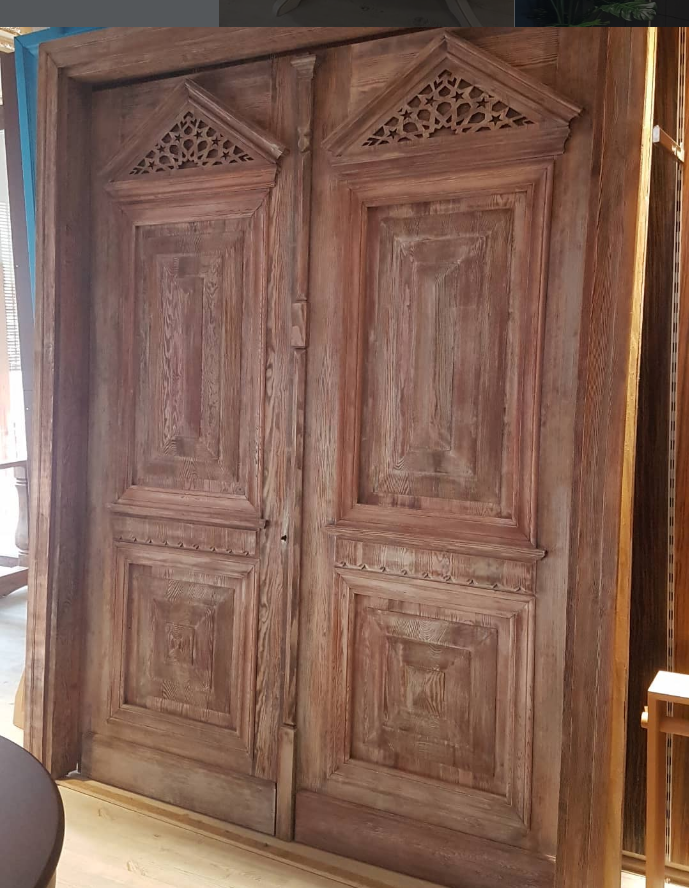
Butik Otel Mobilyaları
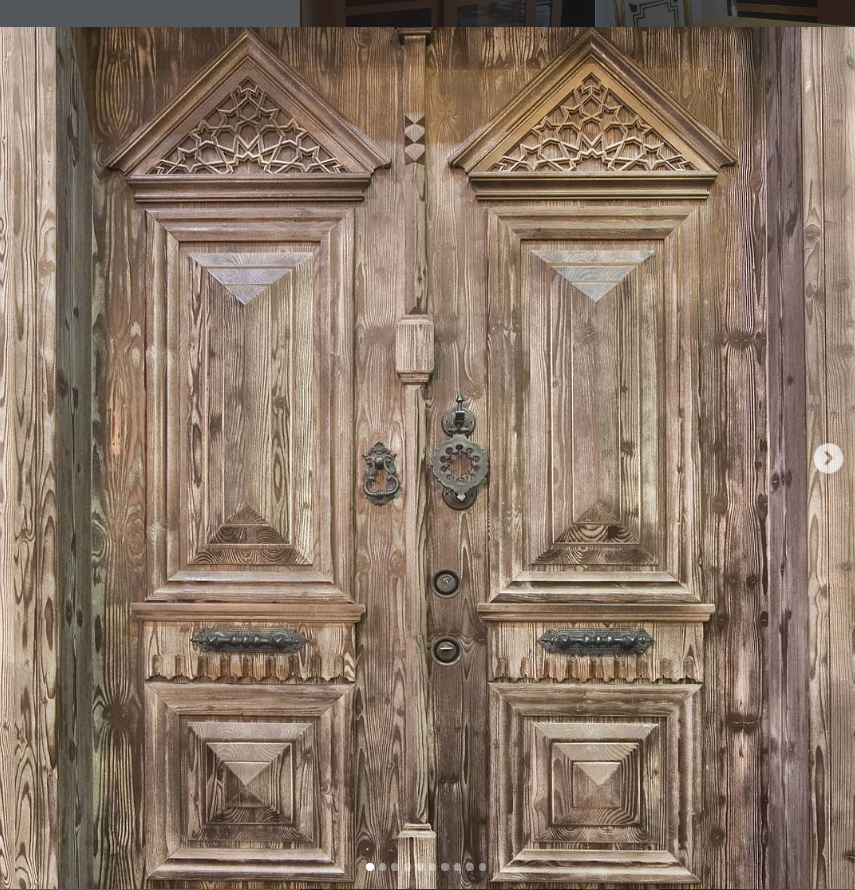
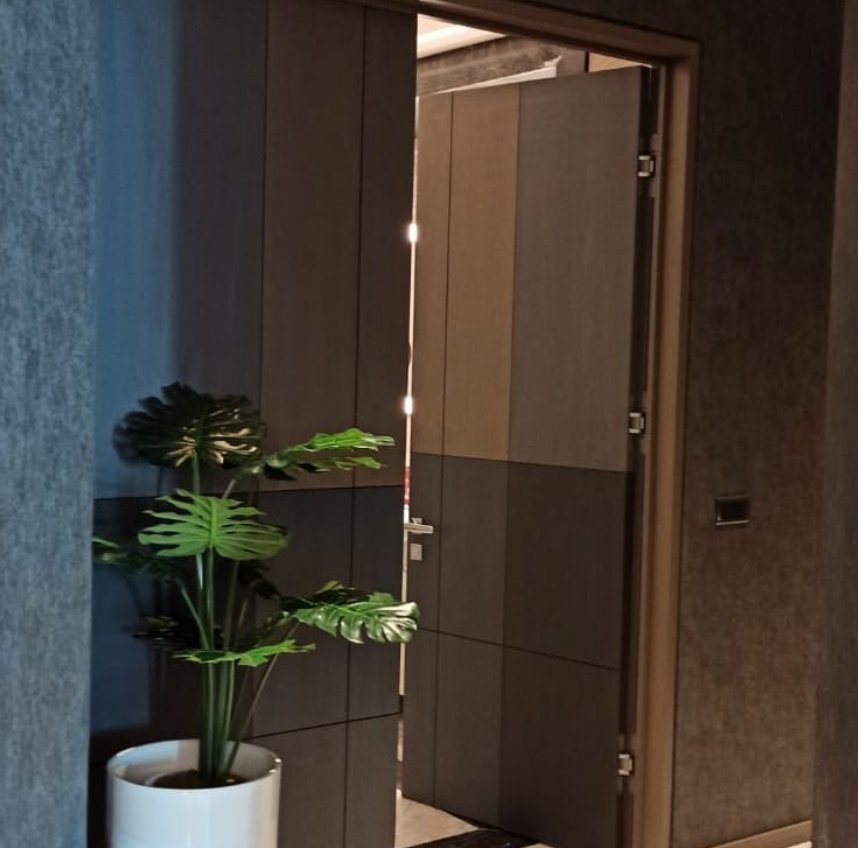
Butik Otel Mobilyaları

Butik Otel Mobilyaları


Şunları da sevebilirsiniz
Mass Production Solid Furniture

Solid Wood Furniture Production Turkey