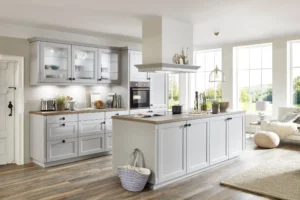

Ready-Made Kitchen Cabinet Turkey
Ready-Made Kitchen Cabinet Turkey: The Definitive Guide to Modular Engineering, Material Science, and Global Procurement Logistics
Introduction: The Industrial Metamorphosis of Modular Sourcing
In the landscape of modern residential architecture and commercial property development, the kitchen has undergone a profound spatial transformation. No longer treated as an isolated, hidden service room, it has emerged as the central design anchor, social hub, and primary equity-driving zone of the contemporary home. This evolution demands cabinetry that balances sophisticated design aesthetics with long-term material durability. For international interior architects, real estate developers, and high-volume furniture distributors, establishing a reliable supply chain for a Ready-Made Kitchen Cabinet Turkey project has emerged as a premier strategy to optimize project timelines, control material expenditures, and maintain uncompromising build quality.
The physical and mechanical demands placed on modular kitchen furniture are exceptionally high. Unlike cabinetry destined for dry areas of the residential structure, a kitchen vanity operates within a punishing microclimate characterized by rapid fluctuations in relative humidity, frequent temperature swings, direct water exposure, and airborne chemical vapors from high-temperature cooking grease. Furthermore, ready-made or flat-pack (Knocked-Down) systems introduce distinct structural challenges. Because these modules are mass-produced and shipped globally, they must rely on precise structural engineering tolerances, standardized sizing grids, universal hardware boring templates, and robust connection fittings to ensure that non-specialized local labor can assemble them without compromising squareness or load-bearing capability.
Turkey’s modern manufacturing infrastructure has established itself as an absolute global leader in this specialized sector. By combining centuries of Mediterranean woodworking heritage with top-tier German and Italian multi-axis automated computer-numeric-control (CNC) machining lines, Turkish factories produce modular cabinetry that satisfies rigorous European build standards while maintaining a highly competitive structural cost advantage. This comprehensive technical guide analyzes the regional manufacturing clusters, substrate material engineering, surface finish chemistry, precise modular dimensions, assembly hardware mechanics, and international procurement logistics that define the premium market for a Ready-Made Kitchen Cabinet Turkey build.
1. The Turkish Manufacturing Infrastructure: Industrial Clusters and Scale Mechanics
To understand the logistical efficiency and cost competitiveness of the Ready-Made Kitchen Cabinet Turkey export pipeline, one must examine the country’s specialized industrial geography. Turkey’s furniture sector is organized into advanced manufacturing clusters, with each region specializing in specific production techniques, raw material processing paths, and volume capabilities.
+-----------------------------------------------------------------+

|         TURKISH READY-MADE KITCHEN MANUFACTURING CLUSTERS       |
+-----------------------------------------------------------------+

|  [Kayseri Cluster]      ---> Ultra-Scale Automated Flat-Pack    |
|  [İnegöl Hub]           ---> Mass-Customization & Engineered Wood|
|  [İstanbul Ecosystem]   ---> Architectural Modular Custom Run   |
|  [Aegean/İzmir Zone]    ---> High-Efficiency Modern Port Export |
+-----------------------------------------------------------------+
The Kayseri Industrial Cluster (The Scale Giant)
Kayseri hosts some of the largest, highly automated furniture production facilities in Eastern Europe and the Middle East. These factories are characterized by multi-acre under-roof automated lines featuring computerized high-capacity beam saws, continuous through-feed edge-banders, and robotic multi-spindle drilling centers. Kayseri is the primary sourcing zone for large-scale commercial contracts—such as outfitting massive multi-family residential towers, student housing developments, or global retail distribution networks that require tens of thousands of uniform Ready-Made Kitchen Cabinet Turkey components with absolute dimensional consistency.
The İnegöl Furniture Ecosystem (Bursa Province)
İnegöl is an international woodworking center with a long heritage of carpentry craftsmanship. This region excels at blending automated mass production with flexible customization. Factories here focus on processing premium substrates, multi-layer veneering, and complex transitional modular designs. It is a key hub for mid-to-high-end implementations of a Ready-Made Kitchen Cabinet Turkey run where developers seek modular speed but require premium finishes like real wood veneers or multi-coat catalyzed lacquers.
The İstanbul Design and Corporate Hub
İstanbul serves as the engineering and technical hub for bespoke modular layouts. Advanced factories in the industrial outskirts of İstanbul specialize in transforming complex architectural drawings into modular components. These workshops integrate advanced smart home technologies, built-in sensor lighting pathways, and premium European motion hardware directly into standard ready-made configurations, making it a primary sourcing center for luxury property developments.
The Aegean and İzmir Export Corridor
The western coast of Turkey, centered around İzmir, leverages excellent port access and proximity to European sea lanes. Factories in this zone specialize in high-efficiency manufacturing of contemporary minimalist cabinetry, utilizing advanced automated edge-banding technology and flat-pack packaging engineering optimized for rapid ocean and land container shipping logistics.
2. Core Substrate Material Science: Engineering the Structural Foundation
The ultimate lifespan, screw-holding power, and deflection resistance of any Ready-Made Kitchen Cabinet Turkey unit rely entirely on the quality of its underlying core substrate. Because ready-made units are shipped flat and assembled under tension on-site, the structural panels must possess specific mechanical properties to handle connection stresses without fracturing.
       CORE RESILIENCE SPECTRUM (Value Tier to Premium Luxury)
 ┌───────────────────┬───────────────────┬───────────────────┐
 │ High-Density PB   │ Green MR-MDF      │ Multi-Ply Plywood │
 │ Value Base Cost   │ Mid-Tier Premium  │ Top Luxury Cost   │
 │ (Carcasses/Boxes) │ (Routered Doors)  │ (Heavy Load Zones)│
 └───────────────────┴───────────────────┴───────────────────┘
High-Density Melamine-Faced Chipboard (MFC / Particleboard)
- Chemical Composition: Formed by compressing refined wood chips, shavings, and particles with synthetic resins under intense hydraulic heat and pressure. The face is permanently sealed on both sides with a resin-impregnated decorative paper sheet under short-cycle hot presses.
- Performance Parameters: For cabinet boxes (carcasses) used in high-volume commercial developments, premium Turkish factories utilize high-density MFC with a density ranging from 620 to 680 kg/m³. It provides flat, easy-to-clean interior walls while keeping costs competitive. To guarantee strict compliance with international indoor air quality laws, reputable factories use Super-E0 or E1 certified boards, ensuring formaldehyde emissions remain safely below 0.1 ppm.
Moisture-Resistant Medium Density Fiberboard (MR-MDF / Green Core)
- Chemical Composition: Formed by blending fine wood fibers with hydrophobic wax emulsions and moisture-resistant polyurethane or melamine-urea-formaldehyde resins before hot-pressing. The core is often tinted green during production for straightforward field identification.
- Performance Parameters: Features a uniform, dense core profile (ranging from 720 to 820 kg/m³) with zero internal void spaces. This structural density allows 3-axis CNC routers to cut complex Shaker profiles or integrated J-pull handle grooves into the door fronts without fraying the fibers. It features a low thickness swelling rate (typically under 6% when submerged for 24 hours), making it an excellent substrate choice for a long-lasting Ready-Made Kitchen Cabinet Turkey door panel.
Multi-Ply Birch Plywood (Su Kontrası)
- Chemical Composition: Constructed by laminating thin sheets of high-density birch veneers at alternating 90-degree grain angles. The layers are bonded under intense hydraulic heat and pressure using completely waterproof phenolic or polyurethane cross-linking adhesives.
- Performance Parameters: Does not delaminate, twist, or split when exposed to direct water contact or boiling steam. Plywood offers exceptional screw-holding strength, ensuring heavy-duty hinges and drawer slides remain securely anchored over decades of heavy daily use. It represents the pinnacle of the luxury cost bracket, specified for high-end ready-made lines targeting areas prone to plumbing leaks, such as sink base cabinetry.
3. Surface Finishing Technologies: Shields Against Water, Steam, and Heat
The exterior finish applied to a Ready-Made Kitchen Cabinet Turkey face serves as the primary aesthetic statement and acts as the defensive shield protecting the core substrate. Sourcing modular cabinetry from Turkey provides access to advanced industrial surface treatments.
| Finishing Process | Substrate Compatibility | Liquid Impermeability | Scratch Resistance | Design Aesthetics |
|---|---|---|---|---|
| Melamine Direct Lamination | High-Density Chipboard | High (Faces only) | High | Flat colors; standard faux wood grain prints |
| Vacuum Membrane Thermoform | Routered MR-MDF | Perfect on face/edges | High | Seamless 3D profiles, tactile textures, easy-clean |
| High-Pressure Laminate (HPL) | Flat MR-MDF / PB | High (Requires edge-bands) | Extremely High | Ultra-durable color block, faux stone or metal |
| Catalyzed Polyurethane Lacquer | Homogenous MR-MDF | Excellent (Seamless) | Medium-High | Seamless matte, satin, or mirror high-gloss |
Melamine Direct Lamination (The Value Baseline)
This tier serves as the economy baseline for ready-made lines. The faces are highly scratch-resistant and easy to clean, but the exposed perimeter edges must be sealed with PVC or ABS edge-banding strips using hot-melt adhesives. While highly cost-effective, its application is generally limited to flat-front modern doors or internal cabinet boxes due to the vulnerability of the edge joints if subjected to sitting pools of water.
Vacuum Membrane Thermoforming (The Mid-Market Standard)
Operating at a premium mid-market cost tier, thermoform technology utilizes automated membrane presses to wrap a continuous sheet of rigid PVC or PET foil over a profile-routered MR-MDF door. Because the foil wraps around the front face and sides seamlessly from a single piece, it completely eliminates edge-band lines, offering excellent moisture protection for transitional Shaker styles at a highly scalable commercial price point.
High-Pressure Laminate (HPL / Continuous Pressure Laminate)
HPL doors utilize decorative papers bonded with phenolic resins under high pressure to form a thick, impact-resistant outer shell. Premium variants processed in Turkey feature advanced electron-beam cured (EBC) surfaces that provide ultra-matte finishes with anti-fingerprint properties and thermal healing capabilities, allowing micro-scratches to be repaired with a damp cloth and a standard home iron. These flat panels require advanced laser edge-banding to maintain a zero-joint look.
Catalyzed Polyurethane Lacquer (The Luxury Tier)
A premium lacquer finish is highly labor-intensive and represents the luxury tier of the Ready-Made Kitchen Cabinet Turkey market. The core MR-MDF panel undergoes a multi-layer chemical application process: an isolation primer seals the wood fibers, two coats of high-solid polyurethane filler form a flat surface, and catalyzed acrylic color coats are cross-sprayed inside sterile cleanrooms. This multi-layered approach builds a seamless, non-porous chemical shell that wraps the front, back, and all edges of the door, completely eliminating seams where moisture can bypass the finish.
4. Precision Edge Fabrication: Laser Fusion and PUR Bonding
In ready-made modular cabinetry, the weakest point of any panel is its exposed perimeter edge. If water droplets find a path through a loose edge joint, the core substrate will expand, destroying the door alignment. Sourcing a Ready-Made Kitchen Cabinet Turkey program ensures access to two advanced industrial edge-sealing technologies.
       +---------------------------------------------------------+

       |           LASER EDGE-BANDING FUSION PROCESS             |
       +---------------------------------------------------------+

       | [Laser Diode Source] ---> Melts Functional Polymer Layer|
       | [ABS Edge Band]      ---> Pressed Directly into Core     |
       | [Resulting Interface]---> Zero-Joint, 100% Waterproof Seam|
       +---------------------------------------------------------+
Reactive Polyurethane (PUR) Edge Bonding
Standard economy edge-banders use Ethylene Vinyl Acetate (EVA) hot-melt glues, which melt inside a glue pot and adhere panels via simple physical friction. EVA glues can soften if exposed to high kitchen heat (such as escaping steam from dishwashers) and leave a visible glue line that can collect dirt over time.
Premium Turkish factories implement reactive PUR hot-melt edge-banding. PUR adhesive is applied via specialized enclosed nozzles. As it cools, it undergoes a permanent chemical cross-linking reaction with ambient moisture. Once fully cured, the PUR layer forms an inert, flexible bond that is 100% waterproof and heat-resistant, ensuring edge-bands will not peel or delaminate near range cookers or under-sink moisture zones.
Zero-Joint Laser Fusion Edge-Banding
For contemporary high-gloss and ultra-matte slab door models, top-tier Turkish production facilities utilize advanced laser fusion edge-banding systems. Instead of applying liquid glue, the machine uses a concentrated laser beam to instantly melt a co-extruded polymer functional layer on the back of a thick ABS edge-band (typically 1.0mm to 2.0mm thick). The edge-band is then pressed firmly against the panel edge, fusing the two components together at a molecular level. This process creates a seamless, zero-joint transition that is completely waterproof, heat-resistant, and visually clean, eliminating the unsightly “black line” typical of standard ready-made cabinetry.
5. Architectural Dimensional Standardization: The Sizing Grid
The defining characteristic of a Ready-Made Kitchen Cabinet Turkey system is strict adherence to international metric modular sizing standards. This standardization allows architects and developers to layout kitchen spaces using uniform building blocks that easily accommodate built-in European appliances.
+-----------------------------------------------------------------+

|            STANDARD MODULAR KITCHEN DIMENSIONAL GRID            |
+-----------------------------------------------------------------+

|  [Base Widths]  ---> 30cm | 40cm | 45cm | 60cm | 80cm | 90cm    |
|  [Box Depths]   ---> Base Boxes: 56cm  | Wall Cabinets: 33cm    |
|  [Box Heights]  ---> Base Boxes: 72cm  | Wall Cabinets: 72/90cm |
+-----------------------------------------------------------------+
Base Cabinet Modular Widths
Ready-made cabinet carcasses are manufactured in standardized horizontal width increments to facilitate seamless multi-unit layouts:
- Single-Door Narrow Units: 30cm, 40cm, and 45cm width profiles, typically utilized for pull-out spice racks, narrow trash containers, or fill-in spaces.
- Standard Appliance and Sink Units: 60cm width increments, perfectly calibrated to accept standard built-in ovens, under-counter dishwashers, and standard single-basin sinks.
- Wide Drawer Stacks and Pantry Blocks: 80cm, 90cm, and 120cm width increments, optimized for heavypots-and-pans drawer modules or large double-door pantry systems.
Standard Box Depths and Heights
To maintain optimal user ergonomics and ensure clean integration with standard countertops, the structural carcass dimensions follow fixed parameters:
- Base Cabinet Box Depth: Standardized at 56cm, leaving a clear 4cm plumbing and ventilation cavity behind the cabinet when placed against a wall, allowing for a final 60cm deep countertop slab.
- Base Cabinet Box Height: Standardized at 72cm. When paired with a standard 10cm or 15cm adjustable toe-kick plinth and a 3cm or 4cm stone countertop, the final working plane reaches an ergonomic height of 85cm to 91cm.
- Wall Cabinet Box Depth: Standardized at 33cm, ensuring that a user working at the countertop will not strike their head on the upper cabinets, while providing adequate space for standard dinner plates.
- Wall Cabinet Box Heights: Offered in standard increments of 36cm (for short over-fridge configurations), 72cm (standard height), and 90cm (extended ceiling-height runs).
6. Assembly Hardware Mechanics: The Engineering of Knocked-Down Cargo
Shipping custom pre-assembled cabinetry internationally is expensive because you are paying to transport empty air inside the cabinet boxes. A successful Ready-Made Kitchen Cabinet Turkey program relies on shipping flat-packed, Knocked-Down (KD) units that are mechanically assembled on the job site using robust interlocking hardware.
       +---------------------------------------------------------+

       |             CAM-AND-PIN FASTENER ENGAGEMENT             |
       +---------------------------------------------------------+

       | [Steel Threaded Pin] ---> Anchored into pre-bored core  |
       | [Zinc-Alloy Cam Lock]---> Dropped into intersecting path|
       | [Mechanical Torque]  ---> Rotated 180° to lock joint     |
       +---------------------------------------------------------+
The Cam-and-Pin Fastener System
The primary structural joint connecting the top, bottom, and side walls of a ready-made cabinet box relies on the classic cam-and-pin mechanical fastener system.
- The Steel Pin: A threaded steel pin is screwed directly into a factory-bored plastic sleeve embedded in the side panel of the cabinet. This design ensures that the screw threads anchor into dense plastic rather than raw wood fibers, preventing strip-out defects.
- The Zinc-Alloy Cam Lock: The side panel is pushed against the perpendicular top or bottom shelf, and the exposed head of the steel pin slides into an intersecting hole. A circular zinc-alloy cam lock is dropped into a pre-bored pocket on the shelf face. When rotated 180 degrees with a screwdriver, the eccentric spiral groove of the cam lock grabs the pin head, pulling the wooden panels together with immense mechanical force to form a rigid, square 90-degree corner joint.
Flawless Factory Pre-Boring Tolerances
Because flat-pack cabinetry leaves no room for manual modifications during site assembly, the location of every single hardware boring must be flawless. Turkish export factories utilize advanced through-feed CNC drilling lines (such as Biesse or Homag drill blocks) that drill screw pockets, dowel pathways, and hinge locations simultaneously down to fractions of a millimeter. This absolute precision ensures that on-site installers can fit matching shelves and drawers together without needing to force components or drill custom alignment holes.
7. Internal Motion Mechanics and Structural Safety Brackets
A premium Ready-Made Kitchen Cabinet Turkey unit relies on top-tier mechanical hardware to ensure smooth, effortless operation and handle the substantial weight of dense doors and stone countertops.
Under-Mount Soft-Close Drawer Runners
Premium Turkish ready-made kitchen systems reject cheap side-mounted metal rollers, utilizing instead concealed, under-mount synchronized runner tracks sourced from top-tier brands like Samet (a leading Turkish hardware manufacturer) or global leaders like Blum and Grass.
- Load Capacity and Damping: Standard drawer configurations utilize galvanized steel runners rated for dynamic weight capacities of 30kg or 40kg. Deep pots-and-pans drawers or wide pull-out pantry modules integrate upgraded heavy-duty 70kg runner tracks to prevent drawer sagging over time. These glides incorporate sealed hydraulic cylinders that slow the drawer’s momentum just before closing, ensuring it shuts silently and prevents water or fine glassware from rattling.
Three-Dimensional Micro-Adjustable Concealed Hinges
Doors are hung using concealed soft-close hinges featuring integrated oil dampers. The hardware must be certified under European standard EN ISO 9227 (enduring 48 hours of continuous salt spray testing to prevent rusting in humid environments) and rated for at least 200,000 opening cycles. Installers use integrated adjustment screws to calibrate the doors across three axes (horizontal alignment, vertical height, and inset depth) down to fractions of a millimeter, ensuring crisp, uniform door reveals.
Heavy-Duty Wall-Hanging Bracket Systems
For upper wall cabinets, structural safety and precise alignment depend entirely on the hidden bracket system inside the cabinet carcass box. High-end factories utilize heavy-duty, all-metal adjustable hanging brackets (such as Camar or Triman systems). These brackets are anchored into the cabinet side walls and hook onto a heavy steel rail bolted to the wall studs, allowing for independent micro-adjustments in height and depth while safely supporting combined weights exceeding 100kg.
8. Structural Trade Matrix: Sourcing Profiles Evaluated
To assist procurement directors and development managers in structuring their project specifications for a Ready-Made Kitchen Cabinet Turkey import program, this matrix compares the primary options across key performance vectors:
| Sourcing Profile Category | Core Substrate Selection | Face Surface Coating | Edge-Banding Technology Base | Relative Cost Index | Primary Packaging Plan |
|---|---|---|---|---|---|
| High-Volume Commercial | High-Density Melamine Chipboard | Direct Melamine Paper Skin | 0.8mm PVC Foil via EVA Glue Pot | 1.0 (Baseline Base) | Flat-Packed FCL 40ft High-Cube Containers |
| Mid-Market Premium | Moisture-Resistant Green MDF | Vacuum Membrane PET Foil | Seamless Sealed Thermofoil Face | 1.5 (Moderate Multiplier) | Flat-packed with heavy edge pulp protectors |
| High-End Contemporary | High-Density MR-MDF Core | Electron-Beam Cured Matte HPL | Zero-Joint Laser Fused ABS Band | 2.2 (High Premium Tier) | Rigid modular packing in palletized boxes |
| Luxury Heirloom Tier | Multi-Ply Marine Birch Plywood | Catalyzed Polyurethane Lacquer | Monolithic Continuous Chemical Shell | 3.4 (Top Luxury Tier) | Pre-assembled modules inside OSB wood crates |
9. Sustainability Frameworks and Eco-Compliance Standards
As sustainable building standards like LEED and BREEAM become common worldwide, the environmental credentials of furniture manufacturing are increasingly important. Sourcing a certified Ready-Made Kitchen Cabinet Turkey ensures full compliance with rigorous European ecological safety regulations.
Formaldehyde Safety Ratings (E1 vs. US EPA Title VI)
The resins used to bond engineered wood substrates can off-gas formaldehyde, which impacts indoor air quality. Certified Turkish export factories utilize substrates that carry E1 certification (European market standard limiting emissions to less than 0.1 ppm) or meet the rigorous EPA TSCA Title VI requirements for the North American market, ensuring clean, safe indoor environments.
FSC (Forest Stewardship Council) Chain of Custody
High-end manufacturers maintain an FSC Chain of Custody certification. This tracking code certifies that all logs used in the cabinetry can be traced back to managed forest plots where replanting rates equal or exceed harvesting rates.
Zero-Formaldehyde Chemical Adhesives
By implementing advanced polyurethane hot-melt (PUR) glues for edge-banding and water-based polyurethane dispersion (PUD) glues for membrane presses, premium Turkish factories eliminate urea-formaldehyde resins from their final assembly stages. This choice keeps the home’s indoor air clean and completely free of toxic chemical emissions.
10. Procurement Logistics, Customs Compliance, and Incoterms
Sourcing Ready-Made Kitchen Cabinet Turkey configurations for international residential developments or private estates involves an organized, step-by-step production and logistical process to ensure success.
+-------------+      +-------------+      +-------------+      +-------------+

| 1. Design & | ---> | 2. Automated| ---> | 3. High-Speed| ---> | 4. Quality  |
| CAD/CAM Plan|      | CNC Sawing  |      | Boring Lines|      | Toler Audit |
+-------------+      +-------------+      +-------------+      +-------------+
                                                                      |
+-------------+      +-------------+      +-------------+             |

| 7. On-Site  | <--- | 6. Sea/Land | <--- | 5. Flat-Pack| <------------+
| Assembly    |      | Freight FCL |      | KD Crating  |
+-------------+      +-------------+      +-------------+
Phase 1: Architectural Drawing and CAD/CAM Engineering
The project starts with the client’s site floor plans. Factory architects translate these room measurements into millimeter-precise production drawings using advanced software like IMOS or TopSolid Wood. This software maps out every joint, hinge boring, and panel boundary, ensuring that ready-made modules fit the architectural layout perfectly.
Phase 2: Mass Production Execution and Automated Boring
Raw substrate boards are sliced on high-capacity automated beam saws and passed immediately onto high-speed through-feed drilling centers. The panels are routered, edge-banded, and bored for assembly hardware simultaneously, with computer sensors monitoring tolerances to prevent tool wear from causing alignment errors.
Phase 3: The Factory Tolerance Audit
Before flat-pack crating is approved, random sample modules from each production lot are pulled from the line and fully assembled on the shop floor. Quality control inspectors verify:
- Complete interlocking alignment of cam-and-pin fasteners under dynamic stress.
- Hinge boring alignment and reveal tolerances between doors (typically set to a strict 1.5mm gap).
- Structural squareness of the carcass boxes across diagonal dimensions.
Phase 4: Flat-Packed Packing and Container Optimization
To minimize ocean freight costs, ready-made cabinetry is flat-packed. Components are stacked sequentially in the order of assembly, separated by sheets of expanded polystyrene (EPS) foam, and wrapped inside double-wall corrugated cardboard boxes. The box perimeters are fitted with rigid honeycombed or dense pulp edge protectors to absorb impact shocks during forklift handling. The boxes are palletized, shrink-wrapped, and strapped tightly into shipping containers, maximizing container utilization factors up to 95%.
Navigating Trade Documentation and Incoterms
- The A.TR Movement Certificate (The European Cost Advantage): For procurement managers operating within the European Union, the single greatest financial advantage of the Turkish supply chain is the A.TR Movement Certificate. Under the terms of the EU-Turkey Customs Union agreement, industrial goods—including cabinetry and furniture products—can move between Turkey and EU member states without being subject to customs duties. This duty-free status saves EU buyers between 2% and 8% in capital costs compared to importing from non-union nations.
- FOB (Free on Board – Named Port of Export): The Turkish manufacturer handles domestic production, inland transport to the port, and export customs clearance. The buyer assumes responsibility and freight costs once the shipping container is loaded onto the vessel at major deep-water ports like Ambarlı (İstanbul) or Alsancak (İzmir).
11. Technical Care, Maintenance, and Heat Shield Configuration
To ensure a premium ready-made kitchen layout maintains its finish sheen and structural balance for generations, homeowners and installers should follow a structured care and protection routine.
The Critical Role of Deflector Heat Shields
While modern cross-linked edge adhesives and polymer finishes offer excellent thermal resistance, prolonged exposure to intense heat can gradually weaken bonds. When installing a Ready-Made Kitchen Cabinet Turkey layout next to a built-in oven, dishwasher, or range cooker, installers must attach slim aluminum heat deflector shields to the front edges of the cabinet carcasses. These shields deflect escaping radiant heat and hot water vapors away from the door edges, protecting the edge-band bond during high-temperature baking or cleaning cycles.
Cleaning Chemistry Restrictions
Never use cleaning agents that contain ammonia, chlorine bleach, or abrasive scrubbing powders. These chemicals can scratch or dull high-gloss surfaces and degrade the protective clear coats of lacquered finishes. Clean cabinet surfaces using a soft microfiber cloth and a drop of pH-neutral dish soap, always wiping along the direction of the natural wood grain or flat panel surface.
Spill Mitigation along Exposed Plinths
Ready-made kitchens feature adjustable ABS plastic legs hidden behind decorative toe-kick plinths. While these legs are completely waterproof, the plinth board itself is typically made from edge-banded engineered wood. Installers must attach a clear, flexible PVC soft gasket profile to the bottom edge of the plinth board. This gasket creates a tight seal against the kitchen tile floor, preventing water from mopping cycles or accidental appliance leaks from absorbing into the wood fibers via capillary action.
Conclusion: Sourcing Efficiency in the Turkish Modular Sector
Sourcing your cabinetry project from a certified Ready-Made Kitchen Cabinet Turkey supplier balances precise automated manufacturing capacity with streamlined logistics options and strong cost efficiency. By matching project specifications with the appropriate core substrates, enforcing advanced PUR or laser edge fabrication methods, adhering to strict modular dimensional grids, and ensuring complete documentation compliance via the A.TR certificate, corporate procurement officers and developers can confidently build highly functional kitchen spaces that deliver lasting asset value.

Şunları da sevebilirsiniz

Handleless Kitchen Cabinet Turkey
Built-in Kitchen Cabinet Turkey