

Rustic Lacquered Door Manufacturing Turkey
Rustic Lacquered Door Manufacturing Turkey: The Definitive Guide to Architecture, Engineering, and Global Sourcing
The global high-end interior architecture and custom millwork sectors are shifting away from plain synthetic surfaces. Architects, luxury developers, and interior designers are looking for products that combine traditional charm with industrial precision. The sector surrounding rustic lacquered door manufacturing Turkey has grown into a major international supply chain. It brings together advanced CNC engineering, modern paint technology, and generations of Turkish woodworking experience to serve markets across Europe, North America, and the Middle East.
This comprehensive guide delivers a technically rigorous analysis of the design styles, core materials, automated production steps, global customs rules, and installation standards that define rustic lacquered door manufacturing Turkey. Whether you are an international B2B buyer organizing a large procurement order, a sourcing agent looking for premium Turkish suppliers, or an architect writing project specifications, this manual provides the operational detail needed to execute successful, high-volume transactions.
1. Defining the Concept of Rustic Lacquered Door Manufacturing Turkey
To source the right products for premium residential or commercial builds, it helps to understand what makes authentic rustic lacquered door manufacturing Turkey unique. It stands apart from both standard flat modern painted doors and traditional rough-sawn country timber doors.
A high-tier rustic lacquered door from Turkey is an engineered architectural component. It uses a dimensionally stable substrate finished with a multi-layered, sprayed liquid coating. It is built to mimic the historic charm of country living, farmhouses, and classic Shaker styles while eliminating the structural flaws of raw, solid wood—such as cracking, twisting, splitting, and warping under changing indoor humidity.
The Internal and External Blueprint
- The Structural Wood Frame: High-quality Turkish manufacturers build the internal frame using finger-jointed timber, typically European red pine (Pinus sylvestris) or kiln-dried fir. This engineered framing removes internal directional stresses, keeping the door flat over decades of use.
- The CNC-Engineered Surface Skims: High-density fiberboard (HDF) or medium-density fiberboard (MDF) panels—ranging from 6mm to 12mm thick—are hydraulically pressed onto the internal timber frame. This provides a dense, perfectly smooth canvas capable of accepting deep vertical v-grooves, beadboard details, and recessed panel carvings.
- The Continuous Paint Layer: Unlike lower-tier doors finished with synthetic PVC foils or edge-banded laminates, these doors feature a continuous, multi-layer liquid chemical coating. This paint wraps around every edge of the door leaf, ensuring there are no visible seams or joints that could peel or let in moisture.
2. Core Material Selections and Acoustic Engineering
The overall quality, hand-feel, and longevity of products within the rustic lacquered door manufacturing Turkey sector depend heavily on the internal core material. Importers can customize these cores to match specific project budgets and local building codes.
Extruded Tubular Particleboard Core
- Technical Details: Built with solid engineered wood chipboard arrays drilled horizontally with parallel cylindrical chambers during extrusion.
- Sound Insulation Performance: Delivers excellent sound dampening, typically ranging from 28 dB to 34 dB.
- Weight Profile: Moderate to heavy, averaging 28 to 38 kilograms per door leaf.
- Best Application: Master bedrooms, home offices, and luxury hotel rooms. It gives the door a heavy, satisfying feel when swung shut.
High-Compression Solid Flaxboard Core
- Technical Details: A fully dense core made from compressed natural flax fibers bound together with high-performance, water-resistant thermosetting resins.
- Sound Insulation Performance: Achieves high ratings from 35 dB to over 42 dB when paired with professional frame drop-seals.
- Weight Profile: Very heavy, often exceeding 45 kilograms per door leaf.
- Best Application: Commercial hospitality openings, security doors, and high-end residential suites requiring top-tier thermal and acoustic separation.
Reinforced Kraft Honeycomb Core
- Technical Details: Constructed from high-compression hexagonal kraft paper cells bonded directly to the internal frame and face panels.
- Sound Insulation Performance: Provides basic sound reduction, typically between 22 dB and 26 dB.
- Weight Profile: Lightweight, averaging 15 to 22 kilograms per door leaf.
- Best Application: Budget-conscious housing developments, multi-family housing developments, or secondary guest rooms where heavy acoustic separation is not a priority.
3. Design Classifications in Rustic Lacquered Door Manufacturing Turkey
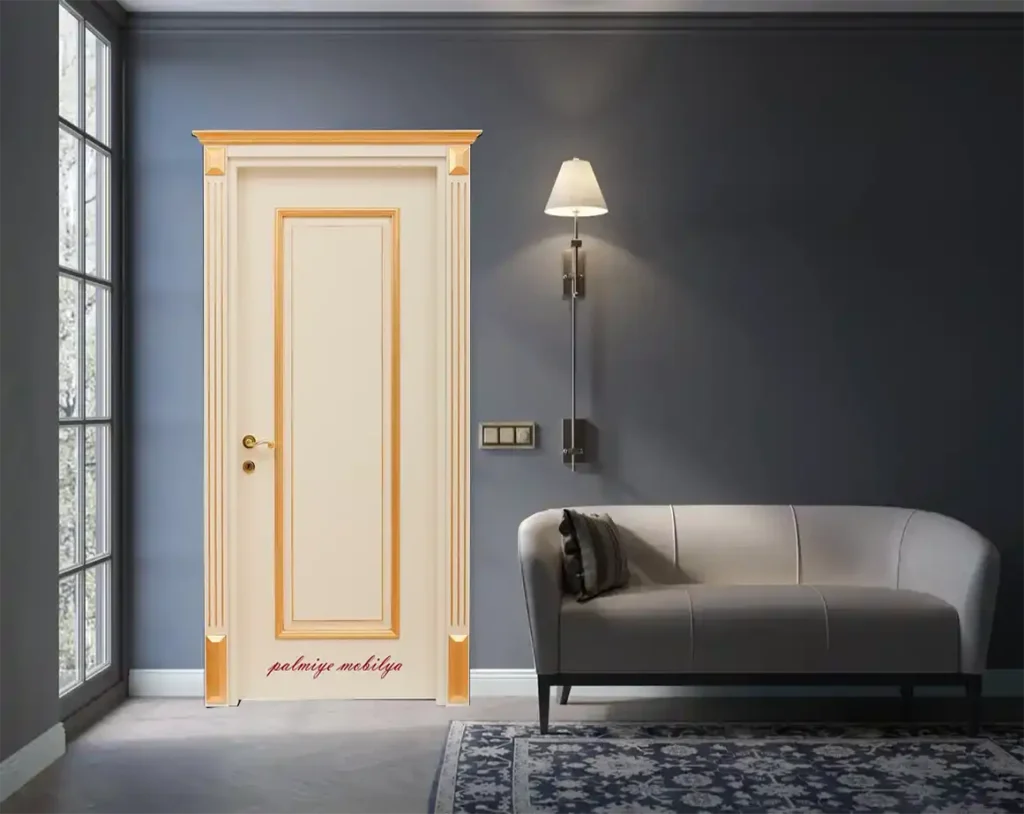
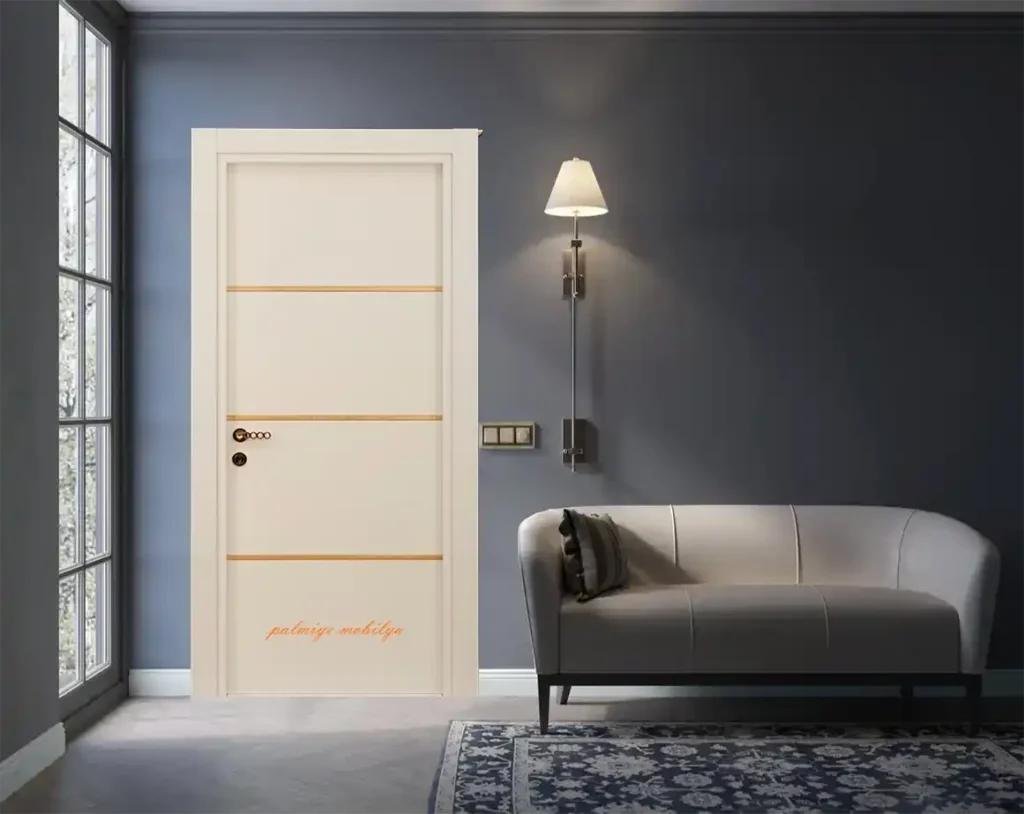
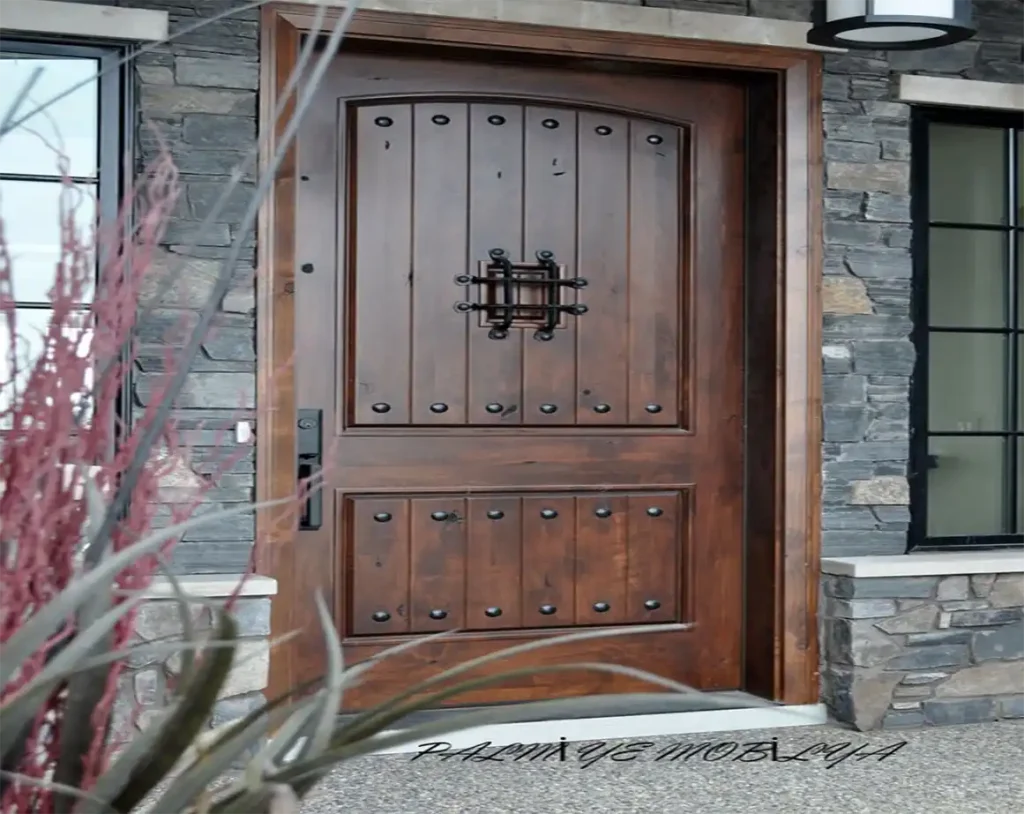
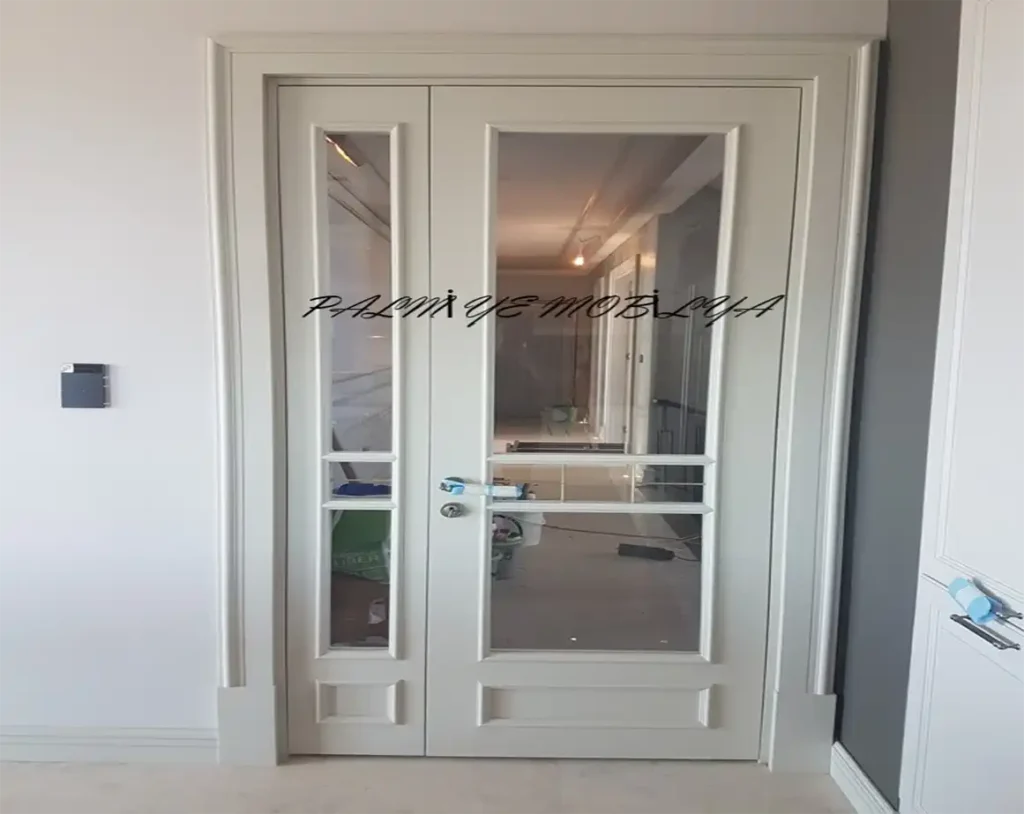
The versatile manufacturing lines behind rustic lacquered door manufacturing Turkey allow suppliers to produce a wide range of rustic design variations. These models can be tailored to match diverse international architectural themes.
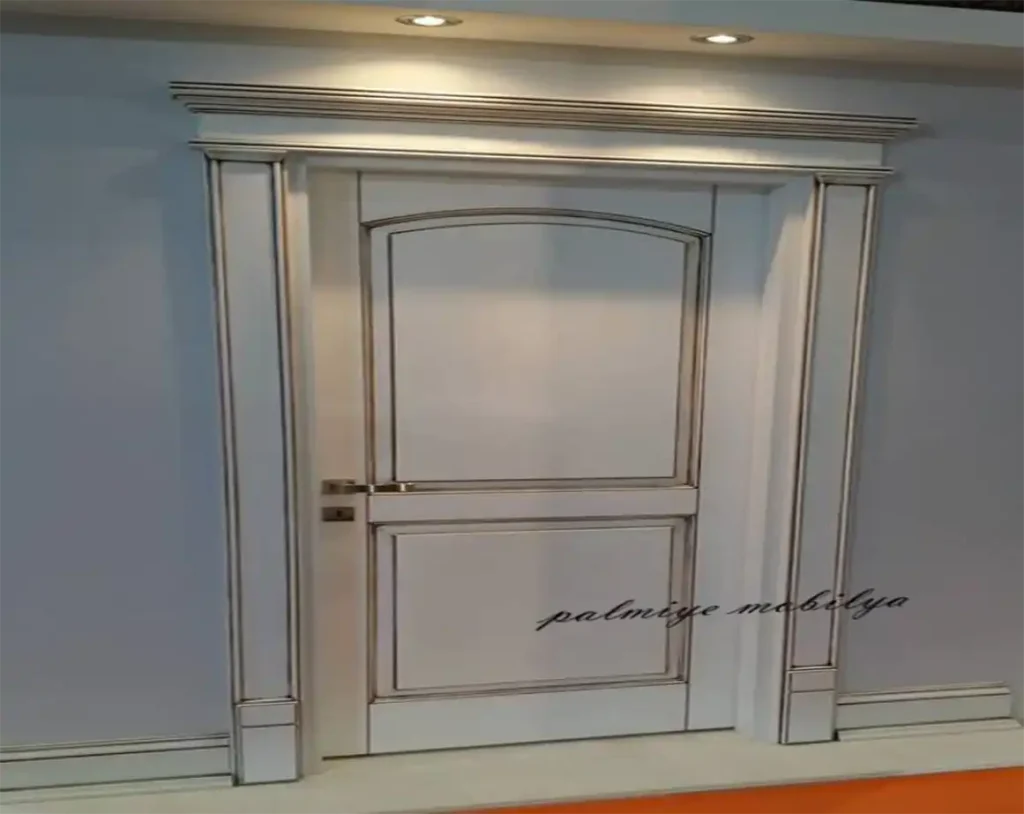
The Shaker-Rustic Fusion Model
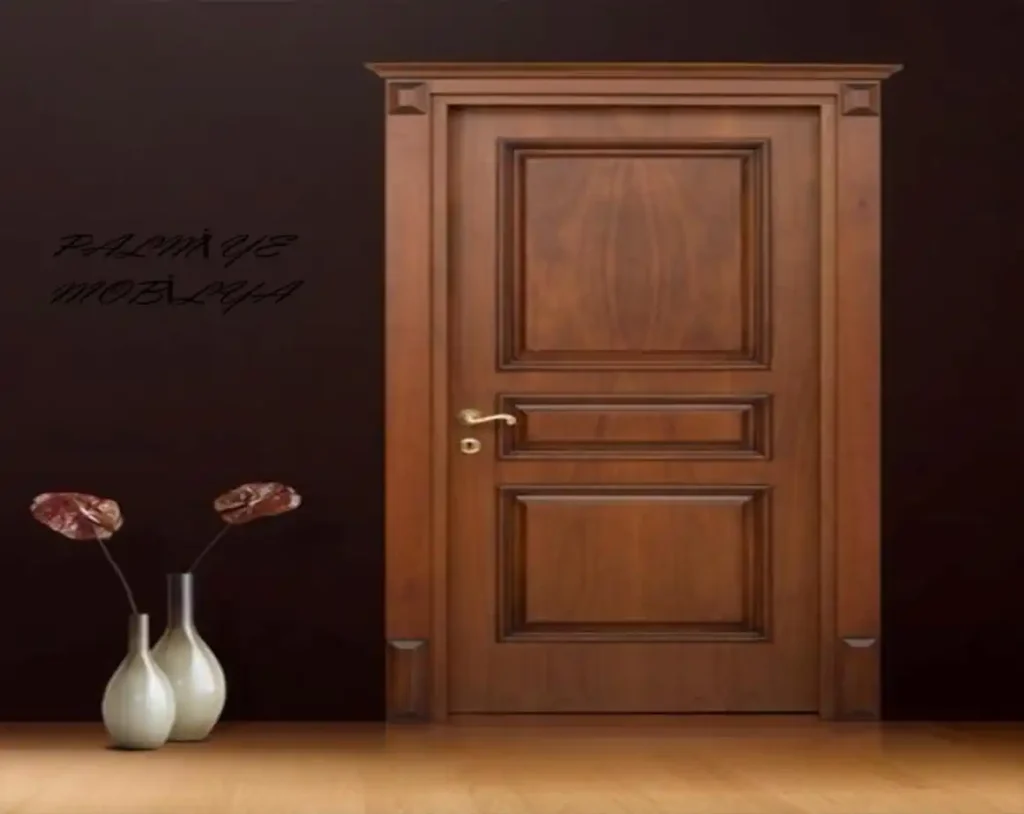
- Design Details: Inspired by timeless Shaker simplicity. These doors feature clean, recessed center rectangular panels with crisp, un-beveled 90-degree internal edges.
- Aesthetic Profile: Blends minimalist modern lines with traditional country warmth, making it highly popular in British and North American residential projects.
- Color Matching: Frequently paired with silk-matte whites, warm creams, and light linen greiges.
The Country Beadboard (Tongue-and-Groove) Model
- Design Details: Features tight, repeating vertical v-grooves or beadboard patterns carved precisely into the dense MDF surface by 3-axis CNC machinery. This design replicates the look of traditional vertical wood planks clamped together.
- Aesthetic Profile: Offers a distinct cottage appearance, making it an excellent choice for side entries, laundry rooms, bathrooms, and rustic-themed boutique hotels.
- Color Matching: Looks best in traditional earth tones, soft olive greens, warm cashmere, and muted sage.
The Raised Architrave Country Model
- Design Details: Combines vertical plank carvings with bold, raised geometric outer frame moldings attached to the door face before painting.
- Aesthetic Profile: Provides a formal, high-end rustic look that fits beautifully in grand country estates, rustic luxury mountain villas, and premium golf resorts.
- Color Matching: Ideal for deep, rich tones like charcoal grey, midnight navy, and antique ivory.
4. The Chemistry of Rustic Mattes and Finish Engineering
The surface appearance of rustic lacquered door manufacturing Turkey relies on industrial chemical coating formulations. Because rustic aesthetics favor natural, low-gloss textures, managing sheen levels is a major focus for Turkish chemical labs.
Acrylic Polyurethane Coating Matrices
Premium Turkish factories use a hybrid blend of high-grade acrylic resins and aliphatic polyurethane hardeners. This combination forms an incredibly tough, impact-resistant chemical cross-link over the MDF substrate. The acrylic component gives the door exceptional UV resistance, ensuring that light tones do not turn yellow or fade when exposed to direct sunlight over the years.
Calibrating Matte and Silk-Matte Sheen Levels
To maintain a rustic, wood-like look, high-gloss finishes are avoided in favor of low-sheen configurations, which are calibrated using precise electronic gloss-meters:
- Deep Matte (1% to 8% Gloss Units): Completely absorbs light, resulting in a velvety surface with zero glare or reflection. It mimics the raw texture of natural chalk-painted wood while offering high stain resistance.
- Silk-Matte / Satin (12% to 25% Gloss Units): The balance point for high-traffic projects. It reflects a soft glow that accentuates CNC routing lines without creating harsh, distracting highlights. It is easy to clean and highly resistant to daily wear.
Water-Borne Bio-Resins for Eco-Conscious Building
Driven by global green building certifications like LEED, BREEAM, and DGNB, forward-thinking players in rustic lacquered door manufacturing Turkey have introduced water-reducible coatings. These formulations use water as the primary carrier instead of volatile organic solvents, resulting in ultra-low volatile organic compound (VOC) emissions. This ensures clean indoor air quality right after installation while matching the durability of traditional solvent-based finishes.
5. Automated Production Lines and Manufacturing Precision
The global success of rustic lacquered door manufacturing Turkey is driven by automated, high-precision industrial facilities located in manufacturing hubs across the country.
[Timber Kiln-Drying & Finger-Jointing] ➔ [Hydraulic MDF Hot-Pressing] ➔ [Multi-Axis CNC Carving] ➔ [Chemical Isolator Spraying] ➔ [Robotic Intermediate Sanding] ➔ [Polyurethane/Acrylic Coating] ➔ [UV Curing & Baking]
Phase 1: Timber Conditioning and Framing
Raw timber panels enter computer-controlled kiln ovens to reduce internal moisture down to an exact 8% to 10%. The wood is then cut and finger-jointed into straight structural framing stiles and rails, removing knots and natural weak points.
Phase 2: MDF Pressing and CNC Carving
Thick outer sheets of moisture-resistant MDF are bonded to the timber framework using high-pressure hydraulic hot-presses and industrial PUR adhesives. The assembled door blanks then move to multi-axis CNC routers, which carve intricate vertical v-grooves, recessed shaker faces, or custom rustic patterns with sub-millimeter precision.
Phase 3: Surface Isolation and Priming
MDF is highly absorbent. To ensure a smooth final finish, an automated spray line applies a chemical isolator layer that seals the raw fiberboard pores. The door then receives two to three separate coats of high-build polyurethane primer.
Phase 4: Robotic Sanding and Topcoating
Between each primer coat, the door passes through automated wide-belt sanding machines and robotic brushing stations. These systems use fine grits (up to 400 grit) to smooth out tiny surface variations. The doors then enter pressurized, dust-free cleanrooms where robotic arms apply the pigmented matte or satin lacquer topcoats.
Phase 5: UV Curing and Quality Inspections
The wet, painted doors move through ultraviolet (UV) curing tunnels or temperature-controlled baking ovens. This process accelerates chemical cross-linking, creating a hard, scratch-resistant surface. Finally, inspectors check each door for uniform paint thickness (measured in microns) and precise gloss levels.
6. Sourcing Geography: Turkey’s Main Sourcing Clusters
To build an efficient procurement plan, B2B buyers should understand how different manufacturing regions across Turkey specialize in specific market tiers and production volumes.
Kayseri Industrial Zone: High-Volume Automated Production
- Core Strength: Kayseri features massive industrial production zones equipped with heavy machinery optimized for large-scale residential developments, social housing projects, and hospitality rollouts requiring thousands of consistent units.
- Sourcing Advantage: Offers excellent cost efficiency per unit for large, standardized orders of rustic shaker or beadboard doorsets.
Istanbul and Kocaeli: High-Spec Customization and Fast Logistics
- Core Strength: Istanbul factories excel at high-end, custom architectural designs, 5-axis geometric patterns, and integrations with structural aluminum frames.
- Sourcing Advantage: Positioned close to major export ports like Ambarlı and Gebze, making it easy to coordinate fast sea and air shipping to international markets.
Inegöl and Bursa: Generations of Fine Woodworking Craftsmanship
- Core Strength: Inegöl is famous for its long history of furniture and millwork craftsmanship. Factories in this region blend advanced modern painting with skilled manual detail work.
- Sourcing Advantage: The top choice for sourcing intricate panel details, custom crowns, and hand-applied rustic distressed details.
7. Technical Comparisons: Rustic Lacquered vs. Alternative Doors
To see why top-tier developers choose rustic lacquered door manufacturing Turkey, it helps to compare these products against common interior door alternatives on the market.
| Feature / Metric | Turkish Rustic Lacquered Doors | PVC / Vinyl Membrane Wrapped Doors | High-Pressure Laminate (HPL) Doors | Melamine Faced Chipboard Doors |
|---|---|---|---|---|
| Edge Seam Integrity | Monolithic: 100% seamless liquid envelope with zero edges to peel. | Glued plastic edges prone to peeling near heat and moisture. | Visible dark joint lines where the laminate meets the edge band. | Exposed glued edge bands that can peel under impact or moisture. |
| Rustic Routing Depth | High: Deep vertical v-grooves and recessed shaker faces can be carved cleanly. | Restricted to shallow curves; sharp internal corners can cause vinyl tenting. | Zero: Strictly flat; cannot accept 3D rustic carving or panel routing. | Zero: Flat only; limited to simple geometric sheet processing. |
| Repairability | High: Minor scratches and chips can be sanded and touched up with matching liquid lacquer. | Zero: If the vinyl melts or tears, the entire leaf must be replaced. | Very Low: Scratches cannot be filled without leaving visible patches. | Zero: Any surface damage requires replacing the door leaf. |
| Aesthetic Value | Premium: Soft satin glow or velvety matte finish with deep optical clarity. | Synthetic, plastic-like sheen that can look cheap under bright light. | Industrial look; excellent wood grains but looks commercial. | Budget aesthetic; lacks depth and premium feel. |
| Moisture Resistance | Excellent: The sealed paint layer prevents ambient humidity from reaching the MDF. | Good initially, but water can seep into edge seams over time. | High on the face, but joints can swell if exposed to standing water. | Vulnerable; moisture easily penetrates edge seams, swelling the core. |
8. Advanced Architectural Frameworks and Component Integration
A door is an integrated structural system. When procuring products from the rustic lacquered door manufacturing Turkey sector, buyers look beyond the door leaf to evaluate the frame, architrave, and hardware preparation.
Telescopic Adjustability and Sandwich Frames
Turkish manufacturers are known for engineering highly adaptable frame profiles that streamline on-site installation:
- The Sandwich Frame Profile: Built by gluing solid wood pine blocks between high-density outer HDF layers. This hybrid setup combines the structural strength of timber with the smooth, paintable surface of HDF.
- Telescopic Adjustability: The architrave (casing) features a structural tongue that slides smoothly into a matching groove machined along the perimeter of the frame. This lets the installer adjust the frame width on site to match varying wall thicknesses (e.g., expanding from 14cm to 18cm) without needing custom wood cutting.
Pre-Hung Hardware Engineering via CNC
Top-tier Turkish door factories pre-bore all hardware recesses using high-precision CNC machinery based on European DIN norms:
- Concealed 3D Hinges: These hinges are routed deep into the door leaf and frame, making them completely invisible when the door is closed. They allow the installer to adjust the door leaf across three separate axes (height, depth, and lateral alignment) using a simple hex key, keeping the rustic margins perfectly square.
- Magnetic Lock Mortises: Traditional mechanical latches are replaced with silent magnetic systems. When the door is open, the latch stays completely flush with the door edge. It only slides out into the strike plate via magnetic attraction when the door is fully closed. This eliminates mechanical clicking and delivers a clean look.
- Automatic Mechanical Drop Seals: A spring-loaded mechanism mortised into the bottom rail of the door leaf. The moment the door hits the frame, an internal plunger drops a heavy-duty silicone seal down against the floor line. This blocks drafts and sound without requiring a raised floor threshold.
9. Sourcing Logistics, Shipping Security, and B2B Customs
Managing international logistics smoothly is critical to keeping project timelines on track. The rustic lacquered door manufacturing Turkey trade benefits from several major international trade frameworks.
Trade with the European Union: The ATR Certificate
For buyers across the European Union, the EU-Turkey Customs Union Agreement offers a major financial benefit.
- The Document: The ATR Movement Certificate is issued by Turkish customs authorities during export clearance.
- The Benefit: Presenting a valid ATR certificate at any EU customs checkpoint allows the buyer to import the doors duty-free (0% customs tariff). The importer only handles their local value-added tax (VAT), avoiding heavy import duties.
Sourcing for the United Kingdom: The EUR.1 Certificate
Trade between the United Kingdom and Turkey is managed under the UK-Turkey Free Trade Agreement.
- The Document: Shipments bound for British ports (like Felixstowe or Southampton) require an EUR.1 certificate or an official Origin Declaration on the commercial invoice.
- The Benefit: This certification proves preferential origin, allowing UK buyers to import Turkish rustic doors without paying standard import tariffs.
North American Import Steps (USA & Canada)
For buyers in the United States and Canada, importing involves unique logistics and regulatory steps:
- Lacey Act Declarations (USA): Importers must submit a Lacey Act declaration form. This document verifies the botanical names of the wood species used in the internal framing (e.g., Pinus sylvestris) to prove the raw lumber was harvested legally.
- CARB Phase 2 Compliance: Any engineered wood product entering the US market must carry certification showing compliance with California Air Resources Board (CARB) and Environmental Protection Agency (EPA) rules on formaldehyde emissions. Top-tier Turkish factories routinely provide these compliance certificates for North American orders.
Heavy-Duty Packaging Standards for Transit
Lacquered finishes are sensitive to friction and shifting loads during transit. Reliable Turkish exporters use systematic packing protocols:
[Polyethylene Scratch Wrap] ➔ [EPE Foam Corner Caps] ➔ [Corrugated U-Profile Board Edge Wrap] ➔ [Reinforced Wooden Crate Boxing]
- Polyethylene Scratch Wrap: A static-free protective film is applied directly to the painted surface of every door leaf to prevent friction damage.
- EPE Foam Corner Caps: Shock-absorbing expanded polyethylene caps protect all four corners from drops or impacts.
- Corrugated U-Profile Edge Wrap: Heavy cardboard profiles wrap around the entire perimeter of the door leaf to absorb shipping movements.
- Reinforced Wooden Crate Boxing: The protected doors are stacked flat on reinforced wooden pallets, securely strapped down, and enclosed inside fully boxed wooden crates to shield the cargo from forklift impacts during sea transit.
10. Financial Structuring and Risk Management in B2B Contracts
International trade requires clear financial agreements to keep both buyers and sellers secure. Transactions within the rustic lacquered door manufacturing Turkey sector operate under standard global banking methods.
Typical B2B Payment Terms
- Telegraphic Transfer (T/T – Advance Deposit & Balance): The most common framework for standard trade. The buyer pays an advance deposit of 30% to 40% to kick off raw material sourcing and factory scheduling. The remaining 60% to 70% balance is paid upon presentation of the final shipping documents, including the Bill of Lading (B/L), Packing List, Commercial Invoice, and ATR/EUR.1 origin certificates, right before the container is released at the port.
- Irrevocable Letter of Credit (L/C at Sight): Commonly used for large-scale corporate tenders or institutional procurement. The buyer’s bank guarantees payment to the Turkish exporter’s bank once the factory presents shipping documents that perfectly match the terms of the credit agreement. This setup protects the buyer from delivery delays and gives the factory financial security before starting a massive custom production run.
Choosing the Right Incoterms 2020 for Your Logistics Setup
- FOB (Free On Board – e.g., FOB Ambarlı Port): The Turkish manufacturer handles domestic transport, inland trucking, export customs clearance, and port handling fees, delivering the goods safely over the ship’s rail. The international buyer takes over from there, managing ocean freight costs, marine cargo insurance, import clearance, and final delivery. This is highly recommended for buyers with established freight forwarding networks.
- CFR / CIF (Cost and Freight / Cost, Insurance, and Freight): The Turkish exporter handles and pays for ocean transit to the buyer’s designated destination port. Under CIF terms, they also purchase marine insurance to cover transport risks. This is an excellent option for buyers who prefer to let the factory handle the complexities of international shipping lines.
11. Quality Verification and Site Inspection Protocols
To maintain high quality, adding clear technical criteria for product acceptance into your purchase contract prevents quality disputes before shipments leave the factory floor.
Critical Quality Tests
- The Cross-Hatch Adhesion Test (ISO 2409): Used to verify how well the liquid lacquer bonds to the underlying MDF surface. The inspector uses a precision blade to cut a grid pattern into the paint film, applies a standardized adhesive tape over the grid, and pulls it off firmly. If paint flakes away from the grid corners, the primer coat failed to cure or bond correctly, signaling that the door could chip down the road.
- Micrometer Dry Film Thickness Measurement: Ensures the door received a durable finish rather than just a thin coat of paint. High-quality export-grade lacquered doors require a minimum dry film paint thickness of 120 to 180 microns, split across multiple layers of isolation base, primer, and protective topcoats.
- Gloss-Meter Sheen Analysis: For rustic matte orders, the inspector uses an electronic gloss-meter to measure light reflection at multiple points across the door face. This check ensures the sheen level stays completely uniform, preventing a patchy or uneven look under home interior lighting.
12. Site Preparation, Installation Science, and Maintenance
The longevity and performance of doors sourced from the rustic lacquered door manufacturing Turkey pipeline depend heavily on correct on-site installation and long-term care.
Critical Pre-Installation Site Conditions
- Managing Trade Sequences: Doors should be treated as finish furniture components. They should only be brought onto the job site after all wet trades—such as plastering, drywall taping, screeding, tiling, and self-leveling floors—are fully complete and dried out.
- Controlling Ambient Humidity: The relative humidity on site must be maintained between 40% and 60%, and the ambient temperature should stay between 15°C and 25°C. High ambient moisture from drying plaster can cause the timber framework to expand, stressing the premium lacquer finish.
Step-by-Step Installation Methodology
- Assembling the Frame: Layout the frame jambs and header on a clean, padded surface. Fasten the corners securely using the manufacturer’s provided hidden bracket joints or specialized wood screws.
- Positioning and Anchoring: Insert the assembled frame into the wall opening. Use plastic or timber shims at all anchoring points to ensure the frame is perfectly level and plumb across all planes.
- Applying Structural Foam: Secure the frame to the wall using low-expansion polyurethane foam applied at regular intervals. Avoid high-expansion foams, which can bow the frame jambs inward and prevent the door from closing properly.
- Hanging the Leaf: Mount the door leaf onto the concealed hinges. Use the 3D adjustment screws to set perfectly uniform 3mm gaps along the top and side margins.
Daily Maintenance and Care
- Approved Cleaning Steps: Dust the door face regularly with a clean, dry, ultra-soft microfiber cloth. For light smudges or fingerprints, slightly dampen the cloth with lukewarm water mixed with a drop of pH-neutral dish soap. Wipe the surface down, then immediately dry it with a second microfiber cloth.
- Prohibited Cleaning Products: Never use abrasive scrubbing sponges, steel wool, or harsh chemicals like bleach, ammonia, or acetone. Avoid alcohol-based glass cleaners or citrus-infused sprays, as these solvents can gradually dissolve or dull the protective lacquer topcoat.
Summary Sourcing Checklist for Commercial Buyers
When finalizing a procurement contract or preparing a tender within the rustic lacquered door manufacturing Turkey sector, use this summary checklist to ensure all technical and legal bases are fully covered:
- Internal Core Configuration: Specify Tubular Particleboard for standard acoustic comfort, Solid Flaxboard for luxury hotel guestrooms, or Honeycomb for lightweight budgets.
- MDF Facing Thickness: Minimum 6mm to 8mm for flat panels; 10mm to 12mm for deep 3D rustic v-grooves and recessed shapes.
- Paint Specification: Premium Aliphatic Polyurethane or Acrylic lacquer with a verified UV-absorber non-yellowing guarantee.
- Gloss Level Requirement: Explicitly define the target sheen (e.g., Deep Matte 5% or Silk-Matte 15% to maintain a rustic texture).
- Frame Engineering: Sandwich wood core with telescopic HDF architraves built to match your specific site wall thicknesses.
- Hardware Preparation: Complete factory CNC pre-boring for 3D hidden hinges, magnetic mortise locks, and automatic drop seals to eliminate manual on-site modifications.
- Logistics Protection: Heavy-duty export packaging including foam edge guards, face protection sheets, and reinforced wooden crates suitable for international shipping.
By selecting the right combination of core engineering, chemical coatings, and frame specifications, you ensure your investment in Turkish rustic lacquered doors delivers long-lasting durability, exceptional acoustic comfort, and timeless architectural style.


Şunları da sevebilirsiniz
Distressed Furniture Turkey
Lacquered Furniture Turkey