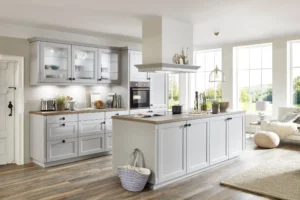

Solid Wood Kitchen Turkey
The Definitive Industrial Guide to Solid Wood Kitchen Turkey Sourcing, Engineering, and Design Standards
The global demand for high-end cabinetry has cast a bright spotlight on the manufacturing capabilities of the Mediterranean and Eurasian regions, with Solid Wood Kitchen Turkey operations emerging as a premier benchmark for global procurement. Driven by a rare convergence of dense, indigenous forest resources, centuries of architectural joinery heritage, and modern automated fabrication facilities, Turkey has transformed into a dominant exporter of completely solid timber millwork.
Unlike standard mass-produced modular options that heavily rely on medium-density fiberboard (MDF) or particleboard substrates finished with paper thin veneers, true solid wood kitchen production in Turkey adheres to rigorous engineering benchmarks. This extensive document details the macroeconomics, wood science, technological integrations, joinery protocols, and procurement logistics that define the structural integrity and timeless design language of a custom Solid Wood Kitchen Turkey installation.
1. The Macroeconomic Landscape of Turkish Timber Infrastructure
Turkey’s unique geographical position provides a highly strategic advantage for global architectural sourcing. Positioned between Europe, Asia, and the Middle East, the country serves as a logistical nexus capable of shipping premium structural architectural components via maritime container lines, cross-continental freight networks, and rapid air transport.
Forest Management and Sustainable Silviculture
The foundation of the elite Solid Wood Kitchen Turkey manufacturing trade rests directly upon the strict forestry policies enforced by the Turkish General Directorate of Forestry (Orman Genel Müdürlüğü). Turkey manages millions of hectares of certified forest lands, ensuring that timber harvesting operations strictly maintain a negative net deforestation footprint.
Most premium solid wood kitchen manufacturers operate under rigorous Chain of Custody (CoC) certifications, adhering fully to the Forest Stewardship Council (FSC) and the Programme for the Endorsement of Forest Certification (PEFC). This ensures that every cubic meter of walnut, oak, chestnut, and beech utilized in premium kitchen carcases and face frames can be tracked back to a sustainably managed, legally harvested forest compartment.
The Industrial Integration Advantage
The Turkish manufacturing sector is highly integrated. Major industrial furniture clusters in regions such as Bursa (İnegöl), Istanbul, Ankara (Siteler), Kayseri, and Izmir feature end-to-end processing systems.
A single enterprise often manages everything from raw log breakdown to advanced moisture conditioning, multi-axis computer numerical control (CNC) machining, artisanal hand-carving, and cleanroom automated finishing. This absolute vertical integration minimizes supply chain volatility, optimizes cost-efficiencies, and enforces rigorous quality control across every production stage.
2. Timber Selection and Material Science in Turkish Cabinetry
Engineering a kitchen capable of enduring decades of thermal expansion, high humidity, and intense physical wear requires a profound understanding of timber morphology and material science. Selecting the correct wood species involves balancing density, structural stability, grain configurations, and natural resistance to organic decay.
European White Oak (Quercus robur / Quercus petraea)
White Oak stands as an absolute pillar of the premium Solid Wood Kitchen Turkey sector. Sourced primarily from the lush, temperate forests of the Marmara and Black Sea regions, Turkish White Oak exhibits an exceptionally tight cellular ring structure.
- Mechanical Integrity: Boasting a Janka hardness rating averaging approximately 1,360 lbf (pounds-force), White Oak provides excellent resistance to denting, abrasive impacts, and surface scratching.
- Anatomical Stability: The heartwood contains dense accumulations of tyloses—microscopic cellular outgrowths that plug the sap-conducting vessels. This natural biological barrier renders the timber uniquely resistant to water penetration, rot, and fungal decay.
- Aesthetic Profile: Its straight grain pattern, punctuated by prominent medullary rays (frequently showcased through quarter-sawing techniques), responds beautifully to reactive stains, ceruse treatments, and deep wire-brushing.
Anatolian Walnut (Juglans regia)
Anatolian Walnut represents the pinnacle of luxury in bespoke kitchen joinery. Renowned for its rich coloration, dimensional stability, and exquisite grain configurations, it is highly sought after for elite custom designs.
- Mechanical Performance: With a Janka hardness rating of roughly 1,010 lbf, Anatolian Walnut hits an ideal structural sweet spot. It is dense enough to maintain crisp, intricate joinery profiles, yet resilient enough to absorb seasonal atmospheric shocks without cracking.
- Grain Morphologies: The slow growing conditions found across the Anatolian plateau produce dramatic, deeply swirled grain patterns, crotch figures, and burl configurations. The wood features a natural spectrum of deep espresso tones, charcoal streaks, and warm amber undertones.
- Dimensional Stability: Walnut possesses a low volumetric shrinkage coefficient, making it highly resistant to warping or twisting when exposed to the intense ambient humidity variations common to active cooking environments.
European Beech (Fagus sylvatica)
Beech is an indispensable component within the internal structural frameworks of a Solid Wood Kitchen Turkey build. Sourced abundantly from the high-altitude forests of the Black Sea zone, it is a true workhorse timber.
- Physical Metrics: Beech features an impressive Janka hardness rating of roughly 1,300 lbf and exhibits exceptional compressive and bending strength values.
- Anatomical Character: The wood has a uniform, fine-textured grain with a straight alignment and a warm, pale-cream to pinkish-brown coloration.
- Industrial Application: While raw beech responds dynamically to humidity fluctuations if left unsealed, it is highly prized for interior cabinet carcases, structural dovetail drawer boxes, and internal shelving systems once stabilized through professional kiln drying and thermal treatments.
Anatolian Chestnut (Castanea sativa)
Anatolian Chestnut is favored for rustic, traditional, and Mediterranean-style open-air or residential kitchen architectures due to its distinctive grain and incredible longevity.
- Natural Protection: Chestnut wood is heavily saturated with natural tannins. These compounds provide a potent chemical defense against wood-boring insects, molds, and moisture-induced degradation.
- Weight-to-Strength Balance: Though slightly softer than Oak (Janka hardness around 680 lbf), Chestnut exhibits minimal dimensional movement, ensuring large door panels and face frames remain square and aligned over decades of use.
3. Advanced Seasoning, Thermal Modification, and Stabilization
Raw timber cannot simply be cut from a tree and immediately processed into kitchen cabinets. Doing so guarantees catastrophic structural failure, including joint separation, split panels, and stuck doors. The elite Solid Wood Kitchen Turkey manufacturing sector relies on world-class thermal engineering to permanently stabilize raw timber before it ever encounters a cutting tool.
Precision Solar and Dehumidification Kiln Drying
Upon arriving at the sawmill, raw lumber undergoes an extensive air-drying phase. It is stacked in monitored open-air yards for 6 to 18 months, allowing the moisture content to naturally drop to approximately 20–25%.
Following this, the lumber enters advanced, computer-controlled kiln chambers. Here, software-driven drying schedules slowly extract moisture over several weeks using precise configurations of heat, air circulation, and steam injection.
For high-end kitchen production, the wood is brought down to a highly uniform internal moisture content of 6% to 8%. This specific range matches the equilibrium moisture content (EMC) of climate-controlled luxury residential interiors globally, preventing subsequent shrinkage or swelling.
Thermo-Vacuum Modifications (Thermowood Technology)
For modern exterior outdoor kitchens or coastal residential installations, select premium Turkish producers implement advanced thermal modification processes.
[Raw Timber] ➔ [Pre-Heating & Drying (~100°C–130°C)] ➔ [High-Temp Thermo-Cure (180°C–230°C under Vacuum)] ➔ [Cooling & Conditioning] ➔ [Stabilized Ultra-Dense Timber]
- Thermal Pyrolysis Phase: Inside a sealed, oxygen-free vacuum chamber, the timber is heated to extreme temperatures between 180°C and 230°C.
- Chemical Metamorphosis: This heat permanently alters the wood’s cellular structure, breaking down hydroxyl groups within the hemicellulose chain. Because these groups are responsible for water binding, their destruction minimizes the wood’s capacity to absorb moisture.
- Resulting Material: The process yields a highly stable, deep-toned timber with a 60% reduction in swelling and shrinking coefficients, absolute immunity to biological rot, and complete freedom from chemical additives.
4. Joinery Masterclass: Structural Integrity and Cabinet Construction
The true testament to a genuine Solid Wood Kitchen Turkey system lies hidden within its joints. While low-cost alternatives rely on pocket screws, plastic dowels, and industrial wood glues to hold panels together, authentic Turkish cabinetry utilizes traditional, time-tested woodworking joinery updated for modern engineering tolerances.
Mortise-and-Tenon Door Architecture
Cabinet door frames bear intense physical stresses from daily cycling and weight suspension. Turkish master craftsmen use classic mortise-and-tenon construction to ensure these components last for generations.
       +-----------------------+

       |     Stile (Vertical)  |
       +-----------+-----------+
                   |
                   | (Mortise Pocket)
             +-----+-----+

             |     |     |  <--- Tenon Tongue
       +-----+-----+-----+-----+

       |    Rail (Horizontal)  |
       +-----------------------+
The horizontal rails feature a machined protruding tongue (the tenon) that inserts perfectly into a matching pocket (the mortise) cut directly into the vertical stiles. This interlocking assembly offers an enormous surface area for long-grain-to-long-grain wood bonding, completely eliminating the risk of sagging or corner separation.
Blind and Through Dovetails for Drawer Boxes
A hallmark of high-end Solid Wood Kitchen Turkey fabrication is the exclusive use of interlocking dovetail joints for all four corners of drawer boxes.
- Mechanical Lock: The wedge-shaped “pins” and “tails” form a mechanical lock that physically prevents the drawer front from pulling apart from the sides, even when subjected to heavy, continuous loads from cast iron cookware or heavy dishware.
- Material Selection: Drawer sides are typically machined from 15mm to 18mm solid European Beech, Maple, or Walnut, then finished with a silk-smooth clear coat to emphasize the beauty of the contrasting interlocking joinery.
Deep Tongue-and-Groove Carcase Panels
For premium all-wood carcases, solid timber planks are edge-glued using alternating grain orientations (pith-face up, pith-face down). This structural technique cancels out internal natural tension forces, keeping the panel perfectly flat.
Rear cabinet backboards are frequently engineered using floating tongue-and-groove vertical solid planks. These planks sit nestled inside a perimeter groove with a deliberate 1.5mm expansion gap, allowing the back pane to safely expand and contract with seasonal atmospheric changes without stressing the master frame.
5. Architectural Design Styles in Turkish Solid Wood Kitchen Production
The versatility of Turkish design studios allows them to seamlessly execute projects ranging from ornate historical reproductions to sleek, ultra-minimalist modern concepts. The Solid Wood Kitchen Turkey mark is found across three distinct architectural design categories.
1. Traditional Ottoman and Classical Grandeur
Drawing inspiration from the imperial architecture of the Topkapı Palace and historic Bosphorus mansions, these kitchens feature immense architectural weight and elaborate hand-carved detailing.
- Design Characteristics: Expect heavy raised-panel doors, Corinthian pilasters, majestic corbels, and towering crown moldings. Integrated range hoods are often designed to mimic grand classical stone hearths.
- Finishing Processes: Applications include rich, deep Anatolian Walnut or hand-applied gold and silver leafing over antiqued ivory lacquers. Distressing, fly-specking, and raw umber glazing are common techniques used to create a rich, historic depth.
2. Transitional Shaker and Anglo-American Country Styles
The globally timeless Shaker aesthetic is a dominant export product for Turkish manufacturers, beautifully bridging the gap between historical ornamentation and clean modernity.
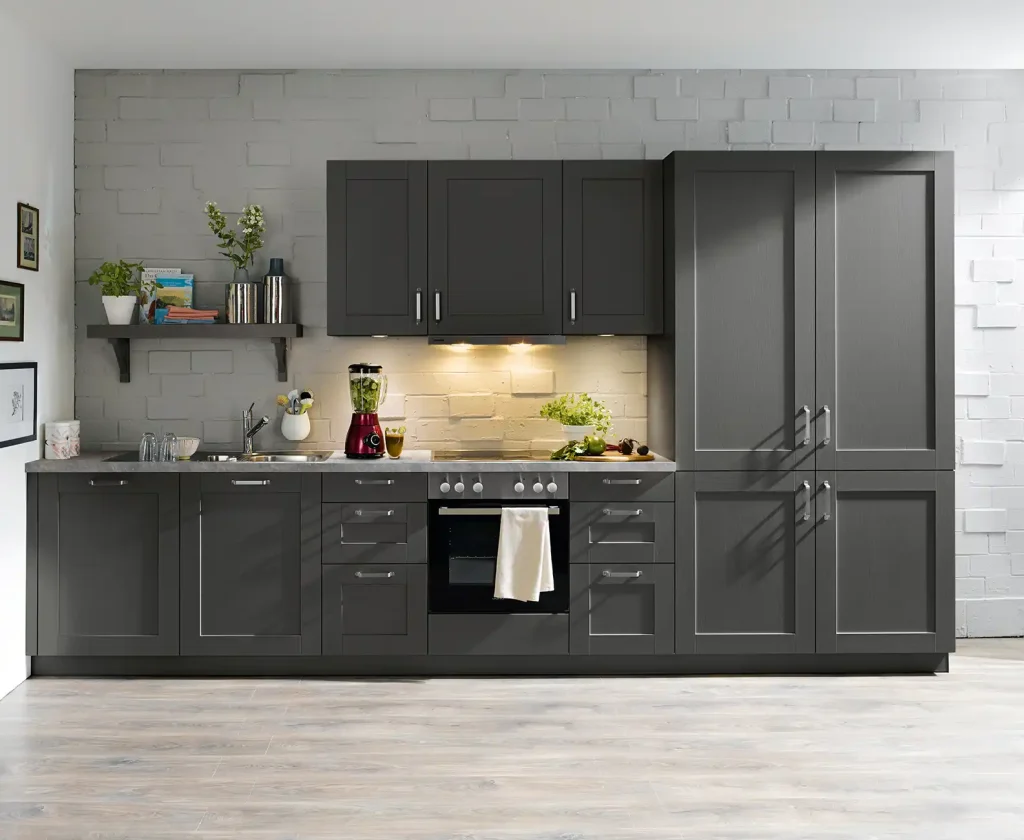
- Design Characteristics: Recessed center panels with crisp, clean 90-degree square profiles define the cabinet fronts. This style strips away superfluous ornamentation, shifting the aesthetic focus onto the natural beauty of the wood grain and the balance of the layout.
- Finishing Processes: Typically finished in smooth, ultra-matte polyurethane paints, or treated with translucent wire-brushed stains in charcoal, sage green, navy blue, or warm cream tones.
3. Euro-Modernist and Handleless Minimalist Conceptions
Modern high-end luxury favors clean lines, hidden functionality, and massive, monolithic expanses of natural wood. Turkish production facilities utilize multi-axis CNC routers to craft incredible handleless solid wood kitchens.
- Design Characteristics: Continuous grain-matching across entire banks of cabinetry creates a seamless visual landscape. Doors feature precision-milled J-pull profiles or integrated 45-degree beveled finger grooves, completely eliminating the need for external hardware.
- Finishing Processes: Clear, non-yellowing acrylic varnishes, natural bio-oils, and specialized matte hardwax finishes preserve the raw, organic tactility of premium white oak, ash, or exotic walnut wood grains.
6. High-Tech Manufacturing and CNC Integration
While old-world craftsmanship ensures soul and beauty, modern industrial scaling requires incredible precision. The leading production facilities driving the Solid Wood Kitchen Turkey sector merge hand tool mastery with advanced European CNC technology.
[Raw Log Breakdown] ➔ [Kiln Dry Stabilization (6-8% EMC)] ➔ [Multi-Axis CNC Milling (±0.05mm)] ➔ [Hand Assembly & Calibration] ➔ [Automated Multi-Stage Cleanroom Finishing]
Five-Axis Homag and Biesse Machining Centers
Premium Turkish factories deploy multi-axis CNC centers capable of performing complex milling, drilling, profiling, and mortising procedures in a single automated setup.
- Precision Tolerances: These machines process large solid wood panels to tolerances within ±0.05mm. This level of precision is critical for seamless integration with complex German and Austrian hidden architectural hardware systems.
- Structural Optimization: Computer-aided manufacturing (CAM) software calculates grain direction profiles to prevent tear-outs along intricate profiles, maximizing timber yield and significantly reducing structural waste.
Automated Laser Sanding and Micro-Calibration
Before applying any surface finishes, solid panels pass through wide-belt calibrating sanders equipped with segmented electronic platens. These machines use lasers to scan the surface topology of the wood, automatically adjusting pressure to eliminate any micro-dips or uneven spots across the grain.
Following this, automated orbital denibbing sanders gently prepare the wood fibers for stain absorption, completely eliminating human error and ensuring uniform finish penetration.
7. State-of-the-Art Surface Finishing Chemistry
The finish on a kitchen cabinet is its primary line of defense against hot grease splatters, boiling water vapor, spilled acids (such as lemon juice or red wine), and constant abrasive physical contact. Turkish exporters utilize high-performance European chemical formulations applied within pristine, pressurized cleanroom environments.
| Finish Category | Chemical Composition | Visual Properties | Performance Profile | Ideal Applications |
|---|---|---|---|---|
| Acrylic Polyurethane | Solvent-based cross-linked resin | High clarity, complete non-yellowing | Excellent resistance to UV fading, scratch-resistant | Modern white oak, light-stained contemporary cabinetry |
| Waterborne Acrylics | Low-VOC water-emulsion polymers | Ultra-low sheen, completely natural aesthetic | Environmentally friendly, excellent clarity, micro-porous breatheability | Minimalist designs, eco-conscious premium residential builds |
| Italian Conversion Varnishes | High-solids acid-curing amino resins | Rich satin to high-gloss depth | Maximum resistance to household chemicals and boiling water | High-wear classical kitchens, traditional raised-panel configurations |
| Natural Hardwax Oils | Linseed/tung oil base with carnauba wax | Completely matte, accentuates open-pored grain texture | Penetrates wood fibers rather than forming a surface film; easily repaired | Luxury rustic, raw wire-brushed oak, Anatolian walnut concepts |
The Layered Coating Protocol
A standard premium finishing sequence within a top-tier Solid Wood Kitchen Turkey facility involves a highly disciplined, multi-stage application pipeline:
- Substrate Isolator: A specialized chemical barrier coat is applied to seal the wood fibers and lock in natural oils, resins, or water-soluble tannins (crucial for oak and chestnut).
- Penetrating Stain/Dye: Hand-wiped or automated spray stains highlight the natural medullary rays and unique pore structures of the timber.
- High-Solids Sealer: A thick, protective primer coat fills the open grain pores (or accentuates them in open-pore finishes) to establish a perfectly flat, stable base layer.
- Inter-Coat Sanding: Operators manually inspect panels and use extra-fine abrasives (typically 320 to 400 grit) to remove any microscopic dust nibs or raised wood fibers.
- Dual Topcoats: Two separate applications of premium conversion varnish or polyurethane create a durable, chemically resistant shield across the cabinet exterior.
8. Premium Hardware Integration: Ergonometrics and Kinetics
A solid wood cabinet door is heavy, placing immense physical demand on its hardware systems. To complement structural integrity, the premium Solid Wood Kitchen Turkey industry partners directly with the world’s leading manufacturers of precision cabinet kinetics, including Blum, Grass, Hettich, and Samet (Turkey’s premier domestic luxury hardware enterprise).
   [Heavy Solid Timber Door] ➔ [ Blumotion / Samet Soft-Close Hinges ] ➔ Zero Sagging & Silent Closure
   [Solid Beech Dovetail Drawer] ➔ [ Under-Mount Concealed Runners ] ➔ 40kg–70kg Dynamic Load Capacity
Concealed Under-Mount Drawer Systems
Luxury solid wood drawer boxes never reveal their sliding hardware when opened. Manufacturers utilize heavy-duty concealed under-mount runner systems featuring integrated fluid dampers.
- Load Carrying Capacity: Standard drawers carry dynamic load capacities ranging from 40kg to 70kg. This effortlessly supports heavy stoneware, cast iron pots, and professional appliances without any guide-rail deflection.
- Fluid Motion Dynamics: Synchronized runner tracks prevent shifting or racking during opening, while integrated self-closing mechanisms pull the drawer silently shut over the final few centimeters of travel.
Soft-Close Hinge Engineering and Aventos Lift Systems
Heavy solid doors are hung on clip-on concealed hinges featuring 3D micro-adjustments for perfect alignment along horizontal, vertical, and depth axes. For modern upper cabinetry, manufacturers deploy advanced mechanical lift systems.
These counterbalanced mechanisms allow heavy, single-piece solid timber lift doors to open vertically with minimal physical effort, holding their position at any open angle to keep handles safely within reach.
9. Sourcing, Customization, and Global Procurement Logistics
Procuring a custom Solid Wood Kitchen Turkey configuration involves a highly structured engineering timeline that translates architectural visions into precise, field-verified physical millwork modules.
Phase 1: Architectural Blueprinting and CAD/BIM Realization
The sourcing workflow begins with the submission of architectural plans or interior elevations. Engineering teams transform these concepts into comprehensive Computer-Aided Design (CAD) drawings and Building Information Modeling (BIM) files.
Every millwork dimension, plumbing cutout, electrical chase, appliance rough-in, and trim tolerance is mapped to the millimeter. This phase ensures absolute clarity before any saw blade touches raw lumber.
Phase 2: Sample Procurement and Material Validation
Prior to full-scale fabrication, clients receive comprehensive material control samples. These submittals feature the exact specified timber species cut to the proper grain orientation, wire-brushed or textured to match specs, and treated with the final multi-layer finish recipe. This gives architects, developers, and homeowners a tangible, physical benchmark to approve texture, sheen, and color variation.
Phase 3: Monitored Industrial Fabrication
Once drawing sets and physical samples are approved, the project is scheduled for production. Leading Turkish exporters offer complete visibility throughout this phase, providing real-time video updates, photographic quality-control records, and open access for independent third-party inspectors.
Phase 4: Cleanroom Assembly and Dry-Fit Verification
To eliminate costly errors on remote job sites, high-end Turkish producers perform a complete factory dry-fit assembly of the entire kitchen layout.
[Factory Floor Assembly] ➔ [Laser Alignment Check] ➔ [Hardware Kinetics Calibration] ➔ [Component Disassembly & Protective Packaging]
Cabinets are leveled and arranged exactly as they will sit in the home. Quality control managers check laser lines for alignment, calibrate doors for uniform gaps, and verify that every pullout accessory operates flawlessly. The kitchen is then carefully disassembled, cataloged, and prepped for packing.
Phase 5: Export Packing and Maritime Logistics
Solid wood cabinetry requires robust protective packaging to endure transit across different climate zones.
- Protective Layering: Individual cabinets are wrapped in heavy-duty polyethylene anti-scratch film, encased in form-fitting high-density foam edge guards, and sealed within thick corrugated fiberboard boxes.
- Crating and Container Stabilization: For sea freight, boxes are tightly stacked onto custom ISPM-15 heat-treated wooden pallets, shrink-wrapped, and loaded into sealed ocean containers. Dessicant moisture-absorbing packs are placed throughout the container to eliminate condensation risks during sea transit, ensuring the kitchen arrives in pristine, factory-fresh condition.
10. Technical Installation Protocols and Care Guidelines
The ultimate longevity of an authentic Solid Wood Kitchen Turkey installation relies heavily on proper site conditioning, precise mechanical mounting, and intelligent long-term surface care.
Crucial On-Site Acclimatization Rules
Solid timber remains a dynamic, living material even after undergoing factory seasoning and finishing.
- Site Stability: Cabinetry must never be brought to a construction site during wet trades. Drywall mudding, tile grouting, and concrete pouring must be completely finished and cured.
- Climate Normalization: The home’s permanent HVAC system must run continuously for at least 7 to 10 days to stabilize ambient indoor conditions. The kitchen modules should then sit unboxed within the installation space for 48 to 72 hours to acclimate to the home’s unique equilibrium moisture content before installation begins.
Precision Leveling and Mechanical Anchoring
Given the substantial weight of solid wood cabinetry and heavy premium countertops (such as Turkish marble or quartzite), structural wall anchoring must be completely secure.
- Laser Base Alignment: Installers use high-precision self-leveling rotary lasers to establish a perfect datum line across the room, compensating for any subfloor imperfections with structural shims.
- Heavy-Duty Fastening: Upper cabinetry must be anchored directly into wall studs or structural masonry using heavy-duty, corrosion-resistant lag screws or specialized steel hanging rails. Relying on simple drywall anchors or light fastenings will inevitably lead to structural failure.
Professional Long-Term Preservation Guidelines
Maintaining the flawless beauty of premium timber finishes requires a disciplined maintenance routine:
- Daily Maintenance: Wipe down surfaces using a soft microfiber cloth dampened with warm water and a mild, pH-neutral soap. Avoid any cleaning products containing ammonia, bleach, abrasive powders, or silicones.
- Spill Mitigation: Wipe up standing water, steam condensation, or liquid spills immediately—especially around sinks, dishwashers, and cooking surfaces.
- Environmental Control: Maintain indoor relative humidity levels between 35% and 55% and keep indoor temperatures between 18°C and 24°C. This stable window minimizes natural volumetric movement in the wood, keeping your investment beautiful and structurally sound for a lifetime.

Şunları da sevebilirsiniz
MDF Kitchen Cabinet Turkey
Modular Kitchen Cabinet Turkey