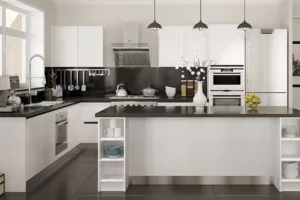

Turkish Solid Wood Kitchen
Turkish Solid Wood Kitchen: The Master Guide to Engineering, Design, and Sourcing
Introduction: The Resonance of a Turkish Solid Wood Kitchen
In luxury interior design, the kitchen has evolved from a closed service area into the architectural anchor of the modern home. Amid global shifts toward mass-produced, synthetic furniture alternatives, the Turkish Solid Wood Kitchen stands out as a symbol of engineering permanence, environmental sustainability, and artisanal heritage.
Turkey’s unique position at the intersection of Europe and Asia has fostered a woodworking sector that blends traditional Mediterranean craftsmanship with rigorous German and Italian manufacturing standards. Utilizing timber harvested from sustainable forests across Europe and the Anatolian peninsula, Turkish manufacturers produce custom cabinetry capable of lasting generations.
This comprehensive text details the material science, construction mechanics, finishing chemistry, and logistical framework of a premium Turkish Solid Wood Kitchen.
1. The Heritage of Woodworking and the Modern Turkish Timber Infrastructure
To understand the quality of a Turkish Solid Wood Kitchen, one must analyze the geopolitical and geographical forces shaping Turkey’s timber industry. Türkiye ranks among the leading furniture producers in Eastern Europe and the Middle East, driven by extensive domestic forests and proximity to premier European hardwood reserves.
+-------------------------------------------------------------+

|               TURKISH TIMBER LOGISTICS HUB                  |
+-------------------------------------------------------------+

|  [Black Sea Forests]   --->  Domestic Beech, Ash & Oak       |
|  [Marmara/Aegean Ports]--->  Imported European & African Logs|
|  [Industrial Clusters] --->  Kayseri, İnegöl, & İstanbul Hubs|
+-------------------------------------------------------------+
The Cultural Context of Anatolian Carpentry
For centuries, Anatolian woodworkers have supplied intricate timber structures, religious pulpits, and palace furnishings to empires. This multi-generational expertise has transitioned smoothly into industrial production lines. Today, contemporary Turkish factories combine this manual craft with automated, five-axis CNC milling systems to ensure consistent precision.
Geographic and Forestry Advantages
Turkey’s General Directorate of Forestry (OGM) enforces strict regulations on domestic timber harvesting, making sure that logging operations do not exceed annual forest growth rates. The regional Black Sea climate yields high-density woods like hornbeam, beech, and ash, which are prized for their shock resistance and structural integrity in heavy-use environments.
2. Deep Dive Into Timber Species Characterizing a Turkish Solid Wood Kitchen
Choosing the right wood species involves evaluating botanical properties, structural behavior, and aesthetics. A premium Turkish Solid Wood Kitchen relies on a select group of hardwoods and softwoods, each offering distinct advantages in density, Janka hardness, and grain stability.
Anatolian Oak (Anadolu Meşesi)
- Janka Hardness Rating: 1,290 lbf – 1,350 lbf depending on sub-species.
- Cellular Anatomy: Open-pored with high tyloses content, which naturally seals the vascular tubes and limits moisture absorption.
- Visual Characteristics: Pronounced growth rings, distinct medullary rays when quarter-sawn, and a color spectrum spanning pale straw to deep tan.
- Best Application: Traditional Shaker doors, rustic country tables, and structural face frames requiring high tensile strength.
Premium Walnut (Ceviz)
- Janka Hardness Rating: 1,010 lbf.
- Cellular Anatomy: Diffuse-porous structure with medium-sized pores and highly interlocked grains that minimize seasonal movement.
- Visual Characteristics: Warm chocolate tones with swirling dark grain lines and creamy sapwood highlights.
- Best Application: Modern slab-front panels, luxury handleless accents, and integrated breakfast bars.
European Beech (Avrupa Kayını)
- Janka Hardness Rating: 1,300 lbf.
- Cellular Anatomy: Exceptionally dense, close-grained, with small, evenly distributed pores that form a highly uniform surface.
- Visual Characteristics: Light pinkish-tan hue with subtle, fine flecking throughout the grain.
- Best Application: Painted cabinet components and inner drawer boxes where an ultra-smooth, lacquer-receptive finish is required.
Exotic Ash (Dişbudak)
- Janka Hardness Rating: 1,320 lbf.
- Cellular Anatomy: Ring-porous with excellent elasticity, offering high shock resistance.
- Visual Characteristics: Bright white to light brown body with broad, flowing, highly expressive grain variations.
- Best Application: Contemporary wire-brushed finishes, open-shelf systems, and deep-grained dark charcoal stains.
3. Material Science: Moisture Equilibrium and Kiln-Drying Optimization
The primary technical challenge of building a high-end kitchen with solid wood is its hygroscopic nature. Raw timber absorbs and releases water vapor, expanding and contracting as indoor humidity fluctuates throughout the seasons. Uncontrolled movement leads to warping, splitting, and binding doors.
       RAW TIMBER (50%+ Moisture Content)
                      │
                      ▼
       AIR DRYING IN YARDS (12–24 Months, down to 18%)
                      │
                      ▼
       COMPUTERIZED DEHUMIDIFICATION KILNS (6% - 8% EMC)
                      │
                      ▼
       STRESS-RELIEF ACCLIMATIZATION (48–72 Hours)
Cellular Water Types: Free Water vs. Bound Water
Timber contains free water within its cell cavities and bound water held chemically within the cell walls. When wood dries, it first sheds its free water until it reaches the Fiber Saturation Point (FSP), roughly 28-30% moisture content. Dimensional shrinkage begins only when bound water starts exiting the cell walls.
The Equilibrium Moisture Content (EMC) Matrix
To construct a stable Turkish Solid Wood Kitchen, the timber must be dried to match the average Equilibrium Moisture Content (EMC) of its destination environment. For most residential interiors in North America and Western Europe, this target range is 6% to 8%. Turkish producers utilize electronic multi-point probes driven by automated software algorithms to manage the drying schedule, checking that the moisture profile is consistent from the core to the surface of the timber.
Prevention of Internal Case Hardening
If a kiln drying cycle operates too aggressively, moisture evaporates from the surface of the wood faster than it can migrate from the core. This imbalance locks the outer shell in tension while the core remains compressed, a flaw known as case hardening. When this timber is subsequently cut by a CNC machine, the sudden release of internal tension can cause immediate warping. To prevent this, premium factories use steam conditioning phases at the end of the drying cycle to equalize stress levels across the wood boards.
4. Structural Engineering of Cabinetry Components
A durable Turkish Solid Wood Kitchen relies on smart product engineering that guides wood movement safely rather than fighting it blindly.
+---------------------------------------------------------+

|             5-PIECE SHAKER DOOR COMPONENT EXPANSION     |
+---------------------------------------------------------+

|      [Stile]  <-- Grain Runs Vertically -->  [Stile]    |
|   +-------------------------------------------------+   |
|   |  [Top Rail] <-- Grain Runs Horizontally -->     |   |
|   |  +-------------------------------------------+  |   |
|   |  |                                           |  |   |
|   |  |            CENTRAL FLOATING PANEL         |  |   |
|   |  |                                           |  |   |
|   |  |     (Expands laterally inside deep        |  |   |
|   |  |      dado grooves with space foam)        |  |   |
|   |  |                                           |  |   |
|   |  +-------------------------------------------+  |   |
|   |  [Bottom Rail]                               |   |
|   +-------------------------------------------------+   |
+---------------------------------------------------------+
The Five-Piece Rail and Stile Layout
Traditional raised and Shaker doors use a five-piece frame assembly to isolates dimensional movement.
- Vertical Stiles: Run the full height of the door on the left and right edges, directing vertical movement.
- Horizontal Rails: Join the stiles at the top and bottom using mortise-and-tenon or dowel joints.
- The Floating Panel: Sits within a deep perimeter dado groove along the inner edge of the frame. It is not glued or nailed down. Instead, it rests on flexible space-balls or compression foam inserts, allowing it to expand laterally during high-humidity seasons without breaking the structural frame joints.
Multi-Layer Cross-Lamination (Three-Ply Solid Timber Boards)
For modern minimalist designs that feature smooth slab doors, a single wide plank of wood will bow over time. Turkish engineers solve this problem with three-ply cross-lamination.
- Core Layer: Composed of narrow, finger-jointed solid wood strips oriented vertically.
- Face Layers: Premium solid wood slabs bonded to both sides of the core with their grain running 90 degrees horizontal to the core.
- This alternating grain direction neutralizes internal movement across all planes, ensuring the door remains perfectly flat for decades.
Dovetail Architecture for Drawer Boxes
High-end drawer boxes in a Turkish Solid Wood Kitchen avoid staple wires or metal corner brackets, relying instead on interlocking dovetail joints.
| Joint Property | English Dovetail | Blum/Dowel System |
|---|---|---|
| Mechanical Bond | Interlocking pins and tails lock under pulling forces | Relies primarily on chemical adhesive or screw friction |
| Material Thickness | Typically requires 14mm to 16mm solid hardwood | Often utilizes thinner 12mm particleboard cores |
| Longevity Profile | Excellent; holds together even if adhesive ages | Prone to loosening under heavy weight over time |
5. Advanced Finishing Chemistry: Protection Against Heat, Water, and Acid
Kitchen surfaces are routinely subjected to challenging conditions, such as boiling steam, grease splatters, and acidic lemon juice. A premium Turkish Solid Wood Kitchen requires sophisticated finishing chemistry to shield the wood cells while highlighting its natural beauty.
Polyurethane and Acrylic Lacquer Armor Systems
For painted finishes or hard glass-like clear topcoats, industrial factories use multi-component catalyzed acrylic polyurethane finishes.
- These coatings undergo an exothermic chemical cross-linking reaction as they dry, building an inert plastic barrier across the surface. This layer prevents liquid penetration, resists heat marking from hot cookware, and blocks ultraviolet rays from yellowing the wood beneath.
Organic Hardwax Oils (Natural Matte Aesthetics)
For contemporary, textured wood finishes, manufacturers apply natural hardwax oils formulated from plant-based oils (such as linseed and sunflower oils) combined with carnauba and candelilla waxes.
- Penetration Mechanism: Unlike lacquer, which forms a top surface film, hardwax oil penetrates deep into the wood pores, bonding directly with the cellulose fibers while the waxes cure on top to repel moisture.
- Repair Advantage: If a section becomes scratched, the homeowner can sand and re-oil just that specific spot without stripping the entire kitchen door.
Automated UV-Cured Flat-Line Spraying
Top manufacturers invest in automated flat-line finishing systems equipped with high-intensity ultraviolet (UV) curing lamps.
- The solid wood doors are loaded onto a conveyor line where wide-belt sanders smooth the surfaces to a precise 220-grit profile.
- Automated reciprocating spray arms apply a uniform mil-thickness of UV-photo-reactive primer.
- The doors pass through a heated flash-off zone to evaporate carrier solvents before entering the UV tunnel.
- High-output ultraviolet lamps instantly cure the coating in seconds, trapping the finish in a hard, protective state that emits zero VOCs post-cure.
6. Architectural Varieties and Aesthetic Configurations
The versatile manufacturing infrastructure of the Turkish wood sector allows designers to realize diverse global aesthetics, from historical European country details to ultra-modern minimalism.
Mediterranean Modernism and Book-Matched Slab Design
This style highlights the raw beauty of natural wood grain. Slabs of Anatolian walnut are sliced sequentially from a single tree trunk. When assembling the kitchen fronts, the doors are laid out so the grain patterns mirror each other across adjacent cabinets, creating an uninterrupted, fluid look across the entire wall. These designs often feature handleless layouts with integrated, CNC-milled finger grooves (J-Pull channels).
The Timeless Transitional Shaker Kitchen
The Shaker design remains highly requested due to its balanced, adaptable look. Turkish makers update this style by tailoring the proportions of the rails and stiles.
- Beveled Profiles: Introducing slight internal chamfers to prevent dust accumulation.
- Color Palettes: Combining natural timber kitchen islands with painted perimeter cabinetry in deep, muted tones like sage green, midnight blue, or charcoal grey.
Classical Grandeur and Ornate Cabinetry
For traditional estates, Turkish joinery shops produce classic, detailed cabinetry. These designs integrate:
- Corbels and Pilasters: Carved solid wood blocks and columns that frame cooking alcoves.
- Stacked Crown Moldings: Complex profile details that extend cabinets smoothly up to the ceiling line.
- Distressed Glazing: Applying dark accent glazes by hand into detail lines, highlighting the depth and texture of carved relief work.
7. Core Cabinet Architecture: Carcass Engineering Options
While the doors grab the spotlight, the inner cabinet boxes (carcasses) bear the weight of heavy stone countertops and everyday storage items.
       +---------------------------------------------------+

       |            CABINET CARCASS CROSS-SECTION          |
       +---------------------------------------------------+

       | [Back Panel]   -> Solid 8mm Plywood Groove        |
       | [Top/Bottom]   -> 18mm Blockboard or Multi-ply    |
       | [Front Edge]   -> 2mm Solid Hardwood Edgebanding  |
       | [Hardware]     -> Dowelled Concealed Blind Pockets|
       +---------------------------------------------------+
Option A: Solid Finger-Jointed Hardwood Panel Carcasses
- Technical Details: Built using edge-glued solid timber strips, usually made from beech or oak.
- Best For: Pure luxury applications where clients want an authentic, all-wood composition across every square inch of the build.
- Considerations: Demands consistent interior humidity monitoring to minimize seasonal movement across deeper cabinet boxes.
Option B: Marine-Grade Birch Plywood Carcasses
- Technical Details: Formed by cross-laminating odd numbers of thin birch wood veneers under intense hydraulic heat and pressure with waterproof phenolic adhesives.
- Best For: High-moisture environments or kitchens with heavy stone countertops. Plywood offers excellent screw-holding strength and remains structurally stable regardless of humidity fluctuations.
Option C: Veneered Blockboard (Starwood Core)
- Technical Details: Features a core made of solid softwood strips laid side-by-side, sandwiched between two layers of real wood veneer.
- Best For: A balanced compromise, offering the flat stability and light weight of an engineered core along with the visual appeal and touch of genuine wood.
8. Hardware Integration: The Mechanics of Motion
A premium Turkish Solid Wood Kitchen relies on top-tier mechanical hardware to ensure smooth, effortless operation.
- Heavy-Duty Soft-Close Drawer Systems: Turkish manufacturers partner with premium European brands like Blum (Legrabox/Tandembox) or Grass (Vionaro) to supply under-mount, synchronized runner tracks. These systems prevent drawer sagging and handle dynamic loads up to 70kg, closing smoothly even when fully loaded.
- Three-Dimensional Micro-Adjustable Hinges: Doors are hung using concealed soft-close hinges featuring integrated oil dampers. Installers can easily calibrate the doors across three axes (horizontal alignment, vertical height, and inset depth) down to fractions of a millimeter.
- Structural Blind-Corner Pullouts: To maximize dead corner spaces, kitchens integrate automated multi-tier pull-out trays (such as Kesseböhmer LeMans systems). These smooth tracks glide around solid wood structural corner frames without rubbing or catching on the timber surfaces.
9. Sustainability Frameworks and Eco-Compliance Standards
As eco-conscious building practices become standard, the environmental credentials of furniture manufacturing are increasingly important. Turkish premium solid wood production complies with rigorous European ecological safety regulations.
┌──────────────────────────┐      ┌──────────────────────────┐
│     FSC CERTIFIED        │      │    E0/E1 GLUE MATRIX     │
│  Timber traced back to   │  ──  │ Zero formaldehyde        │
│  sustainably managed     │  ──  │ off-gassing into the     │
│  forest zones.           │      │ residential air supply.  │
└──────────────────────────┘      └──────────────────────────┘
FSC (Forest Stewardship Council) Chain of Custody
High-end manufacturers maintain an FSC Chain of Custody certification. This tracking code certifies that all logs used in the cabinetry can be traced back to managed forest plots where replanting rates equal or exceed harvesting rates.
Zero-Formaldehyde E0 Glue Compliance
Particleboard kitchens often rely on urea-formaldehyde resins that off-gas toxic volatile compounds over time. A certified Turkish Solid Wood Kitchen uses advanced polyvinyl acetate (PVA) or polyurethane-based structural glues that carry E0 or E1 certification. This choice keeps the home’s indoor air clean and completely free of toxic chemical emissions.
10. Sourcing Logistics, Custom Fabrication, and Global Shipping
Sourcing a custom-made kitchen internationally requires an organized, step-by-step production and logistical process to guarantee success.
Phase 1: Architectural Drawing and CAD/CAM Engineering
The project starts with the client’s site floor plans. Factory architects translate these room measurements into millimeter-precise production drawings using advanced software like TopSolid Wood or IMOS. These programs generate the precise toolpaths for the factory’s CNC machinery.
Phase 2: Factory Pre-Assembly and Quality Tolerance Audit
Before finishing coats are applied, the kitchen is fully assembled on the factory shop floor. Inspectors verify:
- Hinge boring alignment and reveal tolerances between doors (typically set to a strict 1.5mm gap).
- Sequential grain continuity across adjacent panels.
- Complete squareness of all carcass components.
Phase 3: Flat-Packed and Rigid Protective Wood Crating
After passing inspection, the kitchen is disassembled and prepared for transport. Every component is wrapped in multi-layered, anti-static polyethylene foam, reinforced with rigid corner guards, and secured inside custom-built OSB outer crates. These crates are packed tightly into shipping containers to prevent shifting during ocean freight or long-distance road transport.
11. Technical Care, Maintenance, and Lifecycle Cost Evaluation
To ensure a solid hardwood kitchen maintains its finish sheen and structural balance for generations, homeowners should follow a structured maintenance routine.
Indoor Environmental Control
Keep the home’s indoor relative humidity between 40% and 60% and maintain a consistent temperature. Drastic shifts (such as running high dry heat during sub-zero winters without a humidifier) can over-dry wood cells, potentially causing micro-cracking along joints.
Cleaning Chemistry Restrictions
Never use cleaning agents that contain ammonia, chlorine bleach, or abrasive silicones. Silicones can penetrate the topcoat and complicate future refinishing work. Instead, clean surfaces using a damp microfiber cloth and a drop of pH-neutral dish soap, always wiping along the direction of the wood grain.
Lifecycle Financial Valuation (ROI Analysis)
While a Turkish Solid Wood Kitchen requires a larger upfront investment compared to mass-produced particleboard options, it delivers superior long-term financial value.
| Kitchen Construction Type | Initial Cost Vector | Operational Lifespan | Refurbishment Paths | Property Equity Impact |
|---|---|---|---|---|
| Mass-Produced MDF/Particleboard | Low to Moderate | 7 – 12 Years | Cannot be sanded; peeling edges require full replacement | Neutral / Negligible |
| Premium Turkish Solid Wood | High Investment | 50+ Years | Can be sanded, restained, or repainted infinite times | Significant premium asset addition |
Conclusion: The Strategic Sourcing Choice
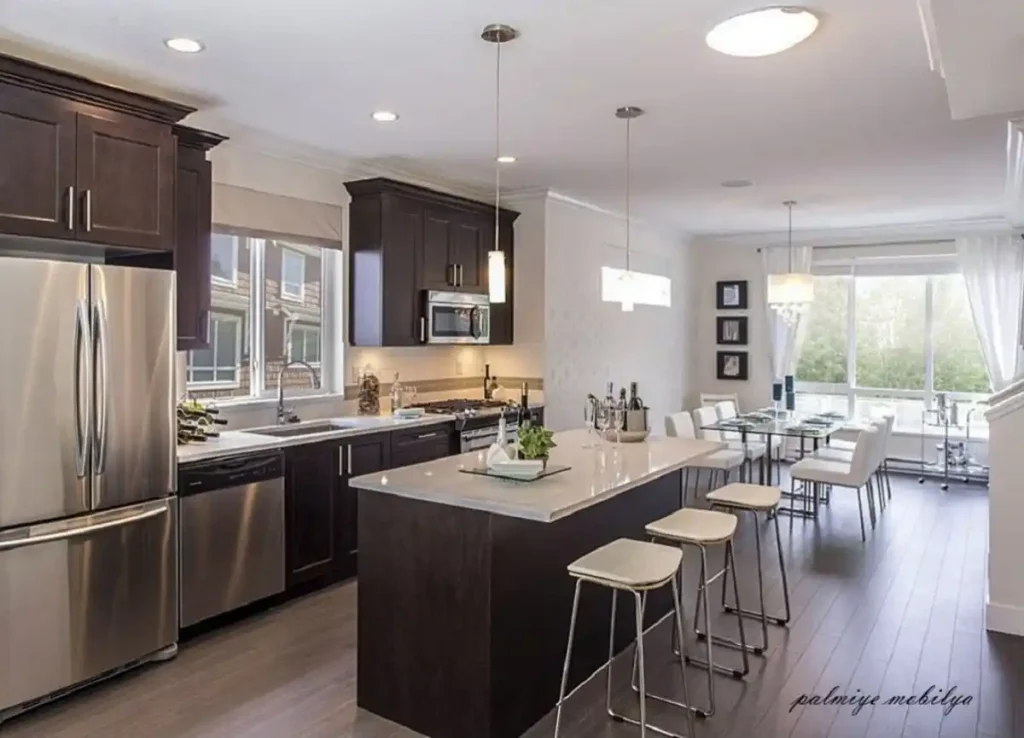
Investing in a Turkish Solid Wood Kitchen blends reliable structural durability with refined, natural design. By understanding the underlying material science, precision joinery techniques, and finishing options, interior designers and homeowners can collaborate with top Turkish factories to build an elegant kitchen space that balances high-performance utility with timeless aesthetic appeal.



Etiket:Acrylic Kitchen Cabinet Turkey, Built-in Kitchen Cabinet Turkey, Country Kitchen Cabinet Turkey, Handleless Kitchen Cabinet Turkey, High Gloss Kitchen Cabinet Turkey, Lacquered Kitchen Cabinet Turkey, Membrane Kitchen Cabinet Turkey, Ready-Made Bathroom Cabinet Turkey, Ready-Made Kitchen Cabinet Turkey, Small Bathroom Cabinets Turkey, Small Kitchen Cabinets Turkey, Wooden Bathroom Cabinet Turkey, Wooden Kitchen Cabinet Turkey

Şunları da sevebilirsiniz
Bathroom Cabinet Prices Turkey
Bathroom Cabinet Models Turkey