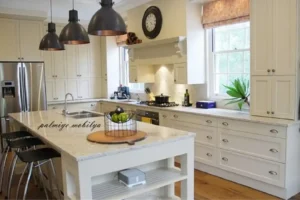

Wooden Kitchen Cabinet Turkey
Wooden Kitchen Cabinet Turkey: The Ultimate Technical, Design, and Sourcing Guide
The international luxury kitchen design and millwork industry has experienced a major structural shift over the last decade. Global procurement executives, upscale real estate developers, and architectural firms are moving away from traditional, high-overhead European producers in favor of manufacturing ecosystems that combine cutting-edge technology with deep-rooted artisanal heritage. Turkey has established itself as an undisputed leader in this field. By integrating state-of-the-art German and Italian automated machinery with centuries of fine woodworking traditions, Turkish factories deliver high-end cabinetry to markets worldwide. Within this expanding sector, the global demand for a premium wooden kitchen cabinet from Turkey has reached unprecedented levels, setting new benchmarks for timber selection, joinery precision, and long-term structural durability.
This comprehensive technical guide provides an exhaustive, multi-dimensional analysis of the wooden kitchen cabinet industry in Turkey. We will explore wood species selection, timber drying physics, advanced substrate engineering, structural joinery methods, state-of-the-art finishing technologies, quality testing standards, regional industrial clusters, and complex global logistics.
1. Timber Selection and Dendrological Material Science
The structural performance and visual quality of a wooden kitchen cabinet from Turkey depend heavily on the characteristics of the raw timber. Wood is an organic, anisotropic material, meaning its physical properties differ along its grain lines. Managing this natural variation requires deep scientific expertise from timber selectors and engineers.
Hardwood Species Selection: Structural Profiles
Turkish manufacturers utilize a diverse selection of high-grade domestic hardwoods alongside imported certified timbers to satisfy a wide range of international architectural requirements.
- Turkish Walnut (Juglans regia): Known worldwide for its rich chocolate tones, complex wavy grain lines, and high structural stability. Turkish walnut is a highly sought-after material for luxury, bespoke cabinetry projects. Its natural hardness resists dents and impacts, while its grain responds beautifully to premium hand-applied oils.
- European Oak (Quercus robur): Sourced from managed domestic forests or imported from Eastern Europe, this wood is favored for its prominent ring patterns and high density. Oak provides excellent mechanical strength and tannin structures that make it highly receptive to modern fuming, bleaching, and wire-brushing techniques.
- European Beech (Fagus sylvatica): A dense hardwood with a fine, uniform texture. Beech is widely harvested in Turkey’s Black Sea region. Due to its straight grain and exceptional mechanical resistance, it is often utilized for internal drawer structures, solid wood framing, and painted shaker doors.
- Ash (Fraxinus excelsior): Renowned for its excellent elasticity and coarse, open-grain structure. Ash is frequently selected for contemporary kitchens requiring deep wire-brushed textures or custom stains.
The Physics of Timber Drying and Equilibrium Moisture Content (EMC)
A primary challenge when manufacturing solid wood cabinetry is preventing subsequent warping, splitting, or joint separation. Raw timber contains high levels of free and bound water, which must be systematically removed. Turkish mills minimize this risk by utilizing advanced, computerized kiln-drying processes.
[ Raw Logs ] -> [ Precise Quarter-Sawn Milling ] -> [ Air Seasoning (Pre-Drying) ]
                                                               |
                                                               V
[ Finished Packaging ] <- [ Computerized Dehumidification ] <- [ Conventional Steam Kiln (6% to 8% EMC) ]
- Air Seasoning: Freshly milled planks are stacked with spacer strips in covered yards for several months to reduce initial moisture content through natural air exposure.
- Conventional Steam Kiln Drying: The wood is moved into large, hermetically sealed kilns. Computerized systems gradually raise temperatures while managing relative humidity to draw out water from the core of the timber without cracking the outer wood fibers.
- Dehumidification Kilns: Many modern Turkish facilities utilize vacuum dehumidification kilns, which boil off internal moisture at lower temperatures by lowering air pressure. This preserves the wood’s natural color tones and minimizes internal stress.
- The Export Target (6% to 8% EMC): For cabinetry bound for North America or Western Europe, the timber is dried to a strict Equilibrium Moisture Content (EMC) of \(6\%\) to \(8\%\). This ensures the wood arrives structurally stable, matching the typical indoor climate control conditions of the destination countries.
2. Advanced Substrate Engineering and Cross-Lamination Dynamics
Solid wood expands and contracts in response to seasonal shifts in ambient humidity. If a kitchen door is constructed from a single wide plank of solid wood, it will naturally warp, twist, or cup. To counter these forces, premium manufacturers of a wooden kitchen cabinet from Turkey utilize advanced timber engineering principles.
Engineered Solid Elements: Solid Wood 3-Layer Board Technology
To create wide, flat panels for doors and structural carcasses, Turkish factories use multi-layer cross-lamination techniques.
- The 3-Layer Cross-Grain Matrix: A premium cabinet door often features a three-layer engineered core. The top and bottom veneer face layers run vertically, while the inner core layer consists of solid wood strips running horizontally at a perfect \(90^{\circ }\) angle.
- Canceling Natural Tensile Forces: Because wood expands primarily across its grain rather than along its length, this cross-laminated structure ensures that the dimensional movement of one layer is mechanically resisted by the adjacent layer. The resulting panel is exceptionally stable and remains flat even when exposed to high-humidity kitchen environments.
+-------------------------------------------------------+

|             Face Layer: Vertical Grain Wood Veneer    | <- Elegant Visual Layer
+-------------------------------------------------------+

|             Core Layer: Horizontal Solid Wood Strips  | <- Cancels Transverse Movement
+-------------------------------------------------------+

|             Back Layer: Vertical Grain Wood Veneer    | <- Balance Layer
+-------------------------------------------------------+
Premium Wood Veneer Sorting and Splicing Tech
For sleek modern designs, Turkish factories apply thick sliced veneers (\(0.6\text{ mm}\) to \(2.0\text{ mm}\)) over high-density, moisture-resistant core panels.
- Flitch Matching Precision: Master graders arrange wood sheets from the same log block to ensure visual continuity. They utilize expert techniques like book-matching (flipping alternating sheets like book pages) or slip-matching (sliding sheets side-by-side) to achieve clean, symmetrical grain patterns across an entire kitchen.
- Automated Splicing Lines: The sorted veneer strips are joined edge-to-edge on high-speed splicing machines (such as Kuper or Fisher & Rückle lines). These systems apply thin, heat-resistant glue threads or glue lines along the edges, fusing the veneer pieces into a single large sheet with virtually invisible joints.
3. Structural Joinery and High-Precision Cabinet Assembly
The long-term durability of a wooden kitchen cabinet from Turkey depends heavily on the strength of its structural joints. Turkish factories use a combination of traditional woodworking techniques and computer-guided accuracy to build robust cabinetry.
Traditional Joinery Formats Made with Computer Precision
Turkish factories utilize CNC machining centers from premium European brands like Homag and Biesse to cut classic, high-strength woodworking joints with tight tolerances.
- Mortise and Tenon Joints: This classic joint inserts a projecting tenon into a matching mortise cavity. It is widely utilized for solid wood face frames and Shaker-style door frames, providing high mechanical strength that easily handles decades of daily use.
- Dovetail Drawer Construction: Premium drawer boxes are built using interlocking English or French dovetail pins. Milled on automated CNC routers with tolerances tighter than \(\pm 0.05\text{ mm}\), these joints fit together perfectly, offering exceptional resistance to pull apart when drawers are heavily loaded.
- Dowel and Cam-Lock Engineering: For carcass panels, automated drilling centers insert high-density beechwood dowels alongside heavy-duty steel cam fasteners. This ensures rigid, square cabinet boxes that remain stable during transport and installation.
[ CNC Milling of Pins ] ---> [ Automatic Glue Injection ] ---> [ Hydraulic Clamp Pressing ]
                                                                       |
                                                                       V
[ Quality Check Validation ] <-- [ Hardware Pre-Mounting ] <-- [ 24-Hour Bond Stabilization ]
Automated Case Clamps and Assembly Workflows
Once the individual parts are cut and drilled, they move to the assembly line.
- Automated Glue Injections: Computerized systems inject precise amounts of water-resistant polyvinyl acetate (PVA) wood glue into the dowel and mortise holes.
- Hydraulic Case Clamping: The cabinet panels are assembled and placed inside a hydraulic case clamp. The machine applies equal pressure from all sides, squaring the cabinet box perfectly.
- Hardware Pre-Mounting: While the cabinet is held securely in the clamp, automated systems pre-mount inner drawer slides and hinge baseplates into pre-drilled holes, ensuring consistent alignment.
4. State-of-the-Art Surface Finishing Technologies
Solid wood surfaces must be thoroughly sealed to protect them from hot grease, boiling water, steam, and everyday household chemicals. Sourcing a wooden kitchen cabinet from Turkey gives buyers access to advanced, multi-layer coating systems that safeguard the wood while highlighting its natural beauty.
Polyurethane, Acrylic, and Natural Oil Surface Systems
Turkish manufacturers use high-performance finishing systems tailored to different global market requirements:
- Polyurethane (PU) Acrylic Finishes: This is the most common system for premium export lines. Acrylic PU coatings are completely non-yellowing and clear, allowing the natural grain of oak or walnut to show through clearly. The finish forms a tough polymer matrix that shields the wood from everyday impacts and scratches.
- Water-Based Eco-Finishes: To meet strict environmental rules in Western Europe and Scandinavia, Turkish mills use premium water-based acrylic lacquers. These finishes emit very low levels of Volatile Organic Compounds (VOCs), protecting indoor air quality while providing excellent water and chemical resistance.
- Artisanal Hand-Applied Oils and Waxes: For rustic or traditional designs, specialized Turkish shops apply natural linseed or tung oils enriched with beeswax. The oil sinks deep into the wood fibers rather than forming a plastic layer on top, creating an organic matte finish that ages beautifully over time.
Automated Flat-Line and Robotic Spray Processes
To achieve a completely smooth finish without run marks or dust specs, top-tier factories utilize automated finishing cleanrooms.
+-------------------------------------------------------------+

|  Overhead Infrared Flash-Off Zone (Solvent Evaporation)     |
+-------------------------------------------------------------+

|  Robotic Anthropomorphic Spray Arms (Uniform Atomization)    |
+-------------------------------------------------------------+

|  High-Velocity Air-Knife Cleanroom Dust Exclusion Chamber    |
+-------------------------------------------------------------+

|  Multi-Head Calibration and Micro-Friction Sanding System  |
+-------------------------------------------------------------+
- Intermediate Sanding: Panels pass through multi-head wide-belt sanders using fine micro-abrasive papers (up to 400-grit) to smooth out any raised wood fibers.
- Robotic Spray Application: Anthropomorphic robotic arms with automated spray heads move across the panels inside positive-pressure spray booths. The system manages spray thickness to within a few microns, ensuring an even coat over detailed carvings and molding profiles.
- UV Curing Tunnels: For flat panels, UV-curable finishes pass under intense ultraviolet lights, instantly drying the coating into a hard shell. This allows the panels to be handled, packed, and palletized immediately without lengthy drying delays.
5. Engineering Performance Metrics, Testing, and Compliance
Wooden kitchen cabinetry must handle structural loads, thermal changes, and everyday kitchen use without cracking or losing its finish. Turkish manufacturers ensure their products comply with strict international testing frameworks to remain competitive globally.
Rigorous Material and Finishing Standards
| Performance Characteristic | International Standard | Turkish Manufacturer Compliance Profile |
|---|---|---|
| Wood Base Formaldehyde Emissions | EN 717-1 / CARB Phase 2 | Full compliance with E1 and ultra-clean E0 eco-standards, ensuring safe indoor air quality. |
| Surface Finish Scratch Resistance | EN 438-2 / ISO 1518 | Advanced clear topcoats withstand structural forces up to 4.5N without film penetration. |
| Hydrothermal Movement Stability | EN 324 (Dimensional Test) | Undergoes less than \(0.15\%\) movement across the grain during rapid humidity shifts from \(35\%\) to \(85\%\). |
| Chemical & Liquid Stain Barrier | EN 12720 / DIN 68861-1 | Zero staining or wood discoloration from 16 hours of contact with red wine, coffee, vinegar, or citrus juices. |
| Adhesion Strength | ASTM D3359 (Cross-Cut) | Achieves a top 5B rating, ensuring zero peeling or delamination at coating joints. |
The Hydrothermal Endurance Test Matrix
To protect cabinetry destined for regions with extreme seasonal weather—such as the northern United States, Canada, or the Gulf region—Turkish laboratories place sample door assemblies inside environmental simulation chambers.
These panels go through rapid temperature and humidity cycles, shifting from sub-freezing conditions to high heat (\(60^{\circ }\text{C}\)) and high humidity within a few hours. To pass, the timber joints must show zero cracking, and the laminated layers must remain firmly bonded without splitting.
6. Functional Architecture: Hardware Integration and Spatial Systems
A premium wooden kitchen cabinet from Turkey is engineered as a complete architectural system where the exterior wood components and internal hardware mechanisms work together smoothly.
Premium Hardware Integration: Blum, Grass, and Samet
The daily performance of Turkish cabinetry relies heavily on European-standard engineering partnerships:
- Blum (Austria) & Grass (Germany): Turkish luxury lines come configured with Blum Clip Top Blumotion hinges and Legrabox drawer runner systems. These components feature fluid-dampened soft-closing mechanisms and dynamic load capacities ranging from \(40\text{ kg}\) to \(70\text{ kg}\) per drawer unit.
- Samet (Turkey): As a premier domestic manufacturing giant, Samet produces world-class, award-winning lift-up flap mechanisms, multi-dimensional hinge systems, and ultra-slim drawer configurations (such as the Alpha Box and Flow box series). These components deliver reliable functionality and exceptional durability at a highly optimized cost point.
Architectural Handleless Designs: Milled Profiles and Gola Channels
Solid wood’s strength makes it an excellent material for creating clean, handleless kitchen profiles:
- Milled J-Pull Channels: Automated routers carve an ergonomic finger grip directly into the top edge of a solid wood door frame before finishing. This creates a clean look that showcases the natural beauty of the wood grain without needing external metal handles.
- Aluminum Gola Systems: The cabinet boxes are engineered to include recessed aluminum Gola profiles (horizontal channels for base units, vertical channels for tall pantry units). This allows users to open doors easily by pulling them from behind the flat door panel, maintaining clean, uninterrupted design lines across the kitchen.
   [ Quartz Countertop ]
   ---------------------
   [ Recessed Aluminum Gola Channel ] <--- User pulls door from behind the panel
   +-------------------+

   |                   |
   | Solid Oak /       |
   | Walnut Door Panel |
   |                   |
   +-------------------+
Carcass Engineering and Internal Shell Construction
While the exterior doors use premium solid wood or veneers, the internal cabinet box (carcass) requires a rugged, easy-to-clean structure. Turkish factories construct these internal units using \(18\text{ mm}\) thick melamine-faced moisture-resistant particle board or MDF.
For luxury installations, manufacturers offer carcasses made from real wood veneered plywood or solid multi-layer blockboards. All exposed carcass edges are edge-banded with \(1\text{ mm}\) thick real wood veneer strips using waterproof PUR adhesives to protect the cabinet from moisture and everyday wear.
7. Sourcing Geography: Major Cabinetry Clusters in Turkey
The production of furniture and cabinetry in Turkey is organized into massive, highly specialized Organized Industrial Zones (OSB – Organize Sanayi Bölgesi). For international procurement managers, real estate developers, and wholesale distributors planning an efficient sourcing trip, targeting the correct geographic hub is critical.
1. Inegöl (Bursa): The Global Woodworking Capital
- Industrial Landscape: Inegöl stands as one of the largest and most comprehensive furniture manufacturing clusters in Europe. It houses an entire industrial ecosystem of raw wood processors, advanced MDF production plants, chemical suppliers, and large-scale cabinetry factories.
- Best Suited For: Medium-to-large multi-residential housing projects, wholesale container distribution, and mid-to-high tier custom branding. Inegöl factories excel at handling bulk exports efficiently while maintaining reliable production schedules.
2. Istanbul (Modoko, Masko, and Tuzla OSB): Design Innovation
- Industrial Landscape: Istanbul combines high-end design showrooms with advanced production facilities in the Tuzla, Ikitelli, and Hadimkoy industrial zones. It is the center for design innovation, custom detailing, and architectural planning in Turkey.
- Best Suited For: Boutique real estate developments, high-end custom penthouses, and complex architectural projects that require close collaboration on design details and custom sizing.
3. Ankara (Siteler): Artisanal Mastery and Heavy Solid Milling
- Industrial Landscape: Siteler in Ankara is one of Turkey’s oldest and most respected woodworking clusters. It is renowned for skilled craftsmanship, custom millwork, and high-precision detailing.
- Best Suited For: High-end residential projects requiring heavy solid timber work, ornate classical carvings, or specialized hand-rubbed wood finishes.
4. Kayseri: Automated Engineered Components
- Industrial Landscape: Kayseri houses massive, highly automated industrial manufacturing plants. These factories rely on high-speed, automated flat-line lamination setups and computerized vacuum presses.
- Best Suited For: Large commercial projects that need standardized veneered components or volume production of core engineered wood elements.
8. Strategic Value Proposition: Turkey vs. Italy vs. China
For real estate developers, commercial procurement directors, and hotel construction managers, selecting a manufacturing partner is an important financial decision. A premium wooden kitchen cabinet from Turkey offers a highly compelling value proposition when compared to products from other major global manufacturing hubs.
Turkey vs. Italy (The Luxury vs. Cost Balance)
- Quality Comparison: Premium Turkish factories use identical German CNC machinery and the exact same premium European hardware as top-tier Italian brands. The level of physical craftsmanship, adhesion strength, and edge quality is virtually indistinguishable.
- The Financial Advantage: Due to lower operating overhead, localized energy infrastructure, and highly optimized labor rates, a premium wooden kitchen manufactured in Turkey is typically \(40\%\) to \(60\%\) more cost-effective than an identical setup made in Italy.
Turkey vs. China (The Logistics vs. Tariff Balance)
- Material Reliability: Turkish manufacturers use authentic, thick polymer sheets that meet strict European Union quality standards.
- Logistical Efficiency: For buyers across Europe, the Middle East, and the East Coast of North America, Turkey offers significantly shorter shipping times. This protects project timelines from the delays often associated with East Asian shipping routes.
- Tariff Protection: Cabinetry sourced from Turkey avoids the heavy anti-dumping duties and punitive trade tariffs that many Western nations place on Chinese wood and furniture products.
9. Supply Chain Logistics, Packaging Protocols, and Transit Management
Shipping a container of high-quality wooden kitchen cabinet from Turkey to international ports requires careful attention to packaging and logistics. Wood and veneer surfaces are sensitive to friction, pressure, and ambient humidity during ocean transport, making proper preparation essential.
Rigid Pre-Assembled vs. Knock-Down (Flat-Pack) Shipping Configurations
Turkish factories provide two primary shipping formats depending on project scale and destination requirements:
- Rigid Assembly (Pre-Assembled Cabinets): Each cabinet box is completely assembled, square-checked, and fitted with its doors and hardware right at the factory. This guarantees flawless alignment, reduces on-site installation time, and minimizes mistakes by local tradespeople.
- Flat-Pack / Ready-to-Assemble (RTA): Panels are shipped disassembled in flat boxes. This method maximizes container volume, making it highly economical for long-distance transport to regions like Australia or the West Coast of North America.
The Protective Packaging Standard
To ensure every panel arrives in pristine condition, Turkish exporters implement a strict, multi-layer packaging protocol:
+-------------------------------------------------------------+

|  Heavy-Duty 5-Ply Corrugated Outer Carton Box               |
+-------------------------------------------------------------+

|  High-Density EPS Foam Corner & Edge Guards (Impact Buffer) |
+-------------------------------------------------------------+

|  Soft Polyethylene Foam Interleaving Layers (Anti-Friction) |
+-------------------------------------------------------------+

|  Co-Extruded Protective Paper Wrap or PE Surface Film       |
+-------------------------------------------------------------+
- The Primary Surface Protection: A factory-applied protective film shields the wood face from dust and scratches. This film stays on the panels during cutting, edge-banding, shipping, and installation, and is peeled off only when the kitchen is ready for handover to the client.
- The Friction Barrier: Panels are separated by soft polyethylene foam sheets to prevent micro-scratching caused by transit vibrations.
- The Impact Buffer: High-density expanded polystyrene (EPS) foam corner blocks and edge guards protect the package against accidental drops or shifting inside the shipping container.
- The Outer Shield: The entire package is sealed inside a heavy-duty, moisture-resistant 5-ply corrugated cardboard box, which is then securely strapped onto reinforced wooden pallets for safe forklift handling.
Container Desiccant Systems for Climate Control
Because wood is responsive to environmental conditions, transporting cabinets across different climate zones carries risks. If a container sits on a hot ship dock and then enters cold northern waters, moisture can condense inside the container, causing the wood to swell.
To prevent this, Turkish exporters line the walls of shipping containers with heavy-duty thermal insulation blankets and place large bags of silica-gel desiccants inside. This absorbs excess moisture from the air, maintaining a stable humidity level throughout the entire sea journey.
10. Environmental Responsibility and Sustainable Forestry Certifications
Modern real estate developments and premium commercial projects require strict compliance with international green building frameworks, including LEED, BREEAM, and WELL certifications. The Turkish wood industry has adapted quickly to meet these rigid eco-standards.
FSC Chain of Custody (CoC) Verification
Top-tier manufacturers of a wooden kitchen cabinet from Turkey maintain full Forest Stewardship Council (FSC) certification. This tracking system ensures that every log used can be traced back to a responsibly managed forest. These logging operations prioritize biodiversity conservation, prohibit illegal harvesting, and protect the rights of local indigenous communities and forestry workers.
Low-Emission Bonding Chemistry
The adhesives used to laminate veneers and assemble cabinet cores comply with global air quality guidelines. Turkish factories use wood components that meet strict European E0 and California Air Resources Board (CARB) Phase 2 standards. This ensures that the finished cabinetry releases virtually no formaldehyde, protecting indoor air quality in residential spaces.
11. Professional Installation and Long-Term Maintenance Protocols
To ensure that a premium wooden kitchen cabinet from Turkey maintains its flawless look and performance for decades, proper installation techniques and regular maintenance are essential.
Precision Installation: Laser-Guided Levelling
Because contemporary cabinetry features clean, geometric lines, minor misalignments will be highly visible. Experienced installation teams utilize multi-line 3D laser levels to establish a true horizontal line across the space.
Any unevenness in the floor or walls is corrected using heavy-duty adjustable legs (such as those from Italian brand Camar), which are later concealed behind matching plinths fitted with soft rubber floor seals to keep out dust and moisture.
  Vertical Drywall Line
  |
  +------------------+

  |  Wooden Cabinet  | <--- Micro-leveled via adjustable legs
  +------------------+

  |  Adjustable Leg  | <--- Camar Heavy-Duty Leveling System
  +------------------+
  ==================== Finished Floor Level
Accommodating Architectural Expansion Gaps
When installing real wood cabinetry, experienced tradespeople leave small expansion gaps near walls and ceilings. These gaps are hidden behind matching crown moldings or scribed filler panels, giving the wood room to expand naturally during humid summer months without putting pressure on the cabinet joints.
Long-Term Care and Cleaning Instructions
Maintaining the beautiful finish of a premium Turkish wood kitchen is simple and straightforward when following a few basic guidelines:
- Daily Wipe-Downs: Use a soft, lint-free microfiber cloth dampened with warm water and a drop of pH-neutral liquid dish soap. Avoid paper towels, coarse sponges, or old rags, which can contain abrasive fibers that leave faint swirl marks over time.
- Chemicals to Avoid: Never use cleaning agents that contain ammonia, acetone, thinners, bleach, or abrasive scouring powders. These harsh chemicals can break down the outer polymer structure, permanently dulling the surfaces or altering the texture of matte finishes.
- Moisture Management: While premium cabinetry is highly water-resistant due to advanced edge engineering and PUR hot-melt bonding, it is best practice to avoid hanging wet kitchen towels directly over the cabinet doors. Additionally, run the range hood during cooking to prevent concentrated steam from settling on the upper cabinet edges.
12. Conclusion: The Strategic Value of Sourcing Wooden Cabinetry from Turkey
Specifying or purchasing a wooden kitchen cabinet from Turkey offers an exceptional combination of natural beauty, advanced material engineering, and smart financial value. By using high-density moisture-resistant MDF cores, premium real wood veneers or solid wood components, and state-of-the-art German and Italian machinery, Turkish manufacturers deliver cabinetry that meets or exceeds international luxury benchmarks at a highly optimized cost.
Whether you are an international real estate developer coordinating a multi-unit apartment complex or an interior designer creating a custom residential kitchen, Turkey’s modern manufacturing hubs provide the scale, flexibility, and logistical efficiency to bring your high-end design concepts to life.

Şunları da sevebilirsiniz

Distressed Furniture Turkey

Lacquered Furniture Turkey