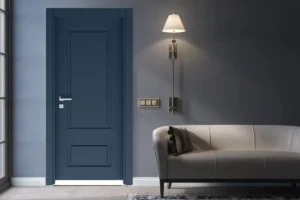

Door Models Turkey
The Turkish interior and exterior architecture sector has undergone a profound industrial transformation, positioning the country as a leading global manufacturing hub for high-end engineered joinery. When exploring options for a commercial development, a luxury hospitality project, or a large-scale residential compound, understanding the structural configurations of Door Models Turkey is essential for balancing budget targets with strict building regulations.
Modern Turkish manufacturing facilities combine automated CNC machinery with advanced materials science to produce entry and interior systems that satisfy European Standards (EN) for acoustics, structural deflection, and fire ratings.
The Engineering Handbook to Architectural Door Models Turkey
+---------------------------------------------------------------------------------------+

|                                  DOOR MODELS TURKEY                                   |
|                      Core Component and Structural Configurations                      |
+---------------------------------------------------------------------------------------+
                                           |
         +---------------------------------+---------------------------------+

         |                                                                   |
         v                                                                   v
+---------------------------------------+           +---------------------------------------+

|        INTERIOR DOOR SYSTEMS          |           |        EXTERIOR SECURITY SYSTEMS      |
+---------------------------------------+           +---------------------------------------+

         |                                                                   |
         +--> Lacquered MDF Models               +--> Monoblock Hook-Lock Steel Models

         |                                       |
         +--> High-Pressure Laminate (HPL)       +--> Pivot-Axis Architectural Entrances

         |                                       |
         +--> Natural Timber Veneer Models       +--> Electro-Galvanized Armored Systems

         |                                       |
         +--> Alumatik Flush-Frame Systems       +--> Thermally Broken Smart-Lock Models
1. Structural Architecture and Core Matrix Configurations
An architectural door is far more than a visual partition; it is an engineered component designed to control acoustics, resist impact, and prevent thermal transfer. Turkish manufacturers design Door Models Turkey using a three-tier internal core structure, tailored to distinct performance requirements and project budgets.
The Substrate Foundation: High-Density MDF vs. Solid Lumber Core
The structural stability of any interior door leaf depends heavily on its external cross-sectional skin and internal framework. Premium Door Models Turkey utilize face skins made from High-Density Fiberboard (HDF) or Medium-Density Fiberboard (MDF) with densities ranging from \(720 \text{ kg/m}^3\) to \(850 \text{ kg/m}^3\).
- Internal Bond (IB) Strength: The internal bond strength, measured according to EN 319, must exceed \(0.60 \text{ N/mm}^2\). This level of strength prevents delamination when structural coatings are cured or when deep CNC routing patterns are carved into the panel surface.
- Perimeter Framing (Stiles and Rails): The internal frame is built from finger-jointed, kiln-dried massif pine or spruce timber. Finger-jointing removes the natural growth tension within the wood fibers. This engineering step reduces the risk of the door warping or bowing to less than \(\pm 2\text{ mm}\) over the product’s lifespan, even when exposed to seasonal changes in humidity.
                  Cross-Section of an Interior Door Leaf
   +------------------------------------------------------------------+

   |   Multi-Layer Surface Coating (Lacquer / HPL / Wood Veneer)     |
   +------------------------------------------------------------------+

   |   Substrate Skin: 6mm or 8mm High-Density MDF (\>720 kg/m³)       |
   +------------------------------------------------------------------+

   |                                                                  |
   |             INTERNAL CORE COMPONENT SELECTION MATRIX             |
   |                                                                  |
   |   [Option A: Tubular Particleboard Core]                         |
   |   - Density: 320-380 kg/m³  - Sound Mitigation: 28dB - 34dB      |
   |                                                                  |
   |   [Option B: Phenolic Kraft Paper Honeycomb]                     |
   |   - Cell Size: 15-22mm      - Weight Reduction Optimization      |
   |                                                                  |
   |   [Option C: Solid Mineral Wool / Fire-Rated Core]               |
   |   - Classification: EI30 / EI60 / EI90 Fire Resistance           |
   |                                                                  |
   +------------------------------------------------------------------+

   |   Substrate Skin: 6mm or 8mm High-Density MDF (\>720 kg/m³)       |
   +------------------------------------------------------------------+

   |   Multi-Layer Surface Coating (Lacquer / HPL / Wood Veneer)     |
   +------------------------------------------------------------------+
Internal Core Engineering Variations
- Tubular Particleboard Core (Core-Drilled): Extruded using horizontal or vertical cylindrical cavities, this option provides an ideal balance of mechanical weight distribution and acoustic insulation. With a typical density profile between \(320 \text{ kg/m}^3\) and \(380 \text{ kg/m}^3\), it offers a baseline sound reduction index (\(R_{w}\)) of \(28\text{ dB}\) to \(34\text{ dB}\).
- Phenolic-Impregnated Honeycomb Core: This lightweight solution features a hexagonal paper matrix with cell sizes from \(15\text{ mm}\) to \(22\text{ mm}\). It is commonly selected for budget-conscious multi-housing projects because it minimizes static load on the hinges, ensuring reliable operation over thousands of cycles.
- Solid Mineral Fire Core: Built from non-combustible compressed mineral boards or high-density solid particleboards, these cores meet strict international fire safety regulations. They are engineered to achieve fire resistance ratings of EI30, EI60, or EI90 under EN 1634-1 standards.
2. Interior Door Models Turkey: Surface Materials & Manufacturing
The visual appearance and durability of interior Door Models Turkey depend directly on the raw materials and surface treatment technologies used during production. Turkish factories utilize four main surface treatment styles to satisfy diverse architectural aesthetics and performance conditions.
| Door Model Category | Primary Substrate Material | Surface Finish System | Mechanical Performance Profile | Ideal Architectural Applications |
|---|---|---|---|---|
| Lacquered MDF Models | High-Density MDF (\(>750 \text{ kg/m}^3\)) | 2K Acrylic-Polyurethane Liquid Lacquer | Excellent surface smoothness, high impact resistance, non-yellowing UV stability | Luxury Residential Interiors, Modern High-End Hotels |
| High-Pressure Laminate (HPL) | Kraft-paper resin composite sheet | Phenolic resin surface layer | Maximum scratch resistance, anti-bacterial, completely moisture proof | Hospital Corridors, Schools, High-Traffic Commercial Zones |
| Natural Timber Veneer | Standard Core MDF cladding | Real cut wood veneer + Clear polyurethane topcoat | Natural grain textures, premium tactile feel, strong structural stability | Executive Boardrooms, Upscale Residential Properties |
| PVC / PP Membrane Models | CNC-routed structural MDF | Thermoplastic foil applied via vacuum thermo-bonding | No visible seams or joints, easy to clean, highly cost-effective | Public Housing Developments, Standard Domestic Bathrooms |
Lacquered MDF Models: Chemical Finishing Science
Lacquered options among Door Models Turkey represent the peak of modern minimalist design. These doors are finished using multi-stage, automated spray lines housed within pressurized Class 100 cleanrooms.
- Polymer Cross-Linking: The coating system uses dual-component (2K) acrylic-polyurethane liquid resins. These resins form cross-linked chemical bonds with aliphatic isocyanate hardeners, creating a tough, flexible surface layer.
- Optical Uniformity: These models are calibrated to maintain precise reflectivity profiles. High-gloss options achieve readings above \(90\text{ Gloss Units (GU)}\) at a \(20^{\circ }\) testing angle, while modern deep-matte variations are held to a soft, consistent range of \(3\text{ GU}\) to \(7\text{ GU}\) at a \(60^{\circ }\) testing angle.
High-Pressure Laminate (HPL) Models: Commercial Durability
For commercial projects like healthcare facilities, university dormitories, and corporate offices, HPL variations of Door Models Turkey offer exceptional resistance to wear and tear.
- Material Composition: The HPL surface layer is made by pressing layers of Kraft paper impregnated with phenolic resins under high heat (\(\ge 140^{\circ }\text{C}\)) and high pressure (\(\ge 7\text{ MPa}\)).
- Performance Testing: These doors meet or exceed EN 438 durability standards. This design ensures the door faces resist scratching, scuffing, and aggressive chemical disinfectants, making them ideal for high-traffic hallways and public spaces.
3. High-Security Exterior Steel Door Models Turkey
Turkish manufacturing excels in producing heavy-duty, armored exterior security entry systems. The external steel options within the Door Models Turkey category are engineered to resist physical impacts, attempted forced entries, and harsh weather conditions.
               Security Engineering Architecture of an Armored Door
+---------------------------------------------------------------------------------+

|                               STRUCTURAL STEEL FRAME                            |
|       Outer Chassis: 1.5mm to 2.0mm Cold-Rolled Carbon Steel Profile             |
+---------------------------------------------------------------------------------+
                                         |
                                         v
+---------------------------------------------------------------------------------+

|                                INTERNAL ARMOR MATRIX                            |
|  - Multi-Point Monoblock Hook Locks with 4-Way Hardened Steel Locking Bolts     |
|  - Vertical and Horizontal Omega (\Omega) Shaped Structural Steel Reinforcements  |
|  - Integrated Anti-Drill Manganese Alloy Defensive Plates Protecting the Cylinder|
+---------------------------------------------------------------------------------+
                                         |
                                         v
+---------------------------------------------------------------------------------+

|                             CLADDING & ENVIRONMENTAL SEAL                       |
|  - Weatherproof Marine Plywood Cladding with Anti-Fading Composite Finishes     |
|  - Continuous Double-Perimeter Compression Gaskets for Thermal & Sound Sealing  |
+---------------------------------------------------------------------------------+
Mechanical Chassis Construction
The foundation of a premium Turkish security door is a rugged chassis made from cold-rolled carbon steel sheets.
- Gauge Thickness: The internal door structure uses steel sheets with a minimum thickness of \(1.5\text{ mm}\), which increases up to \(2.0\text{ mm}\) for bank-grade or high-security residential designs.
- Omega \((\Omega)\) Reinforcements: The interior of the steel leaf is reinforced with multiple vertical and horizontal \(\Omega \)-shaped steel ribs. These ribs are spot-welded into place to provide exceptional structural rigidity, preventing the door from buckling or bending when subjected to heavy hydraulic crowbar pressures.
Locking Mechanisms and Anti-Intrusion Technology
Security-focused Door Models Turkey feature multi-point locking systems sourced from international security manufacturers.
- Monoblock Lock Systems: These heavy-duty systems deploy up to 12 or 14 independent steel bolts into the reinforced steel frame with a single turn of the key. The bolts lock into multiple edges of the frame simultaneously, making forced entry extremely difficult.
- Manganese Alloy Defenders: The locking cylinder is protected by a rotating, anti-drill defender plate made from hardened manganese steel. This defensive layer prevents drilling attacks, core-pulling, or physical shearing of the lock.
- Smart Access Control Options: Premium exterior models can be upgraded with electronic access systems, including biometric fingerprint scanners, encrypted RFID card readers, and smart locks that integrate with home automation networks.
4. Modern Architectural Trends: Flush-to-Wall and Pivot Models
As luxury residential design shifts toward minimalist and grand architectural statements, Turkish industrial engineers have developed specialized luxury variants within the Door Models Turkey catalog.
       Flush-to-Wall concealed Sub-Frame vs. Large-Scale Pivot Axis Systems

    [Option A: Invisible Frame Model]         [Option B: Heavy Pivot Model]
       Wall Line                                         Ceiling Line
     ==============                                     ==============

         |    |                                               |
         |Con-|                                               |
         |ceal|                                            +--v--+ Offset Pivot
         |-ed |                                            |     | Hinge Axis
         |Alu |                                            |     | (360° Rotate)
         |Sub-|                                            |     |
         |Frame                                            |     |
         |    |                                            |     |
     +---+----+----------+                             +---+-----+-----------+

     |   Door Leaf       |                             |  Massive Entry Leaf |
     | (Flush with Wall) |                             |   (Up to 500 kg)    |
     +-------------------+                             +---------------------+
     ==============                                     ==============
       Wall Line                                         Floor Line
Flush-Invisidoor Concealed Systems
Flush-frame alternatives of Door Models Turkey remove traditional architraves and visible door frames, allowing the door leaf to sit perfectly flush with the adjacent drywall or plaster surface.
- Aluminum Structural Sub-Frame: The frame is constructed from an extruded aluminum alloy profile (EN AW-6060) that is anchored directly into the wall structure before plastering.
- Concealed Hinge Integration: The door relies on 3D-adjustable hidden hinges (such as Simonswerk or Anselmi systems). These hinges allow installer to fine-tune the door across three axes (\(\pm 2\text{ mm}\) lateral, vertical, and depth adjustments), ensuring clean, perfectly uniform gaps around the door leaf.
Grand Pivot Entry Models
For large architectural entrances, pivot-axis options within the Door Models Turkey line replace standard edge-mounted hinges with heavy-duty top and bottom pivot pins.
- Weight and Load Capacities: These specialized pivot hinges support massive entries weighing anywhere from \(200\text{ kg}\) to over \(500\text{ kg}\).
- Offset Pivot Axis: By shifting the rotation axis inward from the wall edge, these systems create a dramatic, floating opening movement. They are often built with integrated hydraulic dampening mechanisms to ensure smooth closing and safe operation, despite their large physical size.
5. Technical Metrology, QA, and Performance Compliance Testing
To maintain a competitive edge in global export markets, leading manufacturers subject their Door Models Turkey lines to independent laboratory testing. This rigorous evaluation ensures compliance with stringent international quality criteria.
Door Specimen ---> Acoustic Isolation (ISO 10140) ---> Fire Exposure Tunnel (EN 1634-1) ---> Cycle Tester (EN 1191) ---> Spectrophotometer
Fire Resistance Ratings (EN 1634-1)
Fire-rated variants of Door Models Turkey undergo destructive testing inside specialized horizontal or vertical furnace chambers.
- Thermal Integrity Preservation: The door leaf, complete with its frame, intumescent seals, and hardware, is exposed to temperatures that climb past \(1000^{\circ }\text{C}\) along a standard time-temperature curve.
- Intumescent Gasket Activation: When temperatures hit approximately \(150^{\circ }\text{C}\), specialized graphite-based intumescent gaskets around the frame expand to several times their original volume. This expansion seals all perimeter air gaps, completely blocking smoke, toxic gasses, and hot flames from passing into adjacent rooms.
Acoustic Isolation Performance (ISO 10140-2)
Sound-insulated variants of Door Models Turkey are tested within dual reverberation chambers to measure their ability to block airborne noise transmission.
- Sound Transmission Reduction: By combining high-density tubular particleboard cores or multi-layered acoustic mineral wool pads with drop-down automatic floor seals, these models achieve certified sound reductions ranging from \(32\text{ dB}\) up to \(44\text{ dB}\).
- Target Applications: These high-performance acoustic doors are frequently specified for five-star hotel guest rooms, educational classrooms, and confidential healthcare consulting spaces.
Mechanical Endurance Testing (EN 1191 / EN 12400)
The mechanical durability of a door framework is verified using automated robotic arms that repeatedly open and close the door system over extended testing cycles.
- Classification Criteria: Premium interior and exterior doors are engineered to meet Class 5 or Class 6 performance standards, certifying their ability to withstand \(100,000\) to \(200,000\) continuous opening and closing actions without structural breakdown or hardware failure.
6. Engineering of Frames, Adjustable Jambs, and Architraves
A door system’s field durability depends on the engineering of its framing components. Turkish manufacturers design their jamb configurations to function as integrated, adjustable assemblies that streamline installation and handle wall thickness variations.
                  Telescopic Adjustable Jamb Cross-Section
   Wall Structural Mass (Brick / Concrete / Drywall Studs)
 ====================================================================

   |                                                                |
   |     +----------------------------------------------------+     |
   |     |  Telescopic L-Shaped Architrave (Adjustable)       |     |
   |     +-----------------------+----------------------------+     |
   |                             | (Insert Tongue Slot)             |
   |                             v                                  |
   |   +-------------------------+--------------------------------+ |
   |   | Main Structural Frame / Wood-Plastic Composite Core       | |
   |   +----------------------------------------------------------+ |
   |   | Continuous EPDM Co-Extruded Cushioning Gasket            | |
   |   +-------------------------+--------------------------------+ |
   |                             |                                  |
   |                             v                                  |
   |                    [Door Leaf Closure Path]                    |
   |                                                                |
 ====================================================================
Telescopic L-Shaped Frame Technology
To adapt to variations in partition wall thicknesses on construction sites, the framing systems of Door Models Turkey use smart telescopic configurations.
- Adjustable Tongue Design: The architrave features an integrated structural extension tongue that slides smoothly into a matching slot milled along the main door frame.
- Wall Thickness Accommodation: This sliding mechanism allows the frame depth to expand or contract by \(20\text{ mm}\) to \(50\text{ mm}\). This flexibility ensures a clean, snug fit against finished drywall or plaster without the need for custom on-site carpentry or trimming.
Wood-Plastic Composite (WPC) Waterproof Frameworks
For installation areas exposed to high moisture levels—such as wellness spas, public restrooms, and coastal residential projects—Turkish factories replace standard wood frames with advanced WPC materials.
- Material Synergy: WPC structures are made by blending thermoplastic resins with refined, clean wood flour fibers.
- Moisture Defiance: This composite material is entirely waterproof and will not swell, rot, or degrade when exposed to standing water or high humidity. The exterior surfaces are wrapped or lacquered to match the door leaf perfectly, creating a unified look with enhanced moisture protection.
7. Sustainable Manufacturing, Carbon Reduction, and VOC Management
As global building standards shift toward strict green building metrics, the manufacturing processes behind Door Models Turkey have adapted to satisfy modern environmental and sustainability criteria.
Volatile Organic Compound Exhaust Stream ---> Ceramic Heat Matrix Bed ---> Regenerative Thermal Destruction (850°C) ---> Eco-Friendly Exhaust
Low-Formaldehyde Substrate Standards
Premium Turkish door producers prioritize indoor air quality by sourcing responsibly manufactured engineered substrates.
- E1 and E0 Compliance: MDF and HDF panels conform to strict European E1 or E0 low-emission classifications under EN 717-1 testing protocols. This compliance guarantees minimal residual formaldehyde off-gassing, safeguarding the long-term indoor air quality of residential homes, schools, and healthcare projects.
VOC Reduction via Thermal Oxidation Systems
Air emissions from factory finishing lines are managed through closed-loop capture systems that route exhaust through Regenerative Thermal Oxidizers (RTO).
- Chemical Cracking Process: Volatile organic components given off by solvent-borne coatings are directed into a high-temperature combustion chamber heated to \(850^{\circ }\text{C}\).
- Clean Energy Recovery: At this temperature, volatile hydrocarbons break down safely into simple water vapor and carbon dioxide. The thermal energy produced by this process is captured and reused to heat the factory’s curing ovens, reducing overall energy consumption and shrinking the manufacturing carbon footprint.
8. On-Site Installation Protocols and Maintenance Frameworks
Even a highly engineered door will underperform if it is installed incorrectly. To ensure Door Models Turkey deliver their certified performance values over decades of use, field technicians must follow standardized installation and care procedures.
Precision Field Leveling Protocols
- Laser-Guided Alignment: Installers use multi-line self-leveling cross laser levels to verify that the structural rough opening is plumb and square before setting the frame.
- Tolerance Parameters: Vertical frame alignment tolerances are kept within \(\pm 1\text{ mm}\) across the entire height of the jamb. Keeping to this strict window ensures the door leaf stays perfectly balanced in any position and avoids swinging open or closed on its own.
- Expansion Foam Buffering: The gap between the raw wall opening and the door frame is insulated using low-expansion polyurethane foam. This material secures the frame firmly without bowing the jambs, while creating an effective acoustic and thermal seal around the perimeter.
Preventive Surface Care and Maintenance
To preserve the appearance and performance of the factory-applied finishes over time, maintenance teams should follow a structured care routine:
- Cleaning Formulations: Clean lacquered or laminated surfaces using a soft microfiber cloth dampened with warm water and a neutral, non-abrasive detergent (\(\text{pH } 7\)). Avoid solvents, acetone, or harsh chemical cleaners, as these compounds can break down the polymer chains in the topcoat and dull the finish.
- Hardware Lubrication Intervals: Mechanical locksets, latch bolts, and hinge pivot pins should be lubricated every twelve months with a clear, non-staining silicone spray or synthetic lithium grease to ensure smooth, quiet operation.
- Gasket Inspections: Periodically inspect the perimeter EPDM gaskets for elasticity or wear. Replace any damaged sections promptly to maintain the door system’s original acoustic and thermal sealing performance.
9. Global Logistics Engineering and Export Packaging Protections
Because products travel long distances by sea, rail, and road to reach international markets, the packaging methods for Door Models Turkey lines are designed to protect items from mechanical shock, pressure marks, and moisture damage during transit.
Door Leaf Surface ---> 80µm Low-Tack PE Strip Film ---> Corner EPS Foam Shock Guards ---> Double-Wall Corrugated Shell ---> Shrink Wrapping
Multi-Layer Packaging Systems
- Low-Tack Surface Protection: A clear, protective Polyethylene (PE) film (\(60\text{ \mu m}\) to \(80\text{ \mu m}\) thick) is applied to finished door faces using rubber rollers. This film safeguards the surface from minor scratches during handling and peels away cleanly on-site without leaving adhesive residue.
- Edge and Corner Shock Isolation: High-density Expanded Polystyrene (EPS) foam block bumpers are fitted over all corners and edges to absorb structural impacts if packages are bumped during loading.
- Corrugated Shell Enclosure: The protected door leaves are enclosed in a heavy, double-wall corrugated cardboard box. The complete package is then vacuum shrink-wrapped with waterproof plastic film to block humidity variations inside shipping containers, preventing wood expansion during long ocean voyages.
10. Procurement Guide: Comparing Turkish Door Production Internationally
For global supply chain directors, procurement executives, and real estate developers, selecting a primary country of origin for building materials requires evaluating multiple performance, lead time, and value factors.
| Performance Evaluation Vector | Door Models Turkey | East Asian Sourcing Alternatives | Western European Alternatives |
|---|---|---|---|
| Standard Production Timeline | 3 to 5 Weeks (Highly competitive for rapid-track multi-housing developments) | 8 to 12 Weeks (Prone to ocean transit disruptions and canal bottleneck delays) | 5 to 7 Weeks (Often constrained by limited domestic labor availability) |
| Regulatory Compliance & Testing | Certified Compliance (Full structural alignment with EN fire, sound, and CE frameworks) | Variable Baseline (Requires regular third-party field testing validation) | Strict Compliance (Comprehensive regulatory framework with a premium price tag) |
| Design Customization Agility | High Capacity (Fast setup adjustments for non-standard sizing and custom finishes) | Low Agility (Best suited for rigid, massive volume product runs) | High Capacity (Excellent engineering agility but carries a substantial cost premium) |
| Average Cost-to-Quality Balance | Optimal Return (Combines advanced automation with favorable production economics) | Low Initial Cost (Potential long-term risks regarding material durability) | Premium Cost Scale (Driven by elevated factory operating overhead and labor rates) |
11. Technical Summary and Strategic Procurement Takeaways
The diverse selections within the Door Models Turkey landscape represent a successful marriage of advanced manufacturing automation, material sciences, and responsible environmental compliance. By investing heavily in precision CNC machining, automated cleanroom coating applications, and telescopic frame designs, Turkish factories supply high-performance door systems that meet rigorous global building codes.
When managing procurement for hospitality, healthcare, or residential developments, sourcing professionals should focus on verified performance metrics over low upfront pricing:
- Confirm that interior door panels use HDF or high-density MDF substrates (\(>720\text{ kg/m}^3\)) to guarantee long-term stability and clean routing profiles.
- Specify dual-component (2K) aliphatic acrylic-polyurethane lacquers for white or light finishes to prevent UV yellowing over time.
- Require certified independent laboratory documentation for fire resistance (EN 1634-1) and sound mitigation (ISO 10140-2) to ensure compliance with local building regulations.
- Utilize telescopic adjustable jamb assemblies to minimize installation labor costs and cleanly handle variations in wall thicknesses on-site.
Partnering with an advanced manufacturing facility specializing in Door Models Turkey gives developers and builders a dependable path to sourcing premium, high-durability architectural joinery that enhances interior spaces while ensuring reliable, on-time project completion.

Butik Otel Mobilyaları

Şunları da sevebilirsiniz
Lacquered Door Factory Turkey
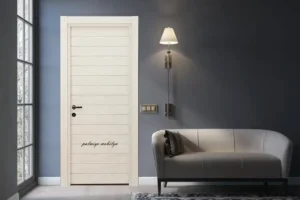
Modern Lacquered Door Turkey