

Lacquered Door Factory Turkey
Lacquered doors represent the pinnacle of modern interior architecture, blending sleek aesthetics with robust engineering. As global demand for premium interior finishes rises, Turkey has emerged as a premier hub for high-quality doors. A Lacquered Door Factory Turkey utilizes advanced automated manufacturing to produce durable, high-gloss, and matte surfaces that meet strict European standards.
This comprehensive technical guide explores engineering processes, material formulations, machinery configurations, and quality control systems within a leading Lacquered Door Factory Turkey.
The Ultimate Engineering Guide to a Lacquered Door Factory Turkey
+---------------------------------------------------------------------------------+

|                                 RAW MDF STORAGE                                 |
|         High-Density, Low-Formaldehyde (E1/E0) Engineered Wood Substrates       |
+---------------------------------------------------------------------------------+
                                         |
                                         v
+---------------------------------------------------------------------------------+

|                         Sizing & CNC Profiling Station                          |
|      Precision Cutting, Grooving, and Edge-Shaping via Multi-Axis CNC Routers   |
+---------------------------------------------------------------------------------+
                                         |
                                         v
+---------------------------------------------------------------------------------+

|                          Calibration & Wide-Belt Sanding                         |
|    Grit Sequence (P120 -> P180 -> P240) to Achieve Perfect Surface Planarity    |
+---------------------------------------------------------------------------------+
                                         |
                                         v
+---------------------------------------------------------------------------------+

|                         Isolator Base-Coat Application                          |
| Polyurethane or Polyester Chemical Barrier Layer to Prevent Fiber Swelling & Absorption |
+---------------------------------------------------------------------------------+
                                         |
                                         v
+---------------------------------------------------------------------------------+

|                         Intermediate Automated Sanding                          |
|        Denibbing Flap Wheels and Cross-Sanding to Remove Raised Wood Fibers      |
+---------------------------------------------------------------------------------+
                                         |
                                         v
+---------------------------------------------------------------------------------+

|                     Robotic Spraying: Multi-Layer Primer                        |
|   Reciprocating Arm Automated Sprayers Applying High-Solid Polyurethane Primers  |
+---------------------------------------------------------------------------------+
                                         |
                                         v
+---------------------------------------------------------------------------------+

|                         Curing & Cross-Linking Tunnel                          |
|      Infrared (IR) Flash-Off & Controlled Convection Thermal Curing Zones       |
+---------------------------------------------------------------------------------+
                                         |
                                         v
+---------------------------------------------------------------------------------+

|                        Precision Fine Sanding (P400-P600)                       |
|       Wet or Dry Automated Mechanical Polishing Prior to Final Color Coats      |
+---------------------------------------------------------------------------------+
                                         |
                                         v
+---------------------------------------------------------------------------------+

|                Class 100 Cleanroom Final Coating (Gloss/Matte)                 |
| Pressurized, Dust-Free Chamber utilizing Dual-Component (2K) Acrylic-PU Lacquers|
+---------------------------------------------------------------------------------+
                                         |
                                         v
+---------------------------------------------------------------------------------+

|                           Advanced UV / Thermal Curing                          |
| Ultra-Violet Light Photo-Initiation or Extended Thermal Curing for Peak Hardness|
+---------------------------------------------------------------------------------+
                                         |
                                         v
+---------------------------------------------------------------------------------+

|                         Metrology, QA & Final Inspection                       |
|  Glossmeter Assessment, Elcometer Dry-Film Thickness, & Cross-Hatch Adhesion Tests |
+---------------------------------------------------------------------------------+
                                         |
                                         v
+---------------------------------------------------------------------------------+

|                     Protective Film Application & Packaging                     |
|  PE Peelable Film, High-Density Corner Foam, & Heavy-Duty Corrugated Wrapping   |
+---------------------------------------------------------------------------------+
1. Introduction to the Lacquered Door Ecosystem in Turkey
The global construction and interior design sectors demand interior doors that provide structural integrity and flawless surface finishes. A specialized Lacquered Door Factory Turkey operates at the intersection of European raw material standards and high-throughput automation. Turkish manufacturers have optimized their production lines to deliver customized, volume-driven solutions for international developers, hotels, and residential projects.
The Evolution of Lacquering Technology
Lacquering has evolved from a manual, multi-step brush and spray process into a closed-loop, highly automated industrial science. Historically, traditional wood coatings struggled with:
- Volumetric shrinkage
- Environmental yellowing
- Poor resistance to mechanical impact
Modern Turkish facilities utilize advanced polymer chemistry—specifically dual-component polyurethane (2K PU), acrylic, and Ultra-Violet (UV) curable coatings—applied onto highly calibrated Medium-Density Fiberboard (MDF) substrates. This ensures complete isolation of the organic core from environmental moisture, maintaining a uniform, mirror-like gloss or a smooth matte finish.
Strategic Advantages of Turkish Production
Operating a Lacquered Door Factory Turkey offers clear geo-economic and structural advantages:
- Substrate Availability: Proximity to major European and domestic timber resources ensures a reliable supply of premium, high-density, low-formaldehyde (E1 and E0 class) MDF.
- Geographical Logistics: Located between Europe, the Middle East, and North Africa, Turkish hubs streamline multi-modal freight transport. This reduces lead times for project-based manufacturing compared to East Asian competitors.
- Regulatory Alignment: Turkish factories manufacture doors in strict accordance with European Standards (EN), including EN 15187 (Assessment of light effects) and EN 12720 (Assessment of resistance to cold liquids).
2. Structural Engineering of the Door Core and Substrates
The longevity of a lacquered door depends on the structural stability of its hidden interior. Without precise material selection and engineering of the core, the lacquer layer remains vulnerable to micro-cracking caused by structural deflection, warping, or moisture expansion.
+-----------------------------------------------------------------------+

|                       Cross-Sectional Architecture                     |
+-----------------------------------------------------------------------+

|                                                                       |
|   +---------------------------------------------------------------+   |
|   |         Top Layer: Multi-Coat 2K Acrylic-Polyurethane         |   |
|   +---------------------------------------------------------------+   |
|   |   Substrate: 6mm / 8mm High-Density MDF (680-750 kg/m³)        |   |
|   +---------------------------------------------------------------+   |
|   |                                                               |   |
|   |   Internal Core Option A: Tubular / Core-Drilled Particleboard|   |
|   |   (DIN EN 438, Acoustic Isolation ~28dB - 34dB)               |   |
|   |                                                               |   |
|   |                             -OR-                              |   |
|   |                                                               |   |
|   |   Internal Core Option B: Phenolic-Impregnated Kraft Paper    |   |
|   |   Honeycomb Cell Matrix (Cell Size: 15-22mm)                  |   |
|   |                                                               |   |
|   +---------------------------------------------------------------+   |
|   |   Substrate: 6mm / 8mm High-Density MDF (680-750 kg/m³)        |   |
|   +---------------------------------------------------------------+   |
|   |         Bottom Layer: Multi-Coat 2K Acrylic-Polyurethane      |   |
|   +---------------------------------------------------------------+   |
|                                                                       |
+-----------------------------------------------------------------------+

|   Perimeter Frame (Stile & Rail): Finger-Jointed Massif Pine/Spruce   |
|   Moisture Content Balanced to 8% - 10% to Prevent Torsional Warping  |
+-----------------------------------------------------------------------+
Substrate Criteria: MDF Density and Internal Bond Strength
A premier Lacquered Door Factory Turkey exclusively uses premium MDF sheets instead of standard particleboard for its face panels. Standard panels lack the uniform fiber distribution required for deep mechanical profiling and routing.
- Density Profile: The MDF must maintain a dense, uniform profile across its thickness, typically between \(680 \text{ kg/m}^3\) and \(750 \text{ kg/m}^3\). A higher surface density prevents excessive absorption of the liquid primer. This minimizes fiber swelling, known as the “orange peel” defect.
- Internal Bond (IB) Strength: The internal bond strength of the MDF, measured according to EN 319, should exceed \(0.55 \text{ N/mm}^2\). This ensures that when CNC machines route decorative grooves into the door face, the core fibers remain locked together and do not fray or separate.
- Thickness Consistency: The tolerance for face panel thickness is restricted to \(\pm 0.1 \text{ mm}\). Any variation across the face can cause inconsistent sanding depth, leading to uneven lacquer coverage.
Internal Core Configurations
Depending on project specifications, acoustic requirements, and weight targets, factories utilize three distinct internal configurations:
1. Tubular (Core-Drilled) Particleboard
- Composition: Extruded particleboard cylinders running horizontally or vertically through the core.
- Performance: Provides superior impact resistance and mechanical stability. It acts as an acoustic barrier, offering sound insulation values between \(28\text{ dB}\) and \(34\text{ dB}\) according to ISO 10140-2.
- Application: Ideal for high-end residential projects and hotel entry doors.
2. Honeycomb Core
- Composition: Hexagonal cells made from phenolic-impregnated Kraft paper. Cell dimensions vary from \(15\text{ mm}\) to \(22\text{ mm}\).
- Performance: Highly cost-effective and lightweight, minimizing stress on the hinges over extended duty cycles.
- Application: Suitable for standard housing developments where cost efficiency and weight reduction are high priorities.
3. Solid Wood Core / Solid Blockboard
- Composition: Parallel strips of low-moisture softwood (typically spruce or pine) bonded together.
- Performance: Offers maximum physical mass and structural rigidity.
- Application: Used for high-traffic doors requiring enhanced resistance to physical forced entry.
Perimeter Framing (Stiles and Rails)
The outer skeleton of the door leaf, composed of vertical stiles and horizontal rails, is typically manufactured from finger-jointed Solid Massif Pine or Spruce.
Finger-jointing relieves the internal growth stresses of the timber, preventing the wood from twisting or bowing over time. The wood’s moisture content is tightly controlled between \(8\%\) and \(10\%\) using thermodynamic kiln drying.
If the moisture content exceeds this threshold, water vapor will attempt to escape outward through the non-porous lacquer coating, causing severe blistering and surface delamination.
3. High-Precision Machine Setup and Mechanical Preparation
Before liquid coatings touch the substrate, the raw door assembly must undergo a series of mechanical calibrations. A modern Lacquered Door Factory Turkey uses high-output CNC routing lines and electronic sanding machines to prepare the substrate for the finishing stage.
Substrate Intake ---> 4-Axis CNC Profiling ---> Calibration Sanding (P120/P180) ---> Cross-Belt Polishing ---> Vacuum Dust Extraction
CNC Routing and Profiling
Architectural patterns, hinge pockets, lockset mortises, and decorative grooves are cut using automated 4-axis or 5-axis CNC machining centers.
- Tooling Speed: Spindles operate at speeds up to \(24,000 \text{ RPM}\) using Diamond (PCD) tipped routing bits. This clean, precise cutting action prevents micro-tearing of the MDF wood fibers.
- Feed Rate Control: The feed rates are continuously adjusted based on the depth of the profile. This optimization prevents heat generation, which can burn the residual resins in the MDF and cause future finish disfigurements.
- Edge Banding and Post-Forming: For flush contemporary designs, edges are calibrated and trimmed to a exact radius (typically \(R2\) or \(R3\)). This softening of sharp corners is essential; liquid coatings naturally pull away from sharp \(90^{\circ }\) angles due to surface tension, which can leave edges with thin, easily chipped coverage.
Calibration and Sanding Calibration
The key to a flawless lacquered finish is the sanding profile. Any minor surface variation on the bare MDF will be magnified once a high-gloss or deep-matte topcoat is applied.
- Primary Calibration: The door leaf passes through a multi-head wide-belt sanding machine. The first head uses a heavy steel contact roller wrapped in a coarse grit belt (typically P120) to level the joints between the wood stiles and the MDF face.
- Intermediate Polishing: The second and third heads feature rubber rollers with segment pads using P180 and P240 grit belts. These heads polish the surface to a consistent smoothness.
- Cross-Belt Technology: Advanced sanding machines employ cross-belt sanding units. By sanding perpendicular to the linear feed direction, these units cut down raised fibers that linear belts might simply press flat.
- Static Elimination & Dedusting: As the door exits the sander, it passes under an ionizing air bar. This neutralizes the static charge generated by mechanical friction, allowing high-pressure air knives and rotating brushes to completely remove micro-dust particles from the routed channels.
4. Advanced Chemistry of Industrial Coating Systems
The durability, color consistency, and scratch resistance of the finished door depend directly on the formulation of the liquid coatings used. A state-of-the-art Lacquered Door Factory Turkey avoids cheap single-component (1K) retail paints. Instead, they rely on advanced multi-component, industrially synthesized polymer systems.
| Coating System Type | Chemical Architecture & Cross-Linking | Solids Content by Weight (%) | Key Advantages & Performance Metrics | Best Applications |
|---|---|---|---|---|
| 2K Polyurethane (PU) | Hydroxyl-bearing acrylic/polyester resins reacted with aliphatic polyisocyanates. | \(55\% – 68\%\) | Outstanding impact absorption, dense elastomeric matrix, strong mechanical resistance. | Luxury Residential Projects, High-Traffic Commercial Entries |
| 2K Acrylic-Polyurethane | Acrylic polyol base paired with premium non-yellowing aliphatic isocyanate hardeners. | \(45\% – 55\%\) | Absolute UV radiation stability, prevents yellowing of white/light doors, crystal clarity. | Pure White Minimalist Collections, Hospital and Clinic Doors |
| UV-Curable Coatings | Photo-reactive acrylated oligomers and monomers activated by high-intensity UV lamps. | \(98\% – 100\%\) | Instantaneous curing (milliseconds), near-zero VOC emissions, extreme scratch resistance. | High-Volume Multi-Housing Orders, Flush Minimalist Collections |
| Polyester Base-Coats | Unsaturated polyester resins accelerated via organic peroxides/cobalt salts. | \(80\% – 90\%\) | Extreme film build per pass, minimal volumetric shrinkage, seals deep MDF fiber pores. | Mirror-Finish High-Gloss Surfaces, Piano-Black Hospitality Accents |
Polymer Physics and Film Cross-Linking
When a dual-component (2K) system is blended, a chemical reaction occurs between the base resin and the hardener. This process forms a highly cross-linked, continuous polymer network.
\(\text{R-N=C=O\ (Isocyanate)}+\text{R}^{\prime }\text{-OH\ (Hydroxyl)}\longrightarrow \text{R-NH-CO-O-R}^{\prime }\text{\ (Polyurethane\ Linkage)}\)
This polyurethane linkage creates an impermeable, flexible layer that shrugs off daily wear, impact stresses, and household cleaning chemicals.
Non-Yellowing Performance (Aliphatic vs. Aromatic Isocyanates)
A common defect in low-grade lacquered doors is the yellowing of white finishes over time when exposed to sunlight.
- Aromatic Isocyanates: Budget-focused factories often use cheaper aromatic isocyanates (like TDI). These compounds contain benzene rings that break down under UV light, forming yellow chromophores.
- Aliphatic Isocyanates: A reputable Lacquered Door Factory Turkey uses premium aliphatic isocyanates (such as HDI). These structures lack unstable double bonds, keeping white finishes pure and bright throughout their operational life.
5. Automated Spraying, Cleanrooms, and Curing Lines
Applying the prepared lacquer requires a tightly controlled environment. Minor ambient dust or variations in air pressure can ruin the finish, causing defects like pinholes, cratering, or fish-eyes.
         [PRESSURIZED CLEANROOM ENCLOSURE - CLASS 100]
         +-------------------------------------------+

         |                                           |
         |   Linear Infeed Conveyor                  |
         |            |                              |
         |            v                              |
         |   3D Laser Scanning Barrier               |
         |   (Maps exact X-Y-Z coordinates of door)  |
         |            |                              |
         |            v                              |
         |   Robotic Reciprocating Spray Arms       |
         |   (Dual-axis, high-volume low-pressure)   |
         |            |                              |
         |            v                              |
         |   Infrared (IR) Flash-Off Zone            |
         |   (Controlled solvent evaporation)        |
         |            |                              |
         |            v                              |
         |   Convection Thermal Curing Tunnel        |
         |   (Cross-linking polymerization)          |
         |                                           |
         +-------------------------------------------+
The Air Handling System (AHU) and Cleanroom Dynamics
The heart of the finishing line is a Class 100 pressurized cleanroom enclosure.
- Positive Air Pressure: The Air Handling Unit (AHU) pumps filtered outside air into the spray booth at a rate that keeps internal pressure higher than the rest of the factory. This positive pressure ensures that when doors or access ports open, air flows outward, preventing dust from entering the cleanroom.
- Multi-Stage Filtration: Intake air passes through multi-stage filters, ending with HEPA filters that capture particles down to \(0.3\text{ microns}\).
- Temperature and Humidity Management: Internal conditions are strictly maintained at \(22^\circ\text{C} \pm 2^\circ\text{C}\) with a relative humidity of \(55\% \pm 5\%\). If humidity drops too low, dry air accelerates solvent evaporation, causing rough surfaces. If humidity rises too high, moisture can react with the isocyanate hardener, creating micro-bubbles inside the curing lacquer film.
Robotic Spray Configurations
Turkish factories maximize consistency by using computer-controlled reciprocating spray machines or multi-axis anthropomorphic robots.
- Optical Tracking: As a door enters the spray cabin, an optical light-curtain or 3D laser scanner maps its exact length, width, and profile depth.
- Spray Path Optimization: The control software converts this profile data into an efficient spray path, keeping the spray guns at a consistent distance and angle (\(90^{\circ }\)) from the door face. This prevents uneven buildup along the routed edges.
- HVLP Technology: The guns utilize High-Volume Low-Pressure (HVLP) or air-assisted airless atomization. This technology reduces paint overspray, controls material usage, and ensures an even application across the entire surface.
Thermodynamic Curing and Drying Tunnels
Once coated, the door travels through a multi-stage curing tunnel to manage solvent evaporation and accelerate polymer cross-linking:
- Flash-Off Zone: The door rests in an intermediate zone for 10 to 15 minutes under gentle airflow. This allows volatile solvents to evaporate naturally, giving the liquid film time to flow out and level itself across the surface.
- Infrared (IR) Heating: The door then enters an short-wave or medium-wave IR drying zone. The infrared energy penetrates into the lacquer layer, heating it from the inside out. This approach prevents a dry skin from forming over trapped solvents, eliminating the risk of solvent popping defects.
- Convection Baking: Finally, the door passes through a convection tunnel heated to \(50^\circ\text{C} – 60^\circ\text{C}\) for 30 to 45 minutes. This thermal energy drives the chemical cross-linking reaction to full cure, delivering a durable, scratch-resistant finish.
6. Comprehensive Quality Assurance, Metrology, and Compliance Standards
To maintain international confidence, a premium Lacquered Door Factory Turkey integrates rigorous quality control (QC) checks throughout its production line. Every batch of doors undergoes testing to verify mechanical durability, chemical resistance, and optical consistency.
Door Sample Batch ---> Glossmeter Scan ---> Elcometer DFT Gauging ---> Cross-Hatch Adhesion ---> Impact Resistance Test ---> UV Aging Chamber
Dry Film Thickness (DFT) Metrics
The thickness of the protective layer is critical for long-term durability. Quality control technicians use non-destructive ultrasonic material gauges (such as an Elcometer 208) to measure the dry film thickness:
- Primer Layer: Needs a consistent thickness between \(80\text{ \mu m}\) and \(120\text{ \mu m}\) per side to properly seal the MDF substrate.
- Topcoat Lacquer: Requires a thickness between \(40\text{ \mu m}\) and \(60\text{ \mu m}\) per side.
- Total Combined Coating: The final system should achieve a total dry film thickness between \(120\text{ \mu m}\) and \(180\text{ \mu m}\). If the coating is too thin, it will wear through easily; if it is too thick, the lacquer becomes brittle and prone to impact cracking.
Adhesion Testing via Cross-Hatch Methodology
To ensure the multi-layer coating system adheres perfectly to the substrate, technicians perform a cross-hatch adhesion test in accordance with ISO 2409 or ASTM D3359 standards:
                  Cross-Hatch Cut Pattern (ISO 2409)
                  +---------------------------------+

                  |  |  |  |  |  |  |  |  |  |  |  |  |
                  |--+--+--+--+--+--+--+--+--+--+--+--|
                  |  |  |  |  |  |  |  |  |  |  |  |  |
                  |--+--+--+--+--+--+--+--+--+--+--+--|
                  |  |  |  |  |  |  |  |  |  |  |  |  |
                  |--+--+--+--+--+--+--+--+--+--+--+--|
                  |  |  |  |  |  |  |  |  |  |  |  |  |
                  +---------------------------------+
          [A standardized grid of 1mm cuts is made into the film.
           Adhesive tape is applied firmly and pulled away at a 60° angle.
           A perfect classification of 'ISO Class 0' means no square flaking.]
A specialized multi-blade cutter makes a grid of precise \(1\text{ mm}\) or \(2\text{ mm}\) incisions through the lacquer down to the bare MDF surface. A standardized pressure-sensitive adhesive tape is applied over the grid, pressed down firmly, and pulled away at a sharp \(60^{\circ }\) angle.
The grid is then inspected under a magnifying lens. Top-tier factories require an ISO Class 0 or ASTM 5B rating, meaning the edges of the cuts remain smooth with no squares of the lacquer flaking off.
Optical Metrology (Gloss Units and Colorimeter Values)
To maintain perfect color harmony across large projects, human visual inspection is replaced with scientific optical instruments:
- Glossmeter Measurement: Surface reflection is verified using a multi-angle digital glossmeter (ISO 2813). High-gloss doors must maintain a stable reading above \(90\text{ Gloss Units (GU)}\) at a \(20^{\circ }\) measurement angle. Deep-matte doors are held to a consistent range of \(3\text{ GU} – 7\text{ GU}\) at a \(60^{\circ }\) angle, ensuring no reflective hot spots.
- Spectrophotometer Analysis: Color variance is evaluated using the international CIELAB color space system (\(L^{*}a^{*}b^{*}\)). A digital spectrophotometer calculates the color distance (\(\Delta E^*\)) between production doors and the approved master sample:
\(\Delta E^{*}=\sqrt{(\Delta L^{*})^{2}+(\Delta a^{*})^{2}+(\Delta b^{*})^{2}}\)
Turkish factories maintain a \(\Delta E^*\) of less than \(0.5\). This strict control ensures that doors installed next to each other in a long hotel corridor match perfectly, with no visible shift in color hue.
International Compliance Certifications
Turkish export facilities align their production with global building codes and environmental certifications, including:
- ISO 9001: Quality Management Systems governing every step of factory operations.
- EN 12720: Verifies resistance to cold liquids, proving the door face can withstand accidental spills of household chemicals, coffee, or alcohol without staining or swelling.
- CE Marking: Confirms compliance with European health, safety, and environmental protection standards.
- FSC Certification: Ensures the wood fibers inside the MDF core are sourced from responsibly managed forests.
7. Custom Architectural Details, Jambs, and Architraves
A premium interior door functions as a complete architectural system. A Lacquered Door Factory Turkey manufactures coordinating frame profiles, adjustable jamb structures, and architraves to ensure seamless onsite installation and a unified design language.
                    Adjustable Lacquered Jamb Assembly
      +--------------------------------------------------------------+

      |                                                              |
      |   Wall Core Structure (Brick / Drywall Cavity)                |
      |   ===========================================                |
      |                                                              |
      |        +-----------------------------------------+           |
      |        | Adjustable Telescopic Architrave (MDF)  |           |
      |        +-------------------+---------------------+           |
      |                            |                                 |
      |                            v                                 |
      |   +------------------------+-----------------------------+   |
      |   | Main Core Jamb Timber  | Polyurethane Glue Joint     |   |
      |   +------------------------+-----------------------------+   |
      |   | EPDM Synthetic Rubber Gasket Insert                  |   |
      |   +-------------------+---------------------------------+   |
      |                       |                                      |
      |                       v                                      |
      |               [Door Leaf Path]                               |
      |                                                              |
      +--------------------------------------------------------------+
Multi-Material Composite Jamb Construction
Door jambs are constantly exposed to moisture from floor cleaning and stress from daily operations. Using solid MDF for the entire frame can lead to structural weakness over time. Instead, advanced manufacturers use a stable sandwich construction:
- Core Layer: A central core of finger-jointed softwood or multi-layer marine plywood provides excellent screw-holding capacity for heavy architectural hinges.
- Exterior Layers: This core is clad with high-density moisture-resistant MDF sheets, which are then lacquered to create a uniform, durable finish matching the door leaf.
- Telescopic Adjustment Design: Jambs are engineered with a telescopic tongue-and-groove system. This design allows the architrave to adjust outward or inward by \(20\text{ mm}\) to \(40\text{ mm}\), accommodating variations in finished wall thickness on the job site.
Integrated Acoustic Gaskets
A dedicated groove is milled into the perimeter of the door jamb to hold a co-extruded EPDM or synthetic rubber compression gasket. This gasket performs three critical functions:
- Acoustic Sealing: Fills air gaps when the door is closed, preventing sound transmission between rooms.
- Impact Cushioning: Absorbs the physical shock of forceful door closures, protecting both the frame and the lacquer finish from cracking.
- Thermal Performance: Minimizes drafts, improving zoned climate control efficiency within residential and commercial spaces.
Contemporary Architectural Profiles
Turkish manufacturing lines can be configured to produce a wide range of modern architectural details:
- Flush-to-Wall (Invisidoor) Systems: The traditional architrave is eliminated. The door leaf sits completely flush with the drywall surface, supported by an extruded aluminum sub-frame concealed within the wall structure.
- Rebated vs. Non-Rebated Leaves: Non-rebated doors feature flat, square edges that sit entirely inside the jamb, creating a clean look favored in modern minimalist design. Rebated doors include an overlapping lip that rests against the front edge of the frame, providing excellent sound masking and light blocking.
8. Sustainable Manufacturing and Volatile Organic Compound (VOC) Mitigation
As global building codes adopt strict environmental standards, environmental sustainability has become a key performance indicator. Modern factories must balance high-volume chemical coating application with responsible environmental management.
Regenerative Thermal Oxidizer (RTO):
Cleanroom Exhaust (VOCs) ---> 850°C Combustion Chamber ---> Thermal Cracking ---> Clean CO2 + H2O Release
VOC Capture via Regenerative Thermal Oxidizers (RTO)
During the flashing and curing cycles of solvent-based 2K lacquers, volatile organic solvents (such as butyl acetate and xylene) evaporate into the exhaust air. To prevent these chemicals from escaping into the environment, advanced facilities route cleanroom air through a Regenerative Thermal Oxidizer (RTO):
- Thermal Destruction: The solvent-laden air passes through a ceramic heat exchanger and enters a combustion chamber heated to over \(850^{\circ }\text{C}\).
- Clean Conversion: At this temperature, the volatile organic compounds break down completely into harmless carbon dioxide and water vapor:
\(\text{Hydrocarbons\ (VOCs)}+\text{O}_{2}\xrightarrow{850^{\circ }\text{C}}\text{CO}_{2}+\text{H}_{2}\text{O}+\text{Thermal\ Energy}\) - Energy Recovery: The heat generated by this combustion process is captured and redirected to pre-heat the incoming fresh air for the factory’s drying tunnels, significantly reducing natural gas consumption.
Shifting to Waterborne Lacquer Systems
To meet strict interior air quality certifications like LEED v4 and BREEAM, leading Turkish manufacturers are converting lines to advanced waterborne 2K polyurethane systems.
- Coalescence Chemistry: These coatings replace traditional organic solvents with water as the primary carrier medium. As the water evaporates, the polymer droplets coalesce and cross-link into a durable film.
- Low Emissions: This technology reduces VOC emissions from around \(550\text{ g/L}\) down to less than \(50\text{ g/L}\). This ensures the finished doors emit no toxic gasses after installation, protecting indoor air quality in residential homes and healthcare facilities.
9. Comprehensive Troubleshooting of Coating Defects
Even with advanced automation, maintaining a perfect finish requires constant vigilance. Industrial engineers monitor production lines continuously to identify and fix surface anomalies before products leave the factory floor.
Orange Peel (Surface Rippling)
- Visual Presentation: The cured lacquer surface shows an uneven, dimpled texture resembling the skin of an orange, destroying the desired mirror finish.
- Root Chemical Causes: This defect occurs when the viscosity of the liquid coating is too high, or the atomization pressure at the spray gun is too low. It can also happen if the flash-off time is cut short, preventing the wet film from self-leveling before cross-linking begins.
- Corrective Procedures: The engineering team must optimize the solvent blend by adding slow-evaporating retarders. They must also increase atomization air pressure and check the sanding profile of the underlying MDF to ensure it is perfectly flat.
Pinholes and Solvent Popping
- Visual Presentation: Small, open craters or micro-bubbles perforate the topcoat surface.
- Root Chemical Causes: Solvent popping happens when the surface layer of the lacquer dries too quickly, forming a hard skin while volatile solvents are still evaporating from the layers underneath. As these trapped solvents heat up in the baking tunnel, they burst through the dry surface skin, leaving permanent pinholes.
- Corrective Procedures: Technicians must lower the initial temperature in the flash-off zone and slow down the conveyor line speed. This adjustments gives solvents ample time to escape naturally before the surface skin seals shut.
Telegraphing and Fiber Swelling
- Visual Presentation: The grain pattern or joint lines of the internal components become visible on the smooth face of the lacquered door after curing.
- Root Chemical Causes: If the raw MDF substrate absorbs moisture from high ambient humidity, its wood fibers swell unevenly. When the solvent-rich primer is sprayed over these areas, the fibers expand and lift, telegraphing their texture up through the final topcoat.
- Corrective Procedures: The facility must store raw MDF panels in climate-controlled warehouses to maintain a stable, low internal moisture level. Applying a specialized polyisocyanate isolation base-coat can also seal the wood fibers completely, creating an unreactive barrier before priming.
10. Packaging, Logistics, and Global Export Infrastructure
The final step in a Lacquered Door Factory Turkey is ensuring the product reaches its destination in perfect condition. Because lacquered surfaces are sensitive to scratches and pressure marks during transit, specialized packaging engineering is required for international freight shipping.
Door Leaf Face ---> PE Protective Film ---> High-Density EPS Corners ---> Corrugated Box ---> Vacuum Shrink-Wrap ---> Palletization
Packaging Material Architecture
- Peelable Protective Film: A co-extruded Polyethylene (PE) film, \(60\text{ \mu m}\) to \(80\text{ \mu m}\) thick with a low-tack acrylic adhesive, is applied directly to the lacquered surfaces using rubber rollers. This film protects the surface from scratches during assembly and handling, and it peels away cleanly on the job site without leaving sticky residue.
- Edge and Corner Shock Isolation: High-density Expanded Polystyrene (EPS) or molded pulp corner guards are fitted around the edges. These guards absorb impacts if the package is bumped during transit.
- Corrugated Boxing and Moisture Barrier: The door leaf is packed into a heavy-duty, double-wall corrugated cardboard box. The entire box is then wrapped in a waterproof polyethylene shrink-wrap film. This moisture barrier protects the doors from humidity changes during ocean freight transit, preventing warping or finish dulling inside the shipping container.
Container Loading Dynamics and Containerization
For volume exports, packages are loaded onto reinforced wooden pallets using automated palletizers.
- Vertical vs. Horizontal Stacking: Doors are typically stacked horizontally on flat pallets, with high-density foam spacers placed between the boxes to distribute weight evenly and prevent pressure marking.
- Climate-Controlled Transit: For shipping routes that cross changing climate zones, factories use desiccant bags inside the shipping containers. These bags absorb moisture from the air, preventing humidity spikes that could damage the timber and lacquer finishes.
11. Strategic Comparison: Turkish Production vs. Global Competitors
For international procurement managers and project developers, choosing the right manufacturing origin involves balancing cost, quality, and supply chain reliability.
| Evaluation Vector | Lacquered Door Factory Turkey | East Asian Manufacturing Hubs | Western European Facilities |
|---|---|---|---|
| Average Production Lead Time | 3 to 5 Weeks (Optimized for European/Middle Eastern transit) | 7 to 10 Weeks (Subject to extended ocean freight timelines) | 4 to 6 Weeks (Often limited by local labor constraints) |
| Adherence to European Standards | Full Compliance (EN 12720, EN 319, CE certification protocols) | Variable (Often requires independent third-party validation) | Strict Compliance (Premium baseline regulatory adherence) |
| Customization Flexibility | High Capacity (Efficient setup for custom sizes and special colors) | Low Flexibility (Optimized for rigid, high-volume product runs) | High Capacity (Excellent customization but at a premium cost) |
| VOC Mitigation Architecture | Advanced Integration (Widespread deployment of RTO and UV technology) | Variable (Regulated by regional environmental policies) | Advanced Integration (Strict compliance with European ECHA rules) |
| Cost-to-Quality Balance | Optimal (Combines competitive operations with European materials) | Low Initial Cost (Potential risks of shipping delays and material issues) | High Cost Premium (Driven by high domestic overhead and labor rates) |
12. Technical Conclusion and Procurement Insights
A Lacquered Door Factory Turkey represents an ideal balance of advanced automation, polymer chemistry, and strategic logistics. By investing in precision CNC profiling, cleanroom spraying lines, and eco-friendly curing systems, Turkish manufacturers produce interior doors that meet the highest international standards for durability and aesthetics.
When source doors for major real estate developments, luxury hotels, or high-volume residential projects, procurement professionals should focus on key technical specifications rather than price alone:
- Confirm the MDF density profile exceeds \(700\text{ kg/m}^3\) to ensure clean routing and structural stability.
- Verify the factory uses non-yellowing, aliphatic dual-component acrylic-polyurethane coatings to protect light colors from UV damage.
- Check for an ISO Class 0 adhesion rating to ensure long-term durability and chip resistance.
- Ensure the facility uses telescopic jamb assemblies with integrated EPDM gaskets for easy installation and excellent acoustic performance.
Partnering with an advanced Lacquered Door Factory Turkey allows global buyers to secure premium architectural millwork that elevates interior spaces while ensuring reliable, on-time project delivery.
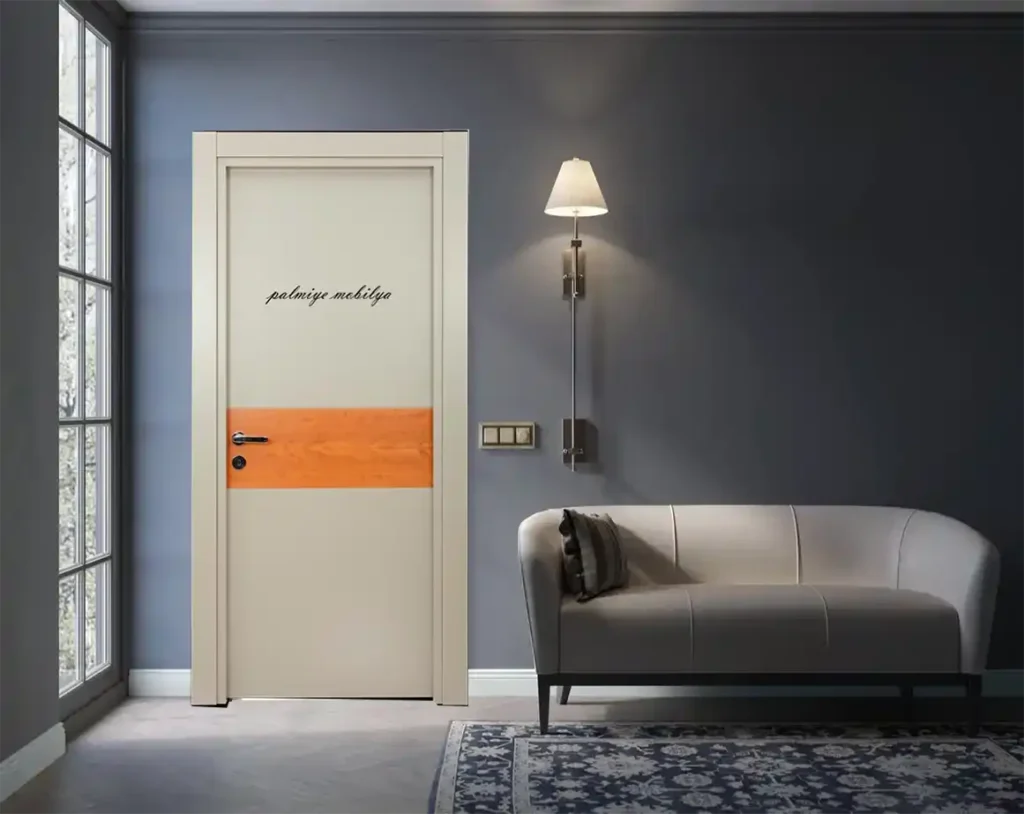
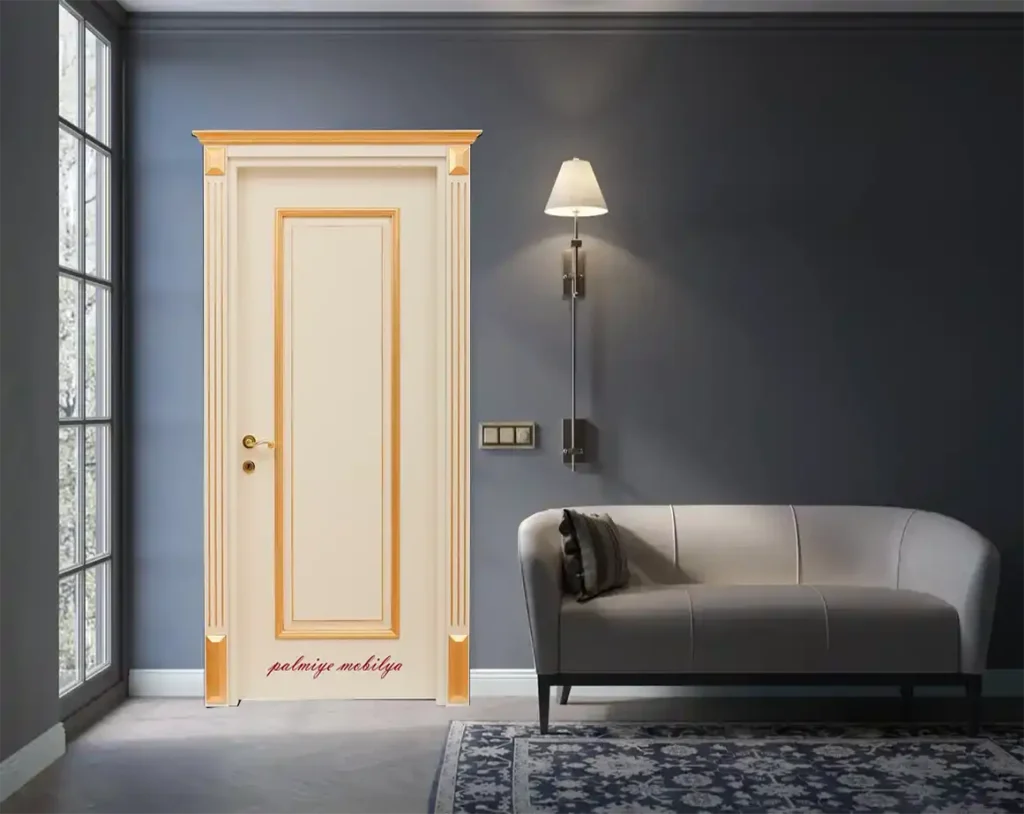
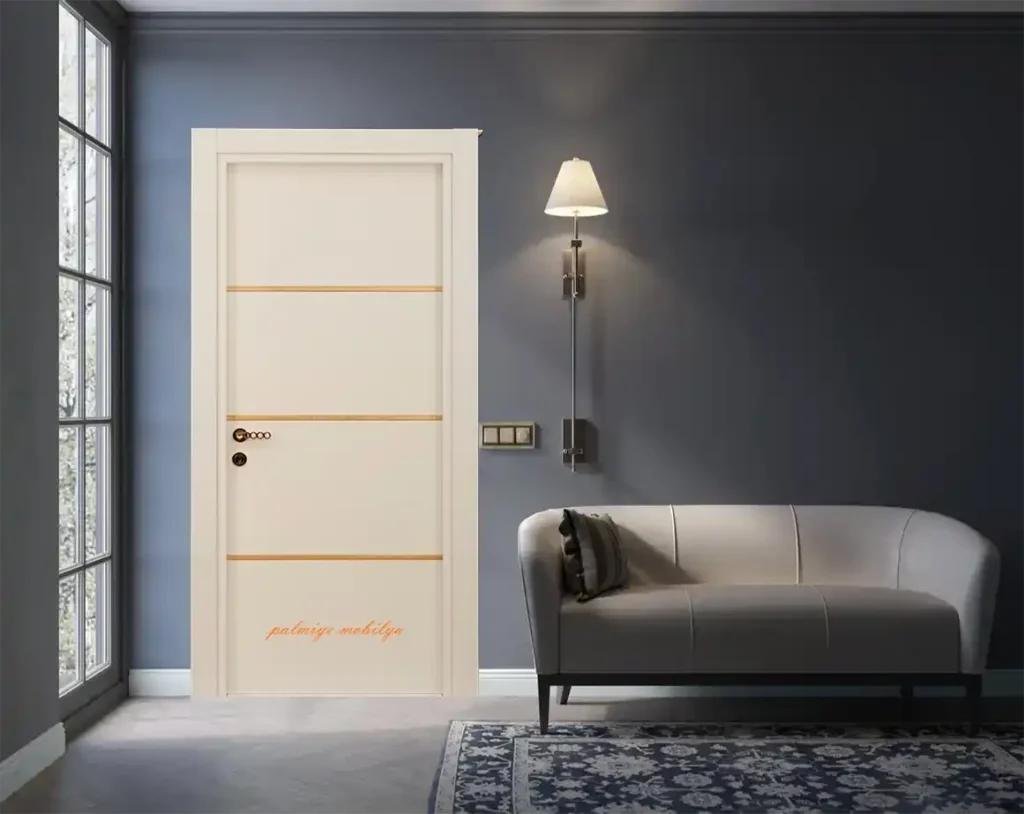
Etiket:Colored Lacquered Doors Turkey, Economic Lacquered Door Manufacturing Turkey, Flat Lacquered Door Manufacturing Turkey, Lacquered Hotel Doors Turkey, Lacquered Room Door Turkey, Luxury Solid Wood Doors Turkey, Rustic Solid Wood Doors Turkey, Solid Wood Door Manufacturing Turkey, Solid Wood Door Turkey, Solid Wood Hotel Doors Turkey, Solid Wood Interior Doors Turkey, Solid Wood Room Doors Turkey

Şunları da sevebilirsiniz
Modern Lacquered Door Turkey
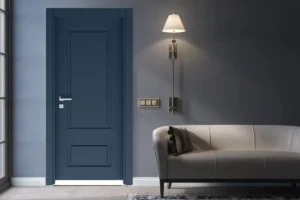
Rustic Lacquered Door Manufacturing Turkey