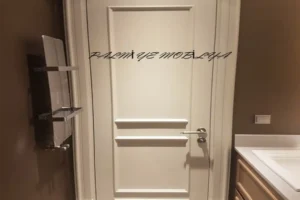

Rustic Lacquered Door Manufacturing Turkey
Rustic Lacquered Door Manufacturing Turkey: The Comprehensive Engineering, Design, and Sourcing Guide
In the global high-end interior architecture and custom joinery sectors, Rustic Lacquered Door Manufacturing Turkey has carved out a unique and dominant position. Traditionally, interior design movements treated “rustic” and “lacquered” as mutually exclusive concepts. Rustic design celebrated raw, textured, and rough-hewn timber imperfections, while lacquered finishes represented the pinnacle of smooth, sleek, ultra-refined modern minimalism. Today, forward-thinking designers have synthesized these opposing philosophies into an avant-garde aesthetic trend: the rustic lacquered door.
Turkey’s highly sophisticated woodworking and industrial coating sectors have emerged as the global epicenter for this specialized hybrid joinery style. By combining ancient Anatolian woodcraft traditions with advanced European chemical application technologies, Turkish factories deliver high-performance internal openings that provide the structural warmth of traditional timber and the elite durability of liquid-painted finishes.
For B2B procurement managers, real estate developers, and luxury architects, understanding the full technical spectrum of Rustic Lacquered Door Manufacturing Turkey is critical to optimizing project specifications, supply chains, and landed value. This masterclass manual provides an exhaustive, granular breakdown of the raw materials, chemical processing matrices, design variations, structural testing criteria, and economic advantages of sourcing from Turkey’s leading production hubs.
1. The Paradoxical Aesthetic: Demystifying the Rustic Lacquered Door
To fully appreciate the innovations driving Rustic Lacquered Door Manufacturing Turkey, one must understand how Turkish engineers successfully marry texture with liquid paint finishes.
Sourcing and Selecting High-Textured Substrates
In standard lacquered door production, the goal is absolute smoothness, achieved by spraying paint onto flawless, uniform High-Density Fiberboard (HDF). Conversely, rustic lacquered manufacturing demands structural depth and surface topography. Turkish manufacturers achieve this through three specialized processing methodologies:
- Sandblasted or Wire-Brushed Natural Wood Veneers: The core door leaf is clad in a thick, premium natural hardwood veneer—such as oak, ash, walnut, or chestnut. Before any paint touches the surface, the door passes through industrial wire-brushing or sandblasting machines. These machines strip away the softer, earlywood fibers of the grain while leaving the dense latewood bands completely intact. This creates deep, tactile, three-dimensional ridges and valleys across the door face.
- Deep-Texture Engineered HDF Skins: For high-volume projects requiring identical visual patterns, Turkish factories utilize multi-ton hydraulic presses equipped with heated, textured steel molds. These molds stamp deep, rustic timber grain patterns, artificial distressing lines, and realistic wood knot indentations directly into ultra-dense fiberboard panels.
- Hand-Carved and Distressed Detailing: In boutique Turkish workshops, master carpenters manually distress the wood. They score the surface, introduce simulated wormholes, and hand-carving deep, uneven bevels along panel joints to replicate centuries of natural wear before the final painting stage.
The Role of Liquid Lacquer over Heavy Textures
Once the rustic substrate is prepared, the magic of the lacquering process begins. Unlike clear wood stains that simply soak into the grain, opaque lacquer wraps over the textured valleys and peaks like a continuous, non-porous skin. This creates a striking visual contrast: the door exhibits the rugged, historic soul of ancient timber, but possesses a crisp, uniform, solid color finish that fits seamlessly into modern luxury architecture.
2. Structural Core Matrix Engineering: Preventing Warp and Distortion
A fundamental challenge in Rustic Lacquered Door Manufacturing Turkey is maintaining structural equilibrium. Because rustic doors often incorporate deep grooving, hand-carving, or mismatched natural wood veneers, internal stresses are inherently higher than in standard flat flush doors. If the internal core is poorly engineered, the door leaf will bow, warp, or twist under seasonal humidity shifts, causing the brittle outer lacquer shell to crack.
To counteract these forces, Turkish manufacturing complexes deploy three advanced internal core configurations:
1. Finger-Jointed Softwood Edge-Banding Frameworks
Every high-grade Turkish rustic lacquered door begins with a heavy perimeter skeleton. Instead of using solid cut lumber—which retains natural tension and memory lines that cause bending—Turkish producers utilize kiln-dried, finger-jointed local or imported pine and fir.
- The Science: Finger-jointing involves cutting out all natural knots, cracks, and directional grain anomalies, then gluing the short, stable segments back together using high-strength polyurethane adhesives. This creates a structurally dead perimeter frame that remains perfectly straight over decades of operation.
2. High-Performance German Tubular Chipboard (Sauerland Core)
For elite commercial contracts, luxury hospitality spaces, and premium residential villas, the interior void of the finger-jointed frame is packed with imported or high-end locally extruded tubular chipboard.
- Structural Mechanics: Engineered with continuous, precise cylindrical air voids running through a dense compressed wood-particle matrix, this core provides a superb strength-to-weight ratio.
- Performance Metrics: It provides the door leaf with a heavy, substantial feel, eliminates the possibility of internal core telegraphing, and provides excellent acoustic dampening (typically 28 to 34 dB) alongside reliable fire-retardant properties.
3. Cross-Laminated Timber (CLT) or Blockboard Cores
The absolute pinnacle of heavy-duty engineering in Rustic Lacquered Door Manufacturing Turkey is the solid blockboard composite.
- Structural Mechanics: The core is packed completely with parallel strips of finger-jointed softwoods layered perpendicular to the outer HDF skins. This cross-laminated orientation ensures that any micro-movements within the wood fibers neutralize one another.
- Performance Metrics: This setup provides maximum screw-holding capacity for oversized ornamental rustic hardware, robust impact resistance, and an incredibly stable foundation for heavy hand-carved detailing.
3. The Chemistry of Coating: Industrial Formulations for Rustic Textures
The longevity, tactile feedback, and yellowing resistance of a rustic door are entirely dependent on the chemical structure of its coatings. In the realm of Rustic Lacquered Door Manufacturing Turkey, industrial chemical application requires a distinct methodology compared to traditional flat painting. If the paint film is applied too thick, it will pool in the deep grain valleys, obliterating the desired rustic texture. If it is applied too thin, the peaks of the wood grain will pierce through the film, leaving the door vulnerable to moisture ingress.
Turkish coating lines utilize three primary chemical configurations, calibrated precisely via automated automated spray systems:
Polyurethane Lacquer Matrices
The traditional benchmark for high-durability Turkish joinery. Polyurethane (PU) is a two-component system consisting of hydroxyl-bearing branched polyesters reacting with polyisocyanate hardeners.
- Application in Rustic Lines: PU lacquers offer a thick, protective film that wraps smoothly over sharp, brushed wood ridges without cracking. It provides phenomenal chemical resistance against household cleaners and accidental impacts.
- UV Mitigation: For white or cream rustic doors, Turkish factories integrate specialized hindered amine light stabilizers (HALS) to prevent the PU resins from yellowing under long-term exposure to direct sunlight.
Acrylic Lacquer Formulations (Aliphatic Systems)
For ultra-light pastel or bright white rustic interior profiles, premium operations in Turkey shift toward acrylic-polyurethane cross-linked systems.
- Aesthetic and Technical Edge: Acrylic resins possess absolute UV-light transparency, ensuring zero yellowing over the lifetime of the building. Furthermore, cured acrylic coatings exhibit a higher pencil hardness rating and a microscopic elasticity that accommodates the expansion and contraction of textured hardwood veneer substrates without experiencing micro-fissures.
Eco-Friendly Water-Borne Lacquers
As global environmental regulations tighten and real estate developers prioritize green building certifications (such as LEED, BREEAM, and WELL), the sector for eco-conscious Rustic Lacquered Door Manufacturing Turkey has expanded dramatically.
- Technical Properties: These coatings utilize water as the primary carrier carrier fluid instead of organic solvents, resulting in ultra-low Volatile Organic Compound (VOC) emissions. They are completely non-toxic and odorless.
- The Drying Challenge: To apply water-based coatings over complex rustic textures without causing grain-raising (where water causes raw wood fibers to swell and stand up), Turkish factories utilize specialized multi-stage forced drying tunnels equipped with controlled infrared heat and precise dehumidification cycles.
4. Design Typologies: Navigating Style Variants in Turkish Production
The manufacturing ecosystem for Rustic Lacquered Door Manufacturing Turkey does not focus on a single aesthetic. Instead, it offers an expansive catalog of structural styles designed to fit varying global interior design trends.
The Modern Rustic (The Wire-Brushed Flush Slab)
A favorite among contemporary mountain chalets, high-end loft apartments, and warm minimalist spaces.
- Visual Structure: The door is a completely flat flush panel, but the surface exhibits deep, intense wire-brushed grain topography.
- Finishes: Almost exclusively specified in super-matt finishes (1 to 5 Gloss Units), often in dark, earthy tones like slate grey, charcoal, olive green, or deep navy blue. It delivers an incredibly rich, tactile, stone-and-wood ambiance.
The Country Shaker (Clean Lines with Textured Fields)
A timeless fusion of traditional craftsmanship and modern order.
- Visual Structure: Features standard recessed panels with crisp, 90-degree step profiles. While the structural stiles and rails of the frame are kept smooth, the recessed center panels are finished in deep rustic textures or v-grooved panels.
- Finishes: Highly popular in antique whites, creams, cream-beiges, and soft pastel blues.
The Mediterranean Louvered & Planked Door
Reflecting the sunny, coastal architecture of the Aegean and Mediterranean regions.
- Visual Structure: The door face mimics traditional vertical wood planks or features heavy, stationary angled louvers set into a massive lacquered frame. Deep v-grooves run vertically down the door to simulate historic board-and-batten construction.
- Finishes: Frequently paired with heavy, black matte iron or oil-rubbed bronze ornamental handle sets and strap hinges to complete the historical look.
The Hand-Patinated Antique Rustic (The Multi-Tone Finish)
The pinnacle of high-end craftsmanship in the world of Rustic Lacquered Door Manufacturing Turkey.
- Visual Structure: A multi-panel, heavily molded door with deep routed profiles and intricate wood carvings.
- The Coating Magic: After the primary lacquer coat is cured, artisan painters manually apply a darker secondary glaze or patina into the corners, crevices, and grain valleys of the door. The surface is then carefully wiped down, leaving the dark glaze embedded only in the low points. A clear matte topcoat seals the entire assembly, producing a breathtaking look of aged, historic luxury.
5. Gloss Architecture: Quantifying the Reflective Index of Rustic Doors
When ordering from factories specializing in Rustic Lacquered Door Manufacturing Turkey, selecting the correct gloss level is critical. High gloss levels create mirrors that scatter light in unpredictable, chaotic patterns when applied over heavily textured rustic surfaces, which can ruin the intended design. Therefore, the gloss architecture must be managed precisely.
Gloss is measured scientifically using “Gloss Units” (GU) at a standard 60-degree angle of incidence:
| Gloss Classification | Gloss Unit (GU) Range | Visual Behavior on Rustic Surfaces | Best-Suited Design Theme |
|---|---|---|---|
| Ultra-Matt / Dead Matt | 1 – 5 GU | Absorbs light completely. Eliminates glare, making deep grain valleys look incredibly deep and cast rich, soft shadows. | Modern Industrial, Alpine Chalets, Warm Minimalism. |
| Satin / Silk Finish | 10 – 20 GU | Provides a soft, velvety sheen along the high ridges of the brushed grain while leaving the deep valleys matte. | Transitional Country, Mediterranean, Luxury Villas. |
| Semi-Gloss | 25 – 45 GU | Reflects distinct light points. Highlights micro-scratches and manual distressing lines prominently. | Traditional European Estates, Classical Paneled styles. |
| High-Gloss / Piano Finish | 80+ GU | Not recommended for heavily textured rustic lines. Used occasionally on flat, smooth doors with printed rustic graphics, but rarely on genuine textured substrates due to extreme distortion. | Avant-Garde commercial spaces only. |
6. Sourcing Intelligence: Mapping Turkey’s Industrial Joinery Clusters
Turkey’s manufacturing prowess lies in its highly organized regional clusters. When sourcing Rustic Lacquered Door Manufacturing Turkey services, bulk B2B buyers and sourcing managers must match their project profiles to the specific strengths of Turkey’s dominant industrial zones.
The Inegöl & Bursa Furniture Ecosystem
Inegöl is globally recognized as an avant-garde furniture and lifestyle design capital.
- Manufacturing Nature: Highly agile, design-centric mid-to-large scale factories.
- Sourcing Advantage: Inegöl is the premier cluster for sourcing high-end, trend-forward rustic lacquered doors. Factories here excel at custom texturing, hand-applied patinas, and integrating matching wall claddings, hidden walk-in closets, and luxury home cabinetry under a single, cohesive design contract.
The Kayseri Organized Industrial Zone (OIZ)
Kayseri represents the massive, automated industrial muscle of Turkey.
- Manufacturing Nature: Multi-acre, hyper-automated manufacturing complexes utilizing high-speed robotic spray lines and massive CNC matrices.
- Sourcing Advantage: If your project is a massive multi-family housing development, a major international hotel chain, or a public commercial infrastructure project requiring 2,000 uniform rustic lacquered doors with pressed texture skins, Kayseri provides unmatched capacity, speed, and cost efficiency.
The Istanbul Industrial Zones (İkitelli, Tuzla, Dudullu)
The hub for ultra-exclusive, bespoke architectural joinery.
- Manufacturing Nature: Premium boutique engineering workshops operating close to major international corporate offices and design firms.
- Sourcing Advantage: Ideal for high-end boutique properties or historical restoration projects requiring strict custom blueprints, uncommon timber species (like aged chestnut or olive wood), and complex integrated smart-lock hardware solutions.
7. Comparative Technical Evaluation: Textured Lacquer vs. Synthetic Alternatives
To understand why luxury real estate developers actively invest in Rustic Lacquered Door Manufacturing Turkey rather than sourcing standard synthetic wood alternatives, a direct performance analysis is essential.
| Performance & Structural Parameter | Rustic Lacquered Doors (Turkish Manufacturing) | PVC / Vinyl Membrane Foil Doors | CPL / HPL Laminate Wood-Grain Doors | Standard Raw Wood Stained Doors |
|---|---|---|---|---|
| Surface Continuity & Seams | 100% Monolithic. Liquid paint completely seals every nook, cranny, and groove without joints. | Continuous over the face, but prone to adhesive delamination at the deep corners under high heat. | Rigid sheets create sharp, micro-seams along the edges that can catch dust and moisture. | Continuous, but vulnerable to micro-splitting along grain lines if the wood dries out. |
| Tactile Authenticity | Genuine Wood Feel. Real wire-brushed textures under a thin, premium coating provide authentic tactile depth. | Smooth or lightly embossed plastic film that can feel synthetic or rubbery under hand contact. | Repetitive machine embossments that lack the variable organic irregularities of true wood. | 100% Organic, but can feel rough, splintery, or uneven if not heavily sanded and varnished. |
| Color Freedom | Infinite. Can be mixed to match any international RAL, NCS, or Pantone color profile. | Strictly limited to the pre-fabricated vinyl color foils kept in stock by film printers. | Restricted to the cataloged décor paper prints produced by industrial paper pressers. | Restricted to the natural tone variations of the base wood species and translucent stains. |
| On-Site Repairability | Exceptional. Heavy impacts or scratches can be filled with wood putty, sanded, and spot-lacquered on-site. | Disastrous. If a vinyl film is torn or punctured, it cannot be repaired seamlessly; the leaf must be replaced. | Very poor. Synthetic laminate surfaces resist minor scratches, but major gouges cannot be filled invisibly. | Good. Can be filled, re-stained, and re-varnished, though matching aged stains requires highly skilled labor. |
| Moisture Shielding | Complete System. The cured polyurethane/acrylic layer acts as a waterproof barrier wrapping the core. | Good on the face, but steam from bathrooms can compromise edge glues over time. | Moderate. The edge-banding lines are vulnerable to moisture ingress, leading to internal core swelling. | Highly vulnerable. Requires continuous maintenance to prevent humidity from causing wood rot or warping. |
8. International Quality Standards, Compliance, and Testing Certifications
For an international procurement manager, establishing structural trust is paramount. Factories specializing in Rustic Lacquered Door Manufacturing Turkey routinely subject their products to international testing bodies to secure the following critical certifications:
- ISO 9001 (Quality Management Frameworks): Guarantees that the factory adheres to strict, repeatable, and audited manufacturing protocols from raw material intake to the final packaging stage.
- EN 14351-2 (European Internal Doorset Standard): This standard dictates the baseline mechanical performance criteria, operating forces, and structural resistance classes for internal pedestrian doorsets entering the European Union and United Kingdom.
- EN 1634-1 (Fire Resistance and Smoke Mitigation): For commercial applications (such as boutique hotels or luxury multi-family complexes), Turkish factories produce certified rustic fire doors (FD30, FD60, FD90). These assemblies utilize hidden intumescent seals beneath the lacquer coating that expand under high heat to seal the opening against toxic gasses.
- E1 or E0 Formaldehyde Compliance: Verifies that all engineered wood substrates, resins, and bonding glues used in the structural cores exhibit zero or negligible formaldehyde off-gassing, preserving indoor air quality (IAQ) according to European criteria.
9. Comprehensive Installation Protocol for Rustic Openings
A common issue in luxury real estate construction is the improper installation of highly finished joinery. Because products emerging from Rustic Lacquered Door Manufacturing Turkey lines feature an absolute opaque liquid finish over textured substrates, they must be treated as final luxury furnishings during the assembly phase.
Phase 1: Pre-Installation Environmental Audits
- Moisture Cure Verification: The building’s structural wet trades—including plastering, wall tiling, concrete pouring, and floor screeding—must be 100% complete and fully cured. The interior relative humidity must sit stably between 40% and 60%, and the room temperature must be maintained between 15°C and 25°C. Installing premium doors into an unventilated, damp concrete shell forces the timber cores to absorb atmospheric water, which can bow the frame and cause the lacquer skin to split along miter joints.
- Laser Structural Calibration: Installers must deploy high-precision laser levels to verify that the rough structural wall openings are perfectly plumb, vertical, and square. Any deviations must be corrected before uncrating the doorsets.
Phase 2: Assembly and Fixing Operations
- Protected Flat Layouts: Turkish door casings utilize advanced telescopic mitered frame systems that slide to adjust to varying wall thicknesses. These frames must be laid out and assembled on a completely flat surface lined with heavy foam padding or clean cardboard to prevent concrete debris or metal filings from scratching the lacquered frame edges.
- Low-Expansion Polyurethane Insulation: The assembled frame is dry-fitted into the wall opening using temporary soft-wood or plastic adjustment wedges. Low-expansion polyurethane (PU) foam must be injected carefully into the structural cavity between the wooden frame and the wall structure. High-expansion construction foam must be strictly avoided; its immense expanding force can crush or bow the frame jambs inward, throwing the door leaf permanently out of alignment.
- Hidden Mechanical Anchor Insertion: Relying on expanding foam alone is insufficient for heavy tubular or solid wood composite rustic doors. Installers must deploy hidden mechanical anchors behind the removable rubber strike strips or beneath the concealed 3D hinge plates. This locks the frame into the structural masonry or drywall studs without exposing unsightly screw heads on the pristine lacquered surface.
10. Long-Term Maintenance, Care, and Finish Preservation
To preserve the deep, dramatic textures and uniform color consistency of products from the Rustic Lacquered Door Manufacturing Turkey sector across generations of use, end-users must practice a chemically safe, structured care routine.
The “Do’s” of Textured Lacquer Preservation
- Deploy Soft Dry Microfiber Fabrics: For routine dusting, use an ultra-soft, static-charging microfiber cloth. Because rustic doors feature deep grain valleys, light dusting should follow the direction of the textured grain to gently lift away settled particulates.
- Execute Controlled Damp Cleaning: For oily fingerprints, grease marks, or light soil accumulation, use a clean microfiber cloth slightly dampened with lukewarm water mixed with a few drops of a pH-neutral, non-ionic liquid dish soap. Always follow up immediately by wiping the area completely dry with a separate soft towel to prevent water spots from forming in the texture valleys.
- Calibrate Hard Moving Parts: Once a year, inspect and lubricate the internal mechanisms of the magnetic lock cases, latch bolts, and concealed hinges using a drop of non-staining, silicone-based dry lubricant spray to ensure smooth, frictionless mechanical operation.
The Strict Prohibitions (“Don’t’s”)
- Banish Aggressive Chemical Solvents: Never allow cleaning agents containing ammonia, chlorine bleach, acetone, or highly acidic vinegars to touch the door. These harsh chemicals will dissolve or dull the polyurethane or acrylic topcoat, causing permanent cloudiness or peeling.
- Say No to Abrasive Scouring Pads: Steel wool, rigid scrubbing sponges, and rough paper towels will micro-scratch the lacquer film, permanently ruining the uniform appearance of super-matt styles.
- Isolate Direct High-Heat Vectors: Ensure that portable space heaters, high-powered radiators, or commercial steam cleaners are never positioned directly adjacent to a lacquered door leaf. Intense, concentrated thermal exposure can induce localized thermal shock, potentially resulting in micro-cracking along the mitered joints of the door frame.
11. B2B Commercial Advantages: Sourcing from Turkey’s Manufacturing Matrix
For international volume buyers, corporate purchasing agents, and global developers, integrating Rustic Lacquered Door Manufacturing Turkey operations into their corporate supply chain is a highly calculated, strategic business decision that provides distinct competitive advantages.
Optimal Value Engineering & Cost Arbitrage
Operating with highly optimized operational overhead and labor indices relative to Western Europe, while simultaneously deploying the exact same high-tech German and Italian automated machinery, Turkish factories produce premium interior doorsets that match or exceed the structural criteria of elite European brands at a fraction of the cost. This enables global real estate developers to elevate the luxury profile of their interior spaces while keeping project budgets highly optimized.
Logistical Velocity and Proximity Advantage
Turkey’s unique geographical position as a logistical bridge between Europe, Central Asia, and the Middle East ensures unparalleled delivery turnaround times compared to distant Asian manufacturing alternatives:
- Overland Transit to Europe: Full truckload (FTL) or less-than-truckload (LTL) shipping containers can depart from industrial hubs in Istanbul, Bursa, or Kayseri and arrive directly at construction sites across Germany, France, the UK, or the Netherlands within 5 to 9 days.
- Global Maritime Shipping Lines: Deep-water container ports in Ambarlı (Istanbul), Mersin, and İzmir provide frequent, competitive maritime shipping lines, ensuring highly reliable, predictable supply chain timelines across the Atlantic and throughout the Middle East.
Massive Scalability Combined with Customization Agility
A significant challenge in global sourcing is that many manufacturing markets are split into either hyper-rigid mass-production complexes that refuse custom alterations, or small-scale artisanal joineries that lack volume capacity. The Turkish door sector bridges this gap seamlessly. A single enterprise-grade Turkish factory can manage a highly customized run of 50 complex, hand-patinated classic rustic doors for a luxury resort palace, while running a parallel automated production line churning out 3,000 minimalist, super-matt flush doors for a multi-tower mixed-use commercial development.
12. Conclusion: Specifying the Ultimate Architectural Transition
As global interior architecture continues to embrace designs that blend raw natural textures with refined modern elements, the market for Rustic Lacquered Door Manufacturing Turkey remains at the absolute forefront of the modern building components industry. Sourcing successfully from this vibrant manufacturing hub requires a clear understanding of your project’s exact technical demands—balancing the acoustic dominance of a tubular chipboard core against the budget efficiency of a honeycomb core, and selecting between the crisp contours of a classic country Shaker style or the striking visual texture of a wire-brushed super-matt flush slab.
By pairing the correct structural substrate with an appropriate chemical topcoat and ensuring strict adherence to professional, low-expansion installation protocols, architects and developers receive an interior architectural element that transcends simple utility. The rustic lacquered doors emerging from Turkey’s premier manufacturing sectors transform basic room transitions into profound statements of permanent luxury, environmental safety, and structural mastery.


Şunları da sevebilirsiniz
Lacquered Door Factory Turkey
Modern Lacquered Door Turkey