Bathroom Vanity Finishes for Hotels: Lacquer, Veneer, Laminate and Stone-Effect Surfaces
Choosing among lacquer, veneer, laminate and stone-effect finishes is a trade-off between looks, splash tolerance and repairability. This guide compares them as housekeeping and maintenance teams will experience them after opening.
The right bathroom vanity finishes for a hotel are the ones that look good on day one and can still be cleaned and repaired on day one thousand. Lacquer, veneer, laminate and stone-effect surfaces all work in hotel bathrooms, but they behave very differently when water sits on them and when a chip or scratch has to be fixed in a occupied-room turnaround.
This guide compares the four families on two practical questions: how well do they tolerate splashes, and how easily can your engineering team touch them up in service? Appearance still matters, so we also note where each finish suits a design concept. The advice applies to hotels in any climate, though humidity and cleaning regimes will shift the balance.
Why splash tolerance and touch-up should lead the decision
Most finish comparisons start with the look. In a hotel bathroom, the finish is only half of the story: the board underneath, the edge sealing and the joints decide whether water ever reaches the core. The surface decides how forgiving the unit is when something goes wrong.
Two questions help procurement teams and designers compare options fairly:
- Splash tolerance: what happens when water, toiletries and cleaning chemicals stay on the surface and at the edges for hours?
- Touch-up in service: can a maintenance technician fix a chip, scratch or stain in the room, in under an hour, without taking the unit away?
A finish that scores well on both will usually cost less to own, even if the unit price is higher.
Quick comparison table
| Finish | Splash tolerance | Touch-up in service | Typical fit |
|---|---|---|---|
| Lacquer (PU or similar) | Good on sealed faces; weak at unsealed edges and corners | Moderate; small chips can be filled, but colour and sheen matching is difficult | Design-led hotels, painted colour schemes |
| Natural veneer | Fair to good with a durable clear coat; sensitive if the coat is breached | Moderate; wax fillers and touch-up lacquer work for small marks | Upscale and boutique concepts that want a warm timber look |
| Laminate / HPL | Very good on the face; edges are the weak point | Low for the surface itself; small chips are hidden with fillers, but a damaged panel is usually replaced | High-turnover rooms, budget to midscale |
| Stone-effect surfaces | Very good (depends on the product: laminate, porcelain-look sheet or solid surface) | Varies widely; solid surface can be sanded, sheet products generally cannot | Stone look without the weight or cost of real stone |
The table is a general guide. Specific products within each family vary, so always request the manufacturer's data sheet and a physical sample.
Lacquered vanity cabinets
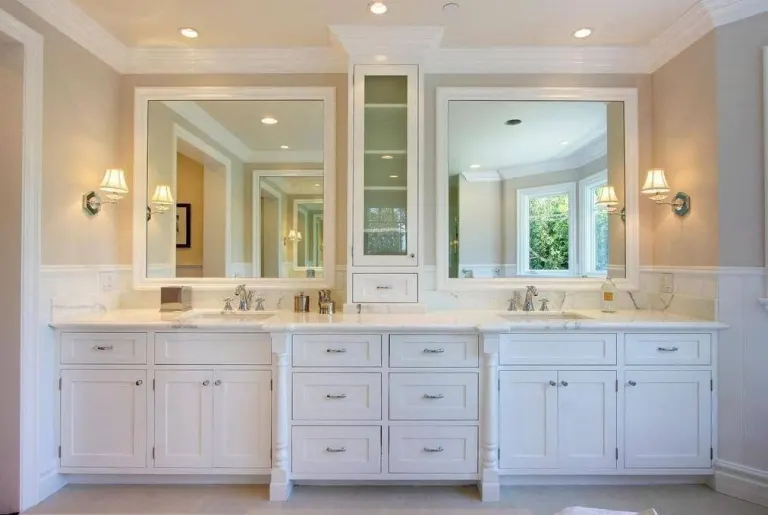
A lacquered vanity cabinet offers the widest colour range and the cleanest, most contemporary look. Matt and satin lacquers are popular because they hide fingerprints better than high gloss and feel more refined in a bathroom.
Splash behaviour
A well-applied multi-coat lacquer forms a continuous film that sheds water on flat faces. The trouble begins at the edges, routed profiles and any point where the film is thin. If water enters there, the board beneath can swell and the lacquer lifts from below. For this reason, specify sealed edges and moisture-resistant substrates, and ask how the primer and top coats are applied on edge profiles.
Touch-up in service
Small impact chips can be filled and repainted, but matching a factory-sprayed finish with a brush or aerosol is hard. Sheen and tone differences show up under bathroom LED lighting. If you choose lacquer, order a small stock of touch-up paint from the same batch and record the finish code. Large visible panels, such as drawer fronts, are often easier to replace than to repair.
Best used when
- The design relies on a specific colour that other finishes cannot match.
- Fronts are mostly flat and edges are protected by the design.
- The hotel keeps replacement fronts or touch-up materials on site.
Veneer in the bathroom
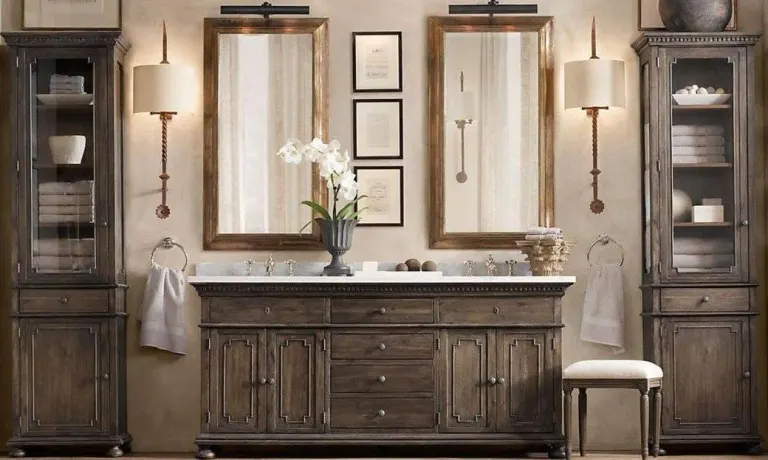
Using veneer in a bathroom brings real timber character, which many boutique and upscale hotels want. The grain gives each unit a slightly individual look, and it can be finished in natural, stained or dark tones.
Splash behaviour
Veneer is a thin layer of wood, so the protective coat does the work. A hard-wearing clear lacquer or oil-based system can perform well on vertical surfaces, but horizontal areas near the basin see the most standing water and are the first to show wear. Veneered edges also need careful sealing. Where the design allows, keep veneer on door and drawer fronts rather than on tops or splash zones.
Touch-up in service
Veneer is often easier to disguise than lacquer. Wax filler sticks, touch-up markers and spot lacquer can hide small scratches, and the natural grain makes minor colour differences less obvious. Deep damage that cuts through the veneer is another matter, and the front usually has to be replaced. Dark stains from water that has penetrated the coat are difficult to remove.
Best used when
- The concept calls for warm natural material.
- Veneer sits away from the direct splash zone.
- Housekeeping uses non-abrasive cleaners compatible with the coating.
Laminate vanity doors
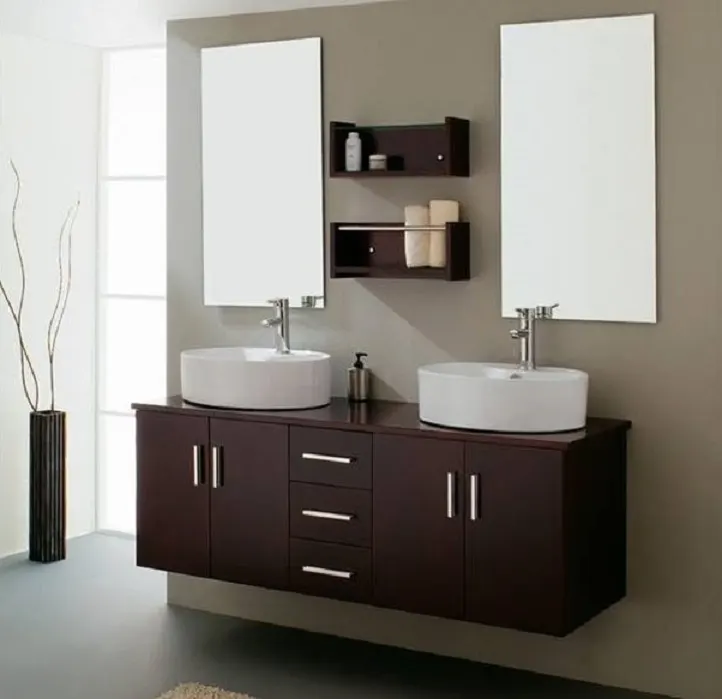
Laminate vanity doors, usually HPL on a suitable core, are the workhorse option for busy hotels. Modern decors include plain colours, wood grains and textured surfaces, and the material is manufactured to resist abrasion, moisture and common cleaning products.
Splash behaviour
The face of HPL is dense and non-porous, so water beads and wipes away. The edge is where problems start: visible joints, thin edge bands and corners that take knocks. Specify a well-bonded edge band (PVC, ABS or a method that gives a tight joint) and check that it is applied correctly on the sides that face the basin.
Touch-up in service
This is laminate's weak point. The surface does not take paint well, and scratches or burns are not easy to polish out. Colour-matched fillers can hide chips at edges, but a damaged face is normally replaced as a panel. On the plus side, because laminate is hard-wearing, repairs are needed less often than with painted or veneered fronts. Keeping spare doors and drawer fronts from the original production run makes replacement simple.
Best used when
- Turnover is high and housekeeping uses strong routine cleaning.
- The budget needs durable, predictable performance.
- Replacement panels can be stocked and swapped quickly.
Stone-effect surfaces
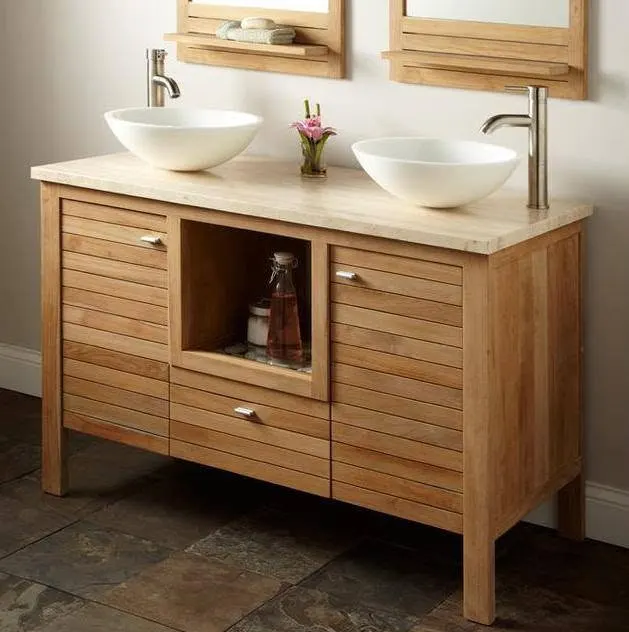
Stone-effect finishes imitate marble, travertine, concrete or slate without the weight of real stone. The term covers several different products, which is why it needs care in specifications:
- Stone-decor laminate: HPL with a printed stone pattern, treated like any other laminate.
- Thin porcelain or sintered sheets: bonded to a substrate and very resistant to water and stains, but brittle at corners and edges.
- Solid surface: a homogeneous material that can be shaped, joined seamlessly and, in many cases, sanded to remove surface marks.
Splash behaviour
All three handle splashes well on the face because they are non-porous or sealed. Joints and cut-outs are the risk: unsealed edges, tap holes and the junction to the wall need the same attention as with any other finish.
Touch-up in service
Repairability depends on the product. Solid surface is the easiest to restore, since scratches can often be sanded and polished by a trained technician following the supplier's instructions. Sheet products and printed laminates are mostly repaired by replacement. For hotels that want a stone look and a simple maintenance routine, solid surface is worth discussing with your manufacturer.
Matching finish to position on the vanity
You do not have to use one finish for the whole unit. Many successful hotel vanities combine finishes according to exposure:
- Top and splash zone: stone-effect, solid surface or real stone for maximum water resistance.
- Front panels: lacquer, veneer or laminate according to design and budget.
- Lower areas and plinth: a robust laminate or sealed surface that tolerates mops and cleaning equipment.
This approach protects the most vulnerable areas while keeping the visual impact where guests look first.
How to test finishes before you approve
Photos and catalogues will not show how a finish behaves. Before approving the full order, ask for physical samples and run a simple check:
- Leave a few drops of water and a typical cleaning product on the face and edge for several hours, then inspect for marks or lifting.
- Scratch the surface lightly with a fingernail and a coin to compare resilience.
- Try the touch-up method your engineering team would actually use, and judge whether the result is acceptable under bathroom lighting.
- Review the sample at the actual lighting colour temperature planned for the bathroom.
A mock-up bathroom is the best place to confirm these points together with edge details and joints.
Planning spares and care documents
Whichever finish you choose, plan for repair from the start. Ask your manufacturer to record finish codes and decor references, and consider ordering a small number of spare fronts and touch-up materials with the main batch. Colour and sheen can vary between production runs, so reordering later will not always give an exact match.
Supply the housekeeping team with a short care sheet listing approved cleaners and those to avoid. Many finish failures in service are caused by the wrong chemical or an abrasive pad rather than by the material itself.
Conclusion
No single finish is best for every hotel. Laminate is the most predictable for heavy use, veneer brings warmth with moderate care needs, lacquer offers colour freedom if edges are well sealed and spares are on hand, and stone-effect options give a premium look with varying repairability. Choose by considering splash exposure, housekeeping routines and how repairs will actually be done.
If you are planning a hotel bathroom project, send us your drawings or room schedule. We can suggest suitable finishes, prepare samples and provide a quotation that fits your design intent and maintenance approach.
Sıkça Sorulan Sorular
Which vanity finish is easiest to repair in a hotel?
Solid surface is generally the easiest to restore because light scratches can often be sanded out. Veneer and lacquer allow minor touch-ups with fillers and spot coatings. Laminate is very durable, but damaged panels are usually replaced rather than repaired.
Is lacquer suitable for hotel bathroom vanities?
Yes, if the substrate is moisture-resistant and the edges are properly sealed. Lacquer gives wide colour choice and a clean look, but chips are difficult to match exactly. Keep touch-up paint from the same batch and consider spare fronts.
Can veneer be used in a humid hotel bathroom?
It can, with a durable protective coating and sealed edges. It is best on door and drawer fronts away from the direct splash zone. Water that penetrates the coating can stain or lift the veneer, so careful cleaning and prompt maintenance matter.
What does stone-effect mean for vanity cabinets?
It is a broad term for surfaces that imitate stone, such as printed laminate, thin porcelain sheets or solid surface. Their water resistance and repairability differ, so ask for the exact product, its data sheet and a sample before specifying.
Should I order spare panels with the main vanity order?
It is sensible to. Colour and sheen can vary between production runs, so panels made later may not match perfectly. A small stock of spare fronts and touch-up materials makes in-service repairs faster and keeps rooms available for sale.
Every hotel project is different. Send us your drawings or room schedule for a tailored proposal on materials, lead time and shipping.