Console Tables for Hotel Chains with Franchise Brand Standards: Translating a Design Book into Production
A franchise design book describes the look of a console table, but a factory needs dimensions, tolerances and approval steps. This guide shows how to translate one into the other.
A brand standard console table is only as consistent as the specification behind it. Franchise design books usually describe the intent, such as proportion, finish tone and mood, but a factory needs measurable data before it can cut a single board. This guide explains how to convert a brand standards document into a production-ready console specification, and where to place approval checkpoints so that every hotel in the portfolio receives the same piece.
What a design book tells you and what it leaves out
Most brand design books contain photographs, a mood description, approved materials and sometimes a line drawing. They rarely include joinery details, tolerances, hardware references or packing requirements. That gap is where inconsistency starts, especially when different owners order from different suppliers.
Before you brief a manufacturer, read the book with one question in mind: which statements can be measured? Phrases like "warm natural oak" or "slim, elegant legs" need to be converted into a finish reference and a dimension.
Step 1: Build a translation table
A simple translation table keeps the brand team, the owner's designer and the factory aligned. Each row takes a design book statement and turns it into a production parameter.
| Design book statement | Production parameter | Who confirms |
|---|---|---|
| Warm natural oak look | Species, veneer or solid, finish sample code, gloss level | Brand and designer |
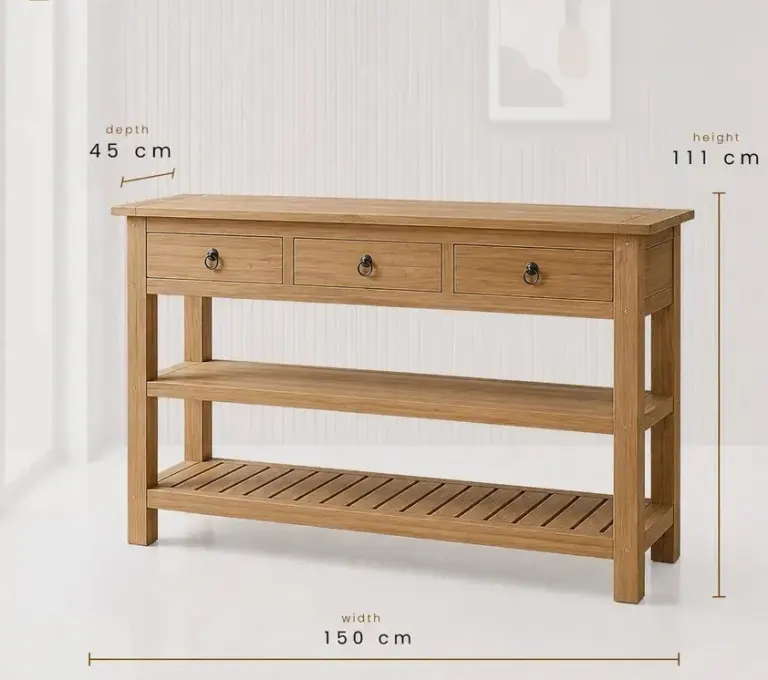
| Slim, light silhouette | Top thickness, leg section, depth in mm (in) | Designer |
| Premium feel | Edge profile, hardware type, joinery method | Brand and factory |
| Durable for hotel use | Coating system, edge protection, fixing method | Factory and owner |
| Consistent across properties | Tolerances, master sample, batch approval rules | Brand |
Step 2: Separate fixed brand elements from flexible ones
Not every detail needs to be frozen. Franchise standards work best when they define what must not change and what the owner may adapt to the building.
Usually fixed
- Finish colour and sheen, tied to a physical master sample.
- Visible proportions, such as top thickness and leg profile.
- Signature details, such as an edge shape or a metal accent.
- Brand marks or plates, where the standard requires them.
Usually adjustable
- Length and depth, to suit lobbies, corridors or niches of different sizes.
- Wall fixing method, depending on wall construction.
- Power or cable cut-outs, depending on local sockets and codes.
- Fire-retardant requirements, which vary by country.
Writing these two lists into the specification saves many emails later. It also shows the franchise team where a local variation request is acceptable.
Step 3: Convert the drawing into shop drawings
If the design book contains only an image or a concept sketch, the factory will produce shop drawings for approval. These should include a front elevation, a side section, a plan view and joinery details. Dimensions should be given in metric units first, with imperial in brackets where the owner's team prefers it, for example 120 cm (47.2 in).
Ask the factory to mark every point where the drawing makes an assumption. Typical examples are the leg-to-top connection, the back panel and the position of any drawer runners. The brand reviewer can then approve or correct each assumption instead of discovering it on the finished piece.
Step 4: Set approval checkpoints
Approval is easier when it is staged. Each checkpoint should have a named approver and a clear pass or fail question.
- Specification sign-off. The translation table is agreed by the brand representative, the designer and the factory.
- Shop drawing approval. Dimensions, joinery and hardware are confirmed in writing before sampling starts.
- Finish sample approval. The sample is compared with the brand's master reference under the lighting conditions of the hotel, not only under factory lights.
- Prototype or mock-up approval. A full console is checked for proportion, stability, fixing and finish. If a guest room or lobby mock-up already exists, place the piece in it.
- Pre-shipment inspection. Photos or a video of the production batch are compared with the approved prototype, and packing is checked.
- Receipt inspection on site. The owner's team checks the delivered pieces against the approved sample and the packing list.
Skipping any of these steps usually moves the problem to a later and more expensive stage.
Step 5: Control finish and colour consistency
Finish is the element most often questioned in a franchise audit. Words and screen colours are not reliable, so the master sample should be a physical piece that both the factory and the brand keep. For wood finishes, remember that species, grain and veneer cut all influence the final tone, which is why the sample should be made from the same material as production.
Agree in advance how much natural variation is acceptable in wood. Solid wood and veneer will never be identical piece to piece, so many brands define an acceptable range, such as a lighter and darker limit sample, rather than a single target.
Step 6: Plan for multi-property ordering
Franchise hotels are rarely built at the same time. A console table approved today may be reordered by another owner years later, possibly in a different country. To keep the piece consistent, build a small reference package.
- Approved shop drawings with revision numbers.
- Finish code and the retained master sample details.
- Material and hardware list.
- Photos of the approved prototype from several angles.
- Packing and labelling requirements.
When a new owner places an order, the factory works from this package. Because we produce to project drawings in our own factory in Istanbul and ship worldwide, we can keep such a package on file for a project and use it as the base for later orders, subject to the agreement with the brand.
Adapting the standard to different markets
Local conditions may require changes that the brand needs to approve in advance. Fire-retardant requirements, climate, wall construction and accessibility rules differ from region to region. Rather than letting each owner decide separately, the brand can publish an approved list of permitted variations. That list keeps local adjustments visible and controlled.
Logistics also vary. Delivery terms such as FOB, CIF or DAP, packing method and the route to the hotel should be discussed with the factory early, because they affect crating and the way pieces are labelled for room or floor delivery.
Common mistakes to avoid
- Approving a finish from a photograph or a screen image.
- Leaving tolerances undefined, then disputing small differences later.
- Letting each owner brief the factory differently, without a shared specification.
- Skipping the prototype because the design looks simple.
- Changing the drawing after production has been released, without a written revision.
A short checklist before you brief the factory
- Translation table completed and signed off.
- Fixed and adjustable elements listed.
- Master finish sample available and labelled.
- Fire and safety requirements for the destination confirmed.
- Approval checkpoints and approvers named.
- Delivery terms, packing and labelling requirements stated.
Next step
If you are working with a franchise design book and need a console table that meets it in every property, send us the book pages, any drawings and the destination countries. We will review them with you, suggest a specification and an approval plan, and prepare a quotation based on your project.
Sıkça Sorulan Sorular
What is a brand standard console table?
It is a console table produced to a hotel brand's defined specification, including dimensions, materials, finish, hardware and details. The aim is that every property receives the same piece, regardless of which owner orders it or where it is manufactured and delivered.
Can a factory work directly from a franchise design book?
Usually not on its own. Design books describe style and intent, while production needs dimensions, tolerances, joinery and finish references. A factory can help translate the book into shop drawings, which the brand and designer then approve before sampling begins.
How do I keep finishes consistent across several hotels?
Use a physical master sample and a finish code rather than photographs. Define acceptable variation for natural wood, and compare each batch against the approved sample before shipment. Keep records so that later orders can reference the same standard.
Who should approve the prototype?
Normally the brand representative, the project designer and the owner's procurement team. Each checks different points: brand compliance, design intent and practical use. The factory should receive one consolidated written approval to avoid conflicting instructions.
Can one specification be used for hotels in different countries?
Yes, if the brand defines which elements are fixed and which may vary. Fire-retardant rules, climate, wall types and shipping terms often differ by country, so an approved list of permitted variations helps keep local changes controlled.
Every hotel project is different. Send us your drawings or room schedule for a tailored proposal on materials, lead time and shipping.