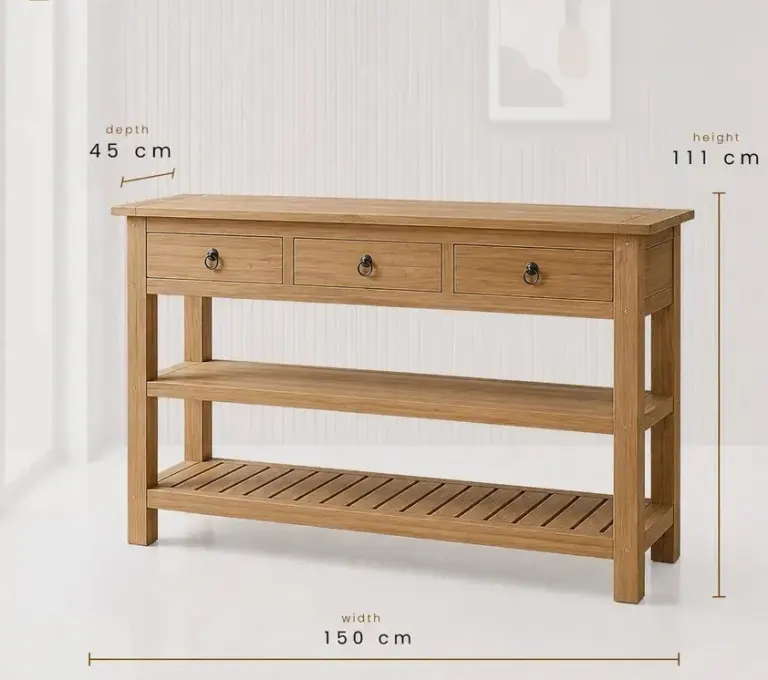
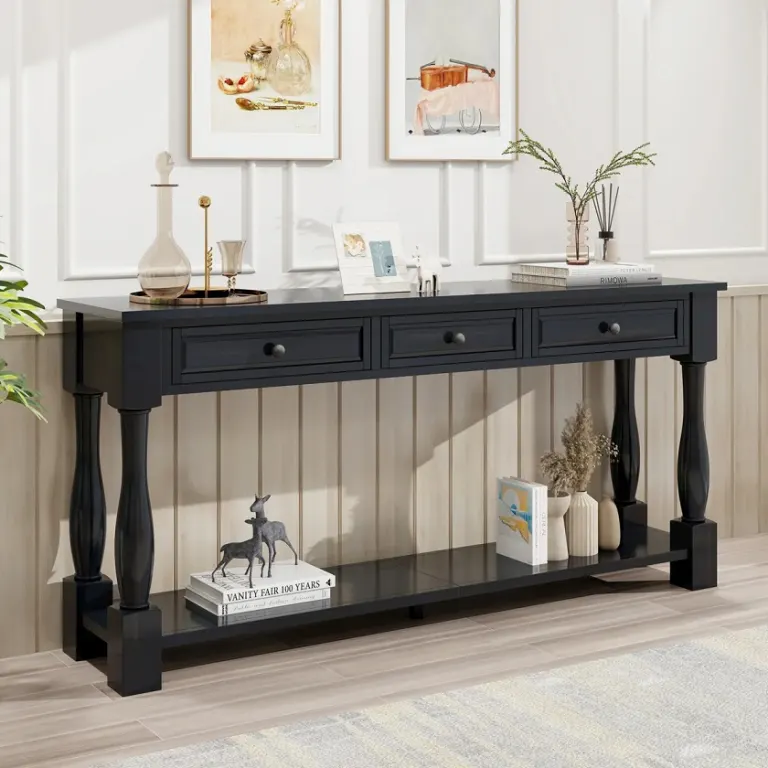
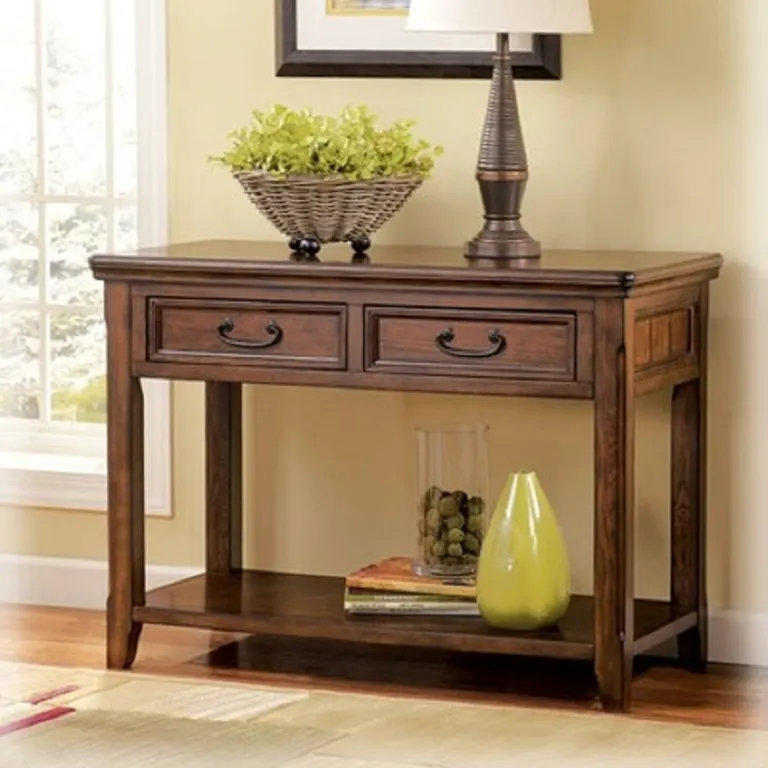
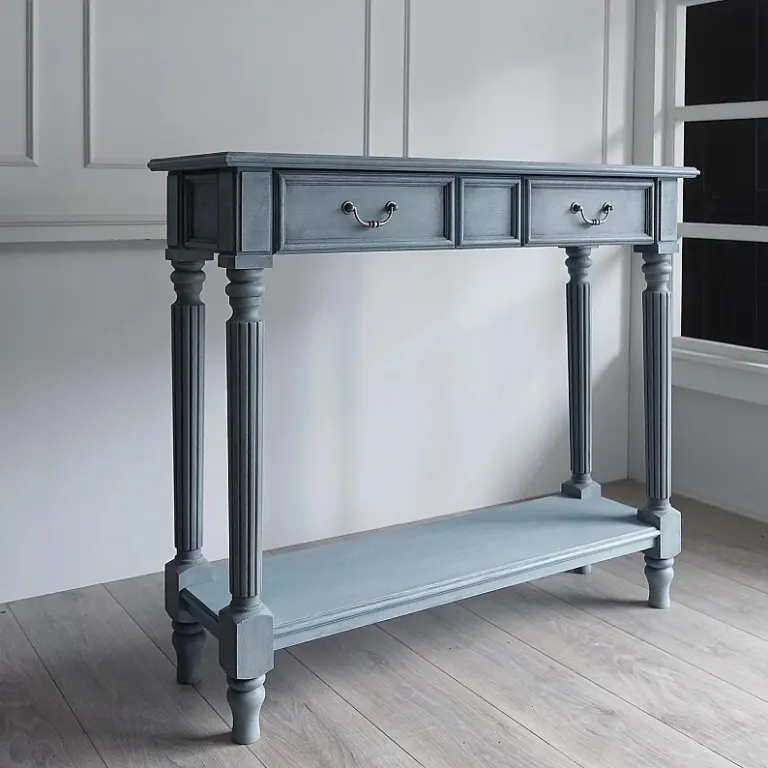
Console Table Top Edge Profiles: Square, Bevelled, Rounded and Waterfall Details
The console table edge profile affects how a piece looks, how well it survives luggage and housekeeping trolleys, and how safe it is for guests. This guide compares the four main profiles for hotel projects.
The console table edge profile is one of the smallest details on a drawing, yet it decides how a piece looks at close range, how it ages and how it behaves when a guest brushes past with a suitcase. For hotels, the right profile balances design intent, chipping resistance and guest safety. This guide compares square, bevelled, rounded and waterfall edges so you can specify with confidence.
We manufacture custom hospitality furniture to project drawings in our Istanbul factory and ship worldwide, so the notes below reflect what matters when pieces are made to order for hotels, resorts and restaurants.
Why the edge profile matters more in hotels than at home
A console table in a hotel entrance, corridor or suite is hit, leaned on and cleaned far more often than a residential piece. The top edge is the first point of contact for bags, trolleys and vacuum cleaners. It is also at hand height for children and at hip height for adults walking past.
Three questions are worth asking for every profile:
- Looks: does it support the design language of the space?
- Durability: how likely is it to chip, split or show wear lines?
- Safety: how does it feel on contact, and does it create a hard line at hip or child height?
Square edge: crisp and architectural
A square (or arrised) edge is the sharpest-looking option. It suits contemporary, minimalist and Japandi interiors where clean lines are part of the concept. On a thick solid wood or stone-effect top it gives a strong, graphic silhouette.
The weakness is the corner itself. A true 90-degree edge concentrates impact on a thin line, so veneer and lacquer are more likely to chip. Even when a square edge is requested, we recommend a small break on the arris, typically a light sanding radius or a very small chamfer, so the edge is not razor sharp and the finish has something to grip.
When a square edge works
- Tops in solid wood where the edge is the same material as the surface.
- Low-traffic areas such as upper-floor lobbies or suite living rooms.
- Pieces set against a wall in a niche, away from trolley routes.
When to be careful
- Corridors with luggage and housekeeping carts.
- Veneered tops with thin edge banding, where chips show a different colour underneath.
- Areas where children are regular guests, such as resorts and family hotels.
Bevelled edge: a light shadow line with a safer corner
A bevelled edge wood detail removes the corner at an angle, usually between 30 and 45 degrees. It creates a fine shadow line under light, makes a thick top look slimmer and gives a more tailored appearance than a plain square edge.
From a durability point of view, a bevel is a clear step up. The impact is spread over a wider surface and the finish does not wrap around a sharp corner. The flat face of the bevel is also easier to sand and coat evenly in production, which helps finish consistency across a large batch.
The main design decision is the size of the bevel. A small bevel reads as a refined detail; a large one starts to look like a deliberate chamfered feature. We suggest approving the bevel on a physical sample or a full-size corner mock-up, because the proportion looks different on a drawing than in the hand.
Rounded edge: the most forgiving option
Rounded corners furniture is the safest choice for guest-facing areas. A radius on the top edge removes any hard line, so there is no sharp corner to bruise a hip or a child's head. It is also the profile that resists chipping best, since finish coats build evenly around the curve.
Radii vary widely. A small radius gives a soft but still crisp look. A generous radius, or a full bullnose, makes the top feel solid and friendly, and suits classic, hospitality-led or resort interiors.
Two rounded variations
- Soft radius (small): keeps a contemporary feel while removing the sharp arris.
- Full bullnose or generous radius: reads as a feature and works well on thick tops in lobbies and family-oriented properties.
Corner shape in plan matters as well. Rounded plan corners on the top, not only the edge, add another layer of safety, especially for pieces that sit in narrow circulation routes.
Waterfall edge: dramatic, but demanding in production
A waterfall edge runs the top surface down the sides to the floor in one continuous look, so the grain or pattern appears to flow over the corner. It makes a strong statement and is popular for feature consoles in lobbies, reception areas and signature suites.
It is also the most demanding profile to produce. To keep the pattern continuous, the top and side panels are normally cut from the same sheet or board and joined with a mitred corner. That mitre is the critical point: the joint must be accurate and the corner must be protected against knocks.
- Material and grain matching: veneer or timber should be selected and sequenced so the pattern flows around the corner.
- Mitre strength: a hidden reinforcement or spline helps the corner resist impact.
- Corner treatment: a very slight rounding of the mitred corner reduces chipping risk without hurting the effect.
- Weight: large waterfall pieces are heavy; consider lift sizes and wall fixing early.
Because the look relies on matching, a waterfall console is best approved from a sample or mock-up, and repeat orders benefit from keeping notes on the material selection.
Comparing the four profiles
| Profile | Look | Chipping resistance | Guest safety | Production complexity |
|---|---|---|---|---|
| Square | Crisp, architectural | Lower, unless the arris is softened | Lower at hip and child height | Low |
| Bevelled | Tailored, with a shadow line | Good | Moderate to good | Low to medium |
| Rounded | Soft, friendly, classic or resort | Very good | Best | Medium |
| Waterfall | Dramatic, sculptural | Depends on the mitre and corner treatment | Depends on corner radius | High |
How the material changes the right profile
The edge cannot be chosen in isolation from the top material. Solid wood tolerates a wide range of profiles and can be refinished in the future. Veneered boards depend on edge banding or a solid lipping; a sharp square corner on a thin veneer edge is the most common source of visible chips.
HPL and laminate tops usually pair better with a small radius or a softened edge, because a hard, sharp laminate corner can chip or lift. For stone or glass tops on wooden bases, the edge of the top and the edge of the frame should be considered together, since a polished stone edge and a timber edge are rarely the same profile.
Finish and edge: where wear appears first
Most wear starts on the edge. Lacquer and oil both build thinner on sharp corners, so a profile with a radius or bevel receives a more even coat. If you are working with dark finishes, chips show quickly because the pale timber underneath contrasts with the surface. In these cases a slightly larger radius is a practical way to keep the piece looking new for longer.
Safety considerations for hotel specifiers
Edge profile is only one part of safe console design, but it is the one guests touch most. As a general approach:
- Avoid sharp square corners on pieces in narrow corridors or at entrance doors.
- Prefer rounded or generously softened edges in family and resort properties.
- Check local building and accessibility requirements for corridors and circulation routes, since these vary by country and may affect which pieces are allowed in certain areas.
- Consider the top height and overhang together with the edge, because a protruding corner is more likely to be struck.
We do not replace your safety consultant or local regulations; the final decision should follow the requirements of the destination country and the operator's standards.
How to specify an edge profile clearly
A vague note such as "soft edge" leaves too much room for interpretation. To avoid revisions and mismatched samples, include these items in your brief:
- The profile type: square, bevelled, rounded or waterfall.
- The dimension: bevel size in millimetres, or radius in millimetres (with inches in brackets if useful).
- Whether the profile applies to the top only, or also to the plan corners and the base.
- The top material and thickness, as these limit which profiles are practical.
- The finish and colour, so the factory can judge how chips will appear.
A section drawing through the top is the clearest way to communicate this. If you only have a reference photo, we can propose a profile and send a drawing for approval.
Approving the profile before production
For a single piece, a sample or corner mock-up is a small cost compared with a full batch built to the wrong profile. For multiple units, approving one piece before production also fixes the standard for the whole run. Check the sample under the real lighting of the hotel, run a hand along the edge and test it with a light knock to see how the finish behaves.
Which profile fits which space?
- Lobby and reception: rounded or waterfall for visual impact, with attention to corner protection.
- Corridors and elevator lobbies: rounded or generously bevelled for safety and durability.
- Guest room entries: soft radius or small bevel to keep slim pieces friendly in tight spaces.
- Restaurants and bars: rounded or bevelled where staff and guests move quickly past the piece.
- Suites and private areas: square or bevelled for a more architectural look, with a softened arris.
Next step
If you are planning a console table for a hotel, resort or restaurant, send us your drawings, reference photos or a short brief. We will suggest suitable edge profiles for your material and location, prepare a production drawing and give you a quotation for delivery to your project anywhere in the world.
Sıkça Sorulan Sorular
Which console table edge profile is the safest for hotels?
A rounded edge is generally the safest because it removes the hard line at hip and child height and spreads impact more evenly. A softened bevel with a lightly rounded arris is also a good option. Always check local regulations and your operator's standards for final decisions.
Does a bevelled edge reduce chipping?
Yes, usually. A bevel spreads impact over a wider surface and avoids a sharp 90-degree corner, so finish and veneer are less likely to chip. The size of the bevel, the top material and the finish all influence how well the edge performs in daily hotel use.
Is a waterfall edge practical for a busy hotel lobby?
It can be, with careful detailing. The mitred corner needs reinforcement and a very slight rounding to resist knocks, and the grain should be matched for continuity. Waterfall pieces are heavy and complex, so approve a sample first and plan handling and fixing early.
Can I keep a square edge and still make it safer?
Yes. A small sanding radius or tiny chamfer on the arris keeps the crisp look while removing the sharp corner. This also helps the finish adhere better and reduces chipping. Specify the dimension on the drawing so the factory applies it consistently.
How do I tell a factory which edge profile I want?
Send a section drawing or sketch through the top with the profile type and size in millimetres. Add the top material, thickness and finish. A reference photo helps too, and we can convert it into a production drawing for your approval before manufacturing.
Every hotel project is different. Send us your drawings or room schedule for a tailored proposal on materials, lead time and shipping.