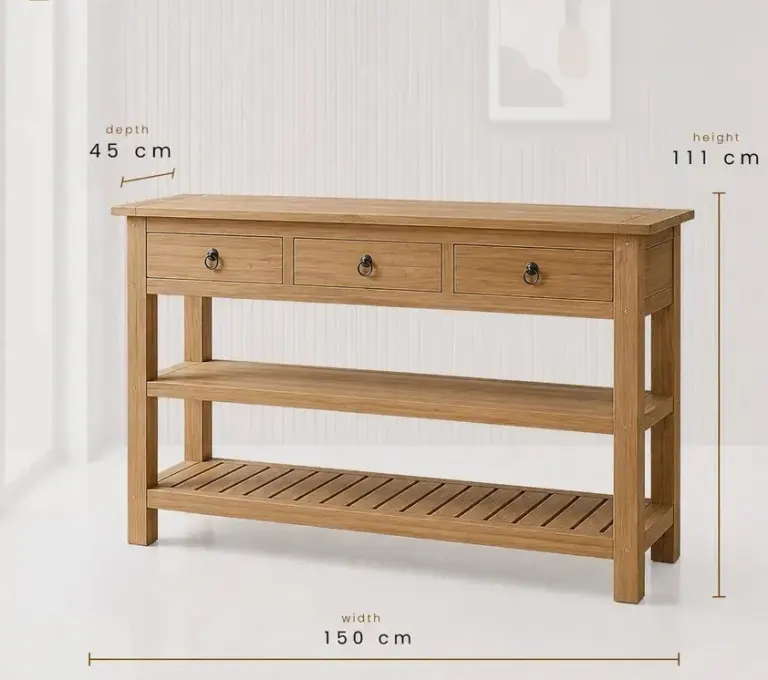
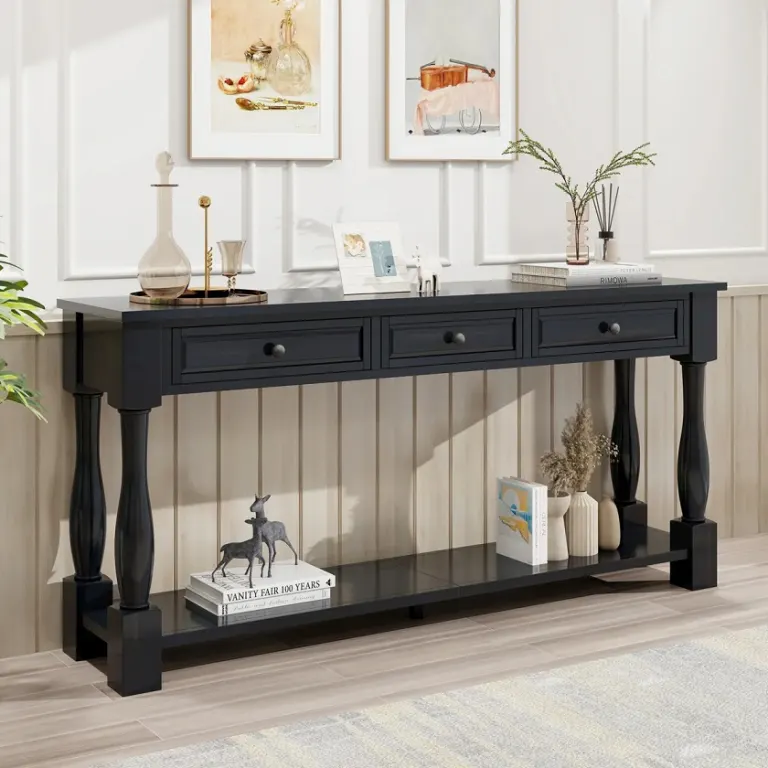
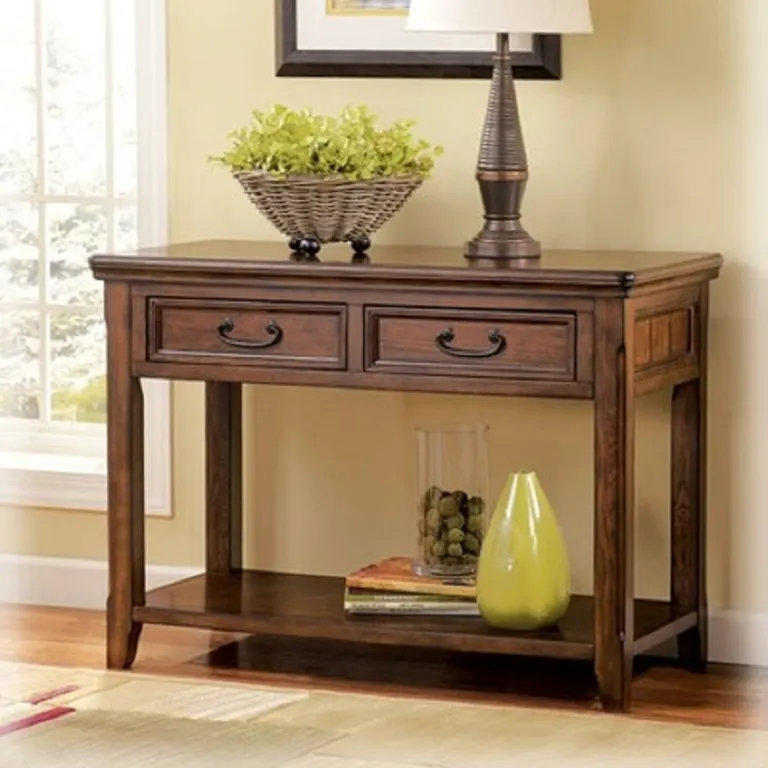
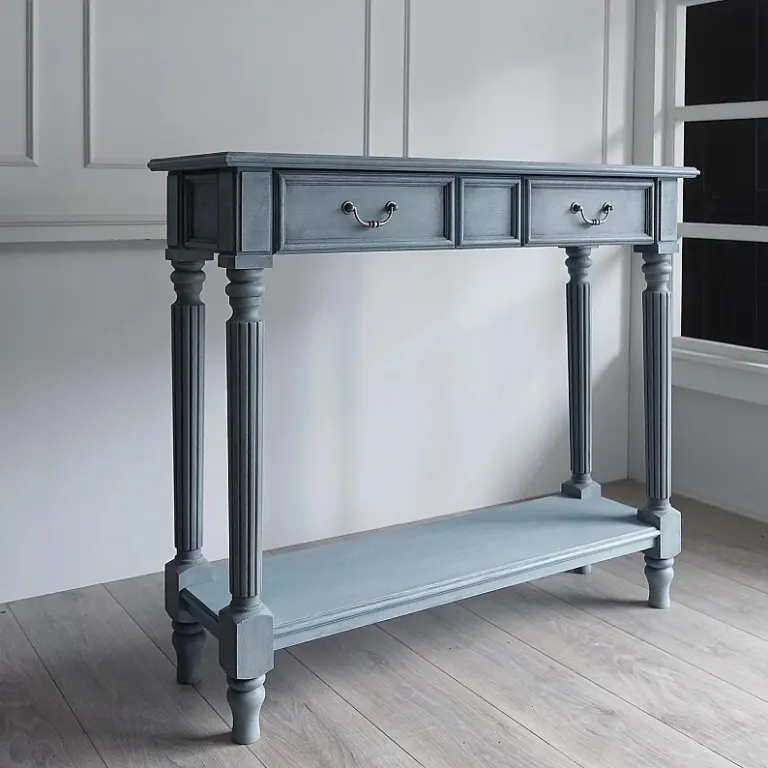
How to Brief a Factory on a Console Table When You Only Have a Mood Board
A mood board shows atmosphere, but a factory needs answers. This guide lists the questions a designer should settle to turn a console table from mood board images into a quotable piece.
You can order a console table from mood board references, but only if the board is paired with a handful of clear answers. A factory cannot price a feeling; it prices dimensions, materials, finishes, quantities and delivery terms. This guide walks through the questions that turn a collage of images into a brief a manufacturer can quote and draw.
We produce custom hospitality furniture to project drawings in our own factory in Istanbul and ship worldwide, so the points below reflect what we need to see before we can give a realistic quotation.
What a mood board can and cannot tell a factory
A mood board communicates style direction: proportion, colour temperature, texture, level of detail and the overall character of a space. It is a strong starting point for a conversation. It does not, on its own, define size, construction or cost.
Two images that look similar can hide very different builds. A slim console in a photo may be solid timber, veneered board or a timber and metal hybrid, and each route changes durability, weight and price. Your brief should close that gap.
Step 1: Annotate the board, do not just send it
Before sending the board, mark what you actually like in each image. One picture may be there for the leg shape, another for the finish, a third for the top edge. Without notes, the factory has to guess, and guesses lead to revisions.
- Label each image: "leg profile", "colour and grain", "drawer front", "mood only".
- Mark anything you do not want, such as high gloss or visible metal fixings.
- Rank the references so the factory knows which one leads if two details conflict.
Step 2: Answer the questions that decide the quote
The questions below are the ones that move a quotation from a rough idea to a number you can rely on. You do not need every answer on day one, but the more you settle, the tighter the estimate.
Where will the piece stand and what must it do?
State the location: guest room entry, lobby, corridor, restaurant host area or suite. Location drives size limits, fire and clearance rules, and wear. Also say what the piece must do: hold a lamp, store items, act as a display, carry a mirror or simply be decorative.
What are the approximate dimensions?
Give length, depth and height in metric, with imperial in brackets if your team uses it, for example 120 cm (47.2 in) long, 35 cm (13.8 in) deep and 80 cm (31.5 in) high. If you are unsure, give a range or the available wall width and let us propose proportions. Mention niches, skirting boards or sockets that affect the fit.
Which materials are you considering?
Name the timber species or veneer you prefer, or describe the look and ask for options. Say whether you expect a stone, marble or glass top, metal accents or cane panels. If you are open on materials, tell us your priority: lowest maintenance, warm natural feel or a specific colour.
What finish and sheen do you need?
Describe the colour in words and, where possible, with a reference such as a RAL code, a Pantone number or a physical sample. Screen colours vary, so treat photos as a direction only. Specify the sheen as matte, satin or gloss, and note whether the piece sits near windows or in a high-touch area.
Is the piece fixed or freestanding?
A wall-mounted floating console needs different construction and fixing details from a freestanding one. Tell us if the wall type is known, if anti-tip anchoring is required and whether the piece will sit in a corridor where clearances matter.
How many pieces and in how many variants?
Quantity affects unit cost, tooling and production planning. Say how many pieces you need in total and whether sizes or finishes differ by room type or floor. A single design in two sizes is easier to plan than five unrelated variations.
What is the project context?
Tell us the destination country, the project stage and the target delivery window. Destination influences fire requirements, climate considerations, packing method and documents. If the console is part of a wider FF&E package, mention it so we can align finishes with other items.
Step 3: Set the budget direction without a fixed number
You do not have to disclose a budget, but a direction helps. Say whether the piece is a signature element, a mid-range workhorse or a cost-controlled repeat item. We can then suggest where to invest, for example in a solid timber top, and where a veneered or simplified detail saves money without hurting the look.
A simple brief template
Use this structure when you write to a factory. It fits on one page and covers what we need to start.
| Item | What to provide |
|---|---|
| Reference images | Annotated mood board, ranked by importance |
| Location and function | Room type, purpose, fixed or freestanding |
| Dimensions | Length, depth, height or available space |
| Materials | Preferred timber, top material, metal or other details |
| Finish | Colour reference, sheen, sample if available |
| Quantity | Total pieces and variants |
| Destination and timing | Country, delivery window, shipping terms such as FOB or DAP |
| Special requirements | Fire rules, accessibility, cable access, branding |
What happens after you send the brief
A factory will normally review the brief, ask clarifying questions and return a proposal. Expect a sketch or a drawing for approval, followed by sample or prototype discussion. Timing and price depend on materials, complexity and quantity, so we do not quote a fixed schedule before seeing the project.
Approve the drawing carefully. Check the dimensions, leg and top connection, edge profile, finish code and any hardware. Changes at drawing stage are simple; changes after production starts are not.
Common gaps that slow a mood board brief
- Images from different styles with no ranking, which leaves the factory unsure what leads.
- No dimensions at all, so proportions are copied from a photo with unknown scale.
- Colour described only as "warm oak" or "dark walnut" without a sample or code.
- No mention of destination, so fire or packing needs appear late.
- Quantity left open, which makes any price indicative only.
Next step
If you have a mood board and a rough room plan, send both to us with answers to as many of the questions above as you can. We will review the references, suggest suitable construction and materials, and come back with questions, a drawing proposal and a quotation route for your project, wherever it is located.
Sıkça Sorulan Sorular
Can a factory quote a console table from a mood board alone?
Only as a rough indication. A mood board shows style, but a firm quotation needs dimensions, materials, finish, quantity and destination. If you send the board with annotations and answers to these points, a factory can usually give a useful first estimate and then refine it after drawing approval.
What is the most important detail to add to a mood board?
Dimensions and function. Without size and purpose, proportions cannot be judged and construction cannot be chosen. After that, add the material preference, finish reference and quantity. These four points change the price and production method more than any other detail in the brief.
Do I need technical drawings before contacting a manufacturer?
No. Many designers start with images, a sketch or a room plan. A factory can prepare shop drawings from your brief for approval. Technical drawings help if you have them, but a clear brief with sizes and finish notes is enough to begin.
How do I describe a colour so the finish matches my vision?
Use a RAL or Pantone reference, a physical sample or a stained timber piece, and add the sheen level. Words like honey or espresso are interpreted differently, and screens distort colour. Ask for a finish sample under your project's lighting before approving production.
Can you produce a console table from mood board and ship it abroad?
Yes. We manufacture custom pieces to project drawings in Istanbul and ship to many regions. Share your destination and preferred shipping terms, such as FOB or DAP, so we can plan packing, documents and delivery together with the design and sample approval.
Every hotel project is different. Send us your drawings or room schedule for a tailored proposal on materials, lead time and shipping.