How Wood Grain Direction Affects Door Appearance: Vertical, Horizontal and Diagonal Layouts
Door grain direction shapes how tall, wide and calm a door looks, and it also affects veneer yield, joints and lead time. This guide compares vertical, horizontal and diagonal layouts for hotel projects.
Door grain direction is one of the quietest design decisions on a hotel project, yet it changes how a corridor feels. Vertical grain makes a door look taller and more formal, horizontal grain widens and calms it, and diagonal grain creates a deliberate feature. Each layout also affects veneer use, joint lines and production planning, so it is worth deciding early and recording it on your door schedule.
Why grain direction matters in hotel interiors
On a flat door leaf, grain is the main pattern the eye sees. In a corridor with thirty or more identical doors, the grain lines repeat and create a strong rhythm. The direction you choose therefore influences the proportions of the space more than most guests will consciously notice.
Grain direction also has to work with the rest of the room. Wall panelling, wardrobe fronts and headboards often use the same species, and the door should either match their direction or contrast with it on purpose.
Vertical grain: the default for most hotel doors
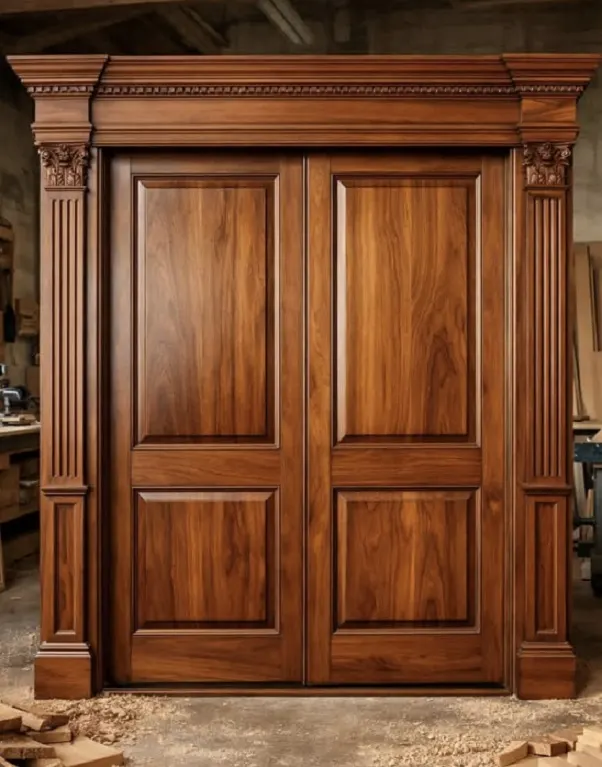
Vertical grain runs along the height of the leaf. It is the natural result of cutting a veneer sheet along the log and applying it lengthwise, which is why it is the most common layout on vertical veneer doors.
Visual effect
- Emphasises height, which helps in rooms with modest ceilings.
- Looks traditional, orderly and calm.
- Hides small differences between leaves better than bold horizontal figure.
Manufacturing implications
- Veneer sheets are usually limited in width, so a standard leaf of around 900 mm (35.4 in) often needs several sheets joined side by side. Joint lines run vertically and are less conspicuous.
- Layout is efficient, which generally keeps waste lower than other options.
- Grain runs in the same direction as the stiles of the frame inside the leaf, which suits stable, conventional construction.
Horizontal grain: wider, quieter, more contemporary
A horizontal grain door turns the pattern ninety degrees. The leaf appears wider and lower, and the effect is often described as modern or architectural. It works well in suites, lobbies and boutique projects where the door is meant to sit quietly in a wall of joinery.
Visual effect
- Emphasises width and can make a corridor feel more relaxed.
- Pairs naturally with horizontal wall panelling and long bedhead walls.
- Shows species character strongly, so walnut and oak look more dramatic.
Manufacturing implications
- Veneer sheets must be laid across their length. Because a door is taller than it is wide, more sheets are joined along the height, so there are more visible joint lines.
- Matching between sheets becomes more important. Without it, the leaf can look striped.
- Veneer consumption is usually higher, and the supply of suitable flitches matters if the same look is needed across hundreds of leaves.
Horizontal grain also affects wood movement visually. Small changes in humidity can show along joint lines more clearly, so ask your manufacturer about balanced construction and moisture control before pressing.
Diagonal grain: a feature, not a default
Diagonal layouts, typically at 45 degrees, are used where the door is meant to be noticed. They suit statement entrances, private dining rooms and signature suites rather than whole-hotel room runs.
- Creates movement and a decorative, crafted look.
- Needs careful pattern planning so that the diagonal lines meet cleanly at the edges and align with any frame or adjacent panel.
- Produces the most offcuts, because sheets are cut at an angle, so cost per leaf is typically higher.
If you want a diagonal door to line up with a diagonal wall panel, supply shop drawings of both so the factory can match the pattern across the junction.
Comparison table
| Layout | Visual effect | Joint lines | Veneer use | Best for |
|---|---|---|---|---|
| Vertical | Tall, formal, calm | Fewer and less visible | Efficient | Guest rooms, corridors, large runs |
| Horizontal | Wide, modern, architectural | More, need good matching | Higher | Suites, lobbies, boutique projects |
| Diagonal | Decorative, dynamic | Angled, need pattern planning | Highest | Feature doors, private dining |
Veneer matching and grain layout design
Grain layout design is not only about direction. How the sheets are arranged on the leaf decides whether the door looks like one piece of wood.
- Book-matched: consecutive sheets are mirrored, creating a symmetrical pattern. It is striking but shows the joint clearly.
- Slip-matched: sheets are laid in sequence without mirroring. This gives a more consistent, repeating grain and suits vertical layouts.
- Random-matched: sheets are mixed for a casual, natural look. It is more economical but gives more variation from leaf to leaf.
Whatever you choose, specify it in writing and approve it on a sample, because the same species can look very different under each method.
Grain direction and the rest of the door
Several details interact with grain, and they are easy to overlook until samples arrive.
- Edges: solid wood or veneered edge strips should follow the main face grain so the leaf looks continuous from the side.
- Grooves and profiles: grooves running against the grain look intentional, while grooves along it can disappear. Check this on a sample.
- Frames and architraves: match the grain direction of the frame to the leaf, or choose a clear contrast, rather than something in between.
- Hardware: long pull handles and lock plates sit better when they align with the dominant grain direction.
- Finish: open-pore and brushed textures emphasise grain, while heavy lacquer can soften it.
Practical considerations for hotel projects
Consistency across a large order
Natural veneer varies from log to log. For a large run, ask for veneer to be sourced from a controlled batch where possible, and agree an acceptable variation range on a sealed sample. Horizontal and diagonal layouts tend to show variation more, so they need tighter control.
Lead time and cost
Grain direction affects veneer availability, pressing time and waste, so it can influence both price and lead time. The effect depends on species, quantity and finish, and we prefer to confirm it against your drawings rather than offer a generic figure.
Different zones, different layouts
Many hotels use vertical grain in guest corridors and horizontal or diagonal layouts only on suites, lobby doors and private dining rooms. This keeps the budget under control while still giving the public areas a distinct character.
Repair and replacement
Record the layout, matching method and species on the door schedule. If a leaf must be replaced years later, the new one will match the originals only if the direction and matching are documented.
How to specify grain direction clearly
- State the direction for each door type on the schedule: vertical, horizontal or diagonal angle.
- Name the species, cut (for example crown or quarter) and matching method.
- Show the layout on elevation drawings, including how it aligns with adjacent panelling.
- Request a sample or mock-up door under the actual hotel lighting.
- Approve a finish sample, since grain and finish appear together.
Choosing the right layout
As a rule of thumb, choose vertical for large guest-room runs where consistency and efficiency matter, horizontal where you want a wider, more contemporary effect, and diagonal only for selected feature doors. The best answer is the one that fits your design concept and your budget, and a sample will settle it faster than a render.
Next step
If you are planning doors for a new hotel or a renovation, send us your door schedule or drawings, together with your preferred species and finish. We will review the grain layout options, explain how each affects production and shipping, and prepare a project quotation.
Sıkça Sorulan Sorular
Which grain direction is most common on hotel doors?
Vertical grain is the most common because it is efficient to produce, shows fewer joint lines and gives a calm, formal look. It suits large runs of guest-room and corridor doors. Horizontal and diagonal layouts are usually reserved for suites, lobbies or feature doors.
Does a horizontal grain door cost more than a vertical one?
Often it does, because more veneer sheets are joined along the leaf height and matching is more demanding. The difference depends on species, quantity and finish, so it is best to request a quotation based on your actual door schedule.
Can grain direction make a door look taller or wider?
Yes. Vertical grain draws the eye upward and makes a door look taller, while horizontal grain emphasises width and makes it look broader and calmer. Choosing the direction to match the room proportions can improve the overall impression.
Should the door grain match the wall panelling?
Either match it or contrast it clearly. Matching direction creates a continuous, quiet wall, while a deliberate contrast makes the door a feature. Intermediate or random combinations tend to look unplanned, so show both on one elevation drawing.
How do I keep veneer grain consistent across hundreds of doors?
Specify the species, cut and matching method, agree on a sealed approved sample and ask the factory to source veneer in controlled batches. A mock-up door under real lighting also helps you confirm the acceptable variation before production.
Every hotel project is different. Send us your drawings or room schedule for a tailored proposal on materials, lead time and shipping.