Doors for Gulf Hotels: Oversized Leaves, Finishes and Climate Planning
Gulf hotel projects favour tall, heavy and visually bold wooden doors, while heat, dust and strong air-conditioning put stress on every leaf. This guide covers how to specify oversized doors and finishes that stay stable and look good in service.
Specifying doors for Gulf hotels is different from most other regions: designers often ask for leaves of 2.4 m (7.9 ft) or more, finishes with a strong visual presence, and performance that holds up in heat, fine dust and heavily air-conditioned interiors. This article explains how those three factors interact and what to put in your specification so a factory can price and build accurately.
It focuses on oversized leaves and climate. For general door models, cores and hardware, see the related guides linked to this article.
Why tall doors are popular in Gulf hotel design
Many Gulf hotels have generous ceiling heights, double-height lobbies and long corridors with a formal character. Tall wooden doors help proportion these spaces, and they signal arrival at suite entrances, majlis-style lounges and private dining rooms.
Typical design requests include:
- Suite entrance leaves from 2.4 m to 3 m (7.9 to 9.8 ft) high, sometimes taller.
- Double-leaf entrances with wide combined openings.
- Floor-to-ceiling leaves with concealed frames, so the door reads as part of the wall.
- Pivot doors for statement entrances.
Sizes vary from project to project, so treat these as common design directions, not fixed standards. Your door schedule should always state the exact structural opening for each door type.
What changes when a leaf goes beyond standard height
An oversized door leaf is not simply a longer version of a standard door. Height and weight change how the leaf behaves, how it is hung and how it travels.
Weight and hinge load
A tall leaf in a thick, dense core can be very heavy. That affects the number and size of hinges, the frame fixing and, for pivot doors, the floor and head fixings. Confirm the weight with your manufacturer before selecting hardware, and make sure the wall or frame behind the door can carry the load.
Flatness and stability
The longer the leaf, the more visible any bow or twist becomes. A stable core construction, balanced face materials on both sides and properly sealed edges all matter more as height increases. Specify the same construction and finish on both faces unless there is a clear reason not to, because unbalanced leaves are more likely to move.
Joints and grain
Veneered leaves taller than a standard board length may need joined veneer. Decide early how joins and grain direction should look, and approve it on a sample. Vertical grain usually emphasises height, while horizontal grain can look striking but needs careful matching across the leaf.
Handling and delivery
Large leaves need stronger packing, careful lifting plans and clear access routes in the building. Check lift sizes, stair widths and corridor turns before the order is confirmed, not after the crates arrive.
Understanding the climate conditions
Gulf hotels combine several conditions that affect wooden doors. They are not all present in every building, but you should consider each one.
- Outdoor heat and sun: relevant mainly for doors near glazing, terraces and entrance vestibules. Direct sun through glass can heat a door face far beyond normal room temperature.
- Dry air indoors: strong air-conditioning can lower humidity inside, and timber loses moisture in dry conditions.
- Humidity swings: coastal locations can be humid outside, so doors moving between conditioned and unconditioned areas face changes in moisture.
- Dust and sand: fine particles collect in grooves, profiles and gaps, and can abrade soft finishes during cleaning.
The practical response is stable construction, moisture-controlled material, sealed edges and a finish that tolerates frequent cleaning.
Finish choices for Gulf projects
Finish is where the visual brief and the climate meet. The right choice depends on the zone, the colour and how much maintenance the operator will accept.
| Finish | Typical use | Points to consider |
|---|---|---|
| Polyurethane lacquer, high gloss | Lobby, suite entrances, feature doors | Dramatic look, but shows dust, fingerprints and fine scratches more readily |
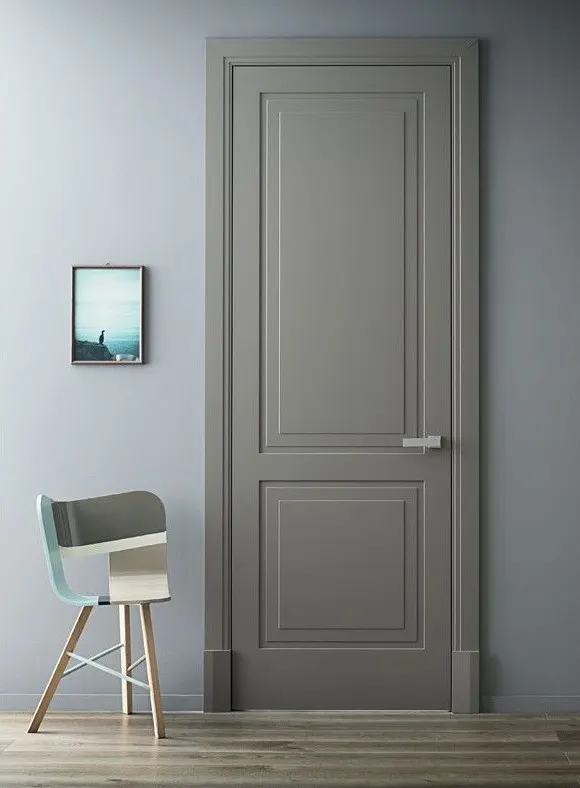
| Lacquer, satin or matt | Guest rooms, corridors | More forgiving in daily use; easier to keep looking consistent |
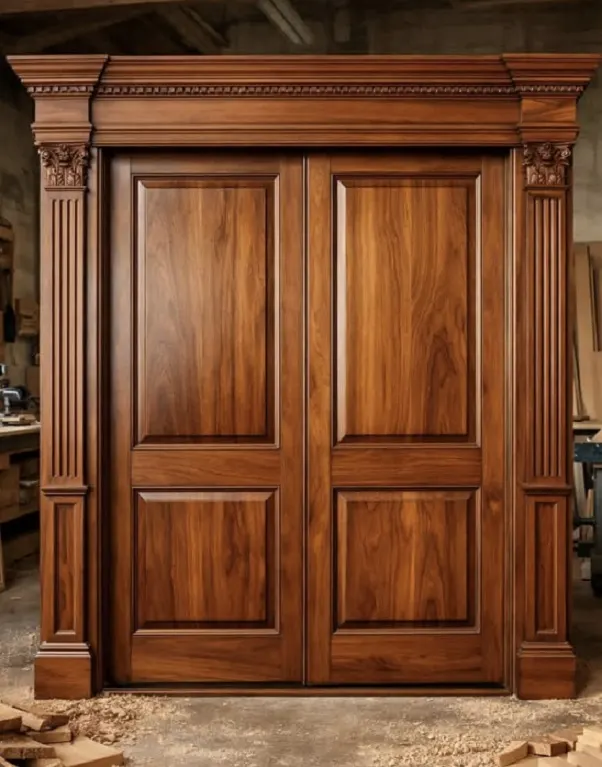
| Natural or stained veneer with protective lacquer | Suites, restaurants, premium corridors | Rich grain; needs UV-aware finish selection near glazing |
| HPL or laminate faces | Back-of-house, staff areas | Hard-wearing and practical; limited warmth of appearance |
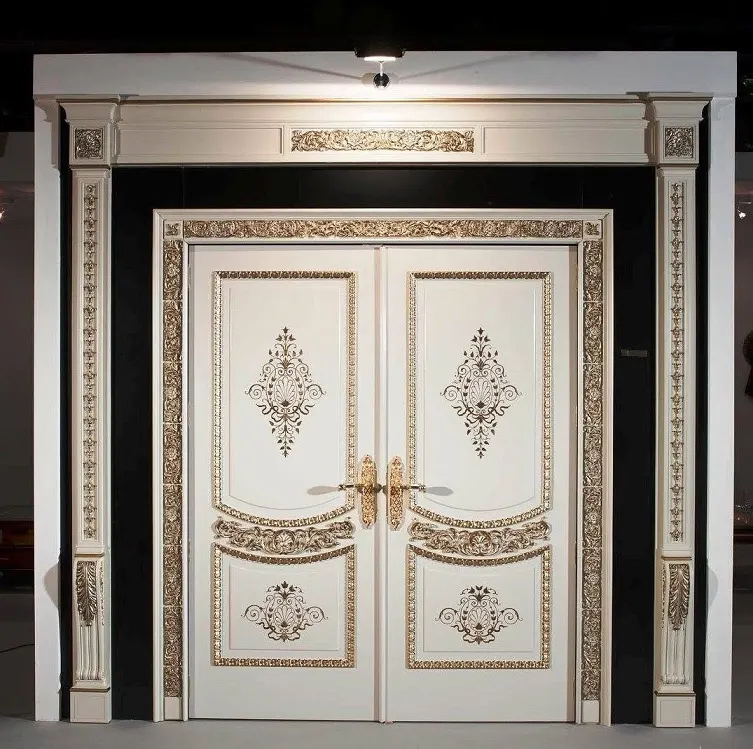
| Metal inlays and trim on wood | Statement entrances | Adds detail; needs care with cleaning products and edge alignment |
Dark tones and gloss
Dark walnut-style stains and black finishes are popular, but they show dust and scratches clearly. If you choose them, ask for a sample and test it under the real lighting. A matt or low-sheen topcoat is often easier to maintain than high gloss.
Light colours and dust
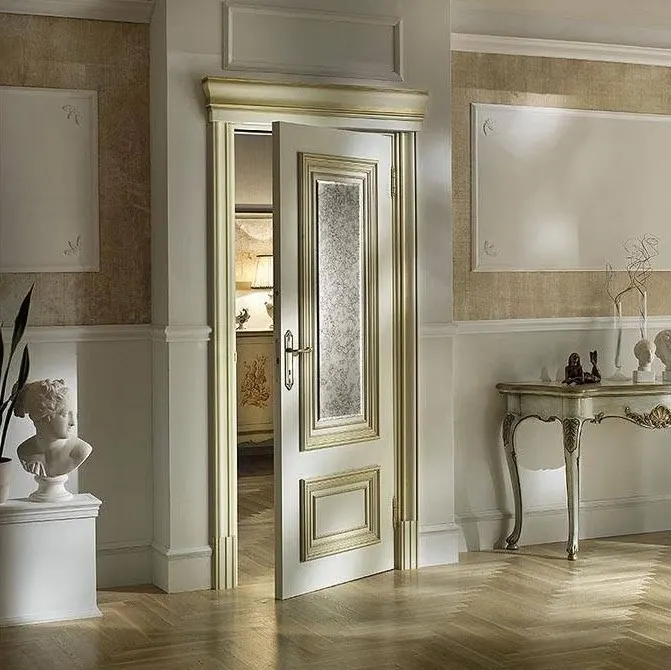
Pale lacquers and white doors can look clean and contemporary, though marks from hands and trolleys are visible. Plan protection details such as kick plates in busy zones.
Sun exposure
Where a door sits in direct sun through glazing, discuss the finish system with your manufacturer. Colour stability and coating performance under UV vary between systems, so do not assume an interior finish suits a sun-exposed position.
Dust, sealing and cleaning
Dust control starts with door details. Deep grooves and complex profiles look rich but hold dust, so use them where cleaning is regular and skilled. Simple flush or shallow-profile designs are easier for housekeeping teams.
Sealing also matters. Door seals and drop bottoms limit dust and air movement between corridor and room, and they help with acoustics. Choose seals that work with the frame profile and floor finish, and check clearances for thick carpets and stone floors.
For maintenance, give the operator the correct cleaning method for each finish and a small supply of touch-up material from the same batch as the doors.
Core and edge construction for stability
For tall leaves, the core and edges do much of the work in resisting movement. Ask your manufacturer to confirm:
- Core type and thickness for each oversized leaf.
- Whether stiffeners or solid timber lippings are used in the leaf edges.
- Edge sealing method, including top and bottom edges.
- Moisture content of the timber and boards before production.
Top and bottom edges are often overlooked because they are hidden once the door is hung. Sealing them properly reduces moisture exchange and the risk of warping.
Hardware and fire requirements
Heavy leaves need hardware chosen for the actual weight: sufficient hinges, correctly sized closers where required and locks prepared in the leaf at the factory. Electronic lock preparation, cable paths and any integrated sensors should be coordinated with your lock supplier before production.
Fire-rated doors have their own certification and frame requirements, and local authority rules apply. Confirm the required rating and documentation for each opening at the specification stage, because this can change materials, thickness and lead time.
Approve a sample before full production
For large leaves and bold finishes, a sample or mock-up is the safest route. It lets the designer, operator and owner check colour under hotel lighting, grain layout, hardware position and the way the door sits in its frame. Record decisions in writing so production follows what was approved.
Shipping oversized doors to the Gulf
Long leaves need rigid packing, protected edges and clear labelling by room or door type so installation can proceed floor by floor. Discuss the shipping terms (for example FOB, CIF or DAP), container loading and the delivery sequence early. Remember that the number of leaves per container falls as height and crate size increase, which affects freight cost.
Checklist for specifying oversized doors for Gulf hotels
- List every door type with exact structural opening, leaf height and leaf configuration.
- State the finish, sheen level and colour reference for each zone.
- Identify doors exposed to sun, terraces or large temperature changes.
- Confirm fire, acoustic and accessibility requirements per opening.
- Agree hardware, lock preparation and weight limits before production.
- Approve a sample under real lighting.
- Check site access, lift sizes and storage for large crates.
Next step
If you are planning a hotel in the Gulf or elsewhere in the region, send us your door schedule or drawings. We will review the oversized leaves, suggest suitable constructions and finishes, and come back with an estimated lead time and shipping options for your project.
Sıkça Sorulan Sorular
What is the maximum height for an oversized wooden door leaf?
There is no single limit. It depends on the core construction, thickness, weight, hardware and packing. Leaves of 2.4 m and above are commonly requested for hotels. Send your drawings so the factory can confirm what is feasible for each opening.
Do tall wooden doors warp more in hot, dry climates?
Taller leaves show movement more clearly, so construction matters. Balanced faces, stable cores, sealed edges and properly dried material reduce the risk. Strong air-conditioning can dry timber, so specify stable construction and check it on a sample.
Which finish suits Gulf hotel doors best?
It depends on the zone. Satin or matt lacquer is easier to maintain in corridors and rooms, while gloss and dark tones suit feature doors if housekeeping can keep them clean. Test any finish under real lighting and request a sample.
Can doors for sun-exposed positions use the same finish as interior doors?
Not always. Direct sun through glazing can stress coatings and change colour. Tell your manufacturer which doors face strong light so a suitable finish system can be recommended and approved on a sample.
How are oversized doors packed for export?
They are protected with edge guards, film, foam or cardboard and placed in rigid crates, labelled by door type or room. Packing details affect container capacity and freight cost, so discuss them when you request a quotation.
Every hotel project is different. Send us your drawings or room schedule for a tailored proposal on materials, lead time and shipping.