Wooden Doors for Resorts and Beach Hotels: Salt Air, Humidity and Sun-Exposed Models
Coastal climates stress wooden doors in ways inland hotels rarely see. This guide matches door models, cores, finishes and hardware to salt air, humidity and sun exposure.
The right doors for resort hotels are not simply the doors you would specify for a city hotel with a sea view. Salt-laden air, high humidity, strong sunlight and frequent door use change which cores, finishes and hardware will still look and work properly after several seasons. This guide explains how each coastal stress affects a wooden door and how to match the model to the location.
It is written for resort developers, designers and procurement teams who need to brief a factory with confidence. We use metric units first, with imperial in brackets where helpful.
Why coastal resorts are harder on doors
A beach hotel combines several stresses at once, and they rarely act alone. Humidity makes timber and board products take up moisture, salt accelerates corrosion on metal parts, and sunlight breaks down finishes and fades colour. Guests also open and close doors constantly, with wet hands, sandy feet and luggage.
The result is that small weaknesses show up sooner. An unsealed edge, a thin lacquer coat or a low-grade hinge may pass in a temperate city, but can fail within a few seasons at the coast.
The four stresses to plan for
Humidity and moisture movement
Wood and wood-based boards absorb and release moisture as the air changes. In a humid climate this can cause swelling, sticking in the frame, edge lifting and, in poor constructions, warping. The effect is stronger where air conditioning is switched on and off, because the room alternates between cool dry air and warm humid air.
Salt in the air
Salt rarely harms timber directly, but it attacks hinges, screws, strike plates and lock bodies. Surfaces within a few hundred metres of the shore can develop a fine salty film that dulls finishes and speeds up corrosion wherever the coating is damaged.
Sun and heat
Rooms with large glazing, terrace doors and open corridors expose door leaves to direct sunlight. UV can fade stains, yellow pale lacquers and dry out unprotected veneer. Heat also increases the movement of the leaf, especially on dark colours that absorb more energy.
Sand, abrasion and cleaning
Sand acts as an abrasive on lower door areas, and resort housekeeping often uses more frequent wet cleaning. Finishes need to tolerate both, which is why surface hardness and edge protection matter more than in a city business hotel.
Which doors are exposed, and how much?
Not every door in a resort faces the same conditions. Sorting openings into exposure zones helps you spend the budget where it matters.
| Zone | Typical exposure | Priority |
|---|---|---|
| Guest room entrance (internal corridor) | Humidity swings, heavy use | Stable core, sealed edges, durable finish |
| Bathroom door | Steam, splashes | Moisture-resistant core, fully sealed leaf and bottom edge |
| Terrace or balcony room door | Sun, humidity, sometimes salt | UV-stable finish, corrosion-resistant hardware |
| Open-air corridors and stairs | Wind-blown salt, rain, sun | Highest-protection specification or alternative material |
| Spa, pool and beach club areas | Heat, steam, wet traffic | Moisture-resistant core and robust finish |
| Villa and suite entrances | Mixed, often partly sheltered | Appearance plus climate resistance |
As a general rule, interior wooden doors in air-conditioned corridors can perform well with the right construction. Doors that sit fully outdoors, or in open galleries that take rain and spray, need a separate decision and may be better served by another material.
Core choices for humid coastal climates
The core determines how much the leaf moves. Here is how common options behave in humid locations:
- Solid timber: attractive, but moves more with humidity. It needs well-seasoned wood, careful construction and a sealed finish.
- Engineered or laminated timber cores: usually more stable than solid boards because grain directions are balanced.
- Particleboard and MDF-based cores: stable in size when edges and faces are sealed, but they react badly if water reaches unsealed edges. Moisture-resistant grades are available for wet areas.
- Honeycomb cores: light and stable, suitable for internal doors with limited impact demands.
- Mineral cores: heavy and dimensionally stable, often selected where fire or acoustic performance is also needed.
No single core is right for every door. Ask the factory what board grade is used, how edges are sealed and whether the leaf is balanced, meaning the same material on both faces to reduce bowing.
Finish choices for sun, salt and sand
The finish is the first line of defence. Compare the options on how they handle UV, wet cleaning and abrasion.
| Finish | Coastal strengths | Watch points |
|---|---|---|
| Polyurethane lacquer | Good surface protection, wide colour range, wipeable | Pale colours may yellow in strong sun; needs full coverage on edges |
| Veneer with protective lacquer | Natural look, repairable | UV can shift tone; lacquer quality matters |
| HPL (high-pressure laminate) | Hard, abrasion and moisture resistant | Limited natural feel; edge detail must be well bonded |
| Oil finishes | Warm, natural, easy spot repair | Need regular maintenance in high-exposure areas |
For a more detailed look at these systems, see our comparison of door finishes for high-traffic hospitality. When sun reaches the door, ask for a UV-resistant topcoat and test the colour in the actual light conditions of the room.
Door models that suit coastal projects
Model design affects how well a door copes with climate. These designs are worth considering:
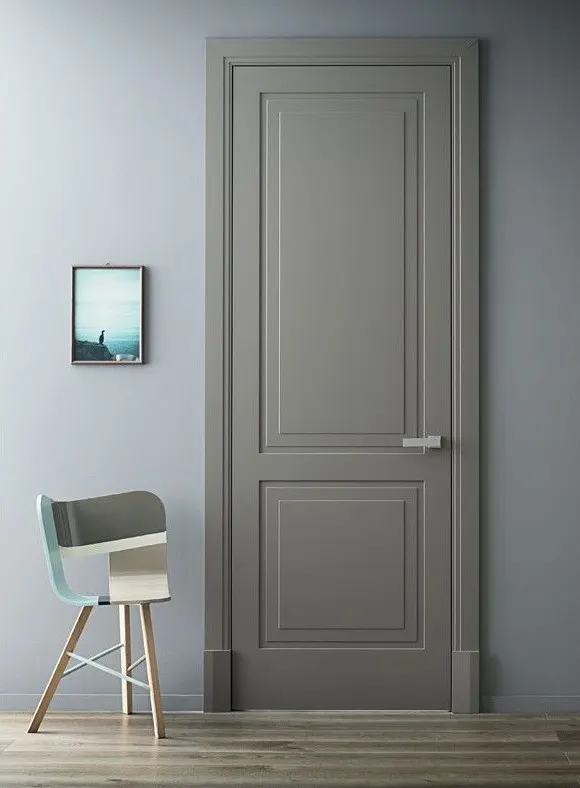
- Flush doors with sealed edges: a smooth surface has fewer places for moisture and dirt to collect, and is easy to wipe down.
- Louvred doors: allow airflow in wardrobes, utility rooms and some terrace openings, helping to limit trapped humidity. They collect dust and salt film, so cleaning access matters.
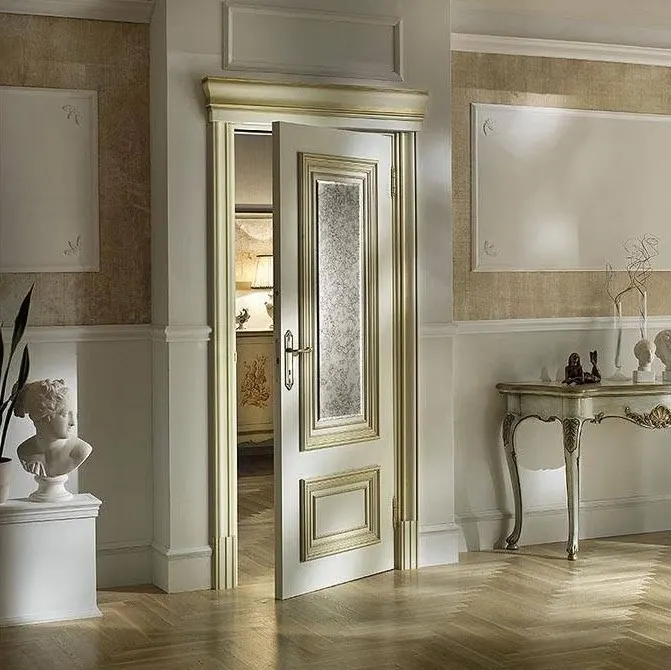
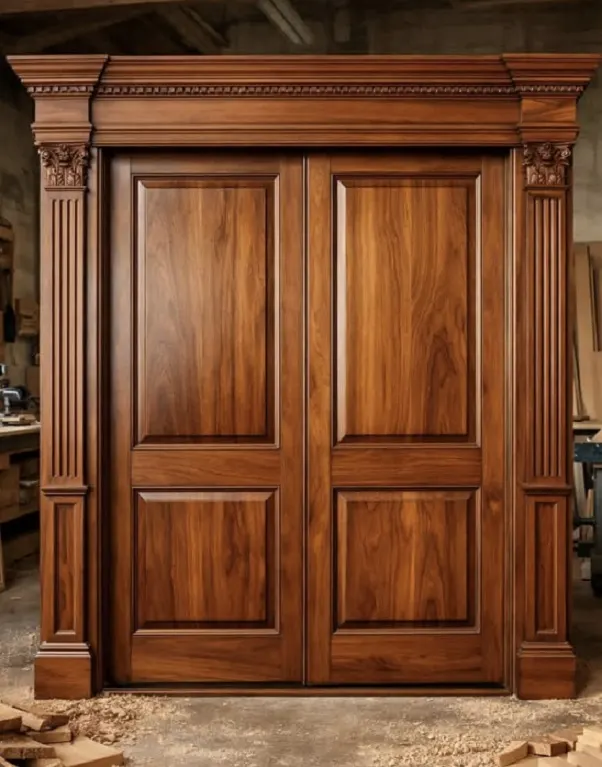
- Panelled and shaker-style doors: attractive in classic resorts, but the joints between rails and panels need quality sealing because they are weaker points.
- Grooved and fluted doors: add texture, but deep grooves collect sand and dust. Choose rounded, shallow profiles for easier cleaning.
- Sliding doors: save swing space in bathrooms and wardrobes, but tracks collect sand, so choose accessible, easy-to-clean track systems.
Design choices that look great in a render may need adapting for coastal use. A fine profile with sharp edges, for example, chips more easily than one with a slightly rounded detail.
Hardware and fixings in salt air
Hardware is often the first part to show wear at a beach property. Specify corrosion-resistant materials for hinges, screws, closers and locks, and avoid mixing metals that can corrode against each other. Stainless steel in a suitable grade, or high-quality coated hardware, is a common approach in coastal projects.
Also coordinate electronic lock preparation early, because routing and cable paths need sealing against moisture. Make sure the lock supplier confirms that the lock is suitable for the coastal environment.
Sealing the details that fail first
Most coastal door problems begin at edges, cut-outs and the bottom of the leaf. Moisture finds unsealed timber and board surfaces, then spreads from there. Good practice includes:
- Seal all four edges of the leaf, including the top and bottom edge.
- Seal hinge, lock and cut-out routings before the hardware is fitted.
- Use a finish on both faces so moisture uptake is even.
- Keep a suitable gap at the bottom for air movement and floor finish changes.
- Protect leaves from rain and sun on site until they are installed.
Frames matter too. Timber frames, steel frames and concealed frames each behave differently near humidity, so match the frame type to the leaf and the wall construction.
Storage, delivery and installation on site
Many resort projects are built in remote locations, with open-sided buildings during construction. Doors stored in humid, unconditioned rooms can absorb moisture before they are even hung. Keep packaging on, store leaves flat or upright on supports, and avoid exposure to direct sun or rain.
Where possible, install doors once the building envelope is closed and air conditioning is operating. Fitting leaves into a damp, unfinished structure is a common cause of later sticking and finish problems.
Maintenance expectations for resort operators
Even a well-built coastal door benefits from a simple care routine. Wipe salt film from exposed leaves with a damp cloth, check hinges and seals regularly, and touch up chips before moisture enters the substrate. Providing the maintenance team with finish codes and a small repair kit at handover makes this much easier.
What to send a factory for a coastal door brief
A good brief helps the manufacturer propose the right construction. Include:
- Location, distance to the sea and whether the building is air conditioned.
- Door schedule with room types, quantities, sizes and handing.
- Exposure notes for each door group (internal, terrace, spa, semi-outdoor).
- Preferred finish, colour references and any sun exposure through glazing.
- Hardware and lock specification, including corrosion requirements.
- Fire, acoustic and accessibility requirements for the destination country.
Prices and lead times depend on the model, materials, finish approval and shipping terms, so they are confirmed per project after reviewing the drawings.
Next step
If you are planning a resort or beach hotel, send us your door schedule and drawings. We will review the exposure zones, suggest suitable core and finish options for each group, and come back with sampling and shipping options for your project.
Sıkça Sorulan Sorular
Can wooden doors be used in a beach hotel?
Yes, for internal and sheltered openings. Well-constructed wooden doors with stable cores, sealed edges and a durable finish perform well in air-conditioned resort buildings. Fully exposed outdoor doors need a separate assessment, as they face rain, spray and direct sun, and another material may suit them better.
What door core is best for a humid climate?
It depends on the location of the door. Engineered timber, moisture-resistant board and mineral cores are commonly used where stability matters. Whatever the core, sealed edges and a balanced leaf construction are essential, so ask your factory how the leaf is built and sealed.
Does salt air damage wooden doors?
Salt mainly affects metal parts such as hinges, screws and lock bodies, which can corrode. The timber itself is more affected by humidity and sun. Use corrosion-resistant hardware, seal all cut-outs and wipe salt film from exposed surfaces during routine cleaning.
Which finish suits sun-exposed hotel doors?
Choose a finish with a UV-resistant topcoat, such as quality polyurethane lacquer, or HPL for hard-wearing surfaces. Pale colours and natural veneers can shift in strong sun, so test samples in the actual lighting of the room before approving the full order.
Should resort door hardware be different from city hotel hardware?
Often yes. Coastal projects benefit from corrosion-resistant hinges, screws, closers and locks, and from suppliers who confirm suitability for salt air. Electronic lock preparations should also be sealed against moisture. Discuss this with your factory and lock supplier during specification.
Can you supply doors for resort projects outside Turkey?
Yes. We produce to project drawings in our Istanbul factory and export worldwide. Shipping terms, packing and delivery sequence are agreed per project, so send your door schedule and destination to receive a tailored proposal.
Every hotel project is different. Send us your drawings or room schedule for a tailored proposal on materials, lead time and shipping.