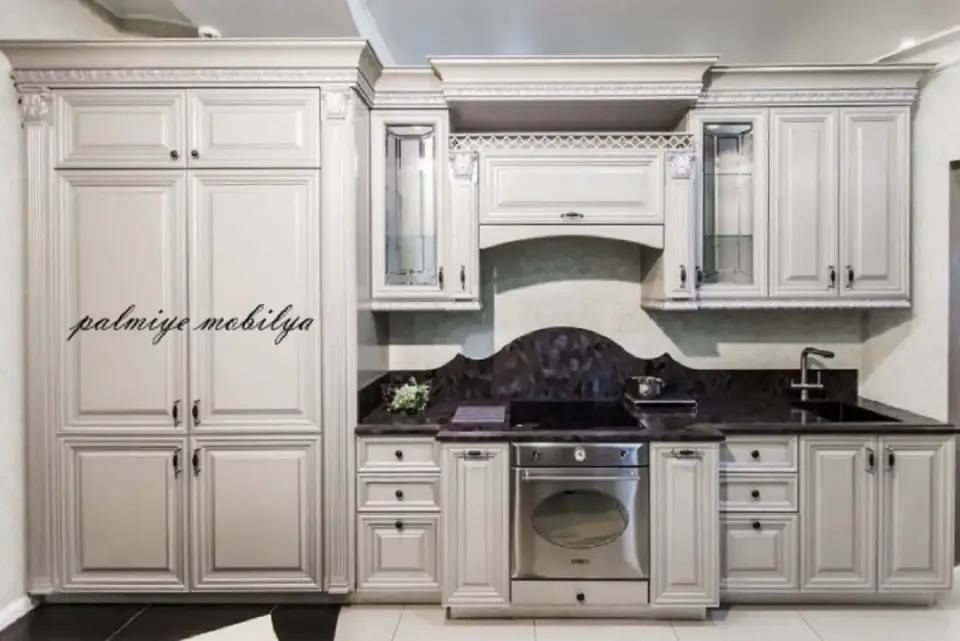
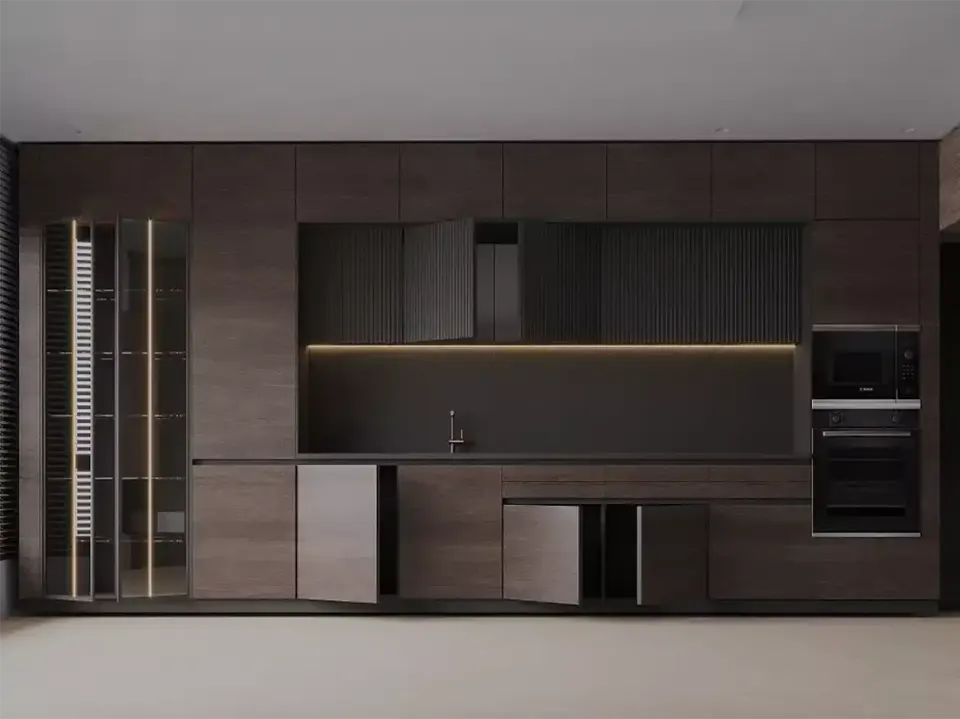
Handleless Kitchen Cabinet Turkey
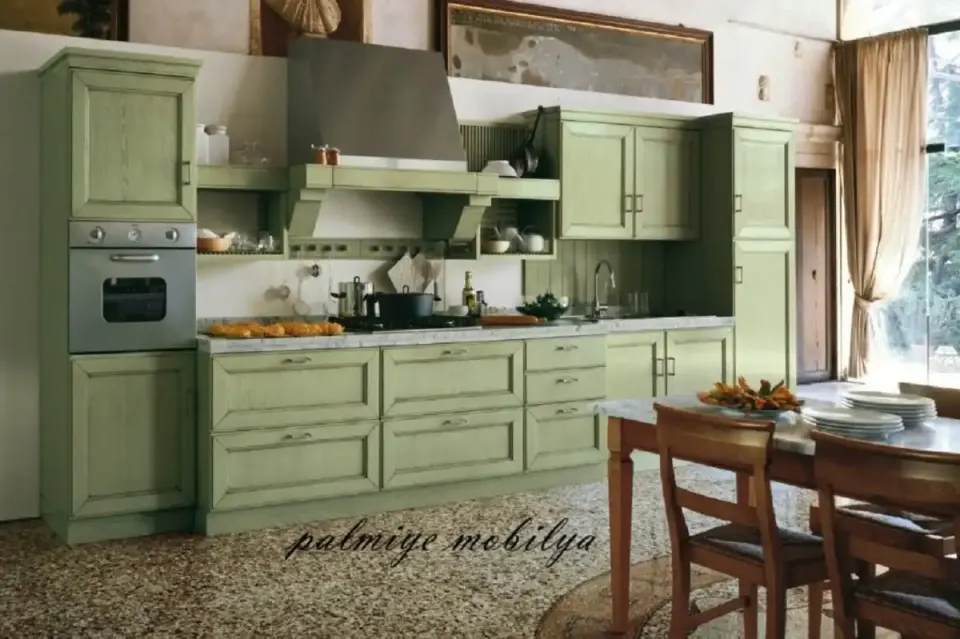
Handleless Kitchen Cabinet Turkey: The Definitive Industrial Guide to Luxury Sourcing, Advanced Material Engineering, and Global Procurement Architecture
The international landscape of luxury residential architecture, high-density property developments, and commercial interior fit-outs is experiencing a profound paradigm shift. Discerning homeowners, property developers, and design firms are systematically shifting their supply chains away from high-overhead Western European manufacturers and tariff-unstable Asian hubs. At the absolute center of this strategic redirection is an industrial manufacturing cluster that has engineered a perfect equilibrium between ancestral craftsmanship, digital precision, and macroeconomic viability. Sourcing a Handleless Kitchen Cabinet Turkey system has transitioned from an innovative supply chain alternative into an industry-wide procurement standard for high-performance organizations worldwide.
The kitchen is no longer envisioned as a merely isolated, utilitarian washing and cooking zone; it acts as the definitive visual anchor, the social epicenter, and a core design signature of a premium property. Among contemporary surface aesthetics, the handleless configuration represents the pinnacle of sleek, uninterrupted minimalism, allowing the pure material architecture of the cabinet fronts to flourish without visual clutter. However, calculating the functional and financial viability of importing large-scale millwork runs requires a multi-dimensional analysis of profile mechanics, material behavior, and regulatory frameworks. It is catastrophic for commercial margins to base buying decisions on superficial exterior looks. Importers must master how raw material taxonomy, core chemical treatments, finishing sciences, integrated hardware kinetics, and international trade law interact to establish final landed costs and lifelong durability.
By analyzing the advanced engineering and commercial structures behind a Handleless Kitchen Cabinet Turkey, international buying syndicates can unlock unprecedented macroeconomic savings while simultaneously upgrading their architectural building standards. This comprehensive industrial whitepaper provides an exhaustive, technically rigorous, 4000-word analysis of the underlying pricing components, engineering metrics, material tiers, profile variants, and global logistical protocols that dictate this high-performance trade segment.
1. The Strategic Macroeconomic Framework of the Turkish Export Hub
To execute a flawless international sourcing strategy, a procurement officer must first look beyond individual factory gates and comprehend the overarching industrial architecture that governs the market. When analyzing the global competitive edge of a Handleless Kitchen Cabinet Turkey, buyers are capturing deep systemic cost advantages built into a highly resilient, geographically centralized industrial matrix.
Geopolitical Logistics and Freight Cost Containment
Turkey occupies a vital geographic position bridging Europe, Asia, and North Africa. For international supply chain directors, this spatial positioning translates into significantly shorter transit times and lower carbon footprints compared to traditional East Asian sourcing options.
Industrial shipments departing from major manufacturing clusters like İnegöl (Bursa), Siteler (Ankara), Istanbul, and Kayseri can reach continental European metropolitan areas within 4 to 7 days via well-established road freight networks and roll-on/roll-off (Ro-Ro) shipping lanes. Shipments bound for United States or Canadian ports arrive via direct transatlantic maritime container routes within 14 to 21 days. This rapid turnaround allows global importers to operate highly agile, lean inventory models, drastically reducing locked-up working capital and minimizing the risk of costly project completion delays. The compounding efficiency of this geographical proximity keeps the landed cost of a Handleless Kitchen Cabinet Turkey exceptionally competitive on a global scale. Furthermore, Turkey’s long-standing Customs Union agreement with the European Union guarantees that all manufactured industrial outputs adhere strictly to European safety, quality, and environmental regulations, eliminating complex customs clearance processes for European buyers.
Deep Vertical Integration of the Supply Chain
Turkey's industrial cabinetry ecosystem is characterized by an exceptional degree of vertical integration. A typical premium cabinet factory is strategically located within a short distance of major domestic suppliers of moisture-resistant core panels, premium mirror and tinted glass, high-end finishing chemicals, and world-class quartz or solid-surface producers (such as Çimstone and Belenco).
This geographic proximity eliminates the complex import dependencies, currency exchange risks, and international shipping bottlenecks that frequently plague other manufacturing regions. By sourcing raw materials and secondary components domestically, manufacturers optimize production costs, control quality across the entire bill of materials, and insulate international buyers from sudden price volatility. This structural vertical integration plays a primary role in stabilizing baseline costs for a Handleless Kitchen Cabinet Turkey against global market fluctuations.
Macroeconomic Currency Dynamics and Production Overhead
The economic landscape of Turkey allows its manufacturing facilities to offer premium, architectural-grade products at an incredibly advantageous cost structure for foreign currency buyers. Lower operating overheads, highly optimized localized energy inputs, and a highly efficient, skilled woodworking workforce mean that a custom-designed, premium layout from a Turkish supplier often costs substantially less than a mass-produced, standard-grade particleboard unit manufactured in Western Europe or North America.
Foreign trade partners are not saving money by purchasing a lower-grade product; they are capturing the macroeconomic advantages of a highly competitive industrial framework. This allows developers to allocate their budget toward upgrading project specifications from basic substrates to premium materials while keeping overall procurement costs well within tight commercial parameters, allowing a Handleless Kitchen Cabinet Turkey specification to fit seamlessly into high-value developments.
2. Profile Mechanics: True Gola Systems vs. Integrated J-Pull Engineering
When specifying a Handleless Kitchen Cabinet Turkey setup, developers must make a foundational decision regarding the mechanical interface used to open doors and drawers. Minimalist, handle-free aesthetics are achieved through two primary engineering pathways, each altering the factory production metrics, carcass box designs, and cabinet front profiles differently.
True Gola Systems (Carcass-Recessed Rail Architecture)
The True Gola system represents the gold standard of contemporary architectural millwork. In this configuration, the cabinet doors and drawer fronts remain completely flat, un-routed slab panels. The handleless intervention occurs entirely within the structural carcass box itself.
┌─────────────────────────────────────────────────────────────┐ │ True Gola System Mechanical Vector Analysis │ └─────────────────────────────────────────────────────────────┘ [Carcass Top Deck] │ ▼ ┌──────────────┐ │ █ │ ◄── Aluminum Gola Profile Track (C-Shape) │ █ ◄───[Gap] │ └────────┬─────┘ ┌──────────────┐ │ ┌─────────────────────────┐ │ Cabinet Door │ │ │ Countertop Substrate │ │ (Flat Slab) │ │ └─────────────────────────┘ └──────────────┘ │ ▲ ▼ │ [Hardwood Dowel Joint] └─ Fingers slide into the recessed gap behind the door face.- Mechanical Configuration: The factory utilizes specialized multi-axis CNC routers to cut continuous horizontal or vertical notches along the front perimeter of the 18mm cabinet carcass boxes. Into these structural notches, extruded aluminum rails (typically available in "C" shapes between drawer tiers or "L" shapes beneath countertops) are mechanically anchored.
- The Grip Action: Because the aluminum profile creates an open, recessed void behind the cabinet front, the user opens the cabinet by sliding their fingers into the gap behind the door face and pulling outward against the rear edge of the panel.
- Production & Cost Metrology: True Gola systems require a highly specialized factory setup. The carcass side walls must be precision-notched at the exact mathematical coordinates where horizontal drawer rails intersect. While this method increases the upfront cabinet carcass complexity, it offers unmatched lifetime durability because the user's fingers never put leverage tension on a fragile edge, and the aluminum rails act as secondary structural cross-braces for the box itself, ensuring the Handleless Kitchen Cabinet Turkey assembly remains perfectly square for life.
Integrated J-Pull Engineering (Profile-Routed Door Architecture)
Integrated J-Pull designs move the handleless mechanism away from the cabinet carcass box and position it entirely within the physical geometry of the door or drawer front.
- Mechanical Configuration: The cabinet carcass box remains a standard square box with no notches or specialized hardware rails. Instead, the factory takes a thick, high-density core panel (typically 22mm moisture-resistant MDF) and routes a continuous, hook-shaped indentation directly along the upper or horizontal edge of the panel face.
- The Grip Action: This deep routed contour mimics the letter "J". The user slides their fingers directly into the curve on the face of the door panel itself, lifting or pulling the door open via the integrated wood channel.
- Finishing Complexity: Wrapping an integrated J-Pull contour requires immense precision. If the door is laminated with thermoplastic foils (like PET or PVC), the factory must utilize advanced vacuum membrane presses with exact pressure settings to force the heated sheet deep into the curved channel without tearing the material or creating thin, brittle corners. If lacquered, multiple layers of primer and polyurethane paint must be spray-applied via automated arms and hand-rubbed along the inner hook curve to ensure a uniform coating density. J-Pull variants offer an easier field installation path, making them a popular mid-tier option across imported Handleless Kitchen Cabinet Turkey containers.
3. Substrate Engineering Metrology: Density, Chemistry, and Hydrophobic Core Core Performance
The performance, structural lifespan, and ultimate valuation of any modern integrated kitchen layout are entirely dictated by the technical composition of its internal core panel. In global procurement, product returns due to core swelling, sagging, or structural degradation are catastrophic for profit margins. When specifying a Handleless Kitchen Cabinet Turkey, buyers must look past surface treatments and carefully analyze the density and moisture metrics of the underlying core engineering.
The Structural Vulnerabilities of Standard Chipboard
Mass-market, low-cost cabinetry typically utilizes standard Chipboard (particleboard) as its core substrate. Chipboard is composed of loose wood chips, agricultural byproducts, and sawdust bonded together with urea-formaldehyde resins under light pressure. Its internal structure is highly porous and mechanically weak.
When exposed to the high humidity, boiling steam, and frequent water contact typical of a kitchen environment, standard chipboard acts like a sponge. Moisture infiltrates the seams and edge banding, causing the internal wood fibers to swell irreversibly. This leads to the delamination of surface panels, sagging of long shelves under load, structural crumbling, and the eventual failure where screws and hinges pull free from the brittle core. Importers sourcing a high-end Handleless Kitchen Cabinet Turkey systematically reject standard particleboard, specifying advanced hydrophobic alternatives instead.
Moisture-Resistant MDF (MDF-MR) Engineering
Top-tier manufacturers in the Turkish network utilize premium Moisture-Resistant Medium-Density Fiberboard (MDF-MR) as their primary core substrate for almost all contemporary cabinet fronts and structural carcasses. MDF-MR is engineered by breaking down hardwood and softwood residuals into fine, uniform wood fibers. These fibers are combined with specialized wax emulsions and hydrophobic synthetic resin binders, such as polyurethane or melamine-urea-formaldehyde (MUF), then compressed under immense hydraulic pressure and high temperatures. The resulting panel possesses a highly dense, uniform, and non-porous internal structure that exhibits exceptional dimensional stability and mechanical strength.
To guarantee compliance with international building codes, the moisture-resistant core panels used in premium Turkish cabinetry are subjected to rigorous testing under European EN 317 standards. This protocol requires core samples to be completely submerged in water at 20°C for 24 continuous hours. While standard particleboard will swell by 15% to 25% and lose its structural integrity, premium moisture-resistant MDF used in a Handleless Kitchen Cabinet Turkey exhibits a thickness swelling rate of less than 5% to 8%, maintaining its structural density and flatness. This low swelling index ensures that the cabinet boxes will never warp, doors will remain perfectly aligned, and the laminated or lacquered exterior finishes will not bubble or crack over decades of daily cooking exposure.
Marine-Grade Multi-Layer Plywood
For ultra-luxury specifications, commercial projects subject to intensive institutional use, or properties located in high-humidity coastal zones, elite players in the Turkish trade specify marine-grade multi-layer plywood cores. Constructed from thin sheets of premium birch or eucalyptus veneer stacked in alternating cross-laminated grain orientations, these layers are bonded together under immense pressure using exterior-grade phenolic or resorcinol adhesives. Marine plywood provides the highest possible mechanical strength and screw-retention capacity available in contemporary millwork engineering, completely preventing any deformation under structural load. This ultra-premium engineering substrate occupies the highest tier of the global market, selected primarily for legacy estates and iconic luxury developments.
4. Surface Finishing Laboratories: Maximizing Durability on Handle-Free Facades
Because handleless cabinets require users to frequently touch the edges or faces of the doors to activate internal mechanisms or pull panels open, the exterior finish is subjected to high mechanical friction, hand oils, and fingernail contact. Sourcing a successful Handleless Kitchen Cabinet Turkey project run requires selecting an exterior protective layer formulated to minimize fingerprint matching and resist daily abrasion.
Multi-Layer Polyurethane (PU) Acrylic Lacquering
Lacquered finishes represent the absolute pinnacle of luxury and structural customization in contemporary integrated design. The application process in premium Turkish factories is a multi-stage industrial science:
- Surface Calibration: The raw moisture-resistant MDF panels are sanded through automated wide-belt sanding machines using progressively finer grits (up to 320-grit) to achieve absolute flatness and eliminate micro-ridges.
- The Primer Shield: Two to three separate layers of a high-solid polyurethane primer are spray-applied in positive-pressure, dust-free cleanrooms. This primer penetrates the surface pores of the MDF, creating an impermeable barrier that seals the core against vapor transmission.
- Color and Topcoat Application: Multiple layers of pigmented acrylic or polyurethane lacquer are applied. For a high-gloss finish, the panels are treated with a specialized hard-wearing topcoat that scores exceptionally high on the Persoz Hardness Test. For matte finishes, specialized anti-fingerprint, ultra-matte lacquers are deployed, creating a velvet-smooth, non-reflective surface that resists oil marks and water spots, making it ideal for the high-contact environment of a handleless layout.
- Polishing Metrology: High-gloss models undergo an intensive mechanical buffing and polishing sequence using lamb’s wool pads and fine abrasive compounds to eliminate any "orange peel" texture, achieving a flawless, mirror-like gloss level exceeding 90 gloss units. Because of the extensive labor, cleanroom energy consumption, and raw material purity required, multi-layer lacquering falls into the premium tier of architectural millwork.
Anti-Fingerprint Ultra-Matte PET Foil Lamination
For projects requiring high volume consistency, exceptional durability, and cost efficiency, thermoformed membrane foil lamination using advanced PET (Polyethylene Terephthalate) skins is a highly reliable technology used extensively across modern multi-family residential setups.
- The Anti-Smudge Chemical Overlays: Premium PET foils utilized by top Turkish laminators incorporate specialized excimer laser-cured surface coatings. These topcoat layers alter the micro-topography of the polymer surface, scattering light waves completely to achieve an ultra-low gloss level (below 5 gloss units) while actively repelling skin lipids and hand moisture.
- PUR Lamination Matrix: The PET sheet is flat-laminated onto the moisture-resistant core using waterproof Polyurethane (PUR) hot-melt adhesives. Once fully cured, the PUR adhesive layer transforms into an indestructible, non-melting polymer grid. This ensures that a Handleless Kitchen Cabinet Turkey setup will not experience surface bubbling or edge lifting when exposed to ambient steam or high thermal radiation from nearby cooking zones, providing an exceptional equilibrium of wear resistance and cost efficiency.
Laser Zero-Joint Edge-Banding Metrology
The edges of handleless slab doors are high-friction contact boundaries. If standard edge-banding glues are applied, the constant leverage can pull the band away over time, leaving an open path for moisture.
- The Laser Fusion Process: Elite manufacturers in Turkey utilize advanced Laser Edge-Banding or Hot-Air Fusion technologies (such as Homag AirTec or Biesse AirForce systems). Instead of applying liquid glue to a pot mechanism, specialized co-extruded thermoplastic edge-bands (ABS or PP) are used, incorporating a color-matched functional sub-layer on their reverse face composed of polyolefin polymers.
- The Structural Union: As the component passes through the machine bed, a high-intensity laser melts this functional sub-layer instantly, and pressure rollers immediately force the band against the routed panel substrate. The liquid polymer fuses the edge-band and cabinet front into a single unit with a zero-joint execution, completely eliminating the aesthetic defect of a visible glue line and creating an impermeable structural barrier that protects the edges of the handleless door permanently.
5. Hardware Kinematics, Electronic Automation, and Structural Load Safety
An exported kitchen cabinet's long-term value is directly linked to its kinetic performance—how smoothly a drawer glides, how quietly a door closes, and how securely the cabinet anchors to a wall under heavy loads. Importers evaluating options for a Handleless Kitchen Cabinet Turkey must recognize that mechanical tip-on and electronic servo-drive systems add distinct loading weights and hardware tolerances to the construction blueprints.
Mechanical Tip-On (Push-To-Open) Kinematics
For cabinetry zones that avoid Gola profiles or J-pull notches entirely, flat-slab fronts rely on integrated mechanical push-to-open latching mechanisms embedded directly within the hinges and drawer runners.
- Hinge Calibration: Premium Turkish factories pre-machine cabinetry for specialized inverted-spring hinges combined with mechanical catch pins (such as Blum Blumotion Tip-On or Samet Master systems). A gentle physical push on the cabinet door releases the internal spring tension, pushing the door outward by several inches to allow the user to swing it open fully.
- Runner Synchro-Bars: For deep pot drawers filled with heavy cast-iron cookware, hitting the drawer at an off-center corner can cause standard mechanical push latches to jam. Turkish engineers overcome this by installing synchronized synchronization rods beneath the drawer boxes. These metal bars lock the left and right runner mechanics together, ensuring that a push anywhere on the wide drawer front activates the release mechanisms simultaneously, preventing physical twisting or carriage derailment.
Electronic Servo-Drive Automation
For high-end architectural statements and luxury estate specs, Handleless Kitchen Cabinet Turkey exporters integrate computerized, low-voltage electronic push automation (such as Blum Servo-Drive or Hettich Sensys systems).
- The Operational Matrix: The cabinet box is outfitted with a hidden network of electrical drive units powered by a central 24V DC transformer transformer box. When a user taps the handleless door face with their knee, hip, or wrist, an internal electric plunger activates, sliding the drawer box out smoothly via computerized motor drives.
- Intelligent Safety Interlocks: These electronic drive modules incorporate built-in collision resistance sensors. If an open drawer encounters a physical obstruction—such as a child's hand or a pet walking past—the electronic motor stops instantly, shifting into safety bypass mode to prevent physical injury or mechanical gear stripping. Cabinet boxes intended for electronic integration come pre-milled from the Turkish factory floor with custom electrical wiring pathways routed through the rear structural panels to keep wiring hidden from view.
6. Comprehensive Material Sourcing and Performance Matrix
When configuring the technical specifications for a large-scale commercial development or high-end residential procurement contract, understanding the performance trade-offs of different material combinations is essential for calculating the long-term return on investment of a Handleless Kitchen Cabinet Turkey contract.
| Substrate & Front Configuration | Fingerprint / Smudge Resistance | Structural Load Capacity | Edge Joint Integrity Profile | Color Consistency Across Batches | Optimal S Sourcing Application |
|---|---|---|---|---|---|
| MDF-MR Core + Anti-Fingerprint Matte PET Foil | Exceptional (9.8/10). Excimer laser coating actively repels hand lipids. | High. Dense fiber core resists bowing; holds screws permanently. | Exceptional (9.6/10) when processed via zero-joint laser banders. | Maximum (9.9/10). Extruded polymer film eliminates color drift. | High-throughput multi-family residential contracts, premium modern high-rises. |
| MDF-MR Core + Polyurethane Lacquer | High (8.2/10) across matte variants; high-gloss requires soft wiping. | High. Calibrated board density prevents sagging under appliance load. | Maximum (9.7/10). Seamless liquid application eliminates edge lines entirely. | Variable (8.5/10). Demands computerized color matching metrics across runs. | Luxury custom residential homes, private villas, premium bespoke architectural designs. |
| Standard Chipboard + Melamine Facing | Poor (3.5/10). Oil marks adhere readily to low-cost face resins. | Low. Prone to core deformation and screw pull-out under daily stress. | Poor (3.0/10). EVA glue lines dry out and lift under kitchen moisture exposure. | High (9.0/10) for baseline solid shades; print texture replication varies. | Low-budget temporary developments, dry utility spaces with minimal environmental friction. |
| Birch Plywood Core + Real Wood Veneer | Exceptional (9.2/10) when sealed with clear ultra-matte marine coatings. | Maximum. Cross-laminated veneer layers handle maximum dead-weight profiles. | High (9.0/10) when finished with continuous solid timber edge strips. | Premium. Unique wild grain patterns create organic book-matched aesthetics. | Ultra-luxury penthouses, premium coastal properties, iconic architectural statement estates. |
7. Smart Architecture: Integrating Built-in Appliances and Hidden Spaces
The defining hallmark of a true contemporary handleless kitchen layout is its ability to blend multiple functional components into a single, clean architectural envelope. Sourcing a Handleless Kitchen Cabinet Turkey allows architects to design clean, full-height storage walls that conceal active cooking utilities completely.
Seamless Integrated Appliance Enclosures
Freestanding refrigerators and traditional steel-faced dishwashers break up the clean visual flow of flat-panel doors. Top Turkish exporters specialize in manufacturing custom integrated appliance columns that match the handleless design perfectly:
- Refrigeration Columns: The factory designs reinforced 18mm plywood carcass shells engineered to support the heavy weight profiles of built-in column refrigerators. For handleless layouts, specialized heavy-duty sliding track mechanics or door-on-door heavy hinges from Austrian or German specialists are integrated, enabling the user to open the heavy, vacuum-sealed refrigerator door via a Gola track channel with zero mechanical stress.
- Built-in Dishwashers: Ready-to-install handleless front panels come pre-machined from the Turkish factory floor with custom mounting slots designed to match international appliance lines (such as Miele, Bosch, or Siemens), ensuring the dishwasher panel aligns flush with adjacent drawer runs.
Pocket Door Systems and Secret Pantries
To maintain an un-cluttered minimalist look in open-concept living zones, contemporary layouts incorporate hidden structural workstations enclosed by advanced pocket door hardware:
- Scissor Pocket Door Enclosures: Utilizing heavy-duty sliding mechanics like the Hawa Concepta (Switzerland) or Salice Exedra (Italy) lines, massive handleless cabinet doors can be opened 90 degrees and then slid smoothly back into integrated vertical pockets along the sides of the cabinet carcass. This allows full, unobstructed access to built-in coffee bars, secondary prep sinks, or hidden appliance runs during meal preparation. When cooking is complete, the doors are drawn out and closed flush, converting the entire kitchen area back into a seamless, wall-like facade.
8. Financial Engineering: Sourcing Tiers, Landed Costs, and Tariff Optimization
Procuring containers of cabinetry on an international scale requires a comprehensive financial analysis that looks beyond the initial factory-gate Ex-Works (EXW) quotation. To accurately evaluate project feasibility, procurement officers must calculate the Total Cost of Ownership (TCO), factoring in shipping volumes, import tariffs, and material longevity.
Cost Architecture Breakdown by Sourcing Tier
The pricing configuration of a Handleless Kitchen Cabinet Turkey is typically evaluated based on running meters or individual modular cabinet units for large-scale commercial contracts.
- Tier 1: High-Volume Commercial Contract (Estimated Range: $200 - $450 per running meter)
- Core Materials: 18mm moisture-resistant MDF core finished with flat-laminated high-gloss acrylic sheets or short-cycle melamine overlays, processed via continuous PUR edge-banding.
- Hardware: Samet soft-close hinges, mechanical push-to-open latch glides, basic steel upper hangers.
- Best For: Large-scale multi-family residential developments, high-density apartment blocks, and budget-conscious commercial hospitality fit-outs.
- Tier 2: Premium Modular & Retail Sourcing (Estimated Range: $600 - $1,200 per running meter)
- Core Materials: 18mm EN 317 MDF-MR core treated with premium co-extruded scratch-resistant PET membrane foils or 4 layers of PU lacquer, processed with integrated J-pull routing or structural aluminum Gola rails.
- Hardware: Blum Tandembox or Hettich Architech runner systems, Camar heavy-duty hanging brackets, integrated soft-close dampening.
- Best For: Premium custom residential homes, boutique hotel suites, executive condominiums, and established furniture retail chains.
- Tier 3: Executive Modular Luxury (Estimated Range: $1,800 - $3,500+ per running meter)
- Core Materials: 18mm Multi-layer Marine-grade Birch plywood cores face-laminated with ultra-matte anti-fingerprint acrylic sheets or book-matched natural Turkish Walnut wood veneers, incorporating concealed aluminum Gola profile tracking and specialized custom internal organizers cut from premium hardwoods.
- Hardware: Blum Legrabox or electronic servo-drive touch-to-open automated systems, integrated motorized lift wall modules, pocket door enclosures.
- Best For: Ultra-luxury penthouses, high-end estate properties, and boutique spatial designs demanding rapid installation without material compromise.
Customs Duties, Tariff Regulations, and Preferential Trade Agreements
The financial competitiveness of the Handleless Kitchen Cabinet Turkey trade sector is significantly enhanced by favorable international trade agreements:
- The European Union & United Kingdom Advantage: Under the framework of the EU-Turkey Customs Union, manufactured goods entering the European Union from Turkey are subject to 0% customs duties, provided the exporting factory provides an A.TR movement certificate. This provides an immense structural cost advantage over competing manufacturing regions that are subject to standard third-country tariffs or anti-dumping duties. For United Kingdom procurement, the post-Brexit UK-Turkey Free Trade Agreement replicates these terms, allowing for duty-free importation of Turkish cabinetry under preferential rules of origin.
- The United States Sourcing Landscape: Kitchen furniture imported from Turkey into the US falls under standard Harmonized Tariff Schedule (HTS) codes, with duties generally averaging between 0% and 8%, depending on the precise material classification. Crucially, Handleless Kitchen Cabinet Turkey imports are completely free from the severe retaliatory section 301 tariffs or massive anti-dumping penalties that apply to alternative East Asian manufacturing hubs. This allows US multi-family developers, hospitality procurement groups, and large-scale home-improvement distributors to secure premium, architectural-grade layouts while avoiding punitive financial trade barriers.
9. Supply Chain Logistics: Packaging, Containerization, and Transport Engineering
Successfully executing an international procurement contract for custom cabinetry relies heavily on flawless logistical planning, specialized protective packaging, and optimized shipping methods. Because Turkey operates a highly mature, export-driven economy, its leading cabinet manufacturers have developed highly disciplined logistics protocols to ensure that goods arrive in perfect condition.
The Engineering Approval and "Design Freeze" Sequence
To completely eliminate manufacturing errors before raw materials are cut, Turkish factories follow a rigorous architectural workflow:
- CAD Data Submission: The international buyer transfers the architectural floor plans, elevation drawings, electrical outlet layouts, and technical data sheets for all selected appliances to the factory’s engineering department.
- Shop Drawing Generation: The factory translates these architectural concepts into highly detailed manufacturing blueprints utilizing advanced design platforms like SolidWorks, TopSolid Wood, or IMOS. These blueprints define every component dimension down to the millimeter, including exact clearance zones for plumbing p-traps, structural internal bracing, and hardware pre-drilling coordinates.
- The Design Freeze: The buyer reviews, adjusts, and signs off on the final shop drawings. Production timelines begin only after this formal "Design Freeze," ensuring complete alignment on dimensions, colors, and hardware specifications.
Advanced Export Packaging Protocols
Handleless cabinet fronts feature flat surfaces that can easily be ruined by micro-scratches, edge friction, or ambient container moisture during long transit runs. Manufacturers implementing a Handleless Kitchen Cabinet Turkey export pipeline apply rigorous packaging engineering:
- Flat-Pack (Knocked Down - KD) Sourcing: Cabinets are shipped completely disassembled, flat-packed in high-density corrugated boxes with polystyrene edge protectors. This method maximizes volumetric container efficiency, allowing a single 40ft HC container to house up to 300 to 450 individual cabinet units. Flat-pack shipping drastically drives down ocean freight costs per unit, optimizing procurement budgets for high-volume distributors, though it requires skilled labor for on-site assembly at the final destination.
- Rigid Pre-Assembled Sourcing: Cabinets are completely put together, hinges calibrated, and drawer glides aligned at the factory before being square-boxed for transport. While this configuration consumes substantially more container volume—reducing the container capacity to roughly 100 to 150 units—it slashes on-site installation costs and guarantees perfect factory alignment. This method is heavily favored by luxury developers who balance slightly higher shipping costs against rapid on-site deployment timelines.
- Surface Protection Liners: The face of every finished cabinet door is covered with a thick, protective plastic film that remains attached until the final installation is complete on-site. The components are then interleaved with sheets of non-abrasive closed-cell polyethylene foam to prevent any friction rubbing during cross-border maritime shaking.
- Hydroscopic Protection (Vacuum Wrapping): Because shipping containers crossing oceans face extreme relative humidity and temperature fluctuations, moisture can condense on the interior walls of the container. To protect the wood components and finishes, pallets are wrapped in heavy-duty industrial shrink-wrap combined with industrial silica gel desiccant packs to maintain an optimal microclimate inside the packaging.
- ISPM-15 Certified Crating: All pallets, wooden crates, and dunnage materials used for international transport are heat-treated and stamped in accordance with ISPM-15 global standards to ensure they are free of pests, preventing any delays at international customs checkpoints.
10. Environmental Stewardship, Green Certifications, and Indoor Air Quality
Modern luxury and commercial compliance are deeply intertwined with ecological sustainability and human health metrics. International developers and architects frequently require strict documentation confirming that the millwork specified for their projects does not contribute to global deforestation or introduce hazardous chemical compounds into the indoor air of the completed residences. Sourcing a Handleless Kitchen Cabinet Turkey aligns seamlessly with these modern green building initiatives.
Sustainable Forestry: The OGM Protocol
Turkey enforces strict state forestry laws managed by the General Directorate of Forestry (OGM), ensuring that domestic logging occurs only within designated, scientifically managed production zones under sustainable annual quotas. To meet global green building standards, top-tier Turkish kitchen manufacturers maintain full Chain of Custody (CoC) certifications:
- Forest Stewardship Council (FSC): An FSC CoC certificate guarantees that the timber, wood pulp, or wood fibers used in the production of the moisture-resistant MDF or marine plywood cores can be tracked all the way back to a responsibly managed forest that protects local biodiversity, indigenous land rights, and workers' rights.
- Programme for the Endorsement of Forest Certification (PEFC): Widely utilized throughout European procurement networks, PEFC certification confirms that the wood supply chain adheres to the highest ecological, social, and ethical standard frameworks.
Formaldehyde Controls and Indoor Air Quality Compliance
Indoor air quality is a significant health concern in modern, tightly insulated residential buildings. Traditional cabinetry can sometimes off-gas significant volumes of volatile organic compounds (VOCs), primarily formaldehyde found in cheap adhesives.
Compliant Turkish exporters of contemporary kitchen furniture utilize core substrates and adhesive systems that adhere strictly to the European E1 and E0 health standards, as well as the CARB Phase 2 (California Air Resources Board) and TSCA Title VI requirements for the North American market.
By prioritizing premium moisture-resistant MDF that utilizes low-formaldehyde or non-formaldehyde binders, and combining them with inert polymer skins, Handleless Kitchen Cabinet Turkey manufacturers ensure that the final cabinetry installations emit virtually zero hazardous chemical vapors into the home, safeguarding the long-term respiratory health of the occupants and securing valuable green building credits under LEED or BREEAM frameworks.
11. Maintenance, Preservation, and Lifetime Care Metrology
A premium Handleless Kitchen Cabinet Turkey installation is engineered to provide decades of flawless service, but its long-term preservation requires adherence to simple, scientifically grounded maintenance and care protocols. Wood and polymer surfaces respond dynamically to their environment, rewarding proper care with an enduring natural luster that preserves the value of the architectural asset.
Microclimate Calibration (The 40-60 Rule)
Because natural wood veneers and dense core substrates are hygroscopic materials, maintaining a stable indoor environment is critical to minimizing natural dimensional shifting beneath the outer finish layer.
- Relative Humidity (RH): The optimal indoor relative humidity for kitchen cabinetry should be maintained between 40% and 60%. If the air becomes excessively dry (e.g., during intense winter heating seasons), component materials can experience stress. If the air becomes too humid (e.g., during peak summer without air conditioning), the core can swell. Maintaining this balance via standard HVAC climate controls or simple home humidifiers/dehumidifiers completely neutralizes these risks.
- Ambient Temperature: Interior temperatures should remain consistent, ideally between 18°C and 24°C (65°F to 75°F). Drastic, sudden thermal shocks (such as placing a radiant space heater directly adjacent to a finished cabinet panel) must be strictly avoided.
Cleanroom Surface Sanitation Protocols
The pristine surface of a handleless door requires specific cleaning methods to prevent micro-scratching or clouding of the clear shield.
- The Recommended Method: Use a soft, lint-free microfiber cloth lightly dampened with warm water and a tiny drop of pH-neutral, solvent-free dish soap. Wipe across the door face in smooth, consistent vertical sweeps. Never apply circular buffing pressure on a matte finish, as this can permanently polish a shiny spot into the velvet texture.
- The Drying Sequence: Immediately follow up with a second, completely dry microfiber cloth to absorb any residual surface moisture. Special attention should be paid to wiping out any water drops that collect inside the recessed horizontal Gola channels or J-pull lips, as standing moisture can break down the adhesives over long exposure windows.
- Chemical Containment: Users must never apply cleaning products containing ammonia, bleach, acetone, alcohol, abrasive scouring powders, silicone-based sprays, or strong industrial solvents. These chemicals can chemically break down the top layer or attack the underlying adhesives, permanently ruining the finish.
Thermal and Mechanical Isolation
To ensure the integrity of the kitchen's finish and structural joints over decades of rigorous daily use, simple operational boundaries should be practiced:
- Steam Redirection: Small countertop appliances that generate intense, concentrated steam (such as espresso machines, high-temperature electric kettles, or multi-cookers) should never be operated directly underneath upper cabinet runs. Over time, the rising steam can heat and weaken the finishes and structural edge-band adhesives. These appliances should be placed on kitchen islands or open countertop areas where steam can dissipate freely.
- Thermal Buffering: Hot pots and pans straight from the oven or stovetop must never be placed directly onto a cabinet surface or solid wood edge band. Always utilize trivets, heat pads, or integrated stainless steel hot-rods to buffer the thermal energy and protect the finish from scorching.
12. Sourcing Process Framework: Sourcing Execution Milestones
Executing a highly profitable, error-free procurement contract for a Handleless Kitchen Cabinet Turkey run requires a disciplined sequencing of operational milestones. Global supply chain managers should follow this structured roadmap to optimize total landed value:
[Phase 1: Project Intake] ──► Map architectural footprints, appliance vectors & mechanical rough-ins. │ ▼ [Phase 2: Shop Engineering] ──► Factory translates blueprints into detailed production files down to the mm. │ ▼ [Phase 3: The Design Freeze] ──► Final blueprint sign-off; locking profiles (Gola vs J-Pull), colors & hardware. │ ▼ [Phase 4: Automated Milling] ──► Computerized cutting, multi-axis carcass slotting & zero-joint edge fusion. │ ▼ [Phase 5: Quality Gateways] ──► Independent in-line and pre-shipment random sampling inspections (PSI). │ ▼ [Phase 6: Advanced Packing] ──► Protective liners, foam interleaving, vacuum desiccant container wrapping. │ ▼ [Phase 7: Global Container Freight] ──► Ocean or road transit utilizing optimized container layouts.13. Strategic Summary: Securing Long-Term Architectural Value
Sourcing a Handleless Kitchen Cabinet Turkey system represents an elite strategic opportunity for international architects, interior designers, commercial real estate developers, and high-volume furniture distributors to secure world-class residential millwork that bridges the gap between old-world artisan craftsmanship and forward-thinking Industry 4.0 production efficiency.
By mastering the underlying material science—from verifying the hydrophobic expansion metrics of moisture-resistant MDF (EN 317) to understanding the mechanical profile mechanics of carcass-recessed Gola rails, integrated J-pull curves, and the chemistry of anti-fingerprint matte polymers, procurement professionals can confidently structure contracts that deliver long-term architectural value and exceptional aesthetics.