Hotel Bathroom Door Models: Choosing Between Hinged, Sliding and Pocket Designs
Choosing between hinged, sliding and pocket doors for guest bathrooms starts with layout, privacy and moisture exposure, not finish. This guide gives you a practical way to decide.
The right hotel bathroom door models depend on three things: the space around the opening, the level of privacy your brand requires and how much steam and water the door will meet every day. Finish and colour matter, but they come second. A beautiful door that blocks the basin, leaks sound or swells in the humidity will cause complaints long after opening day.
This guide walks you through the decision as a buyer or designer would: start from the plan, test each door type against it, and only then move to specification details. As a manufacturer of hotel joinery in Istanbul, we see the same questions on projects around the world, and the answers are usually found in the floor plan.
Start with the bathroom layout, not the catalogue
Before comparing door types, mark up the bathroom plan with the swing arc of a standard leaf. Check what the door would hit: the vanity, the toilet, the shower screen, a towel rail or the bed and wardrobe outside. Many problems are visible in five minutes on a drawing and are expensive on site.
Ask these questions for each room type:
- How much clear wall length is available beside the opening, on either side?
- Does the door open into the bathroom or into the room or lobby?
- Is there a services shaft, pipework or a structural element inside the wall?
- Is the opening in a corridor-style entrance zone or in the main sleeping area?
- Does the same layout repeat across many rooms, or are there mirrored and special plans?
Hinged doors: the dependable baseline
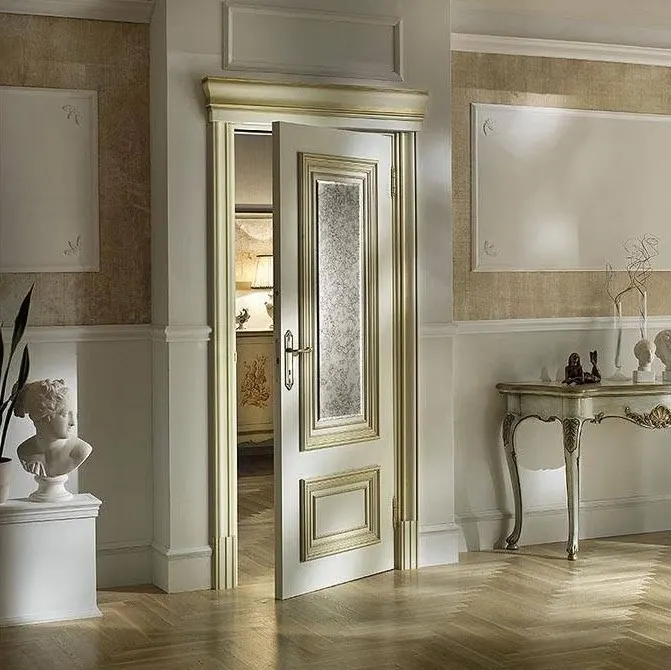
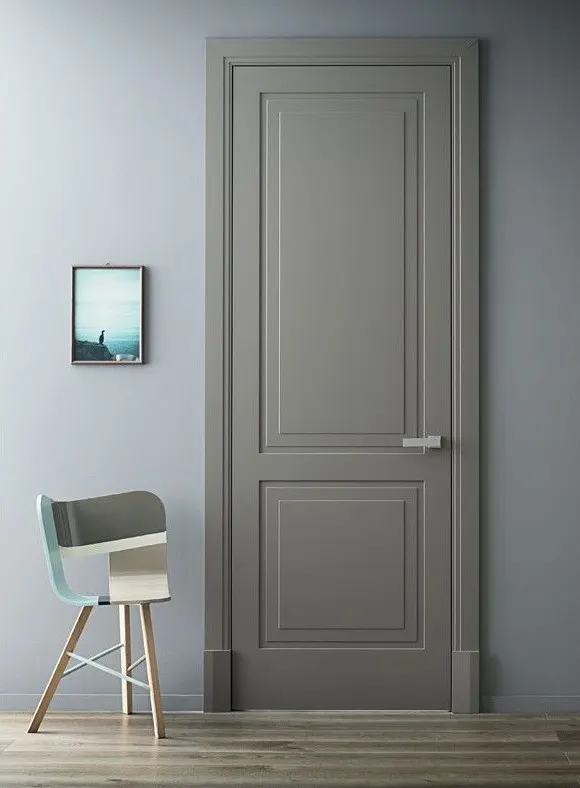
A hinged door is the simplest and most widely supplied option. It needs no track, no wall cavity and no special hardware beyond hinges, a latch or lock and a stop. For most standard guest bathrooms it remains the lowest-risk choice for installation and later maintenance.
Where hinged doors work well
- Bathrooms with enough floor space for a full swing without touching fittings.
- Projects that need strong sound and privacy performance, because a hinged leaf can be fitted with perimeter seals and a drop seal.
- Hotels that want the same door model across many room types, which simplifies ordering and spare parts.
- Accessible rooms, where the door must be easy to operate and clear opening widths are set by local rules.
Limitations to plan for
The swing arc takes space. In a compact bathroom, an inward-opening door can restrict the usable area, and an outward-opening one can collide with luggage racks or the wardrobe. You can reduce this by changing the hinge side, reversing the swing or moving to a different door type, but each change should be checked against the whole room layout.
Sliding doors: freeing floor space
A sliding bathroom door for a hotel runs on a track along the wall surface, so it does not need a swing arc. This helps in compact rooms, in open-plan bathroom concepts and in designs where the door is a visible feature. The leaf slides in front of a clear section of wall, so that wall length must stay free of switches, mirrors and shelves.
Privacy and acoustics
This is the main trade-off. A surface-mounted sliding leaf usually leaves small gaps at the sides and the bottom, and the track and guides are not as easy to seal as a hinged frame. Light and sound pass through more readily. If your brand promises full privacy, or the bathroom sits next to the bed, discuss this early with the designer and decide whether a partial or open concept is acceptable.
Moisture and maintenance
Tracks collect dust and moisture, so choose hardware that is easy to clean and replace. Where the door is mounted on a wet-side wall, make sure the leaf edges are sealed and the core suits humid conditions. Floor guides should be simple enough for housekeeping to clear without tools.
Wall requirements
The wall carrying the track must be able to support the leaf weight, usually with reinforcement or blocking behind the finish. Settle the wall build-up with the contractor before shop drawings are approved. Wooden sliding leaves are heavier than many buyers expect, so track capacity matters.
Pocket doors: the cleanest look, the most coordination
A pocket door bathroom design hides the leaf inside the wall when open. It gives the cleanest appearance and saves the most visible space, which suits boutique and design-led hotels. It also asks the most from the project team, because the pocket must be built into the partition from the start.
What the wall must provide
- A partition thick enough to hold the pocket frame, leaf and guides.
- Enough clear length beside the opening for the whole leaf to retract.
- No pipes, sockets or cables inside the pocket zone.
- Access to the track for future servicing, either through a removable architrave or a service panel.
Considerations for hotels
Pocket doors are harder to repair in an operating hotel. If the leaf drops, the track fails or a seal needs replacing, the work may involve opening the wall finish. Specify robust hardware and ask the supplier how the leaf can be removed. Privacy and sound sealing are also more limited than with a hinged frame, so they suit bathrooms that are not directly against sleeping areas, or concepts where visual privacy is enough.
Moisture exposure: what each model has to survive
Bathroom doors face steam, splashes, cleaning chemicals and temperature changes. The exposure depends on the position of the opening more than on the door type.
- Opening beside the shower or bath: expect the highest humidity. Use a moisture-resistant core, fully sealed edges, particularly the bottom edge, and a finish suited to wet cleaning.
- Opening beside the basin only: moderate exposure. Sealed edges and a durable finish are normally sufficient.
- Opening with a separate WC lobby: lower exposure, but cleaning chemicals still reach the lower leaf.
Frames also need attention. Timber frames in humid zones benefit from sealed profiles and a clearance above the floor finish, while concealed or recessed solutions need careful detailing at the threshold. Warping and swelling usually begin at unsealed edges, so check how your supplier seals top, bottom and hardware cut-outs.
Comparison at a glance
| Criterion | Hinged | Sliding (surface track) | |
|---|---|---|---|
| Floor space needed | Swing arc | None, but needs free wall length | None, needs free wall length inside partition |
| Sound and light privacy | Best, with seals | Limited by gaps | Limited by gaps |
| Moisture tolerance | Good with sealed edges | Good, track needs cleaning | Depends on wall cavity ventilation |
| Installation complexity | Low | Medium | High, built into wall |
| Maintenance access | Easy | Easy to moderate | Difficult |
| Best suited to | Standard and accessible rooms | Compact or feature bathrooms | Design-led, space-limited rooms |
A simple decision path
- Draw the swing arc. If it fits without conflicts and privacy matters, choose a hinged door.
- If the arc does not fit, check for a free wall length at least equal to the leaf width. If it exists and privacy is flexible, consider sliding.
- If you want a hidden leaf and the partition can accommodate a pocket, consider a pocket door, but only after the contractor confirms the wall build-up.
- Check moisture exposure and select core, edge sealing and hardware accordingly.
- Confirm accessibility requirements for the destination country before fixing the model.
Mixing door types across a hotel
It is common to use a hinged door in standard rooms and a sliding or pocket model in suites or compact room types. Keep the number of variations manageable, because every extra model adds drawings, hardware and spare parts. Where possible, keep the same leaf size, finish and hardware family so the room feels consistent.
Approving one bathroom door in the mock-up room is the best way to test the choice. You can see how the door works with the real vanity, lighting and sound conditions before the full order is made.
What to send us for a quotation
For an accurate proposal, we need the bathroom plans with door positions, partition thicknesses, the number of each room type and the door models you are considering. Add any local accessibility or fire requirements and your preferred shipping terms. Our team can review the layout, suggest suitable models and indicate what the production and delivery schedule will depend on.
Conclusion
Hinged, sliding and pocket doors can all work in a hotel bathroom, but only when matched to the layout, the privacy level and the moisture exposure of each opening. Decide in that order, then refine finish and hardware. If you are planning a new hotel or a renovation, send us your drawings and we will help you shortlist the right model for each room type.
Sıkça Sorulan Sorular
Which bathroom door type is best for most hotel rooms?
A hinged door is usually the safest choice because it offers good privacy, can be sealed against sound and light, and is easy to install and maintain. Sliding or pocket models make sense mainly when the swing arc conflicts with fittings or furniture.
Are sliding bathroom doors suitable for hotels?
Yes, in the right layout. They save floor space and can be a design feature, but they usually allow more light and sound through the gaps. They suit compact bathrooms or concepts where full acoustic privacy is not the priority.
Are pocket doors difficult to maintain in a hotel?
They can be. The leaf and track sit inside the wall, so repairs may require access panels or removable trims. Good hardware and a planned service access reduce the risk, but a hinged or surface-sliding door is easier to service.
How do I protect a wooden bathroom door from moisture?
Use a moisture-resistant core, seal all edges including the bottom and hardware cut-outs, and choose a finish that tolerates wet cleaning. Leave a suitable gap above the floor and make sure the bathroom ventilation works properly.
What drawings does a factory need to quote bathroom doors?
Send plans showing door positions, partition thicknesses, room type quantities, door sizes and handing, plus any accessibility or fire requirements. A door schedule and the preferred shipping terms help the factory give an accurate quotation.
Every hotel project is different. Send us your drawings or room schedule for a tailored proposal on materials, lead time and shipping.