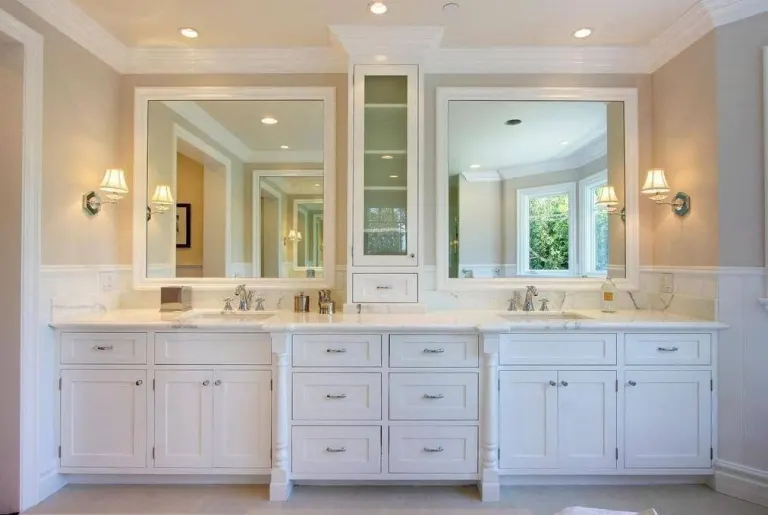
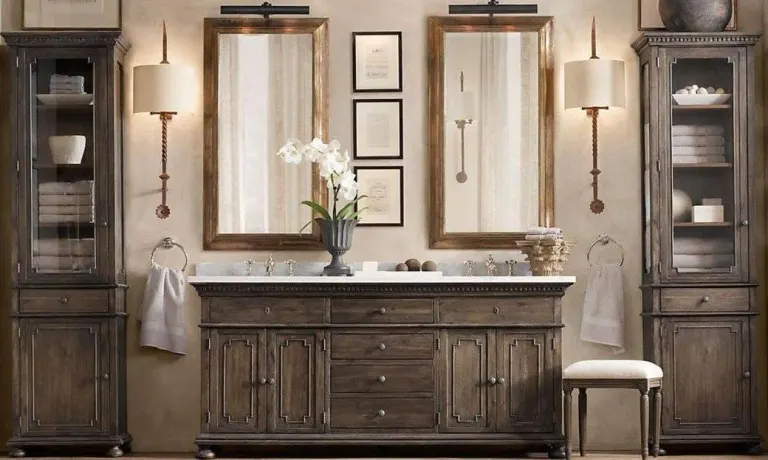
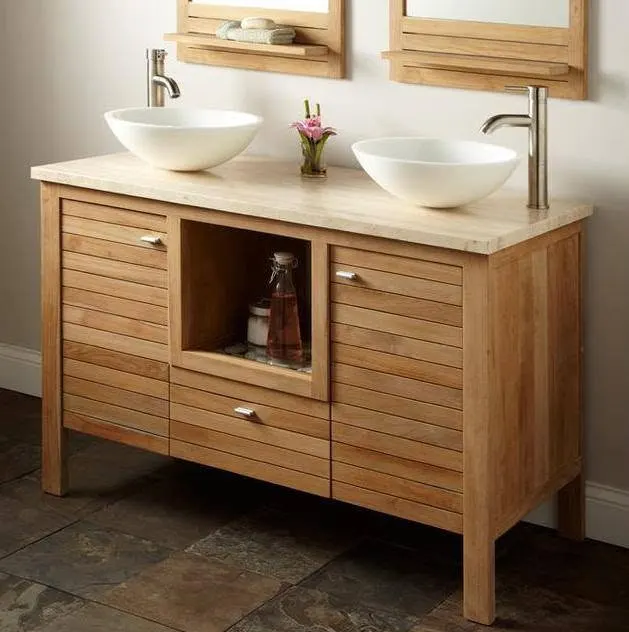
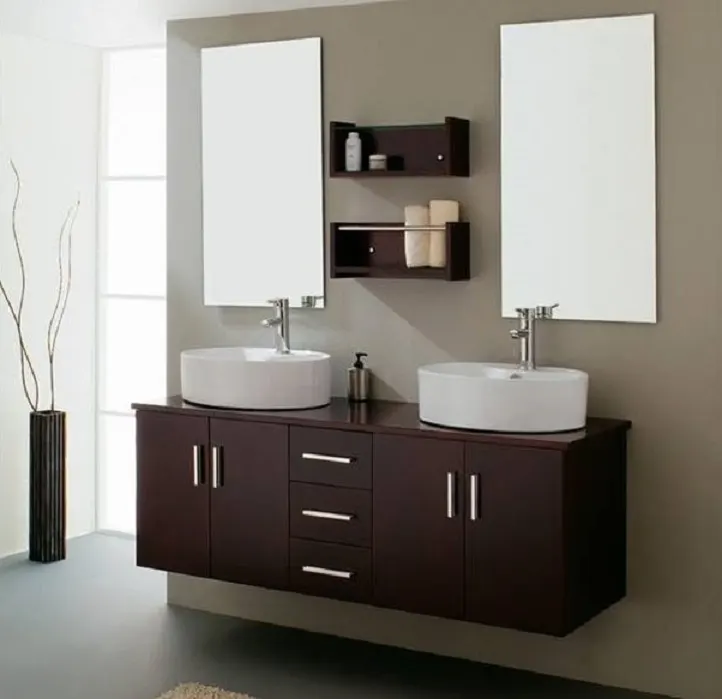
Vanity Cabinet Mistakes Hotel Buyers Make When Ordering from Photos Alone
A good inspiration photo shows a look, not a buildable cabinet. This guide explains what is lost between image and factory drawing, and how to close the gap before you request a quotation.
Ordering vanity from photos is one of the most common ways hotel projects begin, and one of the most common ways they drift off budget. A photo communicates mood, proportion and finish very well, but it says almost nothing about dimensions, board type, hardware or plumbing. This article explains what gets lost between an inspiration image and a buildable cabinet, and how you can bridge that gap without slowing the project down.
We are not suggesting you stop using images. Designers and owners think visually, and a strong reference image is a useful start. The problem appears when the image is treated as the specification.
Why a photo feels like enough
A photo of a finished vanity seems to contain everything: the front style, the colour, the top, the lighting. Because the eye reads it as a complete object, buyers assume a factory can read it the same way. In practice, a factory reads it as a list of questions.
Each of those questions has a cost attached. When they are answered late, or by assumption, the quotation you receive may describe a different product from the one you imagine.
What gets lost between photo and cabinet
Real dimensions
Photos are taken with wide lenses, in staged rooms, from flattering angles. A unit that looks generous may be only 600 mm (23.6 in) wide, or it may be 1,200 mm (47.2 in). Without a scaled elevation, nobody can tell, and a guess in either direction changes the material quantity and the layout of the bathroom.
Construction behind the front
The image shows the visible face only. It does not show the carcass board, the back panel, the support system for a wall-hung unit or the way the top is fixed. These hidden parts decide how the vanity behaves in a humid room after two years of service.
Finish and material identity
A dark oak-look front could be natural veneer, HPL, lacquer or a printed foil. All four may look similar in a photo and perform very differently under water and cleaning chemicals. Lighting, editing and camera settings also shift colour, so a tone matched by eye to a photo rarely matches the sample.
Plumbing and electrical positions
Waste outlets, supply pipes, tap positions, sockets and mirror lighting cables are invisible in a finished image. Yet they control drawer depth, back panel cut-outs and access panels. A cabinet that looks right in the photo can clash with the wall plumbing on site.
Hardware and moving parts
Hinge type, runner quality, soft-close mechanisms and handle material are rarely identifiable from an image. In a wet hotel bathroom these small parts are often the first to fail, so leaving them undefined is risky.
Common mistakes hotel buyers make
- Sending one image and asking for a price. The factory must assume dimensions, materials and hardware, so the figure is only an estimate of a product that does not yet exist.
- Comparing photo-based quotations as if they were equal. Two suppliers may quote different board types, tops or hardware behind the same image. The lowest figure may simply describe the thinnest specification.
- Ignoring the context of the photo. A boutique villa bathroom with one guest a week is not a guide for a 200-room city hotel with daily turnover.
- Copying a residential or retail product. Images from furniture retailers show domestic products with domestic durability. Hotel use needs tougher edges, better sealing and replaceable parts.
- Skipping the room survey. Walls that are out of square, sloped floors and existing pipe chases are not visible in any photo, yet they decide whether a unit fits.
- Assuming the render equals the product. A 3D visual is more precise than a photograph but still carries no construction data unless it is supported by drawings.
- Approving the full order from the image alone. Without a sample or mock-up, the first time you see the real finish may be on the delivery pallet.
A quick comparison: what a photo gives and what the factory still needs
| Item | Photo shows | Factory still needs |
|---|---|---|
| Overall size | Approximate proportion | Width, depth and height in mm |
| Front design | Style and colour impression | Door and drawer layout, gaps, handle detail |
| Carcass | Nothing | Board type, thickness, back panel, edge sealing |
| Top and basin | Look of the surface | Material, thickness, basin type, cut-out sizes |
| Plumbing | Nothing | Waste and supply positions, tap hole layout |
| Hardware | Visible handles only | Hinge and runner type, finish, load rating |
| Finish | Colour as captured by a camera | Finish code, physical sample, sheen level |
How to bridge the gap
1. Keep the photo, but label it
Mark what you like in the image: the front style, the edge profile, the proportion of top to cabinet, the colour. Also mark what you do not want copied. A labelled image is far more useful than a clean one, because it tells the factory which details are important.
2. Add a simple dimensioned sketch
You do not need a full set of shop drawings at the start. A plan and front elevation with overall sizes, basin position and wall plumbing points are enough for a meaningful first estimate. Your architect or interior designer can usually extract this from the bathroom layout in a short time.
3. State the use case
Tell the supplier the hotel category, room count, bathroom type and climate. A vanity for a coastal resort needs a different board and sealing strategy from one in a dry inland city. This single paragraph can change the whole specification.
4. Define material intent
Even if the final choice is open, say what matters: water resistance, a natural timber look, easy cleaning, low maintenance. A factory can then propose suitable boards, finishes and tops and explain the cost effect of each option.
5. Ask for a written scope
A good quotation lists the carcass board, front material, top, basin, hardware, packing and shipping terms line by line. If a photo-based offer is a single sentence, treat it as a rough guide, not a comparable price.
6. Use a sample or mock-up before the full order
One finished unit settles most of the questions a photo leaves open: real colour, surface feel, proportions in the bathroom, drawer action and plumbing fit. It is also the best moment to adjust details at low cost.
A short checklist before you send a photo-based enquiry
- Attach the reference image with notes on what to copy and what to avoid.
- Provide overall dimensions and a bathroom plan or elevation.
- List the number of units by room type, including left- and right-hand variants.
- Name the preferred top and basin type, or ask for options.
- Describe the climate and hotel category.
- State the destination and preferred shipping terms, such as FOB or DAP.
- Say whether a sample or mock-up unit is expected.
When a photo-based quotation is still useful
An early, image-led estimate has a place in concept design. It helps an owner test whether a look is realistic within the FF&E budget before the design is fixed. Treat it as a range finder, and expect the figure to move once drawings, materials and hardware are defined.
The mistake is not using photos. It is allowing the photo to stand in for decisions that still have to be made.
Next step
If you have inspiration images for your hotel bathrooms, send them to us together with whatever plans or dimensions you already have. We will review what can be built as shown, point out what needs to be defined, and suggest a practical way to move from reference image to quotation and mock-up.
Sıkça Sorulan Sorular
Can a factory quote a hotel vanity from a photo alone?
It can give a rough estimate, but not a reliable quotation. Without dimensions, materials, hardware and plumbing positions, the factory has to make assumptions. Treat a photo-based figure as a budget range and expect it to change once drawings and specifications are added.
What is the minimum information to send with a reference image?
Send overall dimensions, a plan or elevation showing the basin and plumbing points, the number of units by room type, the preferred top and basin, the project climate and the destination. Notes on which parts of the image matter most also help a great deal.
Why do two photo-based quotations differ so much?
Each supplier fills the gaps differently. One may assume moisture-resistant boards, a thicker top and branded hardware, while another assumes standard boards and basic fittings. Ask both to list the carcass, top, hardware and packing line by line so you can compare them fairly.
Is a 3D render better than a photo for ordering?
A render is more precise about layout and proportion, but it still lacks construction data unless it comes with dimensioned drawings and a material list. Use it as a design reference, then add a specification so the factory can build and price accurately.
Do I need a mock-up if I already have a clear photo?
A mock-up is still advisable for hotel projects. It shows the real colour, surface feel, drawer action and fit with the plumbing, none of which a photo can confirm. Adjusting a single unit is far cheaper than correcting a full production run.
Every hotel project is different. Send us your drawings or room schedule for a tailored proposal on materials, lead time and shipping.