Door Models for Hotel Rooftop Bars and Terrace Lounges: Semi-Outdoor Wooden Door Considerations
Semi-outdoor wooden doors can work well on hotel rooftops and terraces if you match core, finish, seals and hardware to the real exposure. This guide explains how to judge that exposure and specify accordingly.
Semi-outdoor wooden doors can perform well in a rooftop bar or terrace lounge, but only when the door is specified for the exposure it will actually face. A standard interior guest room door placed on a windy terrace edge will usually swell, fade or delaminate within a few seasons. The practical question is not whether wood can be used, but how much weather the opening sees and which materials and finishes cope with it.
This article is for designers, procurement managers and contractors who need to choose door models for the border zone between inside and outside. It focuses on that boundary condition, rather than on general door selection.
What "semi-outdoor" really means
A semi-outdoor door is not a full exterior door, yet it is not protected like a corridor or guest room door either. A rooftop bar door, for example, may be sheltered by a canopy on one side but face driven rain, sun and temperature swings on the other. Many terrace lounge doors also see wet cleaning, spilled drinks and heavy traffic late at night.
Before choosing a model, classify each opening by exposure. This one step prevents most specification mistakes.
Three exposure levels to define
- Sheltered: the door sits under a roof or deep canopy, with no direct rain or sun on the leaf. It faces mainly humidity and temperature change.
- Partly exposed: the leaf is out of direct rain most of the time but receives sun and occasional wind-blown water.
- Fully exposed: rain, sun and wind reach the door face. This is effectively an exterior door and should be specified as one.
Be honest about the third category. If the opening is fully exposed, a weather exposed interior door is the wrong product, and you should consider an exterior-grade timber door, or aluminium or steel with a timber-look finish.
The main stresses on a terrace-side door
Understanding the stresses helps you read a quotation and question a proposed design.
- Moisture cycling: repeated absorption and release of moisture causes movement in the leaf, particularly across the width.
- UV radiation: sunlight fades stains and breaks down many clear coatings, especially on dark colours.
- Temperature difference: a sun-heated outer face and an air-conditioned inner face can cause one-sided movement and bowing.
- Wind and slamming: rooftops are often windy, which loads hinges and closers far more than a normal interior door.
- Dust, salt and cleaning chemicals: coastal or desert sites add abrasion and corrosion on top of the above.
Bowing is one of the most common complaints, so it helps to read about causes and tolerances in our guide on warping in wooden doors before you finalise a design.
Core materials that cope with exposure
The core decides how the door reacts to moisture and movement. Hollow or honeycomb cores are light and economical for interiors, but they are poorly suited to wet edges and strong sun on one face.
| Core type | Suitability at the border zone | Points to check |
|---|---|---|
| Honeycomb | Sheltered openings only | Edge sealing, low impact resistance |
| Standard particleboard | Generally not recommended | Swells if moisture reaches the edge |
| Moisture-resistant board | Sheltered and partly exposed | Edge and cut-out sealing |
| Solid or engineered timber (stave or multilayer) | Partly exposed, with a suitable finish | Species, balanced construction, grain direction |
Engineered timber cores, built from glued lamellas with balanced layers, are usually more stable than a single wide solid board. For a deeper comparison, see our article on door core types.
Wood species and finishes for a hot, wet or windy edge
Species matter, but finish and detailing matter at least as much. Dense, naturally stable hardwoods tend to cope better than softwoods, although the right choice depends on climate and supply. Ask your manufacturer which species are available for your project and how they behave in your region.
Finish options
- Pigmented or opaque lacquer: usually the most UV-tolerant choice for painted looks, because pigment blocks light. Specify a coating system intended for higher humidity.
- Exterior-grade oil or stain systems: keep a natural look and can be refreshed locally, but they need a maintenance schedule. Plan for periodic recoating.
- Clear lacquer on veneer: attractive, yet clear films are the most vulnerable to sun and can crack or peel when the leaf moves. Use only in sheltered positions.
- HPL-faced leaves: good surface resistance to scratches and cleaning, with a limited range of looks. Edge detail remains the weak point.
Dark tones absorb more heat and can increase movement on sun-facing leaves. If a dark look is part of the concept, discuss it with the factory early and approve a sample outdoors, not only under showroom lighting.
Edges, seals and the details that fail first
Door failures in humid or wet conditions rarely start on the face. They begin at the bottom edge, the lock and hinge cut-outs and any glazing rebates, where raw material meets moisture.
- Seal all four edges and every routed cut-out before final finishing.
- Use a protected bottom edge, such as a sealed rail or a stainless or aluminium bottom detail, to resist standing water.
- Choose a threshold that sheds water away from the leaf and still meets accessibility needs.
- Add perimeter seals and a drop seal where wind, dust or noise from the terrace is a concern.
Edge protection is covered in more detail in our guide on edge banding and sealing, which is worth reading alongside this article.
Glazing and privacy on terrace doors
Many rooftop bar and lounge entrances use glazed leaves to keep views open. Glazed panels need safety glass appropriate to the local code, and the glazing beads and gaskets must be suited to temperature change. For a lounge where noise control or privacy matters, consider laminated or frosted glass options and check them against the relevant local requirements.
Hardware that survives wind and weather
Hardware is often where a good door model is undone. Use corrosion-resistant hinges and fixings, with stainless steel a common choice near the coast or in humid zones. Wind can slam doors against stops, so plan for closers or restrictors and size hinges for the leaf weight, not just for convenience.
Consider also how staff use the door. Trolleys, ice buckets and late-night traffic call for kick plates and a robust handle position. If the door is also part of an access-controlled route, coordinate lock preparation with the lock supplier before production.
Door styles that suit the border zone
Some models are naturally better suited to semi-outdoor use than others.
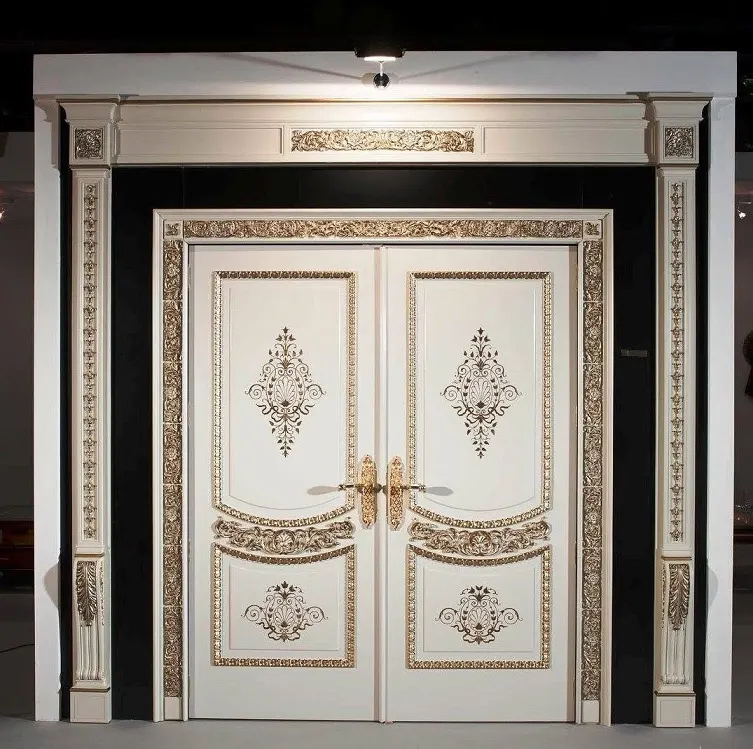
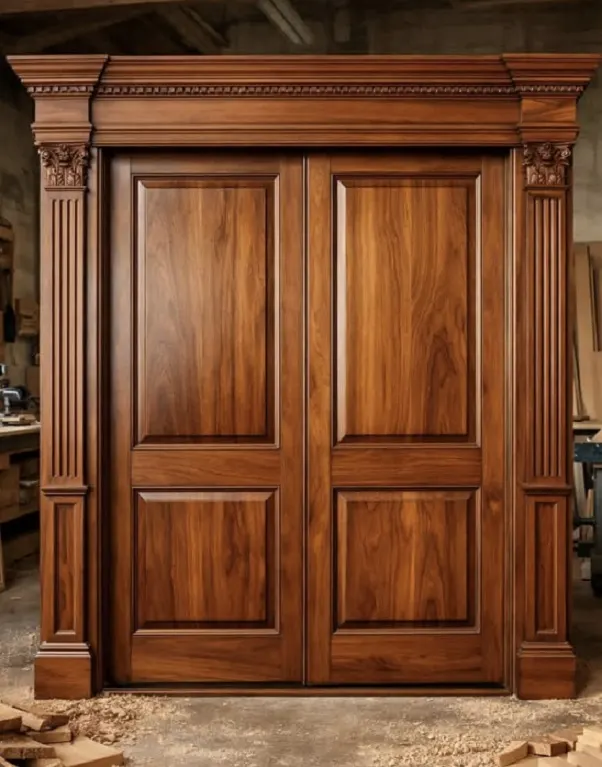
- Double-leaf entrance doors: good for lounge entrances, but wide leaves move more, so keep proportions sensible and the frame rigid.
- Louvred doors: useful where ventilation is needed, for instance to plant or storage rooms next to a terrace.
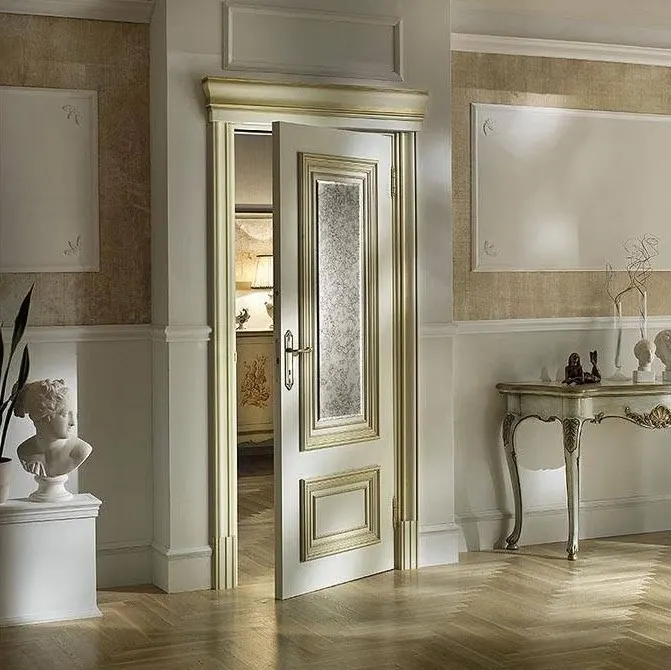
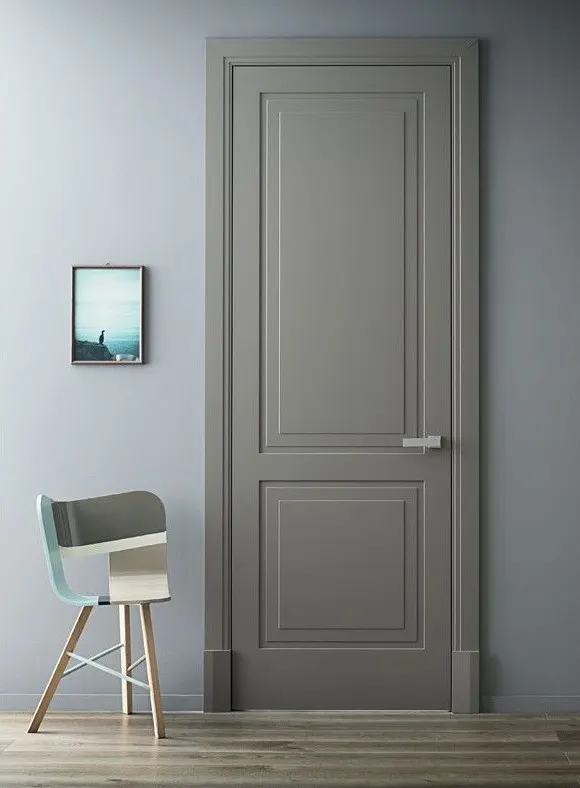
- Panelled or shaker designs: frame-and-panel construction accommodates movement better than a large flat slab.
- Sliding or folding systems: open up a lounge to the terrace, but track design, drainage and sealing need careful engineering and are often better handled with specialist systems.
Flat, large-format flush leaves look clean, yet they can show any bowing more clearly. Panelled construction, with its smaller sections, tends to hide minor movement.
Specifying by climate
The same terrace door behaves differently in different regions, so say where the hotel is located when you request a quotation.
- Hot and dry regions: UV and heat are the main concerns, so focus on opaque or UV-stable finishes and balanced construction.
- Humid and tropical regions: moisture, mould and swelling dominate, so prioritise sealed edges and moisture-resistant cores.
- Coastal sites: salt affects hardware and finishes, so specify corrosion-resistant fittings.
- Cold or mountain regions: temperature differences and condensation matter, so check thresholds and sealing.
Samples, mock-ups and maintenance
For openings at the border of outdoor exposure, a sample placed outside for a few weeks tells you more than any datasheet. Ask for a finished sample or a mock-up door that you can test on site, then check fading, edge condition and fit before approving the full order.
Also agree a maintenance plan at handover. Semi-outdoor doors usually need periodic inspection, cleaning and, for some finishes, recoating. A short care sheet and a touch-up kit help housekeeping and engineering teams keep the doors looking right.
A short checklist before you request a quotation
- Classify each opening as sheltered, partly exposed or fully exposed.
- Note orientation, canopy depth and typical wind exposure.
- State the climate and location of the hotel.
- Choose the leaf construction and core for that exposure.
- Define finish, colour and UV or cleaning requirements.
- List hardware, closers, seals, thresholds and glazing.
- Request a sample or mock-up for outdoor testing.
Next step
If you are planning a rooftop bar, terrace lounge or other border-zone openings, send us your drawings, door schedule and site climate details. We will review the exposure of each opening and come back with suitable models, finish options and an estimated lead time for your project.
Sıkça Sorulan Sorular
Can wooden doors be used on a hotel rooftop terrace?
Yes, if the exposure is controlled. Sheltered and partly exposed openings can use well-built wooden doors with sealed edges, stable cores and suitable finishes. Fully exposed openings that take direct rain and sun should be specified as exterior doors, or as another material with a timber look.
Which core is best for semi-outdoor wooden doors?
Engineered timber or moisture-resistant board cores usually cope better than honeycomb or standard particleboard. The right choice depends on exposure, door size and climate. Whatever the core, all edges and cut-outs should be sealed before finishing to limit moisture absorption.
What finish works best for a rooftop bar door?
Opaque, pigmented lacquers are generally more UV-tolerant than clear films, while exterior-grade oils keep a natural look but need regular recoating. Dark colours absorb heat, so approve a sample outdoors on the actual orientation before ordering.
Do terrace lounge doors need special hardware?
Usually yes. Corrosion-resistant hinges and fixings, closers or restrictors for wind, and hinges sized for leaf weight are all worth specifying. Coastal and humid sites often call for stainless steel, and access control should be coordinated with the lock supplier.
How can I test a door before ordering for an exposed location?
Request a finished sample or mock-up door and place it on site for a few weeks. Check fading, edge condition, movement and fit, then confirm any changes in writing before the full production order is released.
Every hotel project is different. Send us your drawings or room schedule for a tailored proposal on materials, lead time and shipping.