Moulded Skin and Shaker-Style Doors for Hotels: When Profiled Panels Make Sense
Shaker style hotel doors and moulded skin doors add depth and a classic look, but they behave differently from flush doors in cleaning, repair and cost. This guide helps you decide where profiled panels earn their place.
Shaker style hotel doors suit projects that want a calm, classic look without heavy ornament, and they work best where the design intent justifies a little extra cost and cleaning effort. Moulded skin doors reach a similar appearance through a different construction. This article explains how both types are made, how they perform in daily hotel use and where they make sense.
What shaker and moulded skin doors actually are
The two terms are often mixed up in tender documents, so it helps to separate them.
Shaker-style doors
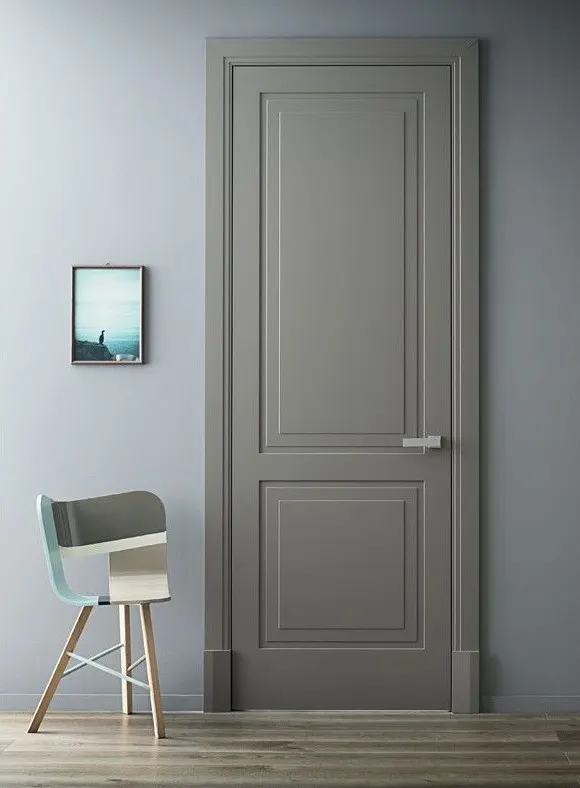
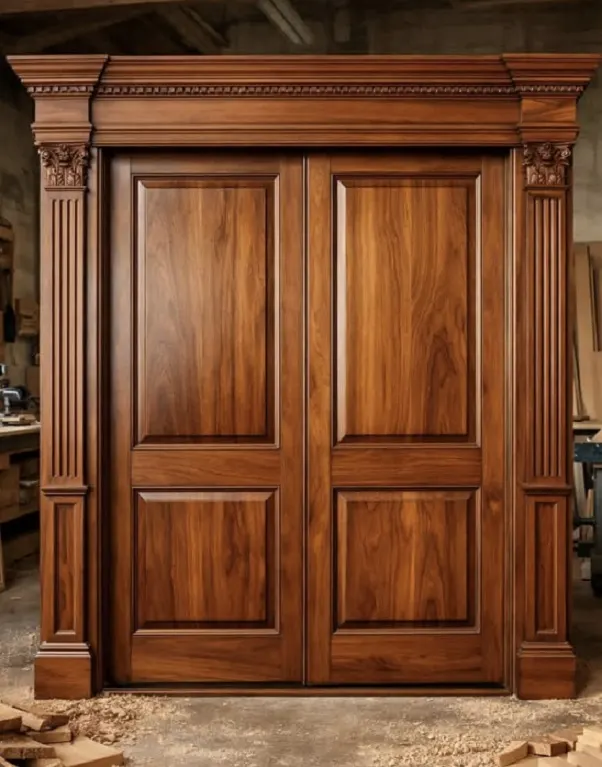
A shaker door has a flat, recessed centre panel framed by square-profile rails and stiles. The design is simple, with straight lines and no decorative carving. It can be built in two ways: as a traditional framed door with a separate panel, or as a surface-applied or routed design on an engineered core.
Moulded skin doors
A moulded skin door has a pressed skin on each face, usually made from HDF or a similar board, over a core. The skin is shaped in a press so that panel details are formed in one piece. The surface is then primed or painted, or finished with a foil or veneer-compatible system depending on the supplier's process.
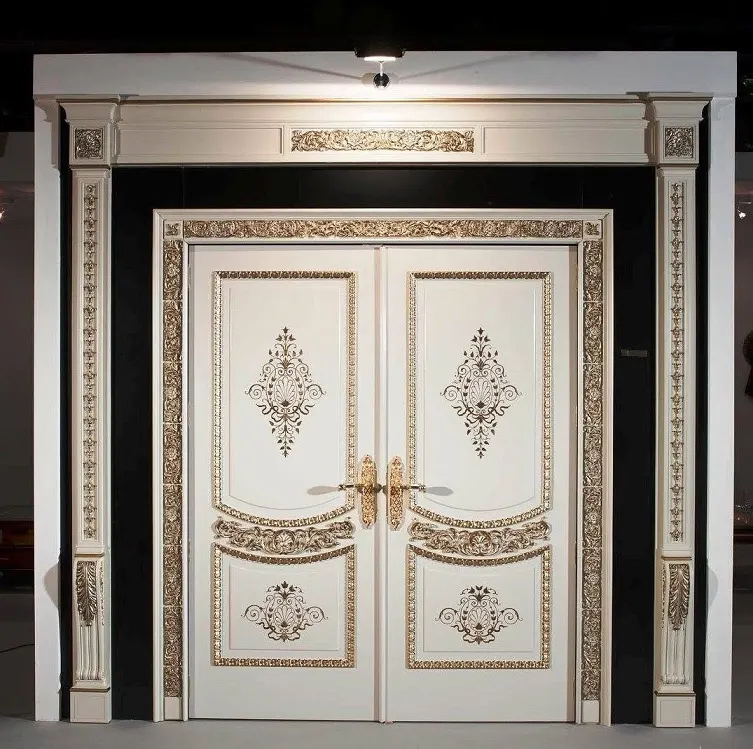
Moulded skins can imitate a shaker panel, a raised-and-fielded panel or a more ornate classic profile. The depth of the profile is limited by what the press can form, so the detail is usually shallower than on a fully framed door.
Where profiled panels fit a hotel concept
Profiled interior doors give a space visual weight. A flush door reads as a plain surface; a panelled door reads as a piece of architecture. That matters in some hotel categories more than others.
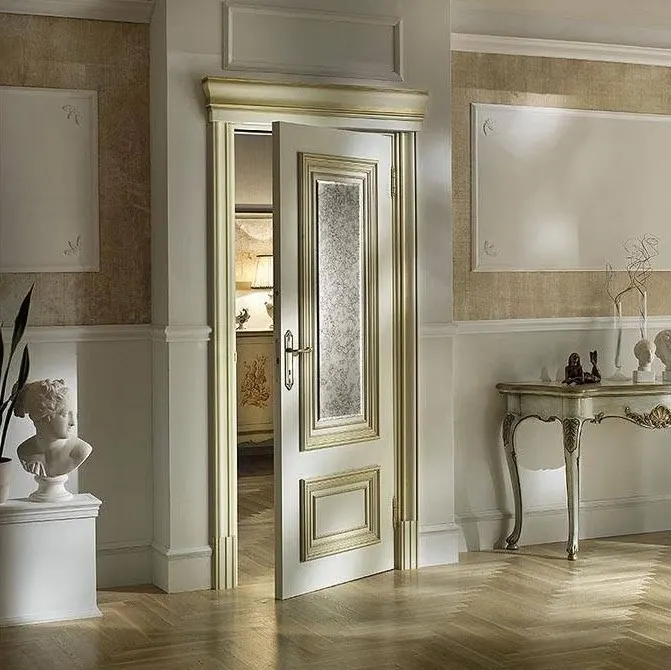
- Heritage and boutique hotels: shaker and classic profiles sit comfortably with period buildings, cornices and wall panelling.
- Country, lodge and resort properties: the shaker look is warm and familiar, and pairs well with painted finishes and brass hardware.
- Serviced apartments and residential-style hotels: panelled doors give a homely feel that guests recognise.
- Suites and villas: a taller, panelled leaf can add presence at the entrance without becoming a statement piece.
For a sharply modern or minimalist concept, a flush or grooved door usually fits better. In those projects a panelled door can look out of place unless the profile is very restrained.
Look and design details to decide early
Small details change how a shaker or moulded door reads once installed.
- Rail and stile width: wider frames feel more traditional; narrower ones feel more contemporary.
- Panel depth: a deeper recess casts more shadow and looks richer, but it also collects more dust.
- Number of panels: a single tall panel looks modern, while two, four or six panels feel more classic.
- Inner edge profile: a square edge is crisp and easy to wipe; a small bevel or ogee moulding is softer and more decorative.
- Finish: painted finishes show the profile best. Stained veneer or timber shows grain but may reduce the clarity of the shadow lines.
Keep the same profile logic across related items. If you also specify wardrobe doors or wall panelling, matching the panel proportions makes the room look planned rather than assembled.
Cleaning and housekeeping realities
This is where profiled doors differ most from flush doors. Every recess and moulding is a place where dust and cleaning residue can settle.
- Sharp internal corners are harder to wipe than rounded or softened ones. Ask your factory about corner radius options.
- Deep, ornate mouldings take more housekeeping time than a simple shaker recess.
- Gloss and satin paints wipe more easily than very matt finishes, though gloss shows fingerprints and surface flaws more clearly.
- Painted joints between rail and panel can crack over time if the construction moves with humidity. Good sealing of the joint and a flexible paint system help.
If your operator is concerned about cleaning time, a shallow shaker profile is usually a sensible compromise between character and maintenance.
Durability and repair
Durability depends mainly on the core, the surface system and the edges, not on the panel shape itself. A well-made shaker door on a stable core with a good lacquer system can serve a hotel well. Moulded skin doors can perform well too, but the skin is relatively thin, so a heavy impact may dent or crack it.
Repair differs by construction:
- Painted shaker doors: chips on flat areas are simple to fill and repaint. Touch-up on a profile edge takes a little more skill to blend.
- Moulded skin doors: small dents can be filled, but a damaged skin on a deep profile can be hard to restore invisibly.
- Stained or veneered profiled doors: colour matching is harder, so supplying a finish repair kit at handover is worthwhile.
High-impact zones, such as areas hit by luggage trolleys or service carts, may need kick plates or a different door type altogether. For back-of-house passages, a plain and robust model usually makes more sense than a profiled one.
Cost drivers compared with flush doors
We cannot give a single price here, because cost depends on specification, quantity and finish. What we can explain is why profiled doors usually cost more per leaf than a standard flush model.
- More machining and assembly: routing, framing or pressing and extra sanding steps add labour and tooling time.
- Finishing time: profiles need more careful priming and painting, often with more coats to build an even film in the recesses.
- Material use: framed constructions and thicker components use more material.
- Tooling for moulded skins: pressed skins depend on moulds, so a new custom profile can involve tooling, while an existing profile in the factory's range does not.
- Rejection risk: more joints and edges mean more places for finish defects, which affects inspection effort.
To control cost, consider using the profile only where it adds value, such as entrances and suites, and keep simpler models for secondary openings.
Comparing the two constructions
| Aspect | Framed shaker door | Moulded skin door |
|---|---|---|
| Profile depth | Crisp, defined shadow lines | Shallower, formed in one piece |
| Design range | Wide, easy to customise proportions | Limited to available moulds unless new tooling is made |
| Finish options | Paint, lacquer, veneer or timber | Mainly paint or foil-type finishes |
| Repair | Generally easier to touch up | Depends on skin damage |
| Cost position | Usually higher for custom work | Often efficient for larger repeated quantities |
Treat this table as a general guide. The real answer depends on the factory's process, so ask for sample sections before you decide.
Specification points to include in your request
To get an accurate quotation for profiled doors, include the following in your door schedule:
- Door elevations showing the panel layout and dimensions of rails, stiles and recess.
- A section drawing of the profile, including the depth and edge detail.
- The finish: paint colour reference, sheen level and any veneer or stain requirement.
- The leaf thickness, core type and any fire or acoustic requirements, since these can limit profile options.
- Hardware preparation, such as hinge, lock and closer positions, checked against the panel layout so that routing does not clash with the profile.
Hardware placement matters more than people expect. A lock body or hinge that lands on a panel recess can force a redesign, so check this on the drawings before production.
Approve a sample before the full order
A profile that looks right in a render can feel different in a real room. Request a sample door or a finished section so that the design team can check shadow lines, paint sheen and corner details under the hotel's lighting. This is also the moment to agree on the acceptable level of surface variation.
Our view on when profiled panels make sense
Choose shaker or moulded doors when the concept needs warmth, tradition or a residential character, and when the operator accepts slightly more cleaning effort. Choose simpler models for service areas, high-impact zones and strictly modern interiors. A mix of both, used by zone, often gives the best balance of look and budget.
Next step
If you are considering shaker style hotel doors or moulded panel designs for a project, send us your door schedule or drawings. We will review the profile options, suggest a construction that suits your finish and traffic level, and come back with a quotation and shipping options.
Sıkça Sorulan Sorular
What is the difference between a shaker door and a moulded skin door?
A shaker door has a flat recessed panel inside square rails and stiles, and can be built as a framed door or routed on an engineered core. A moulded skin door has pressed face skins that form the panel detail in one piece. Moulded skins usually have a shallower profile.
Are shaker style doors suitable for high-traffic hotel corridors?
Yes, if the core, surface system and edges are well specified. Profiled doors need slightly more cleaning than flush doors, and impact zones may need kick plates. For service corridors, a simpler and more robust model is often more practical.
Do profiled doors cost more than flush doors?
Usually, yes, because they involve more machining, assembly and finishing time. The exact difference depends on the profile, finish and quantity, so it is best to request a quotation based on your drawings rather than rely on a general rule.
Can shaker doors be fire-rated or acoustic?
Often they can, but the rating depends on the tested door construction, not just the look. Fire or acoustic requirements may limit profile depth or core choice, so state them in your request so the factory can propose a suitable design.
Which finish works best on shaker style hotel doors?
Painted or lacquered finishes show the profile most clearly and are easy to touch up. Veneer and stain look rich but are harder to colour-match for repairs. Satin sheen is a common compromise between wiping ease and hiding marks.
Every hotel project is different. Send us your drawings or room schedule for a tailored proposal on materials, lead time and shipping.