Bathroom Vanity Lighting Integration: Backlit Edges, Toe-Kick LEDs and Niche Lights in Hotel Cabinets
Vanity cabinet integrated lighting adds ambience and night-time guidance, but only works in hotels if drivers, heat and service access are planned from the start. This guide covers toe-kick, edge and niche lighting built into the cabinet body.
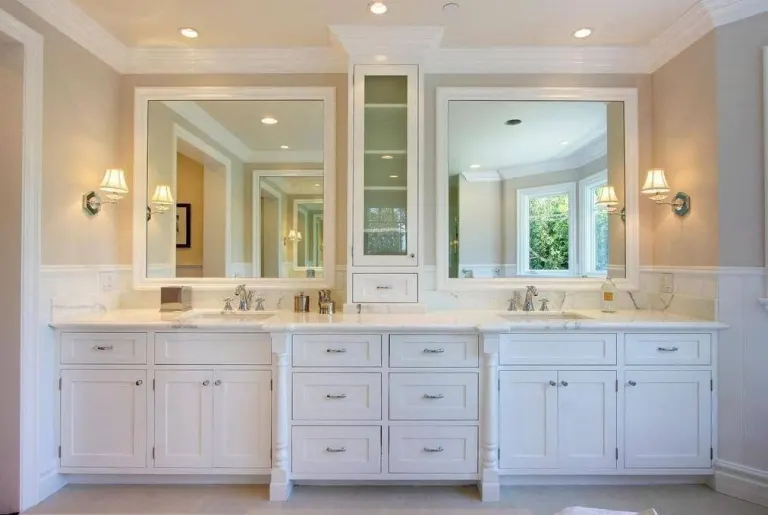
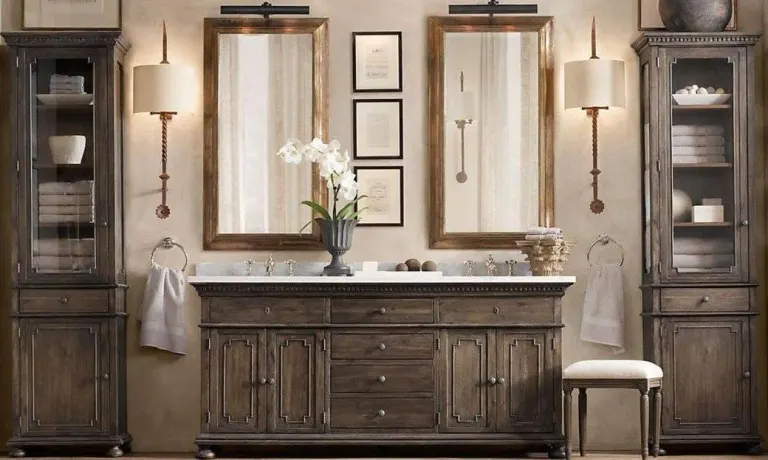
Vanity cabinet integrated lighting means LED lines and points built into the cabinet body itself: under the plinth, behind an edge, or inside a niche or open shelf. Done well, it gives a hotel bathroom a calm night-time glow and a premium look. Done badly, it becomes the first thing housekeeping and engineering complain about. The difference is almost always decided in the drawing stage, not on site.
This article deliberately leaves out mirror lighting and focuses on what sits inside the joinery: where the light goes, where the driver goes, how heat escapes and how an engineer replaces a failed strip without removing the unit.
Why integrate lighting into the cabinet body?
Hotel guests use bathrooms at night more than most designers assume. A low, warm light at floor level lets a guest find the way without switching on the main ceiling lights. This is the practical reason behind most toe-kick LED specifications, and it is a useful argument to give an owner who sees lighting only as decoration.
Integrated lighting also adds depth to a design. A backlit vanity appears to float, a lit niche gives an amenity tray a focal point, and a glowing edge separates the cabinet from the wall finish. These effects are subtle, which is why they suit hotel use better than strong visible fittings.
The three main types of cabinet-integrated lighting
Toe-kick LED lighting
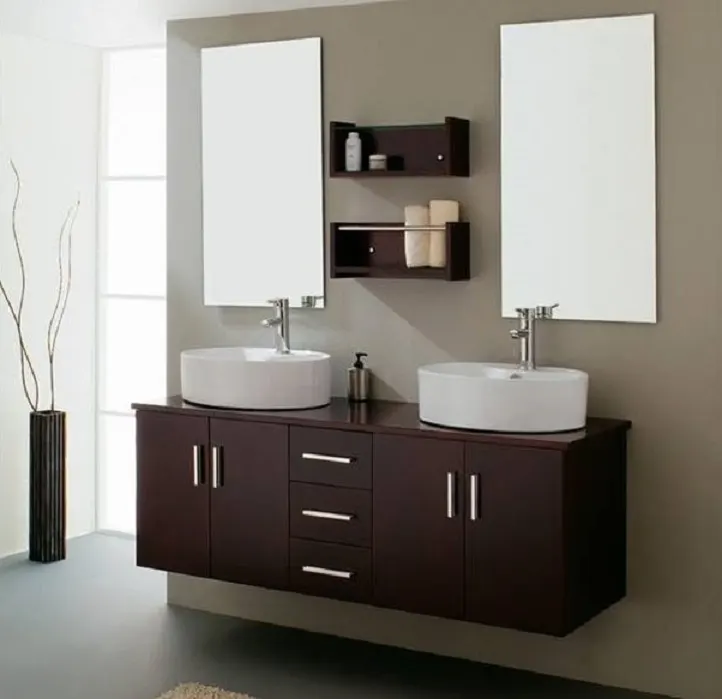
A toe kick LED strip sits in a recess at the base of a floor-standing unit, or beneath the underside of a wall-hung unit, and washes the floor with soft light. It works as a night light and makes a wall-hung vanity look lighter.
Points to plan:
- Splash and cleaning water: the floor is the wettest zone in the bathroom, so the strip needs a suitable protection rating and a sealed channel, not a bare strip stuck to the board.
- Mop and robot clearance: the recess must be deep enough that cleaning tools do not hit the profile.
- Glare: a strip visible from the bedroom door can look harsh. A recessed channel with a diffuser or an indirect wash avoids hot spots.
Backlit edges and panels
A backlit edge hides a strip behind a reveal so that only a line of light on the wall or a halo around the cabinet is visible. A backlit vanity of this kind can also use a translucent panel, such as a thin solid surface or an acrylic front, lit from behind.
This is the most demanding type. The light source needs even spacing from the surface to avoid visible dots, and the reveal must be built accurately. Small differences in the gap between cabinet and wall can show up as uneven light, so surveying the real wall before production matters.
Niche and open shelf lighting
Niche lights illuminate an open shelf, an amenity recess or a cavity under the basin. They are usually short strips or small spot-type LEDs placed at the top front edge of the opening, hidden from view.
Keep the light source out of reach of towels and amenity items, and away from direct water spray. A niche that holds folded towels should not trap them against a warm profile.
Planning the driver: the part most projects forget
Every LED line needs a driver (power supply), and low-voltage LED systems are common in hotel bathrooms. The driver must be installed somewhere, and that decision belongs in the cabinet drawings.
- Location: the driver should sit in a dry, ventilated zone, ideally above the splash area or in an adjacent dry space, not on the floor of a wet cabinet.
- Access: an engineer should be able to reach and replace it without dismantling the vanity. A removable panel or a plumbing access panel combined with the driver zone can work well.
- Cable length: low-voltage runs lose output over long distances, so keep driver and strips reasonably close, and confirm limits with your lighting supplier.
- Compliance: electrical connections, earthing and bathroom zone rules differ by country. A licensed electrician and the local lighting supplier should confirm the layout.
Also decide who supplies what. Some projects ask the joinery factory to build in channels and cut-outs only, while the electrical contractor supplies drivers and strips. Others ask the factory to supply and pre-fit complete lighting. Both approaches work, but responsibility for testing and warranty must be written down.
Heat, ventilation and material choice
Modern LEDs run cool compared with older lamps, but the driver and densely packed strips still produce heat. In a closed cabinet in a humid room, trapped warmth and moisture is a poor combination.
Practical measures include:
- Mount strips in aluminium profiles that spread heat rather than directly on board surfaces.
- Leave ventilation gaps around the driver zone.
- Avoid placing drivers behind insulating materials or inside sealed void spaces.
- Keep wiring away from sharp board edges and moving parts such as drawer runners.
Material choice matters too. Edges around light channels should be sealed, since cut-outs expose raw board to humidity. Moisture-resistant boards and carefully sealed routed channels reduce the risk of swelling near the light line. Metal or solid surface reveals tolerate the heat and water better than thin painted edges.
Water protection and IP ratings
Strips and fittings are sold with an IP rating that describes dust and water protection. Choose the rating according to where the light sits in the cabinet: a toe-kick strip near the floor needs more protection than a niche light inside a dry upper cavity. Local rules for bathroom zones and the supplier's data sheet should guide the final choice, and you should confirm the rating with the lighting manufacturer rather than assume it from the product name.
Remember that the rating applies to the strip, not to the whole installation. Connectors, joints and cable entries are weak points, so they should be sealed or kept out of wet areas.
Light quality: colour temperature and consistency
Warm white light is the usual choice for hotel bathrooms, but the exact colour temperature should match the other lighting in the room. A cooler toe-kick strip next to warm ceiling lights looks like a mistake.
For multi-room projects, consistency is the larger risk. LED batches can vary slightly, so order the full quantity from one source where possible and approve a sample under the same lighting conditions as the finished bathroom. Dimming compatibility is another point: drivers and controllers must be matched, otherwise guests may see flicker at low levels.
Controls: how guests turn it on
Decide how the cabinet lighting is switched before the drawings are issued. Options include a separate wall switch, a motion sensor for night use, or a link to the room management system. A motion sensor at floor level suits night guidance, but position it so that it does not trigger from the bedroom. Each option needs cable routes and sometimes a sensor cut-out, so tell the joinery factory early.
Service access and replacement
Hotels run for years, and LED strips and drivers do fail eventually. A design that requires removing the stone top or the whole cabinet to replace a strip will be costly to maintain. Ask for:
- strips in removable aluminium channels rather than permanently glued lines;
- a clearly labelled driver location;
- connectors that can be unplugged without cutting cables;
- a handover note listing strip type, driver rating and colour temperature, so replacements match.
Keeping a few spare strips and a driver from the same batch on site simplifies later repairs.
What to check in a mock-up room
Lighting is hard to judge from a drawing. In a mock-up, check:
- whether light dots or hot spots are visible;
- how bright the toe-kick is at night from the bed and the bathroom door;
- where cables, connectors and the driver are positioned;
- whether the profile collects water or dust during cleaning;
- how easily the driver can be reached.
Changes at this stage are inexpensive. Once production has started on a full order, adjusting a routed channel is far more difficult.
What to send your manufacturer
To price and build cabinets with integrated lighting correctly, include in your drawing package:
- the lighting positions on plan and section;
- the strip type, colour temperature and IP rating, if specified;
- who supplies drivers, strips and controls;
- driver location and access requirements;
- the local electrical requirements for the destination country.
Next step
If you are planning hotel vanities with toe-kick, edge or niche lighting, send us your bathroom drawings or a one-page brief. We will review the layout, suggest where drivers and access panels can sit, and prepare a quotation for your project.
Sıkça Sorulan Sorular
What is vanity cabinet integrated lighting?
It is lighting built into the cabinet body itself, such as LED strips in the toe kick, behind an edge reveal or inside a niche or open shelf. It is separate from mirror lighting and is used for ambience and low-level night guidance in hotel bathrooms.
Is a toe kick LED strip safe in a wet bathroom?
It can be, if the strip, connectors and driver are chosen for the location and installed by a qualified electrician. Floor level is the wettest area, so check the IP rating with the supplier and follow local bathroom zone regulations.
Where should the LED driver be placed in a hotel vanity?
Place it in a dry, ventilated zone with easy access, ideally away from the floor and splash areas. Engineers should be able to replace it without removing the cabinet or the top. Mark the location on the drawings.
Can integrated LED strips be replaced later?
Yes, if they are designed for it. Strips in removable aluminium profiles with plug connectors can be swapped quickly, while glued strips with fixed cables may require dismantling the unit. Ask for replaceable channels and keep spares from the same batch.
Who should supply the lighting, the joinery factory or the electrician?
Both models work. The factory can build channels and cut-outs only, or supply and pre-fit complete lighting. Decide early and record who is responsible for testing, compatibility and warranty, since this prevents disputes on site.
Every hotel project is different. Send us your drawings or room schedule for a tailored proposal on materials, lead time and shipping.