Vanity Cabinets for Hotel Bathrooms in Latin America and the Caribbean: Model Choices for Humid Coastal Projects
Which vanity cabinet models work best in humid, salt-laden Caribbean and Latin American hotels, and how to plan export shipping around hurricane season. A practical guide for procurement teams and designers.
Vanity cabinets for Caribbean hotels face a tougher environment than almost any other joinery in the building: constant humidity, salt in the air, frequent cleaning and, in many cases, long sea freight and port handling before installation. The right model is rarely the most decorative one. It is the one whose construction, details and delivery plan suit the climate and the site. This guide helps you shortlist models and plan the export side of a coastal project.
Why Caribbean and Latin American coastal projects need their own approach
Humidity in these regions stays high for much of the year, and bathrooms are often air-conditioned intermittently, so cabinets experience repeated swings between cool, dry and warm, damp conditions. Coastal sites add salt-laden air, which accelerates corrosion on exposed metal. Inland Latin American cities such as those at altitude behave differently, so check the actual site climate rather than assuming one specification fits the whole region.
Three practical consequences follow:
- Board edges, cut-outs and joints are the first places moisture enters.
- Hardware finish matters as much as the board choice.
- Delivery timing and site storage can affect the product before it is even installed.
Model types and how they perform in humid coastal bathrooms
Wall-hung vanities
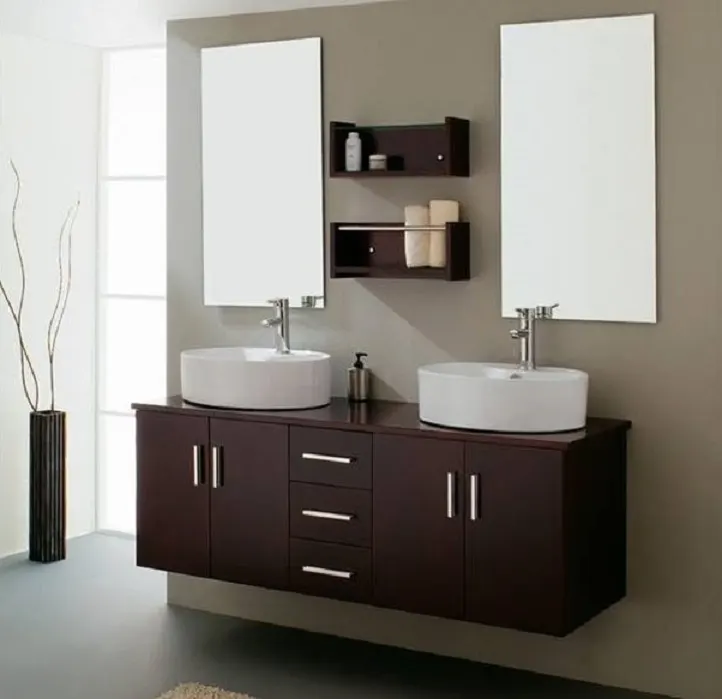
Wall-hung units leave the floor clear, which makes cleaning faster and lets air move under the cabinet. This helps keep the base of the unit dry, and it is why many coastal resorts favour them. The wall must carry the load, so confirm the wall construction and fixing method early, especially with a heavy stone or solid surface top.
Floor-standing vanities
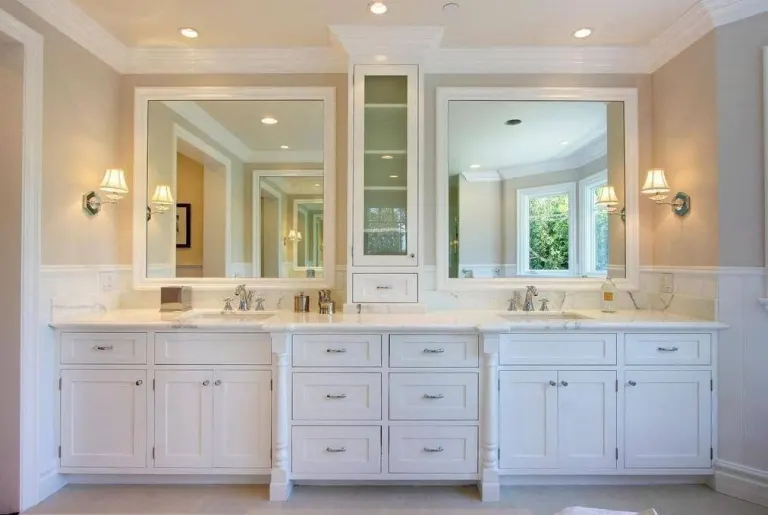
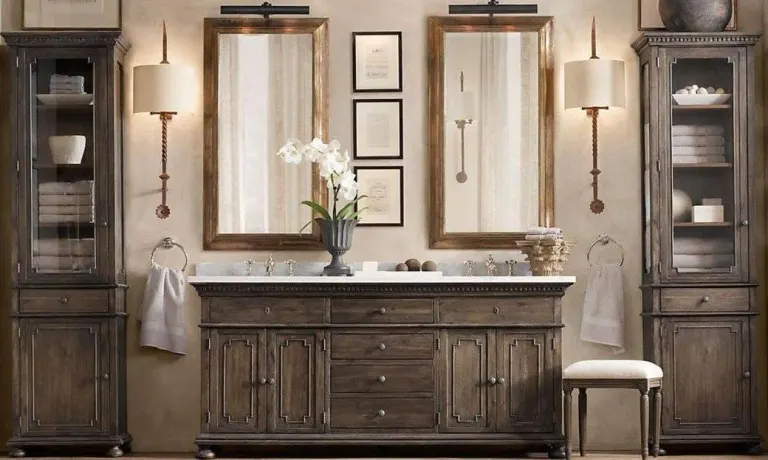
Floor-standing models offer more storage and a more substantial look, but the plinth area is exposed to mop water. If you specify them, use a recessed or water-resistant plinth detail with a sealed base so that water does not wick into the carcass. They suit larger suites where storage matters more than visual lightness.
Open washstands and console types
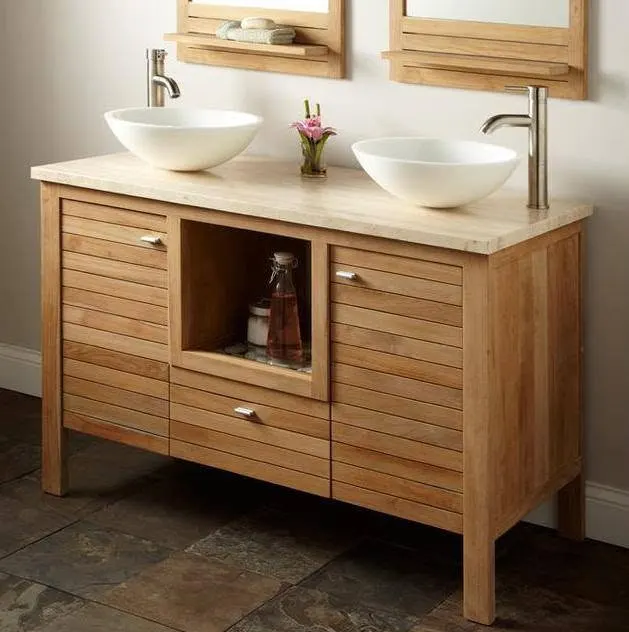
A console with a metal or timber frame and open shelf, often with baskets or towel storage below, has fewer enclosed surfaces where moisture can sit. It is a sensible choice for resort villas and beach-adjacent rooms, provided the metal frame has a corrosion-resistant finish. The trade-off is less concealed storage, so confirm that the operator accepts a more visible layout.
Compact and shelf models
Many Caribbean boutique properties have small bathrooms. Slim-depth or open-shelf models save space and reduce the number of doors and hinges exposed to humidity. See our guide to compact bathroom vanity models for small hotel bathrooms for dimensional options.
Model comparison for humid coastal use
| Model type | Humidity behaviour | Cleaning | Best suited to |
|---|---|---|---|
| Wall-hung with doors or drawers | Good airflow below; sealed carcass needed | Easy floor access | City and resort rooms |
| Floor-standing with sealed plinth | Plinth is the weak point | Moderate | Suites, larger bathrooms |
| Open washstand or console | Few enclosed surfaces | Simple, visible surfaces | Villas, beach-style rooms |
| Slim or shelf-based compact unit | Fewer hinges and joints | Easy | Small boutique bathrooms |
Materials and details that matter in humid climates
Choose the board for the worst-case moisture exposure, not the average. Options such as HPL-faced boards, marine plywood or moisture-resistant MDF each have different strengths, and our comparison of moisture-resistant boards for hotel bathroom cabinets explains them in depth. Whatever you choose, ask that all cut edges, tap and basin cut-outs, and back panel junctions are sealed.
For tops, solid surface, quartz or stone all work, but check weight and fixing for wall-hung models. For hardware, specify stainless steel or other corrosion-resistant fittings for hinges, runners and handles, particularly within a few kilometres of the sea. A short note on silicone and edge sealing at the design stage prevents many of the failures seen later; see our article on edge sealing and silicone joints in vanity cabinets.
Finish selection is also climate-related. Lacquer, HPL and veneer behave differently under humidity, so ask for samples and test them where possible rather than relying on a catalogue image.
Export logistics from Istanbul to the Caribbean and Latin America
Production for these projects takes place in our factory in Istanbul, and the cabinets then travel by sea to the destination port. Transit time, port handling and customs procedures vary by country and by shipping line, so we do not quote one fixed figure; the schedule is confirmed against your project once drawings and quantities are known.
Points to settle early:
- Incoterms: EXW, FOB, CIF or DAP change who carries risk and who manages the port. For islands with limited port capacity, many buyers prefer a freight forwarder with local experience.
- Packing: Sea freight in humid conditions calls for protective wrapping, corner protection and crating suited to long storage in containers. Stone tops, basins and mirrors should be packed separately.
- Labelling: Mark crates by room number or floor so that units reach the correct location on site.
- Customs documents: Requirements differ between countries, so confirm the documents your importer needs before shipping.
Planning around hurricane season
The Atlantic hurricane season generally runs from June to the end of November, and storms can disrupt shipping schedules, port operations and construction progress in the Caribbean. We cannot predict individual events, but you can reduce exposure by planning deliveries with this window in mind.
- Where the construction programme allows, aim for shipment and port arrival outside the peak part of the season.
- Allow extra buffer between the planned arrival date and the date installation actually begins.
- Avoid storing crated units in open yards or unfinished ground-floor areas; agree a dry, secure storage location in advance.
- Discuss cargo insurance with your forwarder, as terms and coverage depend on the shipping arrangement.
- Phase deliveries if the site has limited storage, so that units are installed soon after arrival.
Late arrival is as much of a risk as damage, so agree who decides when to hold a shipment and how it will be rescheduled.
On-site installation and acclimatisation
Once units arrive, keep them in their packaging until the bathroom is ready for installation, with walls finished and plumbing roughed in. Check the delivery against the packing list and photograph any damage before signing. Our guide on installing hotel bathroom vanities on site covers wall preparation and sealing sequence in more detail.
Approve a mock-up before the full order
For a coastal project, a mock-up is especially valuable because you can judge hardware, edges and finishes in context, and run a simple water-exposure check on a sample. Fixing positions, tap heights and drawer clearances are best confirmed on a real unit. Changes at this stage cost little compared with changes after production.
What to send for a quotation
To price your units accurately, it helps to provide:
- Room schedule and quantities per bathroom type
- Bathroom plans and elevations, with plumbing positions
- Preferred model type, top material and basin type
- Location, distance from the sea and expected humidity conditions
- Destination port, preferred Incoterm and target delivery window
Next step
If you are planning a coastal hotel in the Caribbean or Latin America, send us your drawings or room schedule. We will review the project and come back with model suggestions, material options and a shipping plan that takes the climate and the hurricane season into account.
Sıkça Sorulan Sorular
Which vanity cabinet type is best for a Caribbean beach hotel?
Wall-hung units and open washstand or console models usually perform well, because they allow airflow and have fewer enclosed surfaces for moisture. Whatever model you choose, sealed edges, moisture-resistant boards and corrosion-resistant hardware matter more than the shape of the unit.
Should hardware be stainless steel in coastal hotels?
Stainless steel or similarly corrosion-resistant hinges, runners and handles are a sensible choice, especially close to the sea where salt in the air attacks ordinary finishes. Ask your supplier to state the hardware material and finish in the quotation so you can compare offers properly.
How does hurricane season affect vanity cabinet delivery?
Storms can delay shipping, port handling and site progress. Plan shipment and arrival with the season in mind, add a buffer before installation, and agree a dry, secure storage area. Your forwarder can advise on current schedules and insurance for your route.
Can you ship vanity cabinets from Istanbul to Latin America?
Yes, we produce to project drawings in Istanbul and export by sea. Transit and customs arrangements depend on the destination country and port, so we confirm the shipping plan, packing and Incoterm with you once we have your drawings and quantities.
Do I need a mock-up for a humid coastal project?
A mock-up is strongly recommended. It lets you check finishes, hardware, edge sealing and fixing positions on a real unit and run a simple moisture check on a sample before committing to the full order.
Every hotel project is different. Send us your drawings or room schedule for a tailored proposal on materials, lead time and shipping.