How a Vanity Redesign Can Cut Housekeeping Time in a City Hotel: An Illustrative Case Study
An illustrative scenario showing how small vanity design changes, from plinths to edge details, can reduce the minutes housekeeping spends on each bathroom turnover. Includes a framework you can use to test your own project.
Vanity design housekeeping time is a link many hotel teams only notice after opening: every ledge, joint and hard-to-reach corner in the cabinet adds seconds to each room clean. This article walks through an illustrative scenario, not a real client project, to show how a redesign of the vanity cabinet can reduce bathroom turnover time and how you can measure the effect yourself.
The figures used here are examples chosen to explain the method. Your own results will depend on the room layout, the cleaning standard of the brand and the products your housekeepers use.
The scenario: a city hotel with a busy turnover pattern
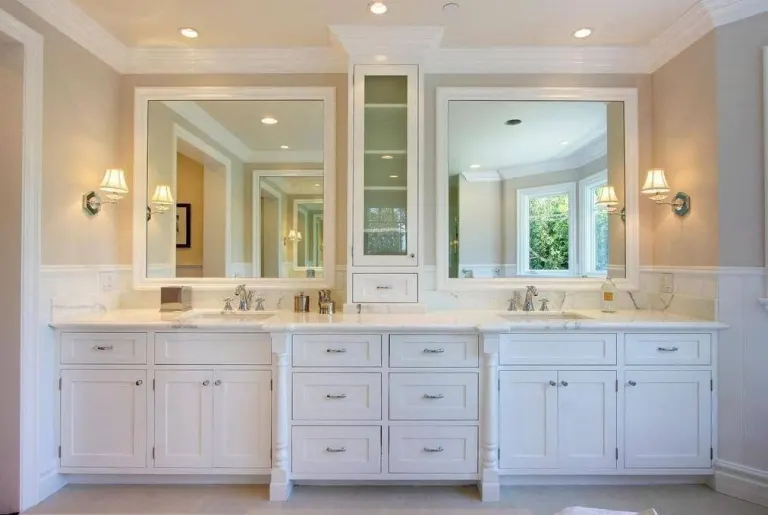
Imagine a 120-room city hotel with high occupancy and many one- or two-night stays. Housekeepers have a fixed time allowance per room, and the bathroom is the most demanding part of the clean. The original vanities were floor-standing units with a recessed plinth, a decorative rebated front and a stone top with a loose upstand.
Housekeeping supervisors reported three recurring problems:
- Water and dust collecting in the plinth recess and along the floor junction.
- Cleaning cloths snagging on exposed hardware and open edges.
- Moisture marks around the basin that needed repeated wiping before the surface looked clean.
None of these is a defect in the usual sense. They are design details that quietly add time to every turnover.
Step 1: observe the clean before changing the cabinet
Before redesigning anything, the hotel's operations team in our scenario timed the vanity portion of the bathroom clean across a sample of rooms and shift patterns. They noted not only the total minutes but also where the cleaner paused, re-wiped or used a different tool.
This observation is the most valuable part of the exercise. It turns vague complaints into a list of specific features that can be drawn differently.
What to record
- Time to clear and wipe the top, basin and tap area.
- Time to clean the front, handles and drawer edges.
- Time to clean the floor around and under the unit.
- Number of re-wipes caused by streaks, marks or trapped water.
- Any tool changes, such as switching to a brush for grooves.
Step 2: translate observations into design changes
The next step is a workshop between operations, the designer and the manufacturer. Each problem is linked to a construction detail that can be changed without altering the look the brand wants.
| Observed problem | Design response | Why it helps |
|---|---|---|
| Dirt and water in plinth recess | Wall-hung unit, or a sealed plinth flush with the front | Floor can be mopped in one pass without working around legs or recesses |
| Snagging on hardware | Finger-pull or flush handle profiles with rounded edges | Cloth glides across the front; fewer detail passes |
| Dust and water in grooved fronts | Flat or very shallow-profile fronts | Single wipe replaces brush work |
| Water pooling at wall junction | Integrated upstand with a continuous sealed joint | No gap for water or product residue |
| Streaks on dark glossy surfaces | Matte or low-sheen finish in a mid-tone | Marks are less visible, so fewer re-wipes |
For deeper comparisons of these options, see the articles on wall-hung and floor-standing vanities and on door styles for cleaning and wear.
Step 3: build a mock-up and re-time the clean
In the scenario, a single redesigned vanity is built and installed in a mock-up room before the full order. Housekeepers who did not take part in the design workshop are asked to clean it using their normal products and routine. The vanity portion of the clean is timed again under the same conditions as before.
A mock-up is also the moment to check whether a detail that looks clean on a drawing works with real cloths, real chemicals and real hands. If something still traps water or catches a cloth, it is far cheaper to change it now than after mass production.
Where the minutes come from
In this illustrative case, the saving is not one large change but several small ones that add up. A typical breakdown might look like this:
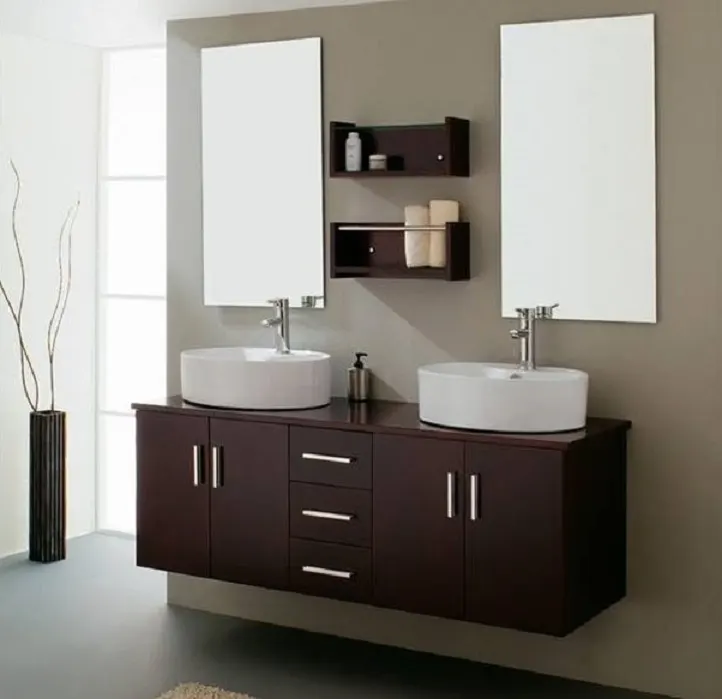
- Floor and plinth area: a wall-hung layout removes legs, recesses and the need to mop around obstacles.
- Front and hardware: a flat front with a shallow finger pull replaces a rebated door with protruding handles.
- Top and basin zone: a continuous top with an integrated upstand and neutral-cure sealed joint removes a line that needed detailed cleaning.
- Re-wipes: a mid-tone matte finish shows fewer streaks and water marks.
If each of these saves even a short amount of time per room, the effect over a full occupancy year can be meaningful. The point of the scenario is the method: measure per detail, then multiply by the number of turnovers. Avoid assuming a result before you have timed your own rooms.
Turning minutes into a business case
Housekeeping time is a labour cost, but it also affects room-ready times, guest satisfaction and staff fatigue. When you present a redesign to an owner, a simple calculation is more convincing than general claims.
- Record the current vanity clean time per room.
- Record the time with the mock-up vanity.
- Multiply the difference by expected annual turnovers and your labour rate.
- Compare this with any extra cost of the redesigned unit.
Keep in mind that some changes cost more to produce, for example a continuous top or a wall-hung support frame, while others cost nothing, such as choosing a flat front. A fair comparison looks at both sides, ideally over several years rather than only at purchase price.
What can go wrong with a cleaning-led redesign
Designing only for speed can create other problems. Be aware of these trade-offs:
- Wall-hung units need properly rated wall fixing and backing, which must be planned with the building contractor.
- Minimal detailing can look plain if the brand expects a richer visual language; texture can be added away from splash zones.
- Very dark or very glossy finishes look elegant in renders but often show every mark under bathroom lighting.
- Sealed joints still need periodic inspection, because failed silicone lets water into the carcass.
Checklist for your own vanity redesign
- Time the current vanity clean before you change anything.
- List every point where cleaners pause, re-wipe or change tools.
- Ask the manufacturer which of those points can be changed in construction rather than just styling.
- Approve a mock-up and re-time it with housekeepers who were not involved in the design.
- Check wall fixing, sealing and material choices for humidity before finalising.
- Document the chosen details in the shop drawings so every unit is built the same way.
How we support this process
At Palmiye, we build vanity cabinets to project drawings in our factory in Istanbul and can produce a mock-up unit so that your housekeeping team can test it before the full order. Whether your hotel is in a humid coastal city, a dry desert climate or a cold region, the same method applies: observe, adjust the details, test and then approve.
Next step
If you are planning a new hotel or a bathroom renovation and want to design vanities around housekeeping efficiency, send us your bathroom drawings or room schedule. We will review the layout, suggest construction details that make cleaning easier and prepare a quotation for your project.
Sıkça Sorulan Sorular
How does vanity design affect housekeeping time?
Details such as plinth recesses, grooved fronts, protruding handles and open joints around the top all add cleaning steps. Flat fronts, wall-hung layouts and sealed, continuous tops let cleaners work in fewer passes. The effect per room is small, but it multiplies across every turnover in a year.
How can I measure the time saved by a new vanity design?
Time the vanity part of the bathroom clean in several existing rooms, then repeat the test in a mock-up room with the new unit using the same products and staff routine. Multiply the difference by your expected annual turnovers to estimate the saving.
Are wall-hung vanities always faster to clean?
They usually make floor cleaning easier because there are no legs or plinth recesses. However, they need strong wall fixing and proper backing, and the hidden space behind and under the unit still needs to be considered. Floor-standing units with a sealed plinth can also work well.
Which vanity finishes are easiest to keep clean in hotels?
Flat, low-sheen surfaces in mid-tones generally show fewer streaks and water marks than dark gloss finishes. Durable laminates and well-sealed lacquers or veneers can all work, but you should check chemical resistance with your housekeeping products on a sample.
Is this case study based on a real hotel?
No. The scenario is illustrative and its figures are examples to explain the method. Real savings depend on your room layout, cleaning standards and products, so we recommend timing your own rooms and testing a mock-up unit.
Every hotel project is different. Send us your drawings or room schedule for a tailored proposal on materials, lead time and shipping.