Wooden Door Models for Hospitals, Clinics and Wellness Centres: Hygiene-Friendly Options
Wooden doors can work well in clinics and wellness centres when the finish is washable, the edges are sealed and the model is kept simple. This guide explains what to specify and what to check with your manufacturer.
Wooden doors for clinics are a practical choice when you want a warm, hospitality-style interior without giving up cleanability. The key is not the wood itself but the surface, the edge sealing and the door model. A smooth, well-sealed leaf with a hard-wearing finish can handle regular cleaning in consulting rooms, corridors and wellness areas.
This guide is written for developers, designers and procurement teams working on healthcare and wellness projects, including medical suites inside hotels, spa clinics and private hospitals. It is a planning overview, not a clinical or regulatory standard. Always confirm the requirements of your project country and your infection control consultant.
Where wood fits in a healthcare or wellness project
Not every opening in a medical building suits a timber door. Operating theatres, sterile processing and some isolation areas usually call for specialist systems such as steel, HPL-faced or purpose-made hygienic doors. Your infection control advisor and the local authority will set those requirements.
Wood-based doors are more commonly used in areas where a calmer, residential or hospitality feel matters:
- Consultation and treatment rooms in private clinics
- Patient rooms and suites in private hospitals
- Waiting areas, reception and administrative offices
- Wellness centre doors for massage, therapy, yoga and changing rooms
- Medical spa and aesthetic clinic corridors
- Staff rooms and back-of-house offices
For hotel-led projects, such as a medical wellness hotel, this mix of zones is common. It helps to map each opening to a hygiene level before choosing models.
What makes a door hygiene-friendly
A door becomes easier to keep clean when it limits places where dirt, moisture and cleaning agents can collect. In practice, four things matter most.
1. A smooth, non-porous surface
Open-pore and heavily textured finishes hold dirt and are harder to wipe down. For healthcare interior doors, smooth surfaces are generally easier to maintain. Options include:
- HPL (high-pressure laminate): hard, scratch-resistant and tolerant of repeated wiping. It is a common choice for busy corridors and treatment rooms.
- Two-component lacquer or polyurethane paint: gives a seamless, washable coat in a wide colour range, including RAL references.
- Veneer with a protective lacquer: keeps a natural look for waiting areas and suites, provided the topcoat is rated for cleaning.
A hygienic door finish should be tested against the cleaning products your facility team actually uses. Ask the manufacturer for sample panels and try them with those products before approval.
2. Sealed edges
Edges are where moisture and disinfectants get in first. Open or poorly bonded edges can swell, chip and eventually trap dirt. Consider:
- Fully lacquered edges on painted doors, applied in the same process as the face
- PVC, ABS or HPL edge banding with a tight, even glue line
- Rounded or slightly softened edges, which resist chipping better than sharp arrises and are easier to wipe
Pay particular attention to the bottom edge, which is the most exposed to mop water. Many projects seal this edge as a specific step. Confirm this on your drawings.
3. Simple, flush door models
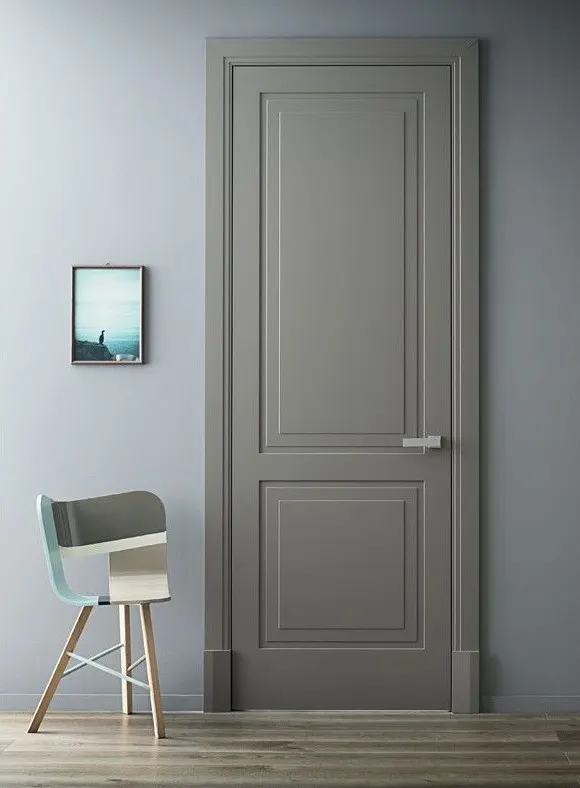
The fewer grooves, mouldings and recesses a door has, the less cleaning effort it needs. Flush leaves are the most straightforward option for clinical areas. Panelled, fluted or shaker-style designs can look excellent in reception and lounge areas, but they create more cleaning detail and are better kept out of treatment zones.
4. Tight, cleanable details around the leaf
Hygiene also depends on what surrounds the leaf. Flush frames, concealed hinges where suitable, and minimal gaps between the leaf and frame reduce dust and dirt traps. Where seals are required for smoke, acoustics or draught, discuss how they will be cleaned and replaced.
Comparing finishes for healthcare and wellness doors
| Finish | Cleanability | Look | Typical use |
|---|---|---|---|
| HPL | High; resists scratches and wiping | Solid colours, wood-effect patterns | Corridors, treatment rooms, staff areas |
| 2K lacquer or PU paint | High when fully cured and well applied | Smooth, wide colour range | Consulting rooms, patient suites |
| Veneer with protective lacquer | Good; depends on the topcoat | Natural grain, warm feel | Reception, waiting areas, wellness lounges |
| Oiled or open-pore wood | Lower; needs more upkeep | Natural and tactile | Low-traffic, non-clinical spaces |
Details vary by supplier and by specific product, so treat the table as a starting point for discussion rather than a rating.
Core and moisture considerations
Wellness areas such as showers, steam rooms, hydrotherapy and spa suites expose doors to humidity and temperature changes. For these openings, ask about moisture-resistant cores, sealed edges and suitable frames. Standard interior doors may not be appropriate for wet zones.
Where a door is exposed to steam or heat, such as near a sauna or hammam, the specification may need to move away from standard timber leaves altogether. Glass or purpose-built spa doors are often a better fit in the hottest areas, while a well-sealed wooden leaf can serve the changing room or relaxation zone nearby.
Hardware and functional preparation
Healthcare and wellness doors usually carry more functional requirements than a standard hotel room door. Plan these early, because they affect routing, reinforcement and lead time:
- Hinges and closers: choose hardware rated for the leaf weight and the expected number of cycles.
- Locks and access control: electronic locks, card readers or staff-only access need routing and cable paths prepared in the factory.
- Vision panels: small glazed lights are common in clinical corridors and treatment rooms for safety and privacy balance.
- Push plates, pull handles and kick plates: protect the surface where hands, trolleys and wheelchairs make contact.
- Privacy: sound control and sealing matter in consultation and therapy rooms.
Accessibility is also important in healthcare. Clear opening widths, low thresholds and easy opening force all depend on local codes, so share the applicable standard with your manufacturer at the start.
Fire, acoustic and regulatory points
Many healthcare buildings use fire-rated doors in compartment lines and escape routes. A wooden door can be made to a fire-rated specification only when the complete assembly, including leaf, frame, seals and hardware, is tested and documented for the relevant standard. Do not assume that a decorative model is fire-rated because of its core alone.
The same applies to acoustic performance. If consultation privacy matters, state the target performance and ask for test documentation. We can advise on what a wooden door factory can supply, but the required ratings must come from your project specification and local authority.
How to specify doors for a mixed healthcare and wellness project
A simple approach keeps the schedule manageable and the maintenance easy:
- Zone the building. Mark clinical, semi-clinical, public, wet and back-of-house areas.
- Assign a finish and model to each zone. Use smooth flush leaves with HPL or lacquer in clinical areas and richer veneers or profiled models in public spaces.
- Limit the variety. Fewer models and hardware sets make reordering and repairs simpler for the facility team.
- Request samples. Test cleaning, edge sealing and colour under the building's real lighting.
- Approve a mock-up. Check hardware, vision panels and clearances in a real opening before the full order.
- Plan spares and touch-up materials. Keep matching finish materials for maintenance at handover.
Questions to ask your door manufacturer
- Which finishes can you supply that are suited to regular cleaning, and can you provide test samples?
- How are the edges sealed, including the bottom edge?
- Which core materials do you offer for humid or wet-adjacent areas?
- Can you prepare the leaf for electronic locks, vision panels and closers?
- What documents can you provide for fire, acoustic and emission requirements?
- How will the doors be packed and labelled for delivery to site, and what Incoterms do you work with?
Working with Palmiye on healthcare and wellness doors
Palmiye manufactures doors and fixed joinery to project drawings in our own factory in Istanbul, and we ship to projects in Europe, the Middle East, Central Asia, Africa and beyond. For healthcare-adjacent and wellness projects, we usually begin with a door schedule, the zone map and the cleaning requirements, then propose models, finishes and edge details to match.
Next step
If you are planning a clinic, private hospital or wellness centre, send us your door schedule or drawings. We will review the openings, suggest suitable models and finishes, and come back with a quotation and shipping options for your project.
Sıkça Sorulan Sorular
Can wooden doors be used in hospitals and clinics?
Yes, in many areas such as consultation rooms, patient suites, offices and waiting areas. Sterile or high-risk zones often require specialist hygienic doors. Check the requirements of your project country and consult your infection control advisor before choosing models.
What is the most hygienic finish for a wooden clinic door?
Smooth, non-porous finishes such as HPL or a well-cured two-component lacquer are generally easiest to wipe down. Always test samples with the cleaning products your facility uses, as chemical resistance varies between products and suppliers.
Why do sealed edges matter on healthcare doors?
Edges absorb moisture and cleaning agents first, which can cause swelling, chipping and dirt traps. Sealed or banded edges, especially along the bottom, help the door keep its shape and stay easier to clean over years of use.
Are wooden wellness centre doors suitable near saunas and steam rooms?
Standard timber leaves are usually not suitable inside saunas or steam rooms. They may work in adjacent changing or relaxation areas if the core, edges and finish are suited to humidity. Ask your manufacturer for moisture-resistant options.
Can a wooden door be fire-rated for a healthcare building?
Yes, but only as a tested and documented assembly including leaf, frame, seals and hardware. Specify the required standard and rating in your tender, and ask the manufacturer which test documentation they can provide.
Every hotel project is different. Send us your drawings or room schedule for a tailored proposal on materials, lead time and shipping.