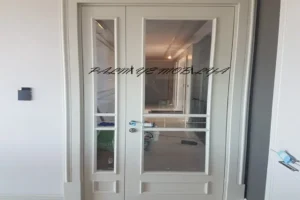

Lacquered Door Models Turkey
Lacquered Door Types Turkey: The Ultimate Technical and Architectural Guide
Lacquered doors represent the pinnacle of modern interior joinery, blending sleek aesthetics with structural durability. In Turkey’s advanced woodworking and manufacturing sector, lacquered door production has evolved into a highly specialized industry. Turkish manufacturers leverage state-of-the-art CNC machining, automated polyurethane spraying systems, and premium core materials to supply both domestic luxury projects and international markets across Europe, the Middle East, and Africa.
Understanding the technical nuances, core configurations, surface treatments, and architectural applications of lacquered door types Turkey is essential for architects, interior designers, and construction professionals aiming to source high-quality, long-lasting interior doors.
1. What is a Lacquered Door? Technical Definition & Composition
A lacquered door is not defined merely by its top layer of paint, but by a systematic, multi-layered chemical coating process applied over a engineered wood substrate. Unlike standard painted doors, true lacquered doors undergo rigorous surface preparation, priming, sanding, and chemical curing to achieve a flawless, pore-free finish.
+-------------------------------------------------------+

|  Top Coat: Polyurethane / Acrylic Lacquer (2-3 Layers)|
|  Barrier Layer: Undercoat / Sanding Sealer            |
|  Primer Layer: High-Solid Polyester Primer (2 Layers) |
|  Substrate: High-Density MDF (6mm to 8mm)             |
|  Core: Solid Wood Framing + Honeycomb / Tubular / Timber|
+-------------------------------------------------------+
The Substrate Matter
The foundation of any high-quality lacquered door manufactured in Turkey is Medium-Density Fiberboard (MDF) or High-Density Fiberboard (HDF). Raw timber cannot be directly lacquered successfully because natural wood expands, contracts, and contains moisture pores that disrupt the smooth lacquer film. Turkish manufacturers utilize premium, low-emission (E1 or E0 grade) MDF sheets, typically ranging from 6mm to 8mm in thickness for the door skins, ensuring a perfectly stable, flat surface that resists thermal expansion.
The Chemical Anatomy of Lacquer
The coating materials used in Turkish production facilities are carefully engineered chemical compounds:
- Polyester Primers: Applied as the base layer to seal the MDF fibers and prevent the absorption of subsequent coats.
- Polyurethane (PU) Lackers: The industry standard for interior doors, offering an exceptional balance of elasticity, impact resistance, and chemical stability.
- Acrylic Lacquers: Utilized premium lines, especially for light colors, due to their superior resistance to yellowing caused by Ultraviolet (UV) light exposure.
2. Core Configurations of Turkish Lacquered Doors
The internal structure of a door dictates its weight, sound insulation, thermal performance, and price point. When evaluating lacquered door types Turkey, the interior core configuration is just as critical as the exterior finish.
Honeycomb Core (Kağıt Petek Dolgulu)
- Structure: Consists of a hexagonal paper honeycomb lattice sandwiched between the MDF skins, supported by a solid finger-jointed pine or fir perimeter frame.
- Weight: Approximately 15–20 kg per door leaf.
- Acoustic Rating: Low (typically 20–25 dB sound attenuation).
- Best For: Budget-conscious residential projects, mass housing developments, and low-traffic areas like guest rooms or closets.
Tubular / Bored Particleboard Core (Delikli Yongalevha Dolgulu)
- Structure: An engineered core made of particleboard manufactured with horizontal tubular voids running throughout the length.
- Weight: Approximately 28–35 kg per door leaf.
- Acoustic Rating: Medium-High (typically 28–32 dB sound attenuation).
- Mechanical Strength: High resistance to warping and excellent screw-holding capacity for heavy architectural hardware.
- Best For: Premium residential apartments, hotel guest rooms, and commercial offices demanding privacy and structural mass.
Solid Timber / Blockboard Core (Seren Dolgulu / Masif Panel)
- Structure: Composed of solid wood strips (usually kiln-dried pine, fir, or spruce) glued together to form a solid internal block, covered by MDF skins.
- Weight: 35+ kg per door leaf.
- Acoustic Rating: High (32–36 dB sound attenuation).
- Best For: Luxury villas, high-end commercial spaces, and historical renovations where a heavy, solid wood feel is required.
3. Classifications by Surface Design & Aesthetics
The versatility of CNC router technology combined with artisanal hand-sanding allows Turkish manufacturers to produce an endless array of visual styles.
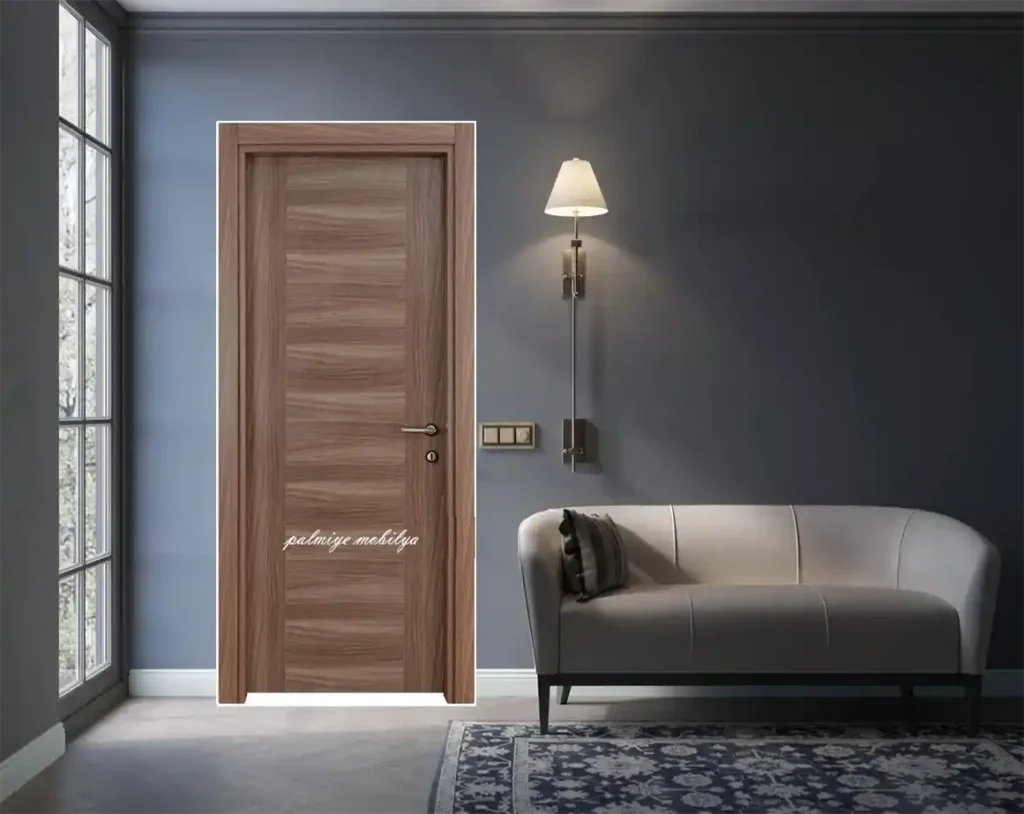
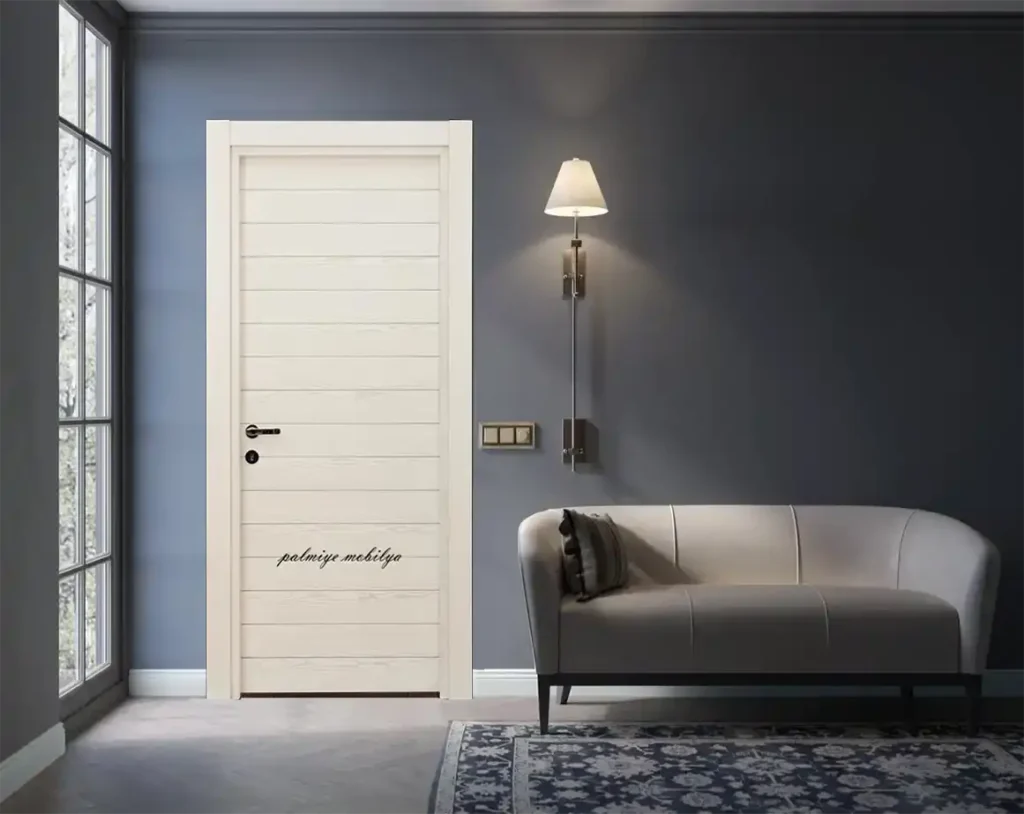
Minimalist & Flat (Düz Lake Kapı)
Flat lacquered doors feature a completely smooth surface with no router lines, grooves, or raised panels. This design is highly favored in contemporary, industrial, and Scandinavian interior designs. Because there are no details to hide imperfections, flat doors require flawless sanding and calibration during the manufacturing phase; any surface wave or dust particle will be highly visible, particularly in high-gloss finishes.
CNC Grooved & Routed (Derzli / Çizgili Lake Kapı)
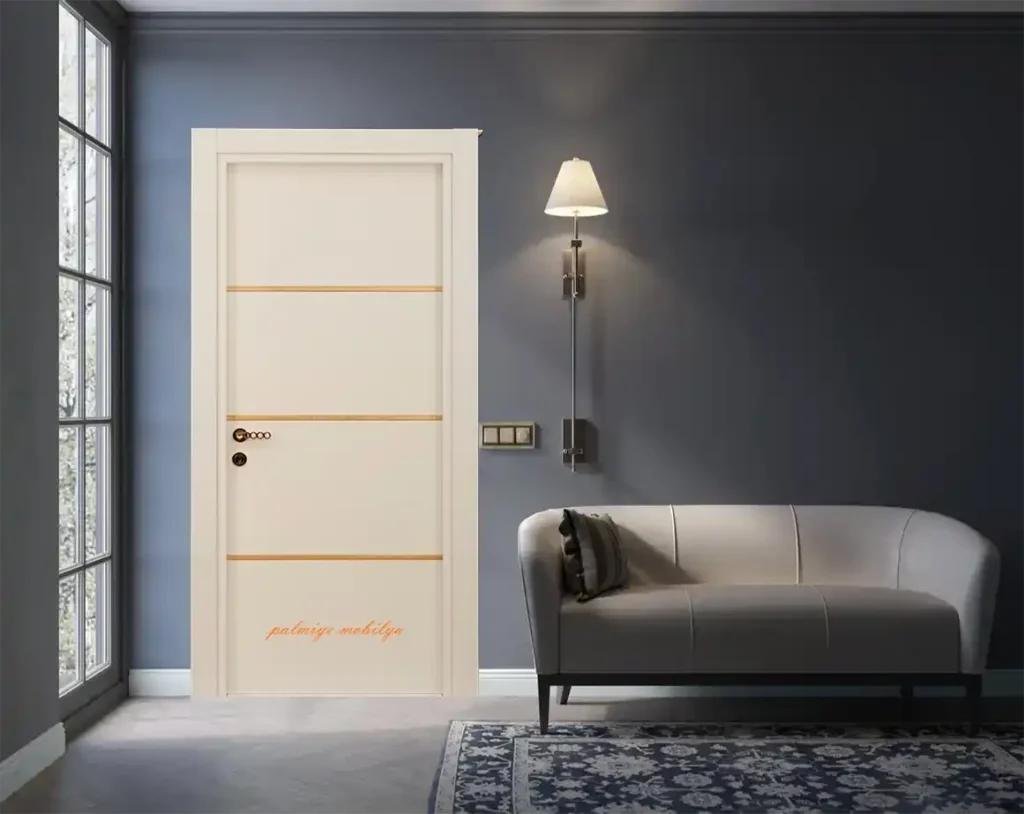
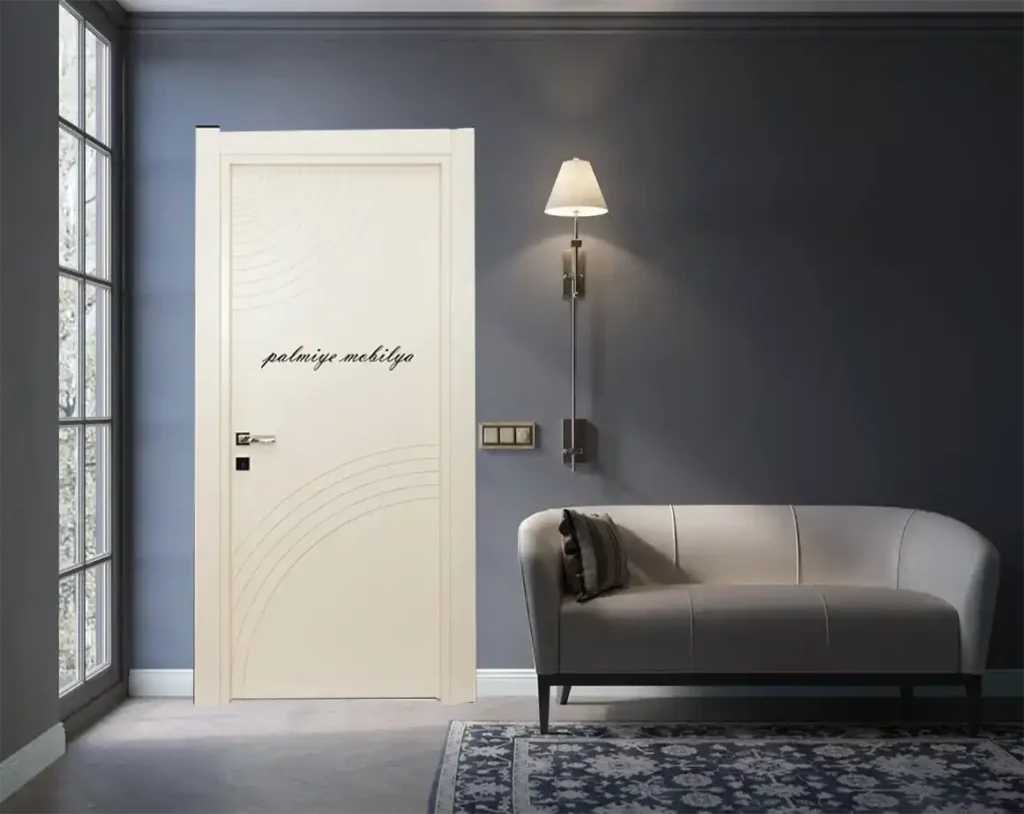
CNC machines cut precise geometric patterns, lines, or V-grooves directly into the thick MDF skin before the lacquering process.
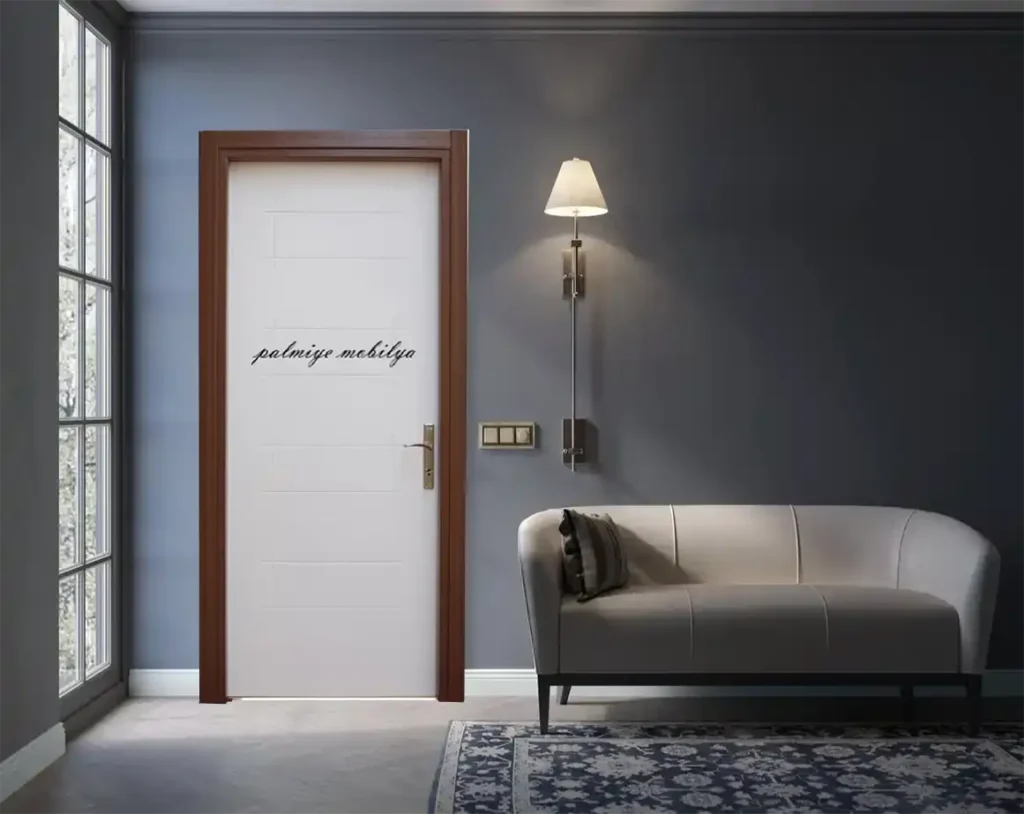
- Modern Grooves: V-shaped or U-shaped grooves ranging from 2mm to 10mm wide, creating horizontal or vertical lines.
- Asymmetric Patterns: Abstract, non-repeating geometric lines popular in avant-garde interiors.
- The edges of these grooves must be meticulously hand-sanded or processed with specialized profiling machinery to ensure the primer and lacquer adhere evenly without pooling or thinning at the sharp corners.
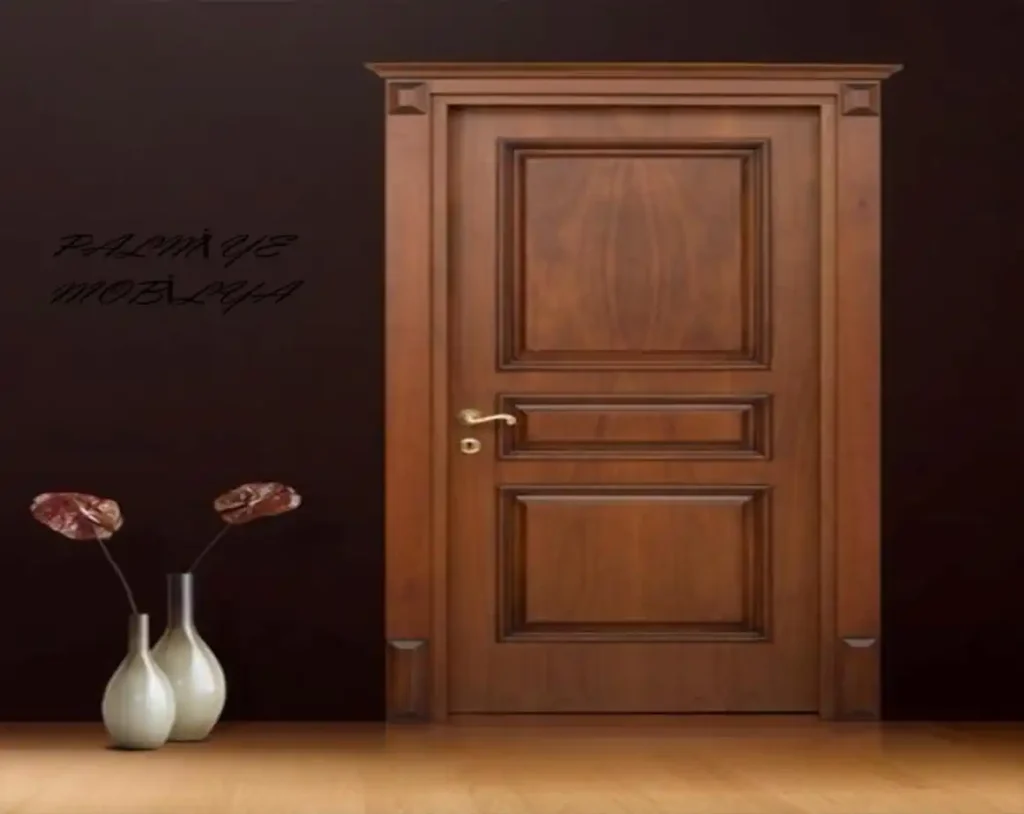
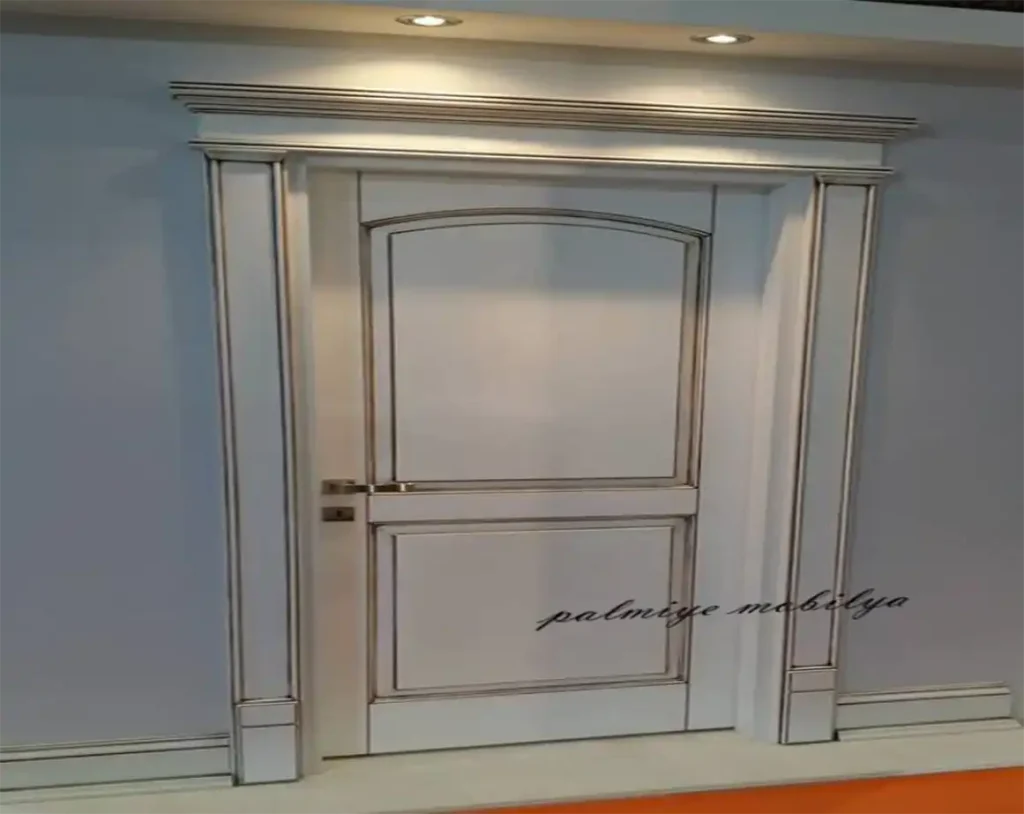
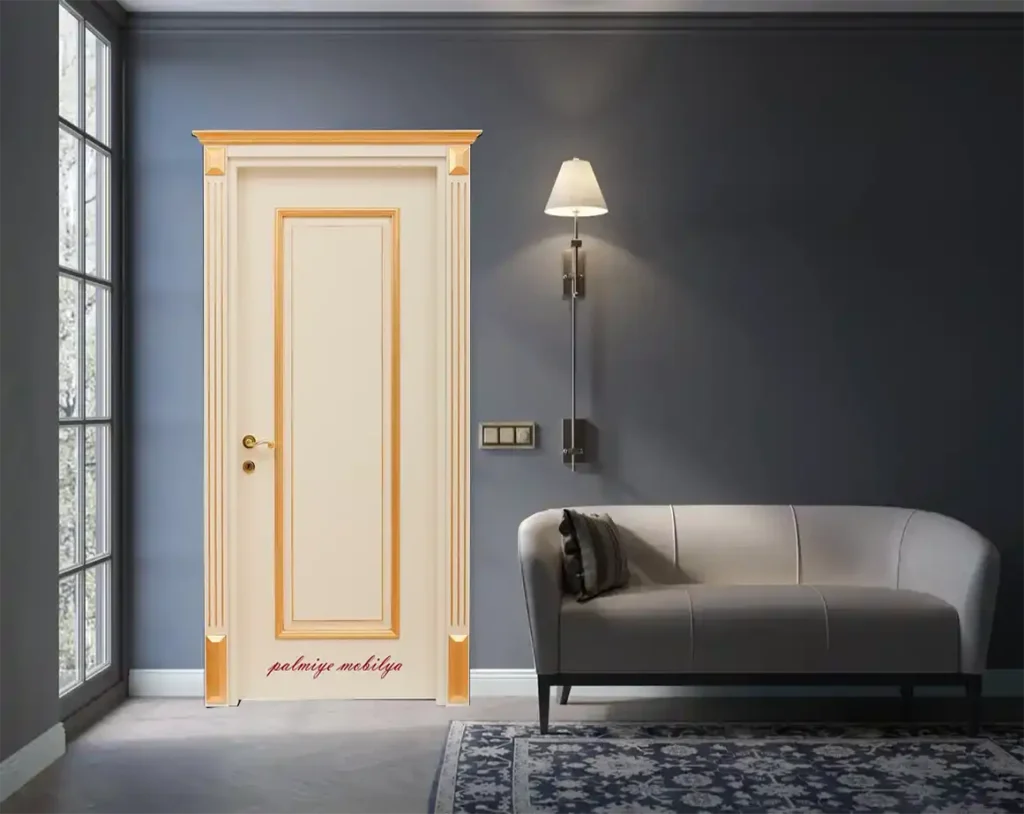
Classic Paneled & Neo-Classical (Göbekli / Klasik Lake Kapı)
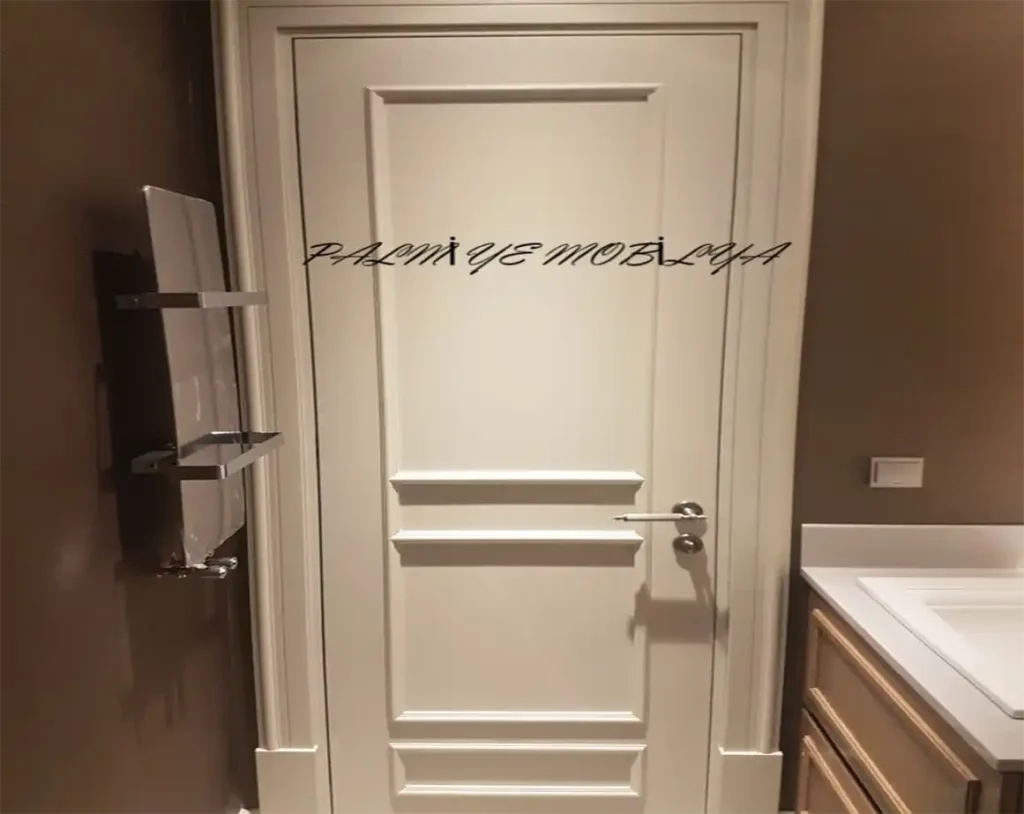
These doors emulate traditional stile-and-rail timber joinery. In Turkish manufacturing, this is achieved either by deep CNC routing into thick (8mm) MDF sheets to create a recessed panel look, or by applying physical, raised MDF moldings (çita) onto the door surface.
- Single Panel / Two Panel: Common in classical English or American colonial aesthetics.
- Country Style: Vertical beadboard lines inside a recessed panel, ideal for rustic, provincial, or coastal interior themes.
4. Classifications by Gloss Levels and Chemical Formulation
The reflectivity and tactile feel of lacquered door types Turkey are governed by the specific topcoat formulation and the post-curing finishing processes.
Matte Lacquered Doors (Mat Lake)
- Gloss Level: Typically between 5% and 15% gloss retention.
- Characteristics: Non-reflective, smooth, silky texture. Matte finishes excel at hiding minor surface scratches, dust, and oily fingerprints.
- Trends: Soft-touch matte finishes, achieved using specialized polyurethane coatings or excimer laser-curing technology, are highly sought after in premium Turkish architectural projects.
Silk Matte / Satin Lacquered Doors (İpek Mat Lake)
- Gloss Level: Between 25% and 40% gloss retention.
- Characteristics: Features a subtle sheen that catches light gently without acting as a mirror. It strikes an optimal balance between the understated elegance of matte and the vibrancy of gloss.
- Application: The most widely produced and specified lacquer finish across Turkey due to its versatility, ease of cleaning, and high aesthetic tolerance.
High-Gloss Lacquered Doors (Parlak Lake)
- Gloss Level: 85% to over 95% gloss retention.
- Manufacturing Process: Achieving a true, mirror-like high-gloss finish requires an intensive, multi-step process. After the final lacquer coat cures, the surface is treated with progressive grits of automotive-grade sandpaper (from 1500 up to 3000 grit) and then buffed using heavy-duty polishing compounds and lambskin pads.
- Visual Impact: Reflects light dramatically, making corridors and rooms feel spacious and ultra-luxurious. However, it demands careful maintenance as it easily reveals fingerprints, smudges, and micro-scratches.
5. Specialty Lacquered Door Types in Turkey
To meet advanced architectural demands, Turkish manufacturers have expanded their portfolios to include highly technical structural variants that integrate lacquer with other materials.
Concealed / Flush-to-Wall Lacquered Doors (Görünmez Kasa / Sövesiz Lake Kapı)
Often referred to as “filo muro” or aluminum frame doors, this system eliminates visible architraves, casings, and trims.
- Mechanism: A heavy-duty, extruded aluminum sub-frame is recessed directly into the drywall or brickwork before plastering.
- The Door Leaf: A flat, premium matte lacquered door is hung using 3D adjustable concealed hinges.
- Visual Result: The door sits perfectly flush with the wall plane, creating an unbroken, invisible line when closed. Turkish engineering ensures these doors are structurally reinforced with internal steel tension rods to prevent even a millimeter of warping, which would ruin the flush alignment.
Glass-Inlaid Lacquered Doors (Camlı Lake Kapı)
Integrating glass into a lacquered frame requires precision engineering to prevent the wood frame from flexing under the weight of the glazing.
- Full-Lite / French Style: A lacquered outer perimeter with multiple glass panes divided by delicate lacquered glazing bars.
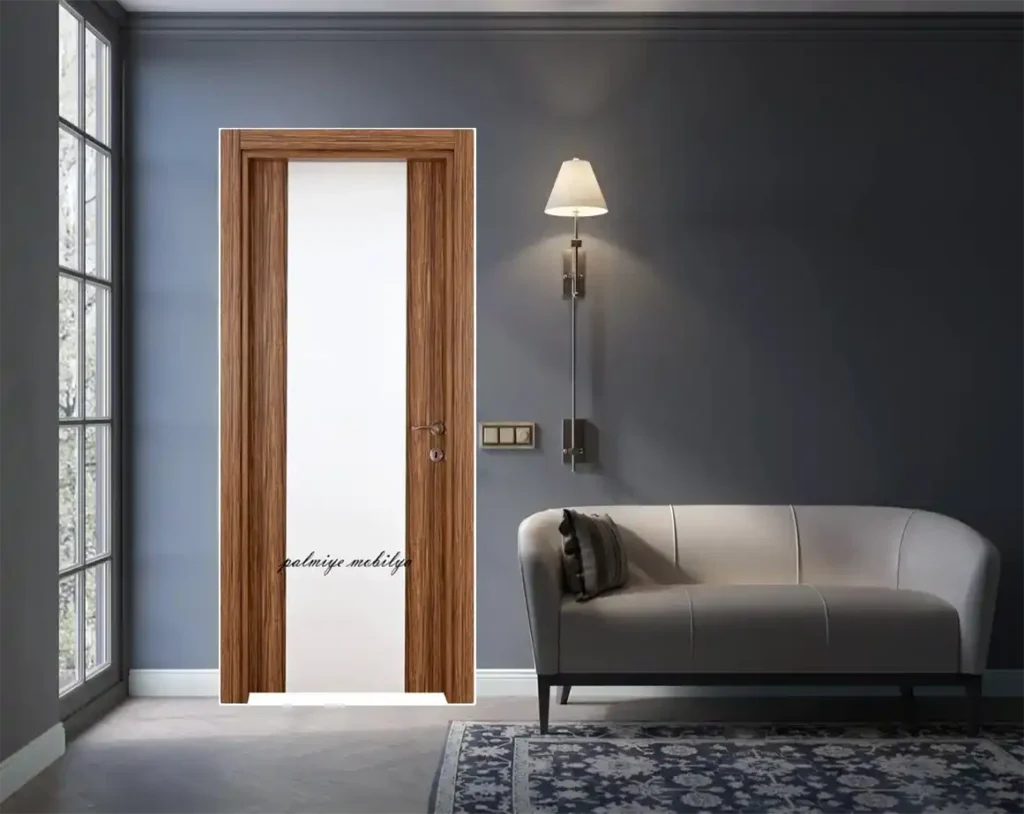
- Vision Panels: Narrow vertical or horizontal glass inserts popular in office environments to allow natural light penetration while maintaining privacy.
- Manufacturing Protocol: The glass channels are routed with absolute precision, and specialized rubber gaskets or neutral-cure silicones are applied to prevent glass rattling and lacquer cracking over time.
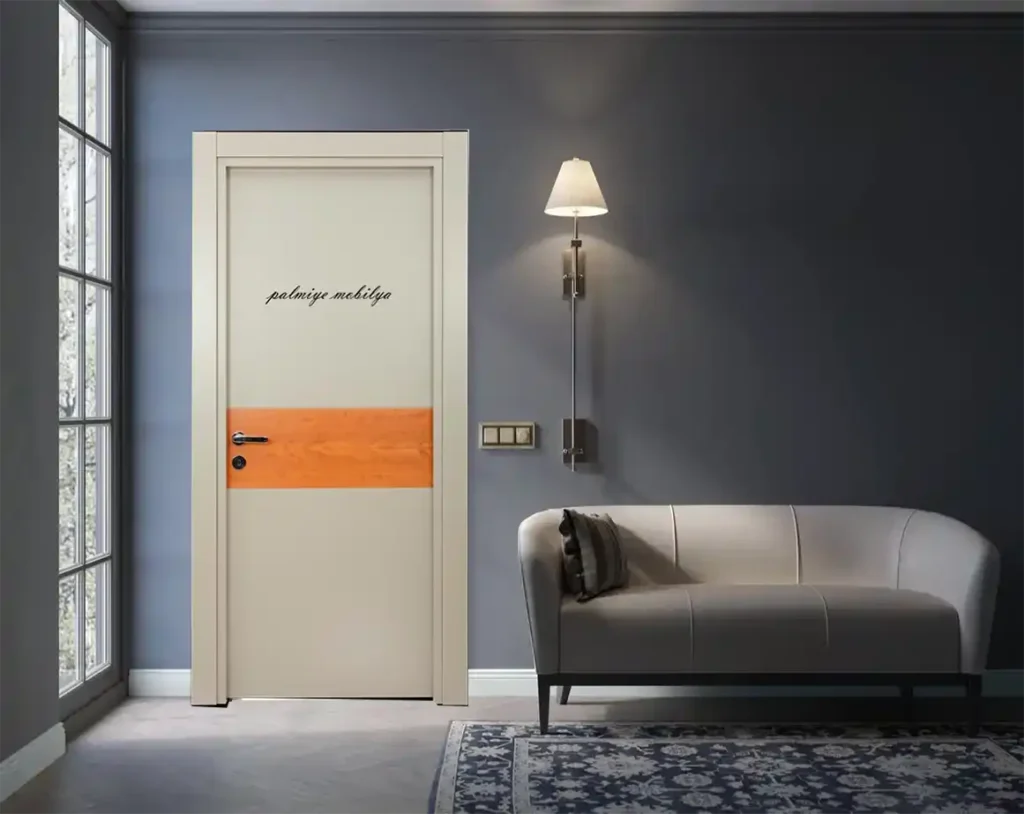
Lacquered Profiling with Natural Wood Veneer Inserts
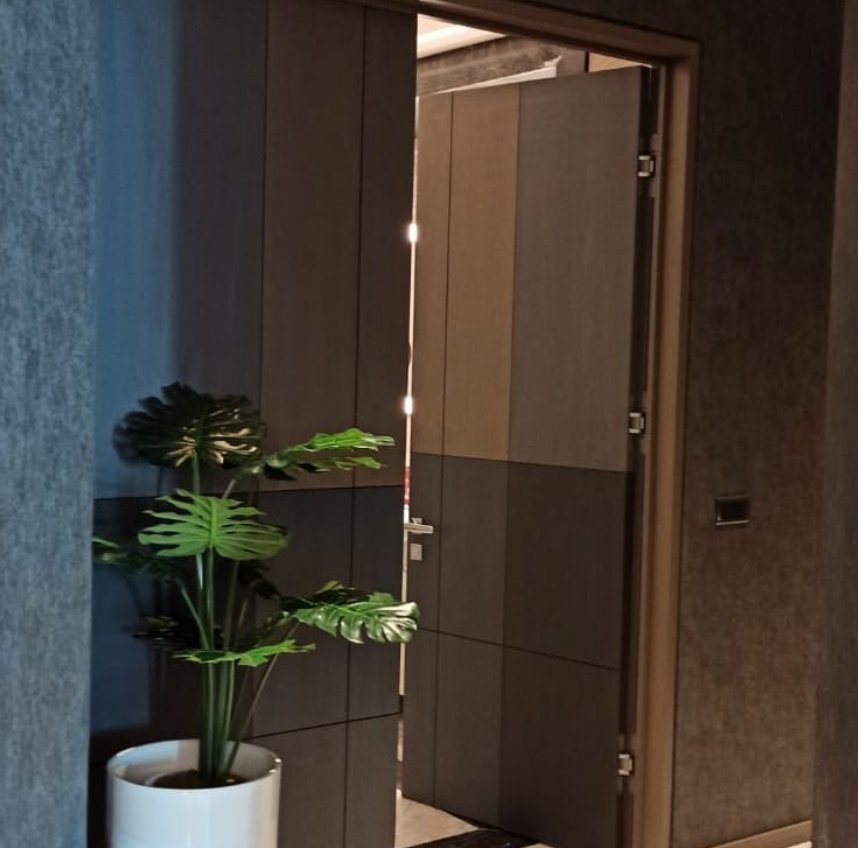
A high-end hybrid trend in Turkish design involves combining the clean look of matte lacquer with the organic warmth of natural wood. For example, a door may feature an entirely dark gray matte lacquered surface with a recessed vertical channel lined in American Walnut or natural Oak veneer. This type requires advanced mask-painting techniques and strict tolerance controls where the two distinct surface materials intersect.
6. The Turkish Lacquered Door Manufacturing Process: A Step-by-Step Technical Insight
The quality of lacquered door types Turkey stems directly from the systematic industrial processes applied in modern production centers like Istanbul, Ankara, Bursa, and Kayseri. Understanding this process demonstrates why true lacquer outperforms basic painted timber.
Phase 1: Wood Preparation and CNC Machining
- High-density MDF panels are cut to precise dimensions using automated sizing saws.
- The structural core (e.g., tubular particleboard) and perimeter pine frames are assembled, and the MDF skins are bonded under high pressure and temperature using heavy-duty polyurethane or urea-formaldehyde adhesives in industrial hot presses.
- The raw door blanks are moved to 3-axis or 5-axis CNC routing stations, where lock cases, hinge seats, and face designs are carved with sub-millimeter accuracy.
Phase 2: Calibrating and Initial Sanding
Raw MDF contains loose fibers and surface irregularities. The pressed door blanks pass through wide-belt sanding and calibration machines to achieve uniform thickness across the entire leaf. Following this, automated orbital sanding machines and hand artisans prepare the grooves and edges.
Phase 3: The Priming and Sealing Cycle
- Isolation Layer: A specialized chemical sealer is sprayed to isolate the MDF from ambient moisture and prevent the absorption of subsequent coatings.
- First Primer Coat: A high-solid polyester or polyurethane primer is applied. This coat acts as a filler to bridge micro-pores in the MDF.
- Curing & Sanding: The door cures in a temperature-controlled flash-off tunnel. Once dry, it is thoroughly sanded down using 240 to 320 grit paper.
- Second Primer Coat: Another layer of primer is applied to ensure an absolutely level, white, opaque base. This layer undergoes a final, meticulous sanding with 400 to 600 grit paper.
Phase 4: Final Lacquer Application (The Cleanroom Environment)
The application of the colored topcoat occurs in positive-pressure, dust-free cleanrooms equipped with water-curtain filtration systems. Dust contamination at this stage ruins the finish.
- Automated Spraying Robots: For flat and standardized doors, linear or oscillating spraying robots apply a uniform coat measured in exact microns.
- Manual Spray Artisans: For complex 3D paneled structures, experienced painters manually apply the lacquer using high-volume, low-pressure (HVLP) spray guns to ensure full, drip-free coverage inside recessed profiles.
Phase 5: Curing and Optional Polishing
The doors pass through automated UV-curing tunnels or traditional heated drying kilns. For high-gloss lines, the doors are moved to a dedicated polishing department for multi-stage mechanical buffing.
7. Materials and Hardware Integration: Frames, Architraves, and Ironmongery
A door leaf is only as good as the system supporting it. Turkish manufacturers provide highly engineered frame and casing solutions tailored for lacquered systems.
Frame Structures
- Adjustable MDF Frames: Made from thick MDF or HDF, wrapped or lacquered to match the leaf perfectly. They feature a telescopic design allowing the architrave to adjust to varying wall thicknesses (e.g., adjusting from 10cm to 15cm walls).
- Sandwich / Composite Frames: A highly recommended structure featuring layers of solid wood finger-jointed timber sandwiched between layers of MDF. This construction combines the warp resistance of MDF with the heavy-duty screw retention and structural integrity of solid timber.
- Water-Resistant PVC/WPC Frames: For bathrooms and humid environments, some Turkish suppliers offer Wood-Plastic Composite (WPC) frames that are lacquered on the exterior to match the interior rooms but remain completely immune to water rot at the base.
+-------------------------------------------------------+

|                 Wall Structural Core                  |
+-------------------------------------------------------+

     |                                             |
     |   +------------------------------------+    |
     |   | Telescopic Architrave (Adjustable) |    |
     +---|------------------------------------|----+

         |   Composite Frame (MDF+Timber+MDF) |
         |   +----------------------------+   |
         |   | Acoustic Rubber Gasket     |   |
         +---+----------------------------+---+

             | Door Leaf (Lacquered)      |
             +----------------------------+
Acoustic Gaskets and Hardware Preparation
Premium Turkish doors integrate a continuous slots for EPDM or silicone rubber gaskets along the inner rebate of the frame. This ensures soft, silent closing impacts and enhances room-to-room sound isolation. Furthermore, lock cases are pre-machined to accept modern magnetic locks, which conceal the latch bolt when the door is open, maintaining clean visual lines.
8. Comparative Analysis: Lacquer vs. Alternative Door Finishes
To understand the positioning of lacquered door types Turkey in terms of value and performance, it helps to compare them against other dominant interior door categories manufactured globally.
| Feature / Criteria | Lacquered Doors | PVC / Vinyl Wrapped Doors | Melamine / Laminate Doors | Natural Wood Veneer Doors |
|---|---|---|---|---|
| Aesthetic Premium | Ultra-luxurious, seamless edges, no visible joints or tape lines. | Medium; can look synthetic under bright light. | Functional; rigid lines with visible edge-banding. | High; authentic, organic wood grains and patterns. |
| Design Flexibility | Infinite. Any RAL color code, any CNC groove pattern. | Limited to available vinyl foil patterns and depths. | Flat surfaces only; cannot be routed with grooves. | Limited to natural wood grain variations and stains. |
| Repairability | High. Surface scratches can be filled, re-sanded, and re-sprayed locally. | Zero. Delaminated or torn vinyl foil requires replacing the skin/leaf. | Low. Scratches cannot be easily filled without leaving visible marks. | Medium. Requires skillful timber patching and re-staining. |
| Moisture Resistance | High, provided all six sides of the leaf are fully sealed. | High on faces, but susceptible to steam peeling at edges. | Excellent on faces; edge joints are the primary point of failure. | Vulnerable; moisture can cause natural timber expansion and checking. |
| Cost Matrix | Medium to High (Investment justified by longevity and design value). | Economical to Medium. | Budget-friendly; optimal for mass commercial build-outs. | Premium to Luxury (High material cost for raw exotic timbers). |
9. Architectural Applications & Project Specifications
When specifying lacquered door types Turkey across diverse commercial and residential archetypes, architectural teams must adapt the internal and external specifications to match the functional demands of the space.
Luxury Residential & High-Rise Apartments
- Specification Tip: Utilize a 6mm to 8mm MDF skin over a tubular particleboard core to ensure substantial weight and robust sound privacy between bedrooms and living areas.
- Aesthetics: Silk matte or deep matte tones in warm grays, off-whites, or custom cashmere shades. Incorporate integrated magnetic locks and hidden 3D adjustable hinges to complement clean modern interior design languages.
Hospitality Sectors (Hotels & Resorts)
- Specification Tip: Hotel corridors and guest rooms demand strict fire and acoustic compliance. Specify certified acoustic lacquered doors with a solid or specialized mineral core capable of hitting a minimum of 35 dB sound attenuation.
- Protection: Integrate recessed automatic drop-down bottom seals (guillotine seals) that deploy when the door closes to block out light and sound from corridors. The lower 100mm of the frame can be optioned with moisture-resistant composite structures to withstand heavy wet-mopping by housekeeping staff.
Commercial Office Spaces
- Specification Tip: High-frequency usage requires superior impact resistance. Specify acrylic-based matte lacquered finishes which offer enhanced chemical and scratch resistance over standard polyurethane.
- Integration: Frequently paired with oversized glass vision panels or full-height transoms extending up to the ceiling grid to evoke a sense of structural height and corporate transparency.
10. Maintenance, Durability, and Quality Assurance Standards
To guarantee that an investment in lacquered door types Turkey yields a lifelong return, users and facility managers must adhere to strict maintenance protocols and verify manufacturing compliance certifications.
Cleaning Protocols for Lacquered Surfaces
- Daily Maintenance: Wipe down with a soft, lint-free microfiber cloth slightly dampened with lukewarm water. Avoid any abrasive scrubbing pads.
- Chemical Restraints: Never use cleaning products containing ammonia, bleach, acetone, alcohol, or aggressive paint thinners. These solvents will chemically dissolve the polyurethane matrix, resulting in permanent cloudiness, stickiness, or color stripping.
- Spill Management: If liquids make contact with the edges or hardware cutouts, dry them immediately. While the faces are fully waterproof, prolonged standing water at joint intersections can cause the underlying MDF to swell over time.
Identifying Manufacturing Quality (What to Inspect)
When sourcing lacquered doors from Turkish suppliers, look for the following hallmarks of expert craftsmanship:
- The Edge Check: Pass your hand over the transition from the flat face of the door to its vertical edge. High-quality production yields a perfectly radius-sanded edge with an unbroken, continuous paint film. Inferior doors will show a sharp edge where the lacquer layer is dangerously thin and prone to chipping.
- Light Reflection Test: Crouch down and look across the face of the door against a strong light source. The reflection should be uniform. Any waviness indicates poor initial calibration of the raw MDF or inadequate sanding between primer coats.
- Hardware Prep Cleanliness: Examine the routed pockets for the hinges and locks. The cutouts should be clean, revealing a sealed interior without frayed MDF fibers or sloppy lacquer accumulation inside the cavities.
International Quality Certifications
Reputable Turkish manufacturers validate their production lines using globally recognized testing protocols:
- ISO 9001: Demonstrates a standardized quality management system across the factory floor.
- EN 13986: Governs wood-based panels used in construction, ensuring low formaldehyde emissions (E1 classification for healthy indoor air quality).
- CE Marking: Shows conformity with European health, safety, and environmental protection standards, an absolute necessity for export into the European Union.
Conclusion
The market for lacquered door types Turkey provides an extensive matrix of structural cores, surface profiles, and refined chemical finishes suited for any architectural caliber. By understanding the critical engineering steps—from selecting a high-density MDF substrate and specifying a tubular particleboard core for sound mass, to choosing between the understated elegance of silk matte acrylics or the bold statement of high-gloss polyurethane—designers and procurement managers can make informed choices. When sourced from certified Turkish manufacturers who prioritize meticulous inter-coat sanding and cleanroom spraying technologies, lacquered doors stand as a durable, beautiful, and valuable asset for modern interior architecture.
Butik Otel Mobilyaları
Butik Otel Mobilyaları

Butik Otel Mobilyaları


Etiket:Colored Lacquered Doors Turkey, Door Factory Turkey, Door Models Turkey, Economic Lacquered Door Manufacturing Turkey, Flat Lacquered Door Manufacturing Turkey, Lacquered Door Export Import Turkey, Lacquered Door Factory Turkey, Lacquered Door Models Turkey, Lacquered Door Production Turkey, Lacquered Door Types Turkey, Lacquered Hotel Doors Turkey, Lacquered Room Door Turkey, Luxury Lacquered Door Manufacturing Turkey, Mass Production Lacquered Door Turkey, Modern Lacquered Door Turkey, Rustic Lacquered Door Manufacturing Turkey

Şunları da sevebilirsiniz
Modern Lacquered Door Turkey
Rustic Lacquered Door Manufacturing Turkey